
Guide to Naïve Art
The 20th century marked a true artistic revolution: many movements chose to break with conventions to explore new avenues. These movements not only opened up new creative territories, but also sparked a growing interest in all forms of artistic expression, including the most unexpected.
In this article, we will look at naïve art, a movement recognizable by its intuitive and inexperienced appearance, which nevertheless remains deeply figurative. Behind these works hide low-profile artists, whose talents ended up earning a place in the largest museum rooms.
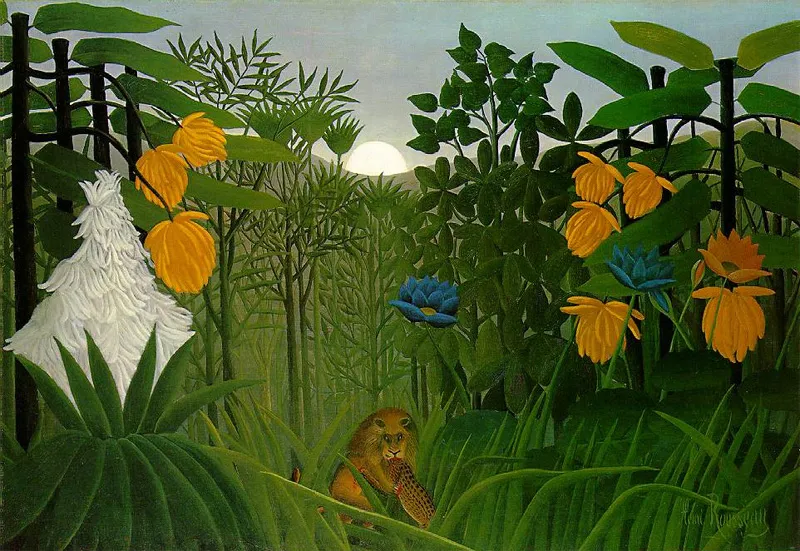
“The Lion’s Meal” (1907), Henri Rousseau
Origins of naïve art
At the turn of the 19th and 20th centuries, artists gradually turned their backs on academicism to seek new forms of expressiveness. The great movements that we know today developed during that period and, alongside them, a space opened up for those who had never received artistic training but felt the need to create.
It was Picasso himself who was the first to recognize the unique quality of the paintings of a customs officer named Henri Rousseau: they had a rare honesty, totally outside of academic rules. He wasn't the only one to notice it. In 1928, the collector Wilhelm Uhde took on the challenge of devoting a Parisian exhibition to these self-taught artists, thereby affirming that artistic creation was a fundamentally human need.
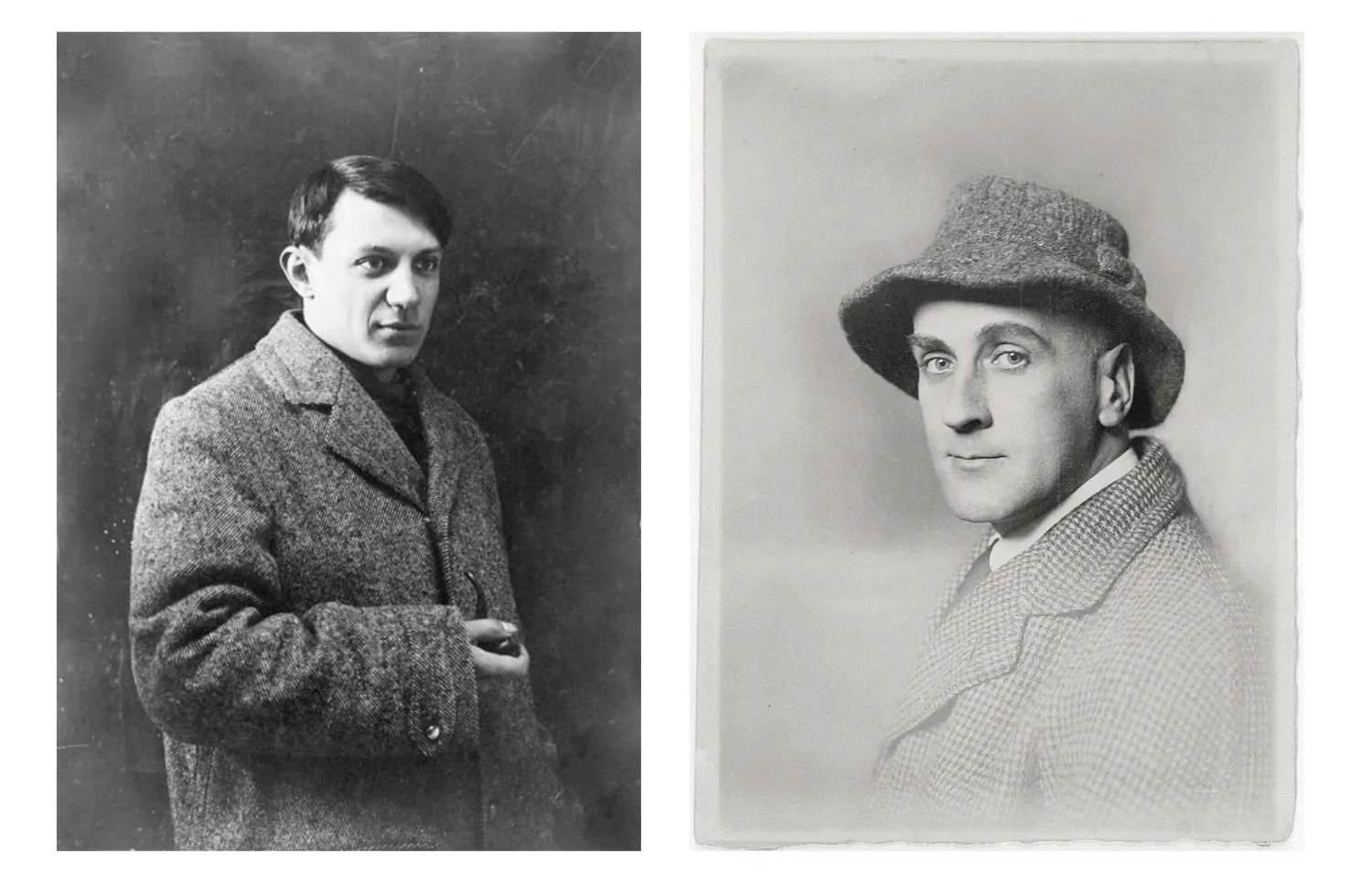
Photos of Pablo Picasso and art dealer Wilhelm Uhde
Characteristics of naïve art
Naïve art is distinguished from other movements by its singular origin: it was not born from a manifesto nor from a group of artists seeking to redefine art. It gradually established itself and is recognizable by several common features:
- Its creators are self-taught, with little or no artistic training, who worked in other professions to make a living.
- The compositions are flat, without seeking depth or volume, which could be described, in the best sense of the term, as a “childish” representation.
- The artworks are treated with care: intense colors, minute details and often complex scenes.
- The subjects are anchored in everyday life, rural environments, ordinary scenes and reflect the reality of their authors.
The leading artists of naïve art
These are the artists who were able to establish themselves through free, spontaneous and sincere creation, and whose value the history of art has finally recognized.
Henri Rousseau (1844-1910)
A leading figure in the movement, this French artist is famous for his scenes of vibrant colors and exotic nature, lush jungles that he had never visited, and which he reconstructed from stories and readings. Among his best-known works:
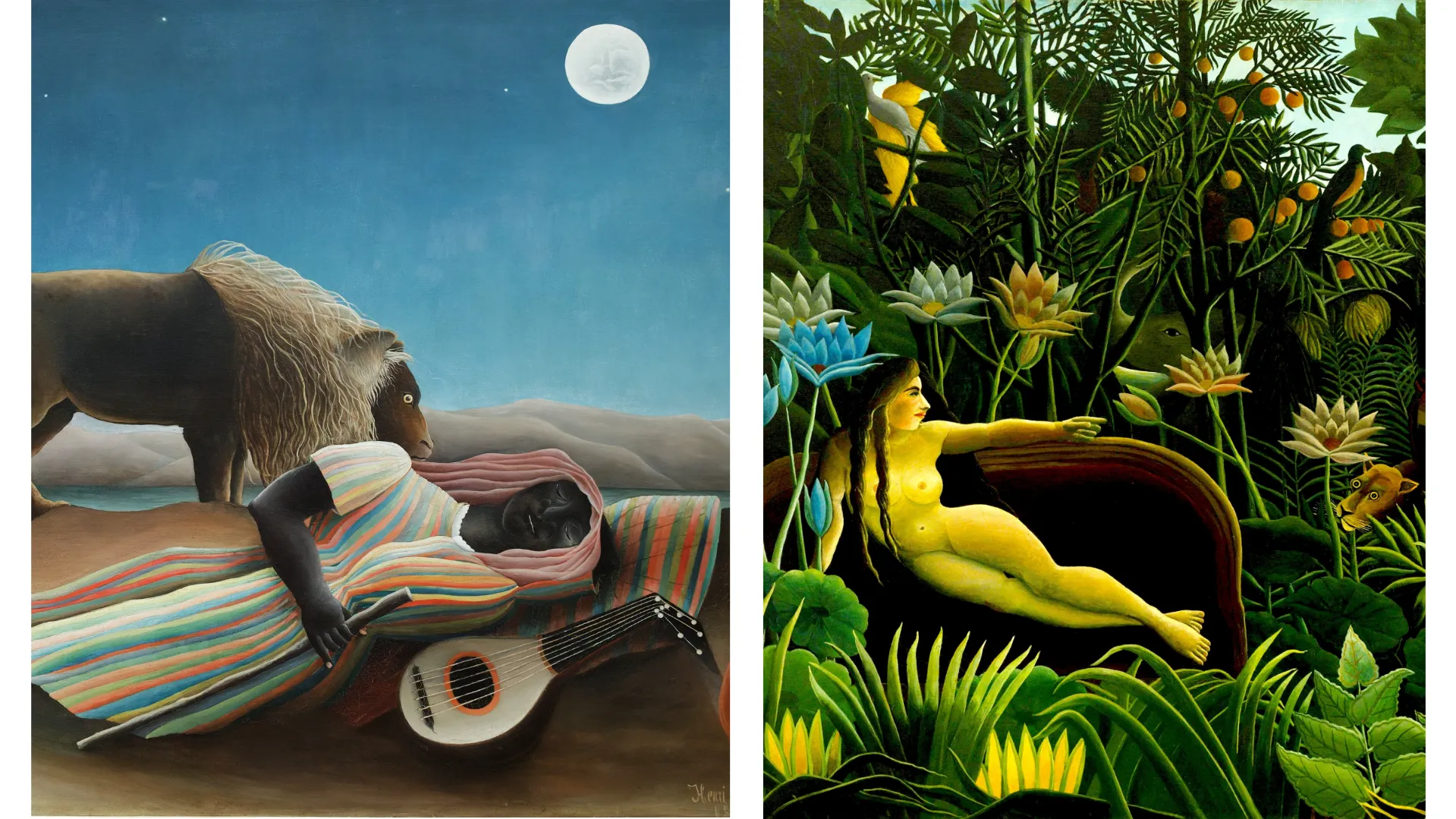
The Sleeping Gypsy (1897) and The Dream (1910)
Ivan Generalić (1914-1992)
A Croatian peasant, he drew in the fields between two jobs. After discovering oil painting, he developed a very unique technique on glass. His love of art led him to found a school for other peasants wishing to learn painting.
Séraphine Louis (1864-1942)
A French housekeeper, she painted floral motifs of remarkable detail during her rare moments of rest. She described this practice as a spiritual necessity. Among her works:
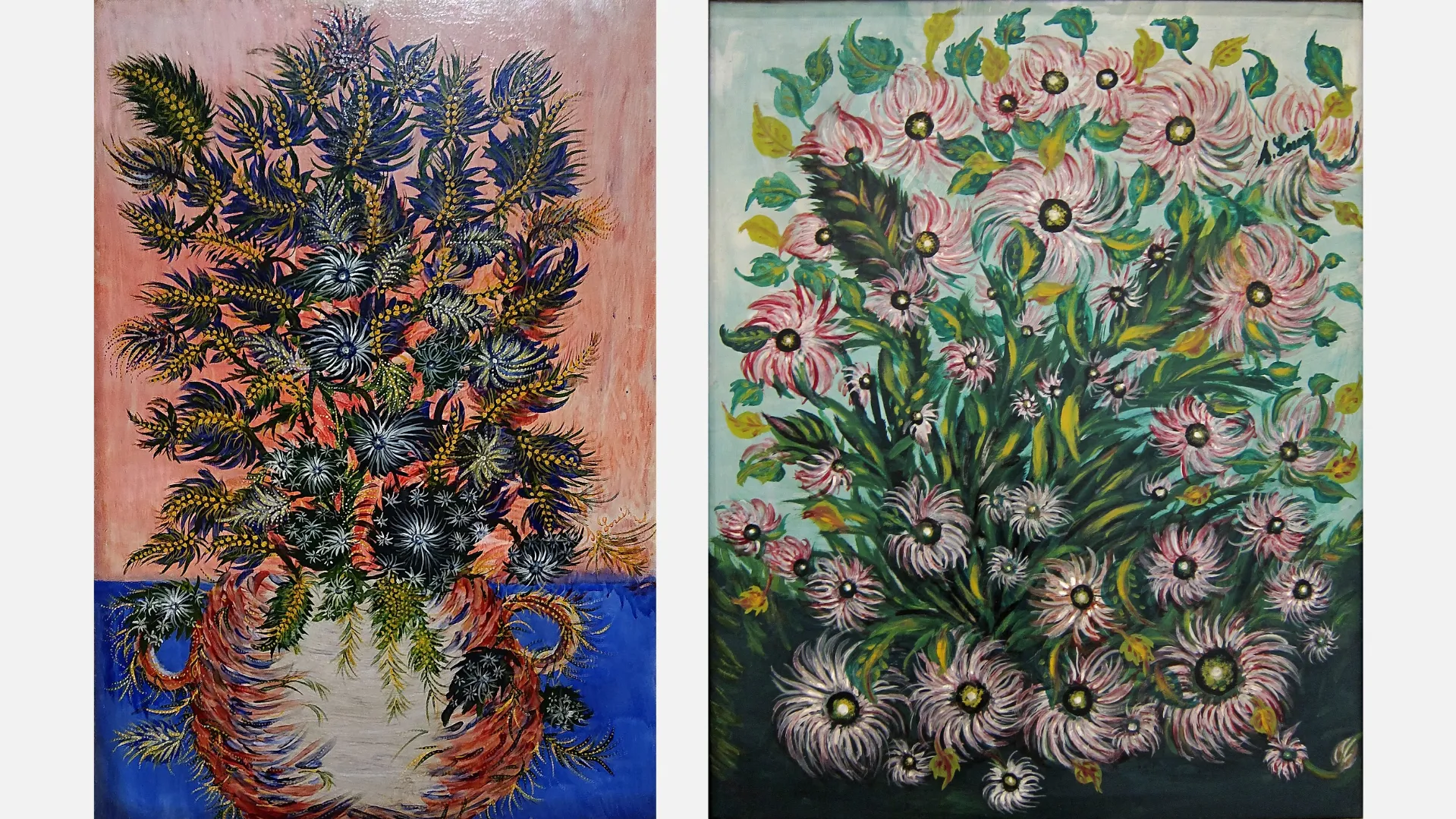
The Bouquet of Mimosas (1932) and The Bouquet of Flowers (1942).
Grandma Moses, Anna Mary Robertson (1860-1961)
It was arthritis that pushed this 70-year-old American woman to turn to painting, after a life devoted to the home and embroidery. Her rural scenes reached a wide audience, and her portrait even appeared on the cover of Time magazine.
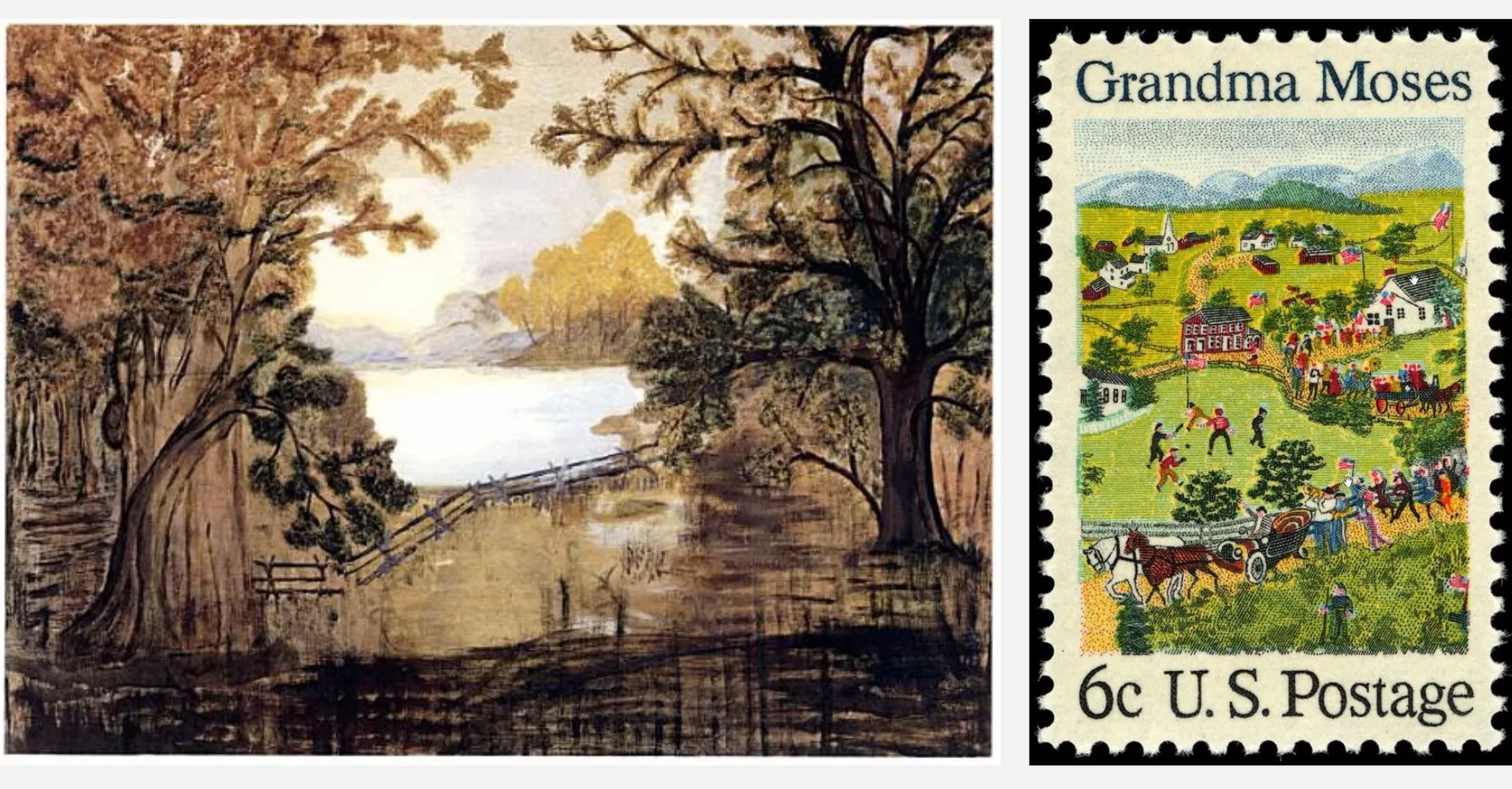
Fireboard (1918) and a stamp reproducing a fragment of her work (1969)
Camille Bombois (1883-1970)
A French artist with an atypical career, he had a series of physical jobs, from the fields to wrestling rings in circuses. Despite exhausting days, he always found time to paint. The traces of this harsh and eventful life can be seen throughout his artworks.
Naïve art is an invitation to look differently at what we call “talent”: these artists prove that a sincere and personal vision can be as valuable as an academic technique. A valuable source of inspiration to develop your own style, without trying to imitate but instead to feel.
Discussion
Good evening
As a great lover of the plastic arts and self-taught in the field, I am very happy to discover your beautiful article on naive art: you offer us a summary of the history of this art and explain very well what it is, and where I find a little of mine. Thank you very much