
How to Choose the Right Sketchbook
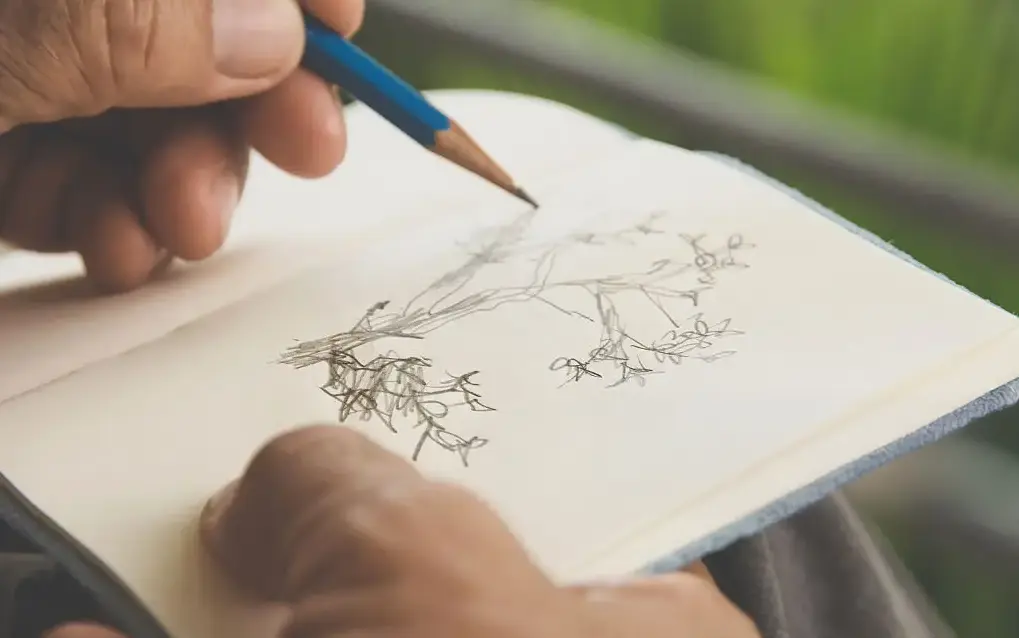
Hello everyone, today we're going to talk about an indispensable companion for every artist: the sketchbook. The one you take everywhere, filled with quick drawings, ideas, trials, sometimes failures, but mostly progress. Let's explore how to choose the right one, according to your needs, techniques, and projects.
Understanding what your sketchbook is for
Before even choosing which type of sketchbook, take a moment to think about what you want to use it for. This simple point changes everything.
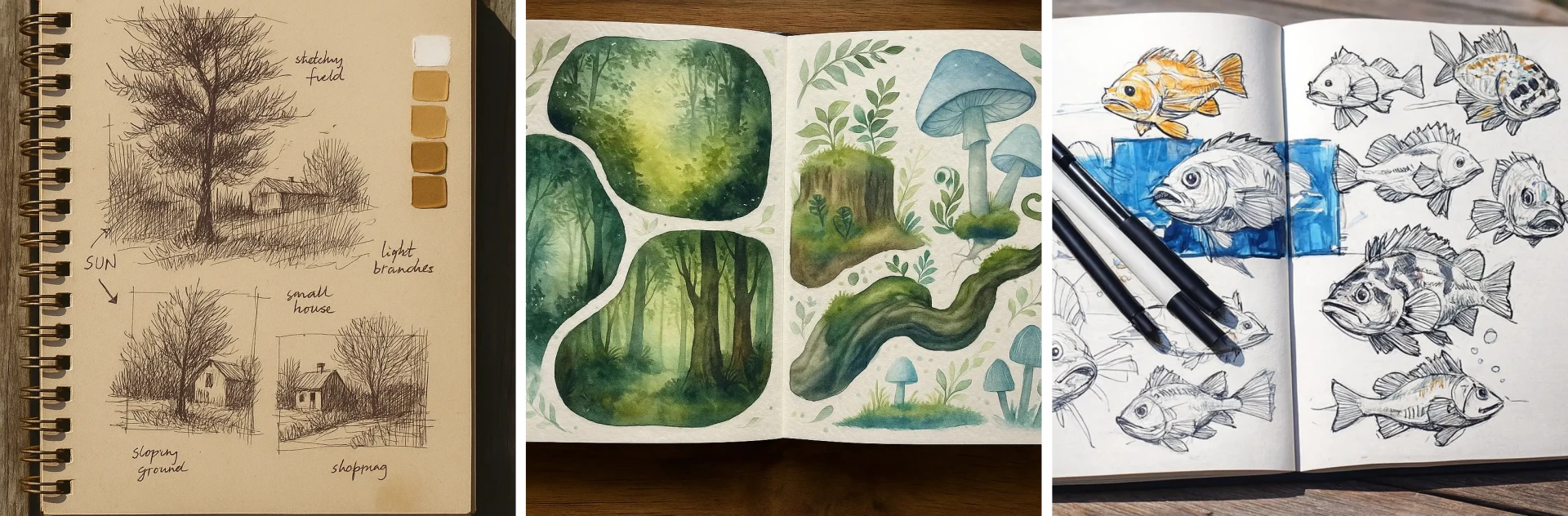
Would you like a sketchbook to draw in every day for pleasure? A sketchbook for anatomical studies in order to improve? A watercolor sketchbook to explore color? Or perhaps a travel journal to immortalize your adventures?
Each use has its specific needs, and choosing a suitable sketchbook will make your practice more enjoyable.
For quick sketches, thin paper and a small size are sufficient. It should be able to be easily slipped into a bag and pulled out in a few seconds, and encourage drawing without the fear of “wasting” a page. For more in-depth studies, such as character research, perspective or architectural studies, opt for a larger format and more robust paper, capable of withstanding erasing and layering.
For watercolor or gouache, choose a thick, textured paper, especially designed for wet techniques. This will prevent the paper from deforming and will preserve the vibrancy of the colors.
And if you're still undecided, opt for a mixed media paper. It’s an excellent compromise for those who like to vary their techniques without limitation. Many artists keep two sketchbooks: an "everyday sketchbook" for spontaneity, and a "cleaner sketchbook" for work they wish to keep or share.
Choosing the type of paper
Paper is the first criterion to consider. It determines not only the rendering of the drawing, but also the pleasure of creating the drawing.
Grammage
The paper weight determines the thickness and strength of the paper; it's the primary criterion to consider. Paper that is too thin will buckle with water, while paper that is too thick can be stiff to handle. Finding the right balance depends on your drawing technique.
Below 120 g/m², the paper is perfect for pencil, pen, or fine marker.
Between 150 and 200 g/m², it offers a good compromise for dry techniques with a few touches of light watercolor.
Above 200 g/m², it is ideal for wet mediums: watercolor, ink, gouache…
Texture
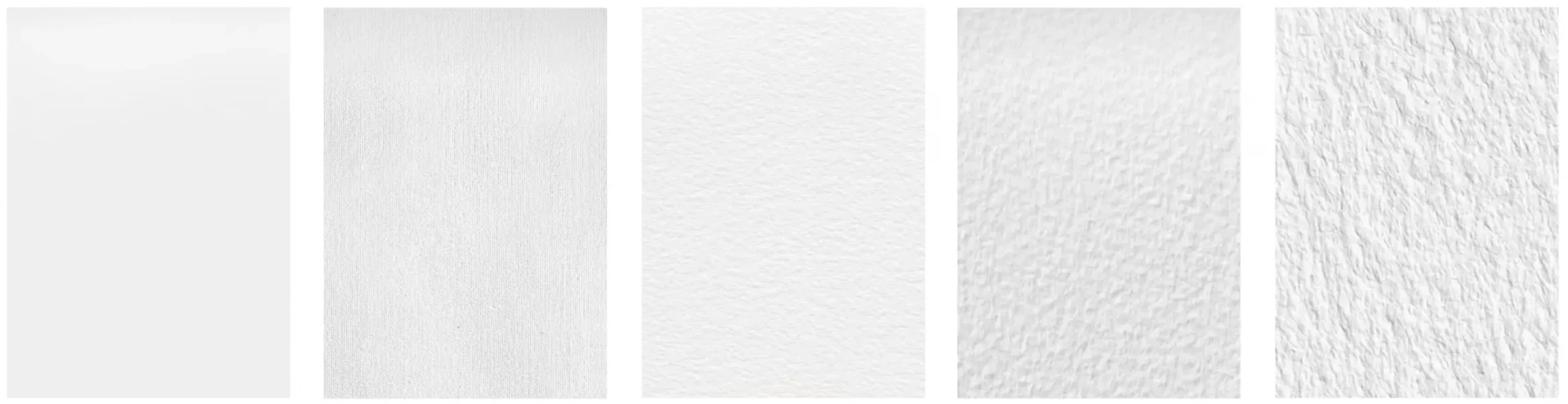
A fine or satin grain provides a smooth surface, perfect for precise lines or observational drawings.
A medium grain is versatile, suitable for pencil and washes.
A rough grain (very textured) enhances the effects of water and brush strokes.
Color
Pure white makes contrasts sharp, but very pale ivory or cream paper creates a softer and more natural atmosphere. Some sketchbooks also have colored paper, perfect for working with white pencils or opaque gouache.
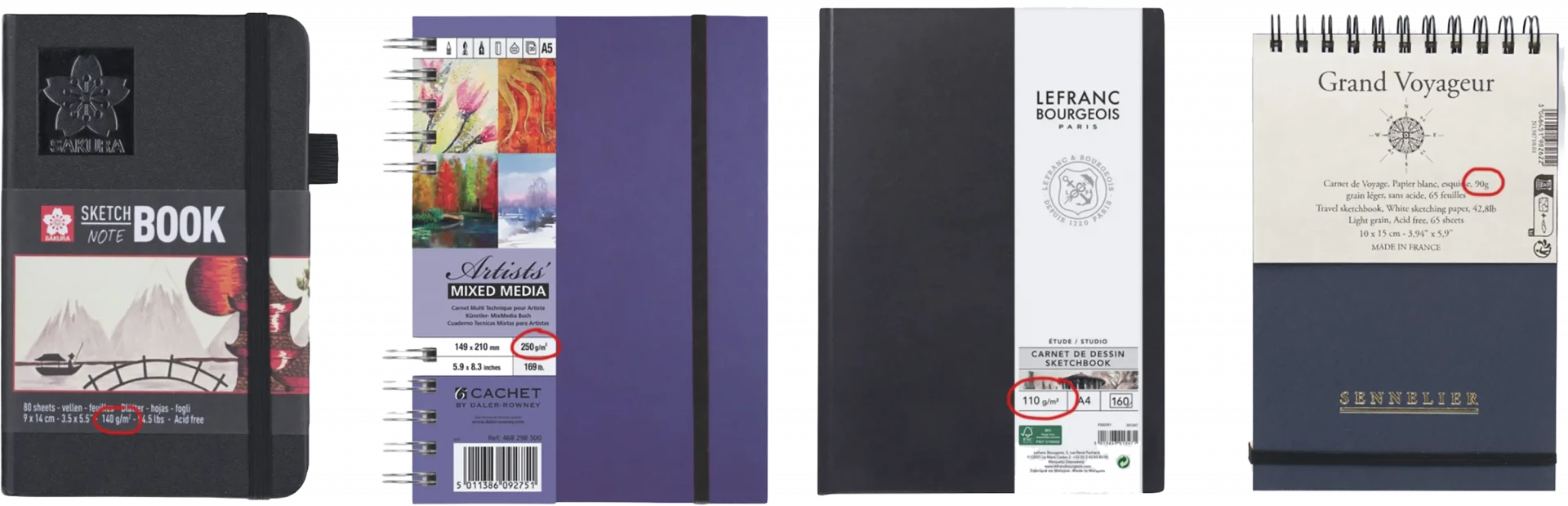
Generally, all this information can be easily recognized by touch once you become familiar with it, but if you are in doubt, especially regarding the weight, it is always indicated on the sketchbook.
Format
The format affects not only your comfort, but also your drawing style.
It's a bit like the size of a canvas: it influences your movement.
Small format (A6, A5): compact, practical, ideal for drawing outdoors or on transport. Perfect for quick sketches and spontaneous ideas.
Medium format (A4): the most versatile. It provides enough space to work on your compositions while remaining portable.
Large format (A3 or larger): ideal for major studies, studio observation drawings, or detailed compositions.
The choice of orientation mainly depends on what you want to convey in your drawing. Landscape format emphasizes the width of a scene, perfect for wide views, open compositions, or tranquil landscapes. Portrait format, being more vertical, naturally draws the eye upwards and works very well for architecture, trees, or characters.
As for the square format, this gives a sense of balance and calm, ideal for centered or more graphical compositions. There are no strict rules: try different orientations, and you will see that sometimes, a simple change of format can completely transform the energy of your drawing.
Binding and cover
Two details that may seem minor… but make all the difference in use.
Binding
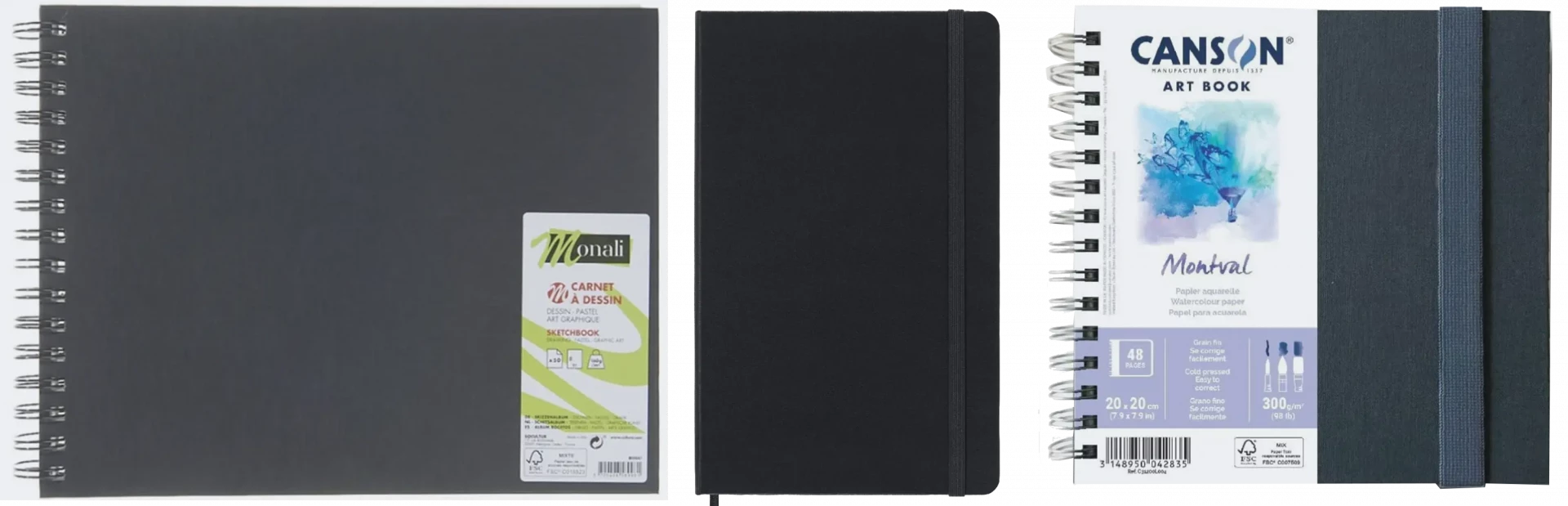
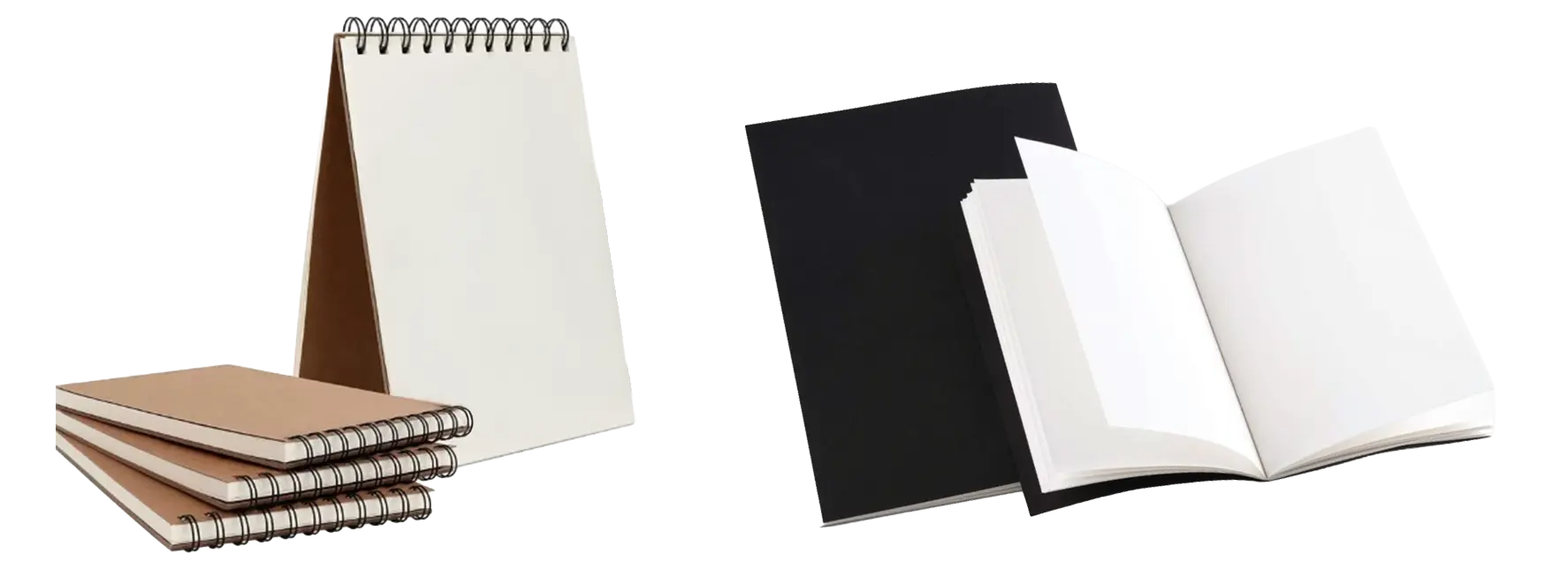
Spiral bindings allow the sketchbook to be opened completely flat. This is ideal for quick sketches and is suitable for both right-handed and left-handed artists. However, they do tend to weaken the pages and make them more prone to tearing.
Sewn bindings are more robust and provide a beautiful "artist book" look. They also enable you to spread your drawings across a continuous double page, perfect for panoramas or wide full scenes.
Cover
The sketchbook is an object that we handle all the time. Its cover must be both durable and pleasant to the touch.
A hard cover protects your drawings and serves as a support if you are drawing outdoors.
A soft cover will be lighter and more flexible, ideal for sketchbooks that you carry everywhere.
Fabric, leather, or thick kraft covers provide an aesthetic aspect and will age beautifully over time.

In conclusion, the perfect sketchbook does not exist, but the one that suits you does. It’s the one in which you won’t be afraid to fail, the one that will make you want to come back to it. Test, explore, mix formats and papers. You will end up finding the one that will capture your ideas on a daily basis.
Editor: Chloé Pouteau
Discussion
thank you for all this valuable information
a very big thank you for all this valuable advice