
How to Correct Mistakes in Watercolor Painting
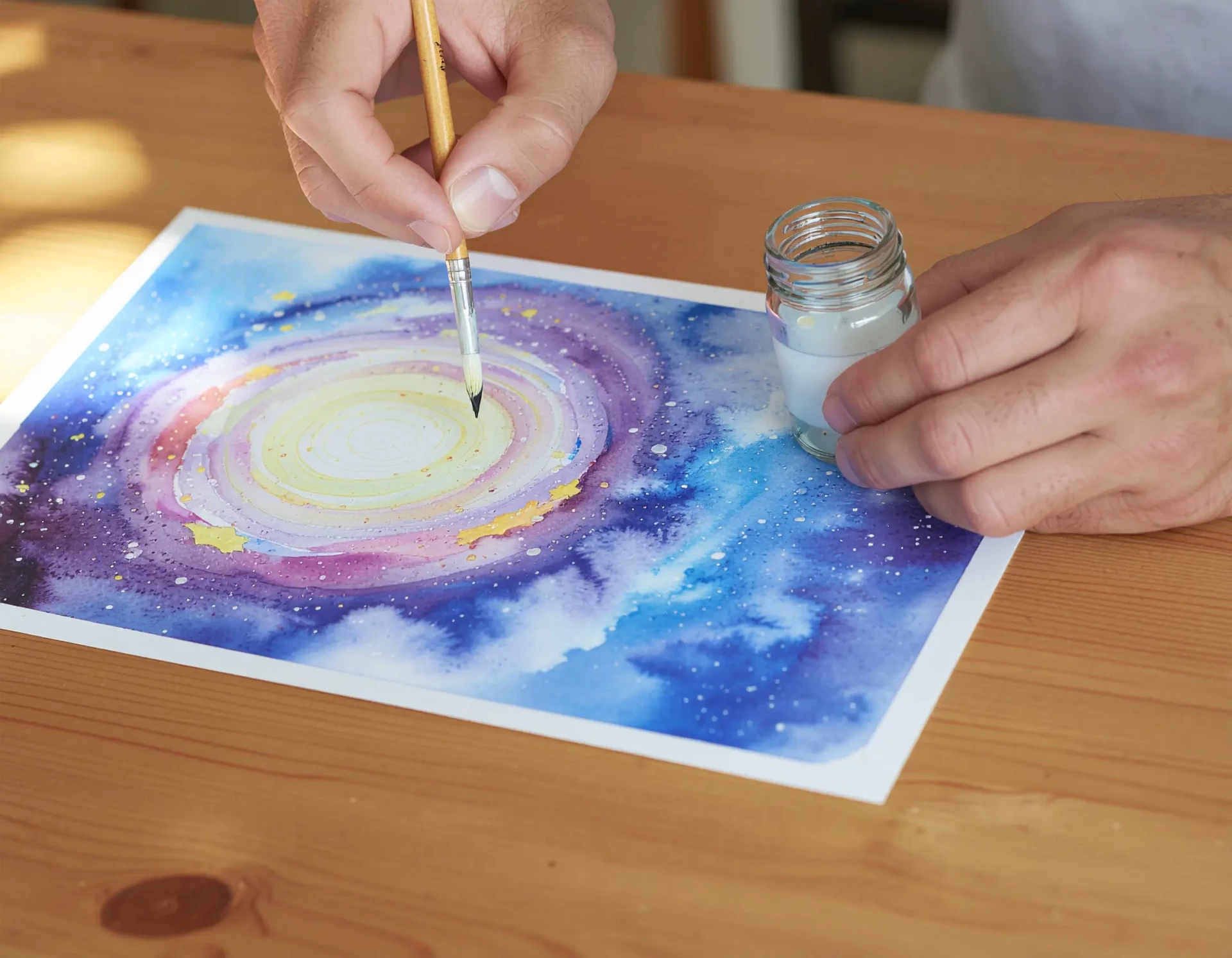
When painting with watercolors, small accidents sometimes happen. Even though it's frustrating, it's perfectly normal, and the good news is that we can fix them. As artists, we must be inventive: turn these mistakes into elements of the artwork, integrate them subtly, or simply reduce them as much as possible.
Hello again and welcome to this new article, where I will show you several ways to fix the unexpected issues that can arise while painting with watercolors.
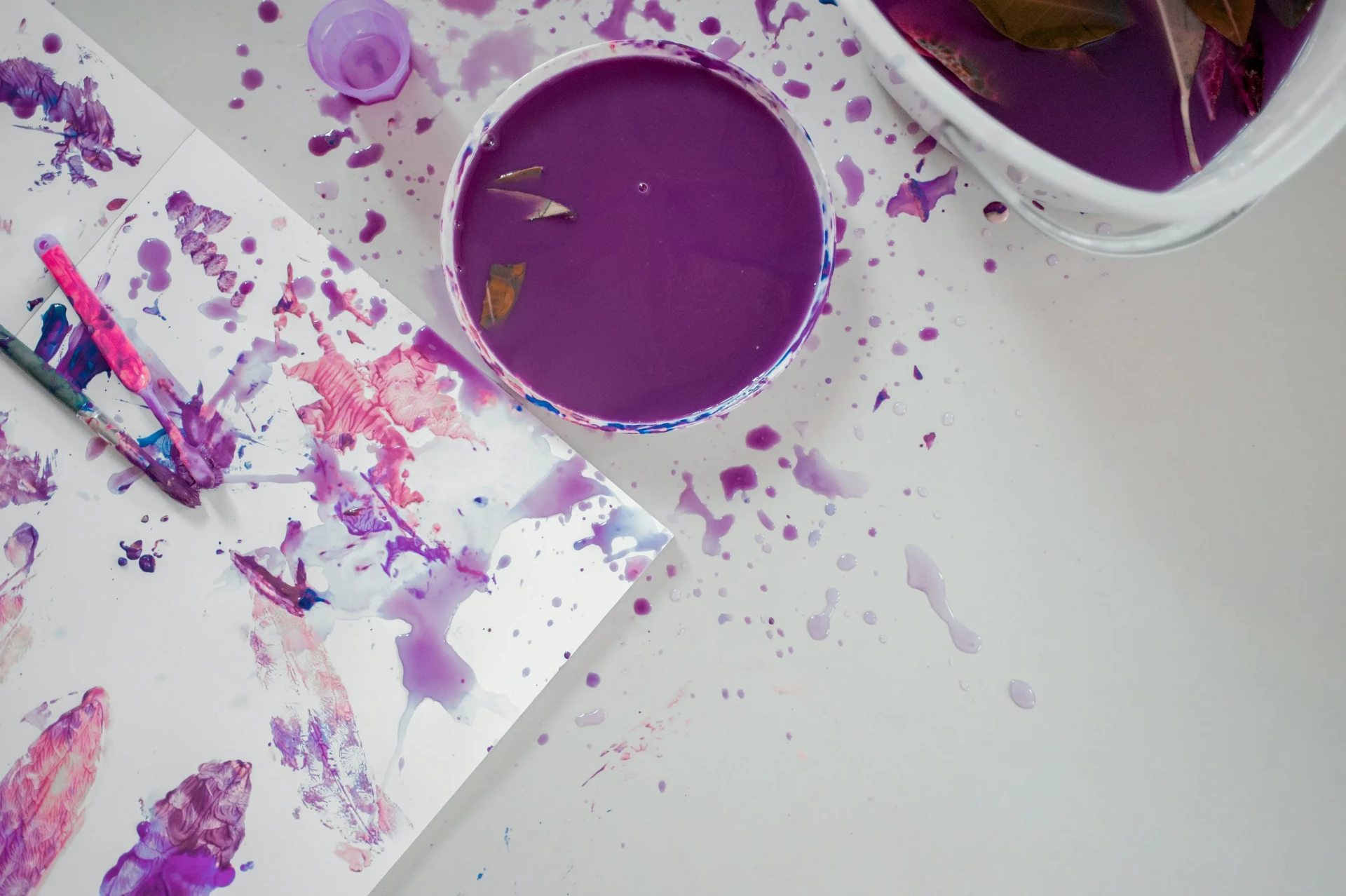
One important thing: do not forget that you are working on dampened paper: even though it is resistant, it can be affected by handling it too much. Therefore, try to take all necessary precautions to avoid major mistakes or, if necessary, correct them immediately.
Corrections on wet watercolor
When painting with watercolor, unexpected events can occur and affect an area, or, in the worst case, the entire piece. If you spot the accident when it happens, you can try to correct it like this:
Absorb excess pigmented water
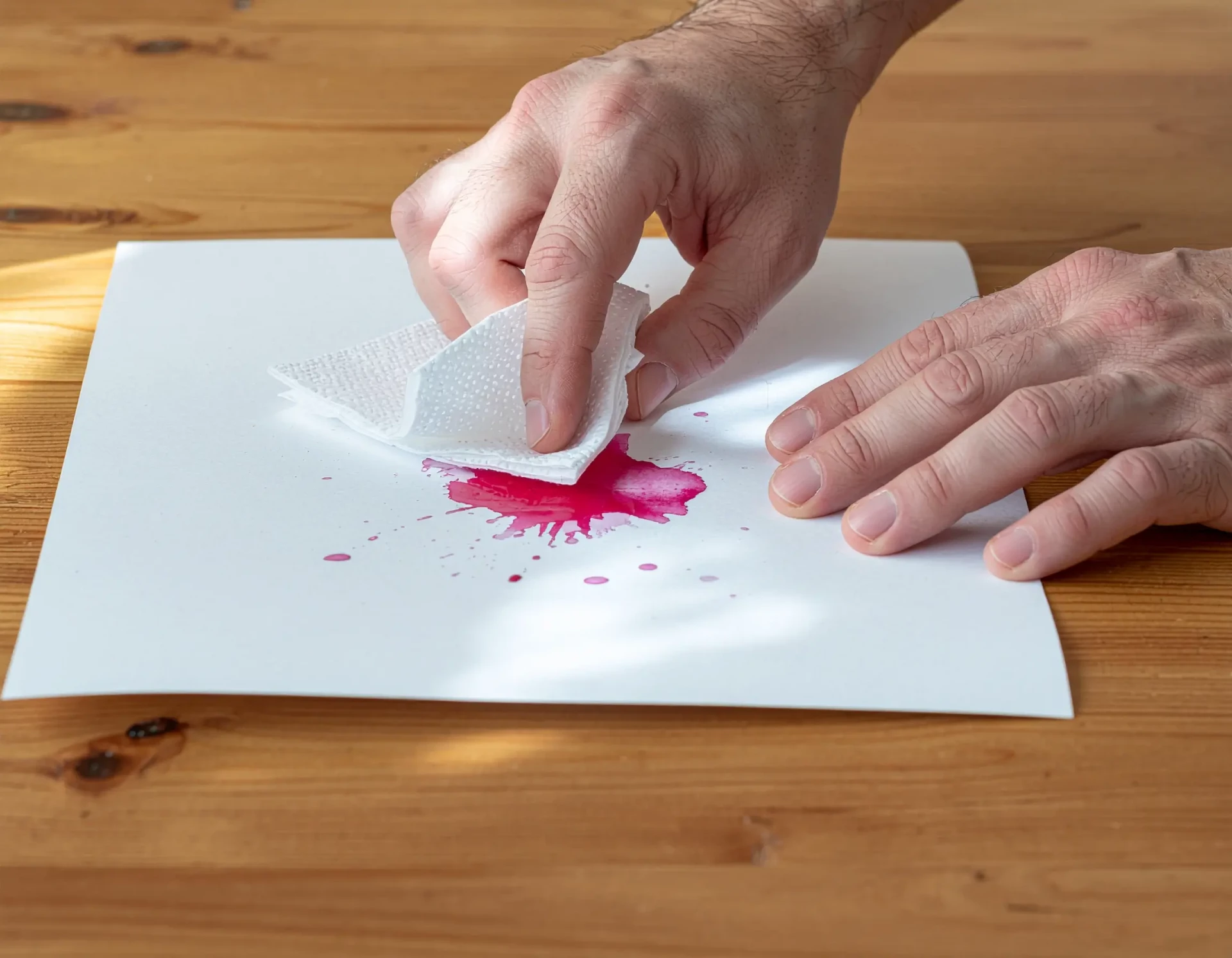
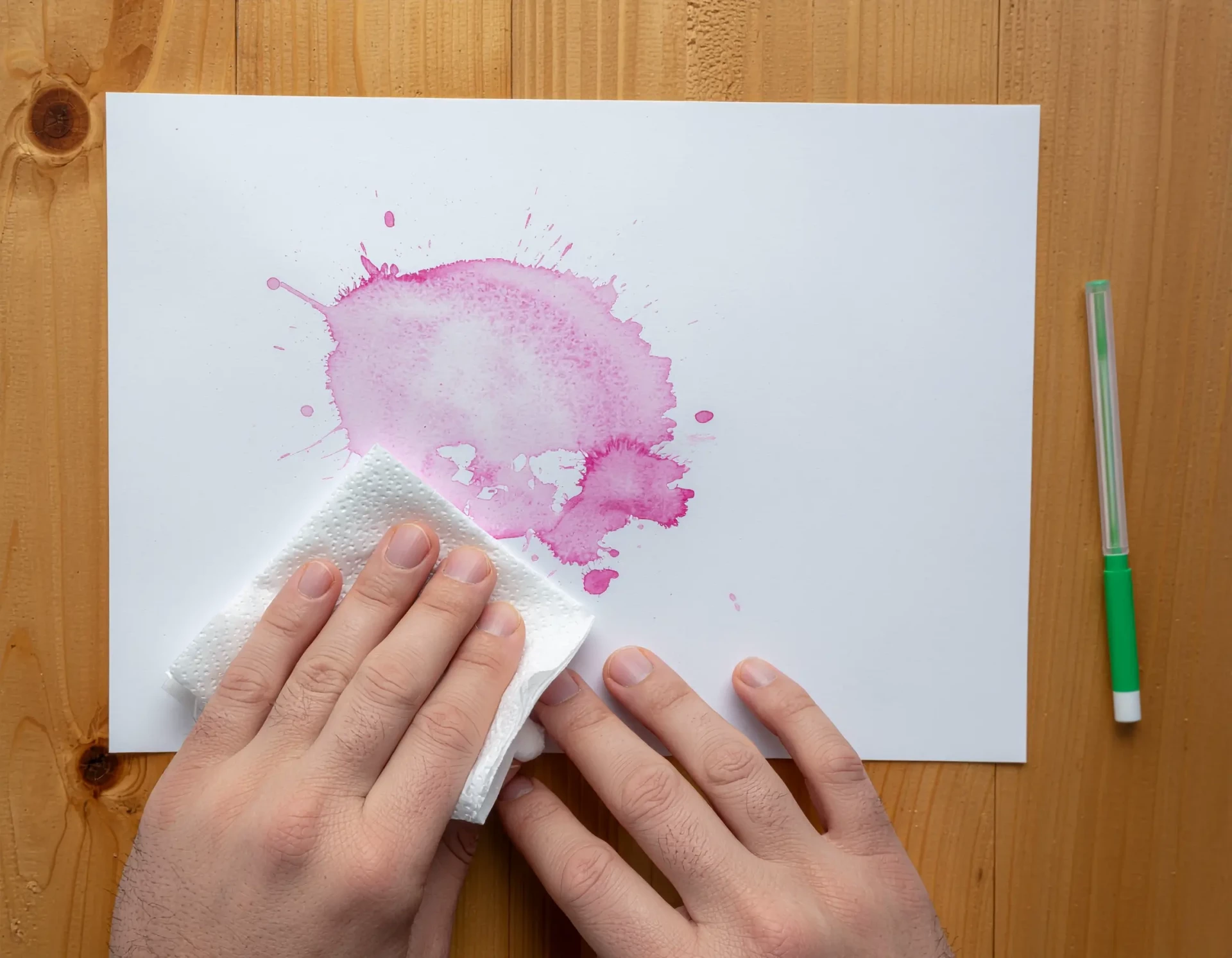
Quickly grab a paper towel or a totally dry sponge and place it exactly on the affected area. It will absorb the water sitting on the surface. Then, press lightly to remove more pigment and water.
Use a dry brush to remove excess water
If you have nothing else on hand, you can use your paintbrush. Dry the one you are using very carefully, or take another one that hasn't been used. Then place the tip on the problem area: you will see that it soaks up the water on the surface. This technique helps prevent the edges from spreading.
Corrections on dry watercolor
When the color dries quickly and there's no time to remove it, other methods must be used. But bear in mind that paper is fragile and has its limits: it's better to be careful not to damage your work.
Re-moisten
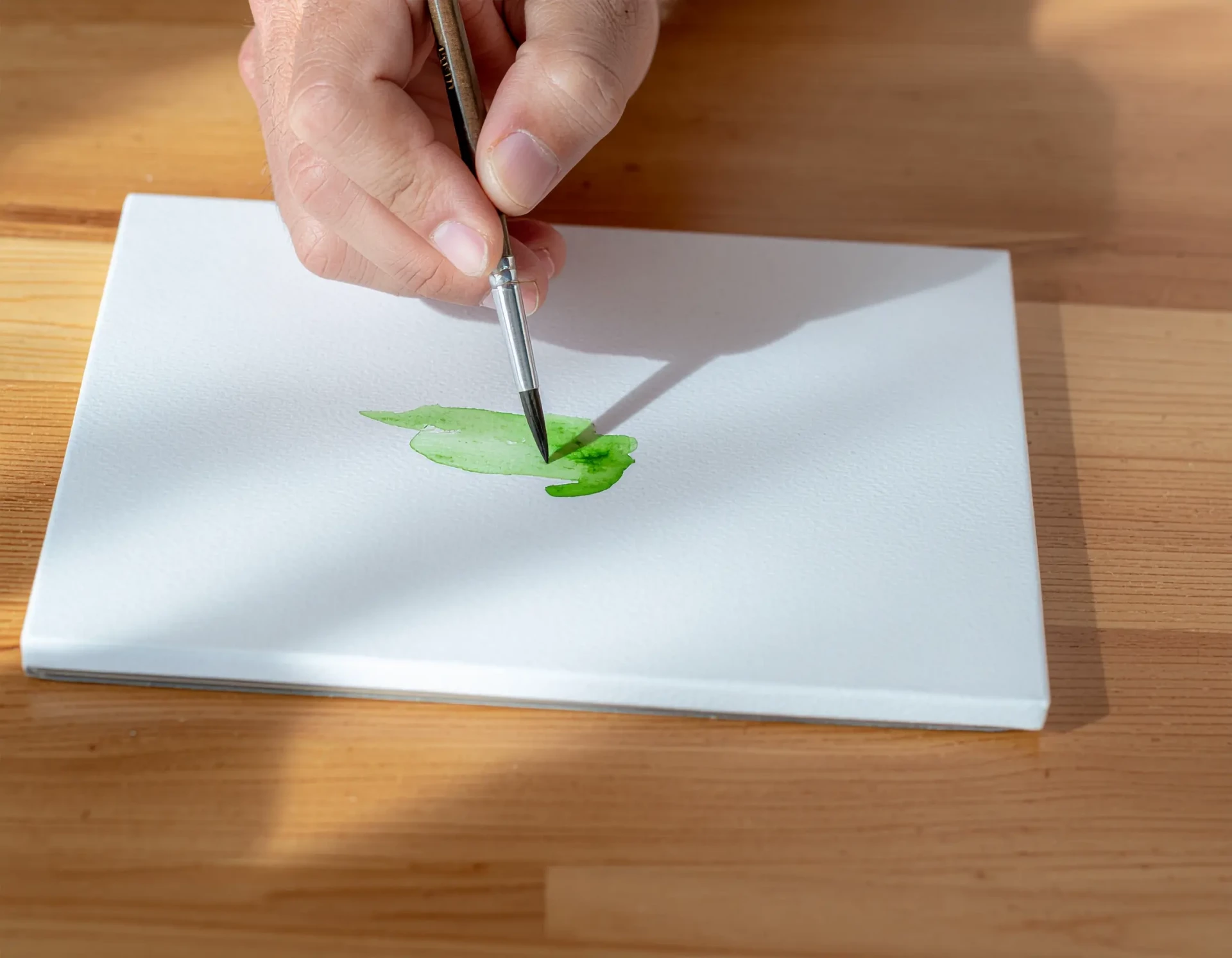
Yes, the first option is to lift the pigment, and watercolor reactivates every time water is added. By using a moist brush (without pigment), you can dilute the stain to fade it, as in the first options. This process may need to be repeated several times, so assess the condition of the paper before continuing.
Scrubber brush
This is a stiff, flat brush, suitable for this type of situation. The principle is the same: moisten the area, then gently brush to lift the pigment. Afterwards, use a paper towel to dry and absorb the color that has lifted.
Cover or hide
If removing the paint splotch is not an option, either due to the intensity of the color or the size of the error, here are some other alternatives:
Apply glazes on top
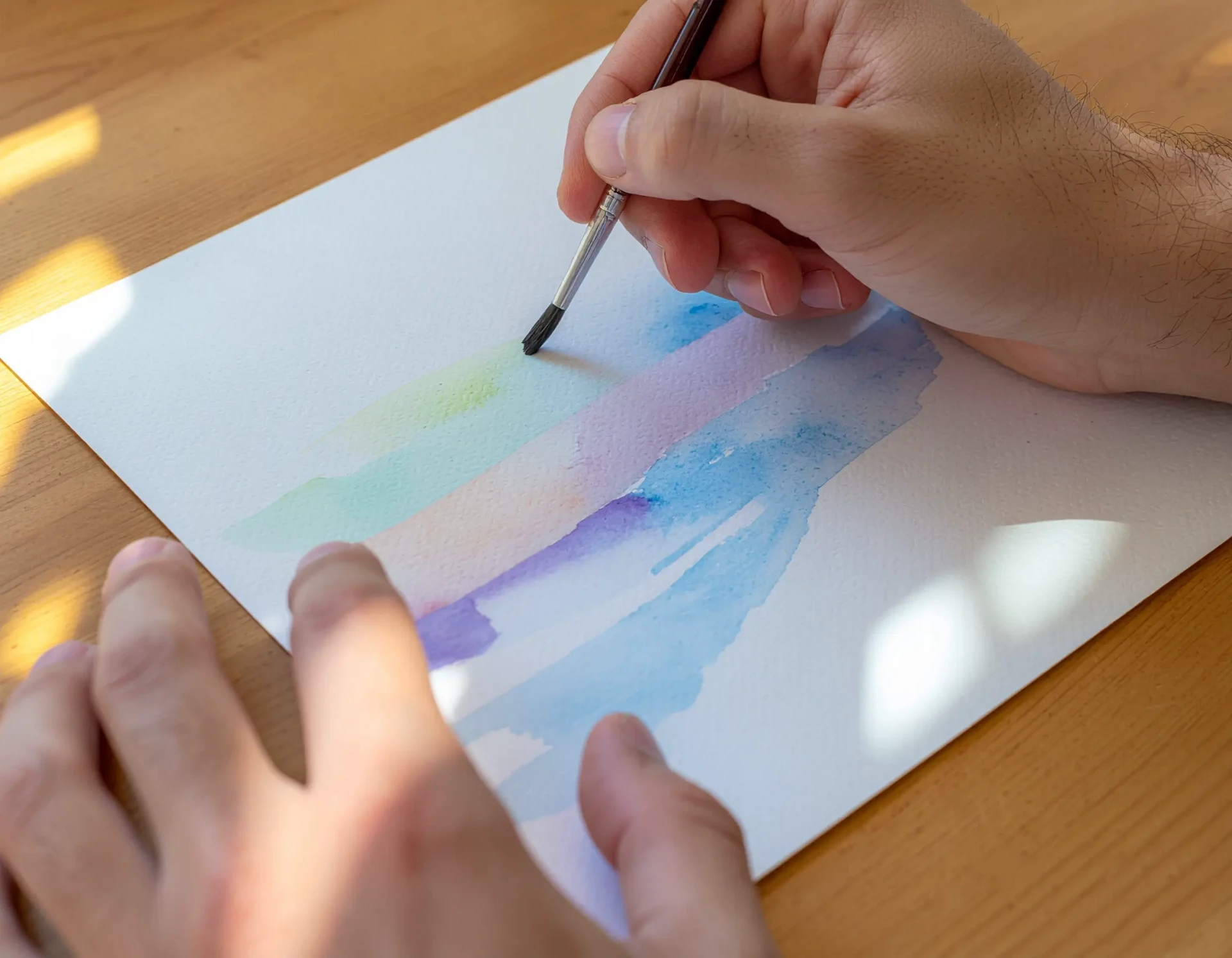
If the stain is relatively light, you can continue to paint with darker tones, gradually covering the incident with layers of glaze, until it becomes imperceptible or integrates into the rest of the painting.
Add a layer of another material
If the stain is too difficult to remove or cover with glazes, the last resort is used. If you have white gouache, you can use it to mask the error: it's a common technique to recover the brightness of the piece, by restoring white to areas of light. Alternatively, you can use white ink or a white gel pen.

That's all for today. I hope this article will help you address those unforeseen issues that can take you away from your initial idea.
Remember, it's perfectly normal to make mistakes when painting with watercolors! Before choosing a solution, take the time to assess the mistake: this will enable you to choose the most suitable option.
Writer: Bryam
Discussion
No comments yet.