
Graphite Pencil or Charcoal: What are the Differences?
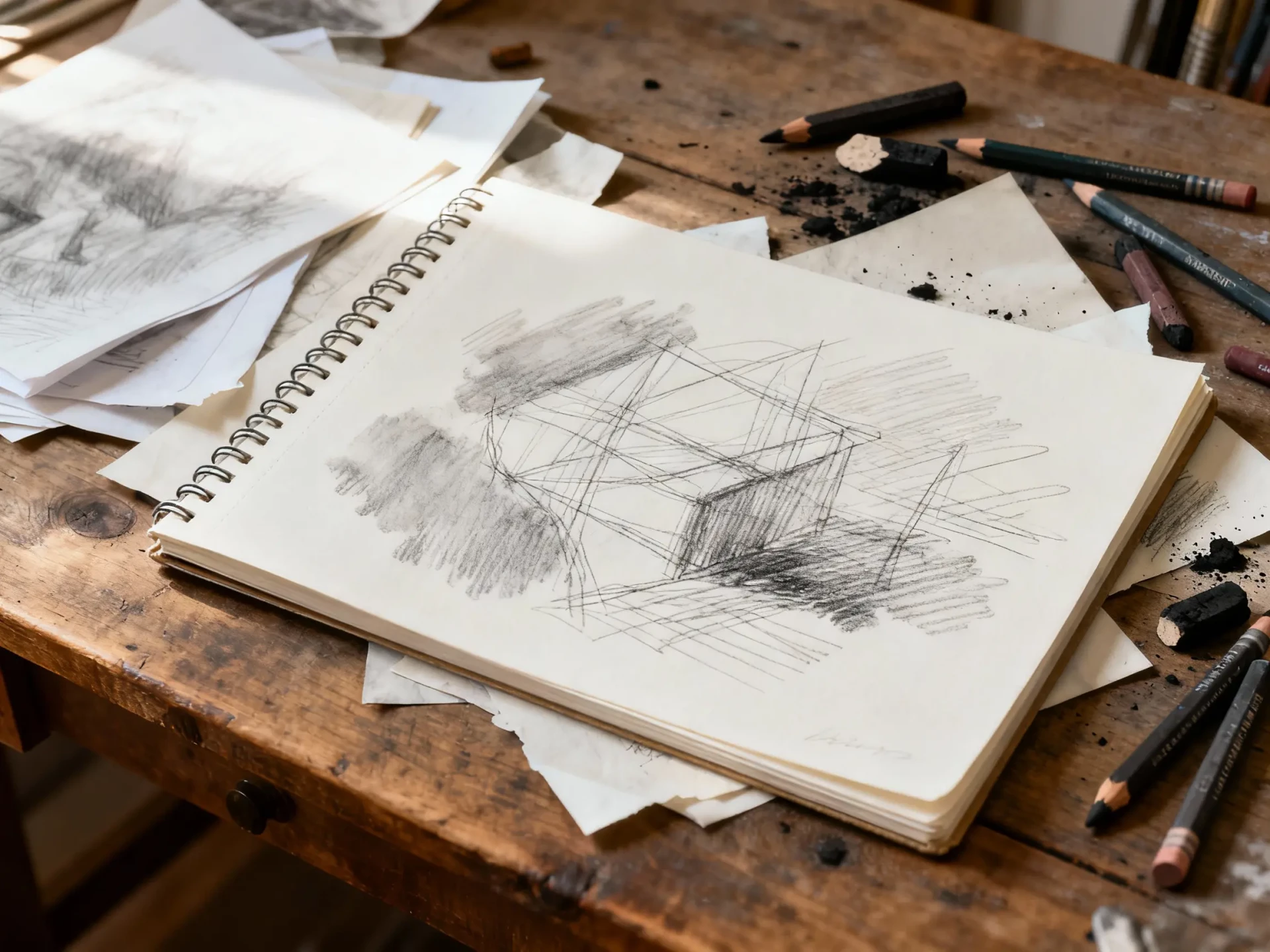
When you start drawing (or even when you've been practicing for a while), it's common to find yourself hesitating between two very popular tools: graphite pencil and charcoal.
These two mediums seem similar since they can both be used for drawing in black and white. However, in reality, they lead to very different movements, experiences, and results. Understanding their individual characteristics will help you to choose the one that best suits your style or simply your current mood.
Today, we will explore together the differences between these two tools, their advantages, their limitations, and also which one to use according to your needs.
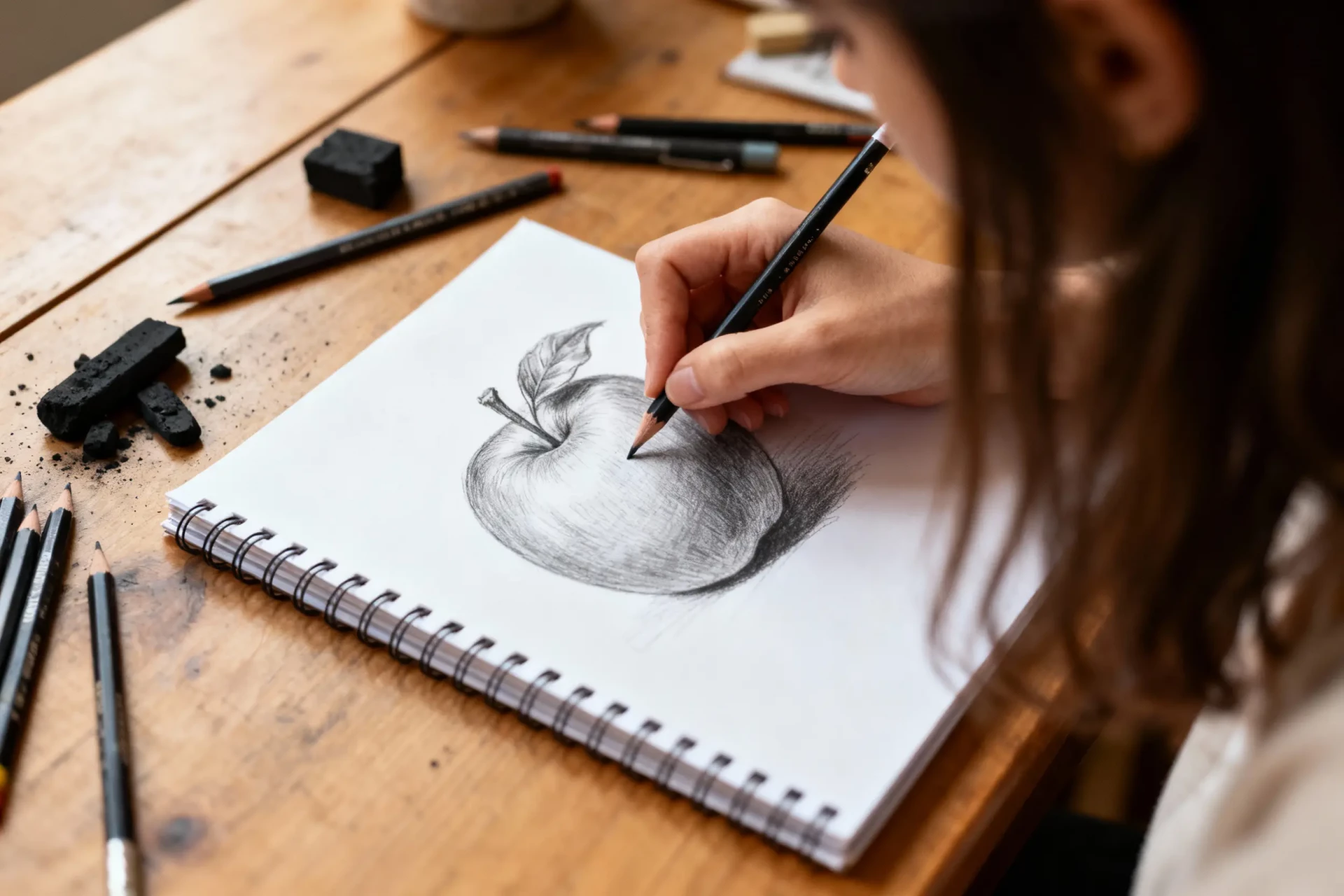
Graphite: precision, control, and finesse
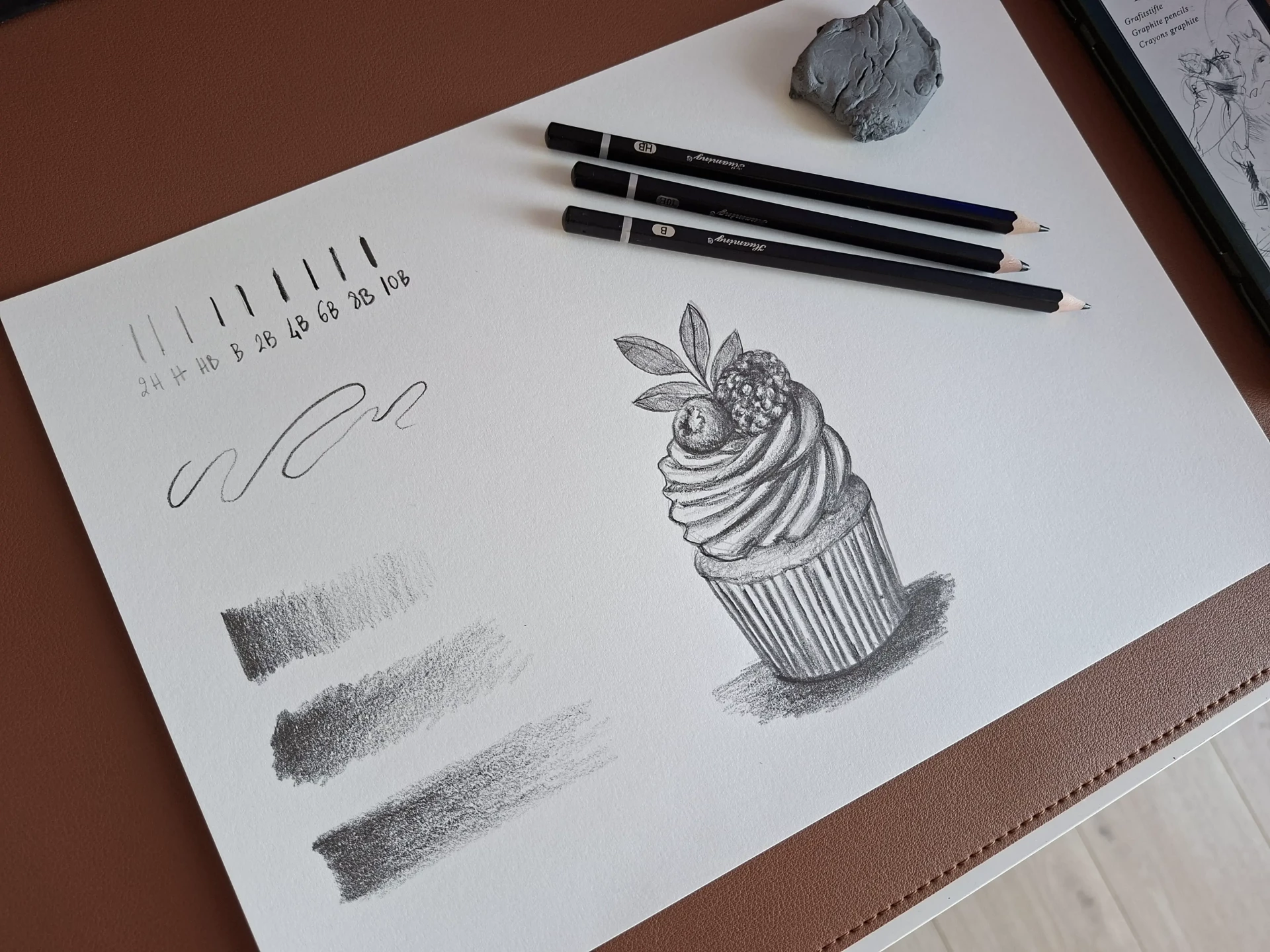
The graphite pencil is undoubtedly the most used tool in drawing. It comes in a wide range of hardnesses (from 9H to 14B), which allows for both fine lines and intense shadows.
Main features
• Precise line: ideal for details, outlines, fine textures.
• Wide range of values: allows for controlled gradients.
• Clean and easy-to-handle tool: does not get very dirty.
• Very good for detailed work: detailed portrait, architecture, objects.
Benefits
• Allows very high precision.
• Easy to sharpen, easy to correct.
• Recommended for learning the basics: construction, proportions, values.
• Good stroke control thanks to a firm tip.
Limitations
• The most intense black is still limited compared to charcoal.
• May give a cleaner and less expressive rendering if contrasts are not emphasized.
• May leave a metallic sheen if pressed too hard.
Charcoal: energy, contrast and expressiveness
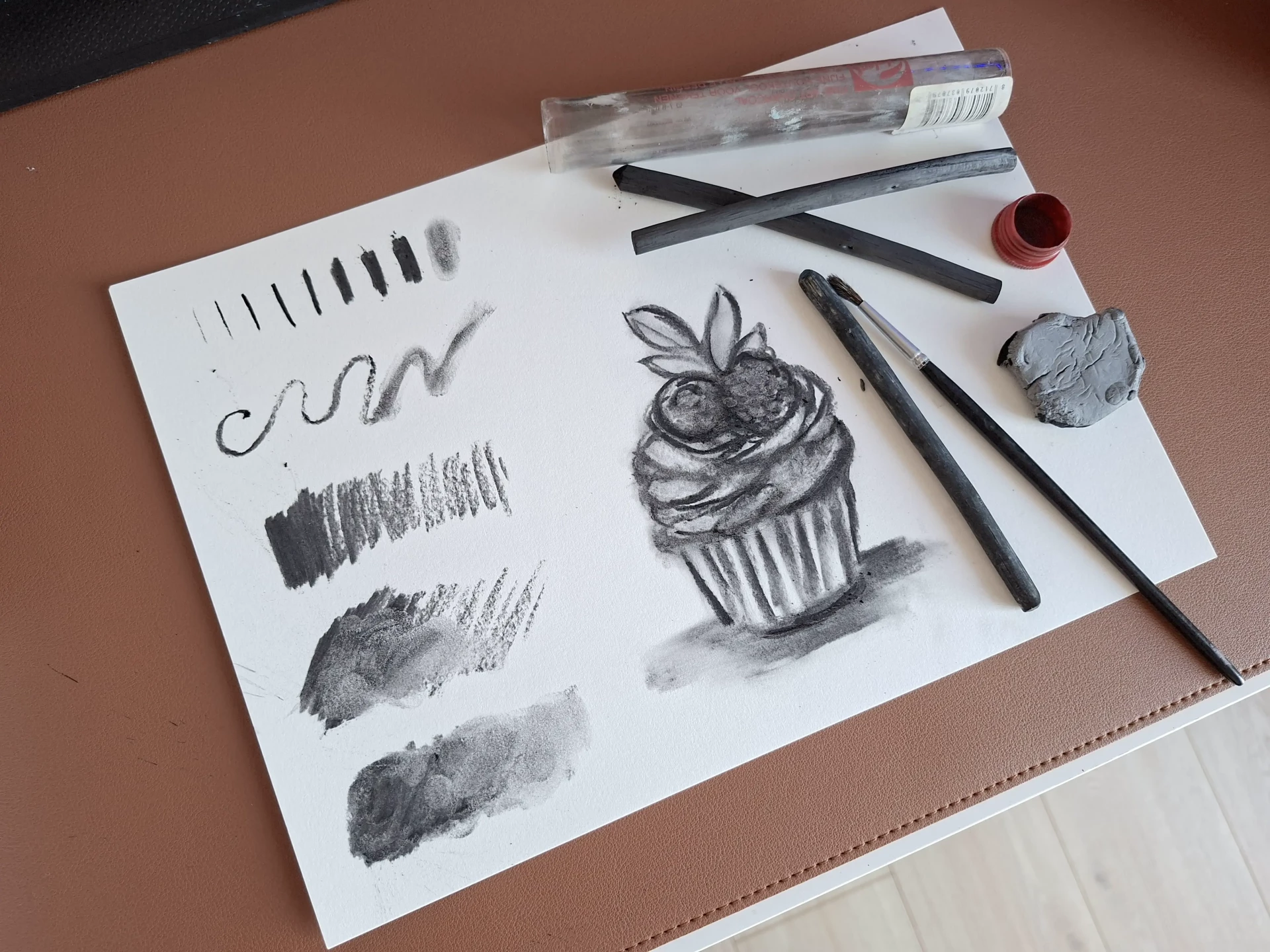
Charcoal is a stick of natural or compressed carbon. It is much softer than graphite, which gives it a very deep rendering and a rougher texture.
Main features
• Very rich and matte blacks: perfect for dramatic atmosphere.
• Wide lines and quick strokes: expressive tool.
• Easily erasable, but also fragile: lines can smudge.
• Requires a broad, almost "full-body" movement.
Benefits
• Ideal for large formats.
• Quick creation of solid forms and volumes.
• Enables light to be rendered with high impact.
• Very good for live sketches, quick poses, expressive portraits.
Limitations
• Less accurate.
• Messy: quickly stains fingers and paper.
• Sensitive to friction (fixative essential).
• Not always suitable for small formats or fine details.
Graphite vs charcoal: the core differences
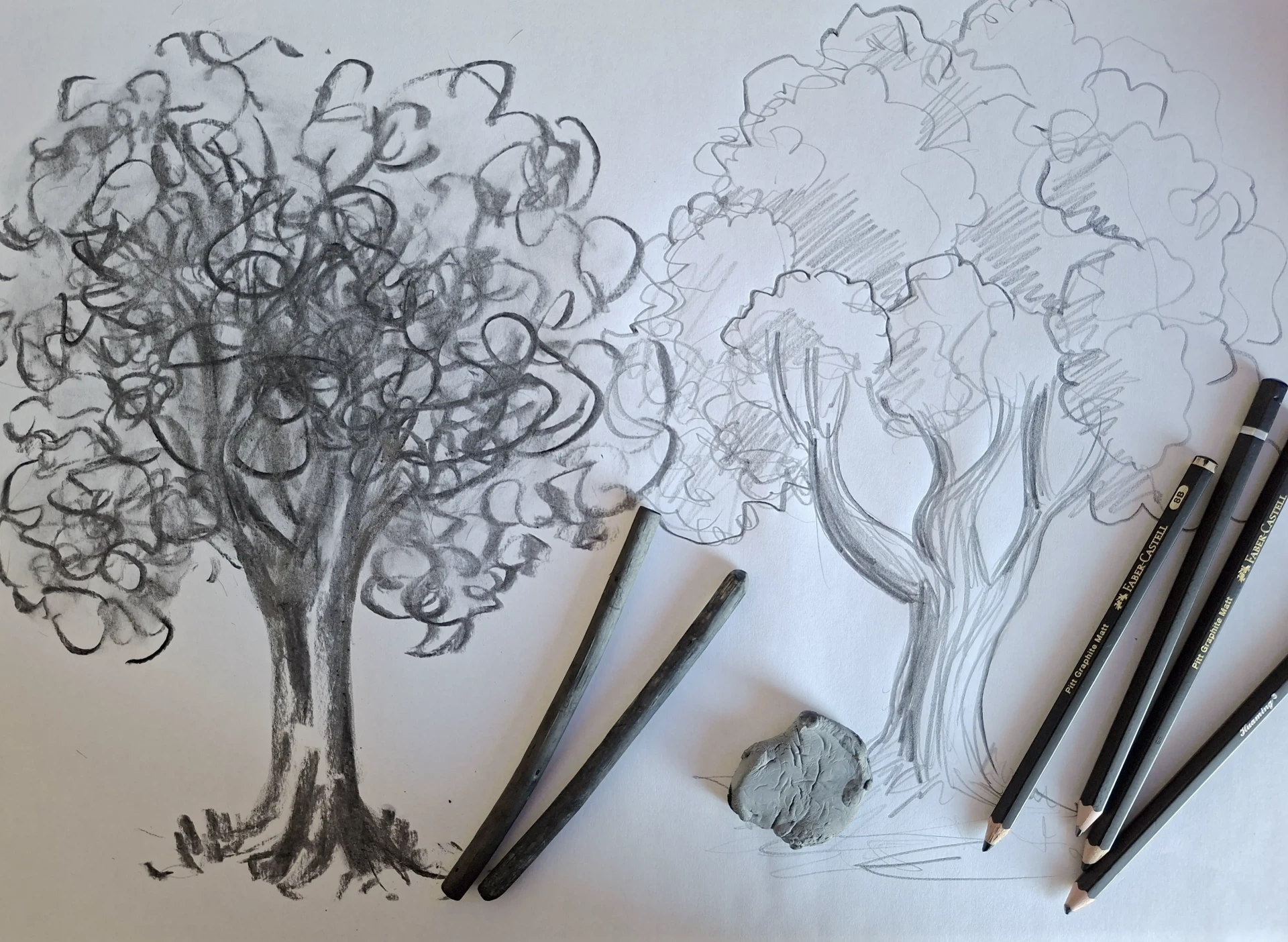
Graphite provides a smooth, precise, and slightly shiny finish, while charcoal creates a matte, deep, and very bold appearance. The movements used by the artist are not the same: graphite requires calm and controlled movements, whereas charcoal encourages broader, freer strokes.
For corrections, graphite erases easily, while charcoal often leaves a small mark. Neither is really easier: graphite demands finesse, while charcoal requires a looser grip in order to play with the solid forms.
Choosing a tool according to your objective
To learn the basics:
Graphite allows you to focus on proportions, simple shapes, perspectives, and values.
To work on movement:
Charcoal is perfect for quick sketches, dynamic poses, and body expression.
For a detailed portrait:
With graphite, you will better master textures (skin, hair, eyes).
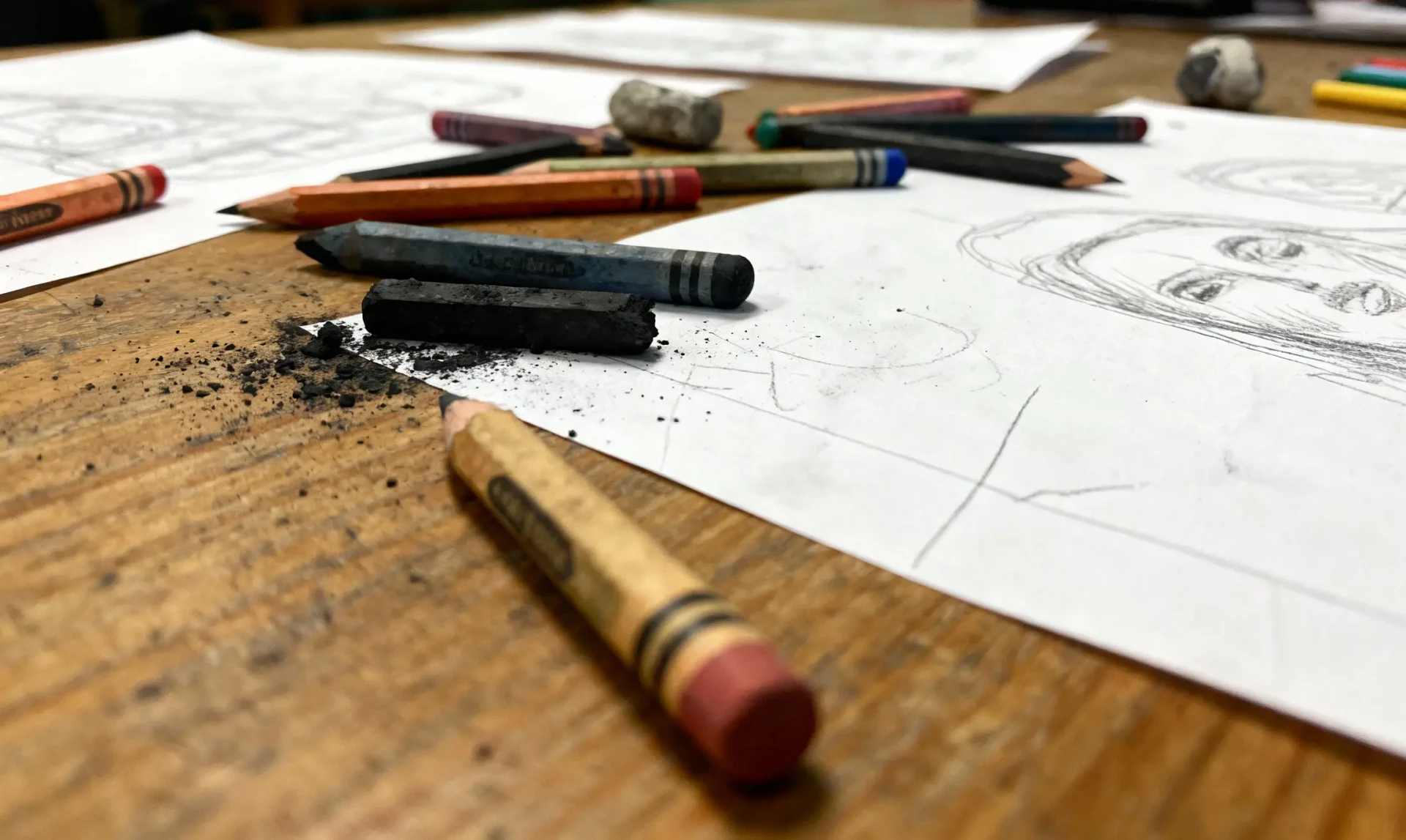
For large formats:
Charcoal, without a doubt, as it will enable you to shade in larger areas.
Working with light: two different philosophies
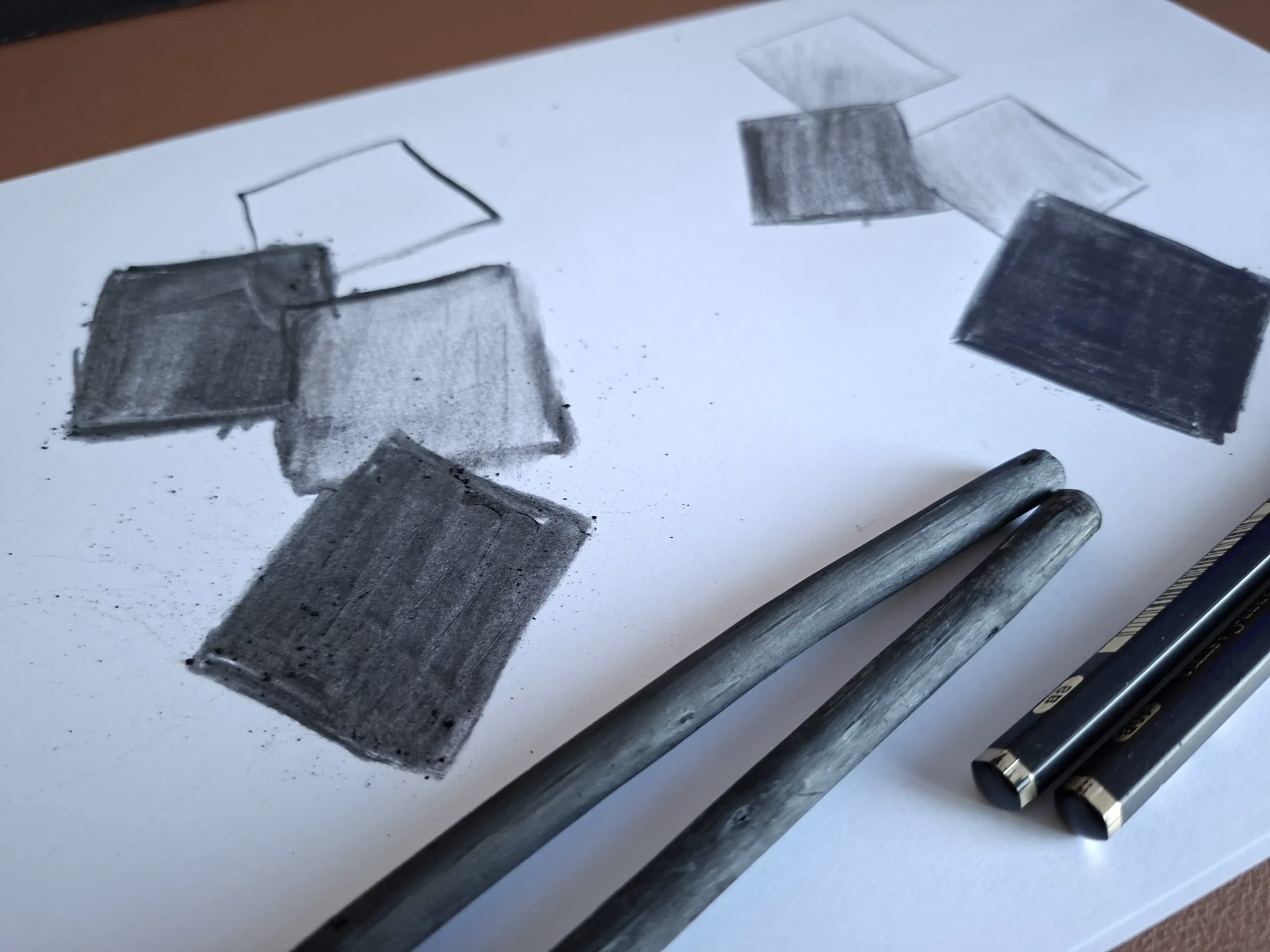
With graphite, light is created gradually by adding light layers that build soft and nuanced values.
With charcoal, the approach is different: we often start by laying down large dark solid forms, then bring back the light by gently removing it with a kneaded eraser.
It's almost the opposite of graphite: you sculpt the light directly in the shadow.
Can graphite and charcoal be mixed?
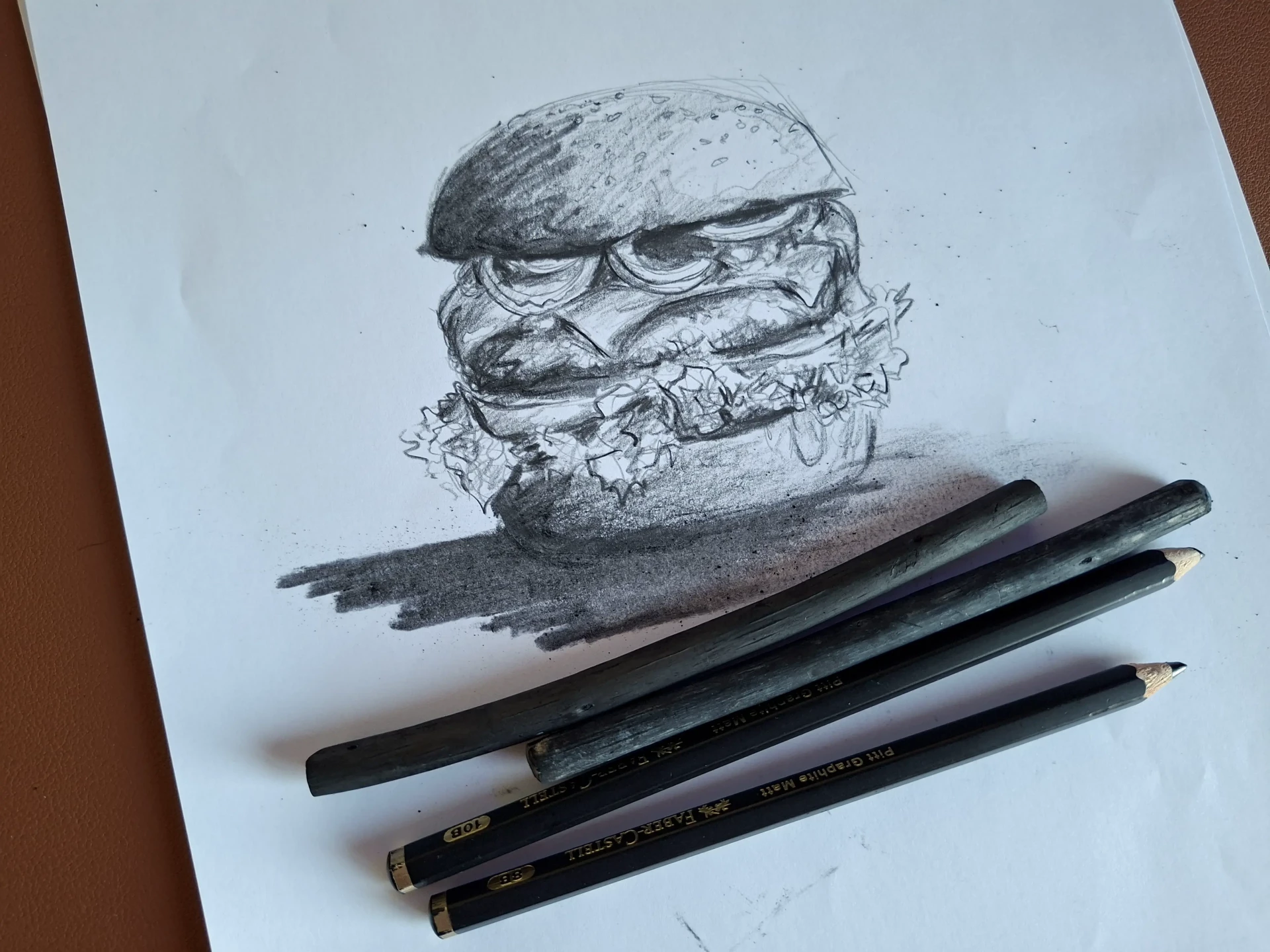
It's perfectly possible to mix graphite and charcoal, but it requires a bit of caution. Most often, we start with graphite to lay out the sketch, then add charcoal, which naturally dominates due to its intensity.
The reverse works less well: graphite slides on a support already saturated with charcoal, which makes mixing difficult and rarely uniform.
Some common mistakes to avoid
1. Pressing too hard (graphite): this creates a metallic sheen and makes erasing difficult.
2. Using charcoal without a fixative: a simple smudge is enough to mess everything up.
3. Drawing with charcoal on too thin paper: the paper must grip, choose a medium grain.
4. Seeking absolute precision with charcoal: it’s not its strength. It is better used for solid forms and volumes.
5. Working with very fine graphite on a large format: you risk a rough-textured drawing or one that is too slow to complete.

Conclusion
Graphite or charcoal? There is no "best" tool. They simply provide two different experiences:
• Graphite is precise, clean, nuanced.
• Charcoal is intense, vibrant, expressive.
One teaches you patience and finesse. The other teaches you movement, light, and the freedom of strokes. It is also possible to alternate between the two: graphite to construct, charcoal for freer strokes.
The most important thing is to listen to what you enjoy drawing... and what you want to feel while drawing.
Editor: Sacha Fatticcioni
Discussion
No comments yet.