
How to Practice Mindful Drawing
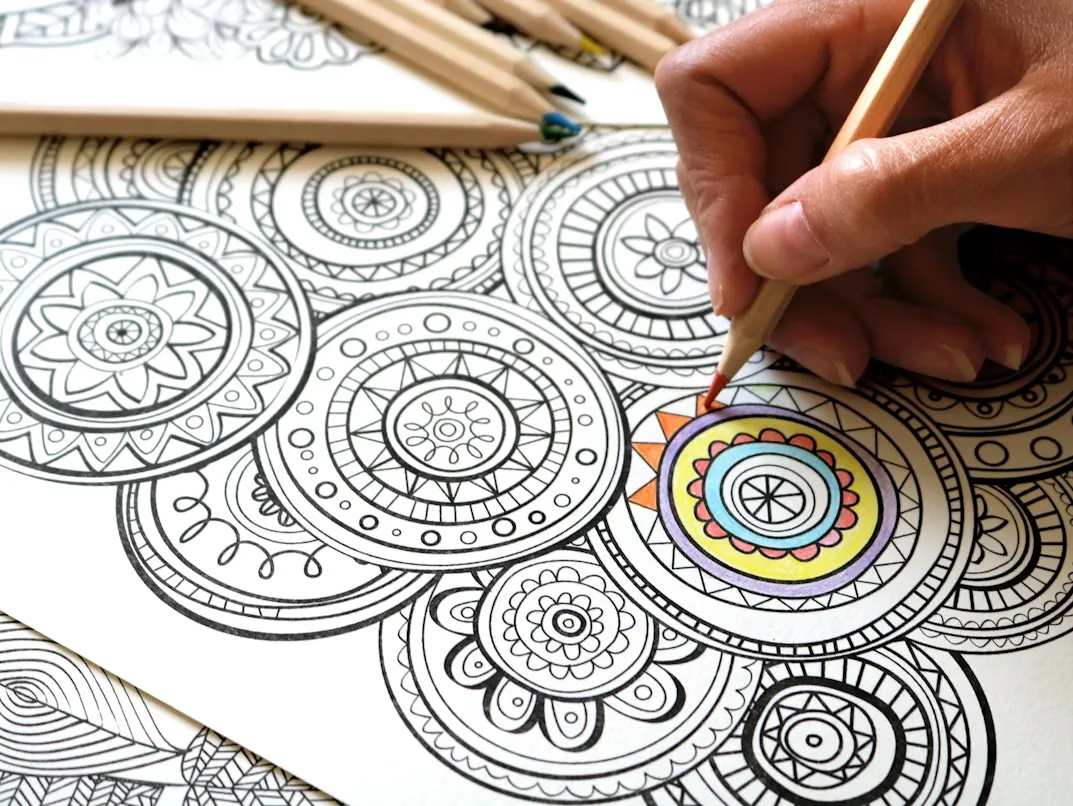
Drawing is a discipline that requires both technique and practice, just like music, theater, or dance. But beyond learning, drawing can also become a true moment of presence in oneself.
Practicing mindful drawing is about slowing down, observing, feeling each movement, and reconnecting with the present moment through creation. More than just an artistic exercise, it is a way to soothe the mind and rediscover the joy of drawing without pressure or performance goals.
In this article, we will explore the benefits of this approach, as well as provide tips and practical exercises to incorporate mindfulness into your drawing practice.
The benefits of mindful drawing
Drawing is a powerful technique for relieving daily stress and finding a space of tranquility. Practiced with mindfulness, it can help you achieve a state of deep calm. Here are its main benefits:
- Returning to the present moment to let go of stress and anxiety.
- Promoting emotional release, as it offers an alternative of non-verbal expression.
- Allowing the flow of consciousness and ideas, which helps to organize your thoughts and daily life.
- Cultivating patience by taking the time to do things.
- Developing your sense of observation to understand things holistically.
- Appreciating the world around you more.
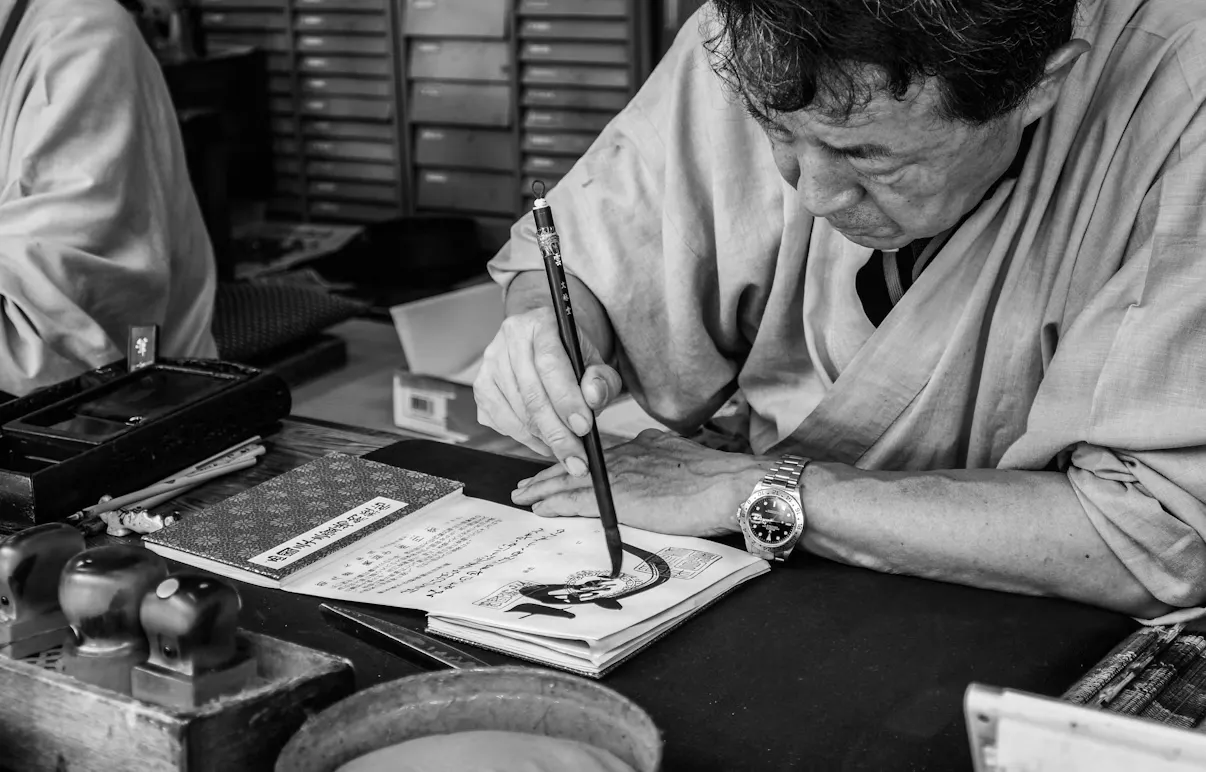
Practical benefits for artists
Since it is an artistic practice, it also brings direct benefits to your creative development. It can help you to:
- Develop your observational skills: you learn to draw what you actually see, rather than what you remember.
- Sharpen your attention to detail: you manage to perceive and differentiate the most subtle elements.
- Free yourself from perfection: you start to find beauty beyond accuracy, which can lead you towards a new and vibrant style.
- Gain fluency: you draw with more confidence, achieving lines free of doubt and hesitation.
- Improve your hand-eye coordination: your accuracy naturally sharpens.
- Rediscover the joy of drawing, leaving behind frustrations and tension.
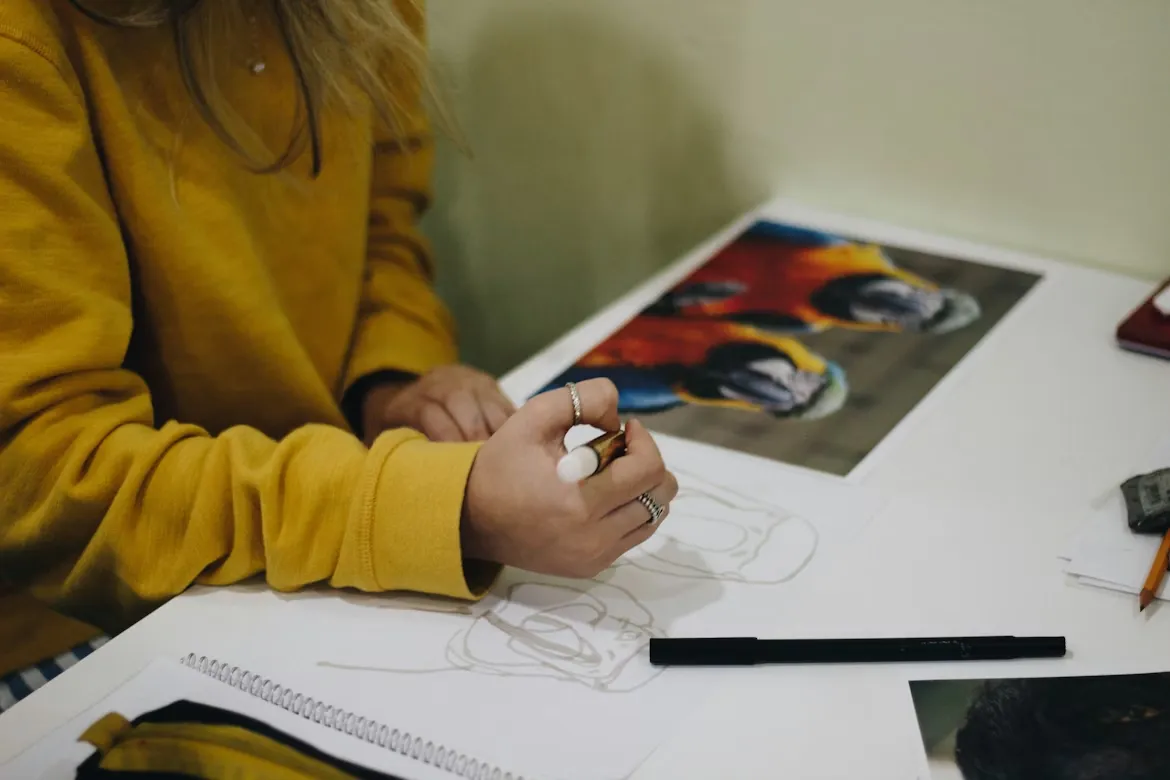
Key principles for practicing mindful drawing
This practice is based on a fundamental principle: focus on the process rather than the outcome. When we draw, we often want to create a beautiful piece of art, but let's forget that for a moment to fully experience the act of drawing, here and now:
- Do not evaluate your work. The result doesn't matter. Draw freely, without thinking about proportions, perspective, or line values.
- Look closely at each detail. When you draw an object, don't look at it as a whole. Focus on a small part and draw exactly what you see.
- Draw while breathing, as if it were a form of meditation, letting your line and your vital rhythm connect.
- Draw one thing at a time. If you are drawing lines, focus solely on that. You can move on to shading or coloring later, but for now, you are immersed in the pure experience of the line.
5 practical exercises to start mindful drawing
Do you want to integrate this approach into your practice? Here are some exercises that will transform the way you experience drawing:
Blind contour drawing
For this exercise, you will need a model and a sheet of paper with a pencil. Begin by drawing the outline of the object, but without looking at your paper. Look only at your model and with close attention, and draw at the same time. Your hand will try to interpret the distances and angles you perceive, while your eyes focus on each detail.
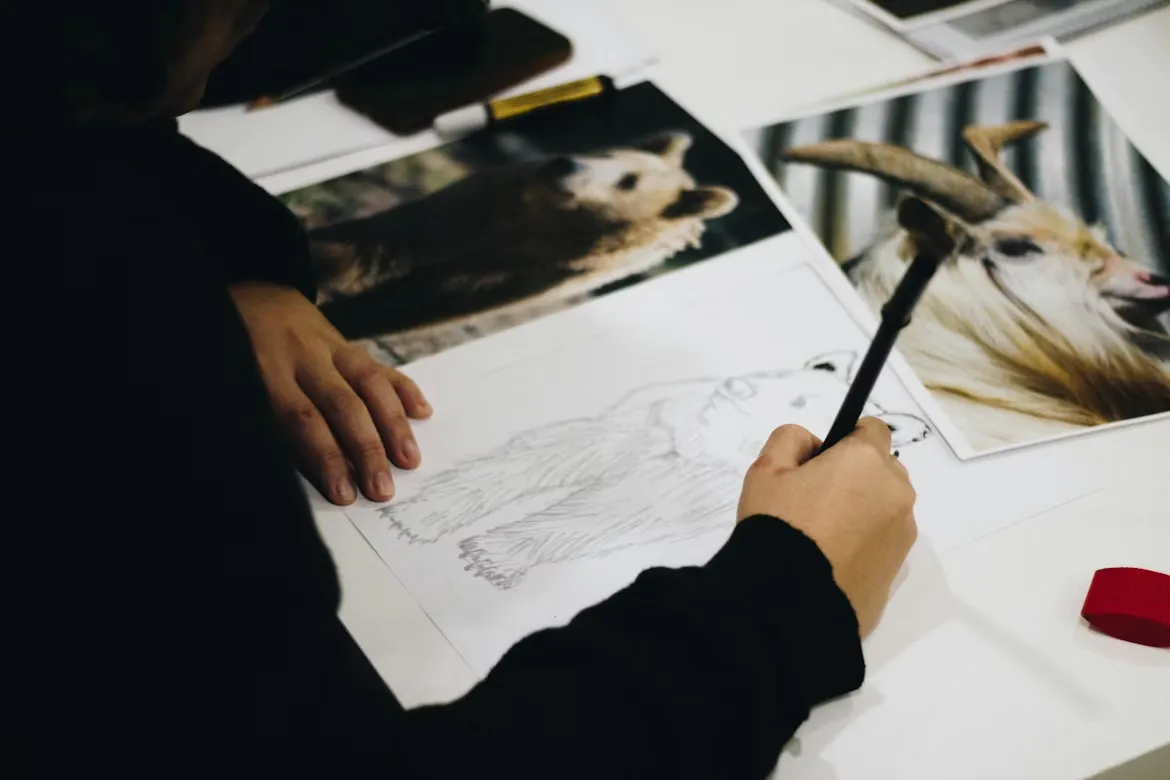
Slow and continuous drawing
Take your pencil and paper, then choose a reference. This time, draw slowly. You can move your eyes between your sketch and the reference, but always maintain an extremely slow and steady pace. This will give you time to adjust your stroke and observe the model in detail.
Draw negative space
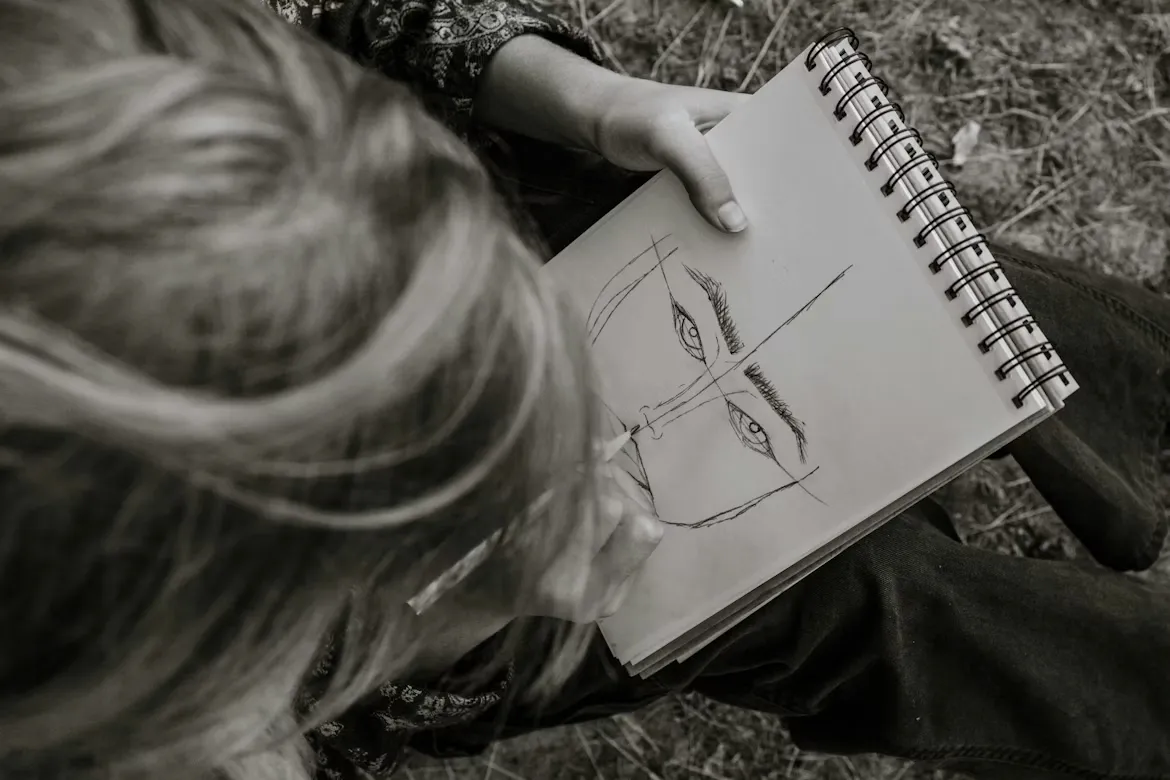
Negative space refers to all the empty areas surrounding the object. Imagine that your object is a black silhouette to be cut out. Then identify the white spaces around it and draw their outlines. You will see the object gradually take shape. Start with a simple object like a cup, then move on to objects with more gaps, like a bouquet of flowers.
Draw quick sketches
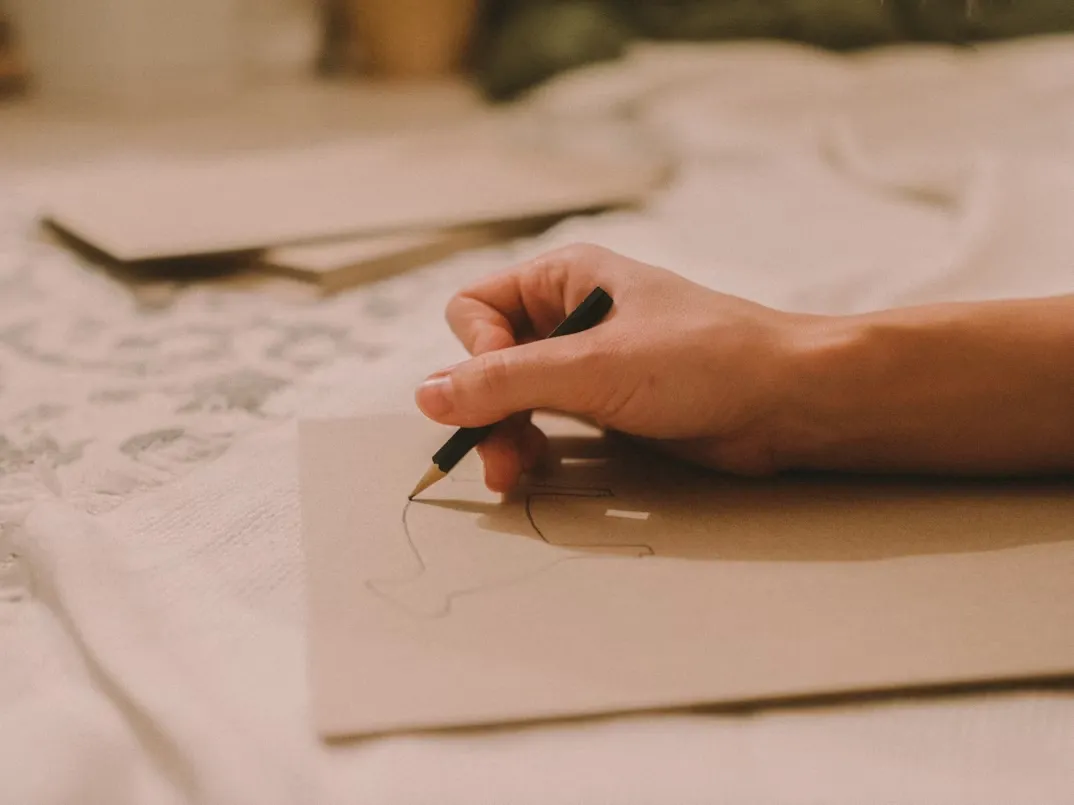
For this exercise, get a timer, a pencil, and some paper. Set it for 30 minutes, and as soon as the timer starts, draw anything that comes to mind. Use references from your surroundings. Here, we are not looking for detail, but the overall picture. Try to capture the essence of the object, then move on to the next one.
Mandalas and colorful patterns
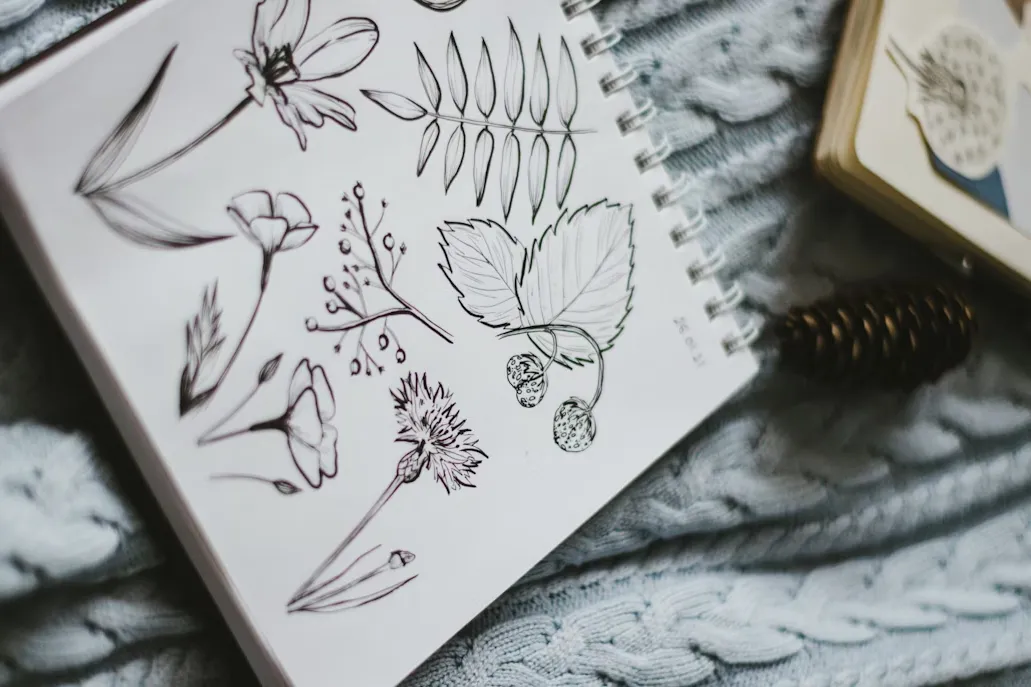
This activity is ideal for training your lines and sense of space. Create your own mandala with varied lines, forming patterns that change from layer to layer without repeating. This will help your brain explore new possibilities in a relaxing way.

As you can see, mindful drawing encourages us to experience drawing in a state of appreciation and presence. It helps us better understand our relationship with this discipline and the benefits it can bring us.
I encourage you to incorporate these exercises into your daily routine as a true meditative practice through drawing.
Discussion
No comments yet.