
What is Op Art?

The 20th century was a crucial period for art, with the emergence of movements that pushed the boundaries of representation. Among them, Op Art stands out: it does not seek to represent the world, but to trick our perception of reality. In this article, we explore its origins, principles, major artists, and evolution towards kinetic art.
Definition of Op Art
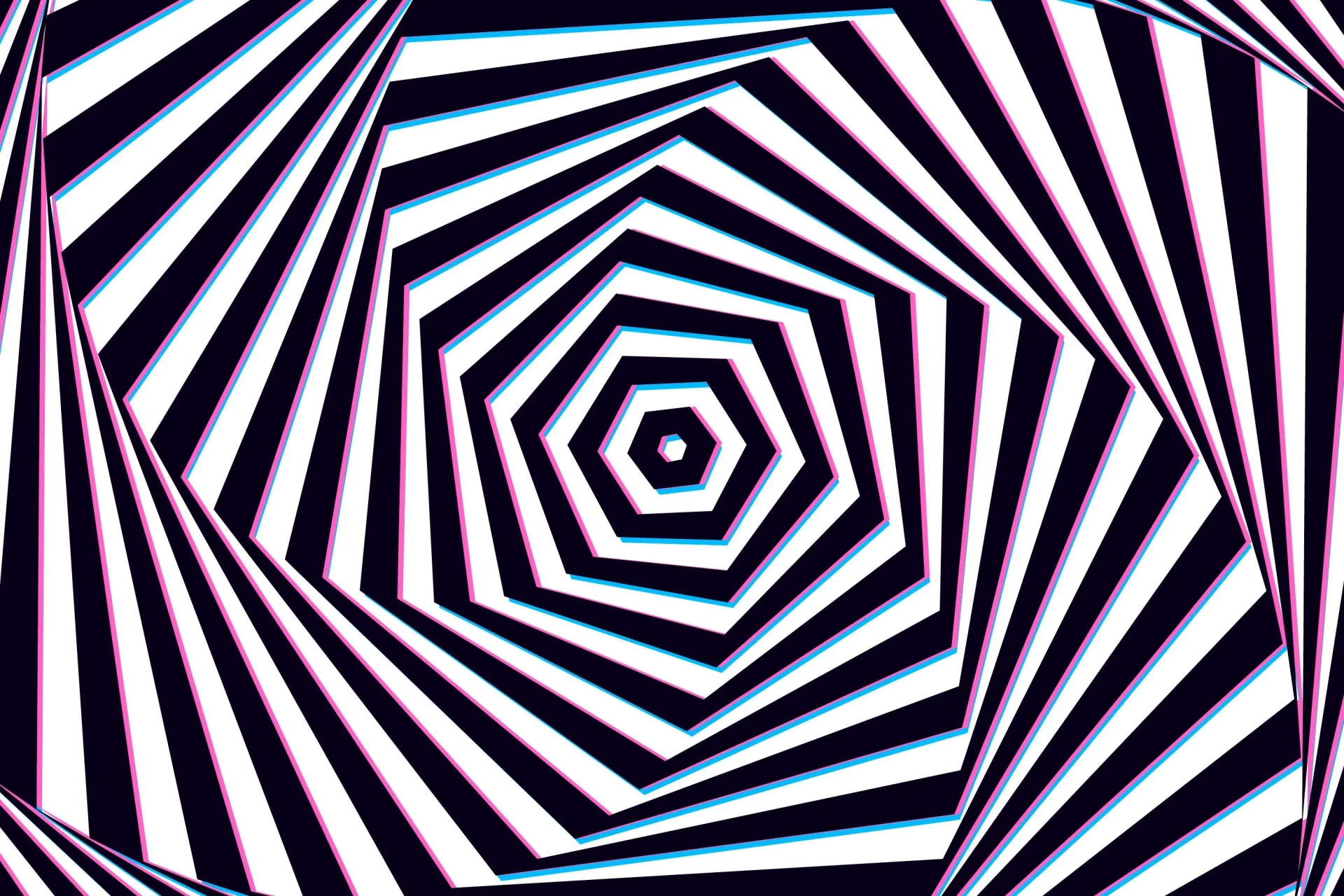
Optical art is based on the principle of illusion. These works deceive our gaze; their composition seeks to alter our perception by making us believe that elements protrude or recede into the canvas, that the image trembles, vibrates, or flickers, or that colors emerge from nowhere.
What makes this movement particularly interesting is that it is entirely based on the science of vision. Op Art artists did not work randomly; they studied the mechanisms of visual perception in order to exploit them better. Each line, each contrast, each pattern repetition was calculated to produce a specific effect on the viewer's retina.
Origins of Op Art
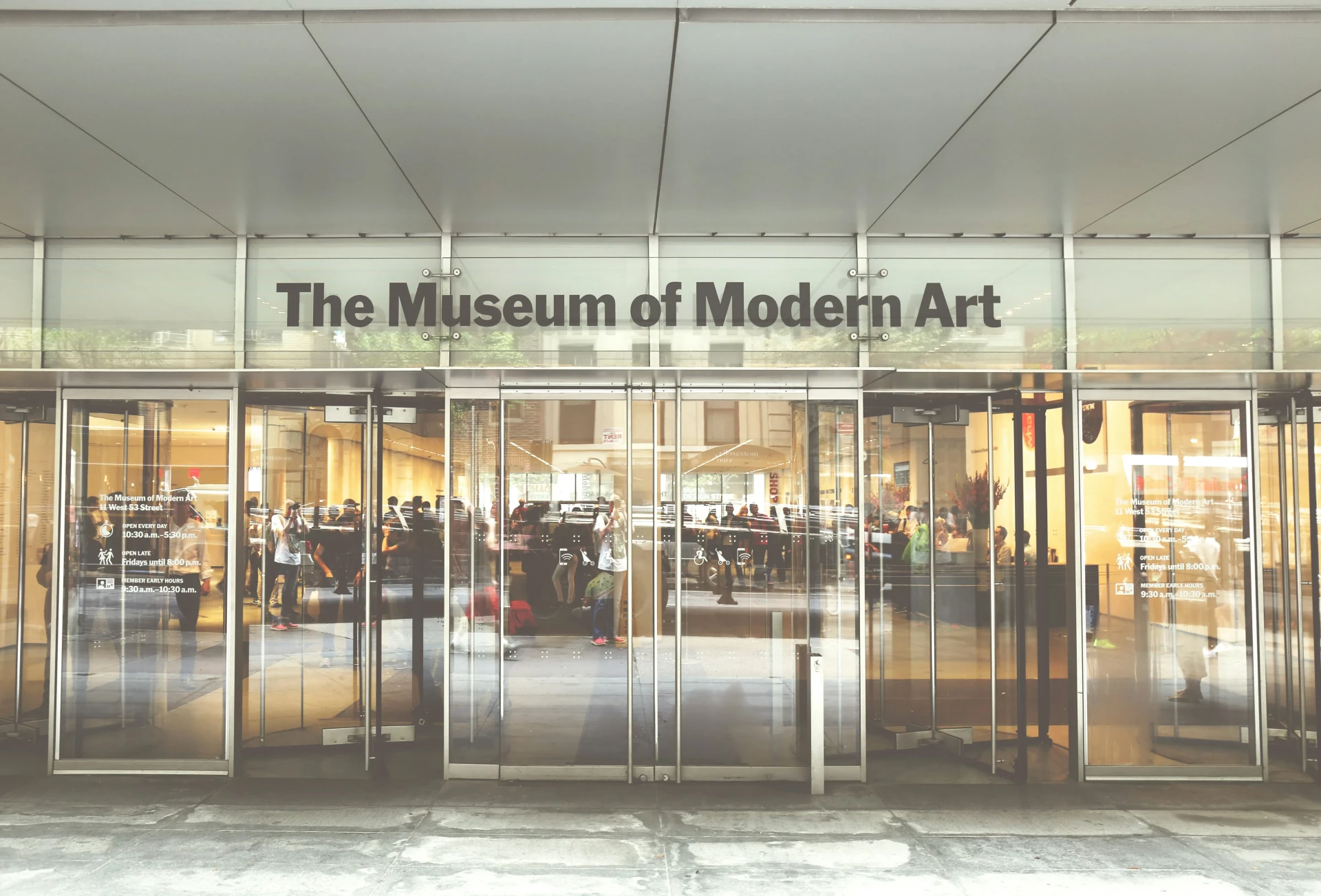
In 1965, MoMA, the Museum of Modern Art in New York, organized an unprecedented exhibition entitled The Responsive Eye. It was the first appearance of Op Art on the international art scene. The works on display amazed the public: in a world of static images, these visual phenomena stimulated everyone's curiosity. The event's archives mention long lines of enthusiastic visitors who wanted to discover this novelty for themselves.
But this story didn’t begin in 1965. Almost twenty years earlier, a graphic designer named Victor Vasarely began conducting his own artistic research, using lines and shapes to play with depth and volume in his paintings.
Ten years before the MoMA exhibition, Vasarely himself inaugurated this avant-garde by establishing the aesthetic and ideological principles of the movement in his 1955 Yellow Manifesto. In it, he stated that:
- The artist must have a scientific mindset; he becomes a researcher who conducts his experiments in relation to the laws of the physical world.
- Color and shape constitute a “plastic unity,” a way of universalizing artistic language and making it accessible to everyone.
- The works must interact with their viewers through the process of observation, and be designed so that they can be mass-produced.
- The works do not depict natural motifs, but rather constitute a tangible experience that is only possible in art.
- The impact is so great that the principles of Op Art are rapidly spreading to the fields of fashion and design, deeply influencing popular culture.
The main representatives of Op Art
Victor Vasarely
A key figure in the movement, he presented works that used a geometric approach and played with the perception of depth in the image.
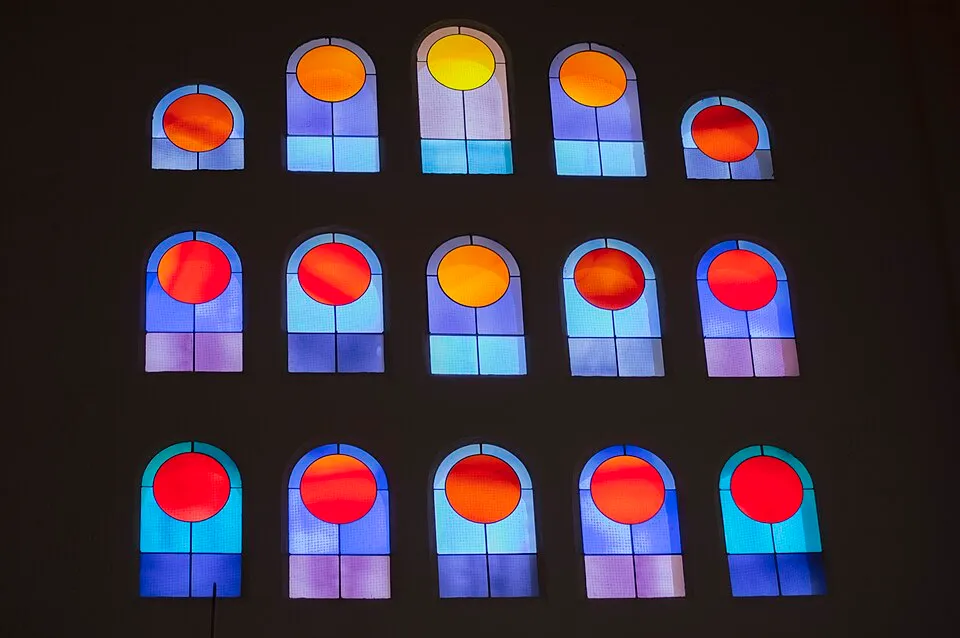
Stained glass windows of the Saint-Francis of Assisi church in Port-Grimaud.
Bridget Riley
Her works, filled with curves and lines, create a dizzying sensation, with compositions that seem to dance hypnotically before the viewer.
Born in England in 1931, Bridget Riley is one of the few women to have held a central position in an artistic avant-garde movement. Her black-and-white works from the 1960s are among the most famous of the genre, but she later introduced color into her practice, opening up new perspectives in the exploration of visual perception.
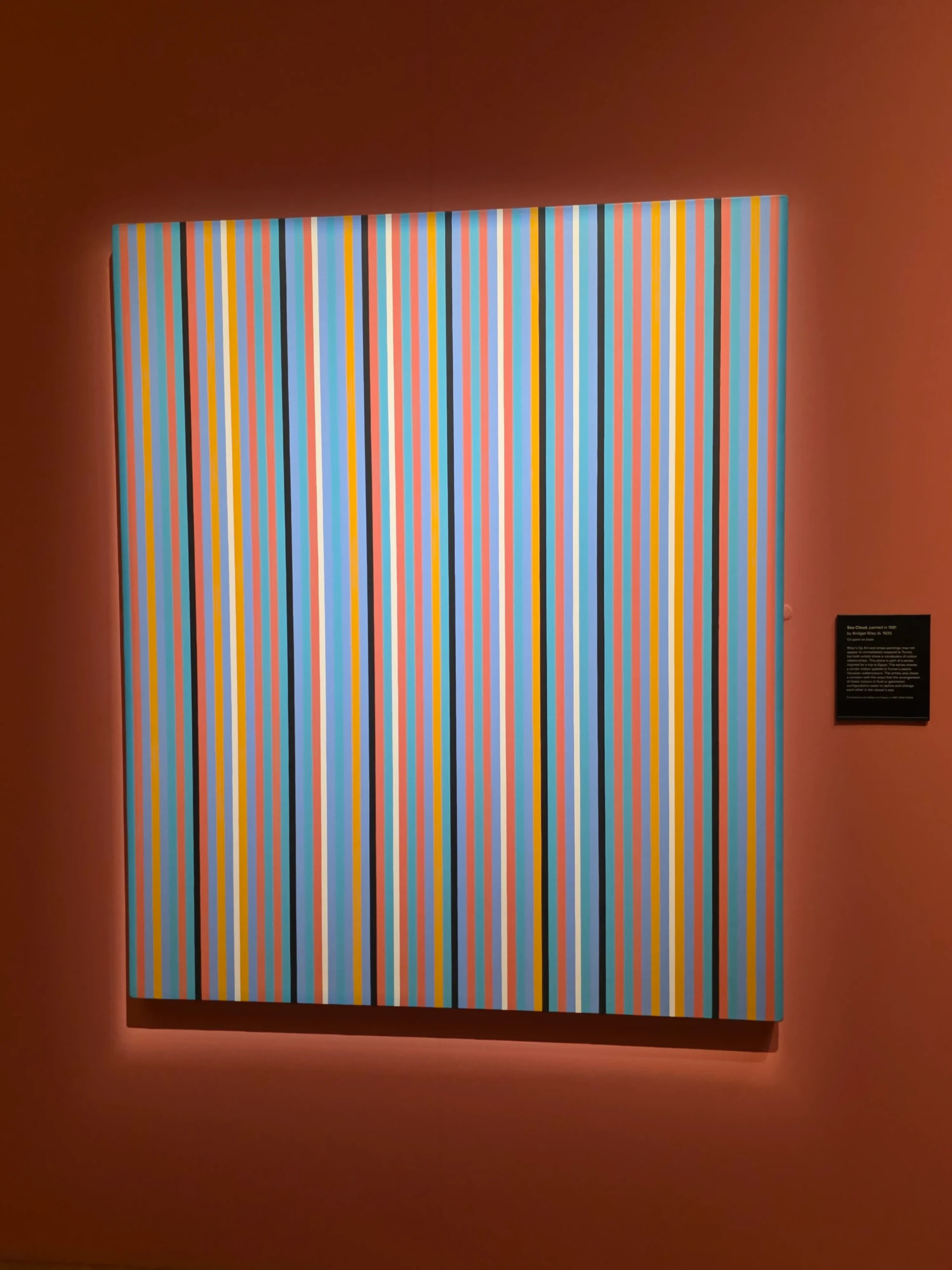
Sea Cloud, 1981
From Op Art to kinetic art
Like any movement, Op Art eventually ran its course and evolved. The explorations of its artists inspired their peers to explore new horizons, giving rise to kinetic art, in which the artwork truly comes to life, whether in relation to the viewer's gaze, through automation mechanisms, or through the forces of nature.
Jesús Rafael Soto
With his installations of floating lines that can be walked through, he literally immersed the viewer in a plastic experience.
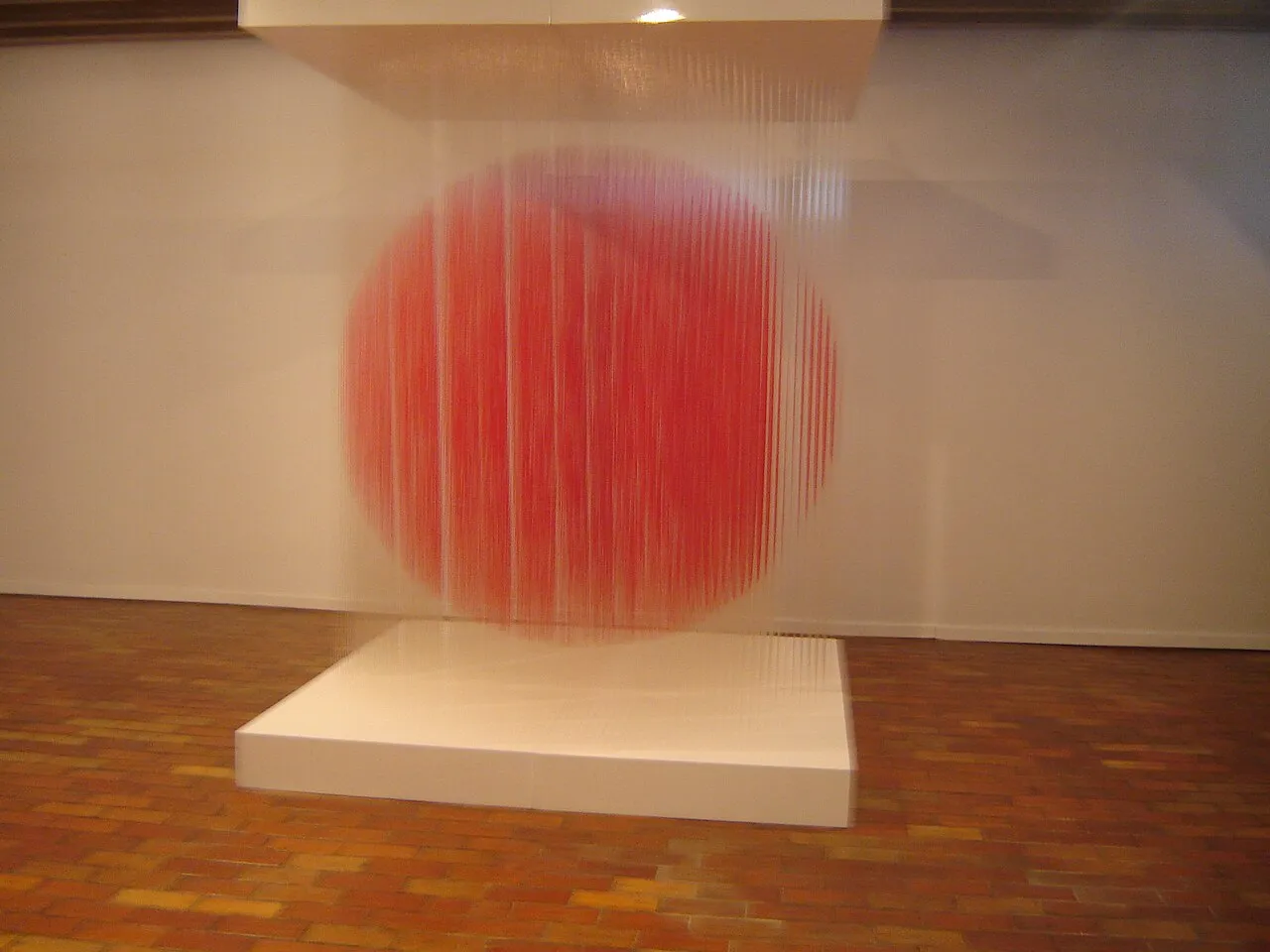
Soto sphere, 1996
Image credit: Soto Sphere, Guillermo Ramos Flamerich, 2006, Wikimedia Commons, CC BY-SA 3.0.
Carlos Cruz-Diez
His works, including paintings, sculptures, and installations, play with the perception of color and how it transforms depending on the viewer’s perspective.
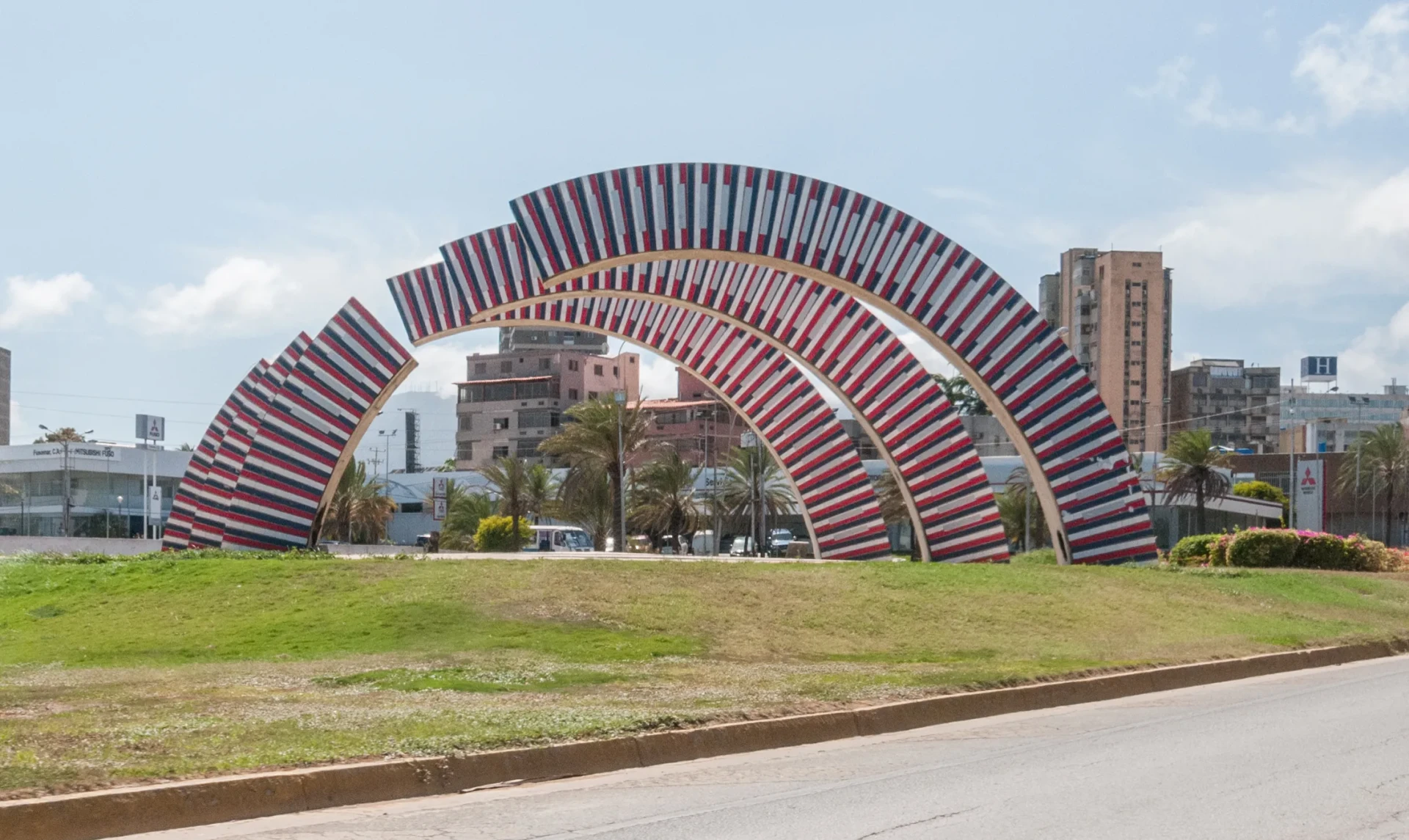
Chromatic Induction Arcs for Margarita, 1997
Op Art is one of those movements that proves that art can be a physical experience as much as a visual one. As you continue to explore the works of these artists, you will see how far their influence extends beyond the walls of museums. And if you want to reproduce some of these works, remember that this is a movement that is meant to be experimented with.

Discussion
It’s magnificent but very unsettling.
Wow, that’s really interesting, thank you very much. It inspires me a lot to delve deeper into this subject and even experiment with it! Thank you very much for choosing this topic.