
What is Sumi-e Painting?

Welcome to this new article dedicated to art and culture. Today, we will explore Sumi-e painting, a technique that makes the most of Chinese ink and shades of gray through a minimalist approach, encouraging us to go back to the basics.
Sumi-e, between art and meditation
When Buddhist monks arrived in medieval Japan from Tang Dynasty China, they brought with them an art form called Sumi-e (墨絵), also known as Suibokuga. The practice was quickly integrated into Zen meditation disciplines: each stroke is drawn with full awareness, as a direct reflection of the painter's state of mind.
No retouching, no hesitation, a single, spontaneous and precise gesture to embody a natural element imbued with symbolism.
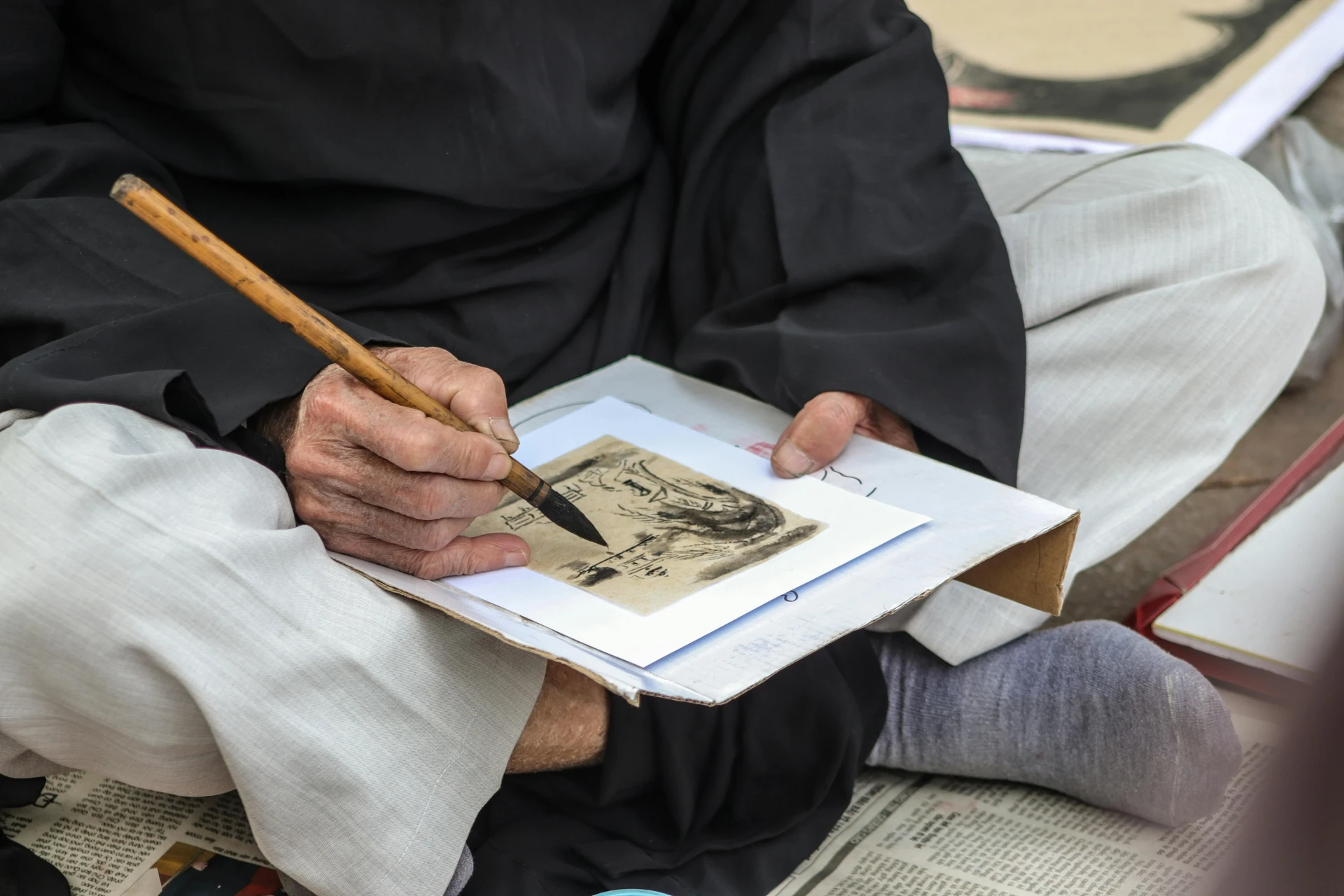
Characteristics of Sumi-e
It is a water-based technique, similar to watercolor, in which the base medium is Chinese ink, made from soot. Its composition allows for the creation of very intense blacks, but it can also be diluted to create transparent gray washes. However, it is not the material that distinguishes Sumi-e; it is the entire concept surrounding it.
- Mastering nuances of gray is enough to create volume, texture, and atmosphere, giving the works an immediately recognizable, evocative quality.
- Emptiness is a central concept in Zen Buddhism, and Sumi-e gives it an essential place. Rather than filling the paper, the technique encourages leaving blank areas that create both atmosphere and light.
- The representation aims to be synthetic rather than descriptive. Economy of line reflects the painter's ability to capture the essence of a subject in a few strokes.
The Four Treasures of Sumi-e
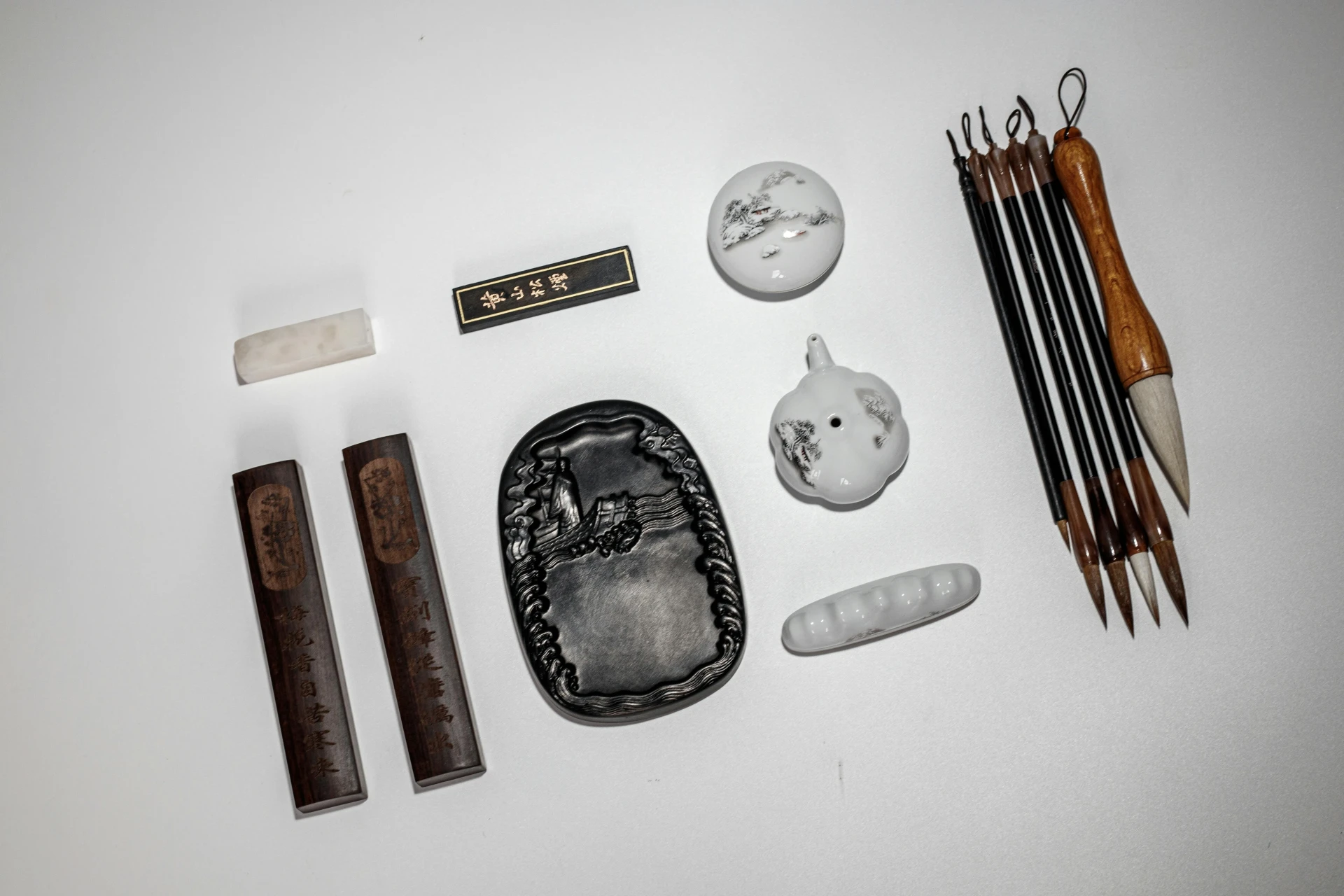
In Sumi-e, the tools are much more than mere utensils. They are true spiritual instruments, passed down from generation to generation by monks seeking enlightenment. In the Zen tradition, they even have a name: "treasures."
Fude: a brush with a bamboo handle and animal bristles, the brush head of which is designed to absorb a large amount of water and ink.
Sumi ink: this comes in the form of a solid ink stick made from vegetable soot and animal glue.
Suzuri: inkstone, often decorated with engravings, on which the Sumi is ground to obtain ink.
Kami: often called rice paper, it is actually a traditional paper made from plant fibers, known for its high porosity.
Mastering the “Four Gentlemen” (Four Noble Plants).
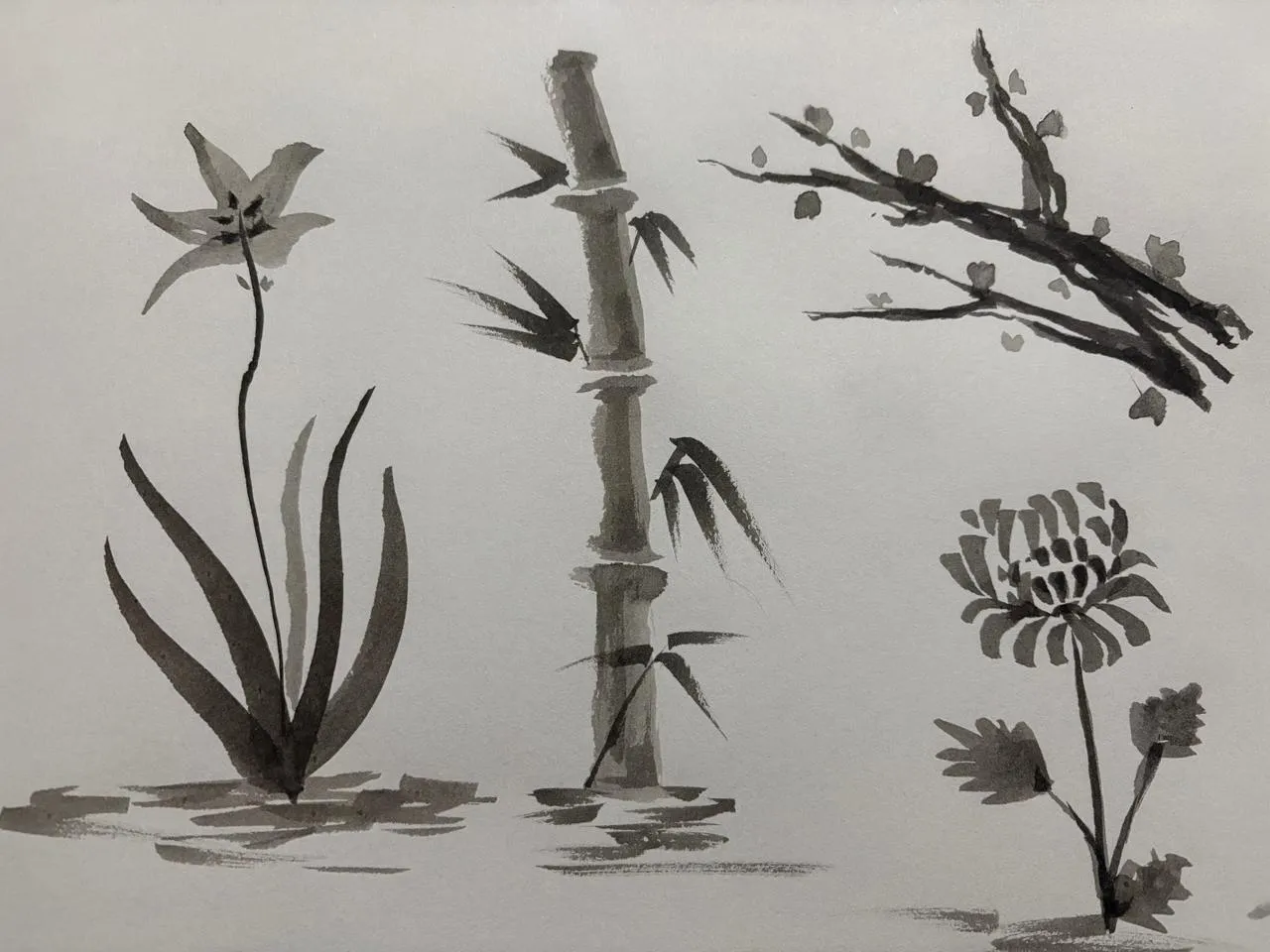
The traditional exercises of Sumi-e are as poetic as the philosophy that underlies it. Rather than repeating strokes randomly on practice boards, each gesture is learned through a botanical specimen to which it naturally corresponds.
Spring orchid
The ideal example for working with long, tapering lines, those that give rise to petals and delicate leaves that ripple in the wind.
Summer bamboo
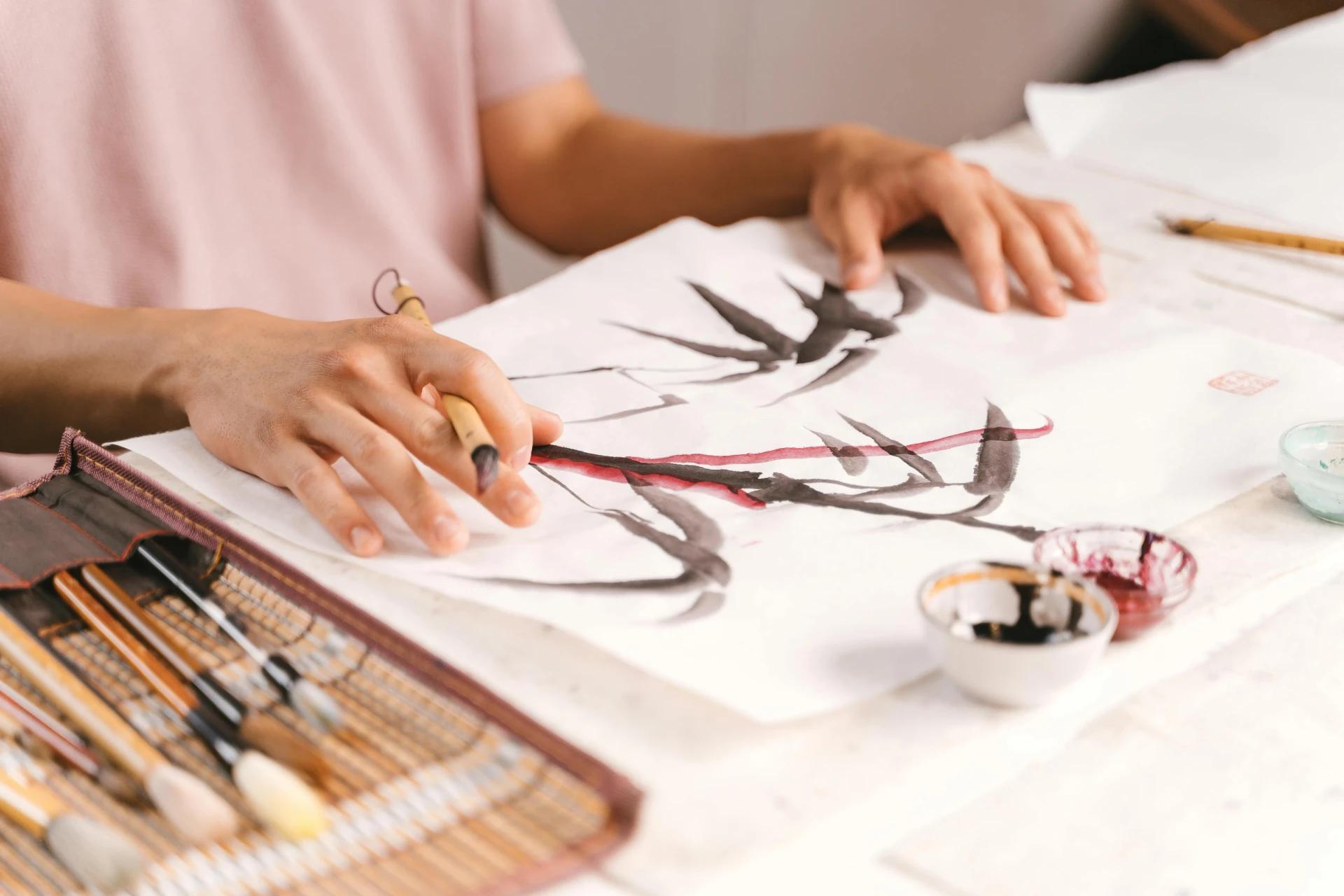
A symbol of strength and flexibility, this teaches the broad stroke, executed with the full width of the brush, then finished dry to define the sections. It also encourages painting quickly and with confidence.
Autumn chrysanthemum
To explore shades of gray, this flower guides you toward a series of short, curved lines that are repeated, each slightly different from the previous one.
Winter-blooming plum tree
To learn how to control the brush’s moisture level: draw the old, gnarled branches with a nearly dry brush, then take advantage of the few moments of moisture to apply small dots, creating a contrasting softness.
The great masters of Sumi-e
As we have seen previously, Sumi-e arrived in Japan in the baggage of Buddhist monks who came from China, the very same monks who laid the foundations for the Zen tradition. The technique pursues a minimalist goal: to capture the essence of a subject with as few strokes as possible. Here are some masters associated with this tradition.
Sesshū Tōyō (1420–1506)
A grand master of landscape painting in Japan, he developed a style characterized by geometric forms of great power. His travels in China enabled him to absorb both traditions and blend them into a unique pictorial language.
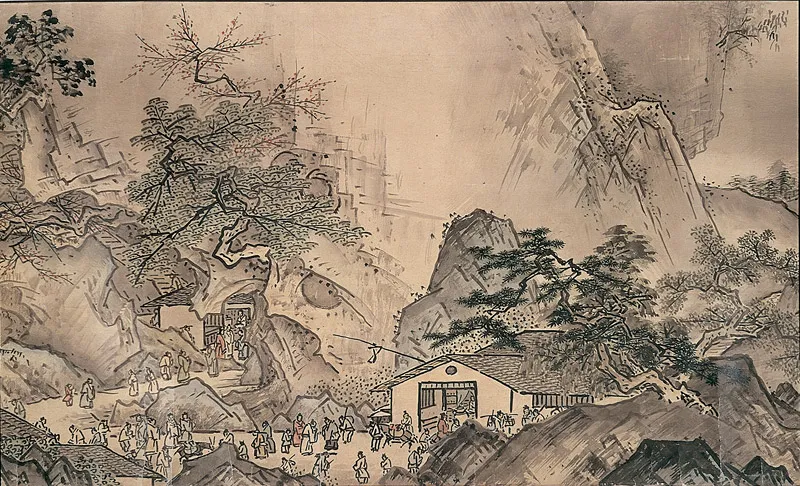
“Landscape of the Four Seasons – Sesshū Tōyō”
Tenshō Shūbun (late 14th century–1460)
A Zen monk, Shūbun drew his inspiration from the high mountains shrouded in mist to create vast, contemplative landscapes. His mastery laid the foundation for the classical canon of Japanese landscape painting, a reference for the entire tradition that followed.
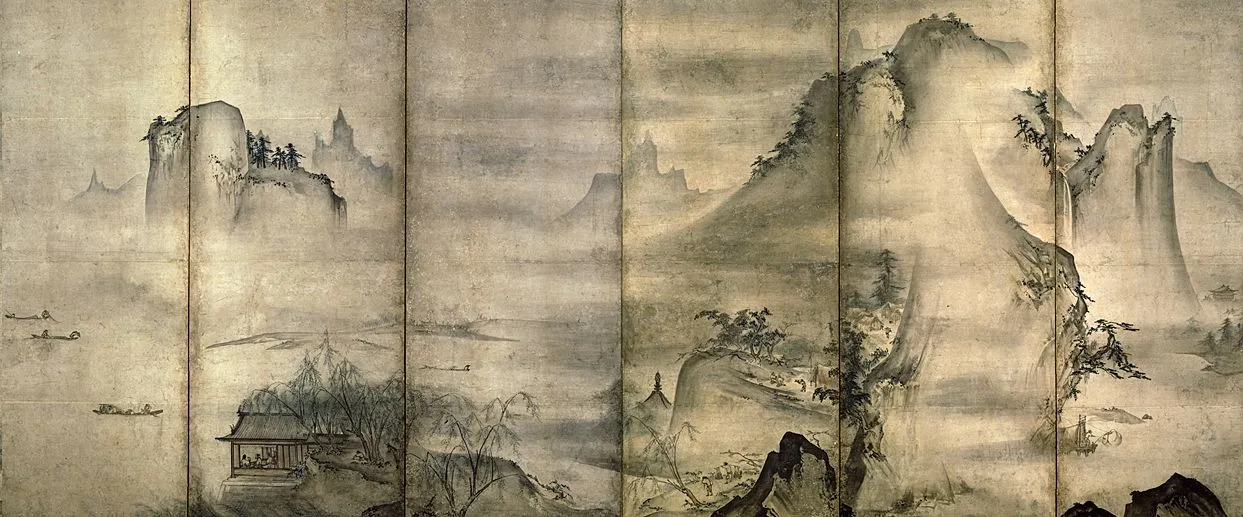
“Landscape of the Four Seasons - Tenshō Shūbun”
Miyamoto Musashi (1584–1645)
His name evokes the legendary samurai above all else, but Musashi was also a painter. The precision he brought to his swordplay with a katana is reflected in his works, where he depicts birds and wild animals with striking economy of line. “Cormorant”
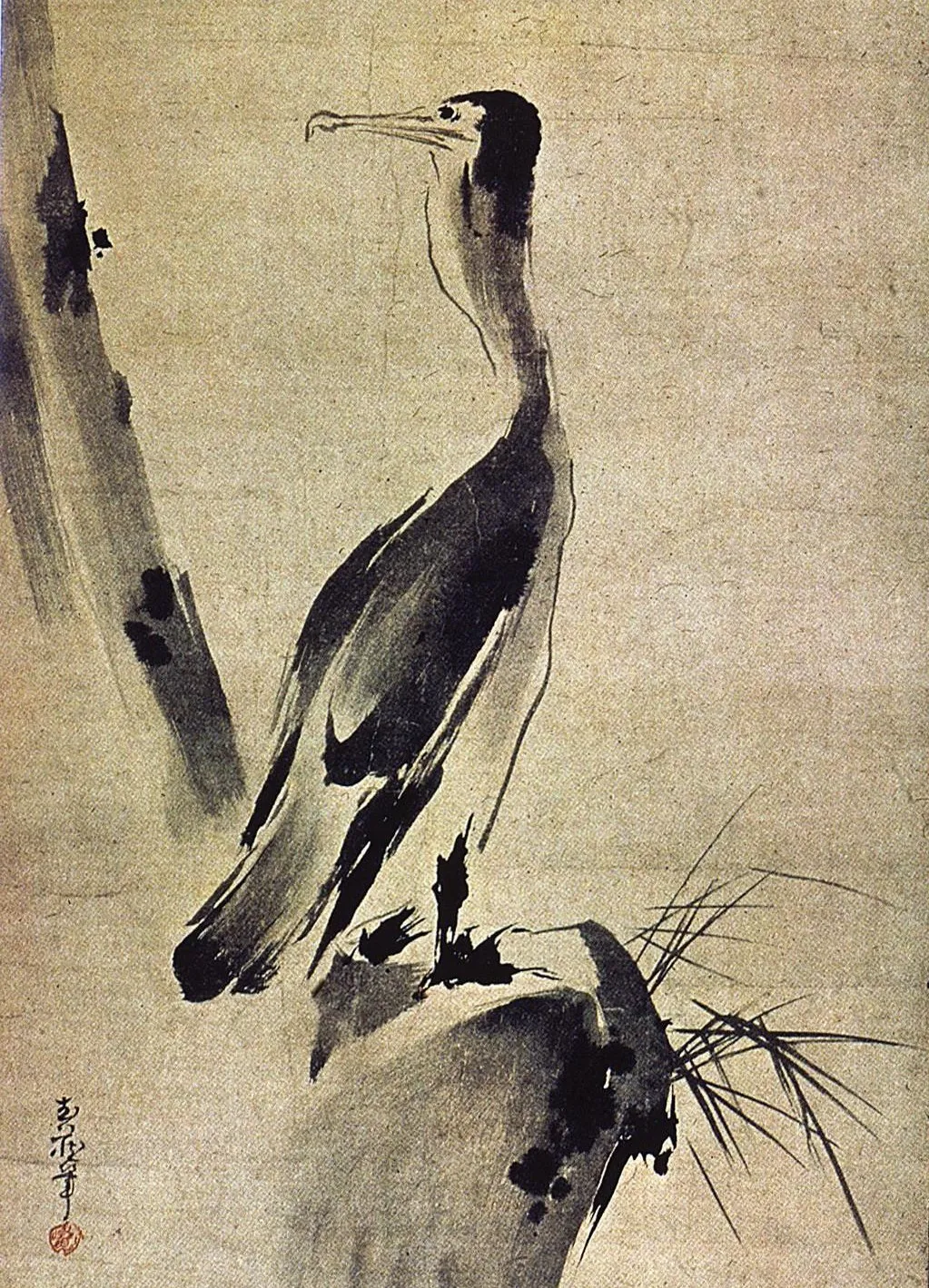
“Cormorant - Miyamoto Musashi”
This concludes our guide to Sumi-e. This approach reminds us that a single, well-executed line is better than a hundred rough lines. There is no need to pile on layers and details: often, focusing on the quality of the execution is enough to create an expressive representation.
Discussion
A huge thank you.
A very nice discovery for me, as I really like Chinese ink.
Butterfly