
Watercolor Water Measurement
Hello everyone, today we're going to cover a topic that often makes all the difference in watercolor painting: water control. It's one of the most delicate aspects to master, but also one of the most important. Finding the right balance means understanding how water and pigment work together.
Understanding the Role of Water in Watercolor Painting
In watercolor, water is not just a mere diluent: it is the true engine of the medium.
She carries the pigment, creates gradients, blends, transparency effects, and textures. By modulating the amount of water, you control the color density, its brightness, and its behavior on paper.
Water can be thought of as a "conductor": it sets the tempo. Too much water drowns the melody. Too little makes it dry and stiff. Finding the right balance is about learning to listen to this dialogue between color and water.
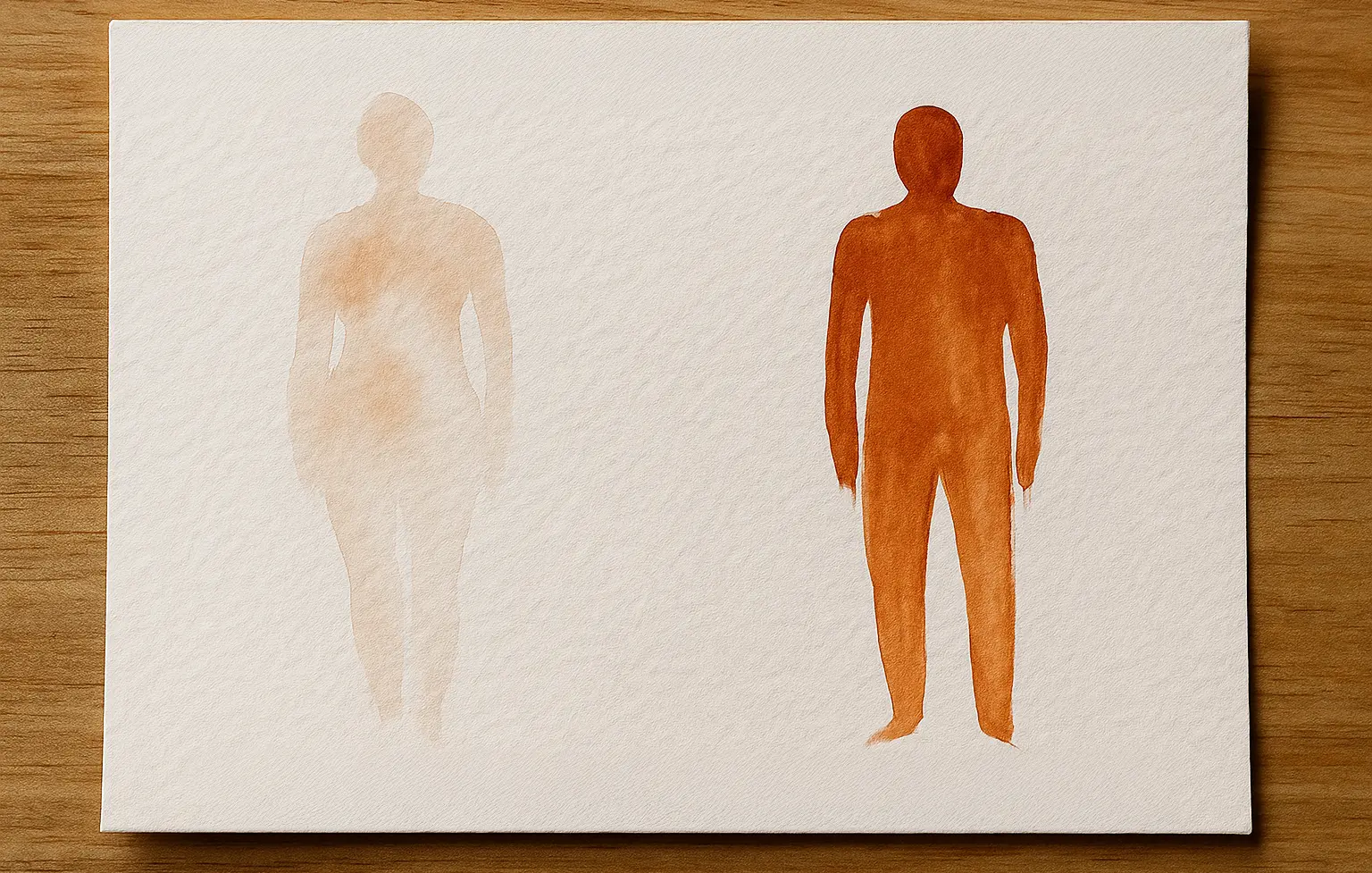
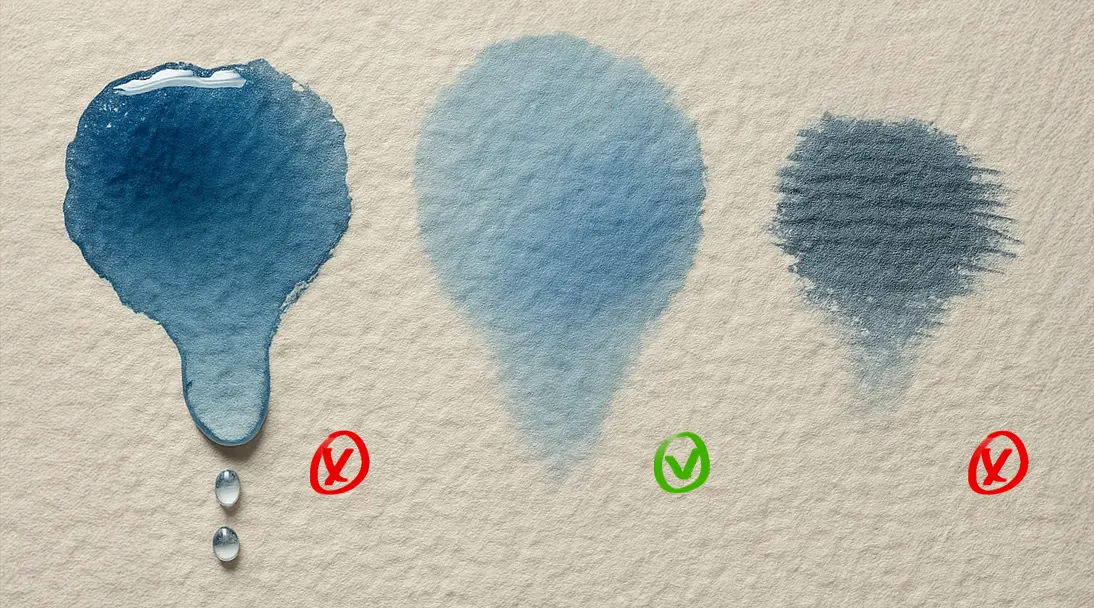
In the illustration below, you can see that the drawing on the left is too diluted, while the one on the right is not diluted enough. When a watercolor is too diluted, it loses pigment; conversely, if it is not diluted enough, it acquires a paint-like quality similar to acrylic or gouache with opaque colors but appears very dry.
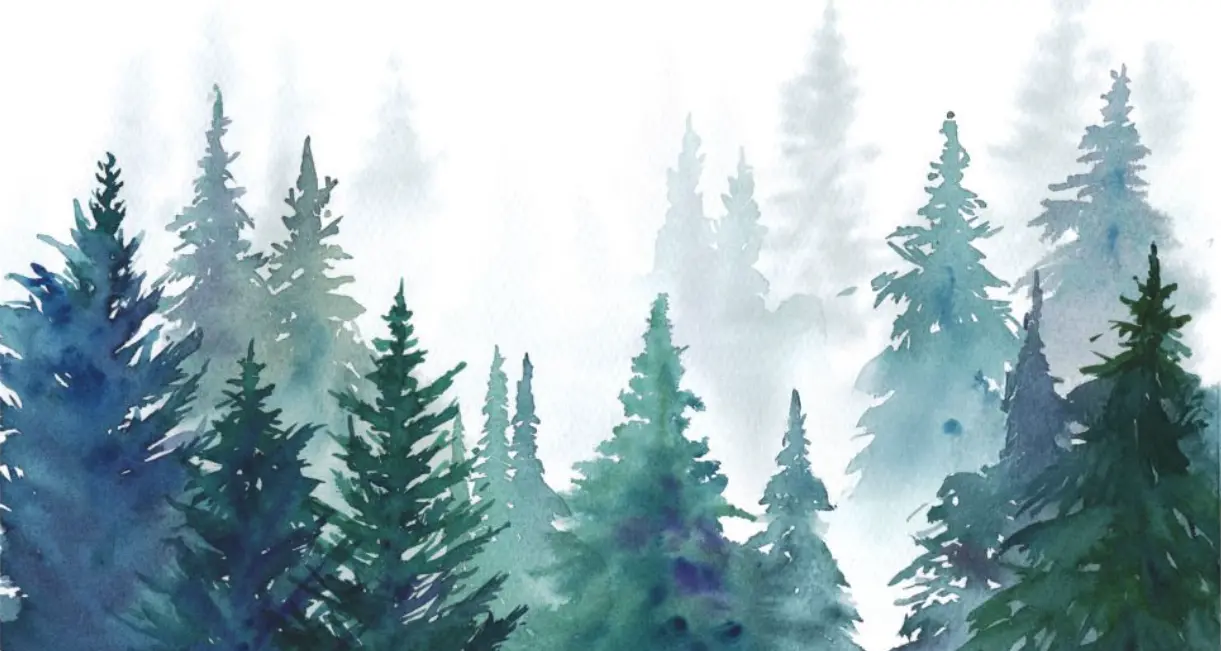
It is this balance that gives watercolor its beauty: a bright yet light color, luminous without being opaque. By working with well-diluted washes, you can layer repeatedly, create depth, shades, and that impression of light which seems to come from the paper itself.
Here is an example of a perfectly diluted watercolor where the colors are bright yet the transparency is still visible.
Learn to manage the amount of water on the brush
The first reflex to adopt is to learn to feel the amount of water on your brush. When you start out, there's often a tendency to overload it, which makes the color uncontrollable and the paper quickly soaked. It's important to find the right balance between a saturated brush (water running off) and a wrung-out brush (too dry to properly spread the color).
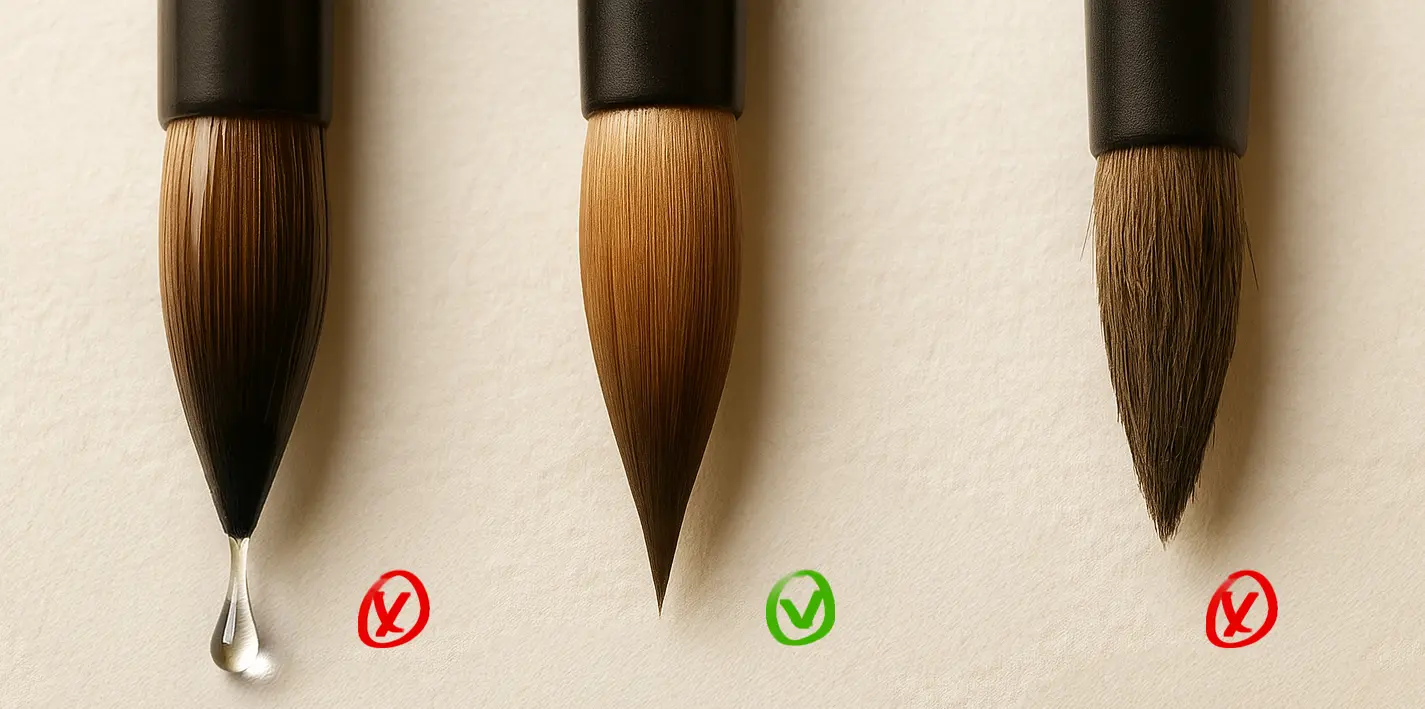
A simple way to assess this dosage is to observe the brush's brightness.
If the tip shines excessively and a drop forms at its base, there is too much water.
If, on the other hand, the tip appears dull, without reflections, the brush is too dry.
The ideal is a soft shine, like a light, uniform film of water on the fur.
Do a small test on a piece of scrap paper. Dip your brush in water, then lightly tap it on a sponge or the edge of the pot. Then place the tip on the paper and observe:
If the color immediately spreads into a wide puddle, you have too much water.
If it doesn't spread much, you don't have enough.
Look for that moment when the color spreads slowly, gently, yet remains controlled: that's when the dosage is right.
The behavior of water on paper
Not all papers absorb water in the same way. A 100% cotton paper will retain water for longer and allow for more gradual blending. A cellulose paper, on the other hand, will dry faster, leaving less time to work on transitions.
The grain of the paper also plays a role. A fine or rough grain allows the water to flow differently: the more textured the paper, the more the pigments cling in the crevices, creating natural effects.
Tip: If your paper dries too quickly, lightly spray water on the area to be reworked with a sprayer. This will give you a few extra seconds to smooth out transitions without soaking the sheet.
Manage the brush moment
The moment you place your brush on the paper is as important as the amount of water.
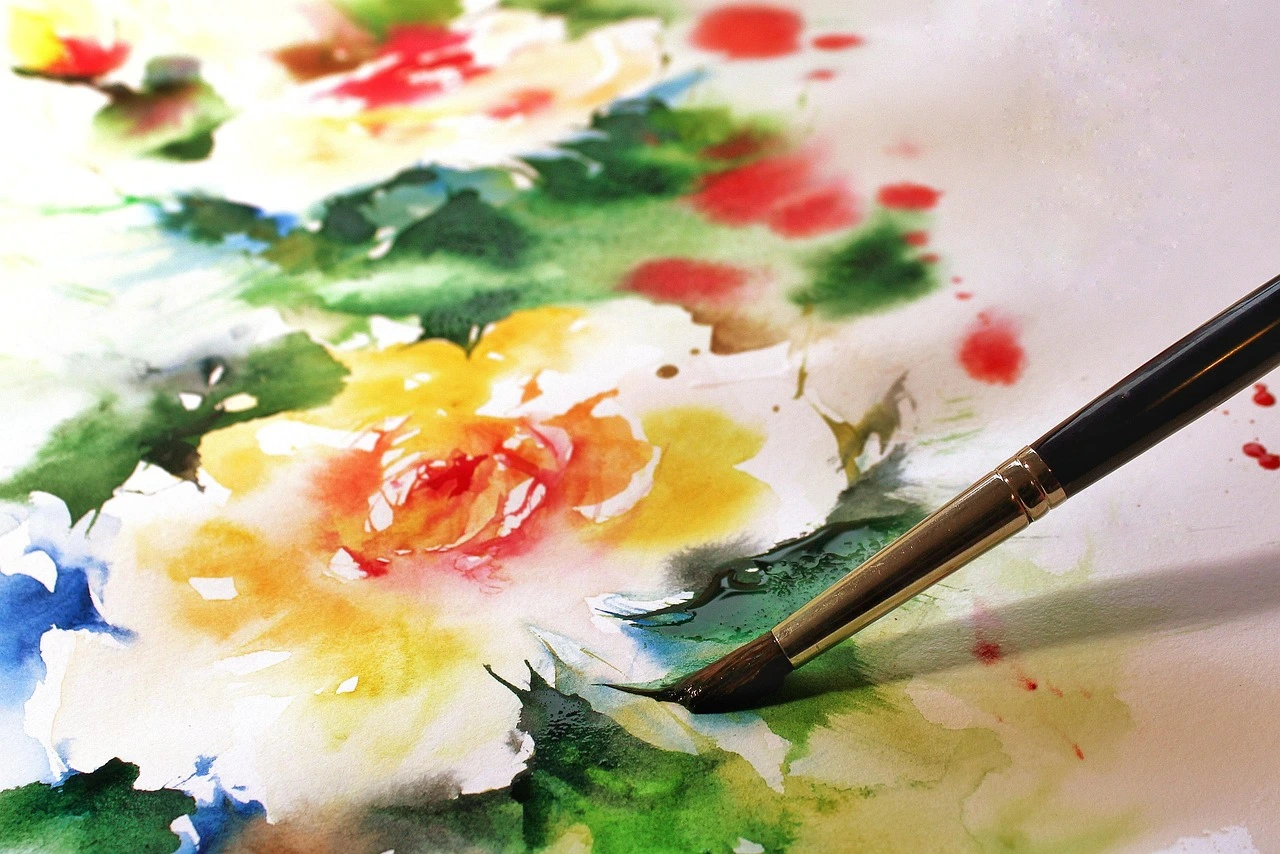
On wet paper, color spreads freely: it's perfect for skies, backgrounds, and light atmospheres.
On wet paper, you have partial control: the edges blend smoothly, creating subtle transitions.
On dry paper, the color stays sharp, precise, perfect for details or finishing touches.
Knowing the condition of your paper is learning to work with time. Watercolor is a dance between the brush and drying: neither too early nor too late.
Find your own balance
Every watercolorist develops over time their own relationship with water. Some like very fluid washes, almost unpredictable, while others prefer dry and precise textures.
The most important thing is to experiment, observe, and feel.
Take the time to test your brushes, papers and pigments. Some absorb or retain water differently. It is only through practice that you will recognize the perfect moment, when the color glides perfectly without overflowing.
In conclusion, mastering the water ratio requires a bit of practice, but it's what gives watercolor its magic. Over time, you will instinctively find the perfect balance between water and pigment.
And if you want to go further, the watercolor course will guide you step by step to understand color, washes, and layering, so you can paint with lightness and confidence.
Writer and Illustrator: Chloé Pouteau
Merci pour cet article clair et pratique
superbe ! en plus j'aime trop l'aquarelle !!