
When to Stop Working on Your Drawing
Hello again! Today, I welcome you to an article where we will learn how to decide when our drawing is finished. I know this has happened to you before: sometimes, after spending several hours on a drawing, we think it would be good to add or remove certain elements, at the risk of spoiling the final piece.
Today, we will learn how to prevent this through a few simple tips.
Balanced composition: Why "less is more"
It is completely natural to feel excitement when we create. Inspiration overwhelms us and pushes us to fill our drawing with creativity. However, it is easy to lose track and end up overloading the artwork without realizing it. Keep in mind that "less is more," as a piece that breathes can be more striking than an overly busy composition.
When to stop drawing: recognize the signs
Here are some observations that will help you develop a more mindful practice, enabling you to identify the right moments to assess your drawing.
Balance of elements in the composition
When composing your image, it is important to identify the elements you want to incorporate, but also to recognize the moment when the balance of the drawing may be lost. Therefore, keep the following points in mind:
Add only elements that are useful to the composition
Before adding a new element, ask yourself if it truly adds something to the image or if it merely distracts. Each element must contribute to the overall view and interpretation of the piece.
Understanding the importance of each element
Some details may seem decorative, but they play a real role in the narrative. Birds in the sky, for example, can simply enrich the setting, but if the character is looking at them, they then become an important element of the scene.
Highlight the main subject
The focal point must remain clearly identifiable. If the eye gets lost among too many details, it might be helpful to reduce some textures, details, or saturation in order to restore a visual hierarchy to the drawing.
Let the composition breathe
Empty spaces play an essential role in the balance of an image. A vast sky or more streamlined areas bring a sense of lightness and allow the eye to move more easily across the composition.
Oversaturation of colors and shadows
An excess of shadows or colors can impair the overall view of the artwork. I therefore recommend progressing gradually, building up tones in layers and using contrasts subtly. Also consider the following points:
Do you feel like your drawing looks flat?
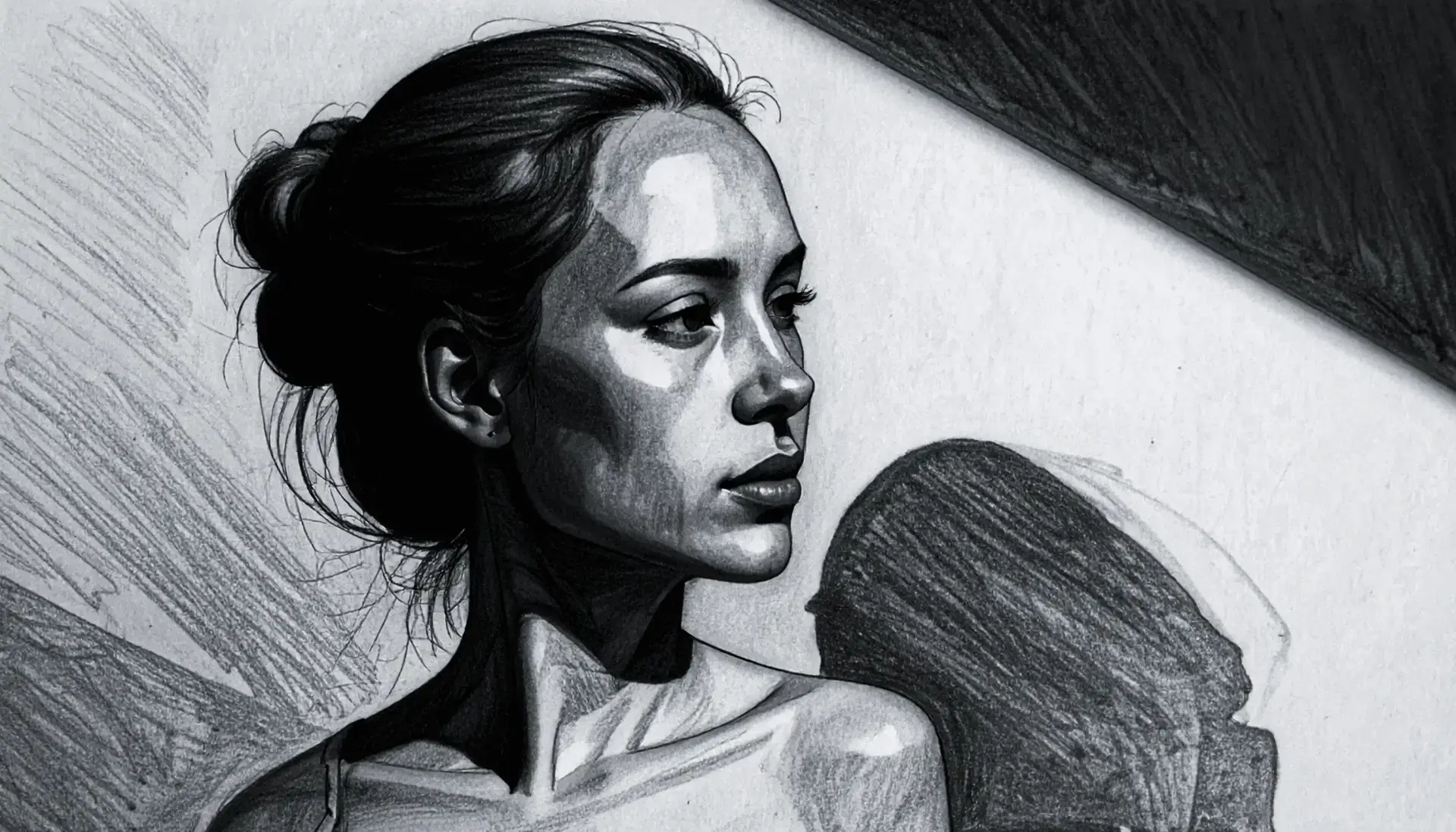
Shadows that are too dark can crush the forms and make the depth effect disappear. To avoid this, start with light tones, then gradually darken with light layers to create more natural transitions.
Dull or lackluster colors
When a color is overworked, it can lose saturation and become grayish or "dirty." Therefore, take the time to apply the color in layers to preserve its brightness.
Respect the paper's limits to preserve your drawing
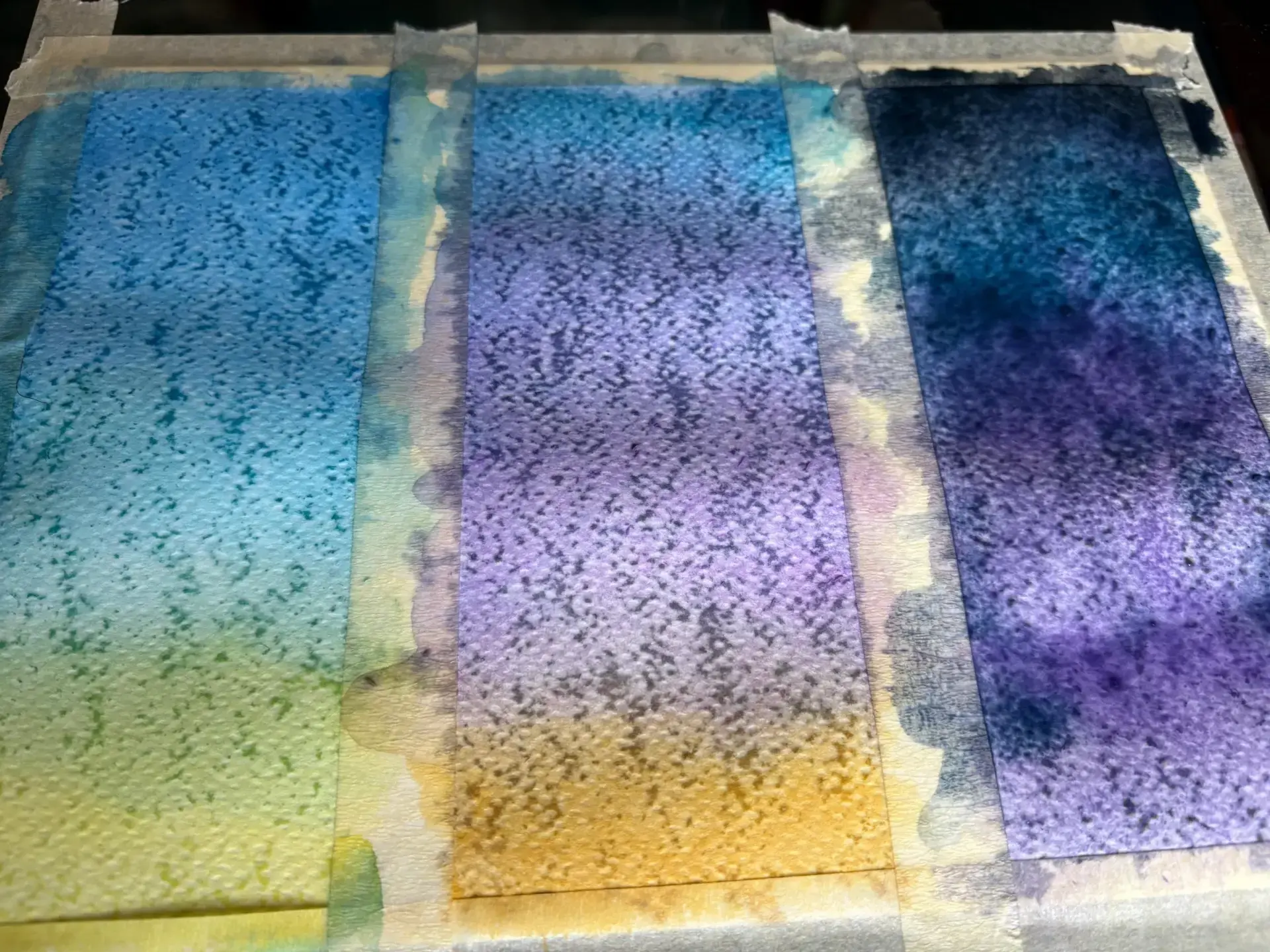
When we draw or paint, we are in contact with the surface on which we work. We are not just adding color: by repeatedly running the pencil over it, we also wear down the paper fibers. We can even cause more significant damage by erasing too often. Even with high-quality paper, it is therefore important to observe it carefully in order to avoid damaging your drawing. Consider the following observations:
Do you notice any small bobbles or residue?
With too much humidity or by excessively rubbing with an eraser, the fibers of the paper can start to get damaged. When small pieces start to come off, it means that the surface is already weakened. Therefore, avoid reworking this area.
A bright, smooth, reflective area
You probably flattened the texture of the paper by making it too smooth. The surface will then no longer be able to properly retain the pigments, which will prevent the colors from applying well.
How to objectively evaluate your drawing before finalizing it
I will now give you some tips on how to objectively analyze your drawing, so that you can make the right decisions at the right time and know when it is better to stop:
- From time to time, squint your eyes to observe the quality of the tones. This will enable you to see if the work is oversaturated.
- Step back from your drawing sometimes. With enough distance, you will be able to see it as a whole piece.
- Look at your drawing in a mirror. This new perspective will enable your brain to process the image differently, revealing proportion errors that it had a tendency to unconsciously ignore.
- Put your drawing aside for one or more days. When you return to it, you will then be able to observe it with more perspective.
- Take a black and white photo. It’s a great way to check if the values in your drawing are well balanced.

And so we come to the end of today’s article. I hope you found it informative and useful, and that next time you create a drawing, you will be able to evaluate it with more perspective in order to achieve a result that you're happy with.
Remember to maintain a clear and balanced composition, keeping only the elements that are truly necessary. Also, add layers with patience to achieve the right contrasts and tones, without overdoing it. And of course, respect the limits of your materials.
These three tips can make all the difference in creating successful artwork.
Discussion
Thank you for the advice; I always try to add little details, but sometimes I tell myself to stop, that’s enough because I’ve done too much. The little tips are good advice.
Thank you for your advice. It’s true that it can be hard to stop sometimes. Great idea to look at your drawing in a mirror.
Thank you for all this information. Indeed, I may have a tendency not to focus on the essentials and to include too much… an area for improvement!