
How to Draw a Cheetah
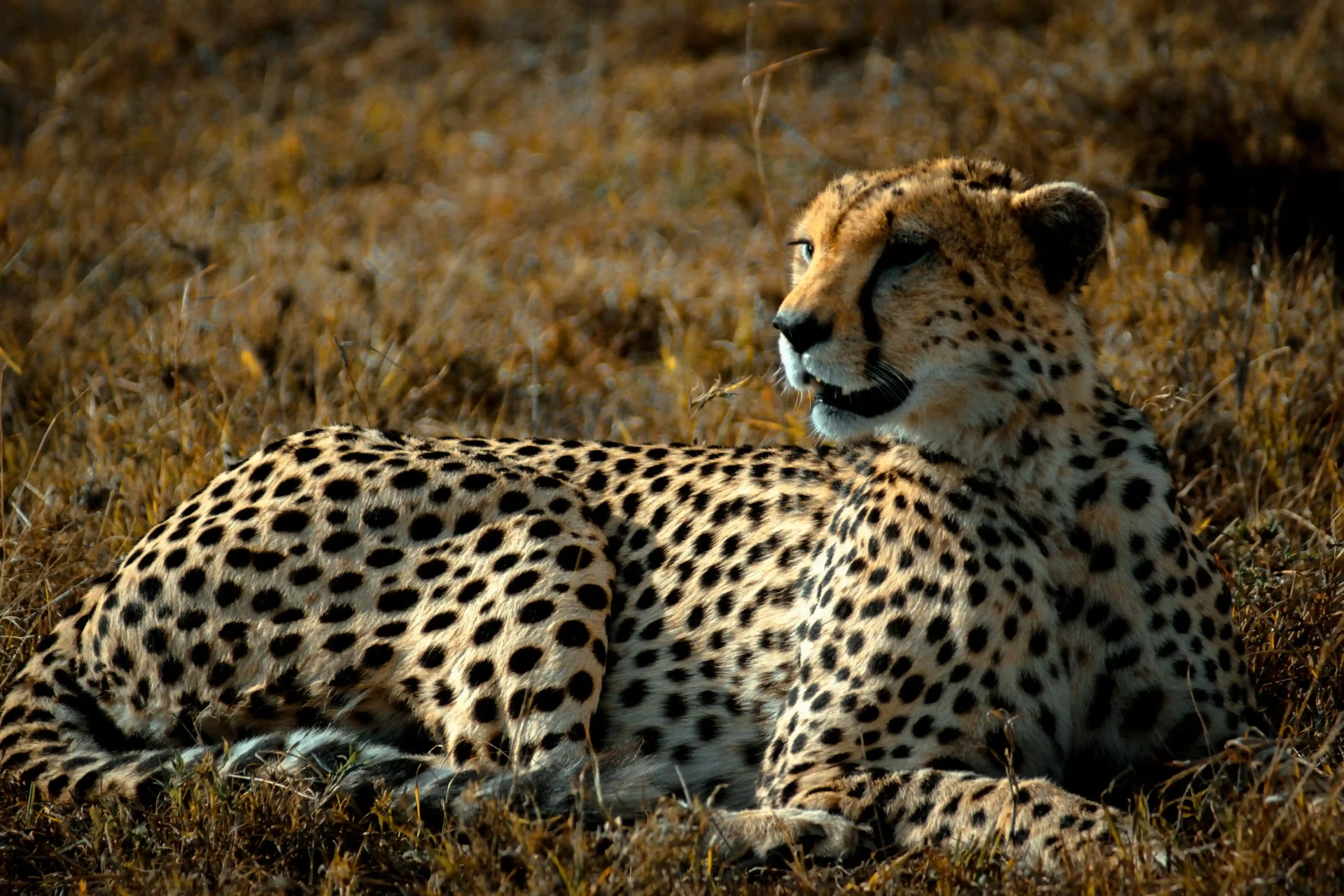
Today, we are interested in one of the fastest animals in the world, one that dominates the plains of the African savannah thanks to its extraordinary speed. The cheetah looks like a leopard or jaguar, but it has its own characteristics, and this is precisely what we will look at in this tutorial as we learn how to draw it step by step.
The anatomy of a cheetah
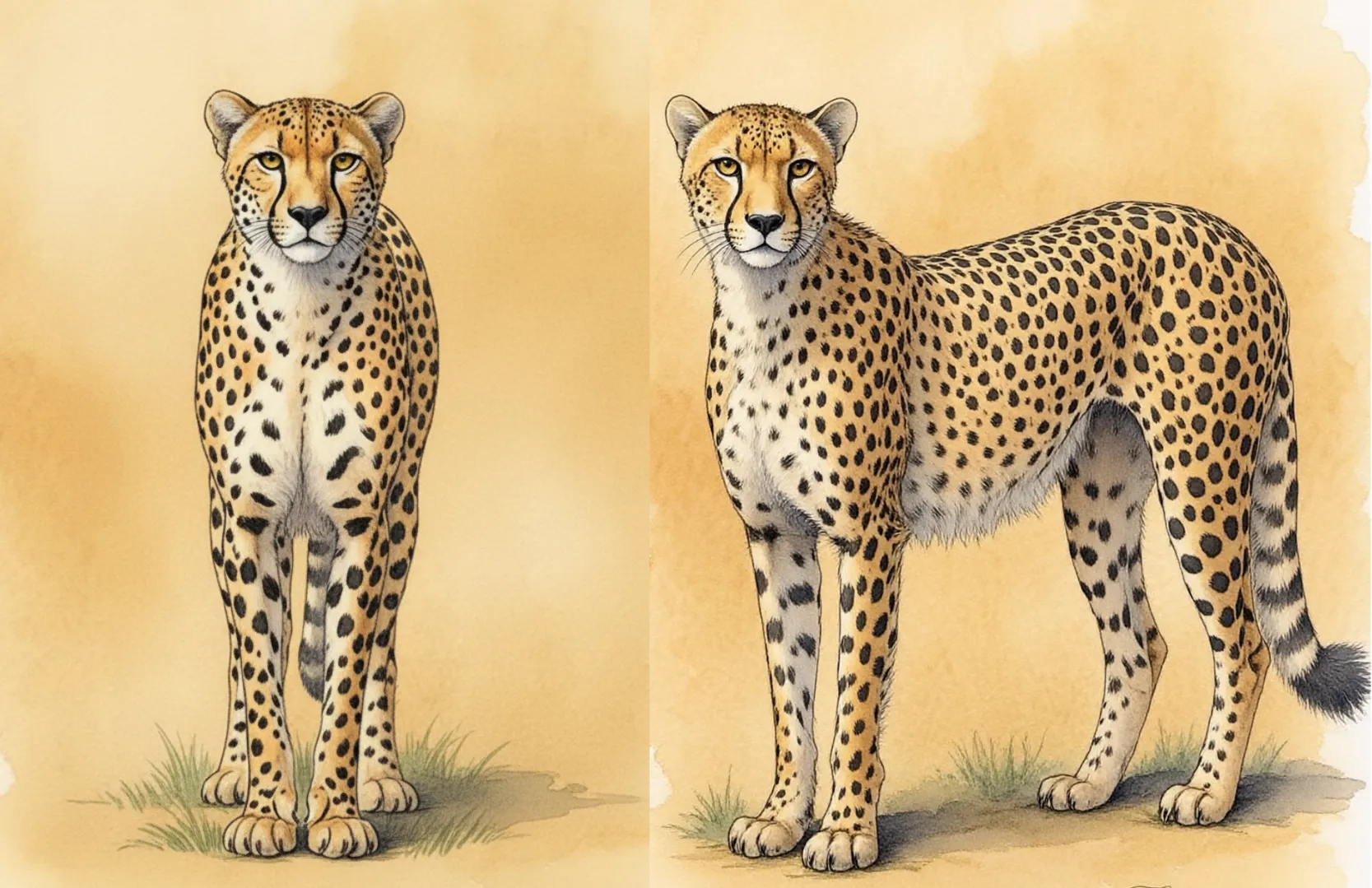
Before you start drawing, let's take a few minutes to observe this animal in order to depict it correctly. In the following illustration, we can identify several elements that I think are important to list so as not to forget anything:
- Athletic silhouette, with a slender body and legs that are longer than those of its close relatives.
- Stabilizing tail: it is not just a limb, it is a counterweight that helps maintain balance at high speed.
- A neck that looks short, due to the impressive musculature of its shoulders.
- Coat pattern composed of black, round, completely solid spots.
- Black lines that start from the inner corners of the eyes and go down around the muzzle.
How to draw a cheetah step by step
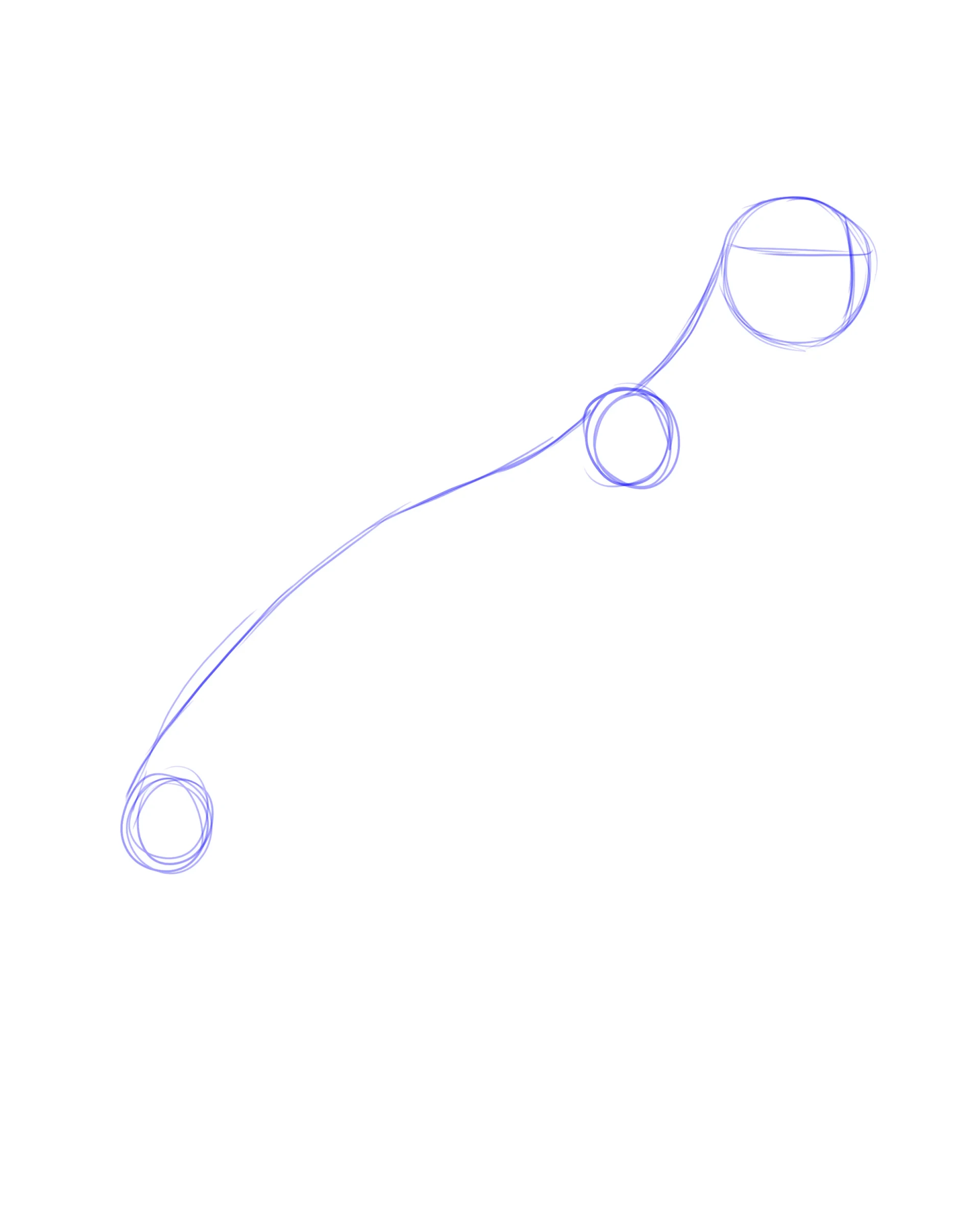
Start by identifying the main points of its mass: the head, shoulders and pelvis. Connect them with a line to create the spine, respecting the slight curvature characteristic of felines.
Then position the head in three quarters view and draw a short muzzle that runs from the center of the eyes to the chin. Draw the four legs in a resting position: felines stand on their toes, with their heels raised.
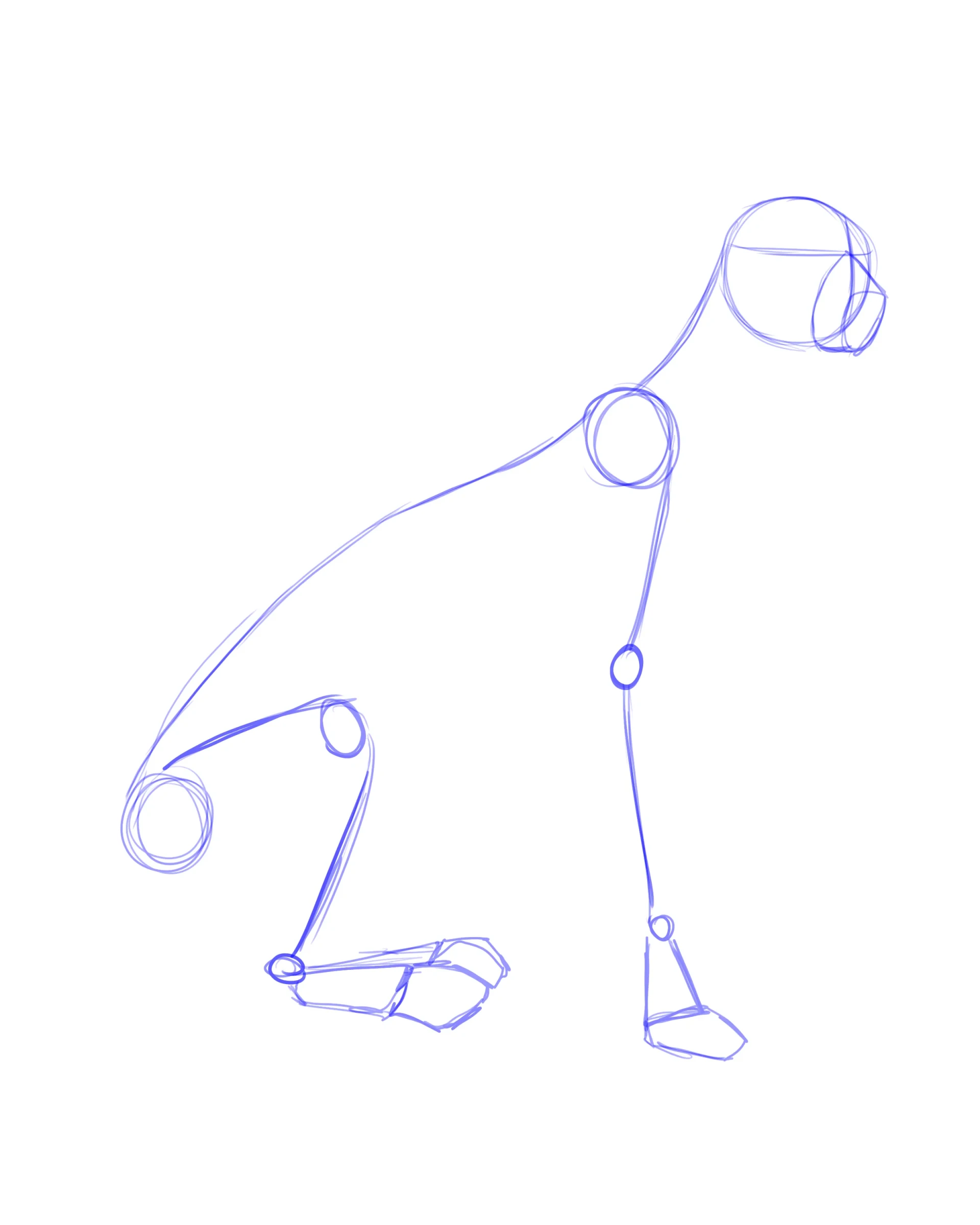
Finish the diagram by adding some body parts: ribs, collarbone, shoulder blades and tail.
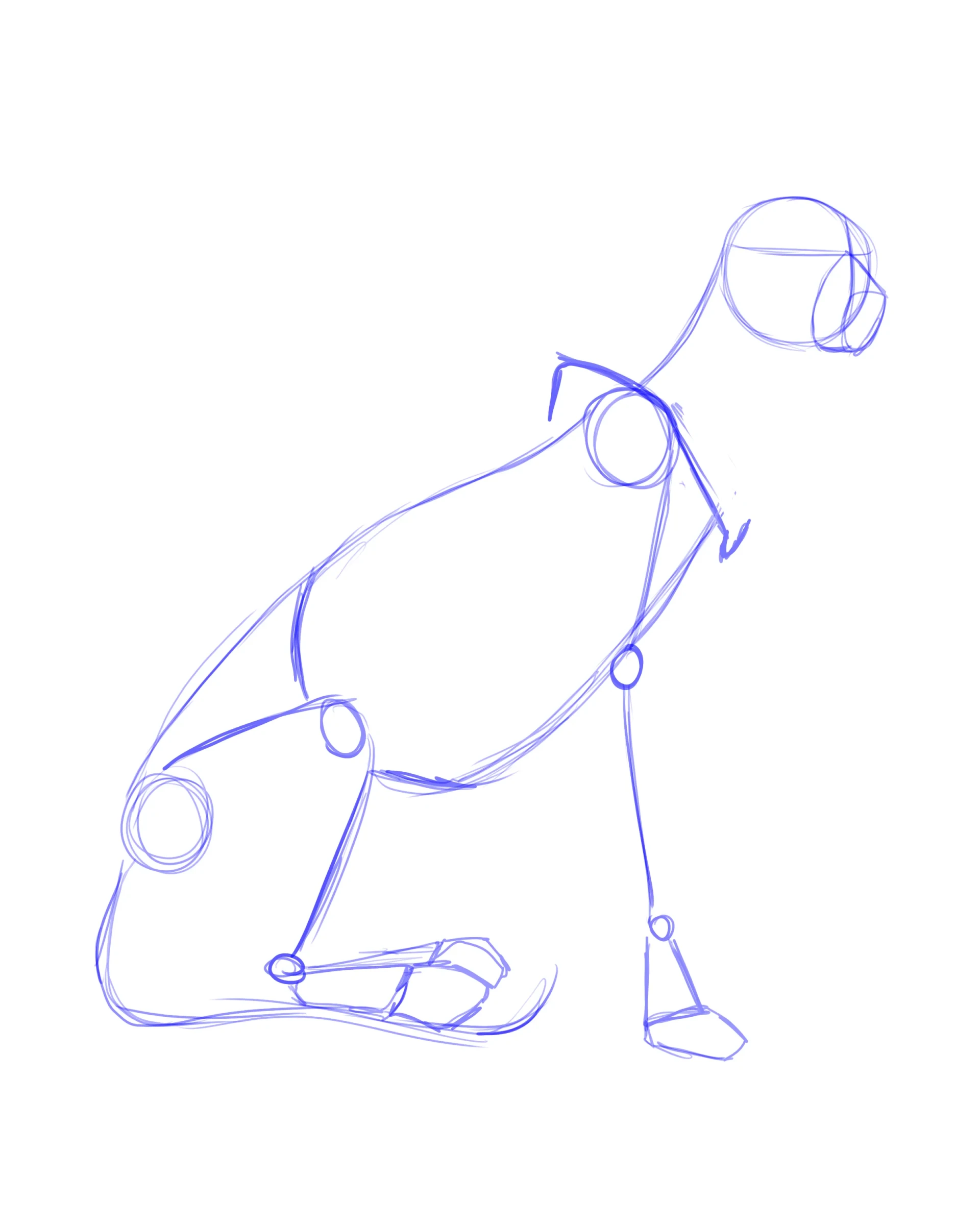
A volume diagram is available below to visualize the appearance of the cheetah with its muscles and skin. You can integrate it into your drawing or leave it out depending on your comfort level.
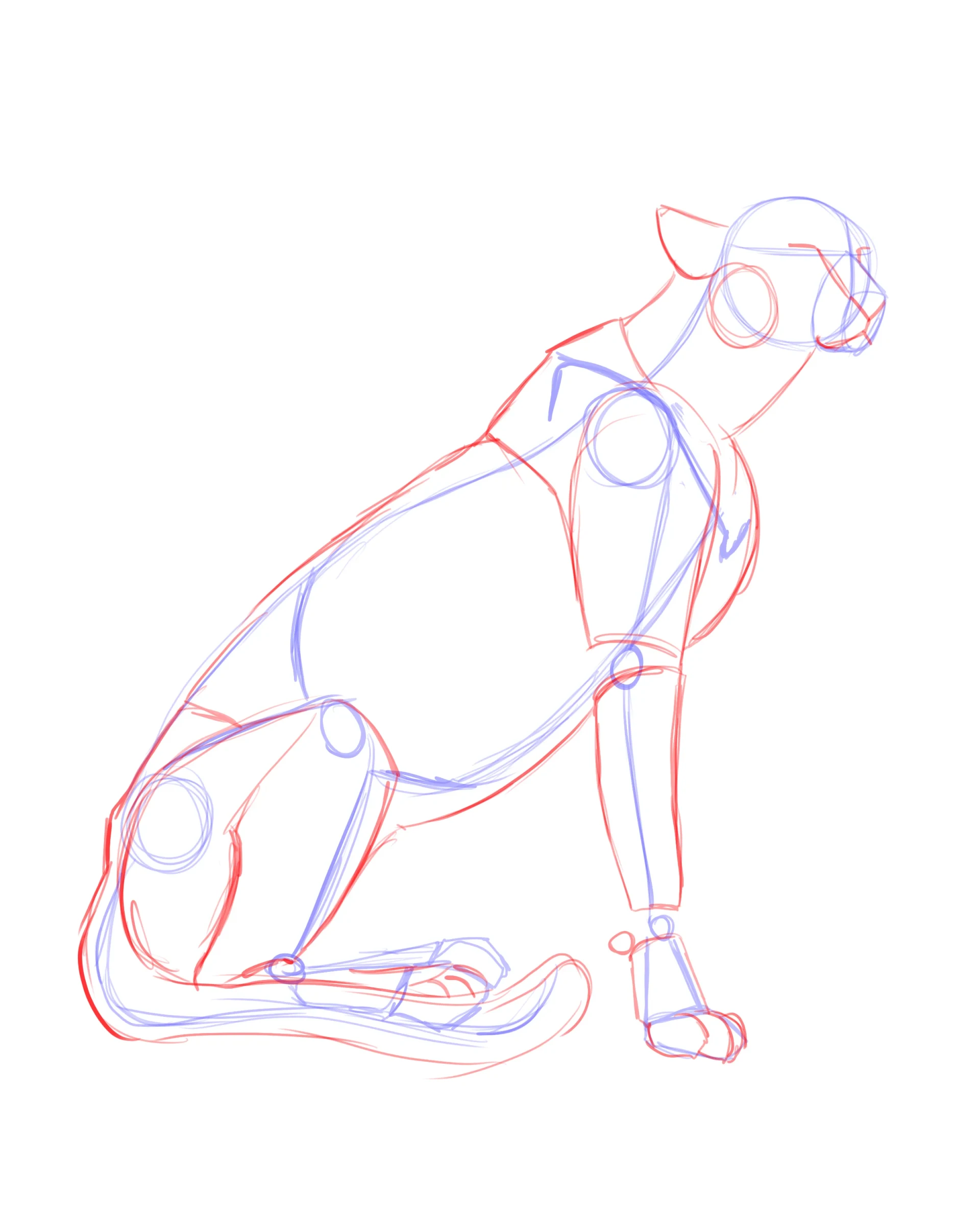
Draw the cheetah's features
Draw round eyes, slightly flat across the top, from which start the two characteristic tear marks that cross the face.
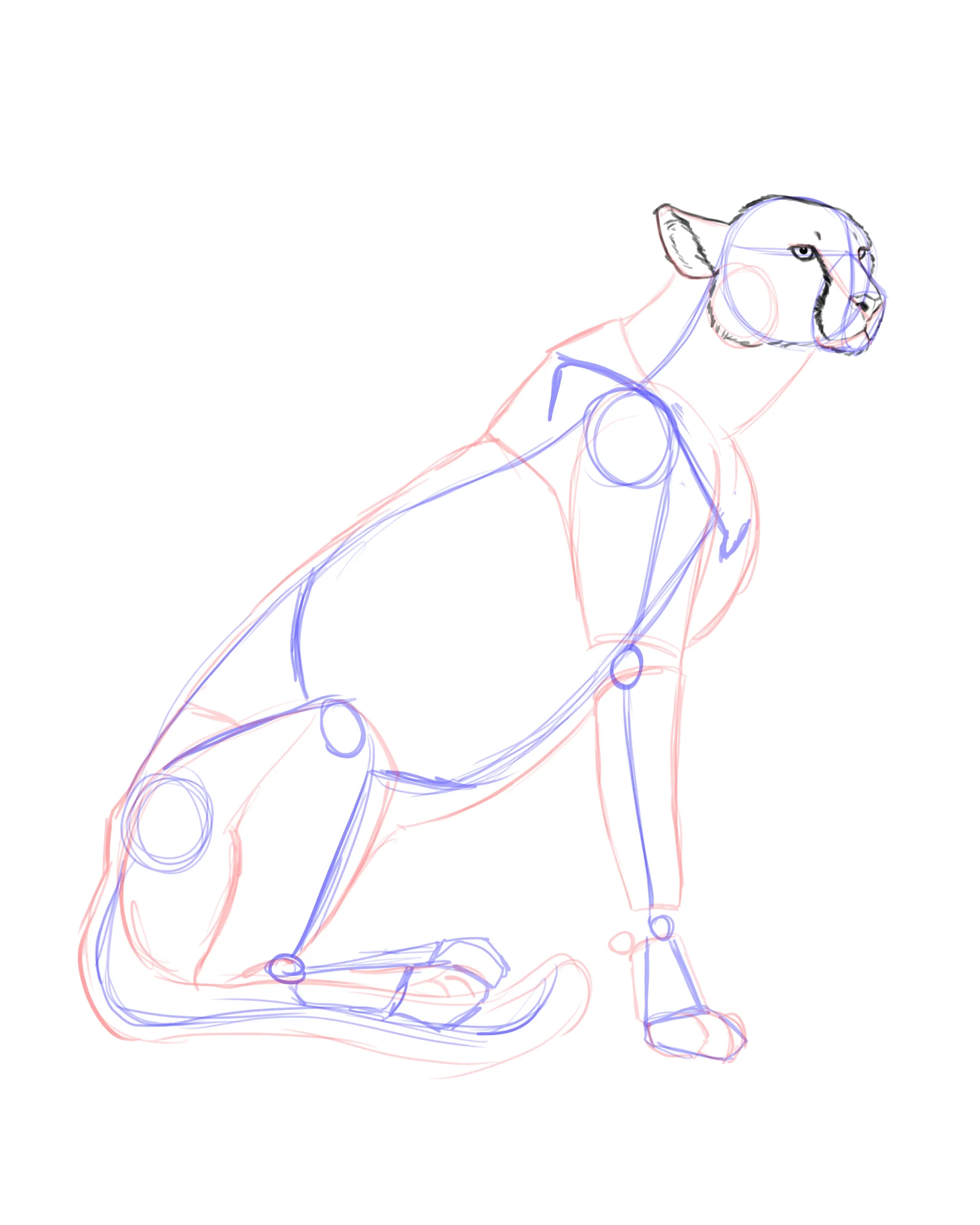
Continue towards the chest with a series of bristly hairs on the back, a common characteristic among some felines. Draw a broad chest and muscular front legs.
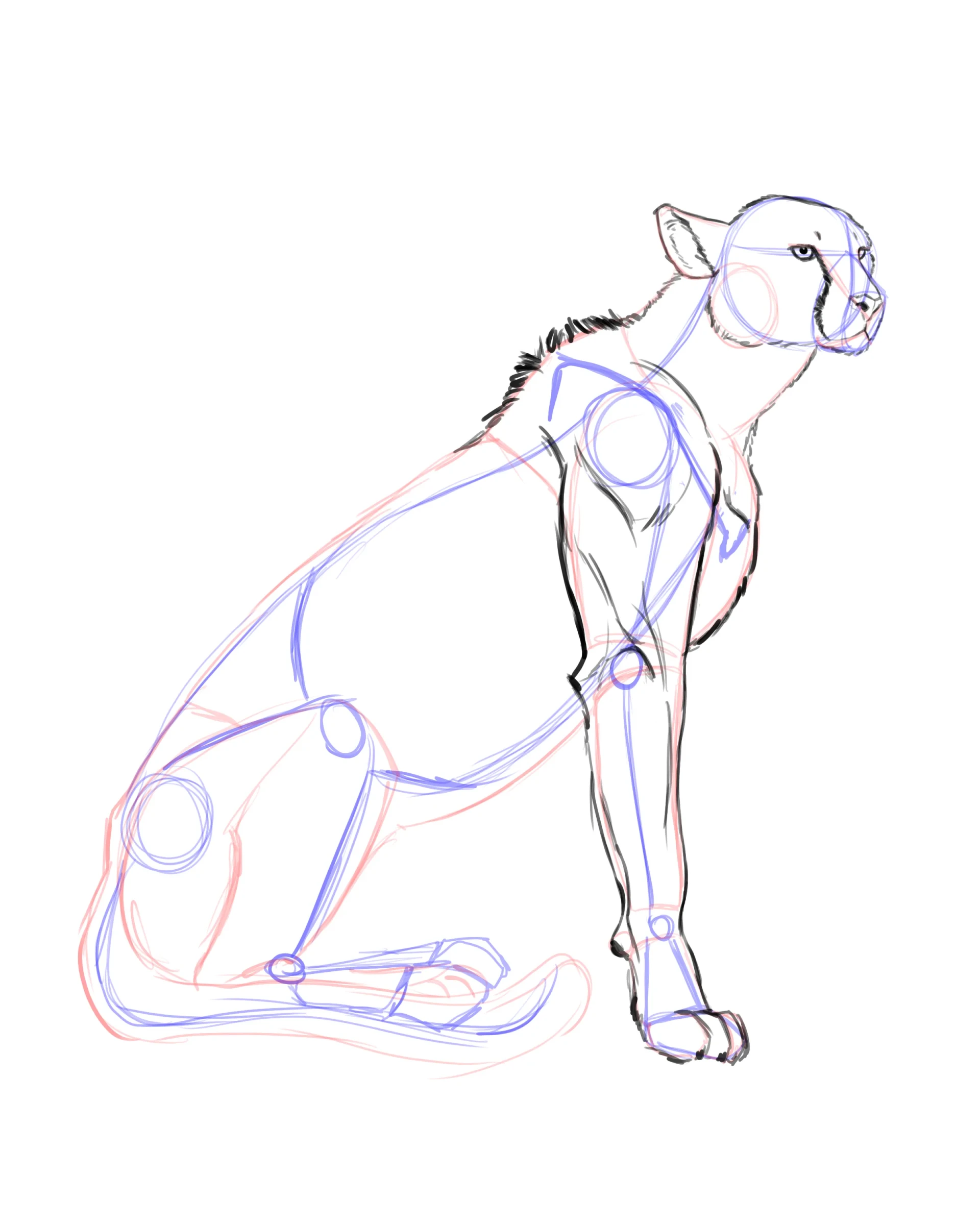
The torso basically follows the pattern, but the belly is different: this is where the coat is longest and messier.
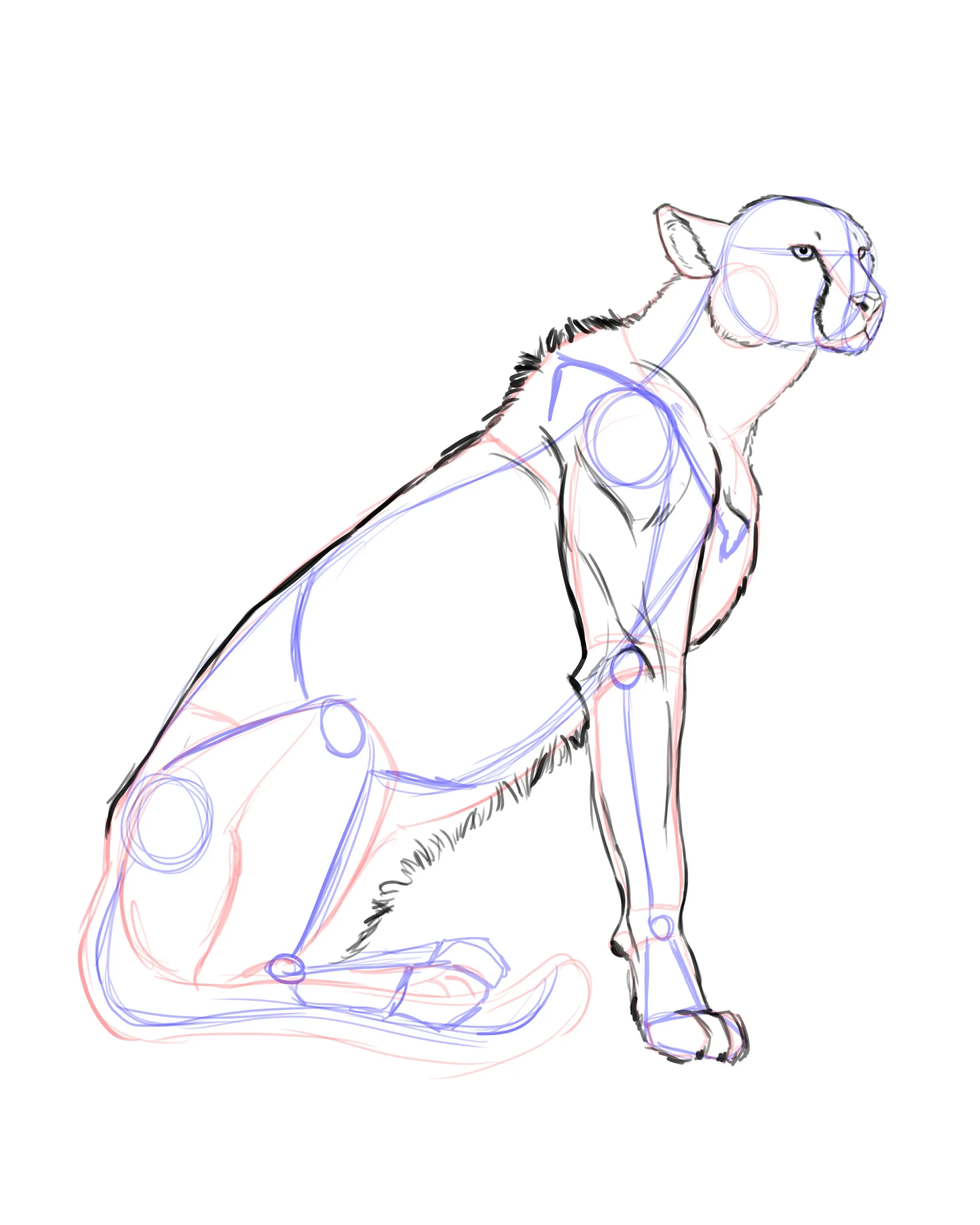
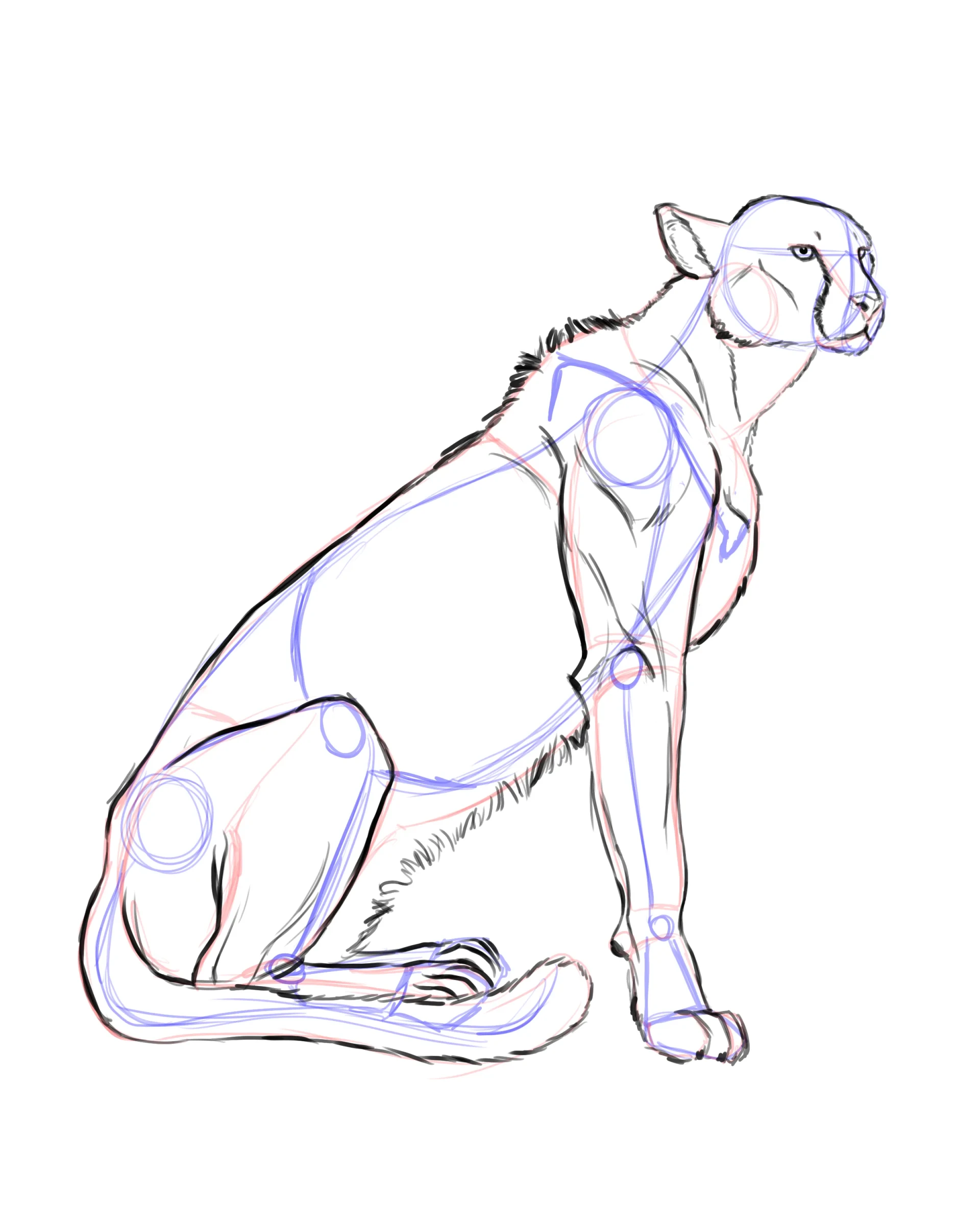
Add the powerful rear legs in a resting position, with relaxed muscles and a few marked folds. For the tail, start with solid strokes, then move to intermittent lines towards the tip to give it a slightly tousled look.
Draw the cheetah's spots
Observe the volumes of the body, identify the curves and their direction, then draw circular points following them.
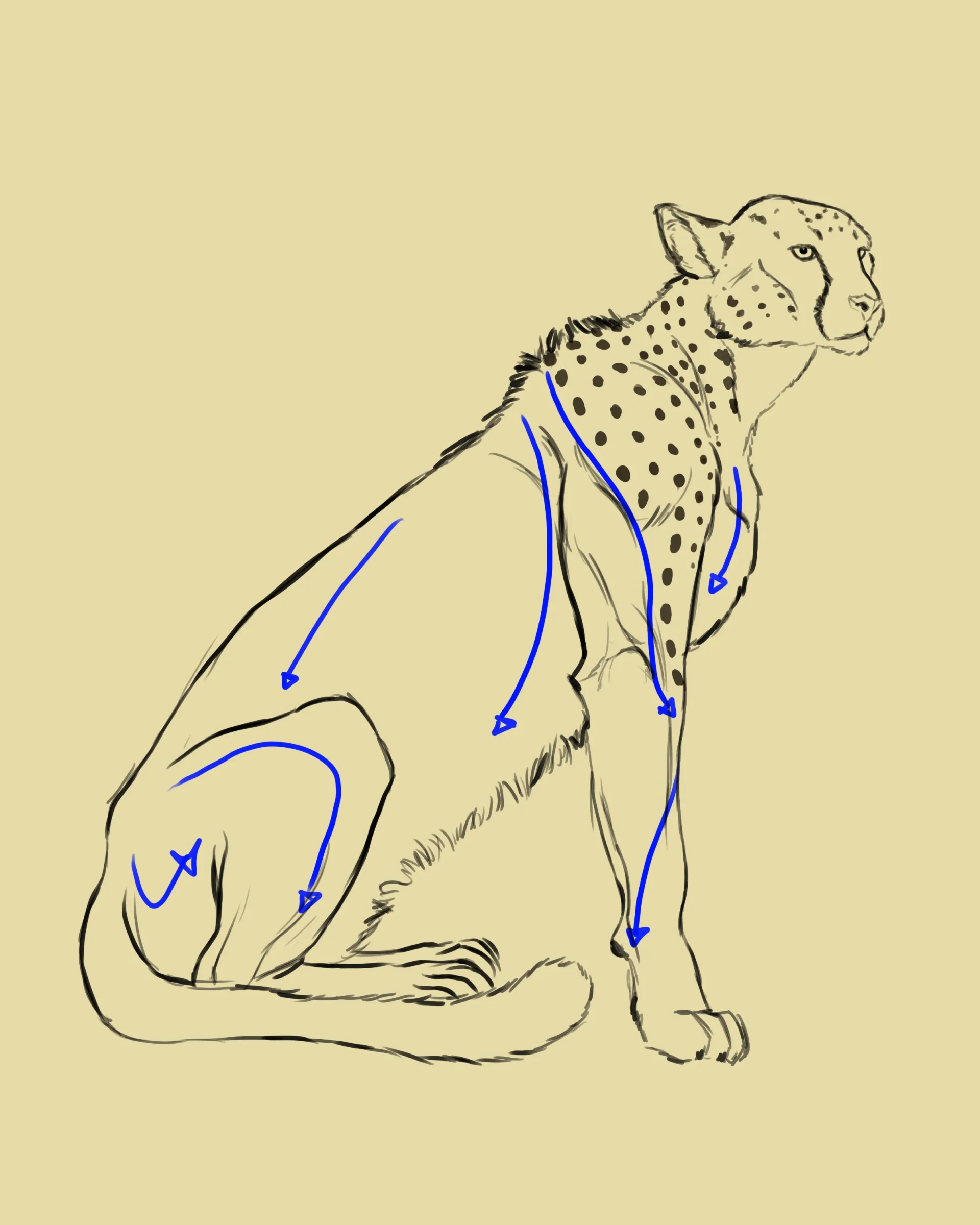
The spots are round in nature, but they deform depending on the tension and flexion of different parts of the body.
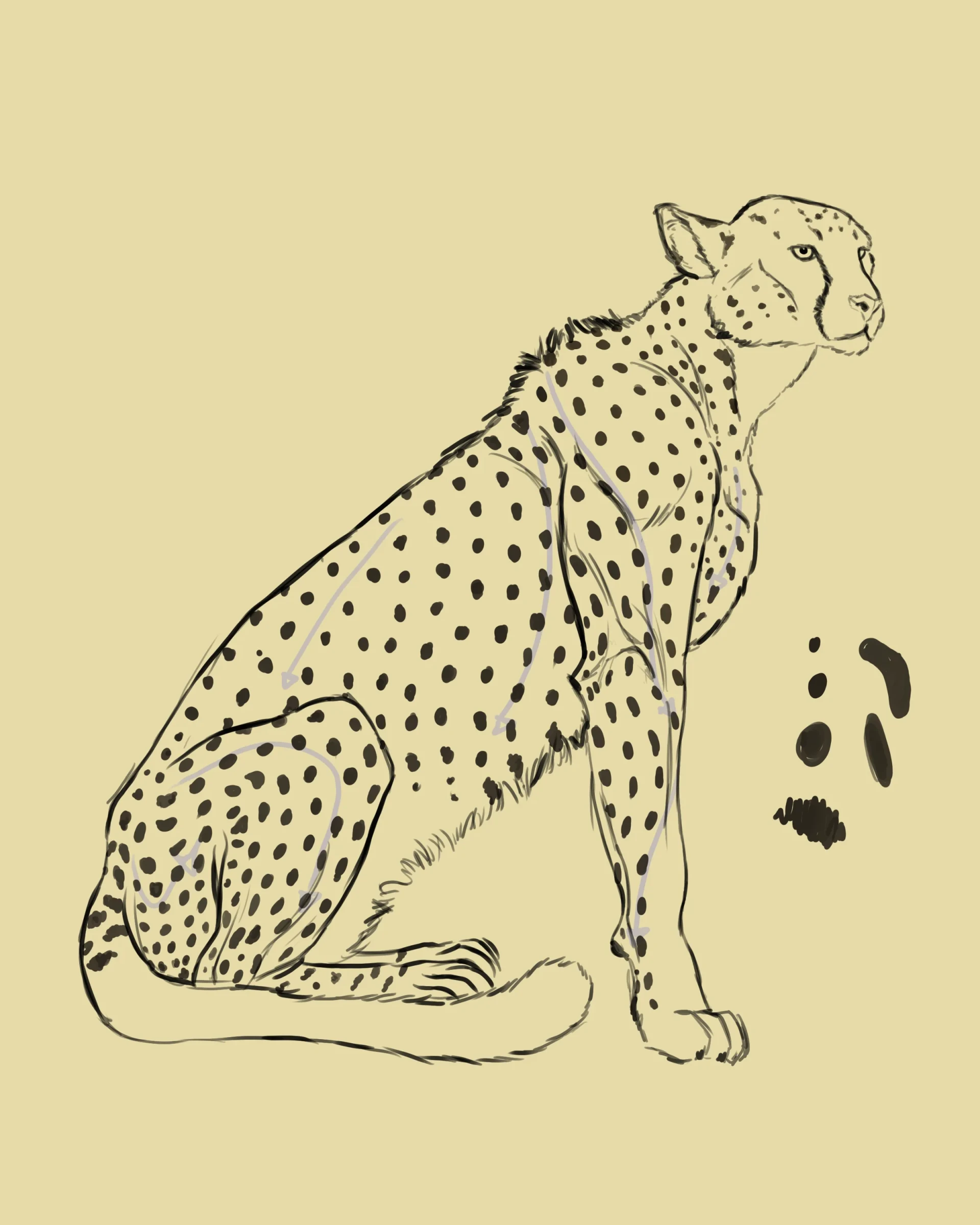
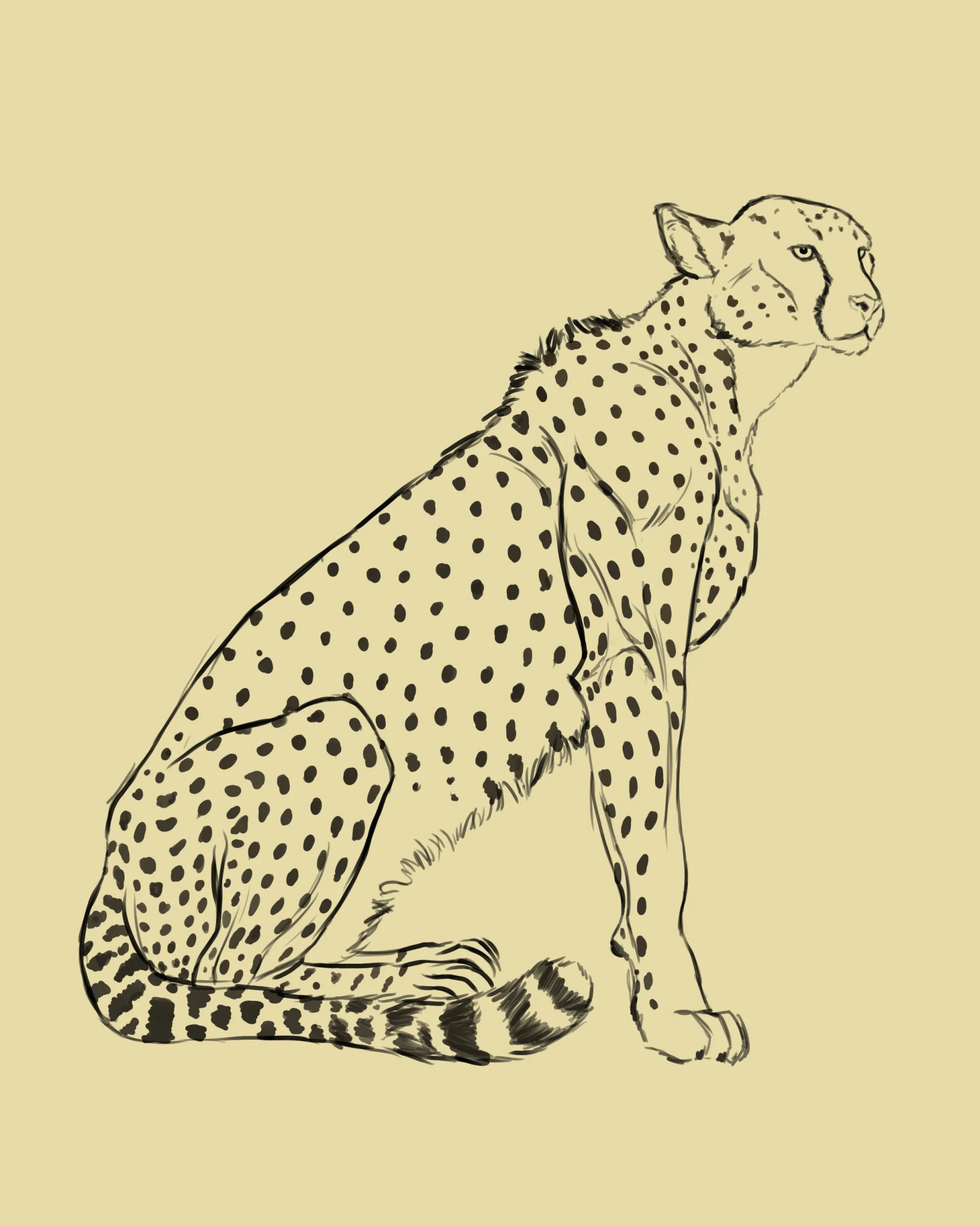
On the tail, the pattern changes: the spots become more disordered and elongated, before gradually transforming into stripes towards the tip.
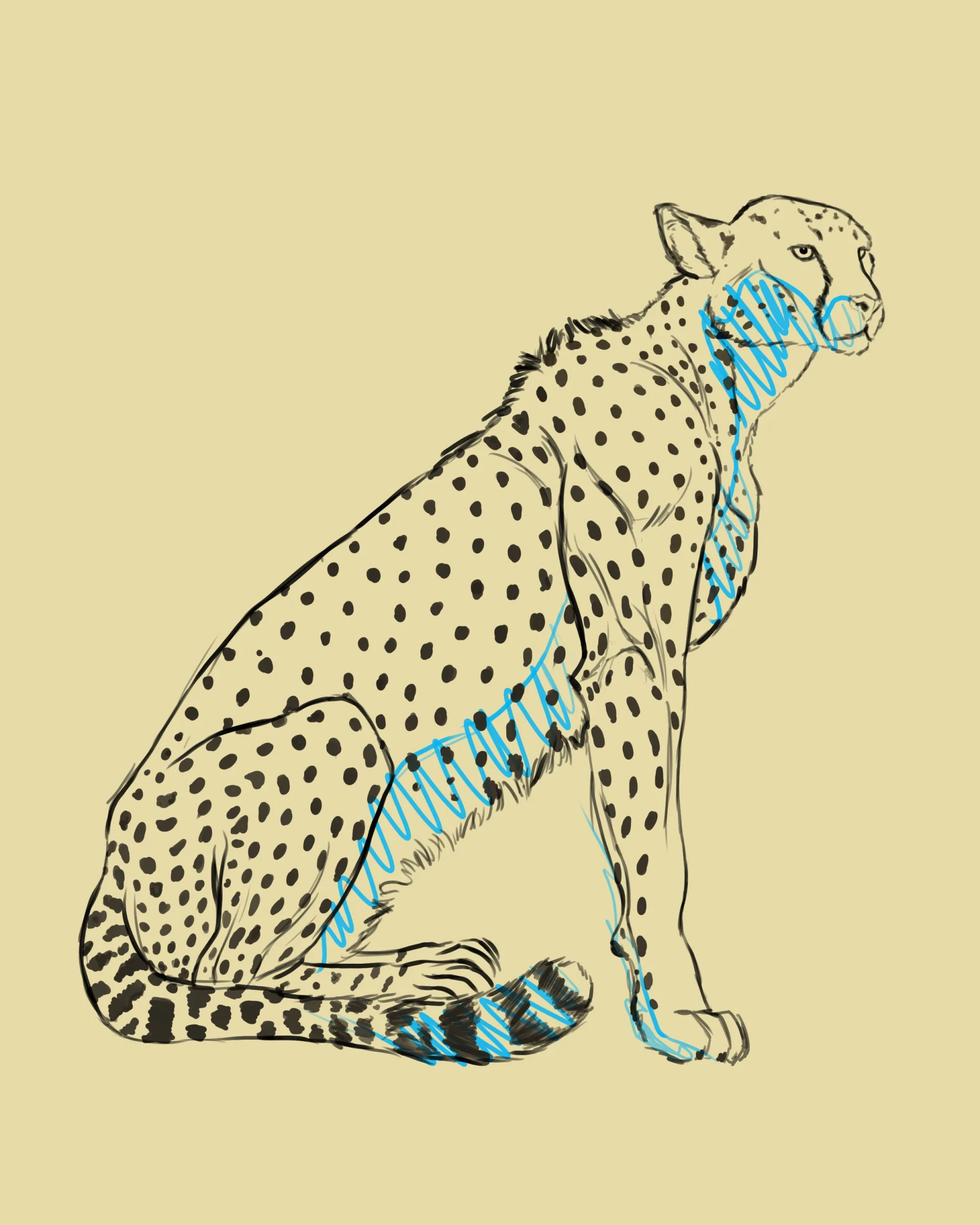
Before moving on to color, identify the white areas: the inside of the muzzle, the throat, the chest, the belly and the tip of the tail. These white areas must remain preserved throughout the coloring stage.
Add volume and color to the drawing
Identify a light source and add some shadows to define the leg muscles and protruding areas
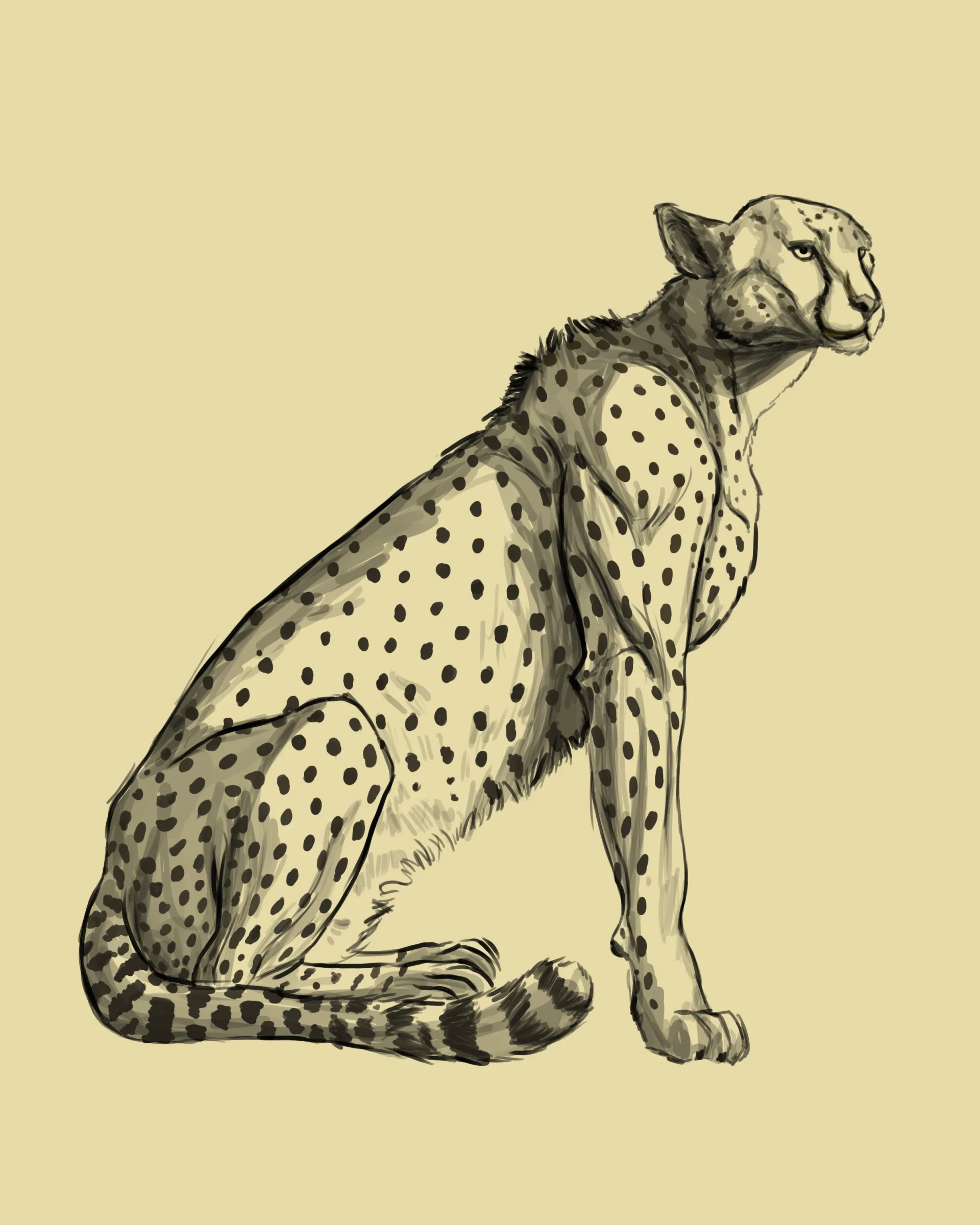
An intermediate step in gray can help you more easily spot highlighted areas before integrating colors.
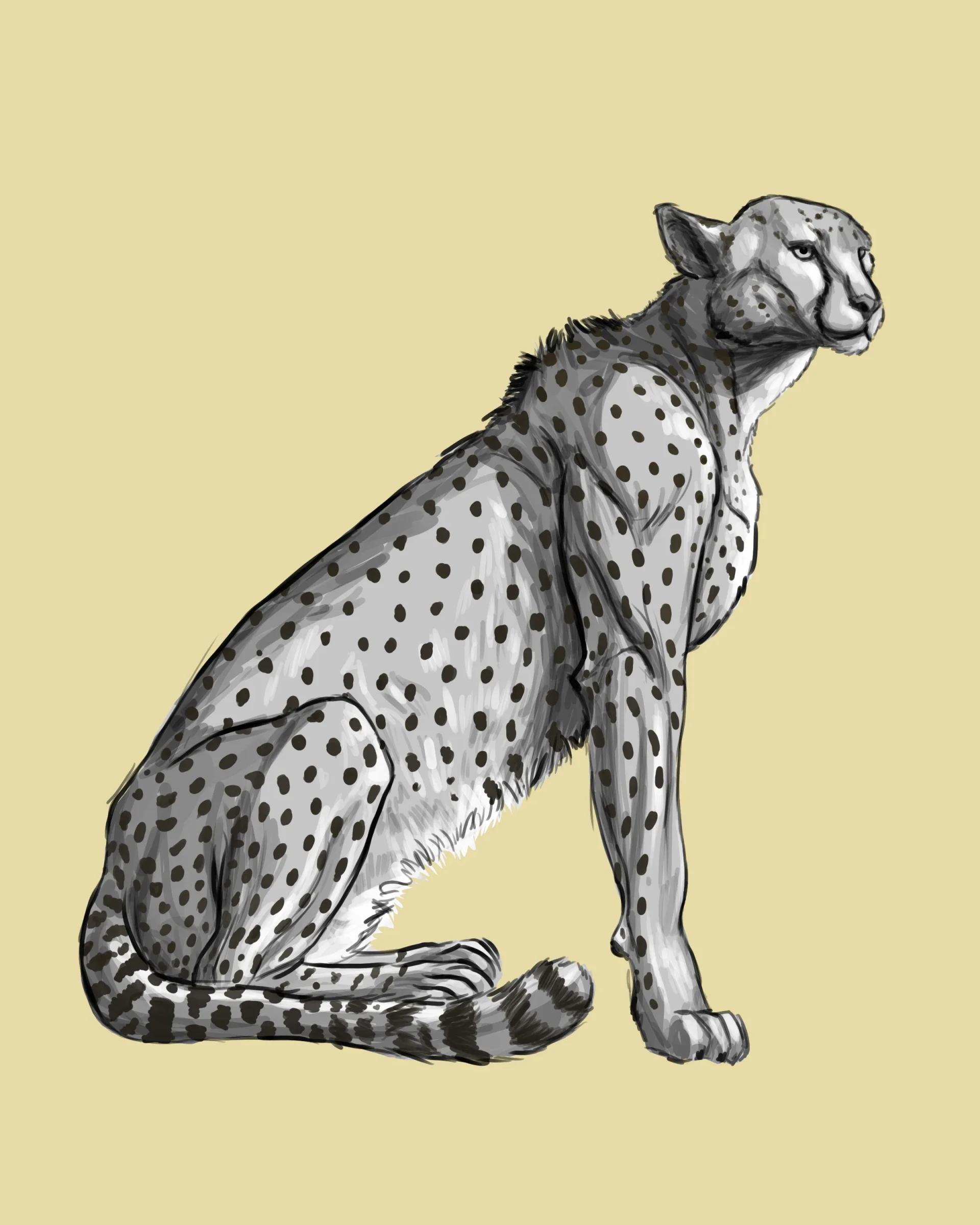
The base colors revolve around yellow: ocher, brown, golden yellow and several similar shades, to create a varied texture. Preserve the white areas while adding some light-colored highlights if necessary.
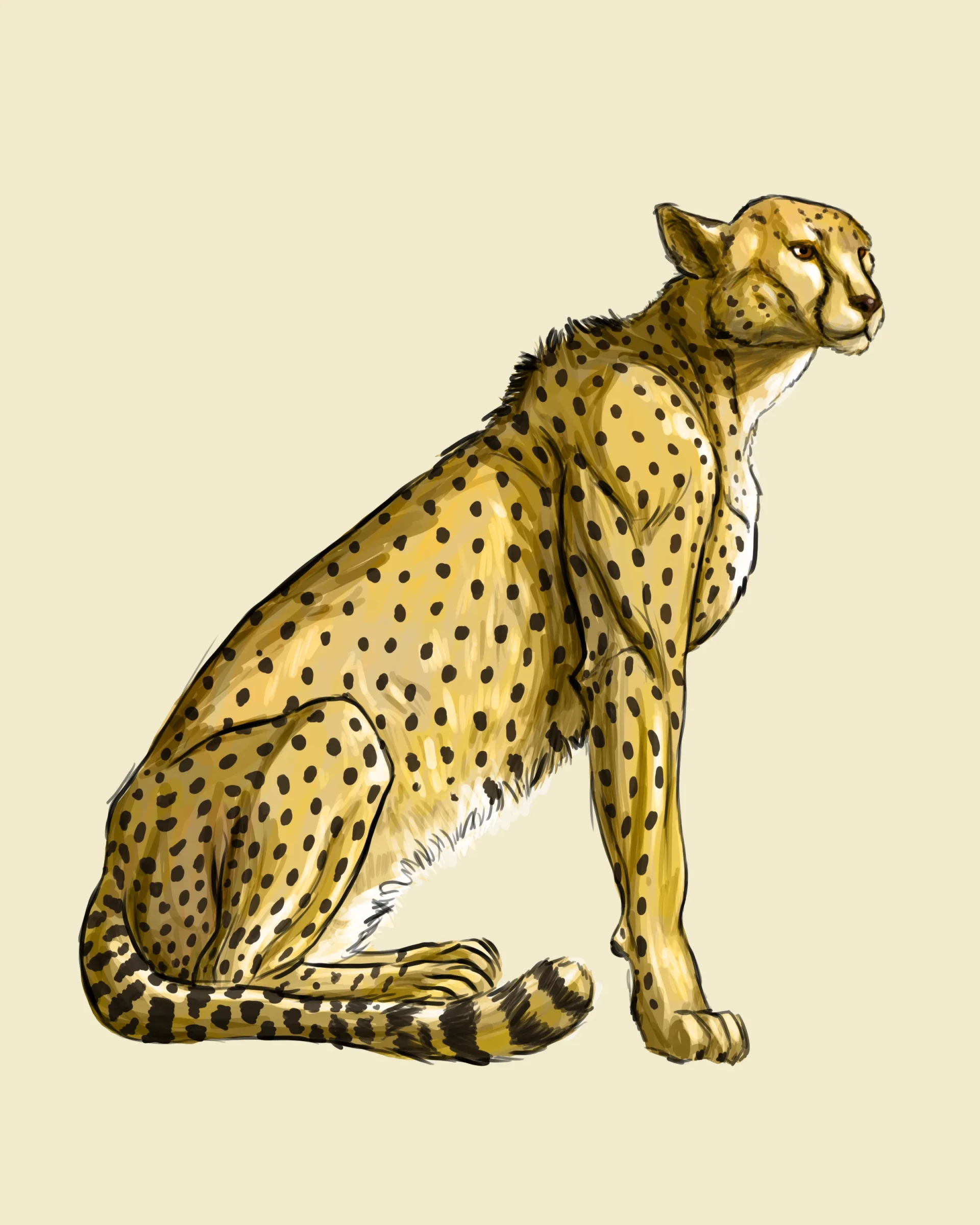
Look for the right level of saturation, neither too pale nor too aggressive. Complete your drawing with the background of your choice.
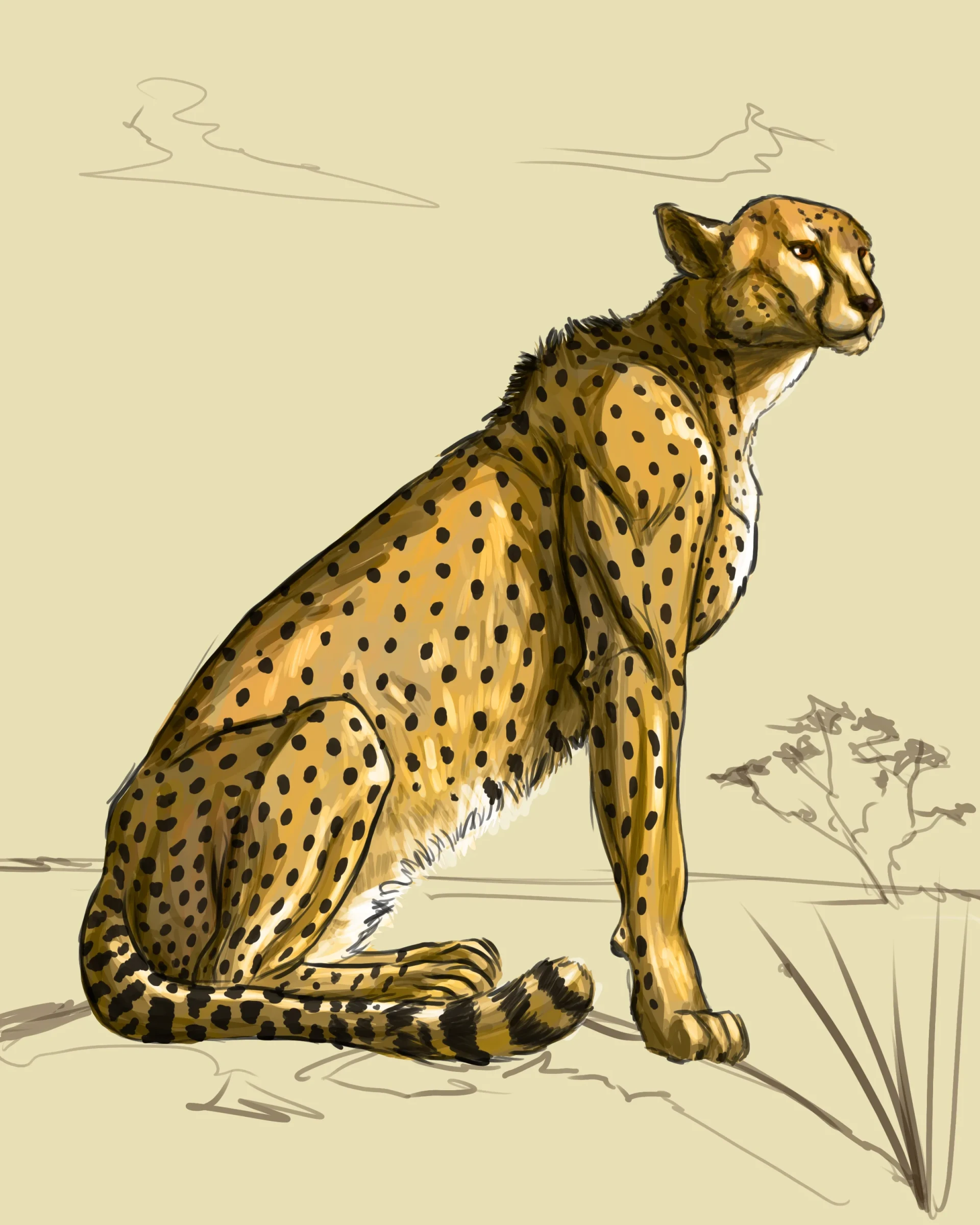
And there you have it, the cheetah is no longer a mystery to you! Now that you have understood how to create its spots and coat, it's up to you: try the method on another feline and see how far you can push the realism. It is precisely by changing the model that we begin to really master the technique. So, which feline are you going to draw next?
Discussion
No comments yet.