
How to Draw a Leopard
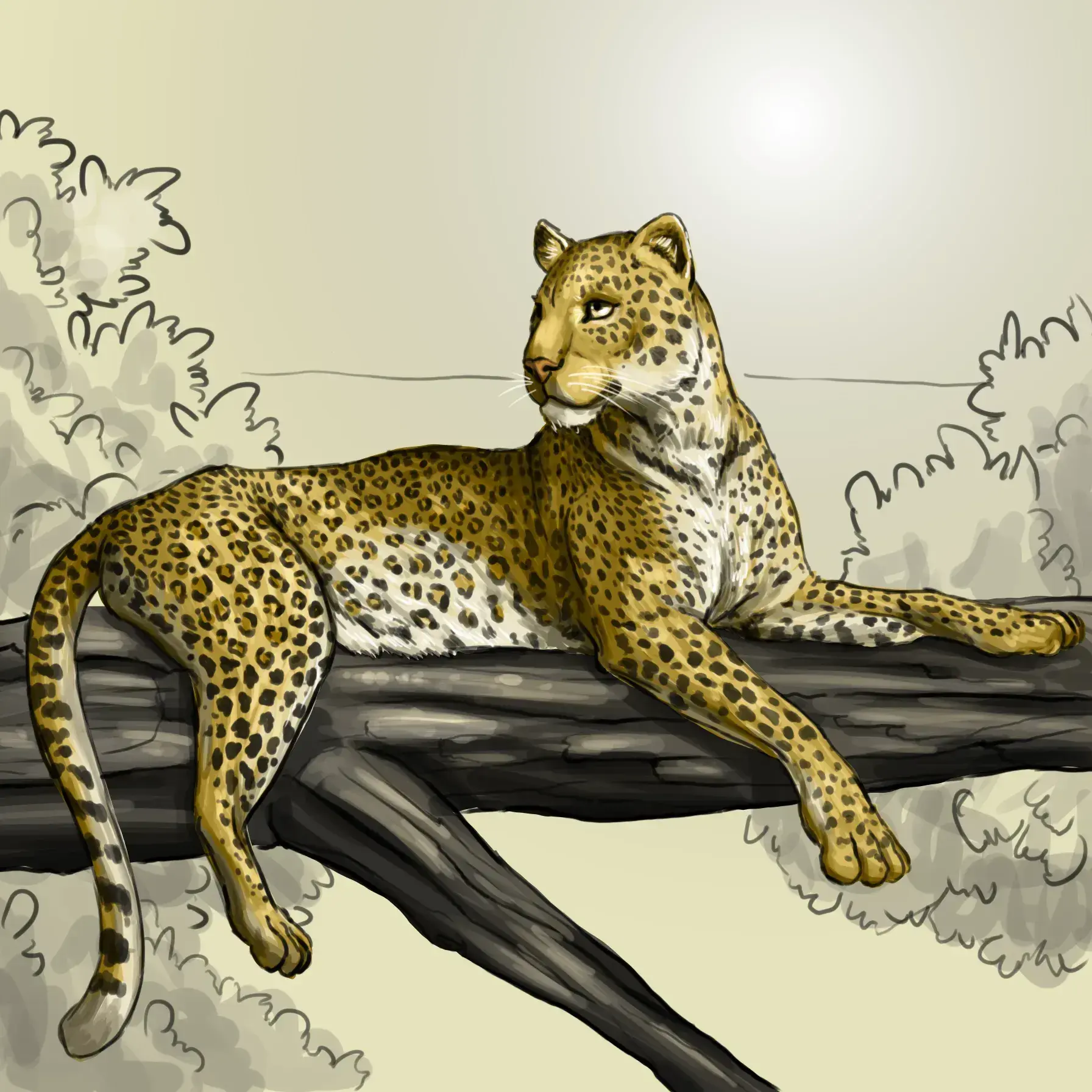
Big cats can be impressive, even terrifying. Their fur adorned with exquisite patterns is a clear signal: it's better to keep your distance! With their large claws, fangs, and brute force, they could knock us out in an instant. At least, that's what we're often told. In reality, big cats are quite calm creatures that only attack to defend themselves, protect their territory, or, of course, to feed.
Welcome to this new tutorial where we will learn to observe and draw another big cat. Today, we're focusing on the leopard, this spotted giant characterized by its methodical patience and ultra-discreet movement.
Anatomy and characteristics of leopards
The leopard belongs to the Panthera genus and lives in almost all of Africa as well as in South Asia. Its physical characteristics reveal a constitution that is both robust and agile: a relatively long body with legs slightly shorter than those of its cousins, allowing it to approach its prey discreetly.
It is often confused with its American cousin, the jaguar, but the leopard is actually a bit smaller and more slender.
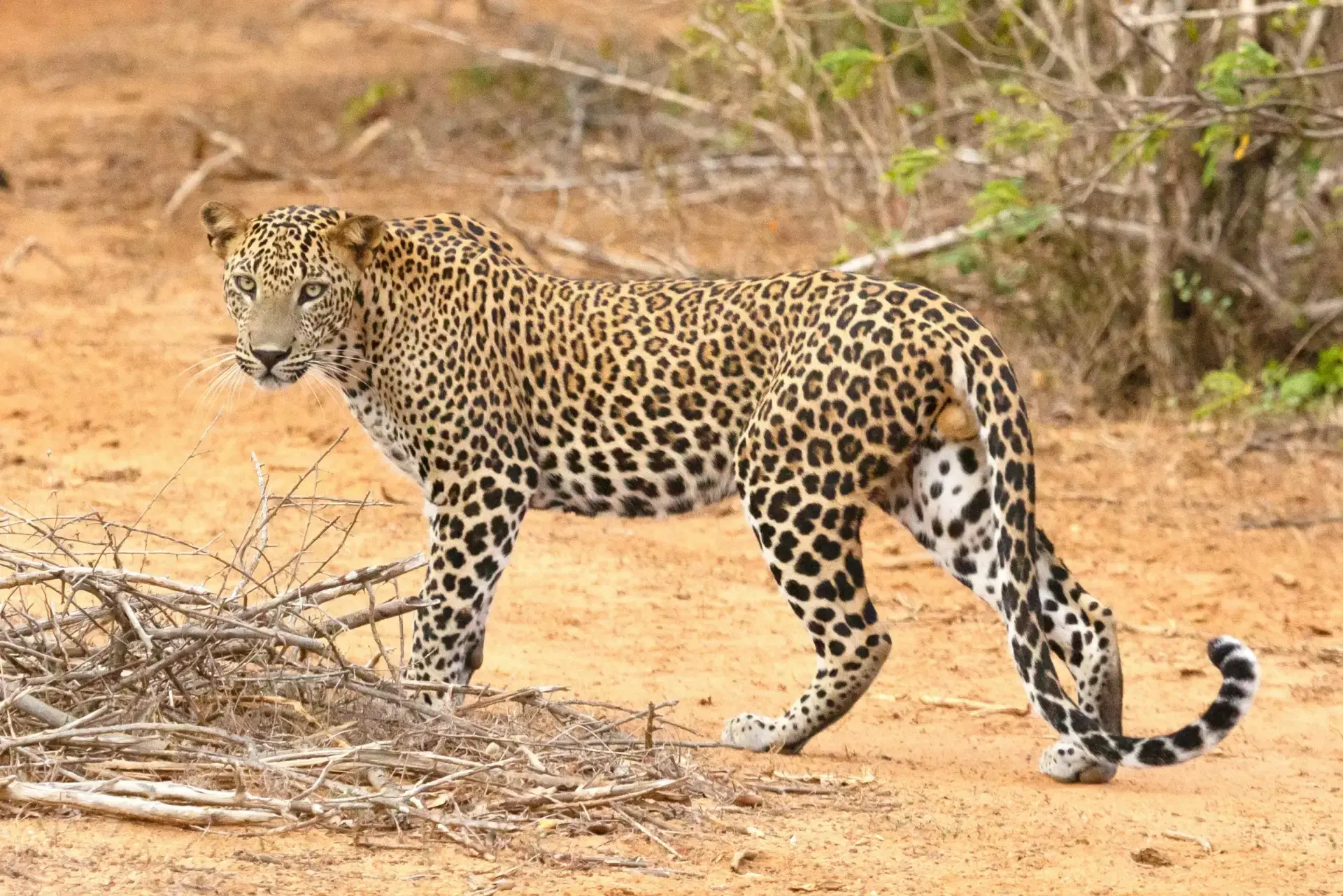
Even though there are several spotted felines like the cheetah, jaguar, and ocelot, each species has a unique pattern that enables identification. The leopard features rosettes: multiple black spots arranged in a circle around an empty center, like the petals of a flower. This is its visual signature!
How to draw a leopard step by step
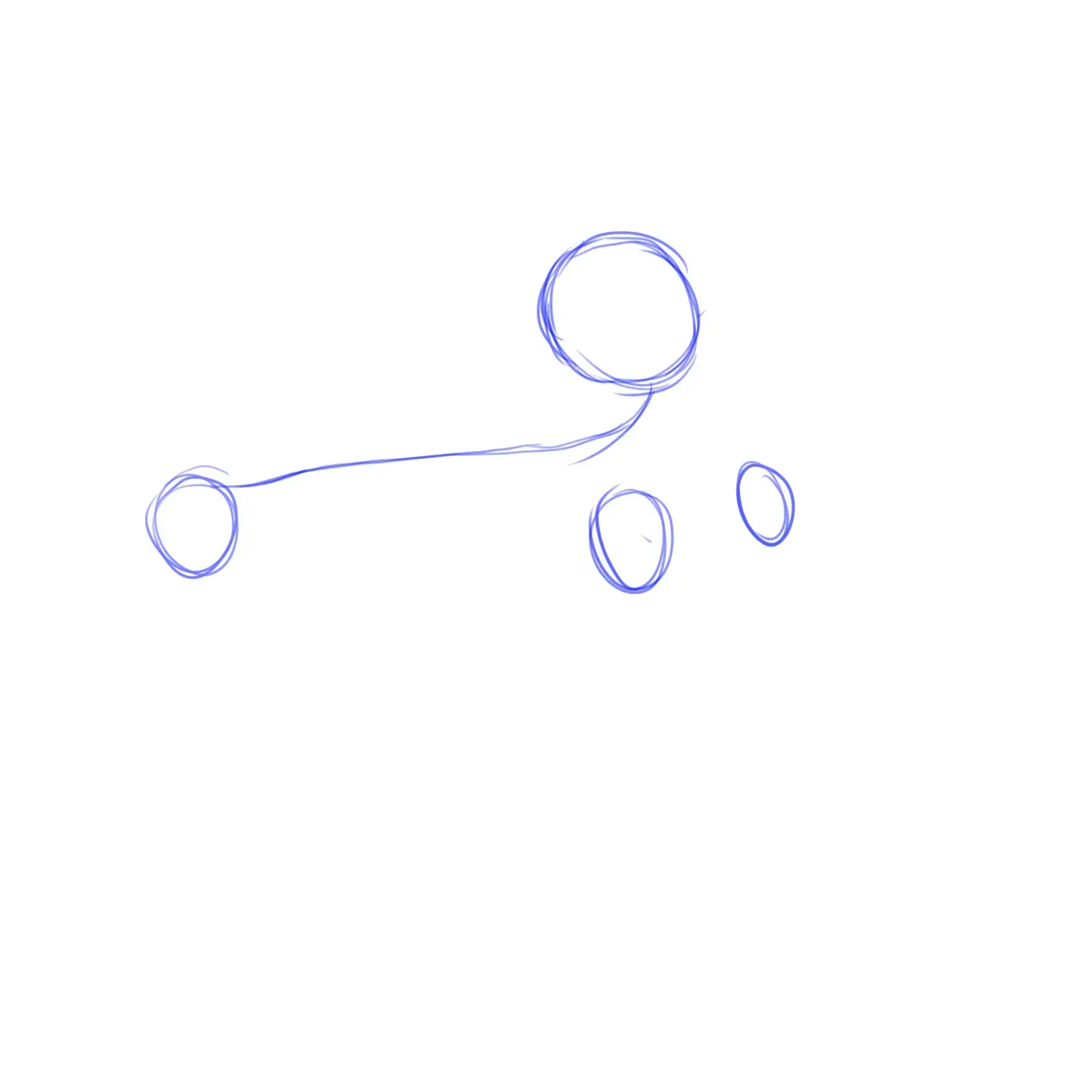
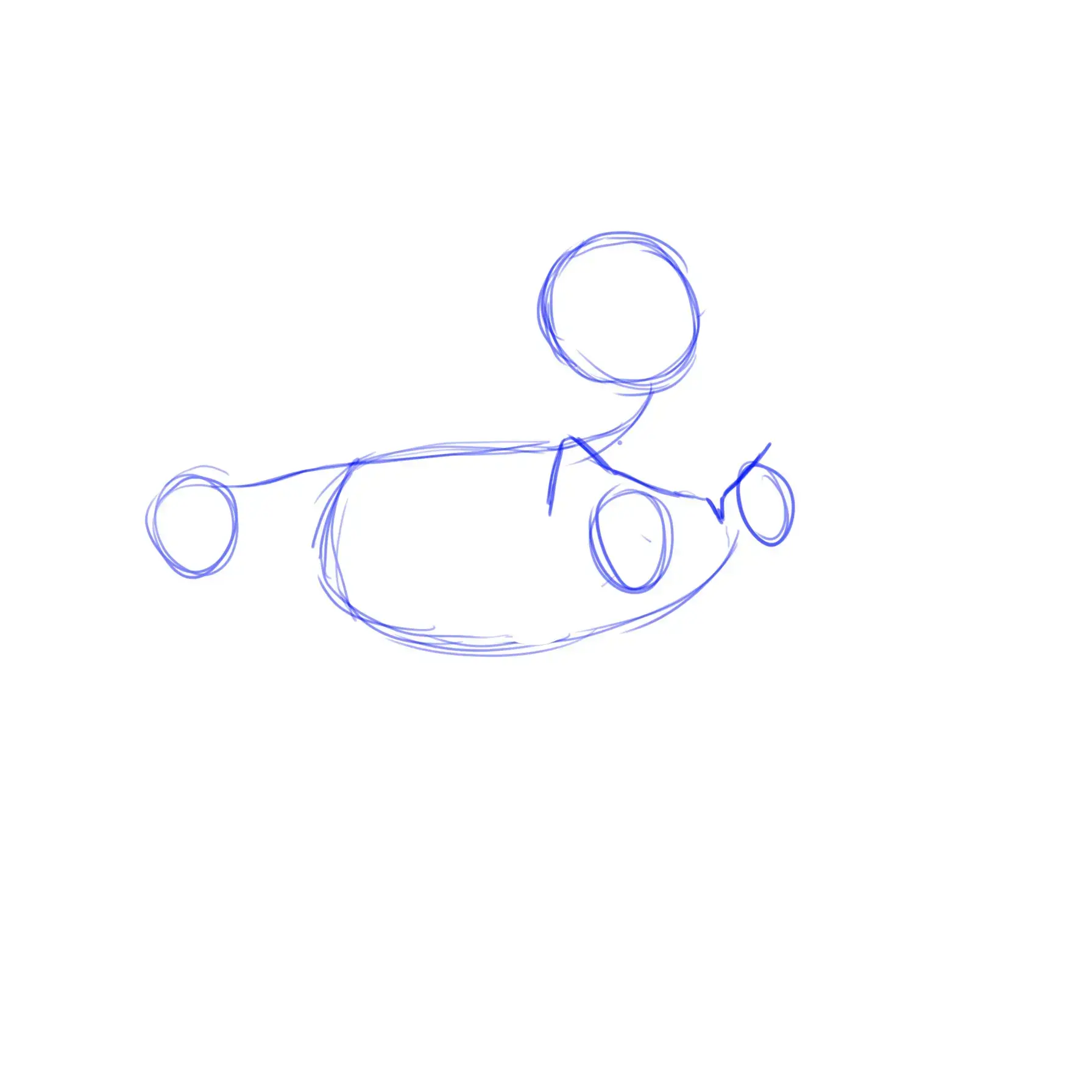
To construct your leopard, start by placing the key points of its structure: the head, shoulders, and pelvis.
The basic structure:
- Draw a circle for the head
- Add two smaller circles for the shoulders, positioned diagonally to create a relaxed posture
- Draw a third circle for the pelvis about three head-lengths down
- Connect everything with a curved line for the spine
On the shoulder circles, draw simple lines to indicate the collarbones and shoulder blades. Then add the rib cage, which is much larger than in humans.
Your drawing really starts to look like a leopard when you add the legs! From each small circle (shoulders and hips), draw the limbs in a comfortable position, as if the animal was lying on something.
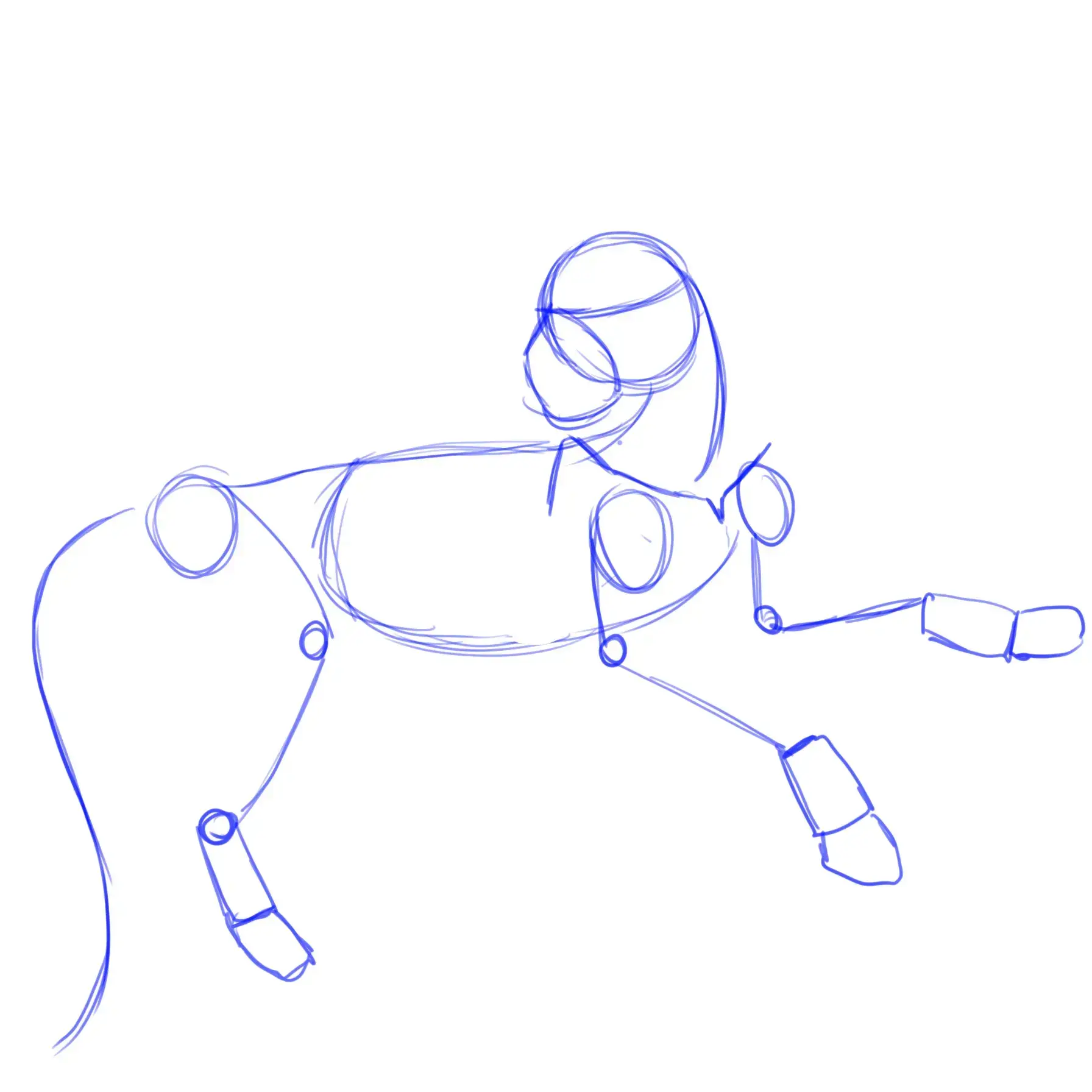
Draw a volume diagram
This step enables you to visualize the behavior of the muscles and the correct proportions required. Add volume around your skeleton to give shape to the body.
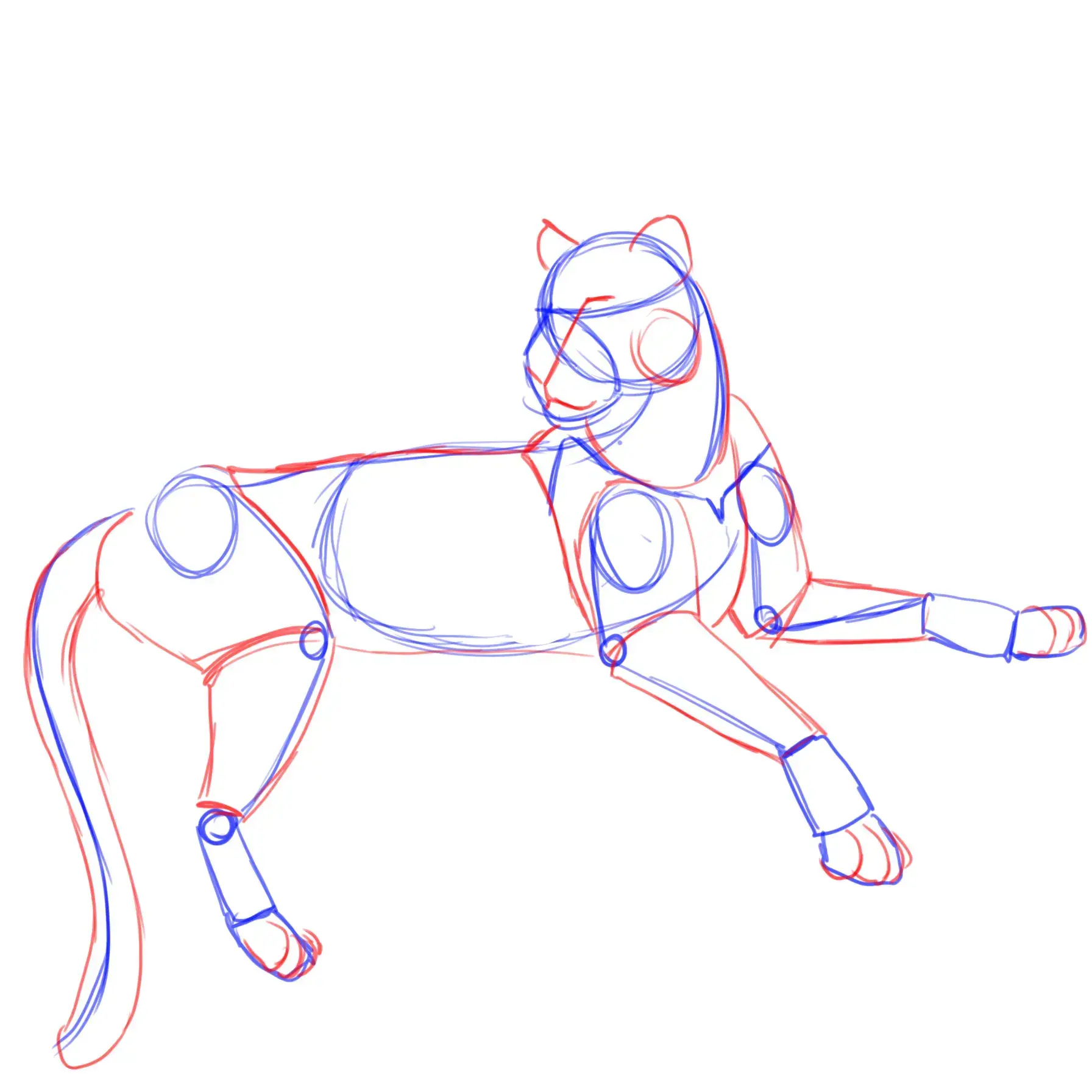
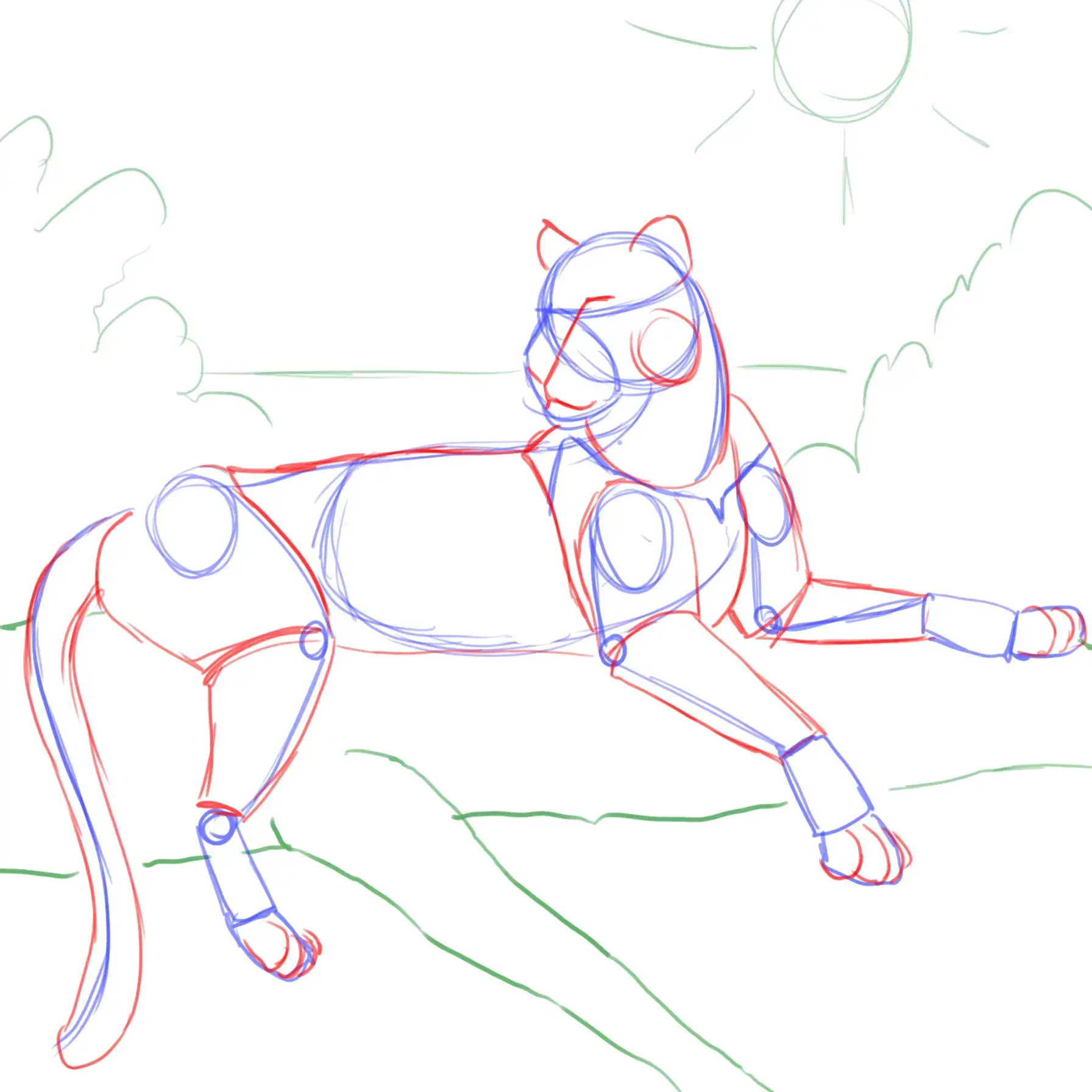
Composition tip: You can sketch a simple setting for your leopard. Its natural habitat can be either the jungle or the savannah, so add some elements from these environments (tree branches, tall grass...).
Draw the leopard's head
Let's start with the facial features, which are essential for capturing the expression of the leopard:
Eyes: Large round eyes for spotting prey, with a round pupil typical of large cats. Don't forget the black outline around the eyes which resembles Egyptian makeup.
Nose: Draw it as wide as the space between the two eyes.
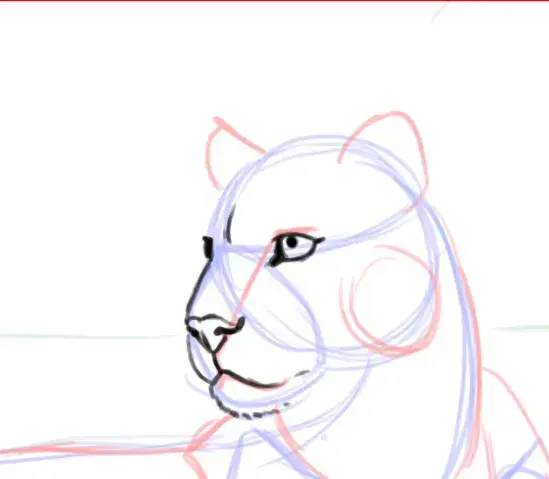
Ears: Pointy and slightly rounded, with fur inside.
Texture of the fur: Use short diagonal lines to create the fur effect, especially on the jaw and chin.
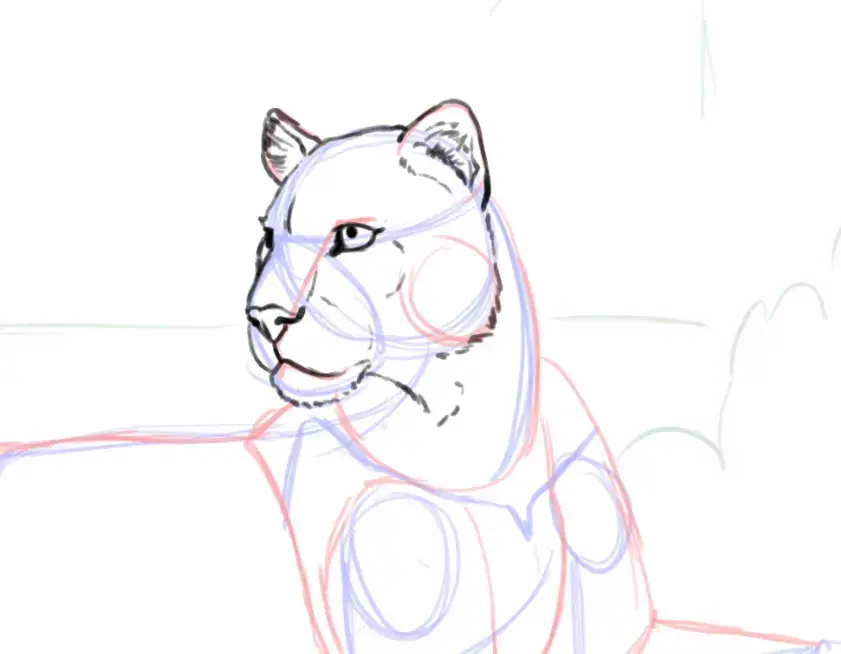
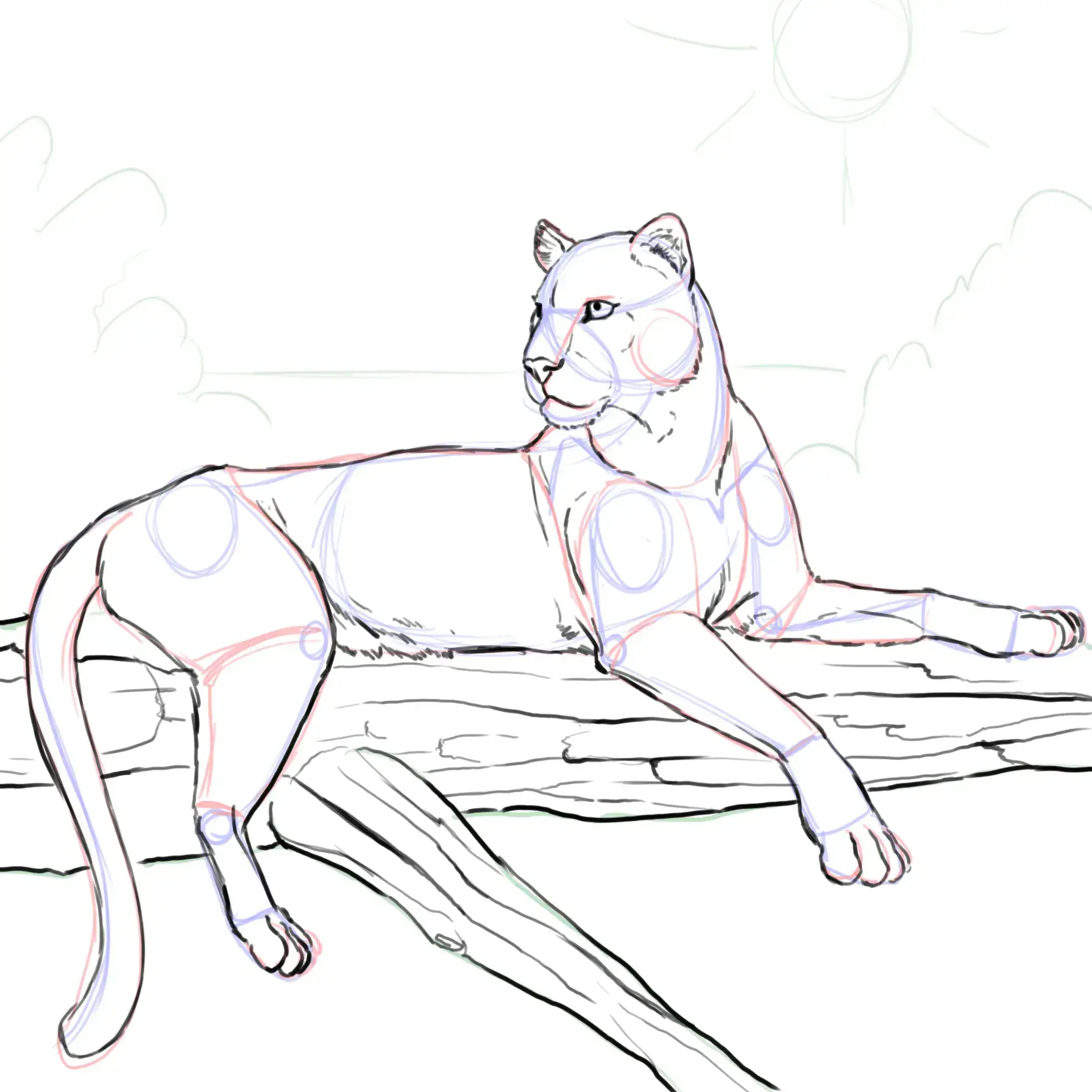
Draw long lines to define each section of the front legs, then add a few lines to mark the folds of the skin and create depth.
Observe how the part above the elbow seems to blend into the skin of the chest: this is an essential detail for a realistic anatomical rendering in this position.
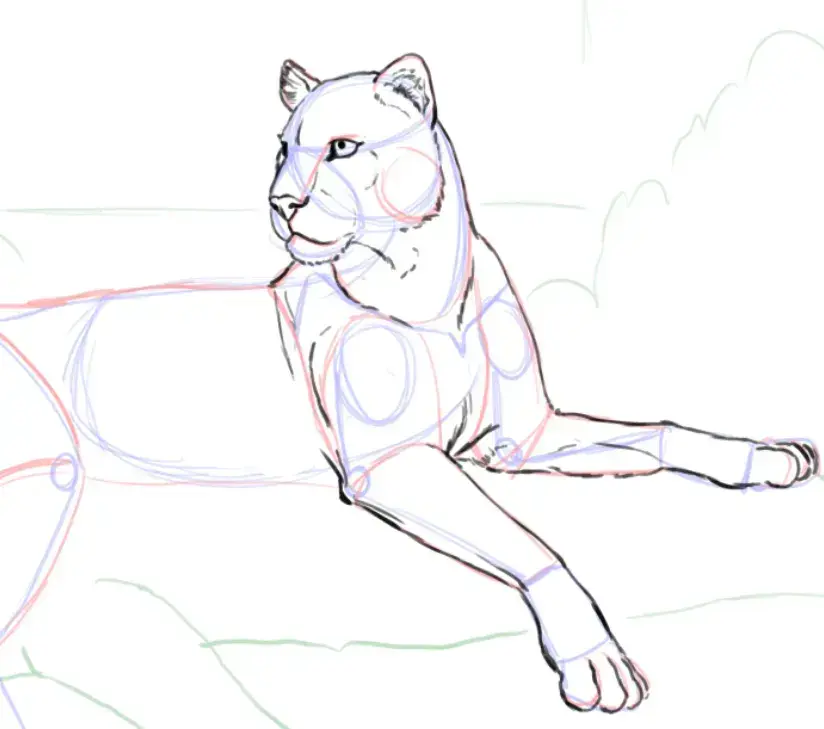
For the hind legs, draw them much more robustly, with larger muscles and more bulk. The hind legs are the most powerful in felines!
Using the hind legs as a reference, connect the chest to the pelvis with a slightly curved spine and a belly with abundant fur. Draw the tail in a curved manner, with a consistent thickness throughout.
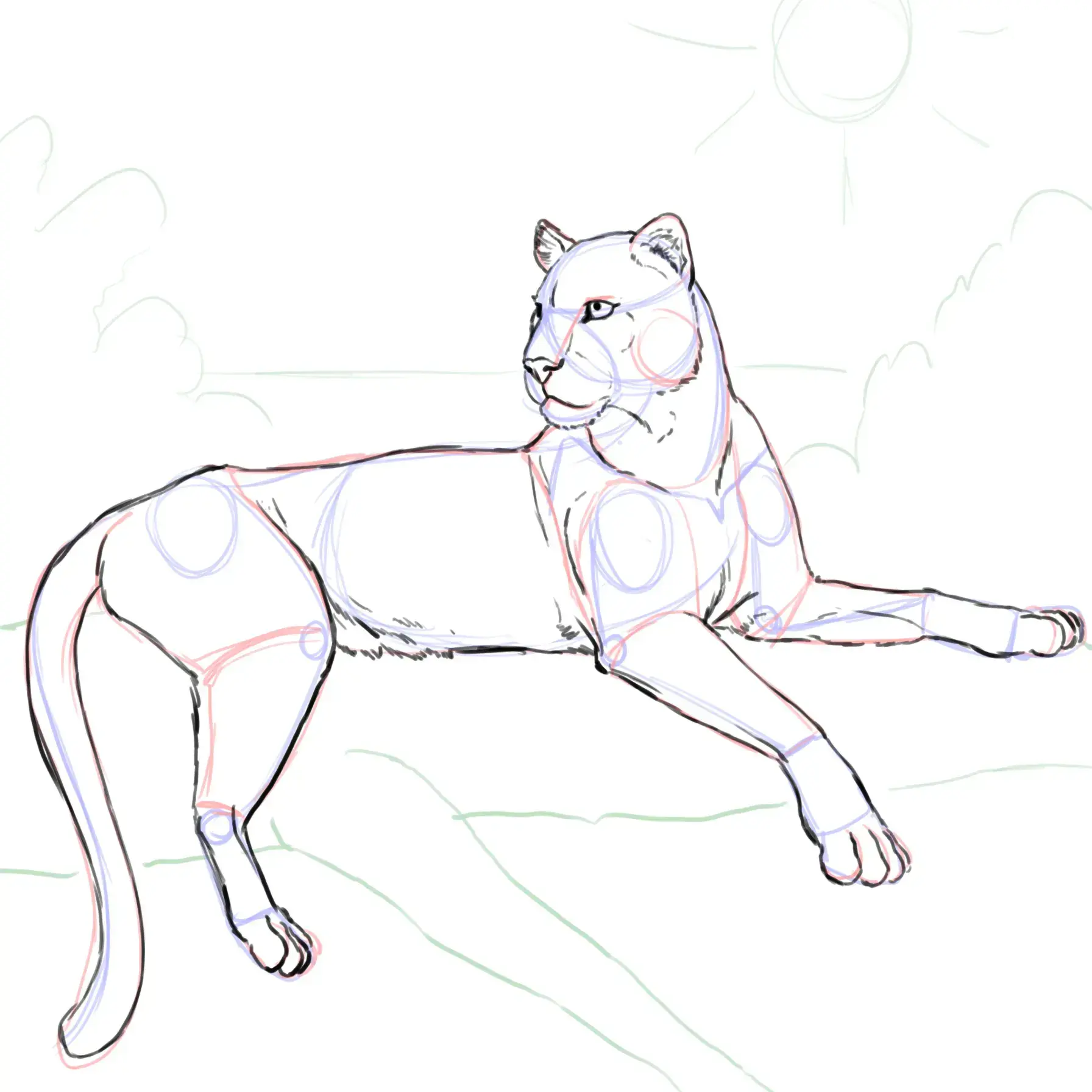
Your leopard needs a surface to rest on or observe its prey. A tree branch is perfect! Give it texture with long curves that change direction abruptly to simulate the bark.
Draw the fur
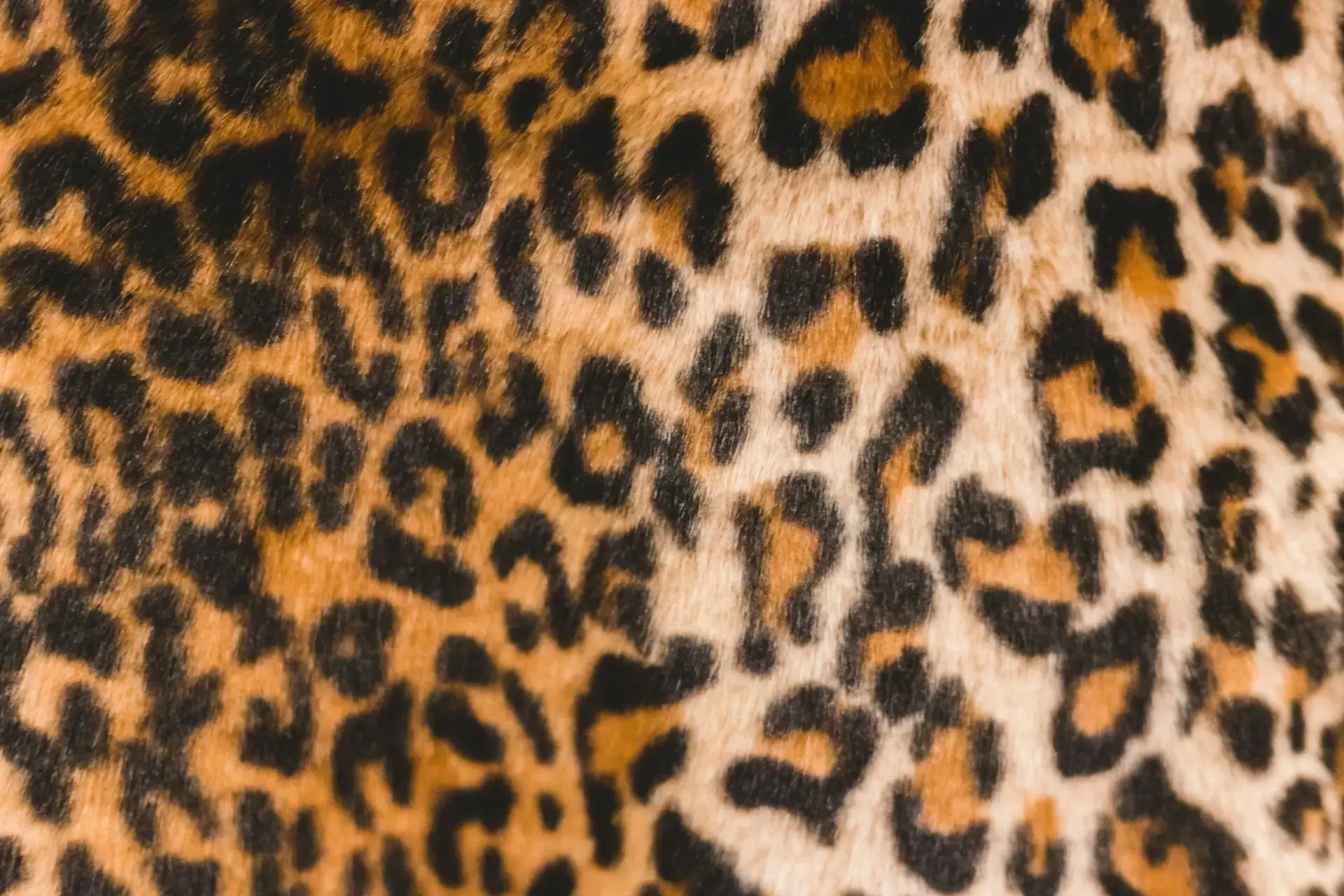
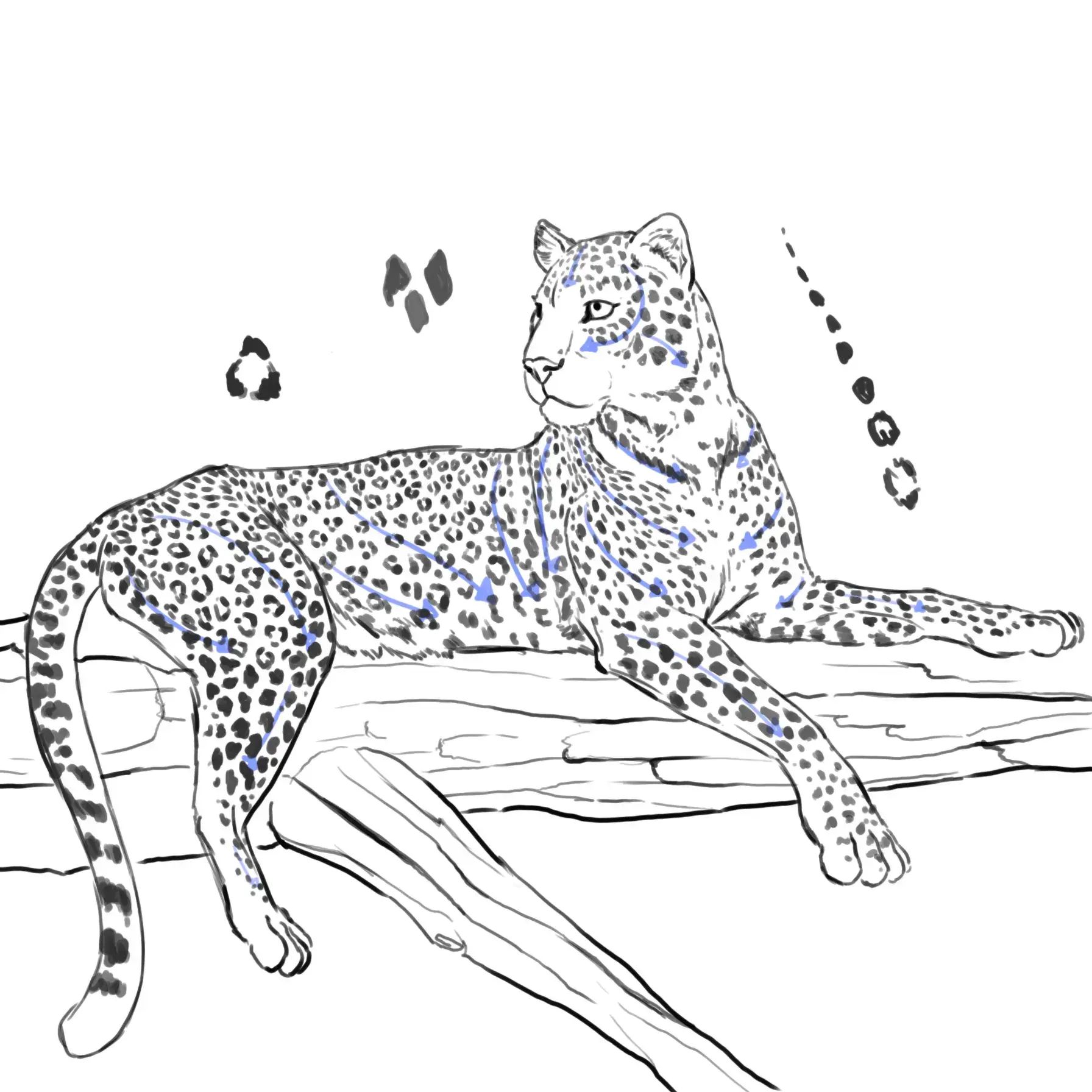
This is where your leopard truly comes to life! The spots are not placed randomly: they form a dynamic pattern that adapts to the shape of the body, the tension, and the folds of the skin.
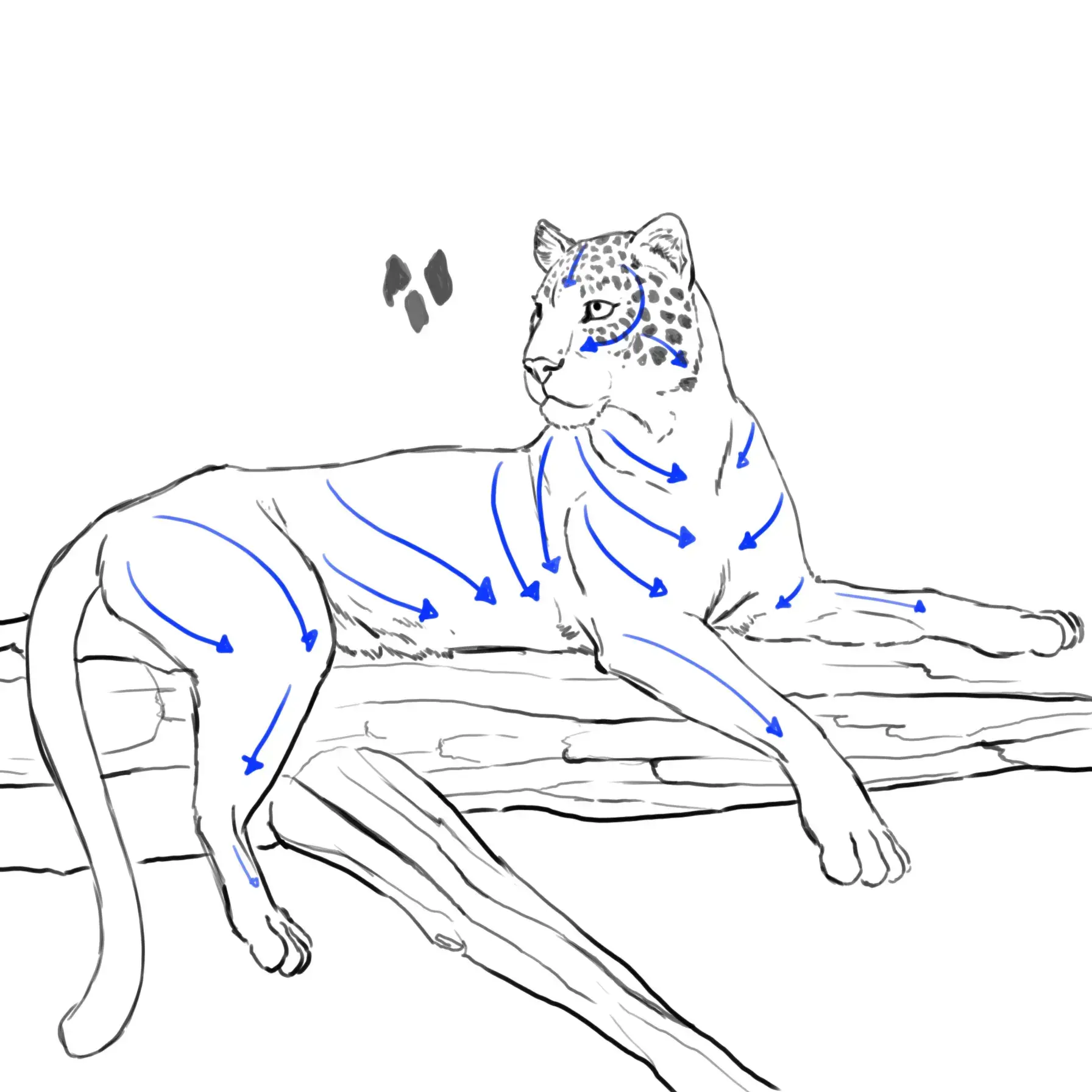
Rules for placing rosettes:
- On the face: Very small spots that gradually grow towards the cheeks
- On the chest: They become smaller again
- Towards the wrists: They swell again
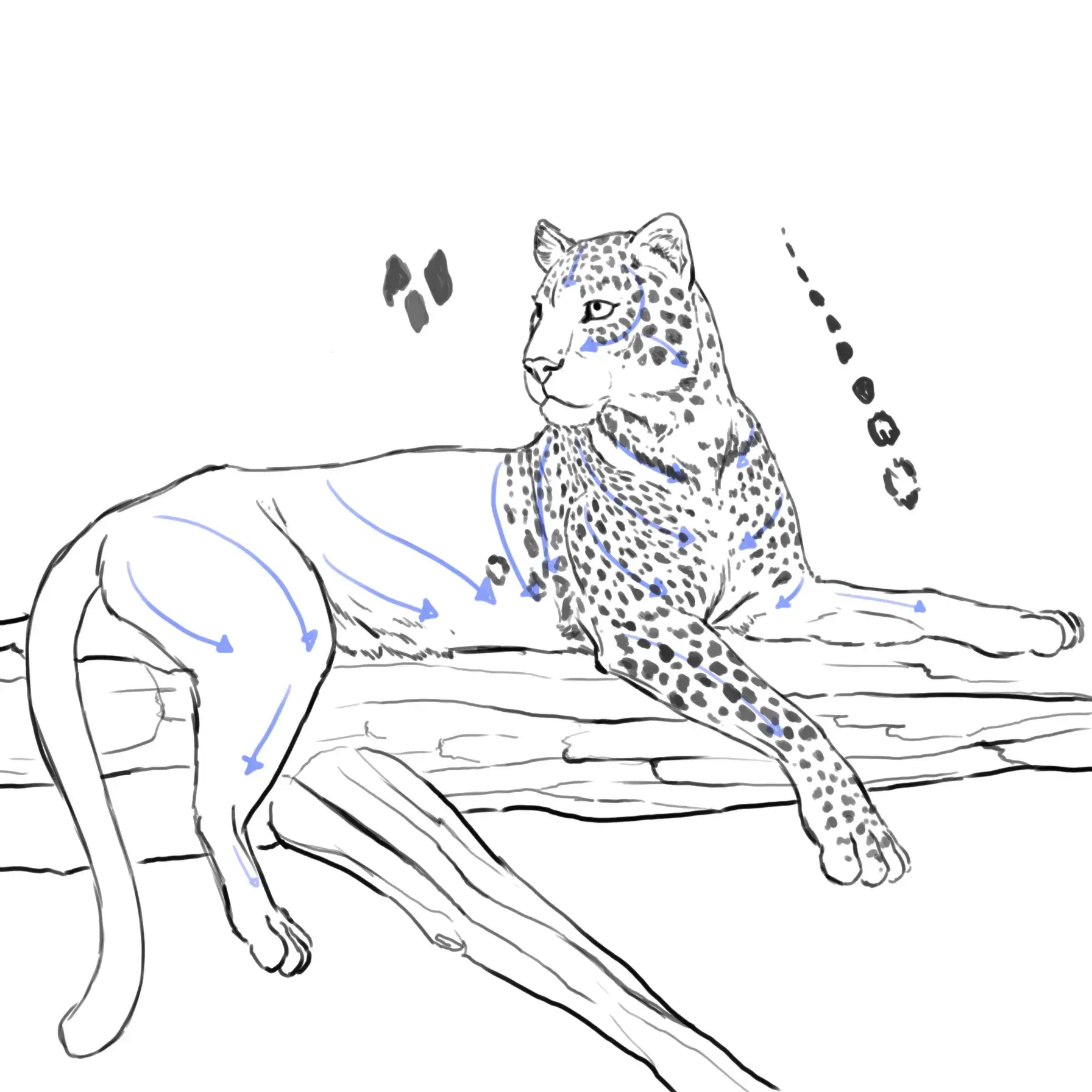
- On their paws: They become more discreet
- On the belly and thigh: The largest rosettes shaped like flower petals
- The spots follow natural trajectories that conform to the shape of the body. Take the time to closely observe these paths in order to render them realistically.
Add color to the drawing
Erase all traces of the sketch so only the final outline is visible. Then apply a warm color as a base, which will lead to a less contrasted and more harmonious result.
You can also add the outlines of the background to better construct the composition of the image, although this step can also be done at the end.
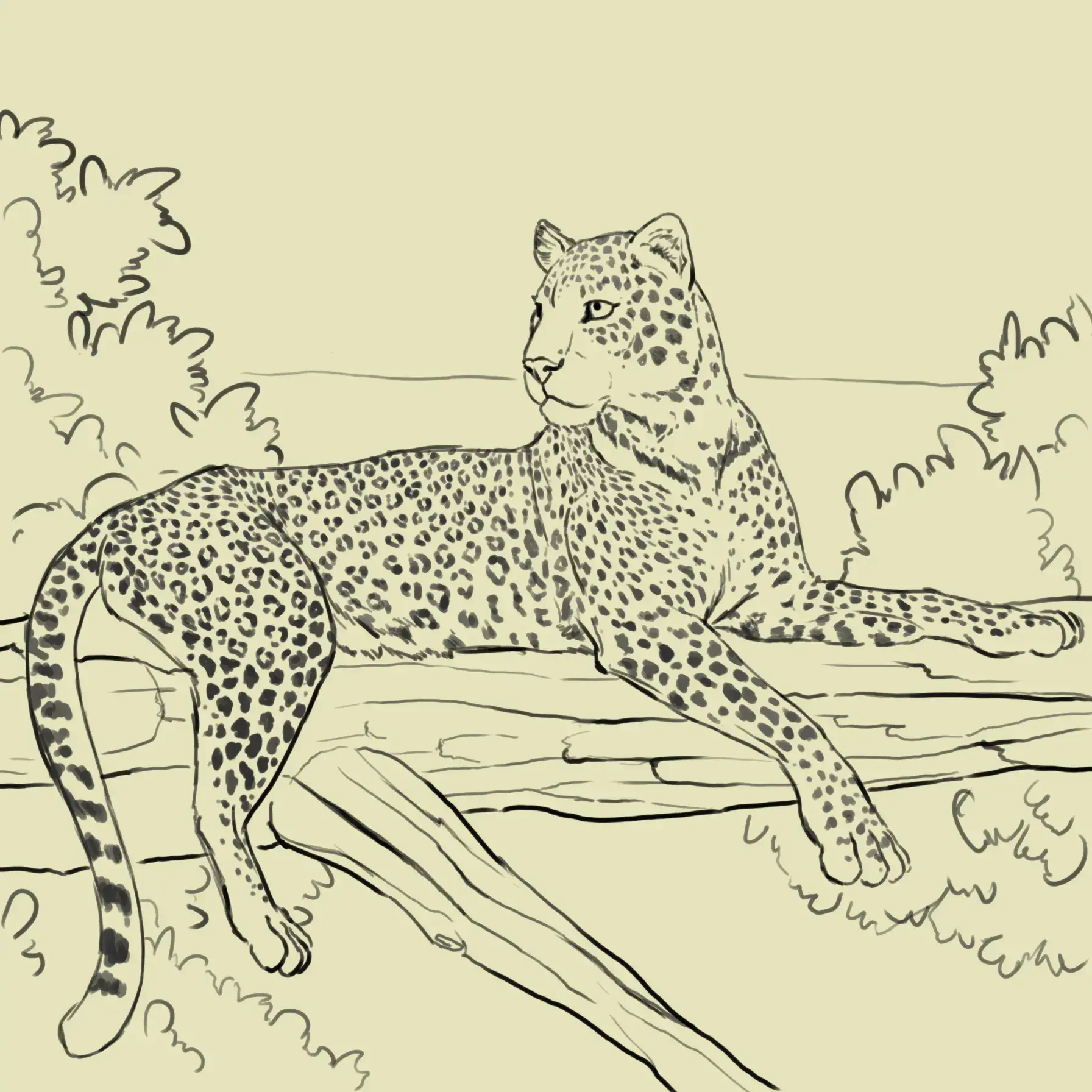
Let's now move on to the main colors of the leopard as well as the surface it rests on. Use bright ocher or golden tones for the coat, then a dark and dull brown to create contrast and add more depth.
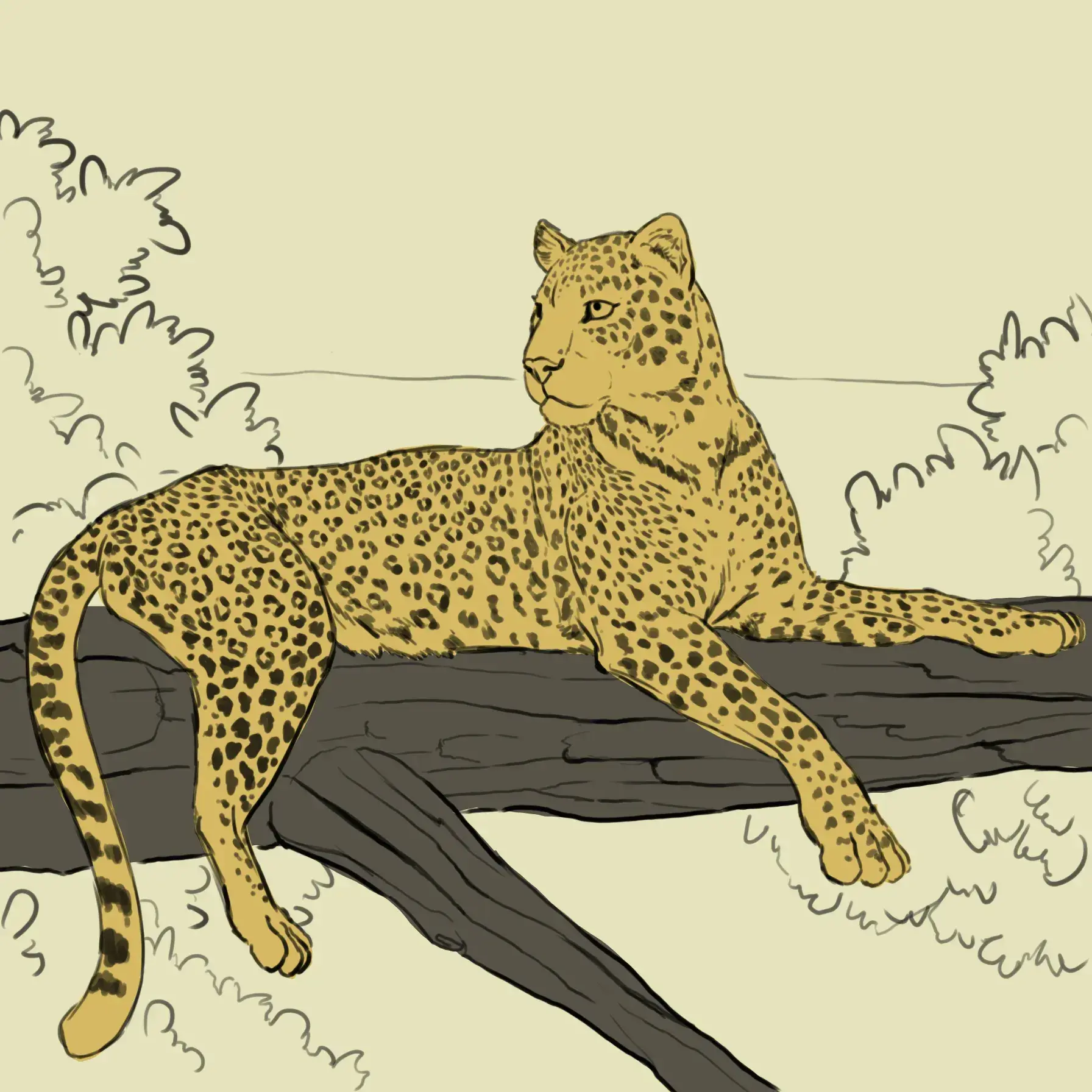
This type of feline has a characteristic white area that starts from the chin, goes down along the throat to the chest, extends along the belly to the tail, and also covers the inside of the legs.
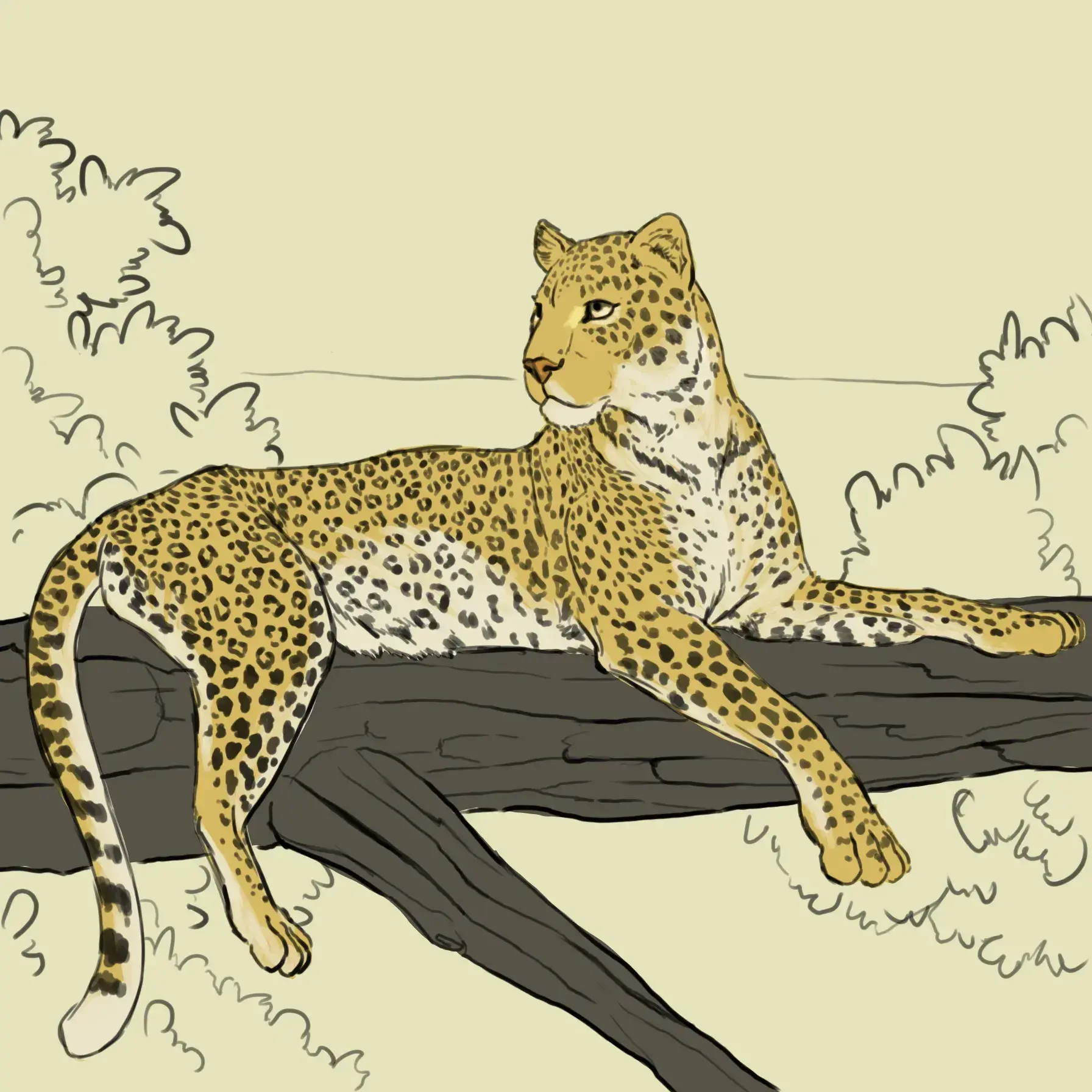
Using a darker shade, add the shadows created by the leopard's posture and the direction of the light. In this example, we can see that the head casts a shadow on the back. Shadows also appear on the sides of the legs and around the hips.
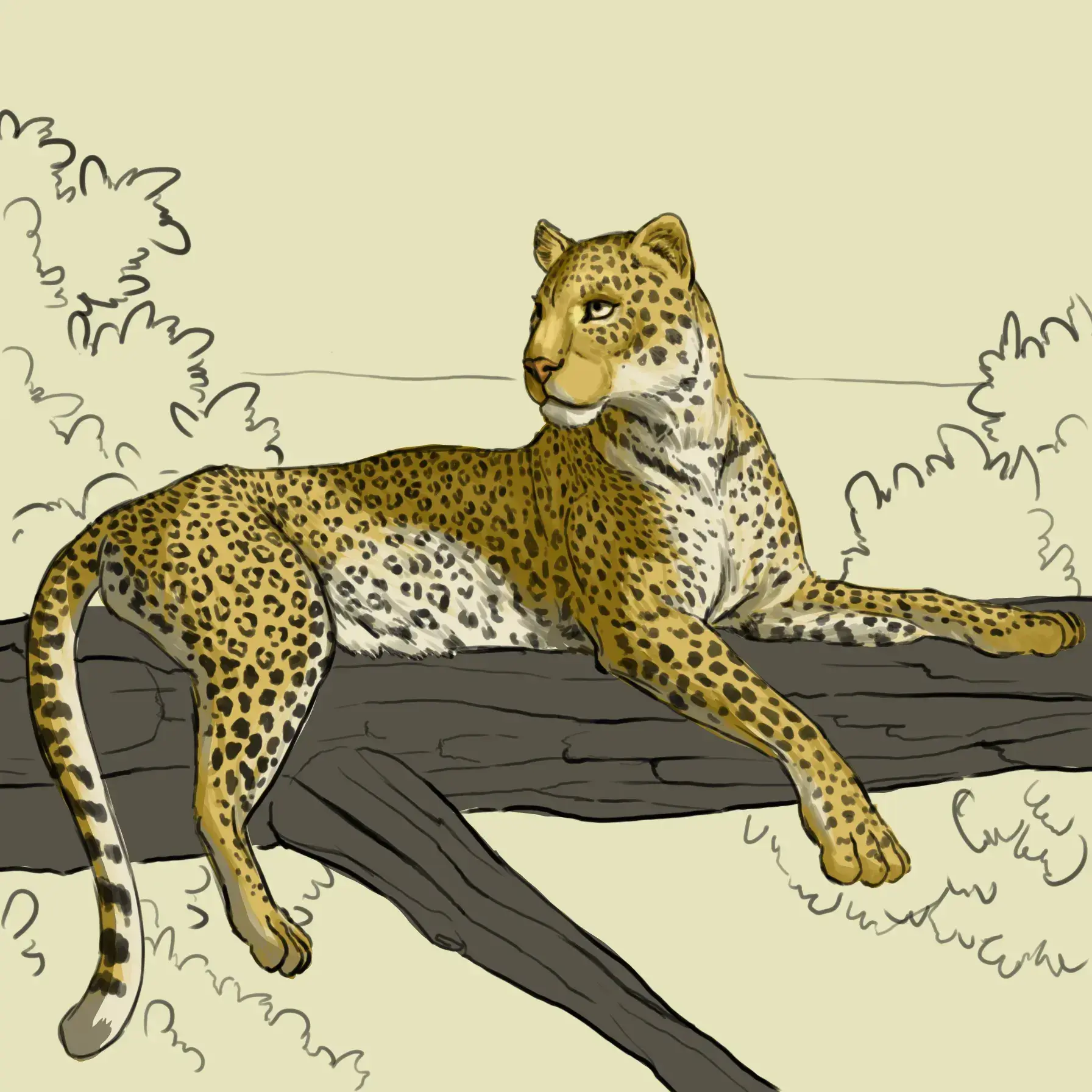
You can then enhance the contrast by applying deeper shadows in contact areas, such as the armpits and neck folds.
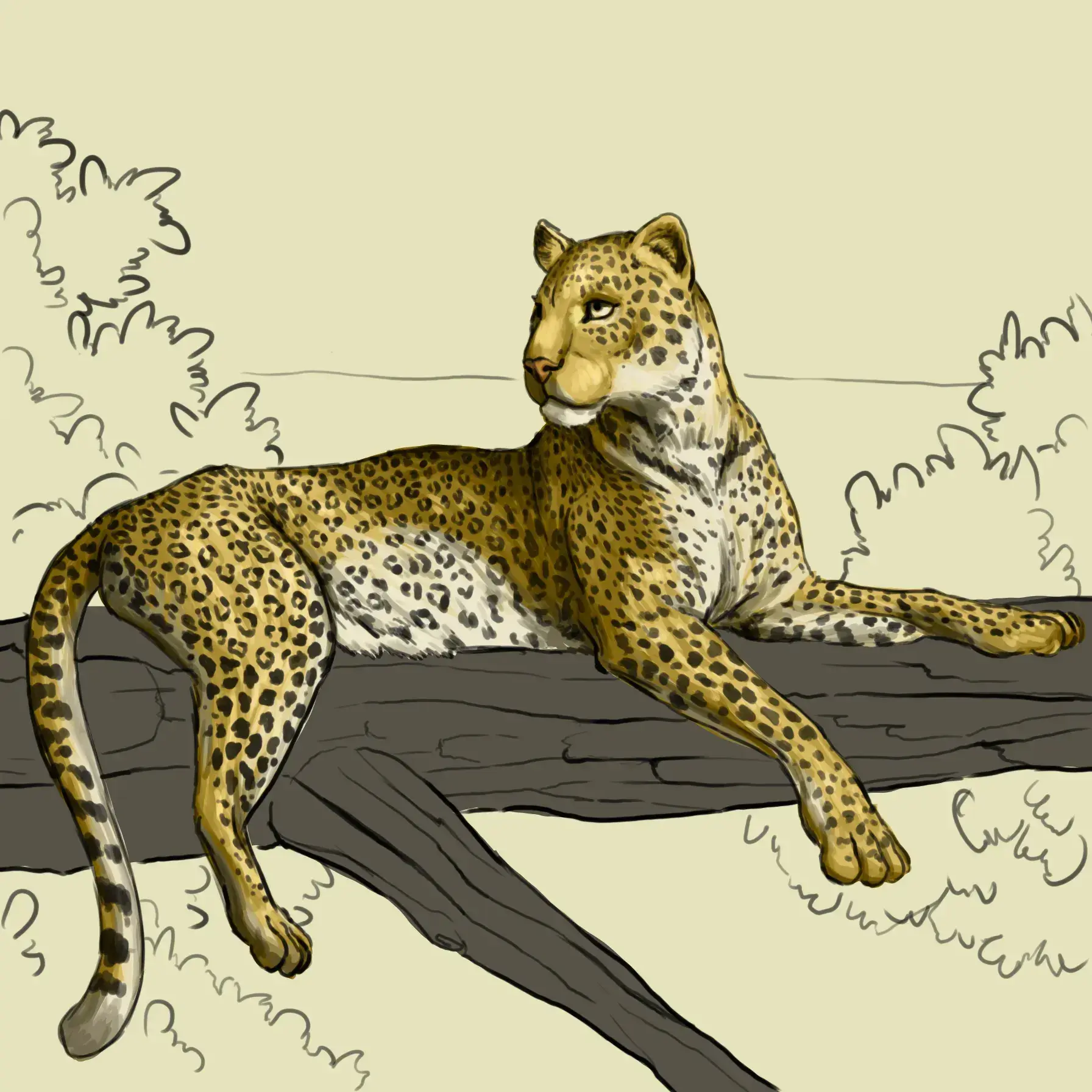
Use additional shades of ocher and orange to color the insides of the spots all over the body. Also use these shades to create the texture of strands in the fur, especially around the neck and legs, where the fur is more visible.
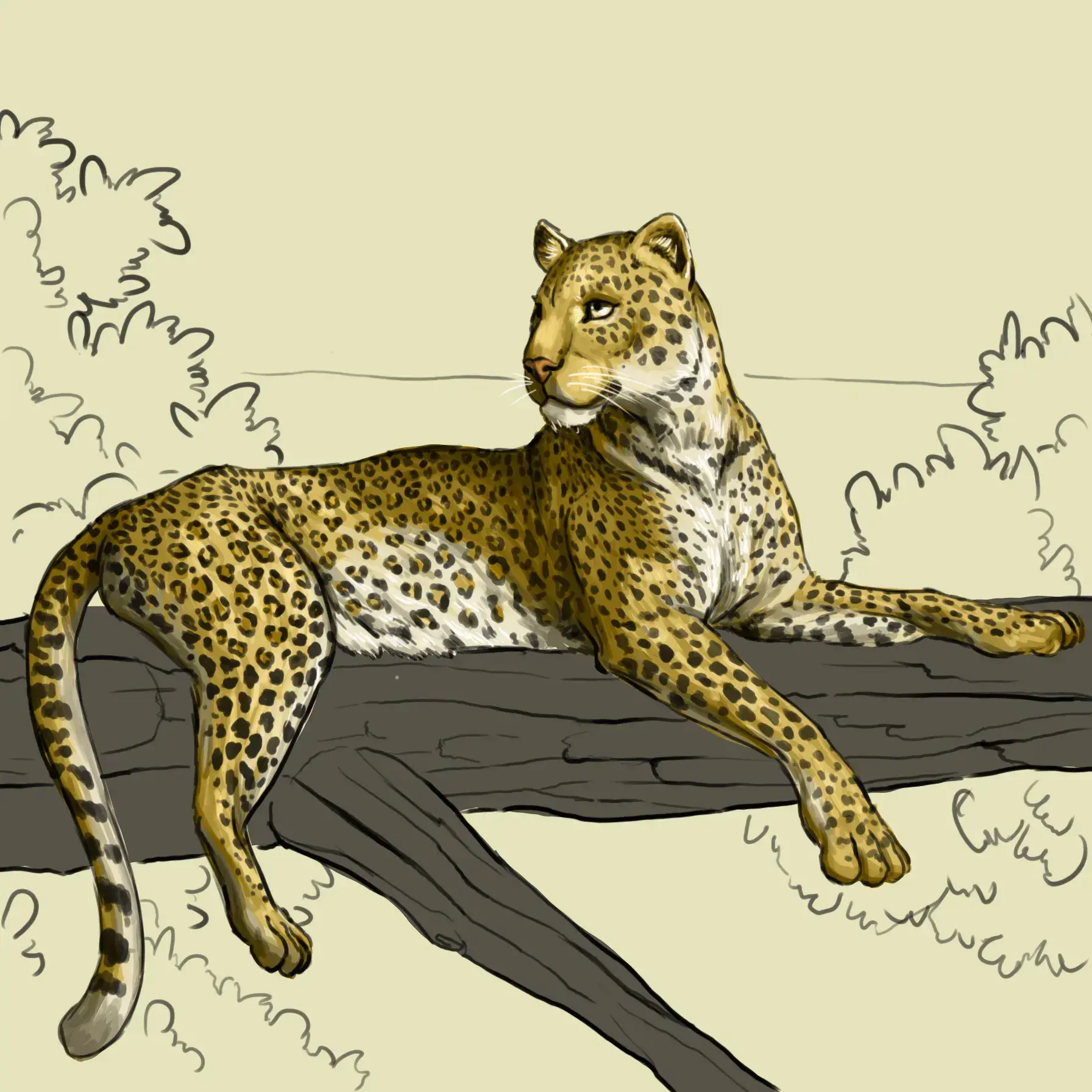
Start by applying a dark base, then add marked lines, without any blending, gradually using lighter but always dull colors. Avoid overly bright colors, and especially pure grays.
Also, make sure to keep the dark streaks, as they are what enable you to create real texture with rich dimension and depth.
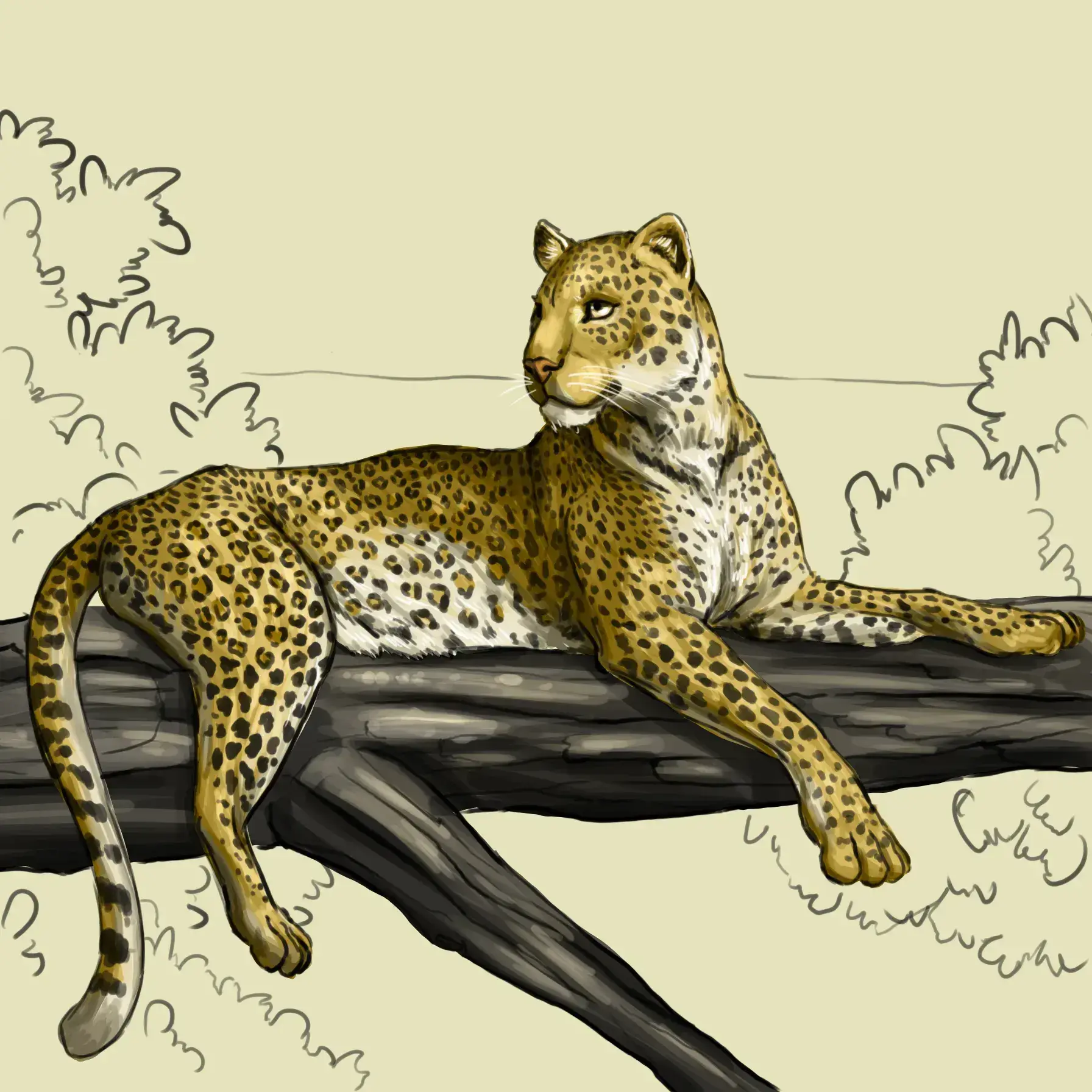
Finalize your leopard drawing
Finalize the drawing by adding a background. In this case, I will opt for a more illustrative approach with a minimalist setting, in order to leave all the attention on our feline. To do this, simply add a light spot as well as some subtle vague shadows in the trees.

And there you have it! Now you have all the elements to draw a magnificent leopard. This tutorial has enabled you to appreciate the unique qualities of this animal and understand what distinguishes it from its close cousins.
The key to success? Observe and carefully analyze your reference model. Don't hesitate to create your own version by adding your own personal touch. Happy drawing!
Discussion
No comments yet.