
How to Draw an Octopus
The sea hides a world that is completely different from that on the surface, and which is populated by strange creatures. The octopus is the perfect example: an animal that baffles even the scientific community, and which provides an original subject for drawing. Let's take a look!
Characteristics of an octopus
An octopus has a large head which intuitively suggests that it is extremely intelligent, and this is true. It is a creature capable of adapting and responding effectively to the difficulties of its environment.
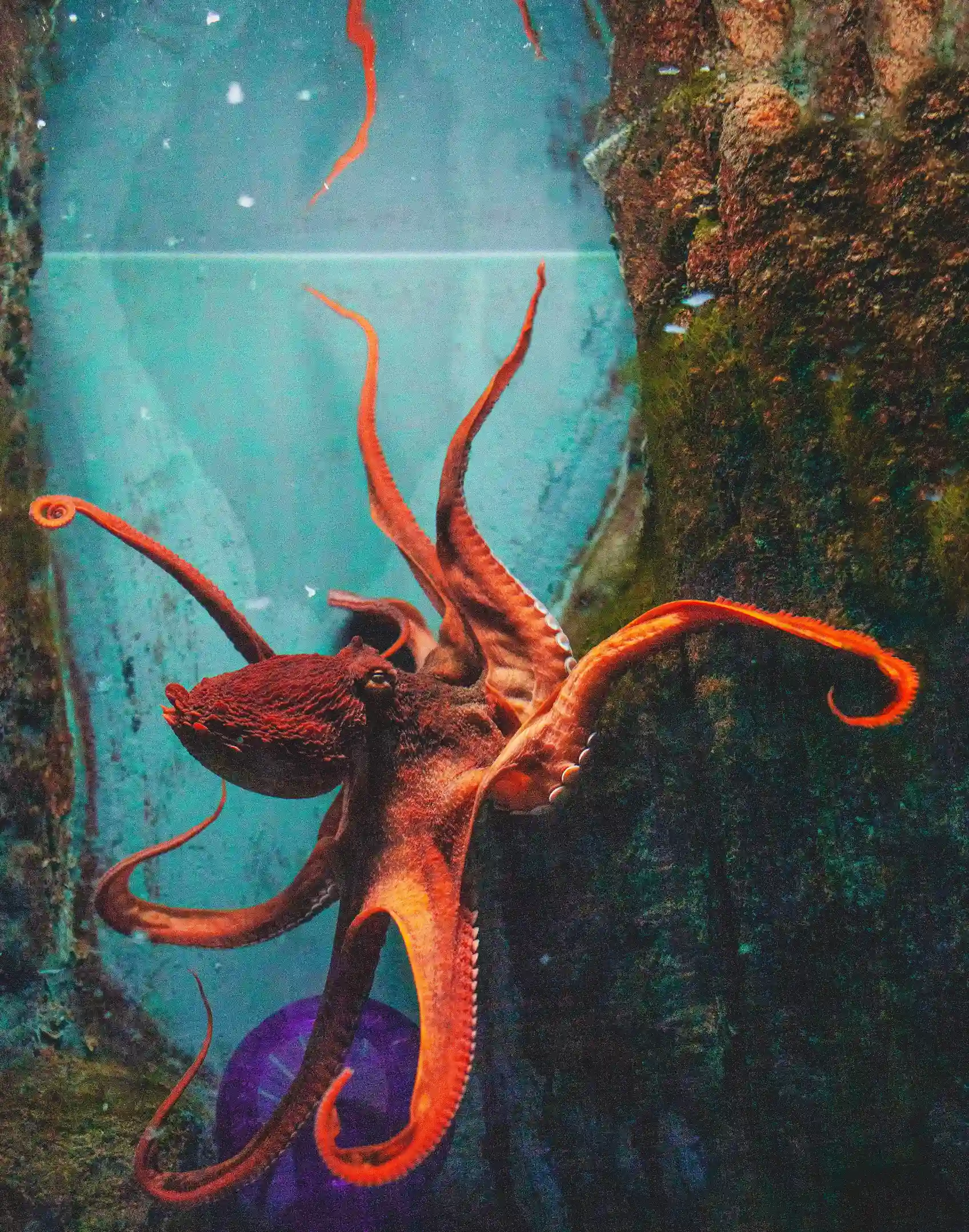
On a physical level, there is a lot to say. Its eight long, fully flexible arms are equipped with suction cups that make certain tasks easier, and its mouth is located in the center of its limbs. It has three hearts that pump blue blood. And if that wasn't enough, it can camouflage itself by changing color and texture, and even regenerate lost tentacles.
How to draw an octopus step by step
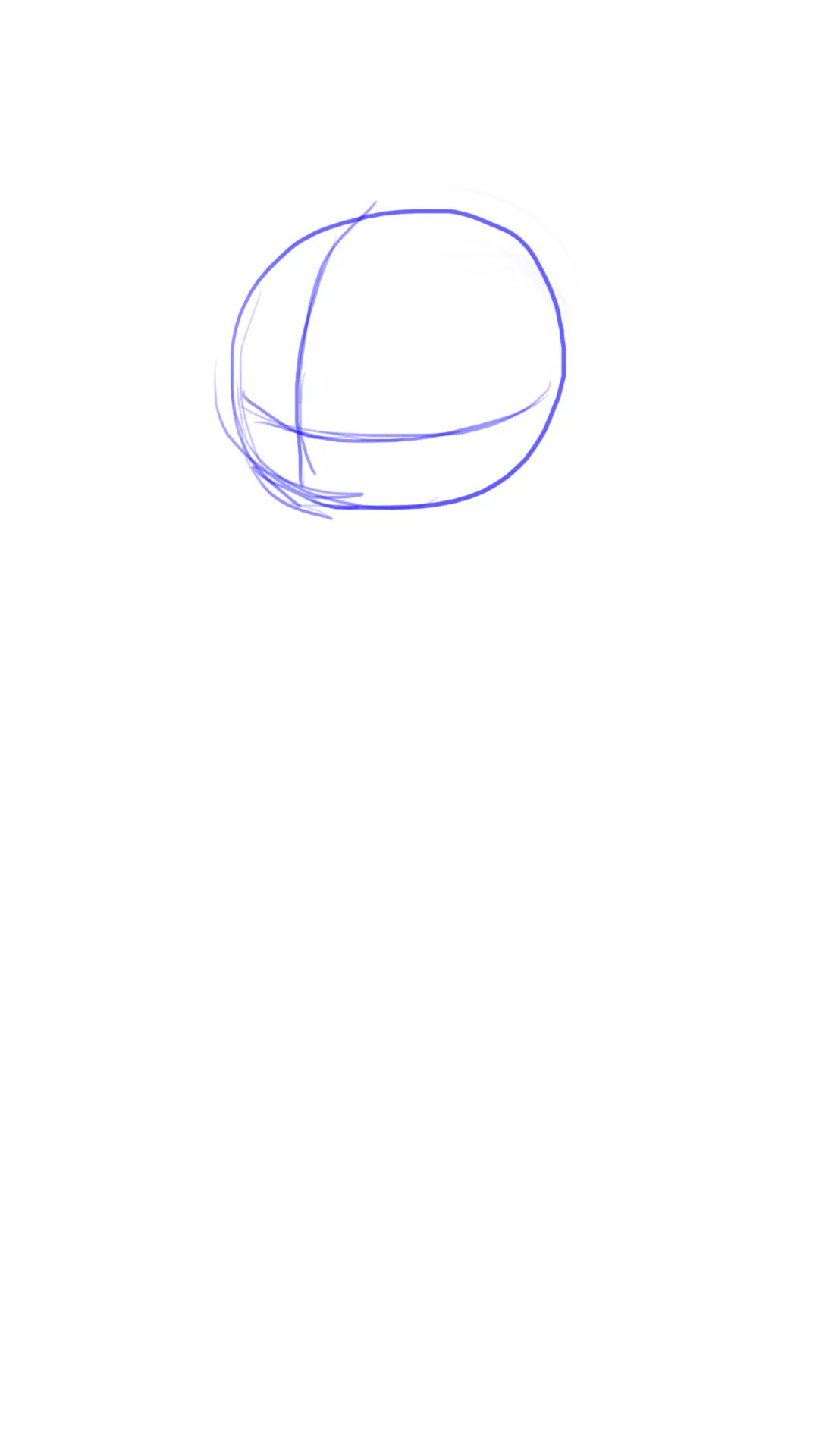
Start by drawing a sphere and divide it horizontally and vertically, as if you were going to draw a face. Tilt it slightly to three quarters view in order to avoid a result that is too flat.
Place two small, well-separated circles for the eyes, then add a skirt that widens underneath.
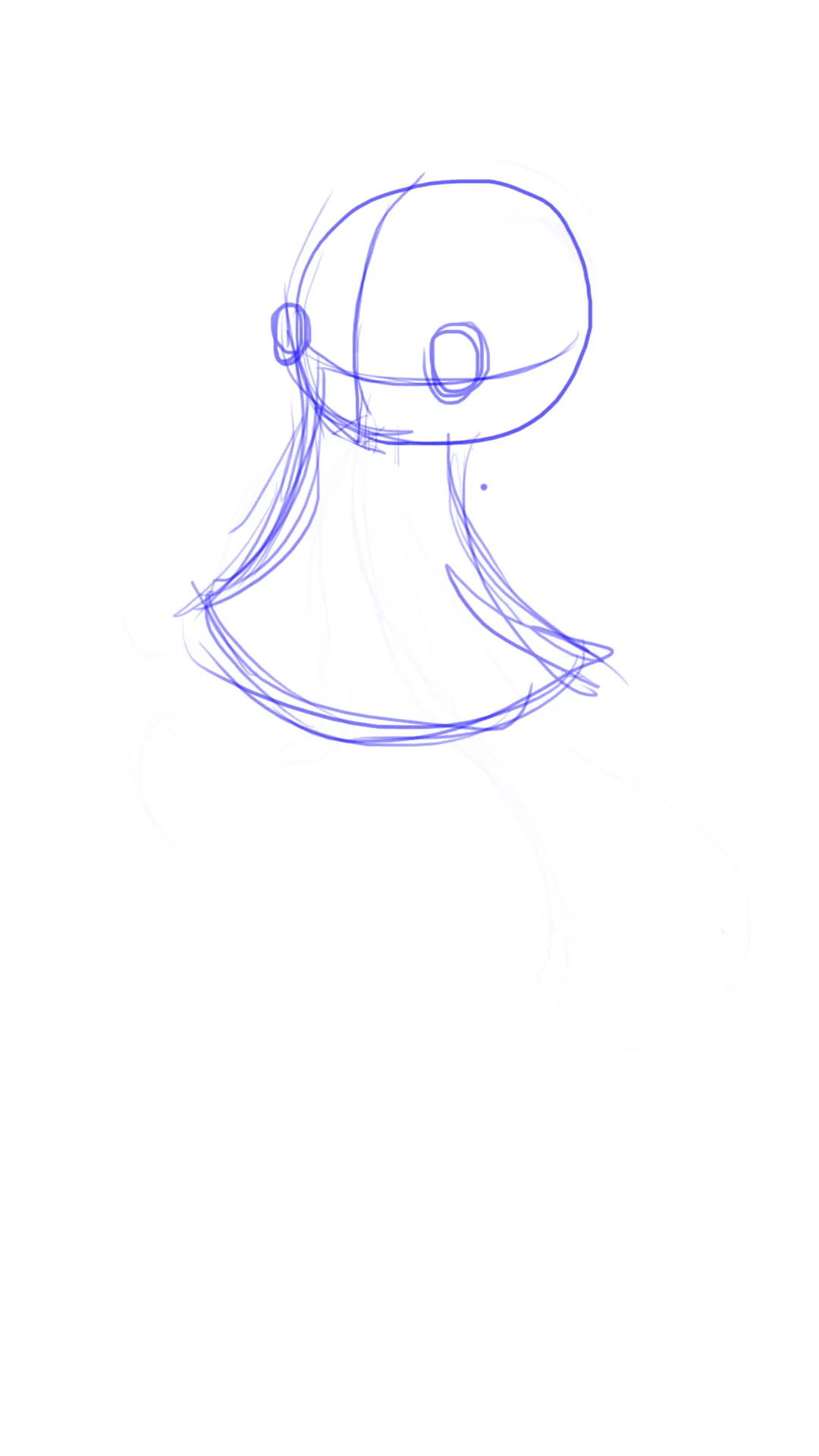
Divide this skirt into eight sections and, from each of them, draw long curved lines with completely different trajectories. Having them overlap gives a more natural look.
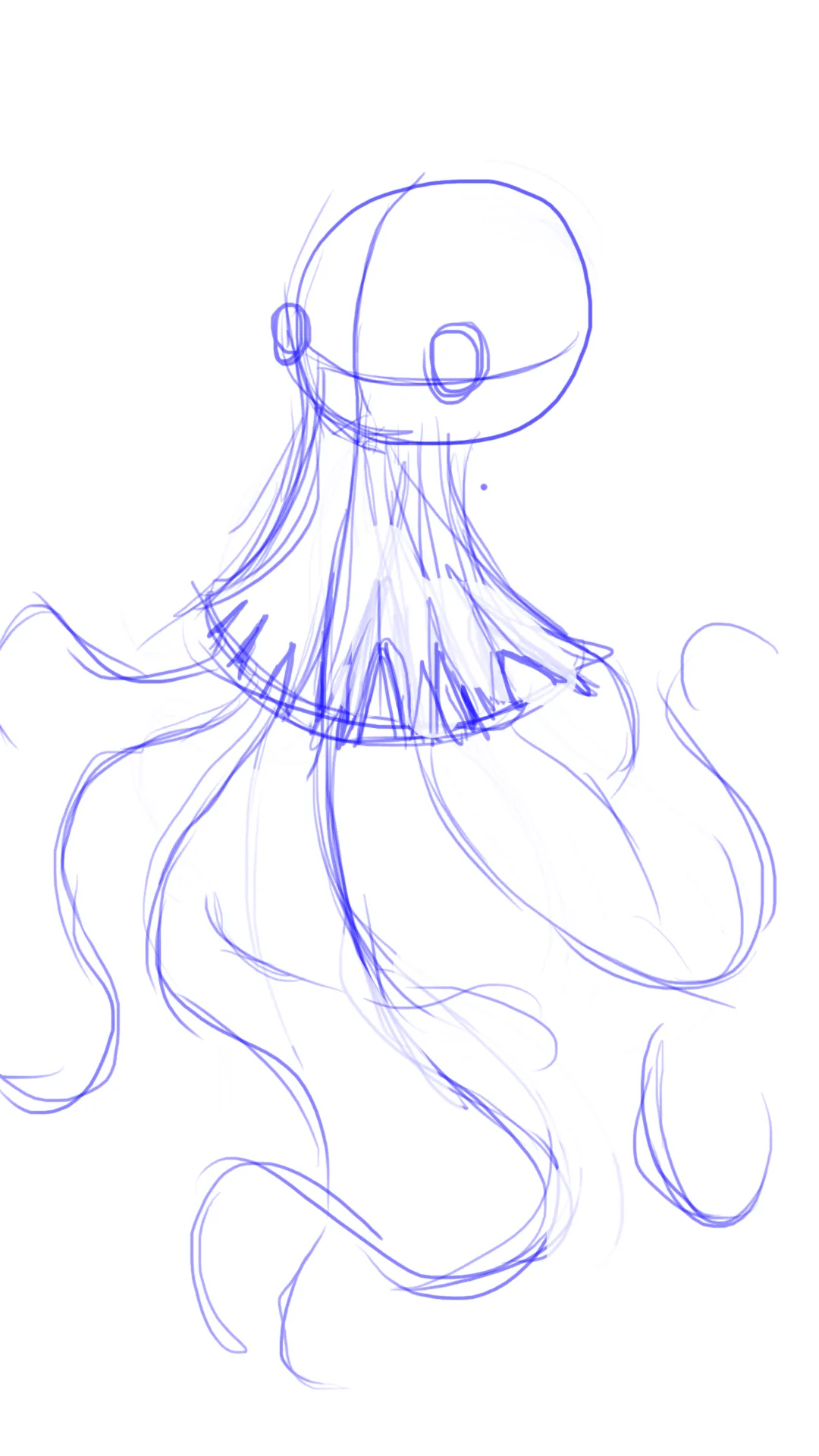
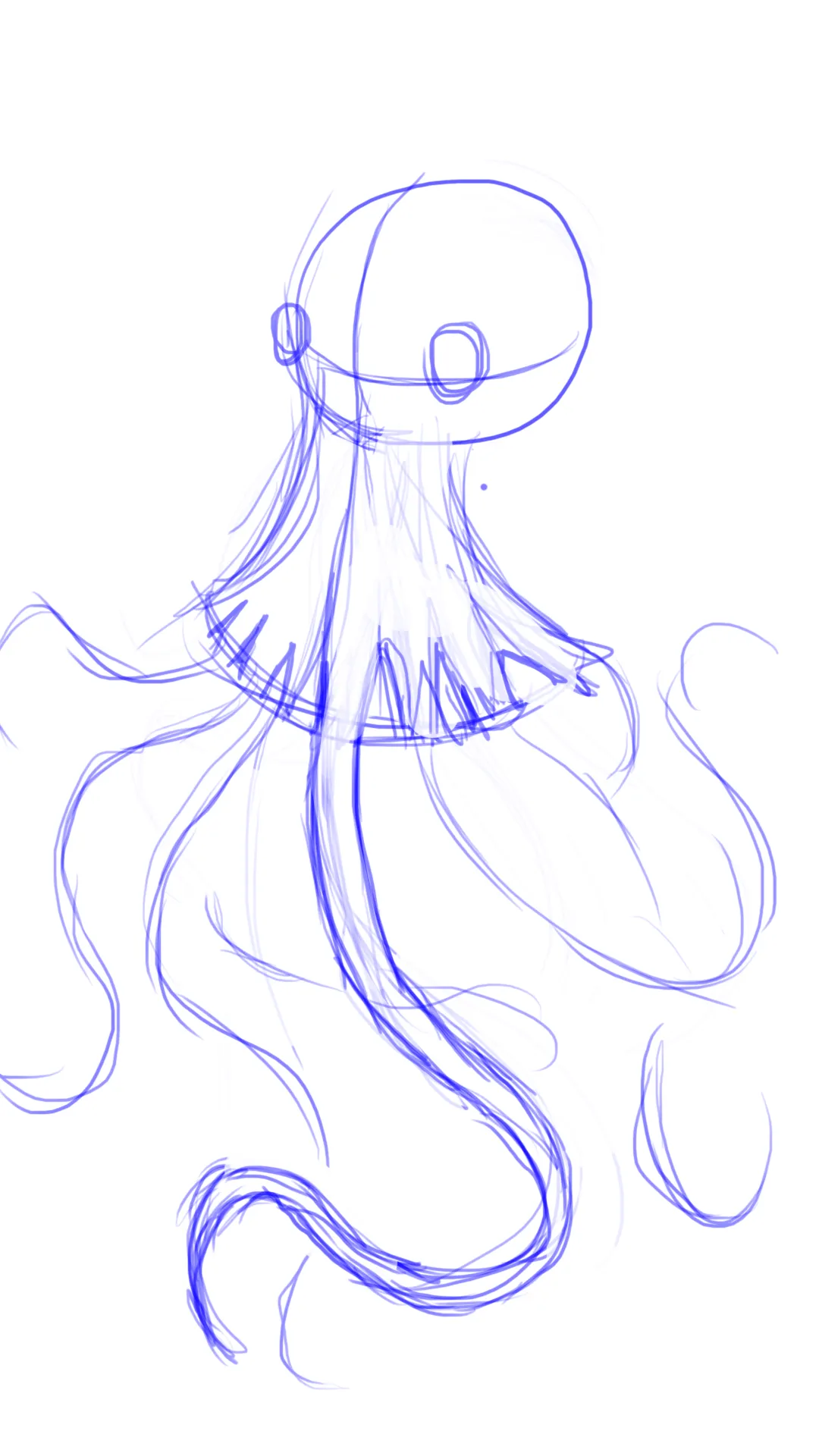
Using these guide lines, draw each tentacle one by one. It has a regular shape but gradually narrows towards the end.
Once all the tentacles are drawn, connect them with a membrane in the shape of an inverted V, at approximately the same height between each arm.
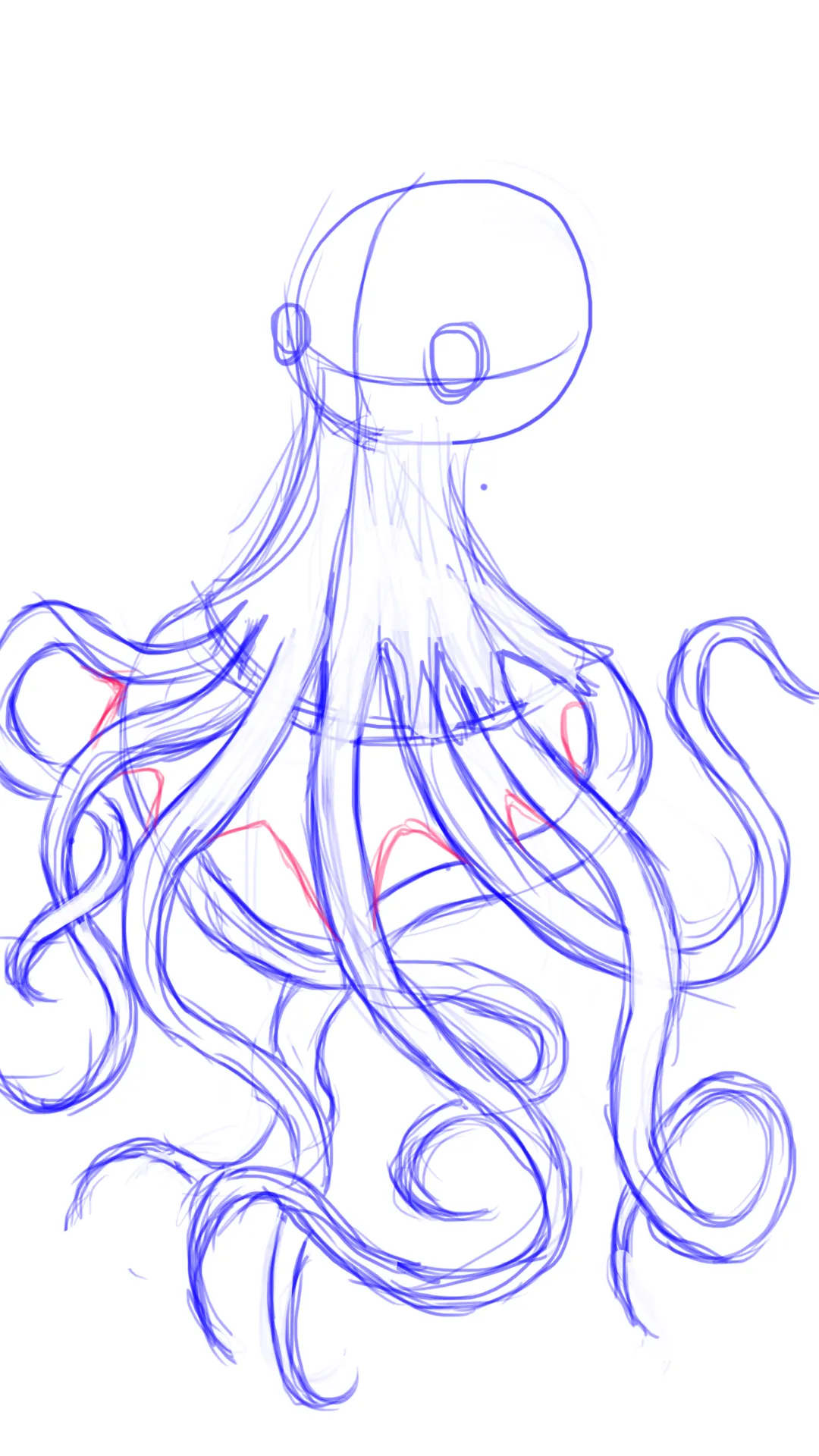
Add some details: a slight overhang at the back of the head and a funnel-like organ located under the eyes.
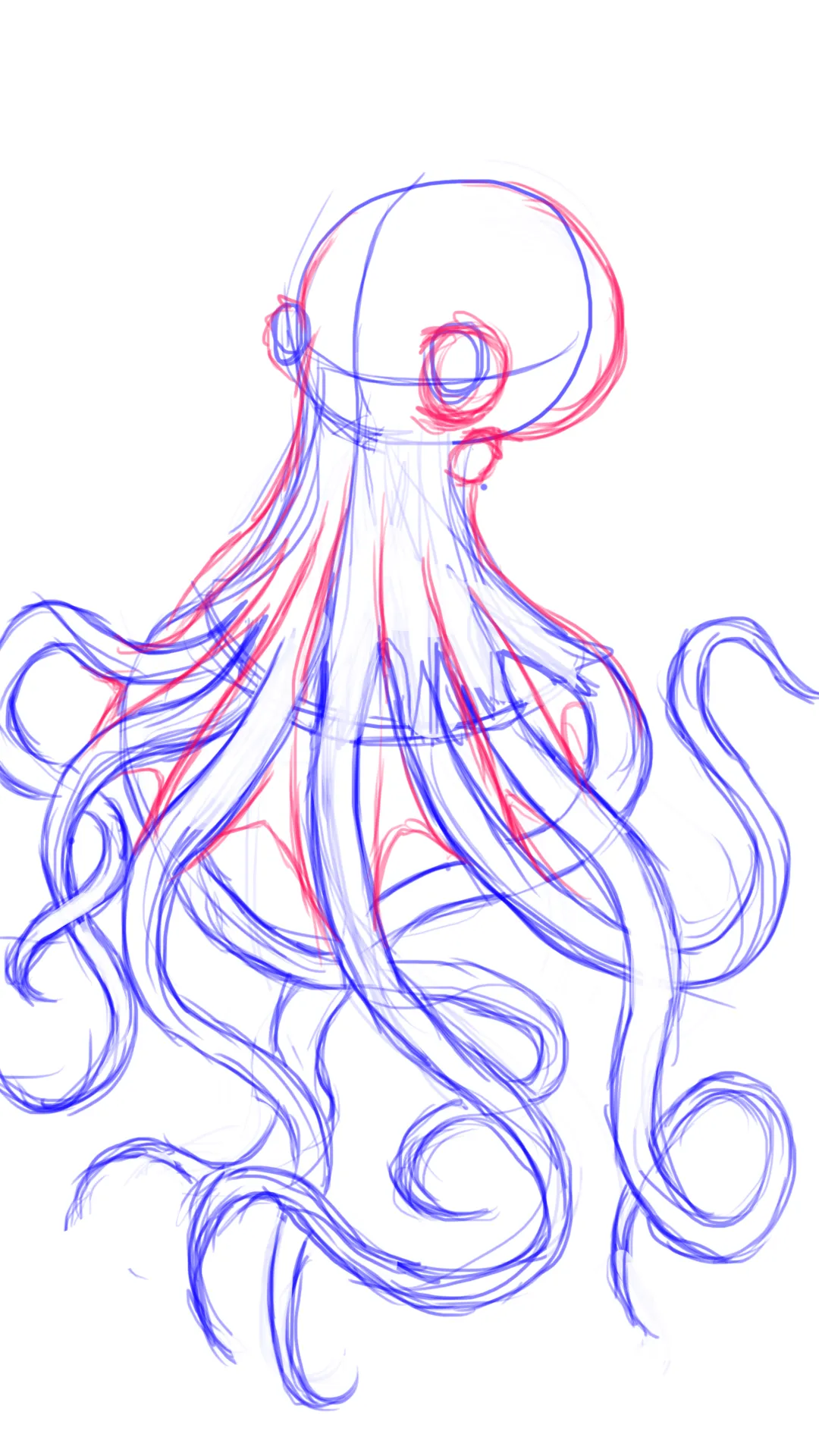
Erase excess graphite or place a new sheet on a light table before beginning the final drawing.
Start with the eyes: a slightly curved horizontal line, surrounded by a large bulge.
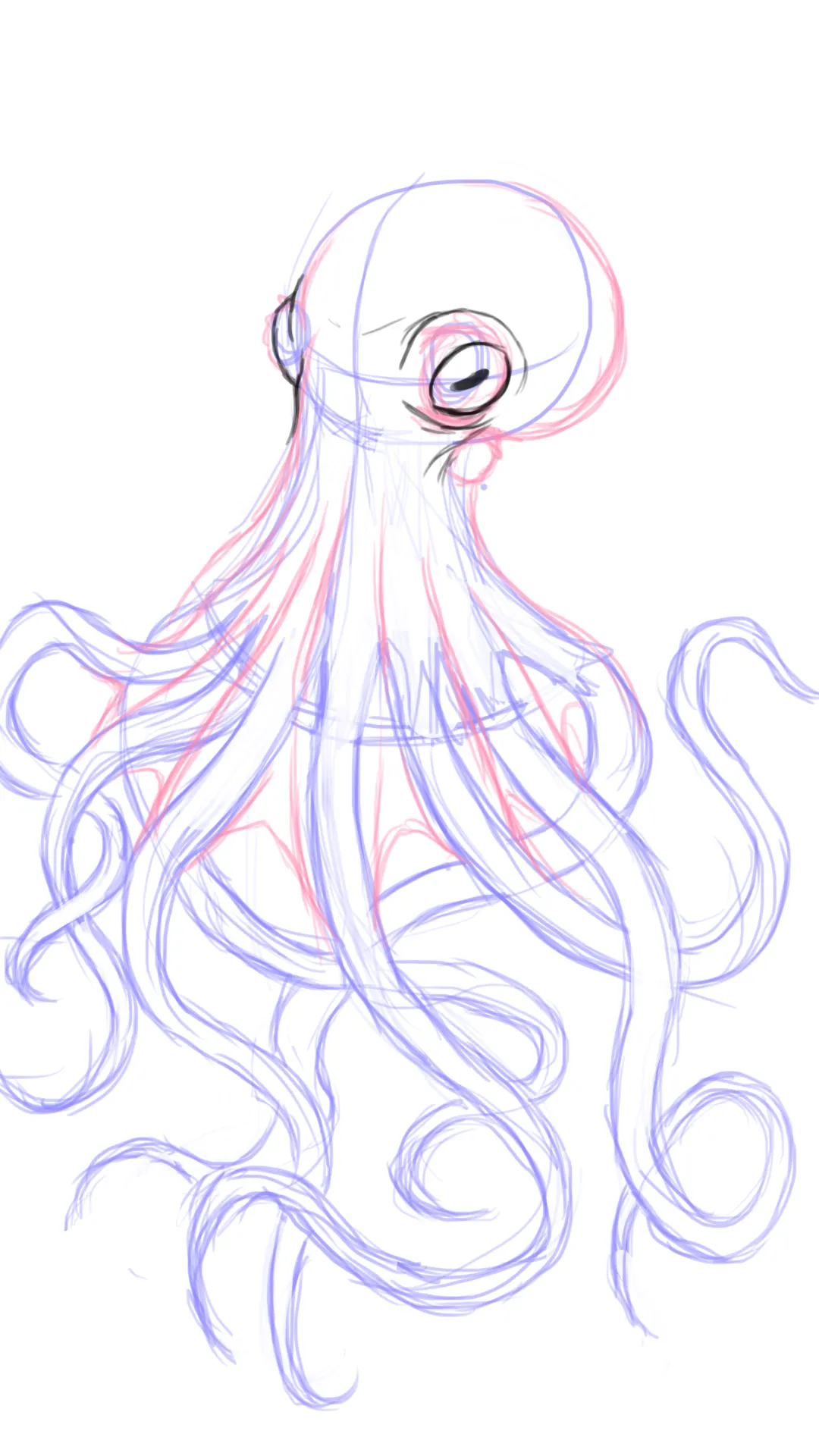
Then draw the outline of the head, adding a few wrinkles and small warts to create the characteristic texture of the skin. If you prefer to leave it smooth, that's just as valid, octopus skin is changeable by nature.
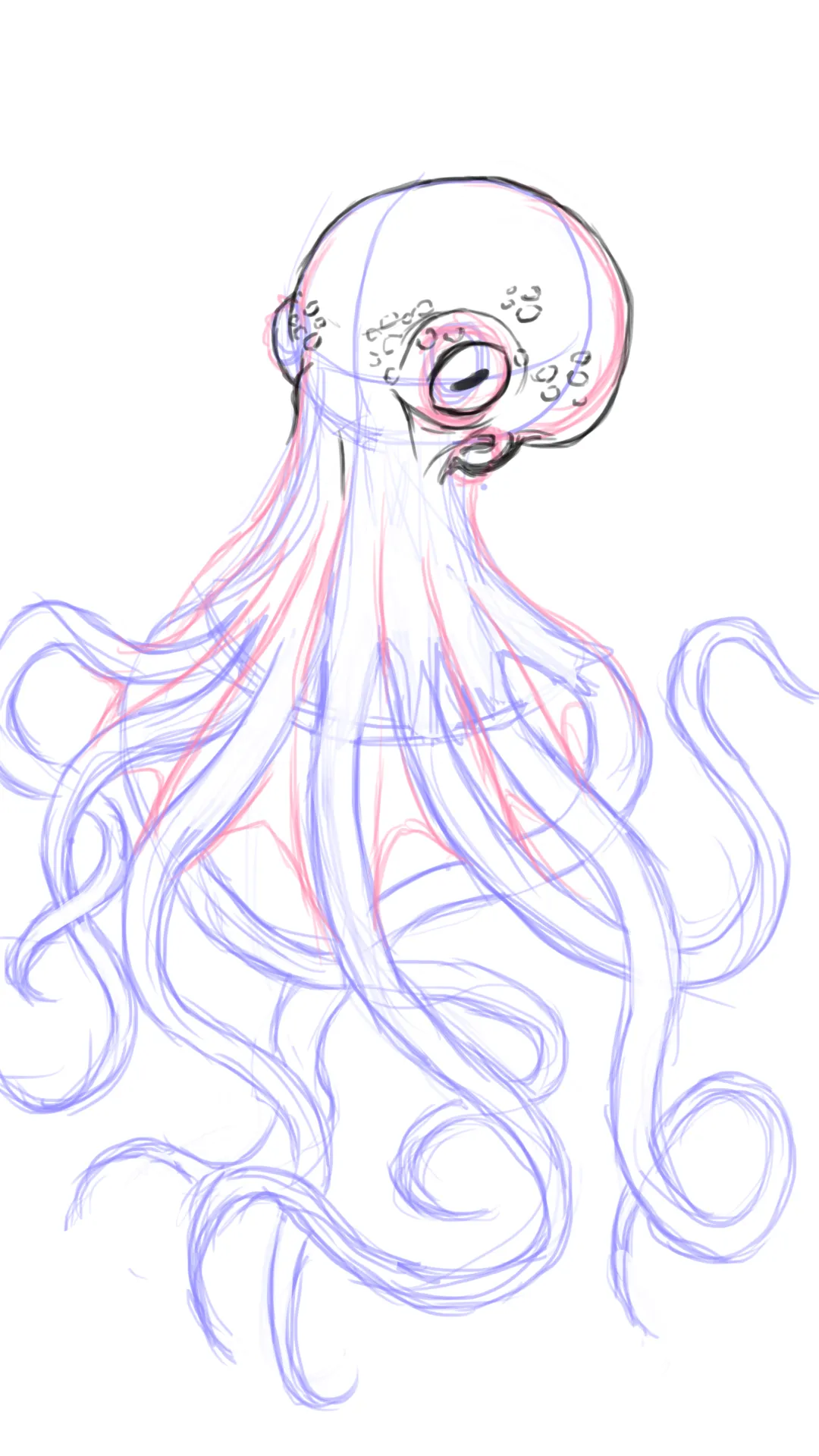
Draw the octopus's suckers
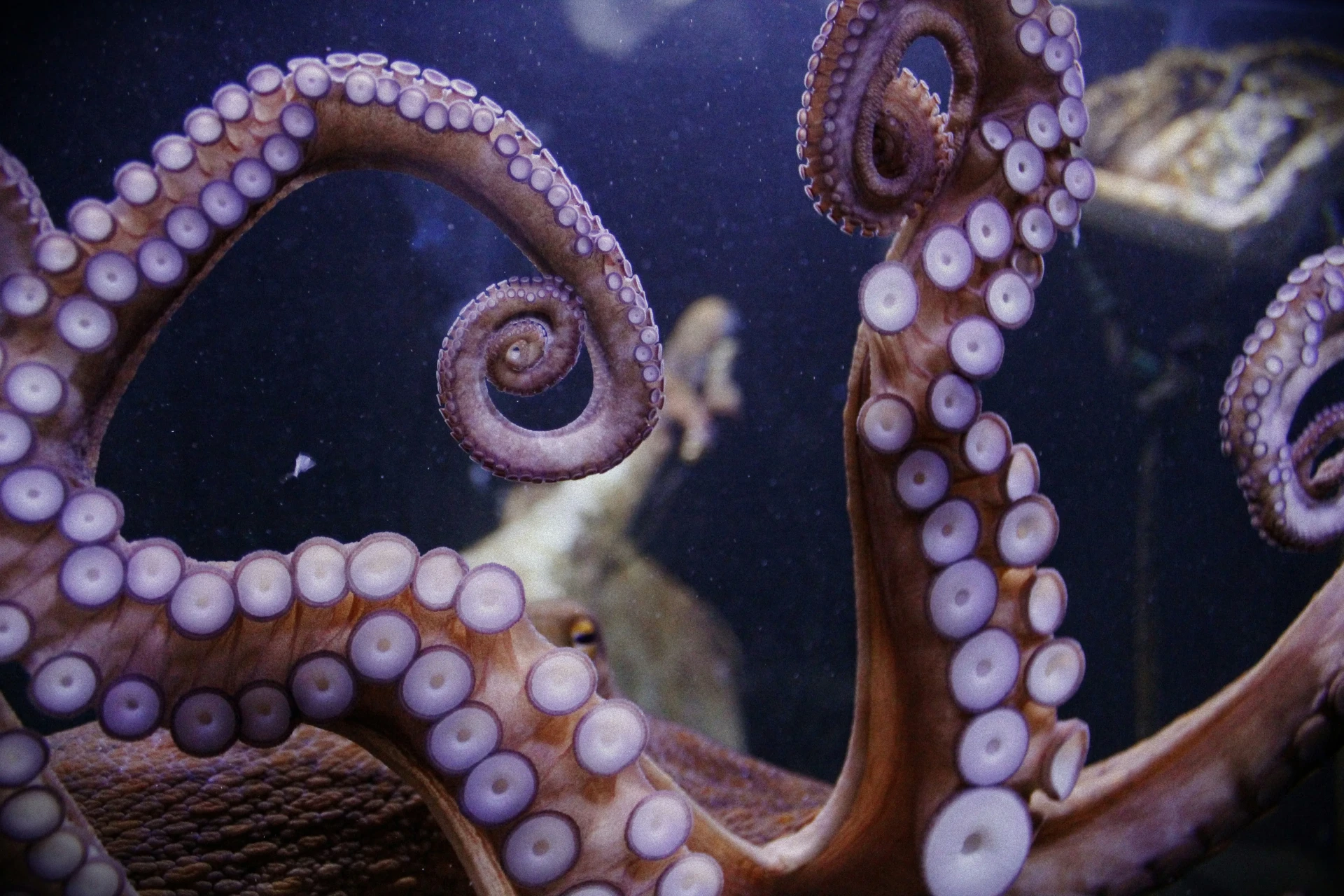
For the tentacles, trace their shape first, then add a strip of suction cups that fits the curve of the limb.
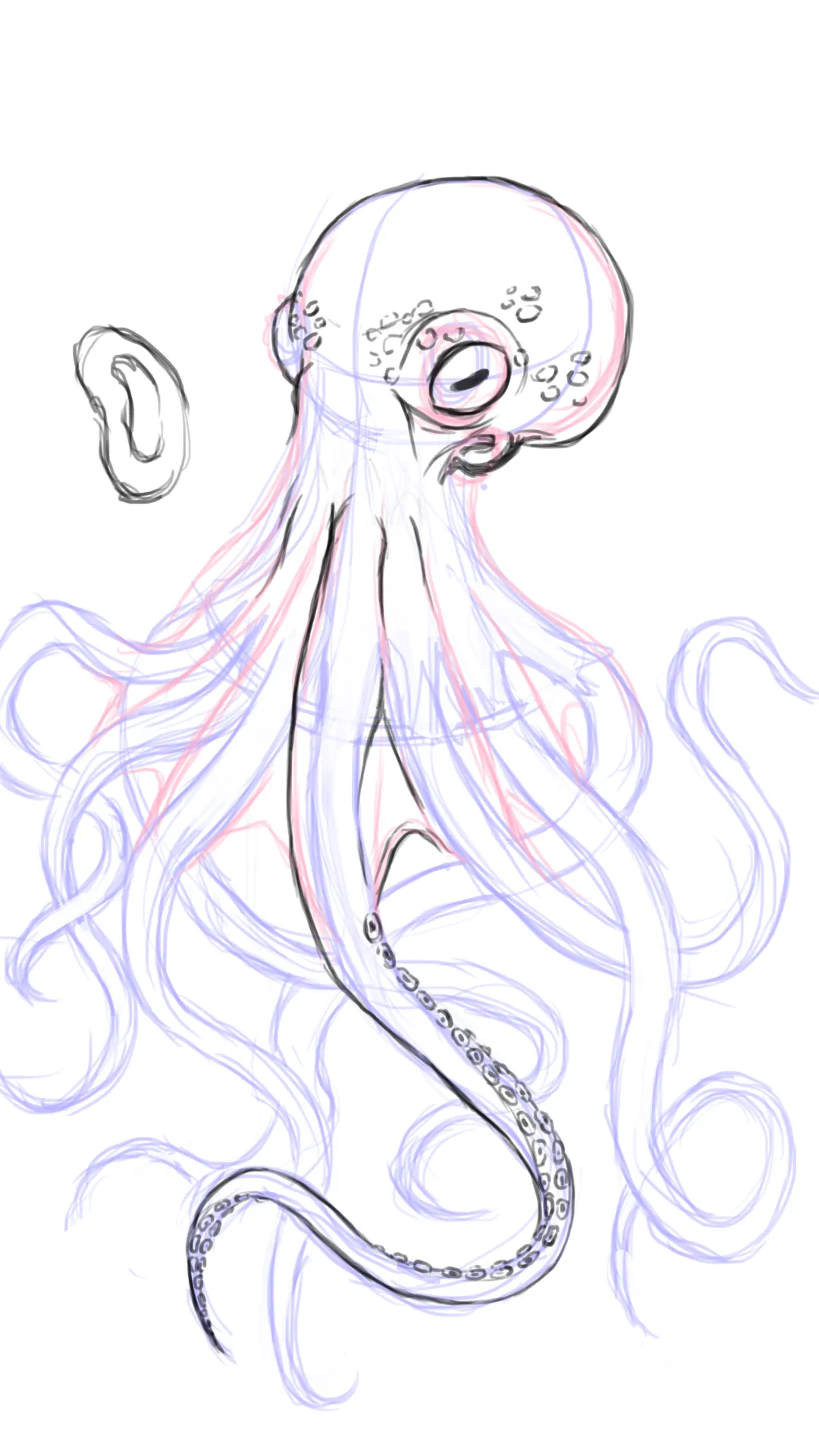
Notice how each tentacle is positioned differently, so the strip of suction cups is also in a different position, making it look more organic and lifelike.
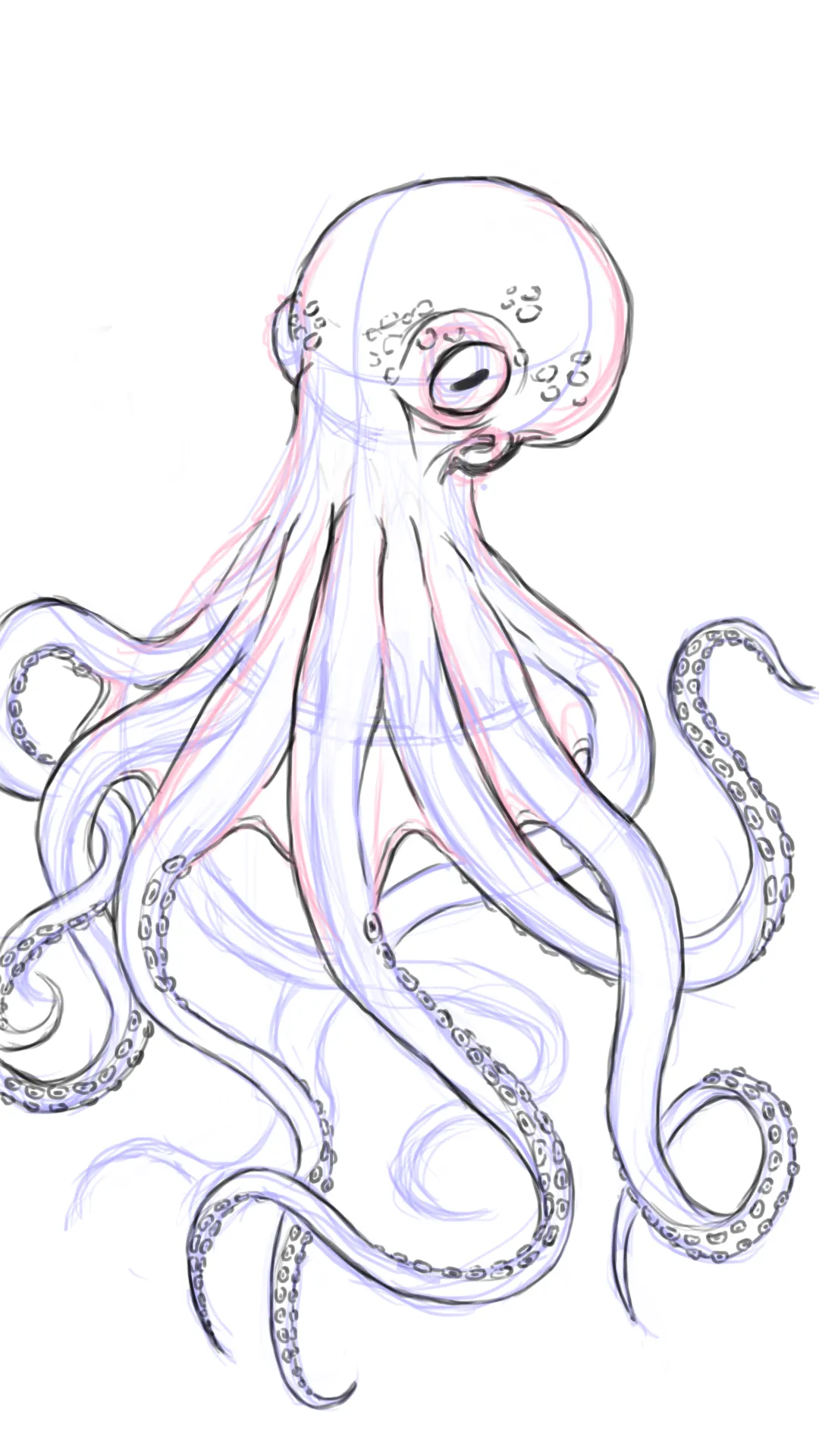
For the tentacles in the background, just outline them without adding any suction cups, not because they don't have any, but to keep the image clear.
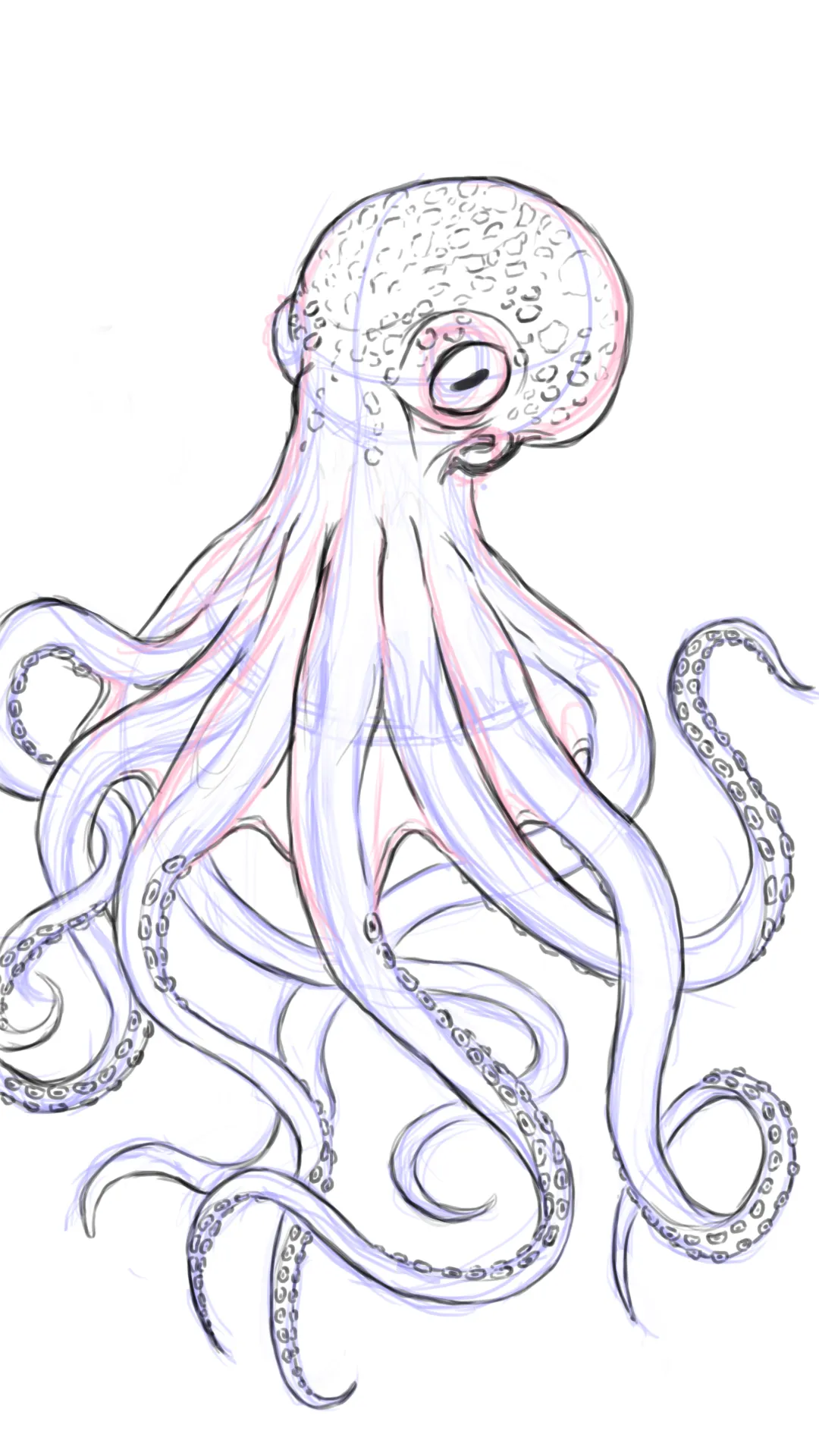
Erase the sketch to get a clean drawing, then add some wrinkles, spots and forms of features to provide texture and relief.
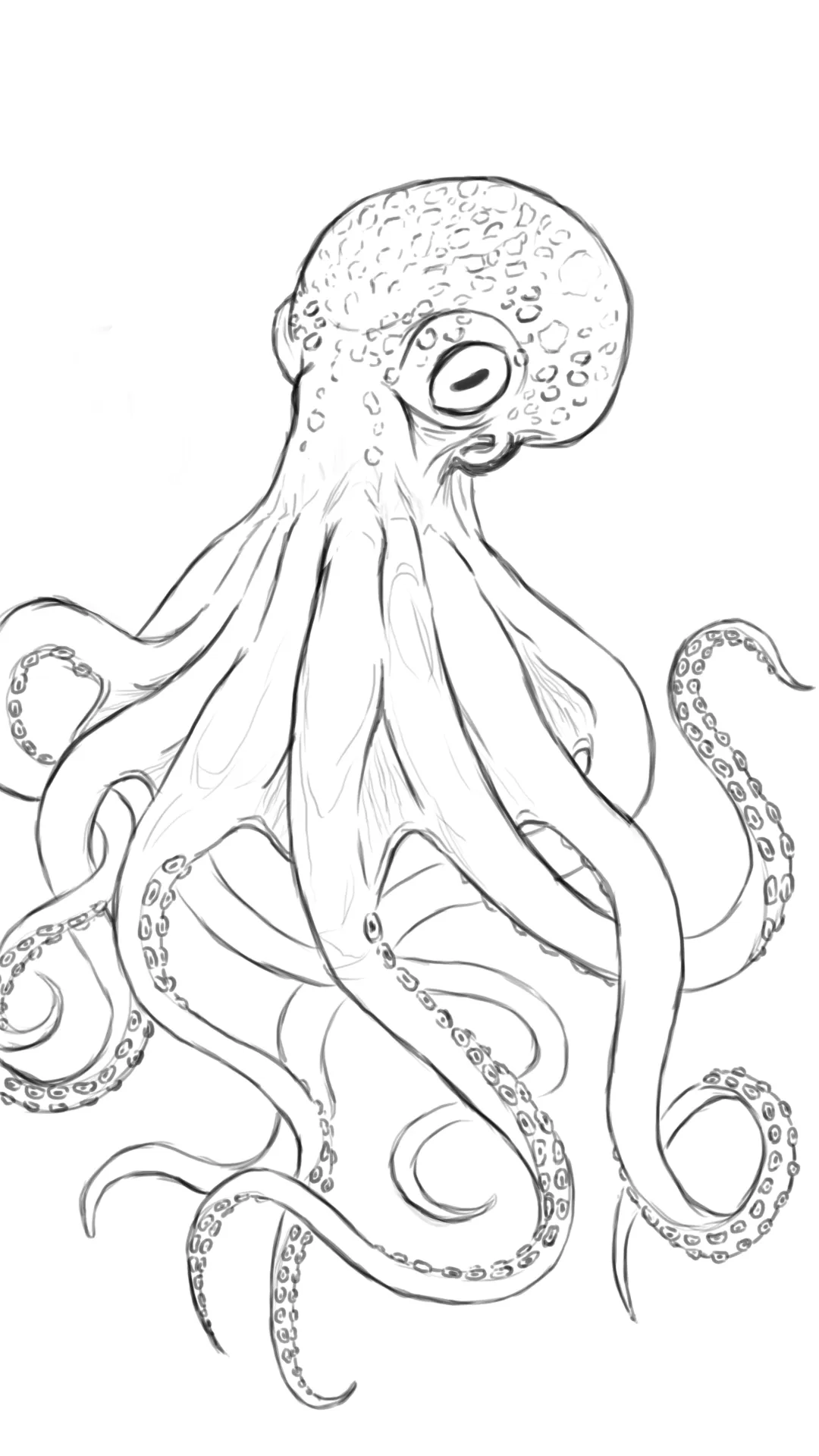
Add color to the drawing
Start with the background: a very dark gradient, almost black, which evokes the depths of the sea. If you are working in a traditional technique, carefully contour the octopus to leave it white.
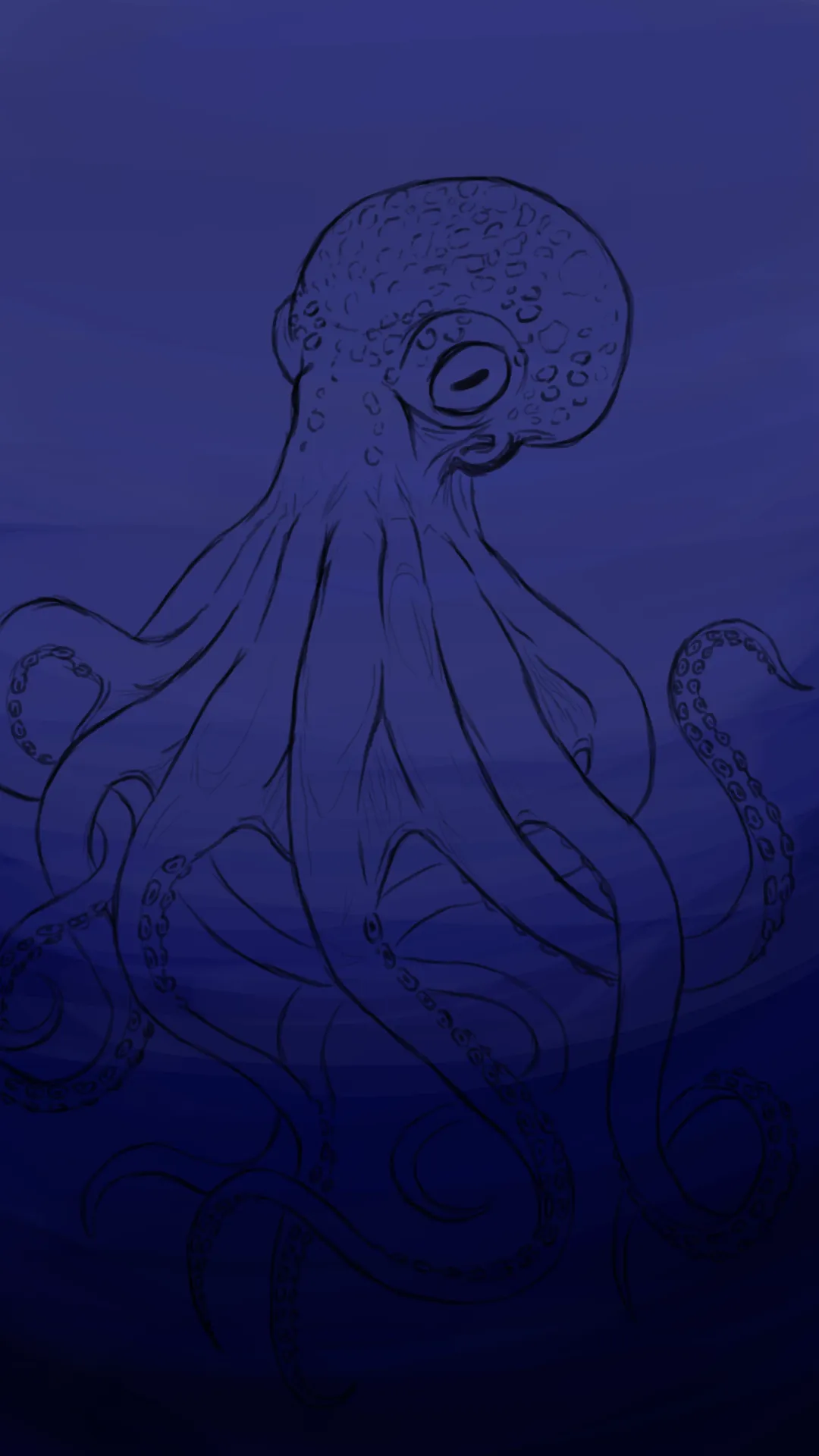
On the head, add some highlights with lighter dull blue tones, then some very blurry white rays to simulate light coming in from the surface.
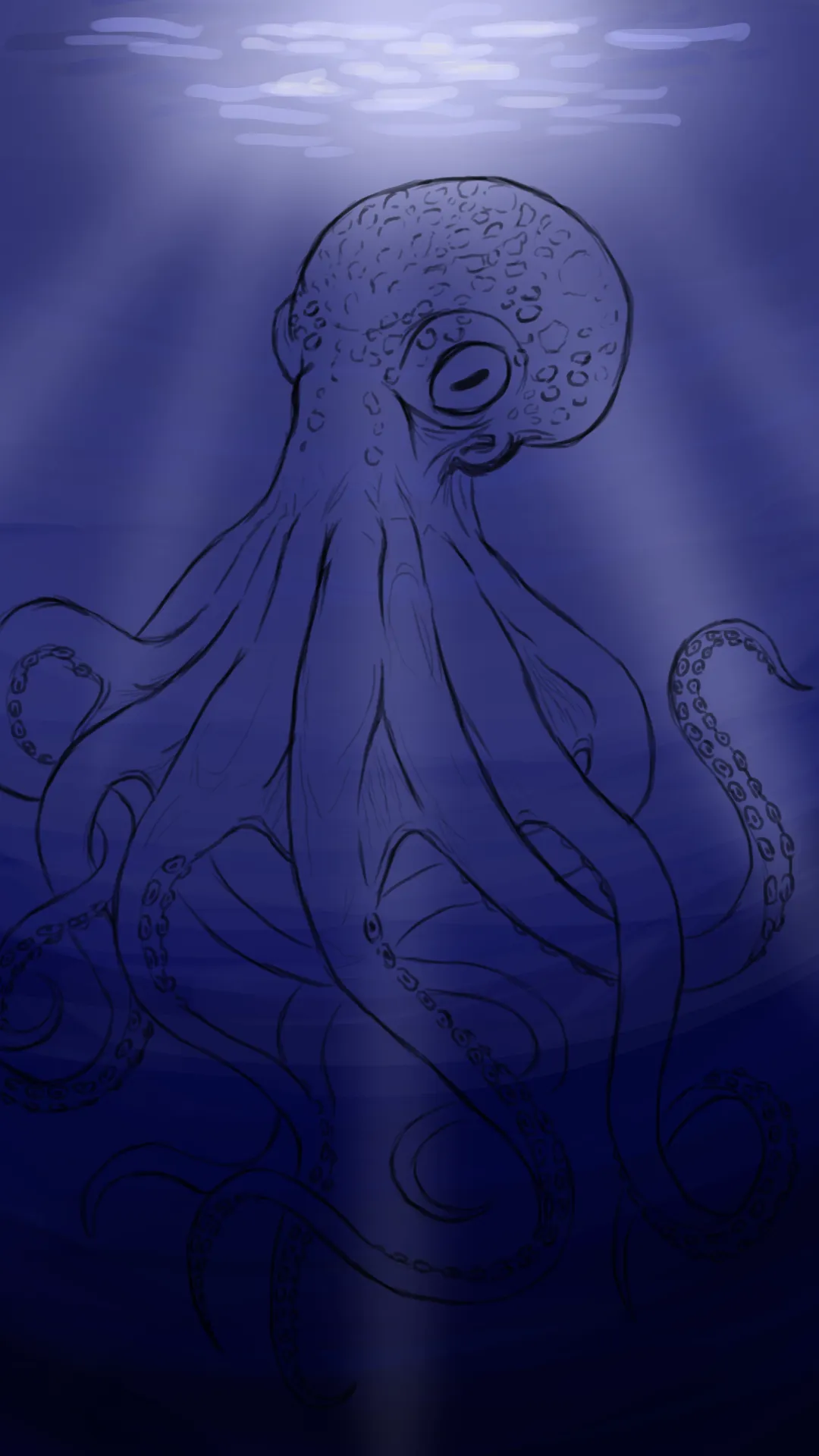
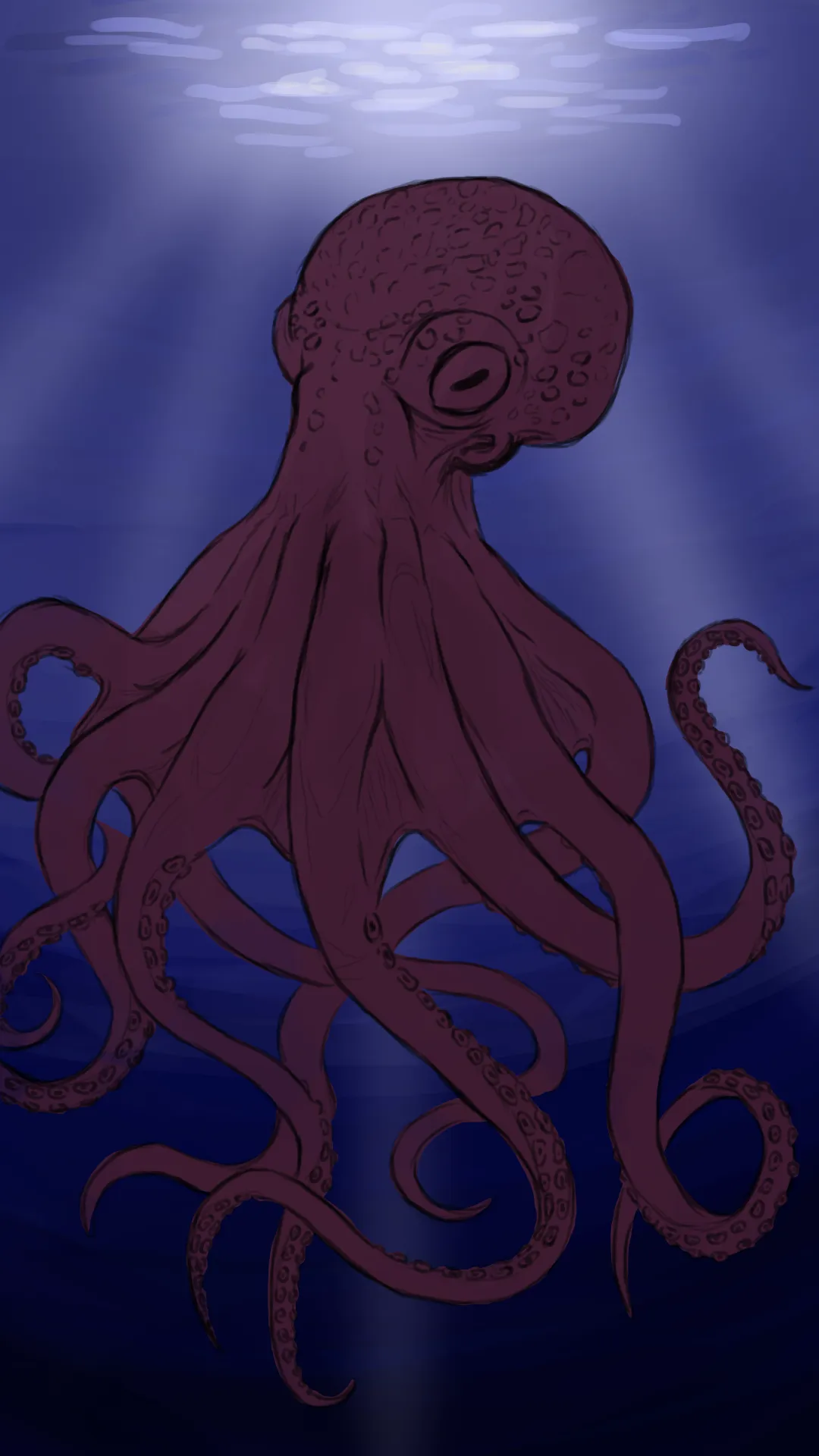
Octopuses come in many natural colors and can change them at will. For this tutorial, we'll stick with something simple.
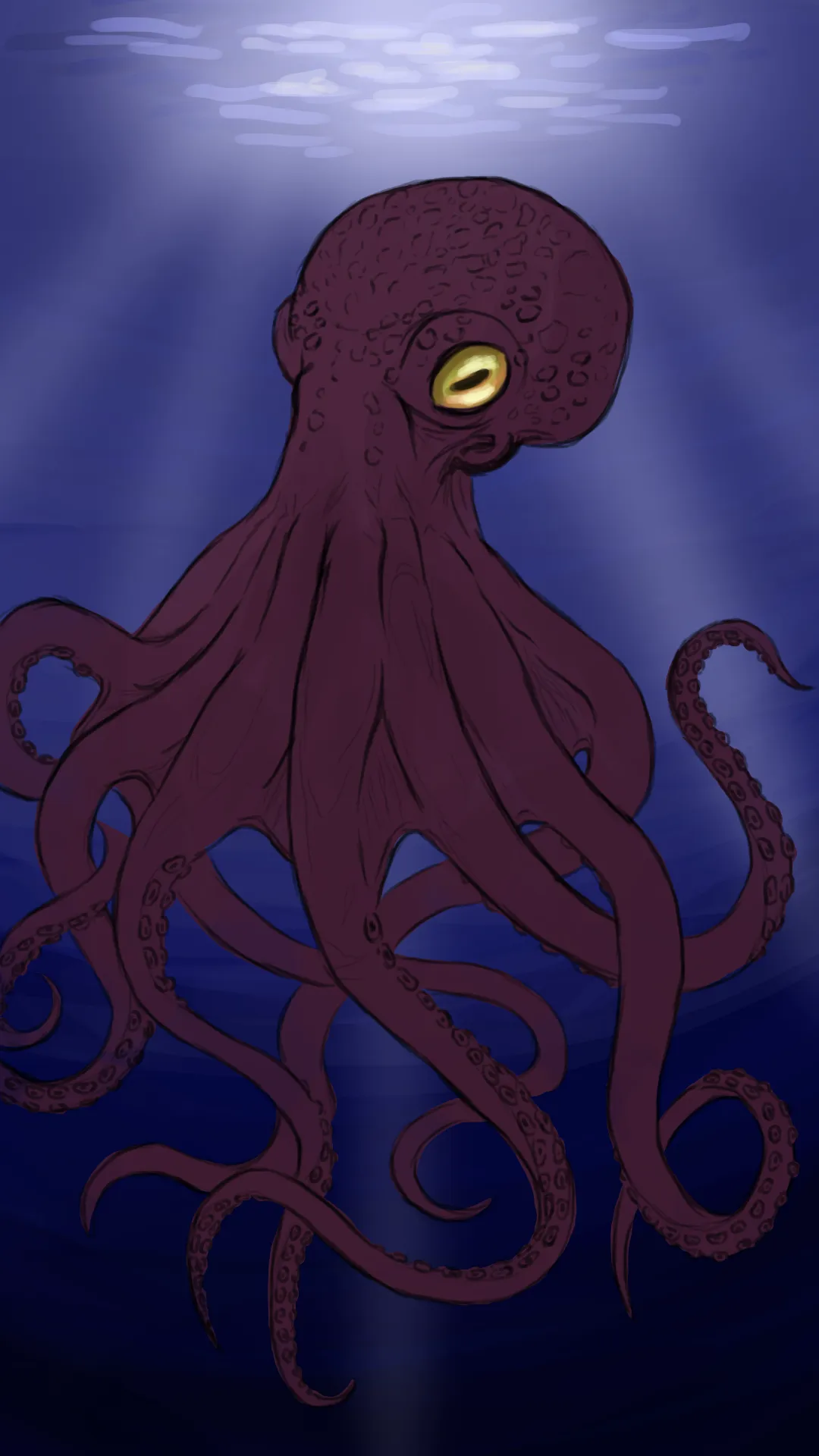
Draw the eye with a complementary color to make it stand out against the base color.
Add volume with dark tones
Take a tone slightly darker than your base color and darken the areas taking into account the light coming from above.
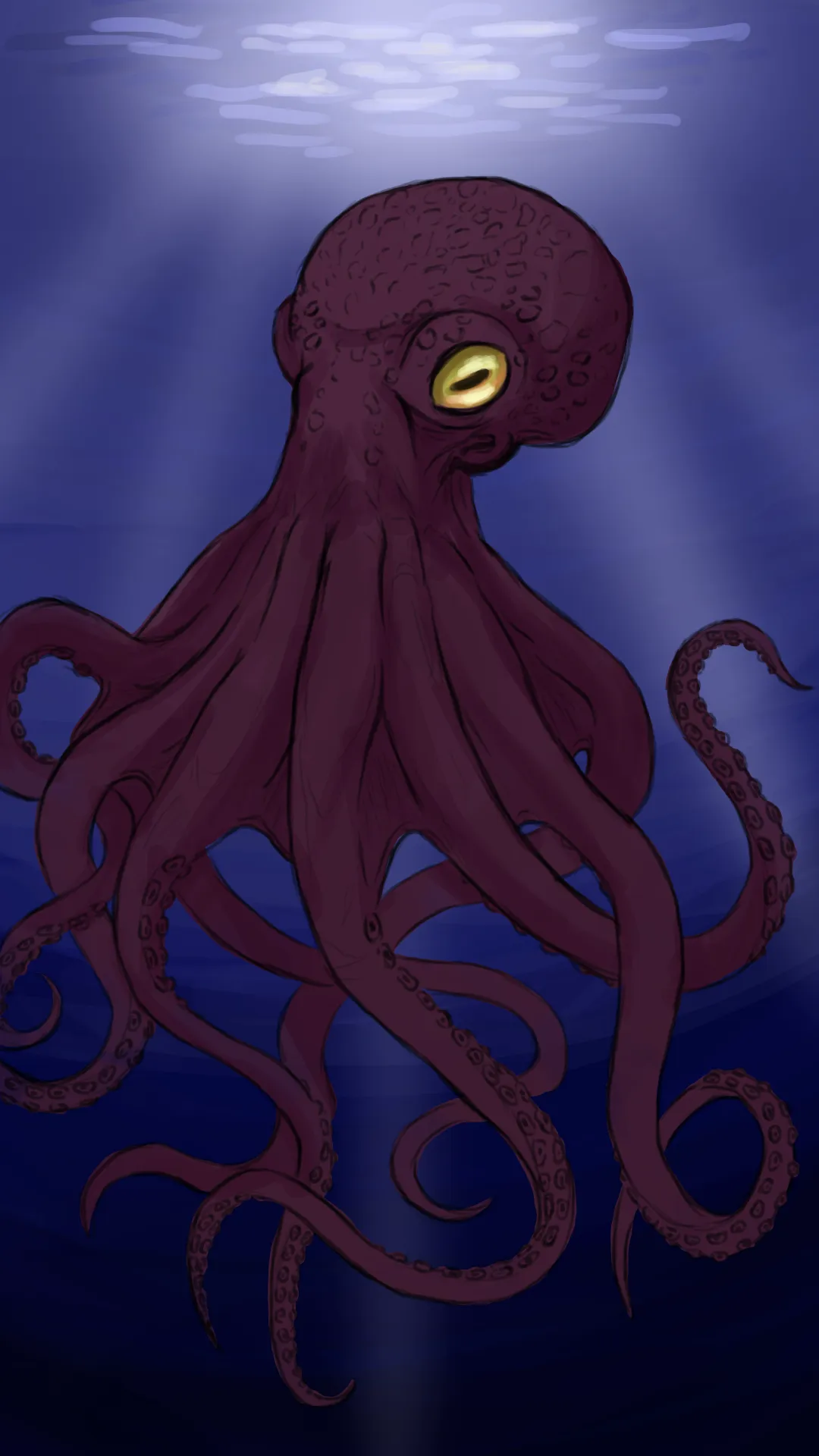
Use an even darker tone for the tentacles in the background and the areas furthest from the light source.
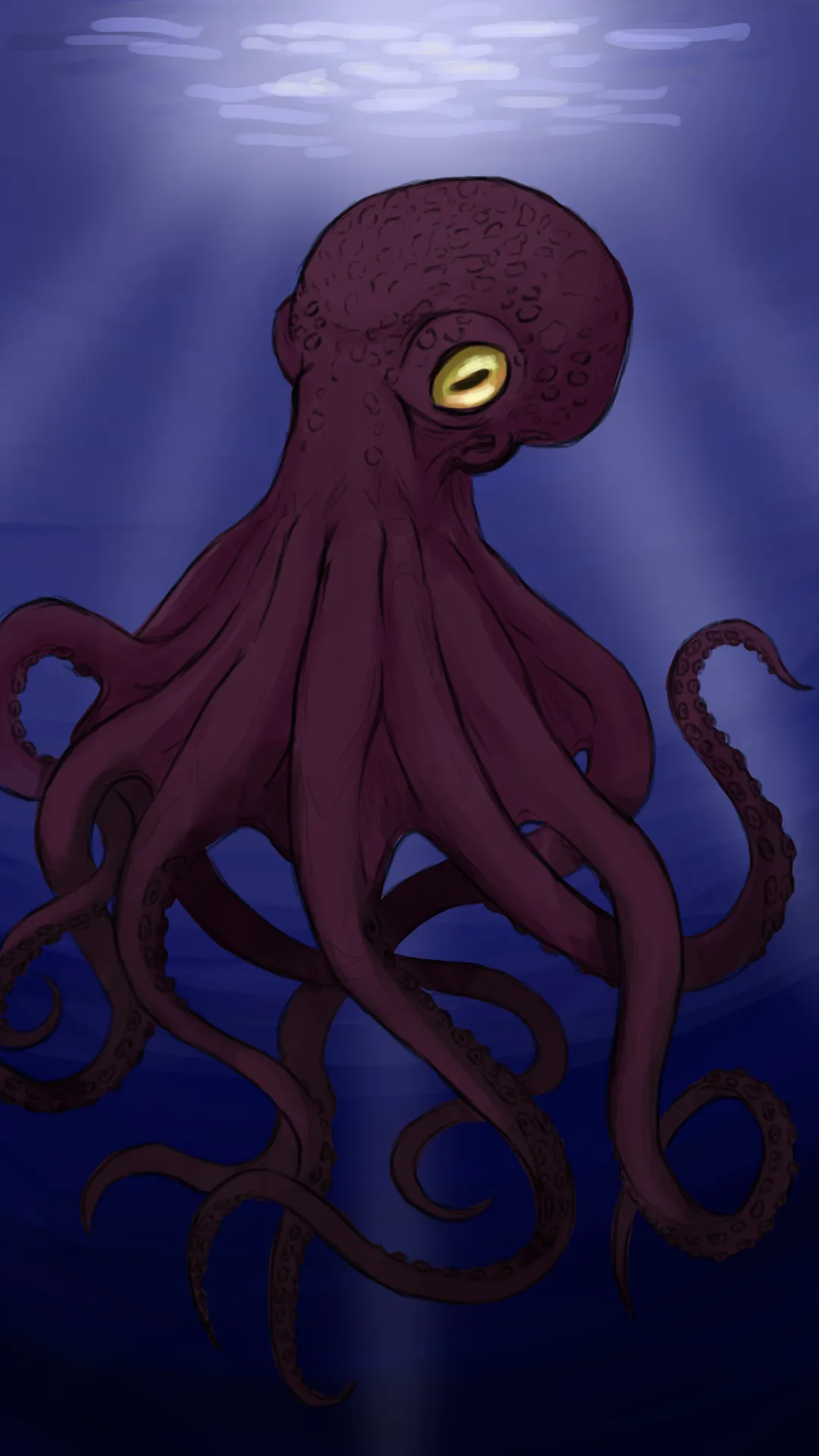
Then add texture to the head with a few spots.
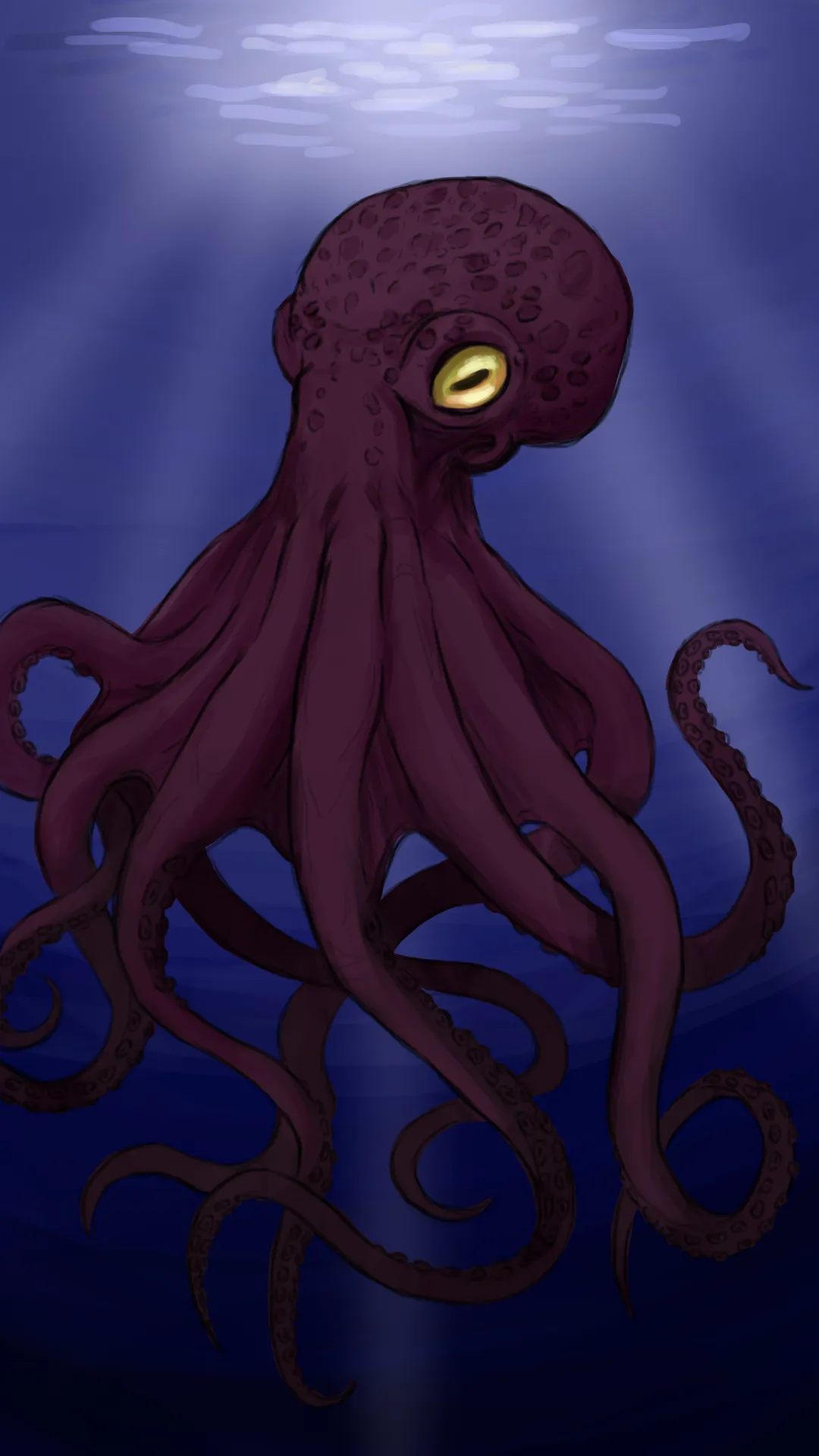
Finally, draw the suckers and membrane area with a different, brighter color, this is a distinct skin type.
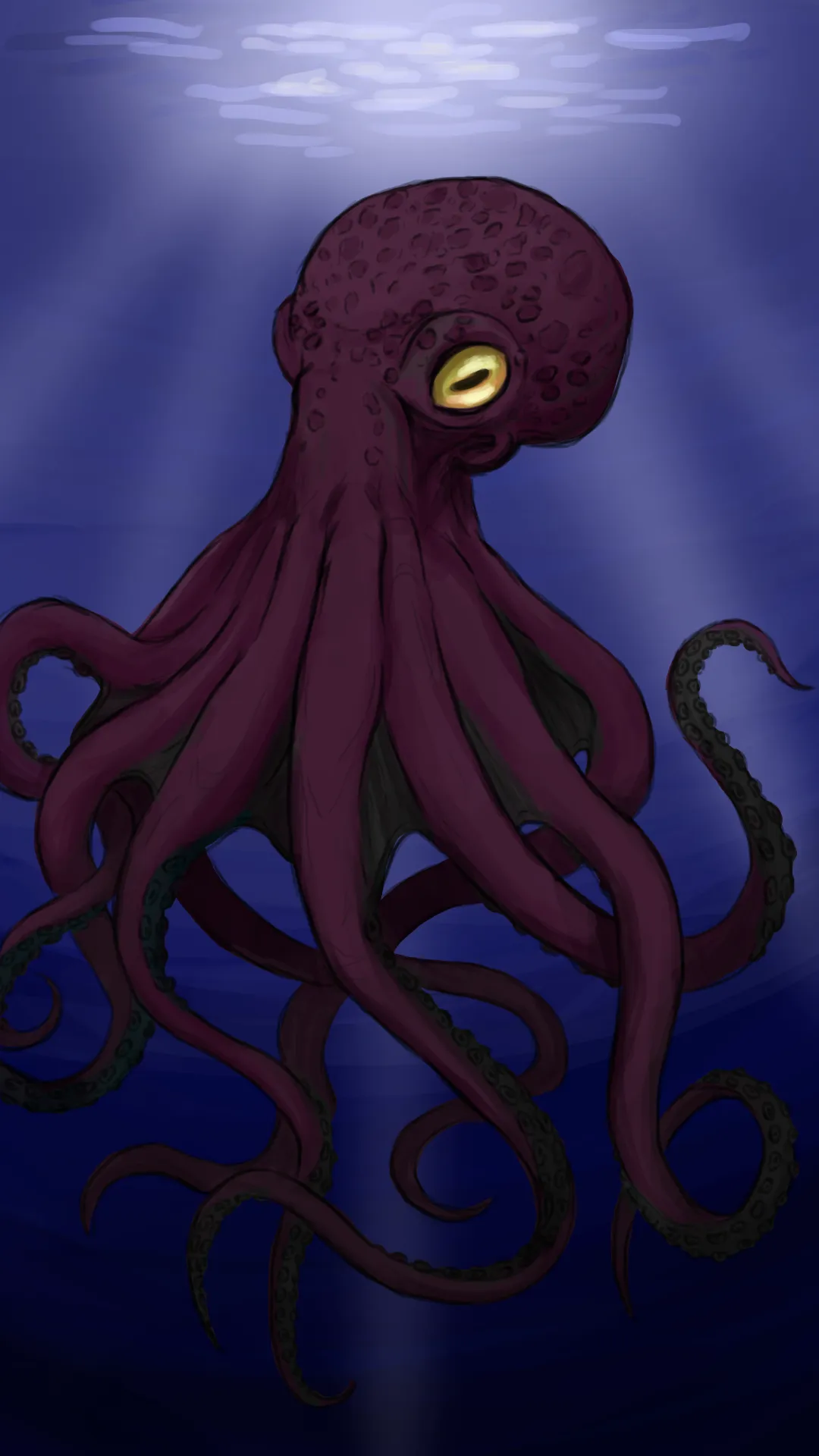
Finalize your octopus drawing
Add lighter layers of color in areas touched by light.
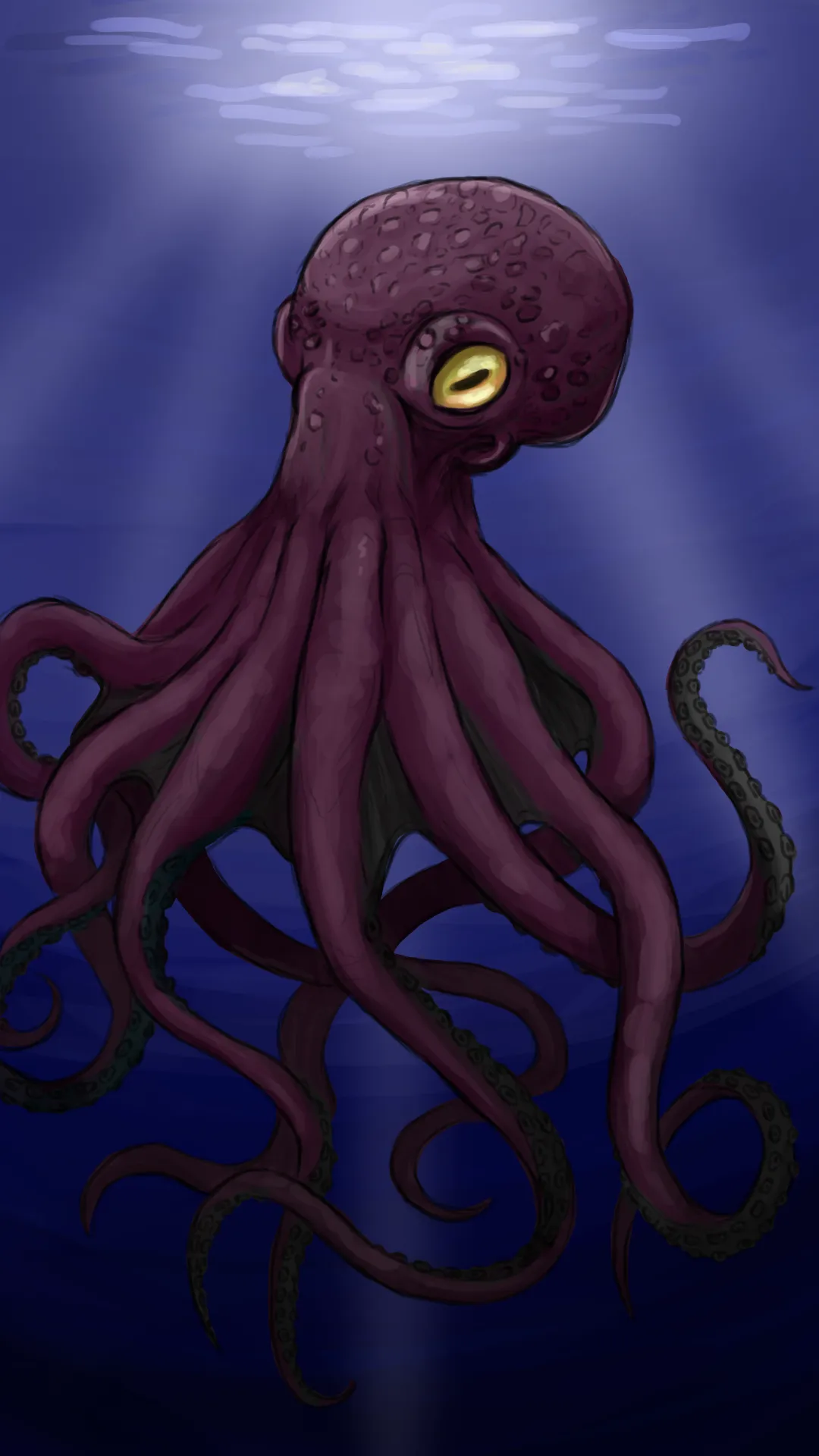
Finish with some strong highlights on the edges and tentacles to create a wet shiny effect, and sharply highlight the suckers so they don't get lost in the shadows.
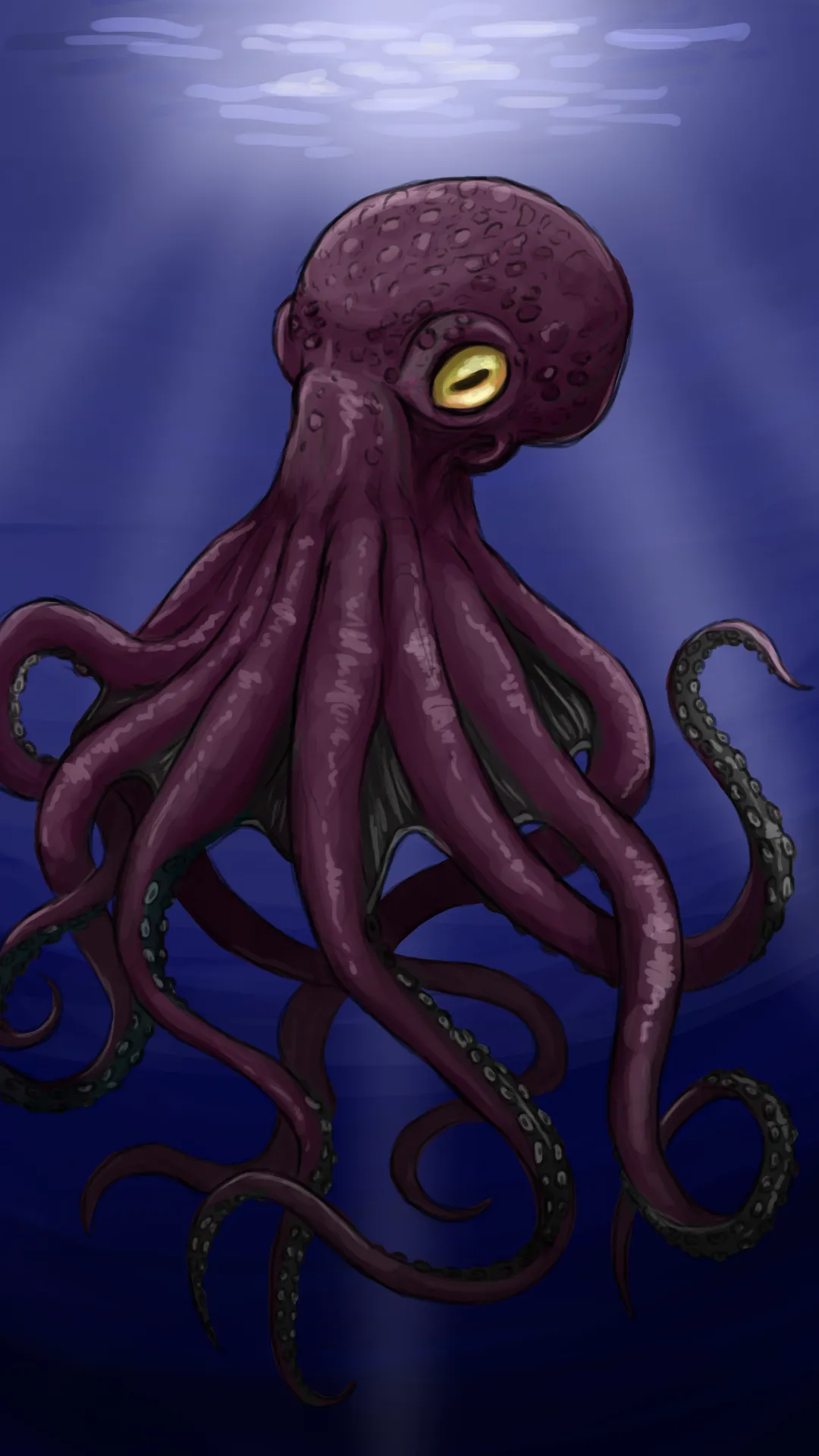
And here is our finished octopus, I hope you like this tutorial. It's difficult to find such a unique animal to draw, between the tentacles which intertwine and the suckers that need to be placed one by one, we never get bored. Now that you have the basics, I encourage you to draw your own version!
Discussion
No comments yet.