
How to Draw a Panther
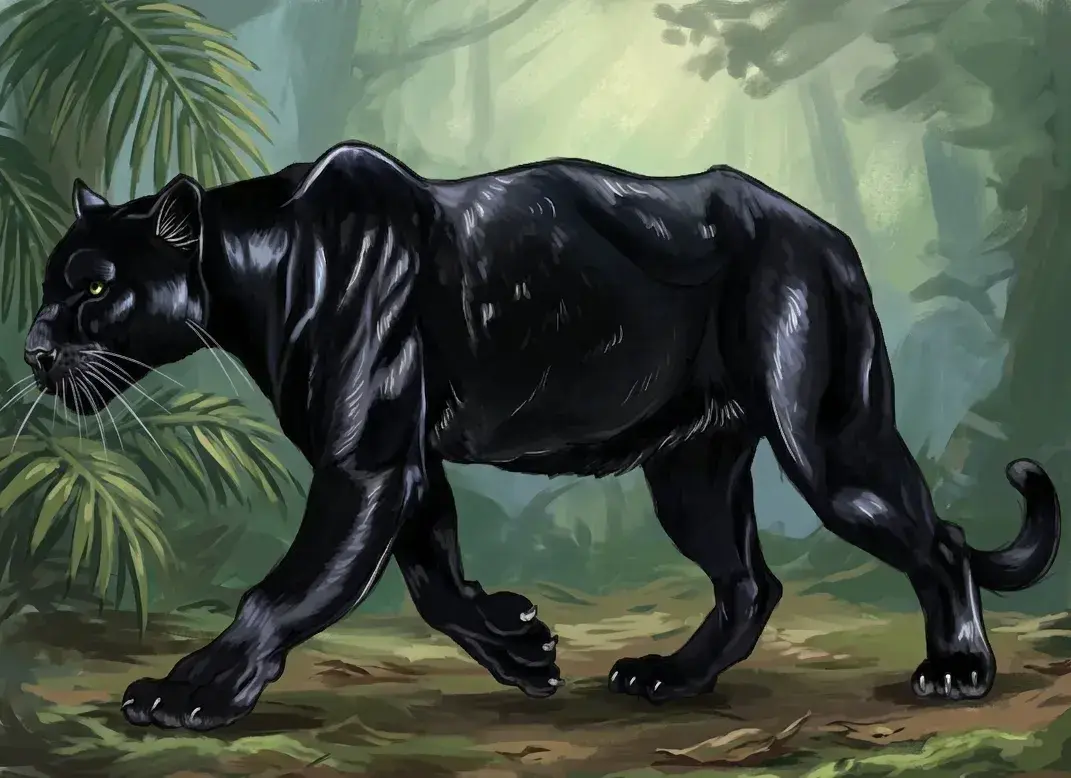
Big cats have something fascinating about them, the way they move with caution and majesty. We often think of the tiger or lion, but the panther also deserves our attention, especially with its mysterious black coat.
Today, we're going to draw a black panther together. We will break down its structure and bring to life its characteristic dark fur.
Understanding the anatomy of the panther
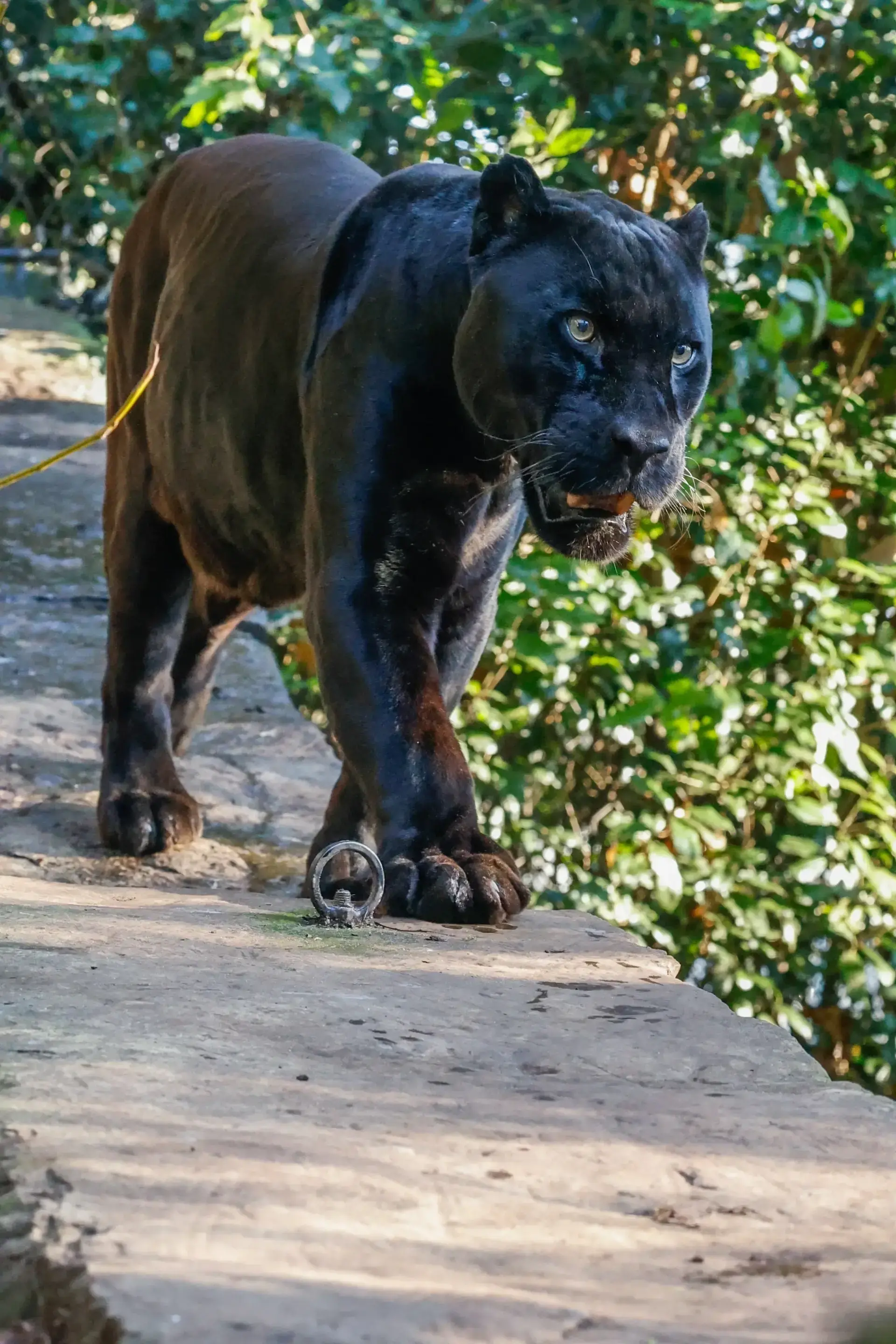
Before we begin, let's observe some key features so that we can accurately draw the animal. Their head remains quite low, almost at the level of their shoulders, which are quite prominent. The torso is long and wide, descending almost to the elbows and knees. The legs are elongated, with an important detail: the heels never touch the ground.
How to draw a panther step by step
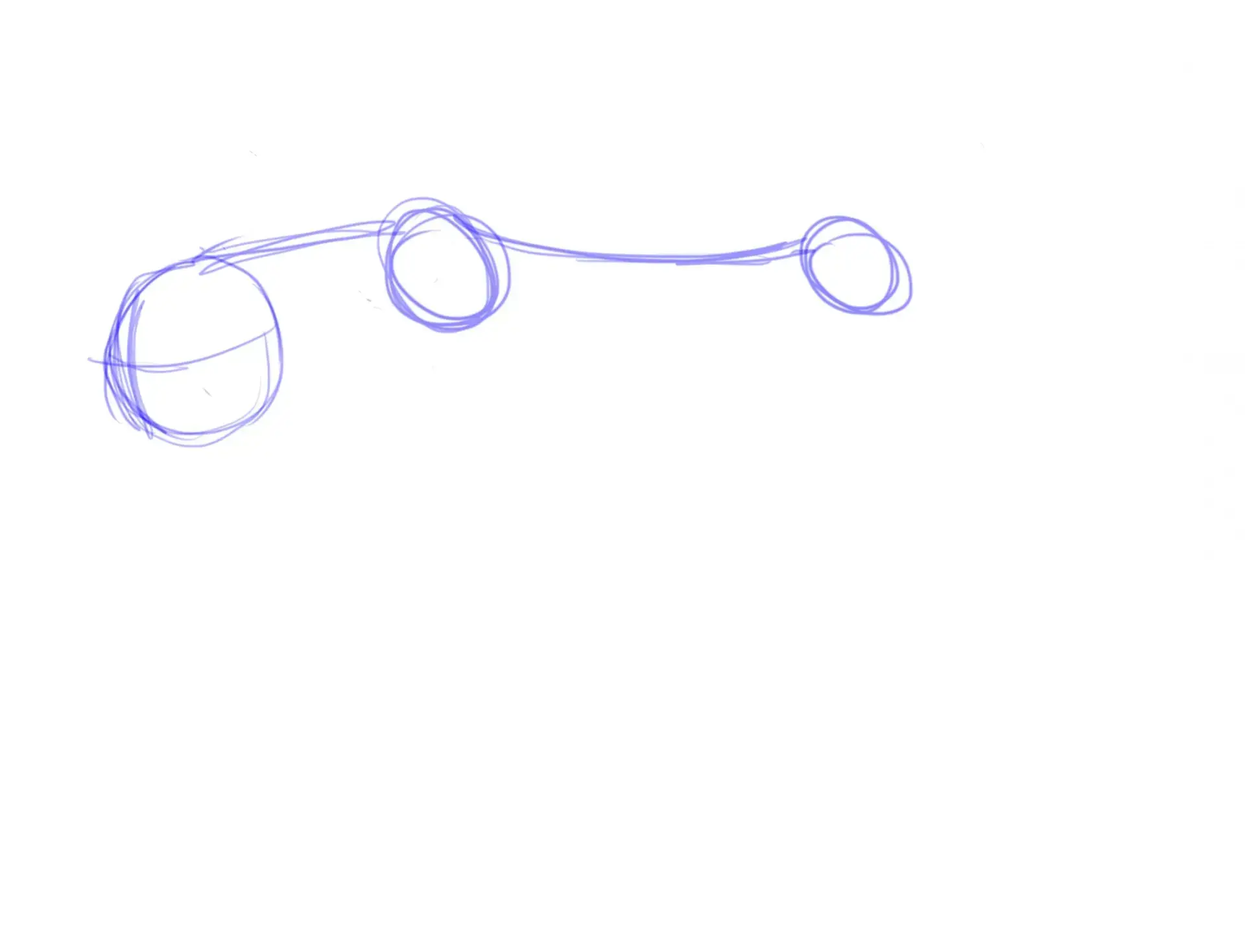
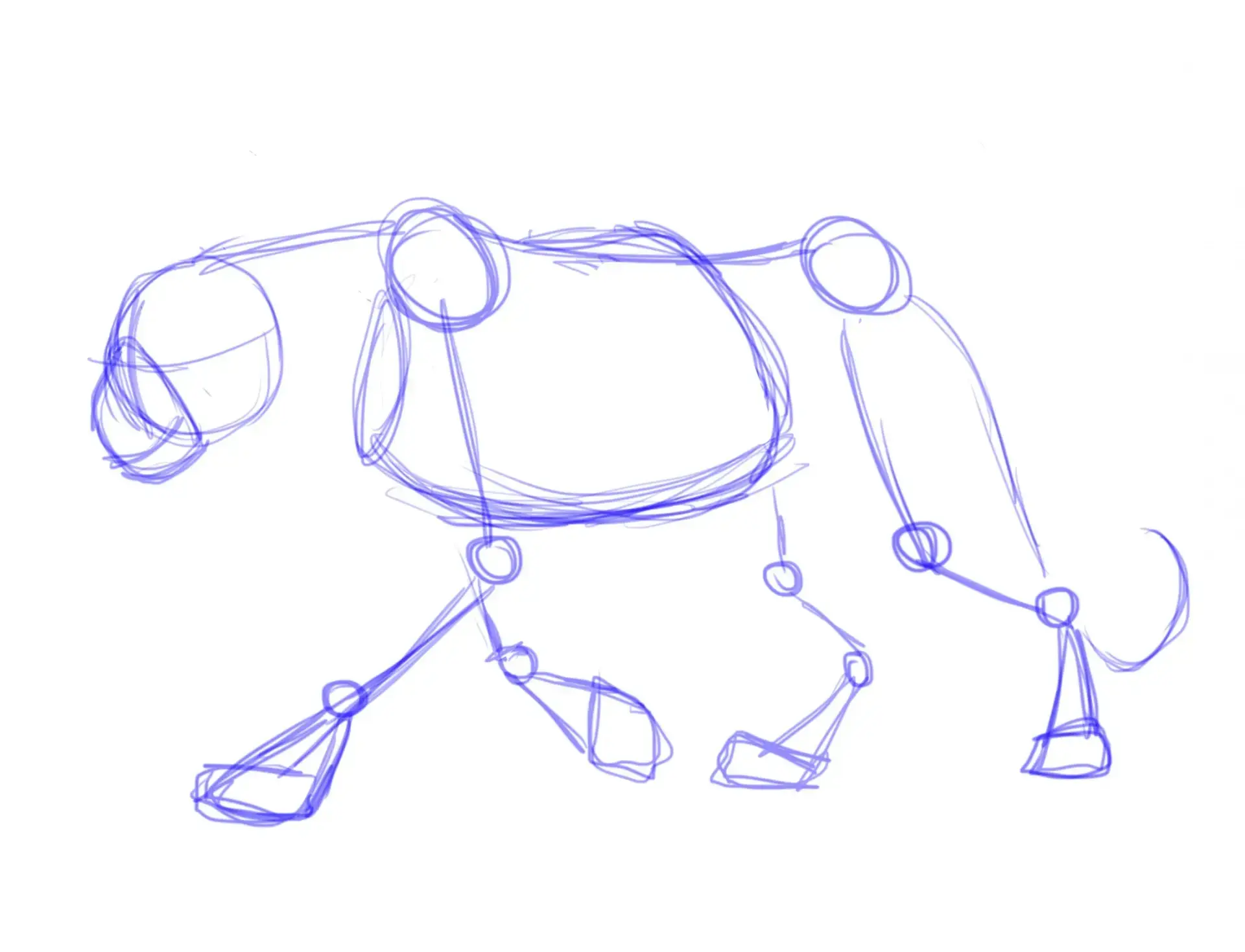
We start by placing two circles of similar size, which will be the shoulders and hips. Then for the head, we make a significantly larger circle.
Now draw the muzzle in a three-quarter view, starting a bit above the halfway point of the head. Add the legs by aligning the knees and elbows at the same height, without going too far down from the head. Draw a slightly shorter line for the ankles, then finish with the shape of the paws.
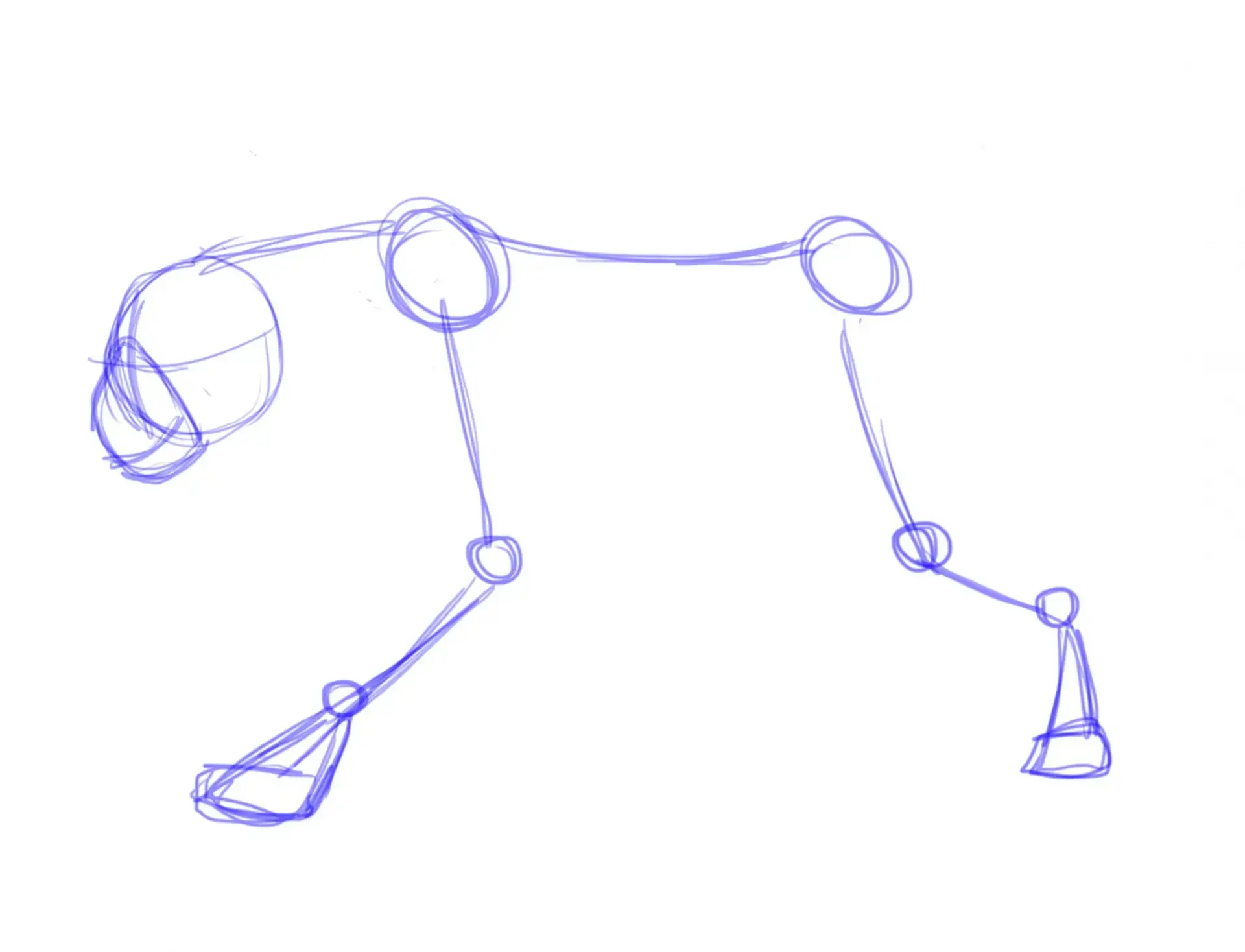
The ribcage should be very wide and descend almost to the pelvis. In the remaining space, draw the legs on the other side.
Add features and mass
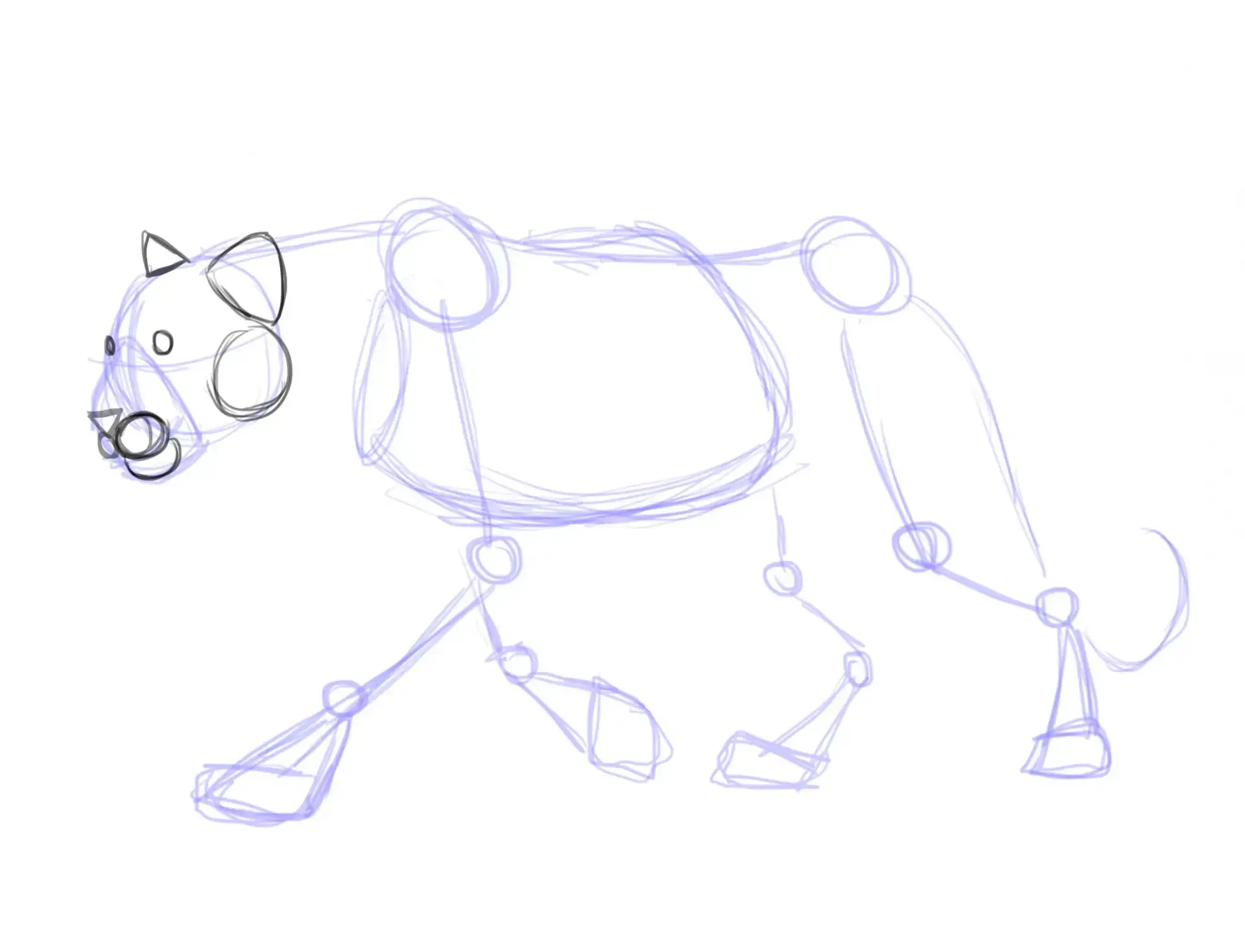
Let's move on to the facial features, starting with simple shapes. Imagine a horizontal line in the middle of the head: the ears go above, the nose below.
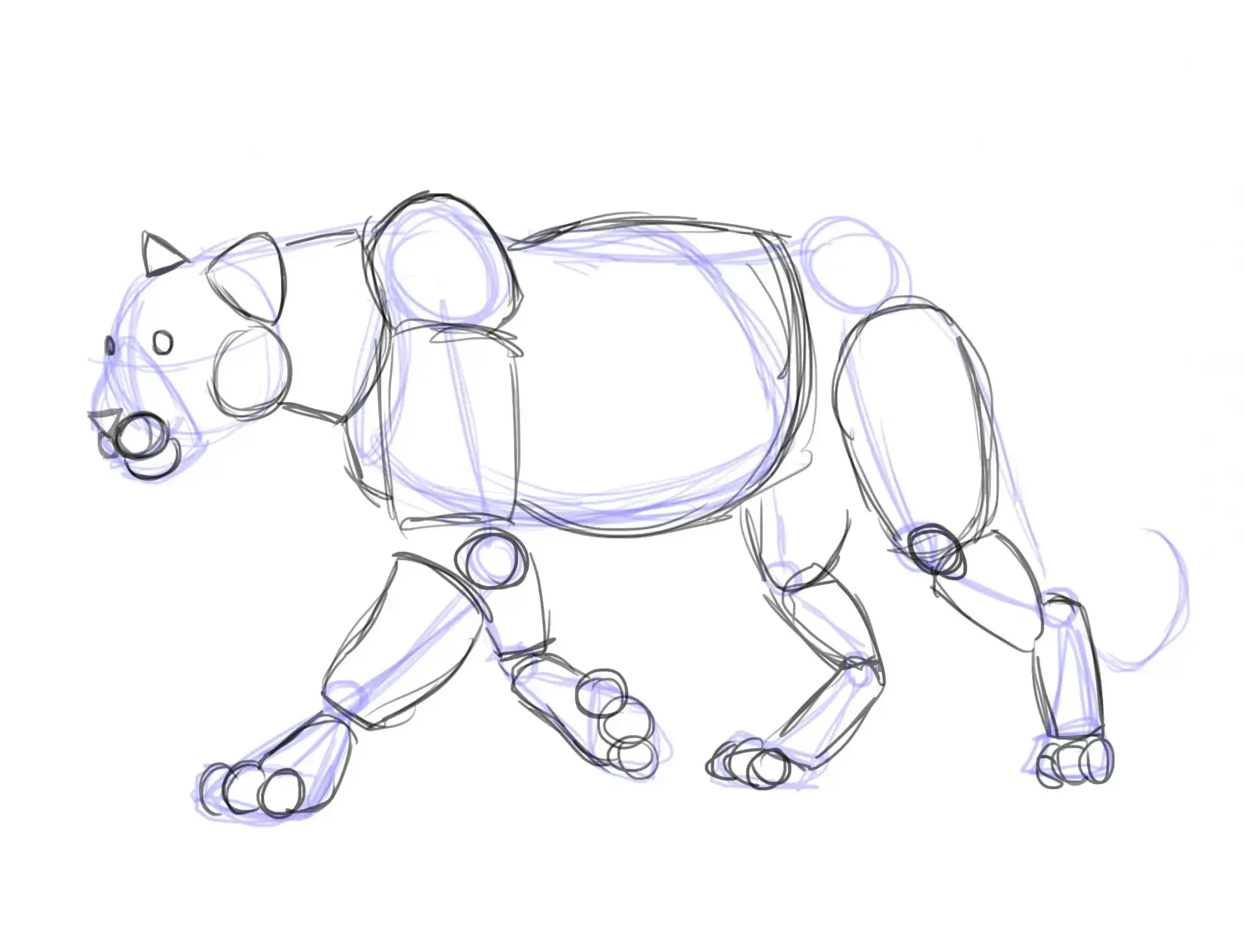
Use cylinders to represent the legs, neck, and torso. Be careful to maintain consistent forms, as it is quite a large solid animal.
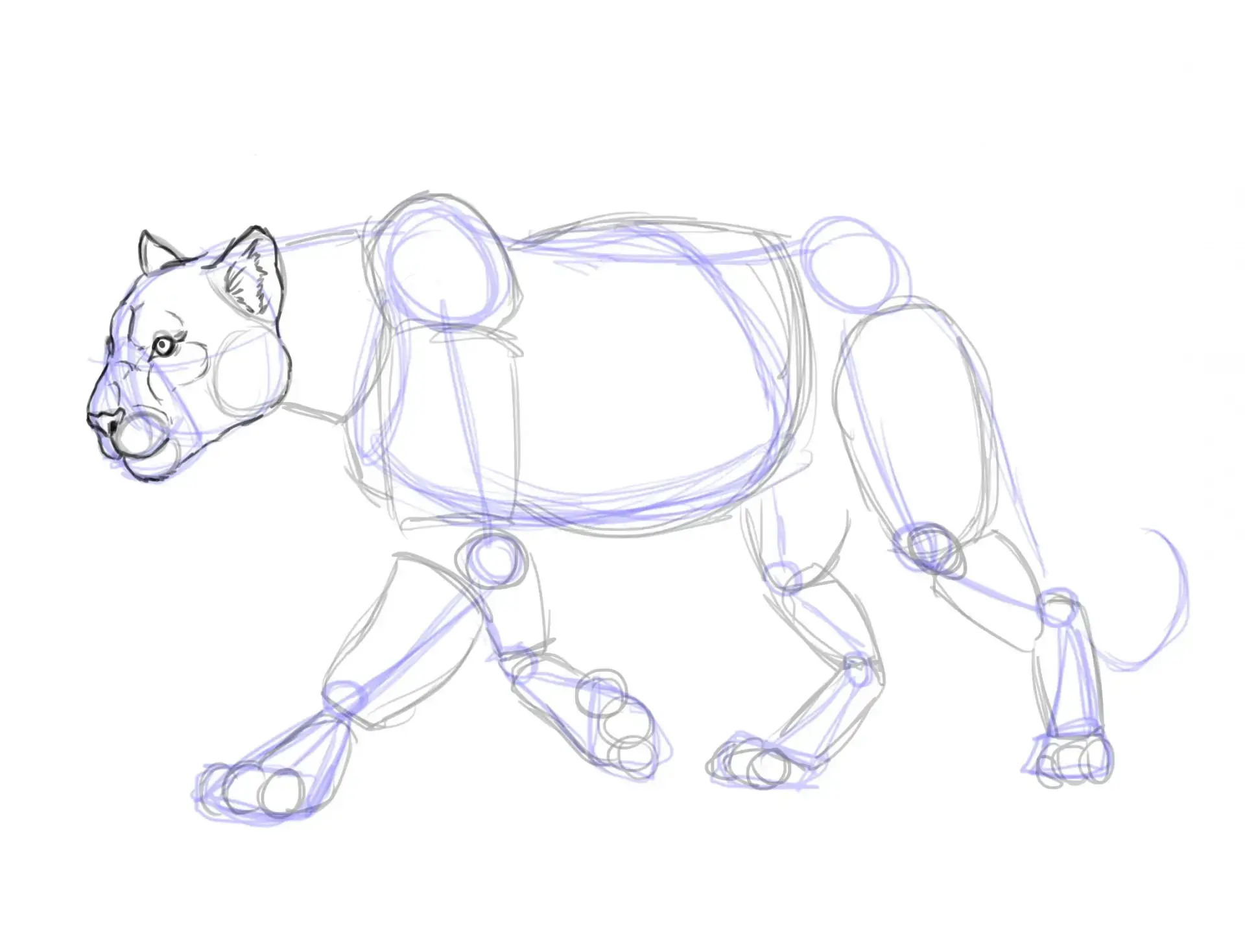
Move onto the final outline and details. Start with round eyes, surrounded by the cheekbones, with a slight protrusion at the eyebrows. Then detail the muzzle and nose. Finish with the ears, adding fur on the inside.
Draw the panther's legs
For the front legs, observe how the muscles tense and relax to create movement. Replicate these lines by following the example.
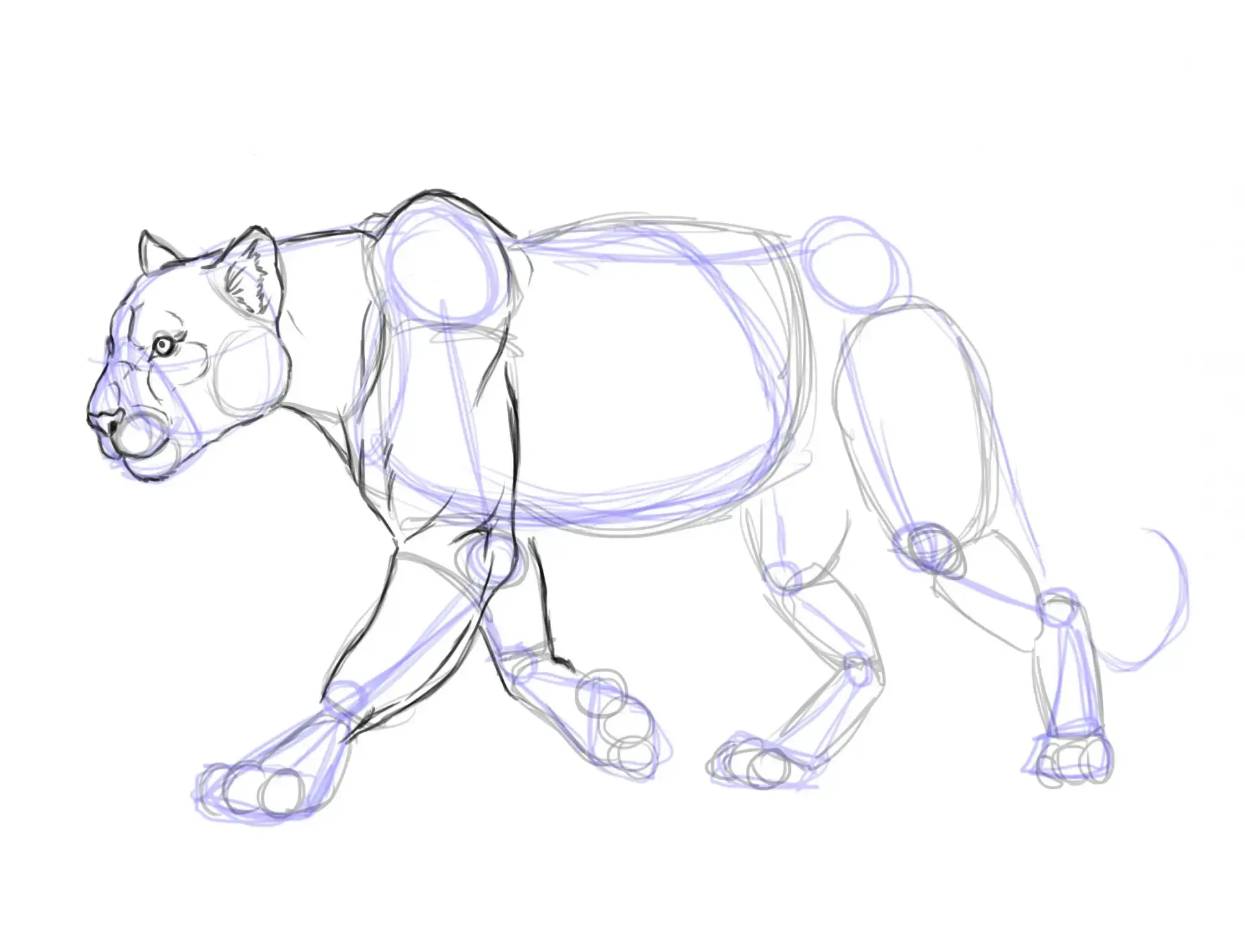
Claws are simpler than we think. There are four round fingers, but from this angle, we only see three. Connect them to the paw and add some lines to mark the bones.
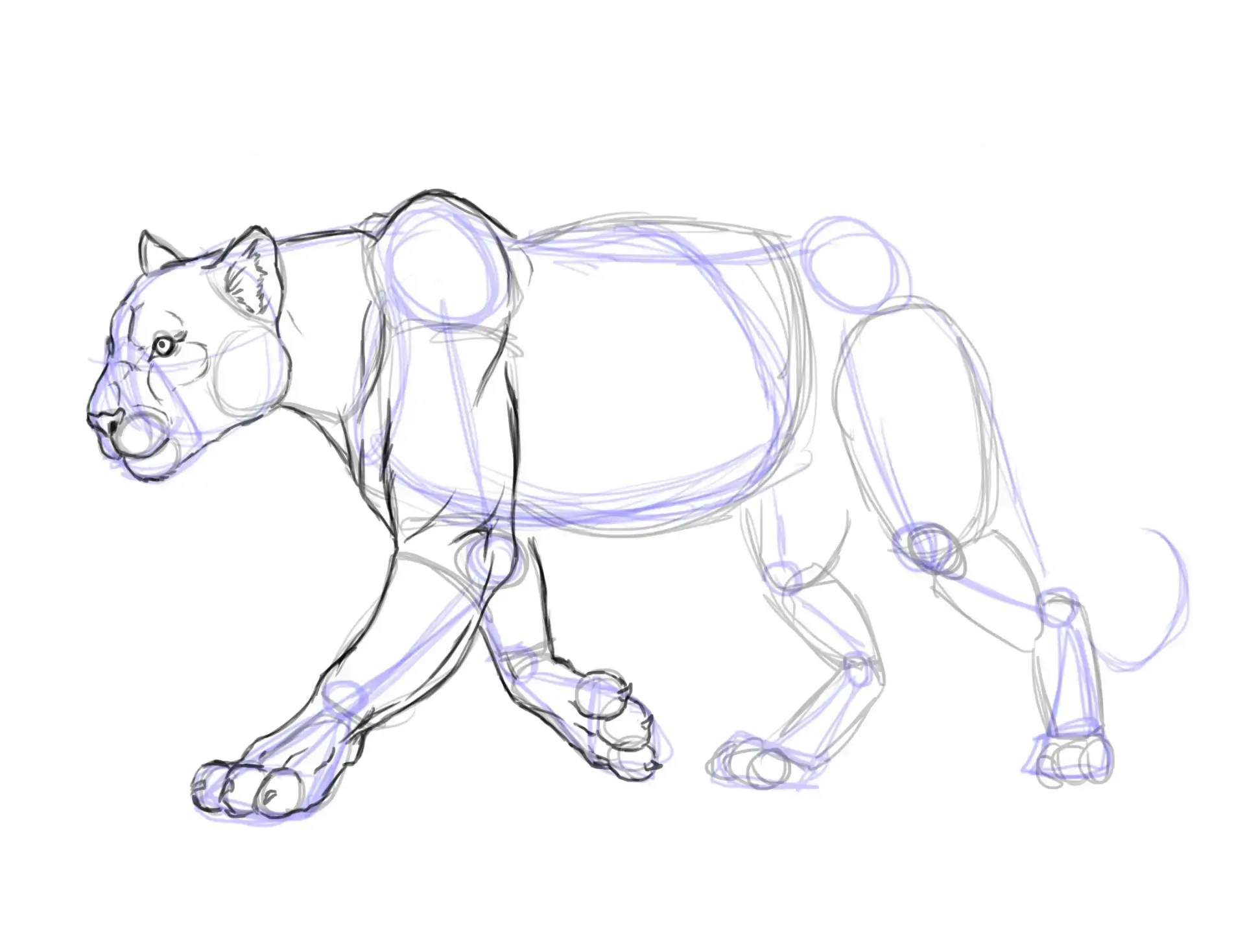
Now add shape to the mass while maintaining the curvature of the spine. In the lower part, don't forget to add quite a bit of hair.
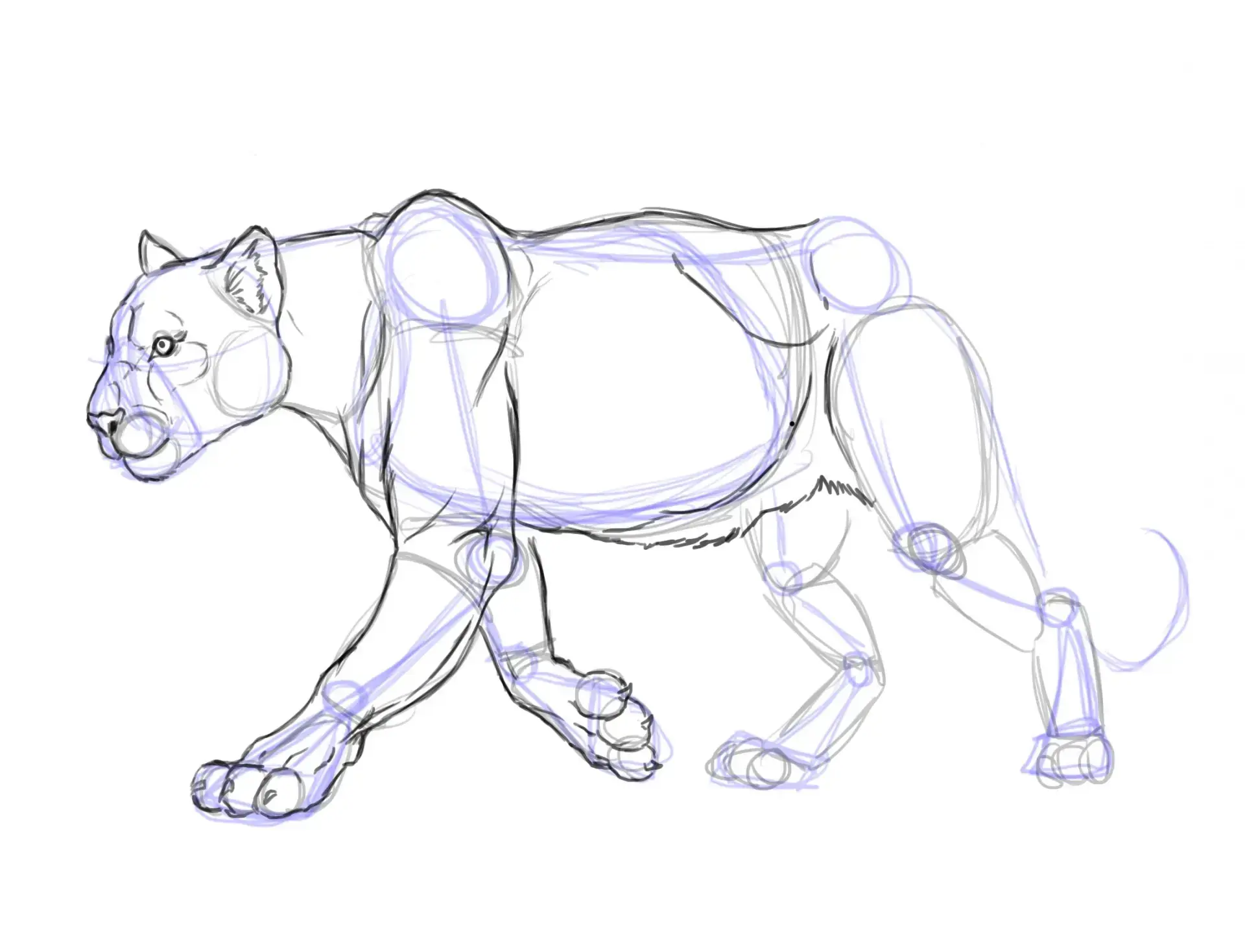
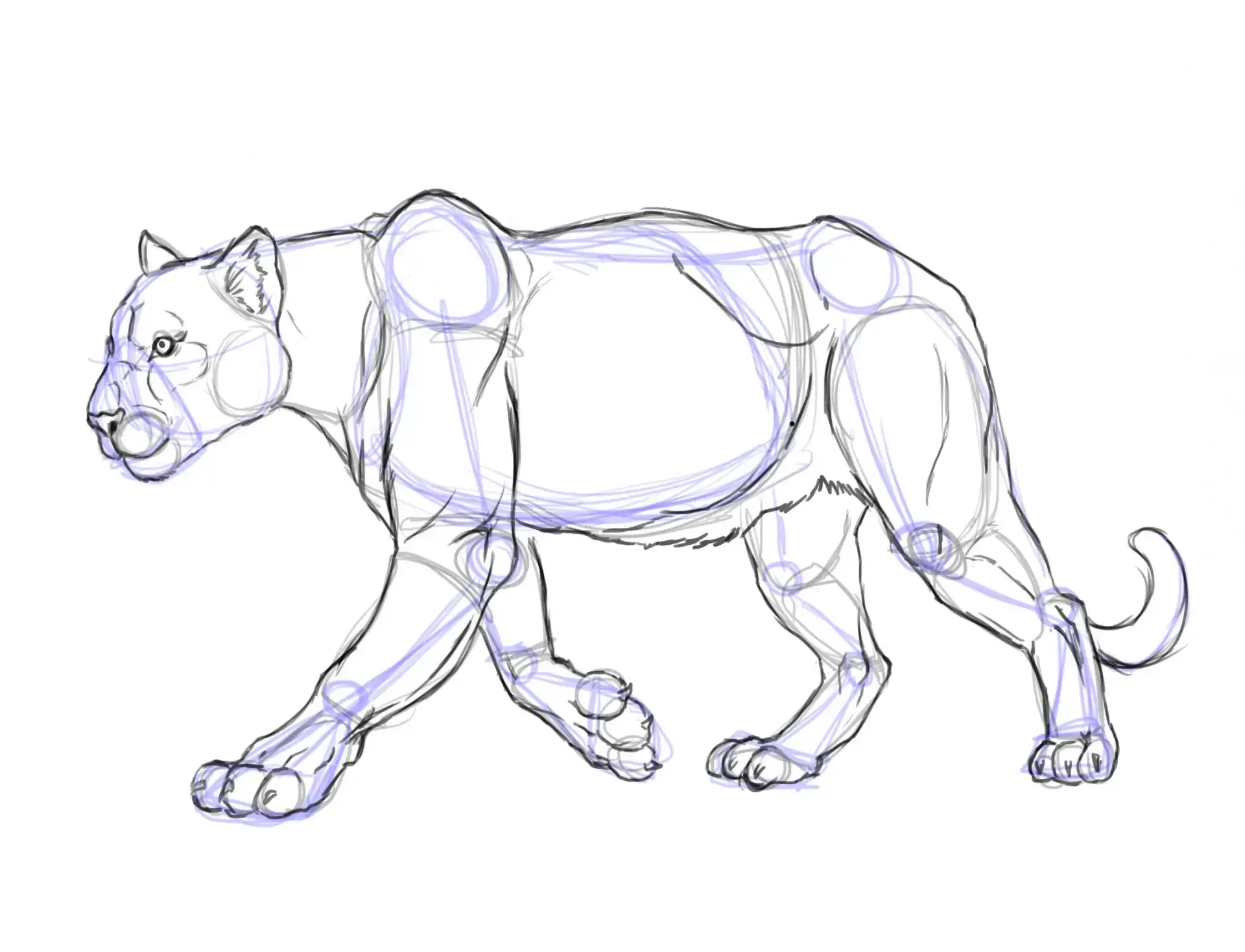
Final stretch: draw the hind legs with a rather bony pelvis, then move downward while adding volume. Be sure to correctly represent the bones around the knees and ankles.
Add color to the panther drawing
Make way for color! We will use several shades of gray, black, white, and a few touches of blue.
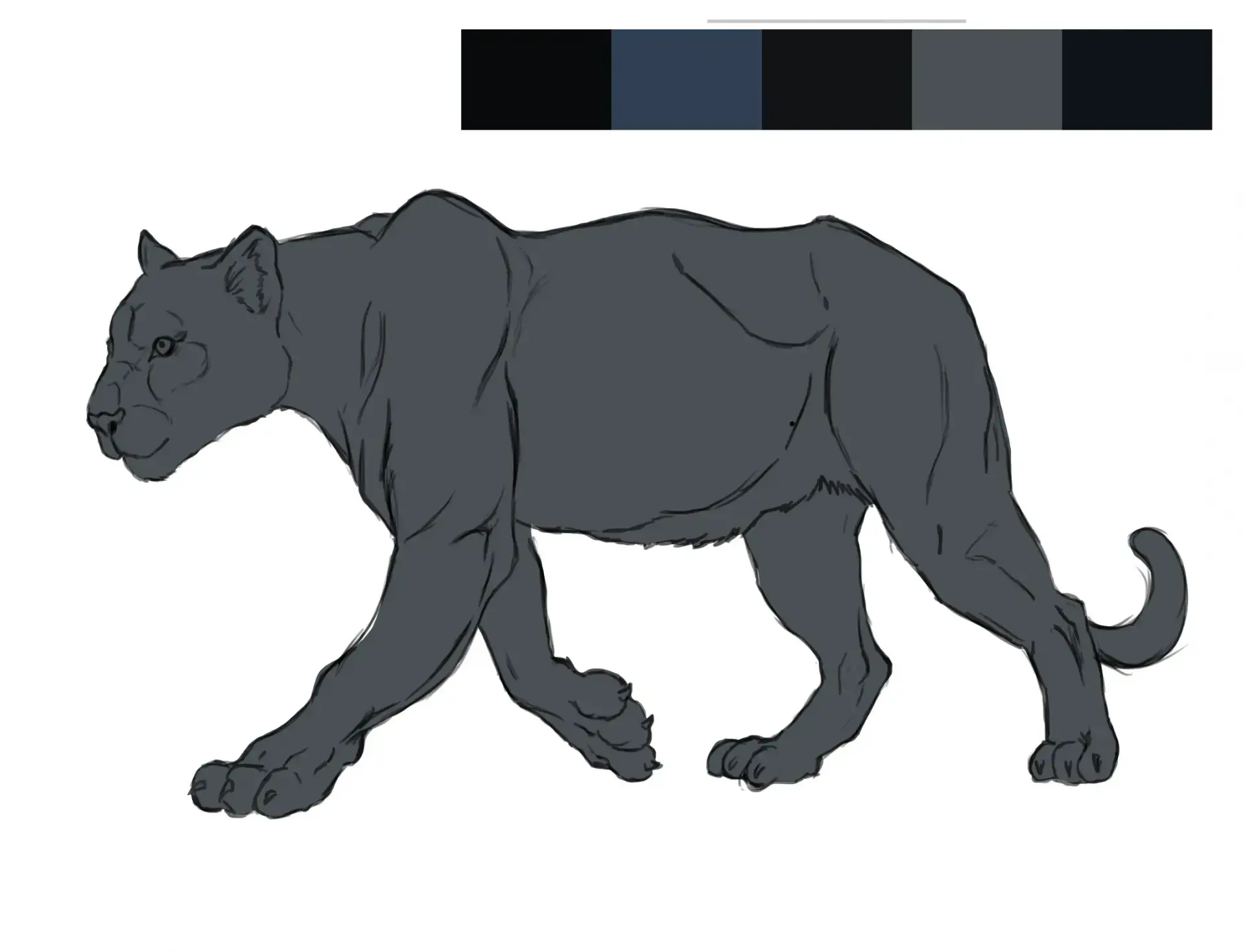
I like to start with the darkest areas. It really makes it easier to define the other areas afterwards.
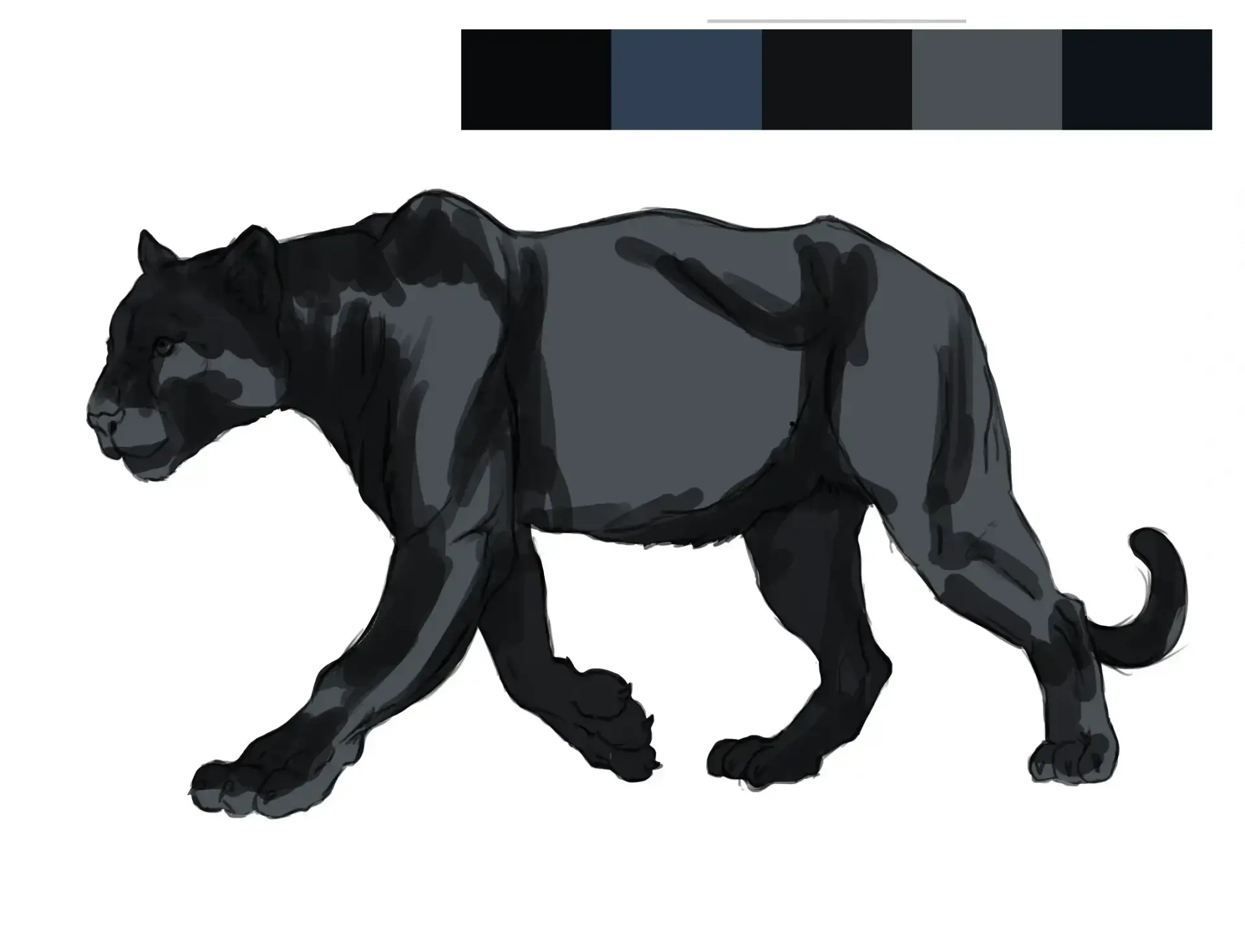
The eyes give the animal all its character. So we will use a yellow to give it that penetrating effect.
Even though the panther is almost entirely black, we will create volume by adding some lighter shades around the eyes, on the cheek, and the top of the nose. Do not rely on the first impression: on closer inspection, you will see many different dark gray tones.
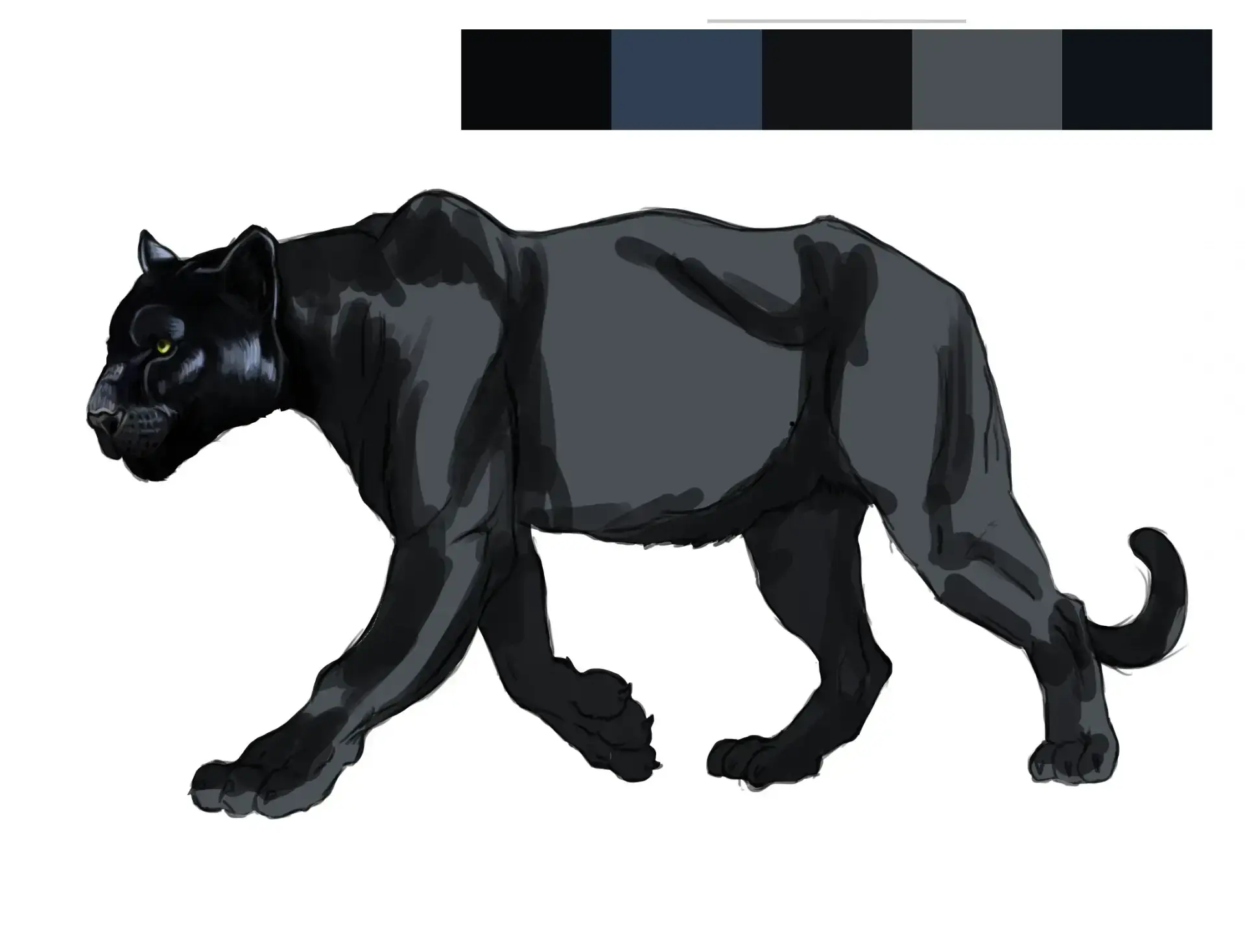
We use the same approach for the neck and torso: add volume with dark grays and blueish highlights on the areas which catch the light.
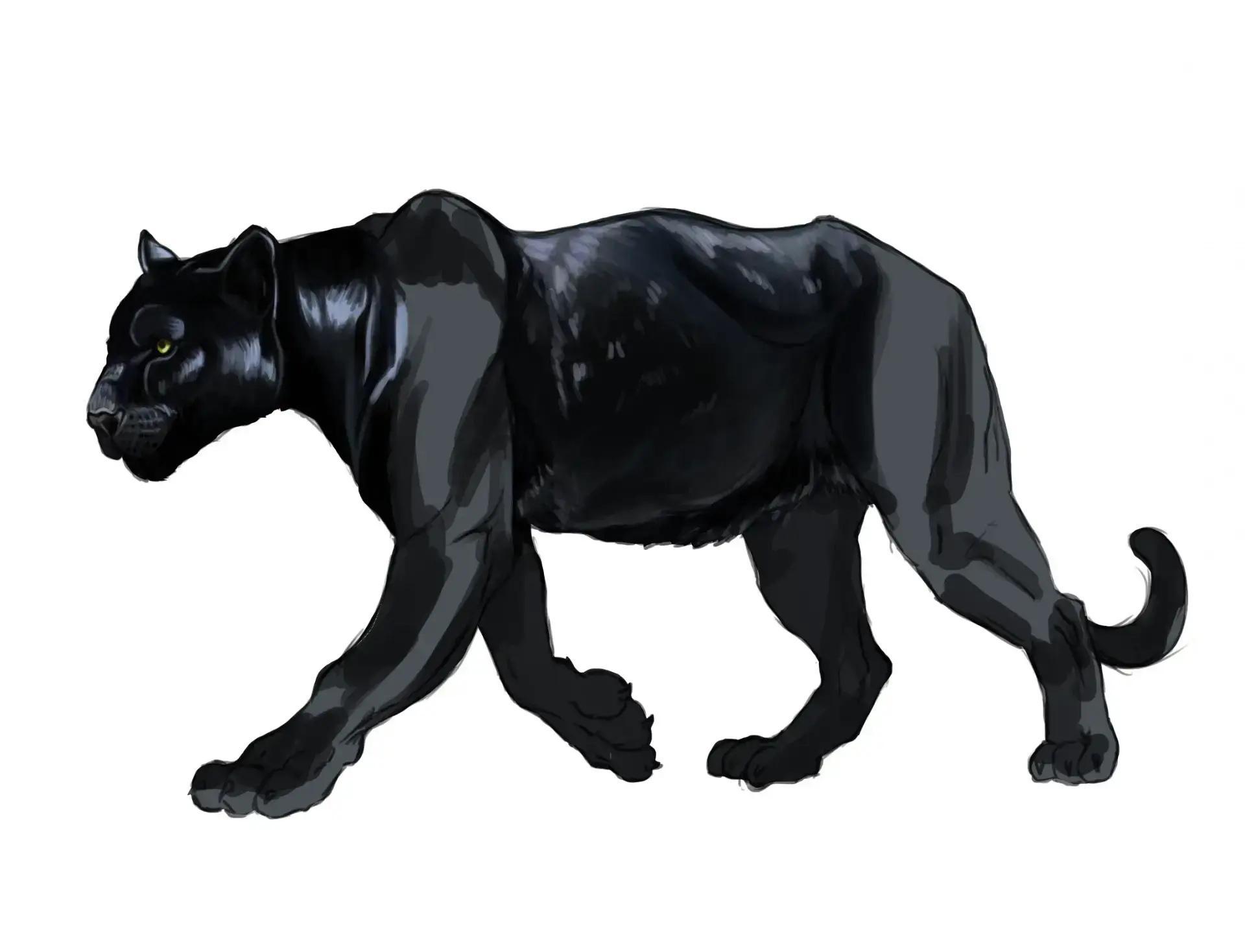
Now let's draw the first leg. There is a lot of dynamism here. Observe the folds created by the movement, then add light with short strokes imitating the fur, following the shape of the leg.
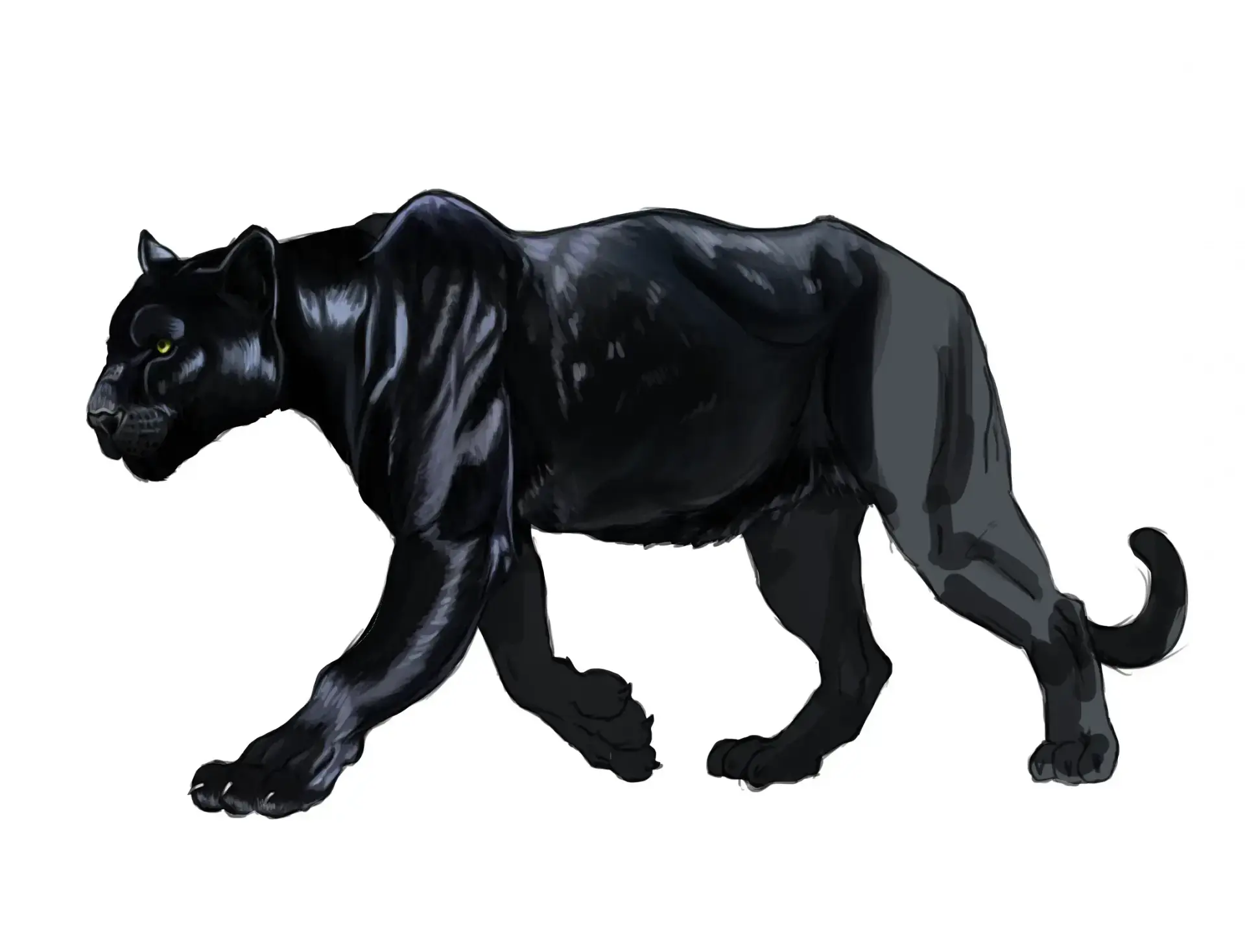
The middle legs deserve attention, even though they are in shadow. There too, there is a play of shadow and light. It's quite simple: use a gray to highlight some strategic contours.
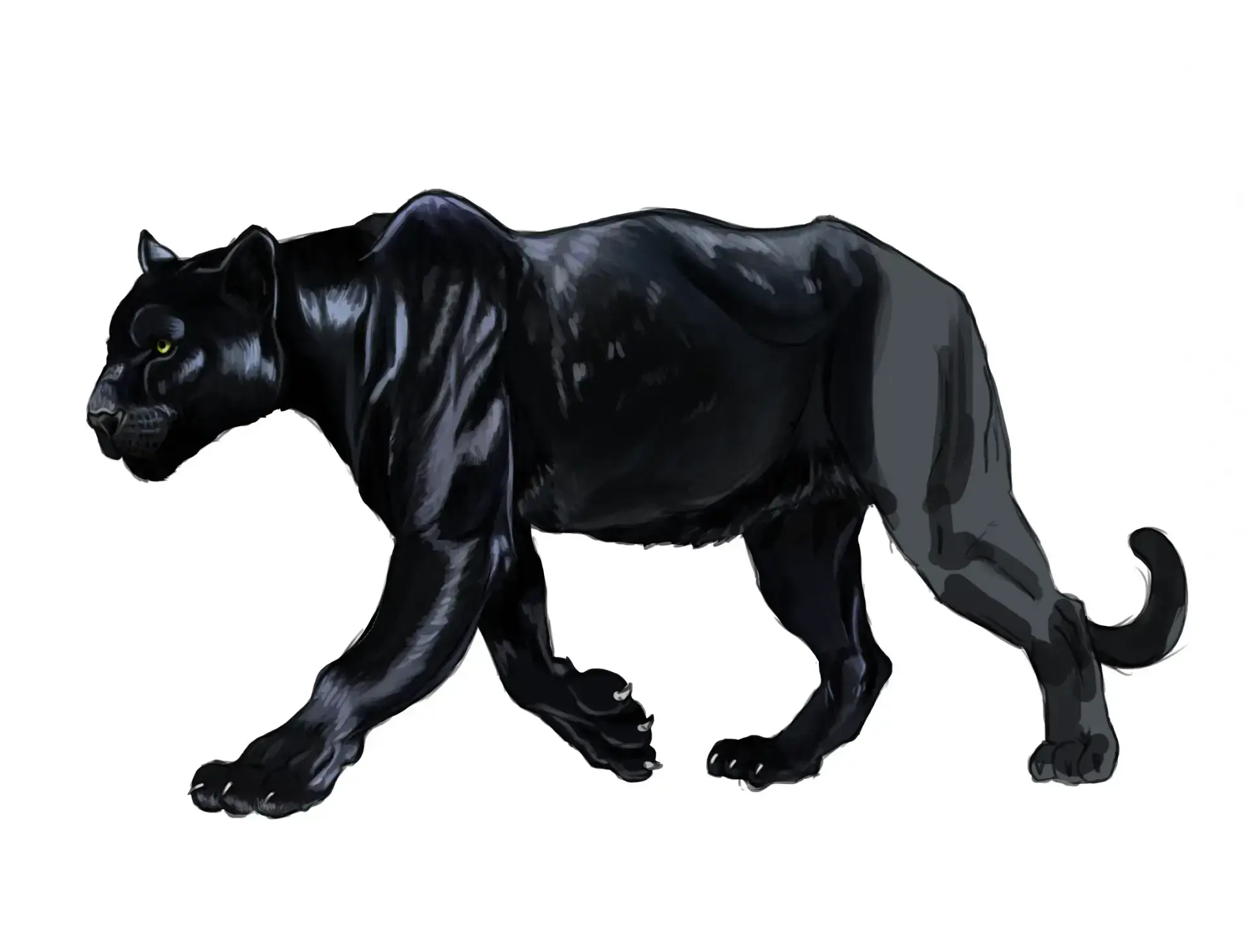
For the hind leg, apply the same method: short strokes that mimic fur, blue and gray tones to add light, and dark grays for volume. Black is reserved for the deepest areas.
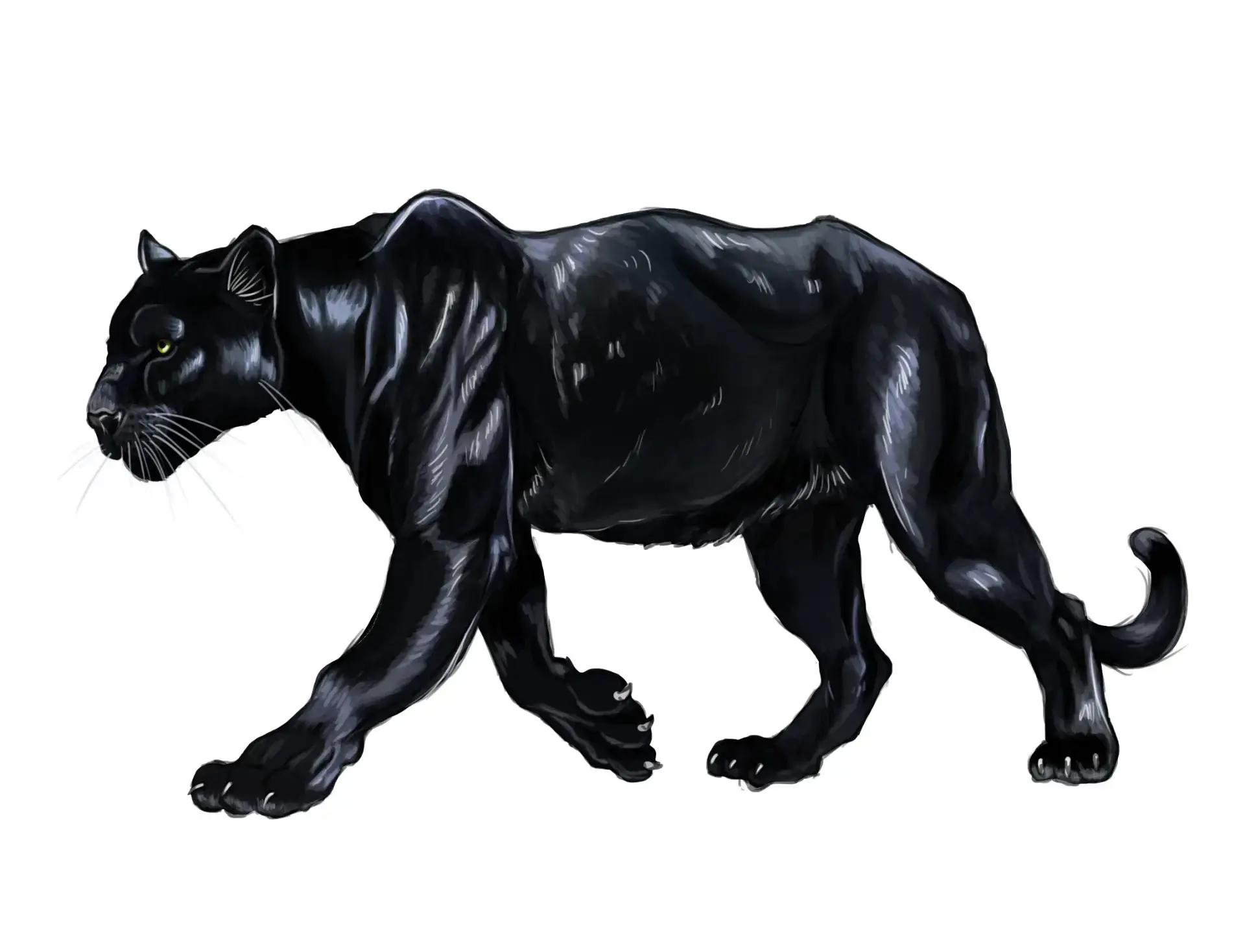
Finalize your drawing
If you wish, add a setting that matches this majestic feline. Its natural habitat is the deep jungle. Draw some tropical leaves in the foreground, ground covered with dry leaves, and in the background, some trees with abundant but not very detailed foliage.

And there you have it! You now have your impressive feline walking calmly through the jungle. I hope you enjoyed this tutorial :)
Discussion
No comments yet.