
How to Draw a Person Running
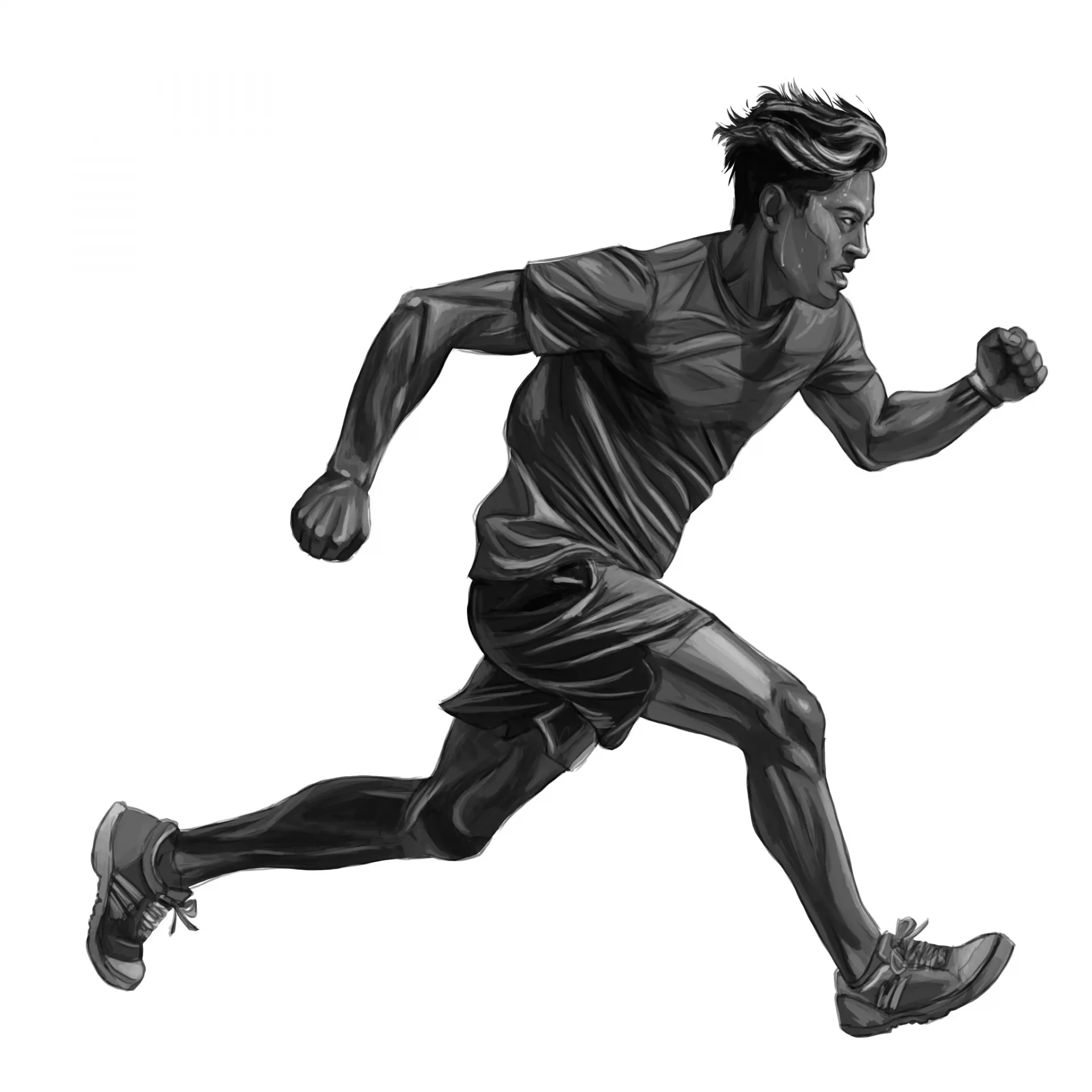
As we delve deeper into the study of human anatomy, it soon becomes clear that knowing proportions is not enough: an artist must also know how to depict dynamic poses, like those found in action comics or in illustrations full of movement.
In this tutorial, I want to help you progress further: we will learn to observe and understand the body in motion to successfully draw a person running with realism and dynamism.
Analysis of the body in motion
As you can see, a body in a static pose is very different from a body in motion. You can observe muscles tensing and relaxing, as well as bones and other body parts that become more or less prominent.
Let's look carefully at how the body behaves when it runs.
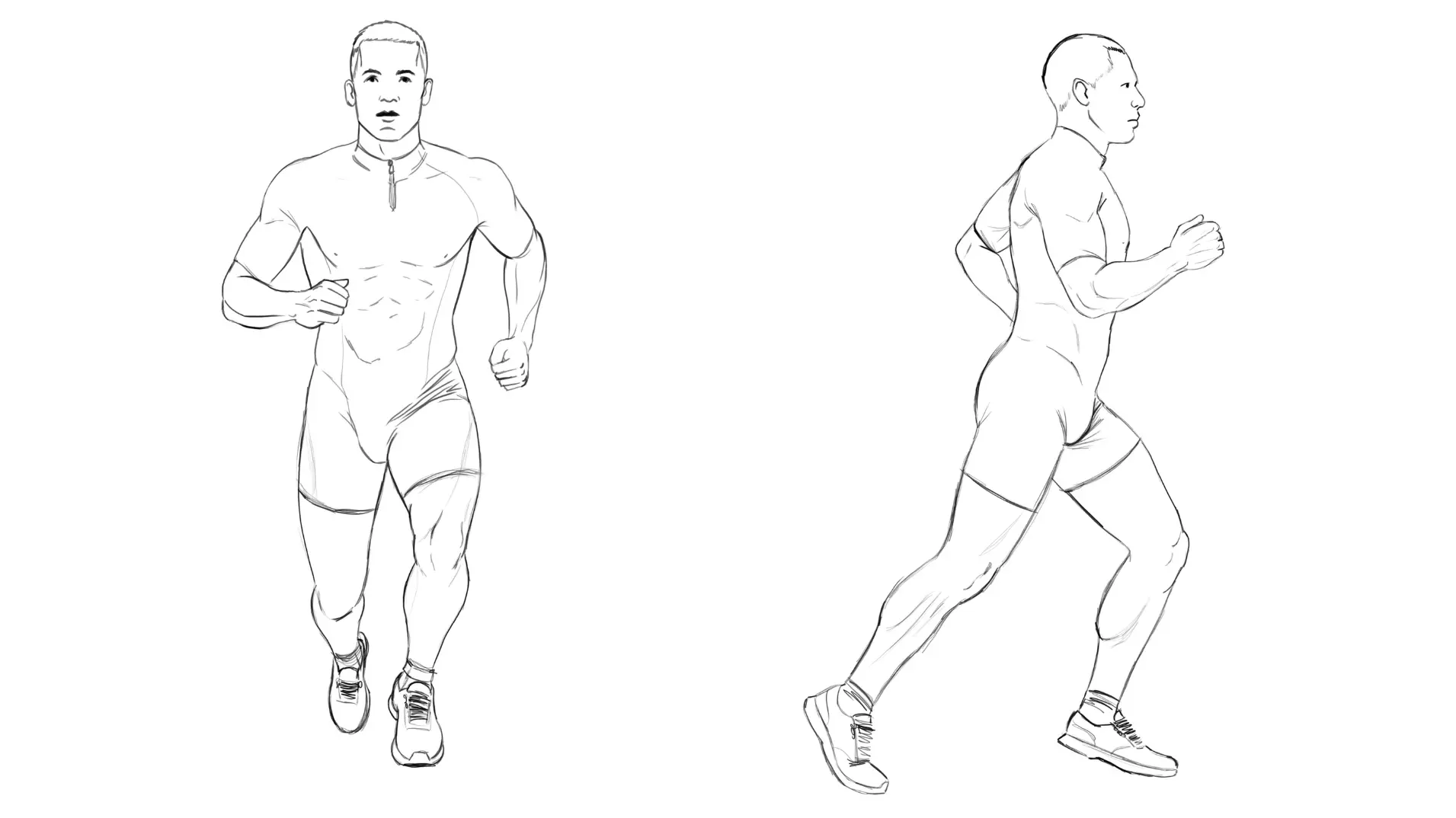
Front view
Let's start by analyzing the following diagram. We see a body slightly tilted forward, the chest open, with the shoulders slanted vertically: one rises, the other descends.
The arms move like a pendulum, in opposite directions, forward and backward, while the elbows bend at an angle from 45° to 90°. The same dynamics are repeated in the legs in the opposite manner, meaning that if the right foot moves forward, the left hand moves backward.
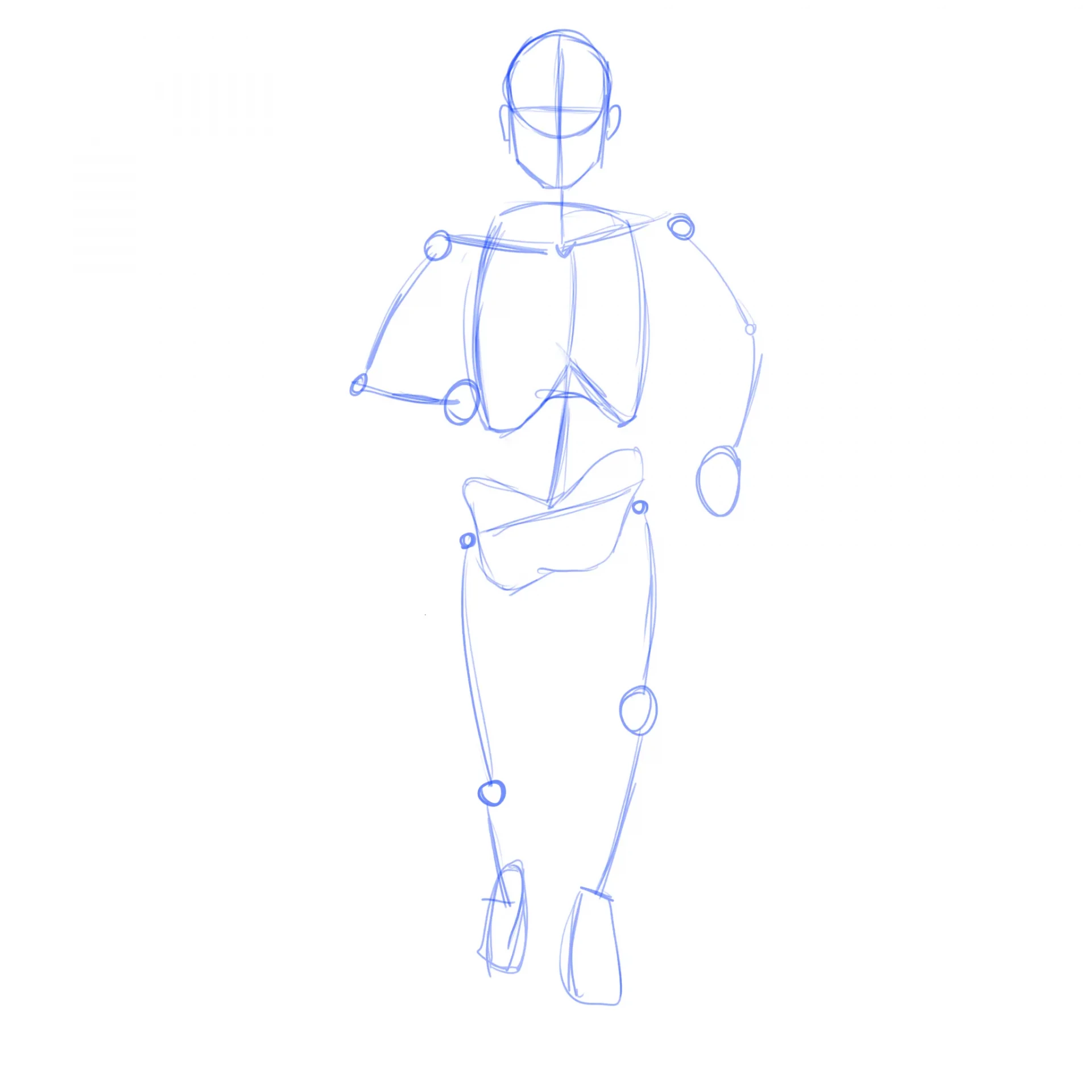
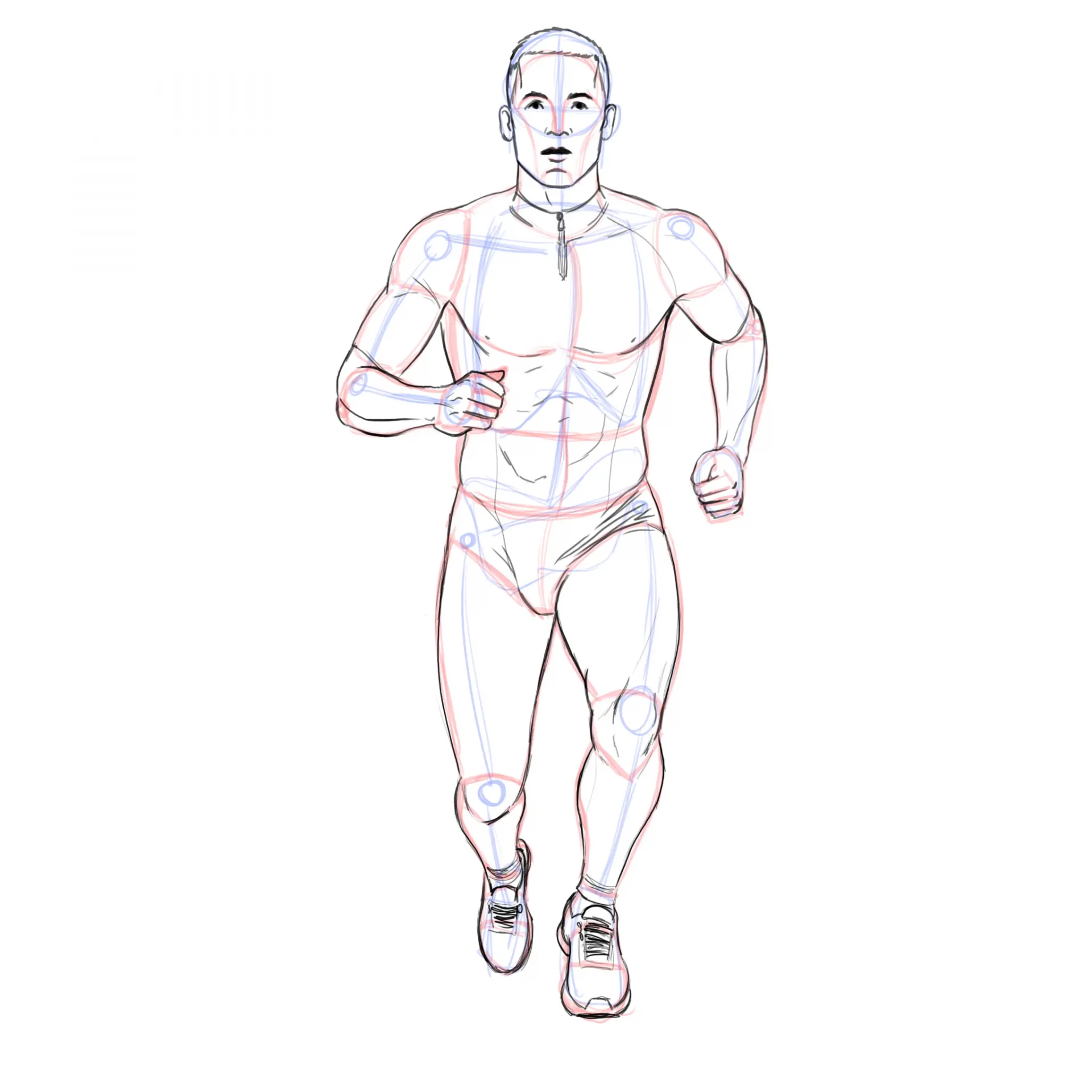
Next, you can observe the different parts of the body that adapt to this composition. Notice the slight twist of the torso, the folds of the forearm and thighs, and carefully observe the tilt of the legs and arms.

Finally, we move on to the final sketch, where you can see the muscle tension. Observe the muscles of the torso and the abdominals to understand how they behave, where they stretch and where they contract. Do the same with the shape of the muscles of the arms and legs.
Side view
Let's now move to another angle, to have a more complete view of the body. Here, we can more clearly see the alternating placement of the arms and legs that we mentioned, as well as the angle of the elbows and knees, and also the tilt of the shoulders and hips.
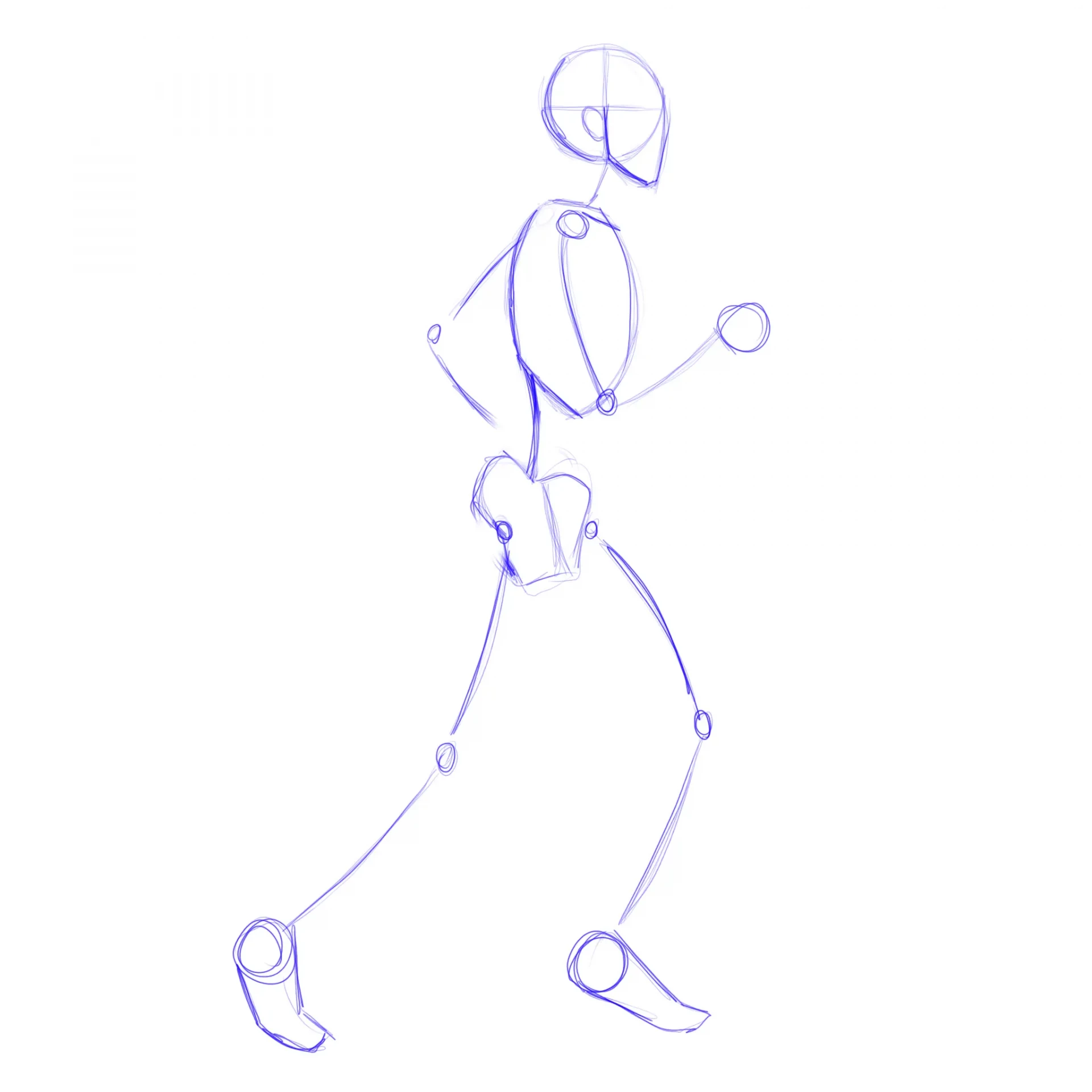
Now observe the volumetric view: it shows which parts of the body cover others, and how the arm muscles fold. In this view, it is also possible to make out the position of the feet.
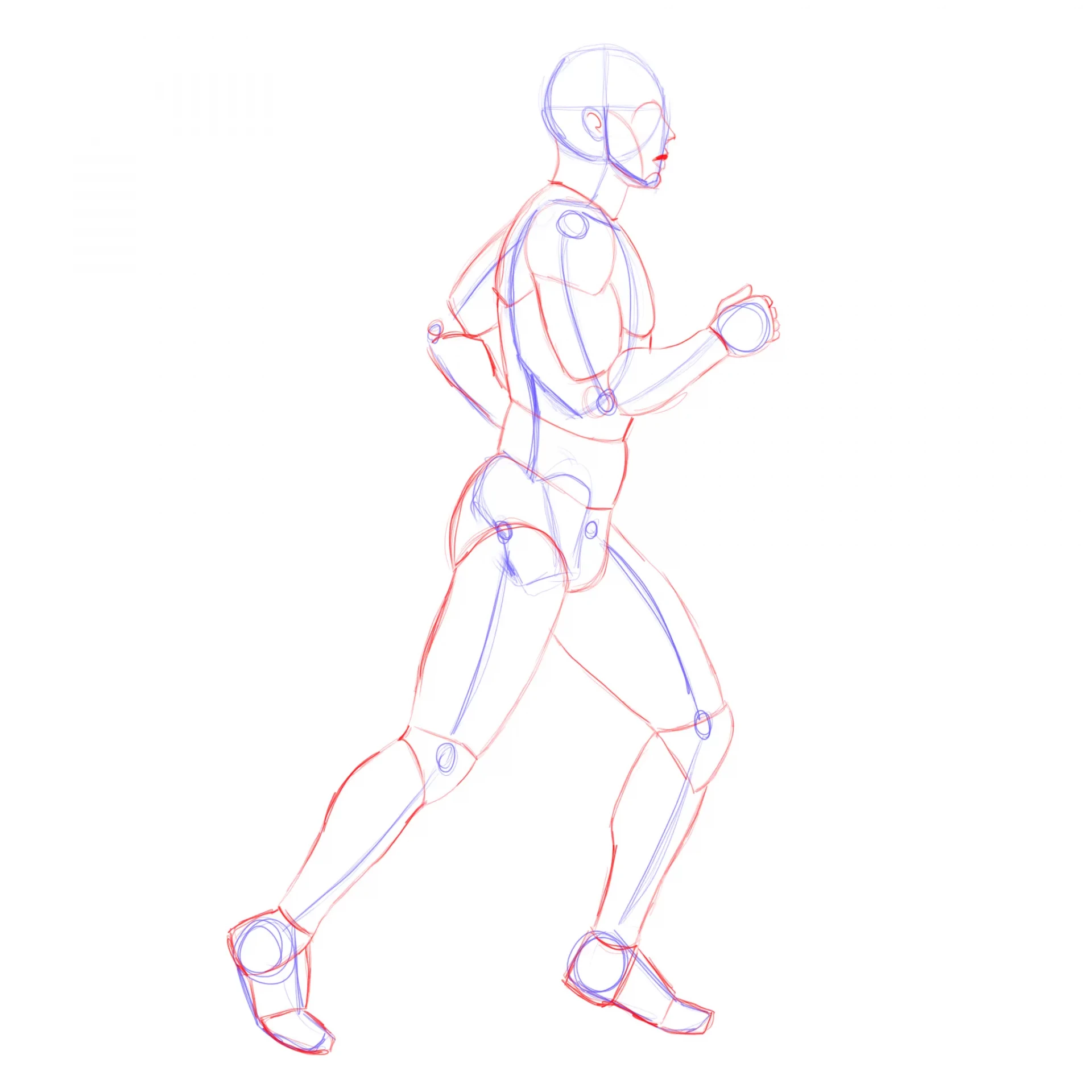
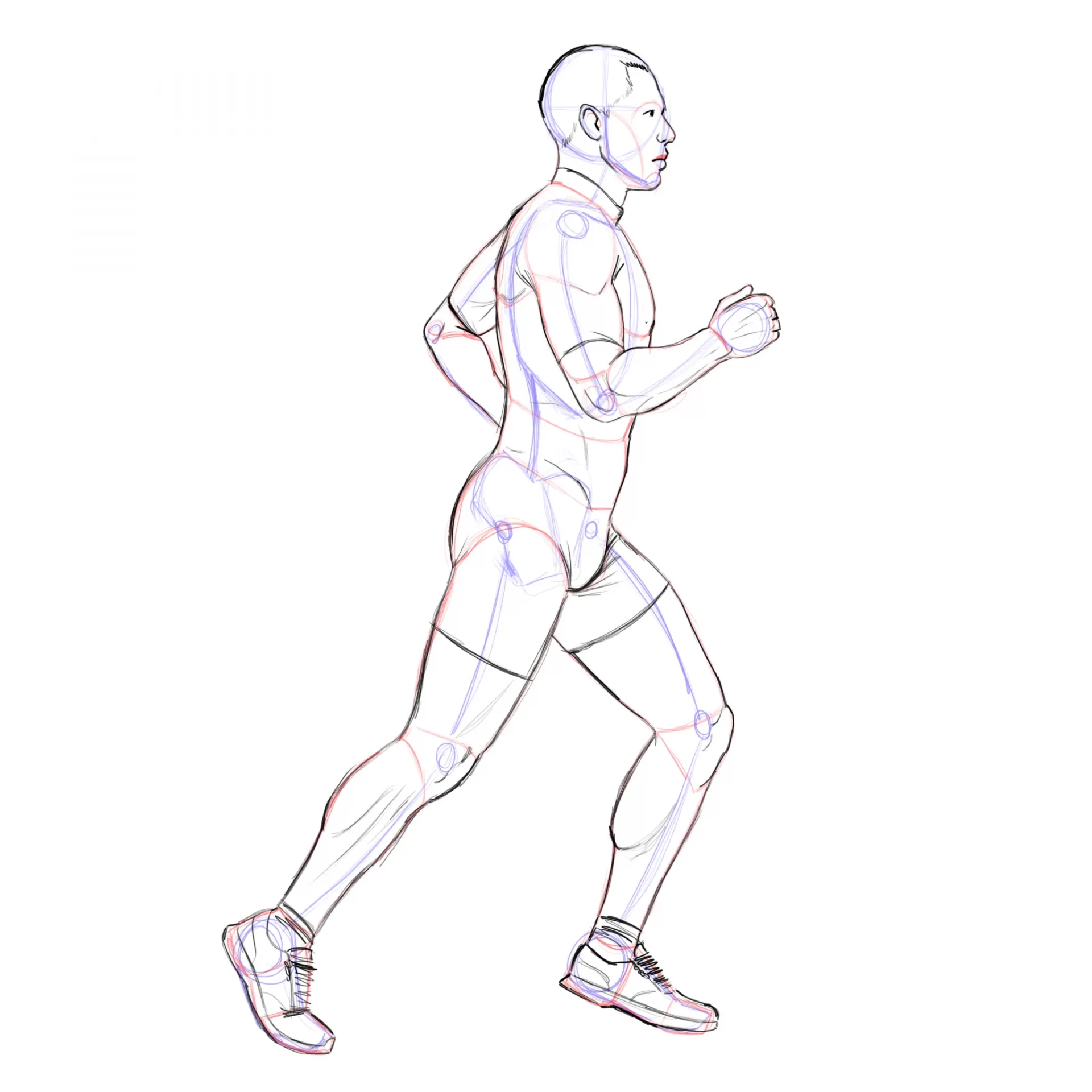
We finish with the final sketch, where you can again analyze muscle tension, particularly in the legs, which are much more visible from this angle.
Draw a person running step by step
Draw a line of action with a long, curved stroke. From this line, you can construct a diagram by incorporating the elements we looked at earlier.
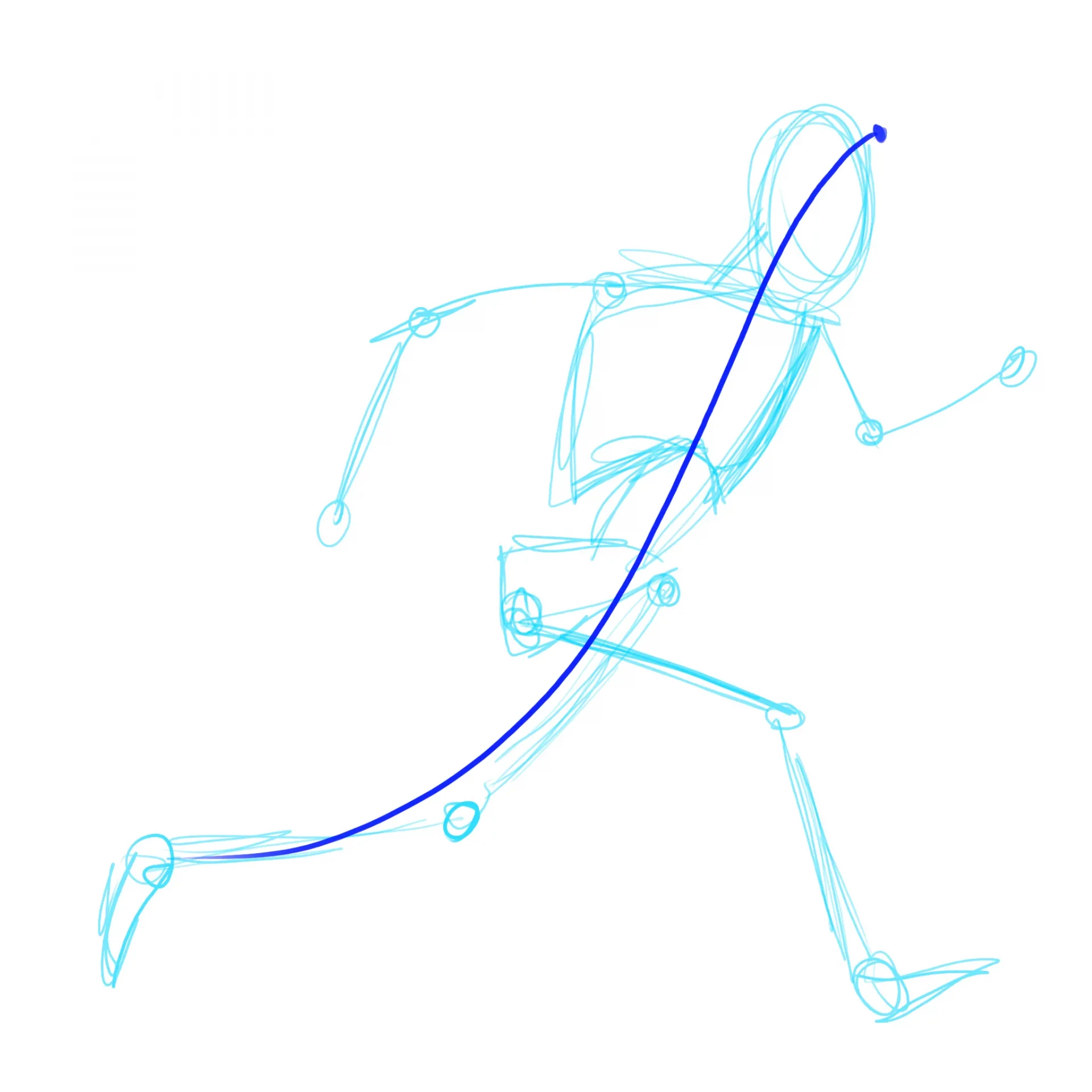
Start by drawing the head in profile, with a slight tilt. To do this, lower the chin almost to the level of the neck's base, while keeping the gaze directed forward.
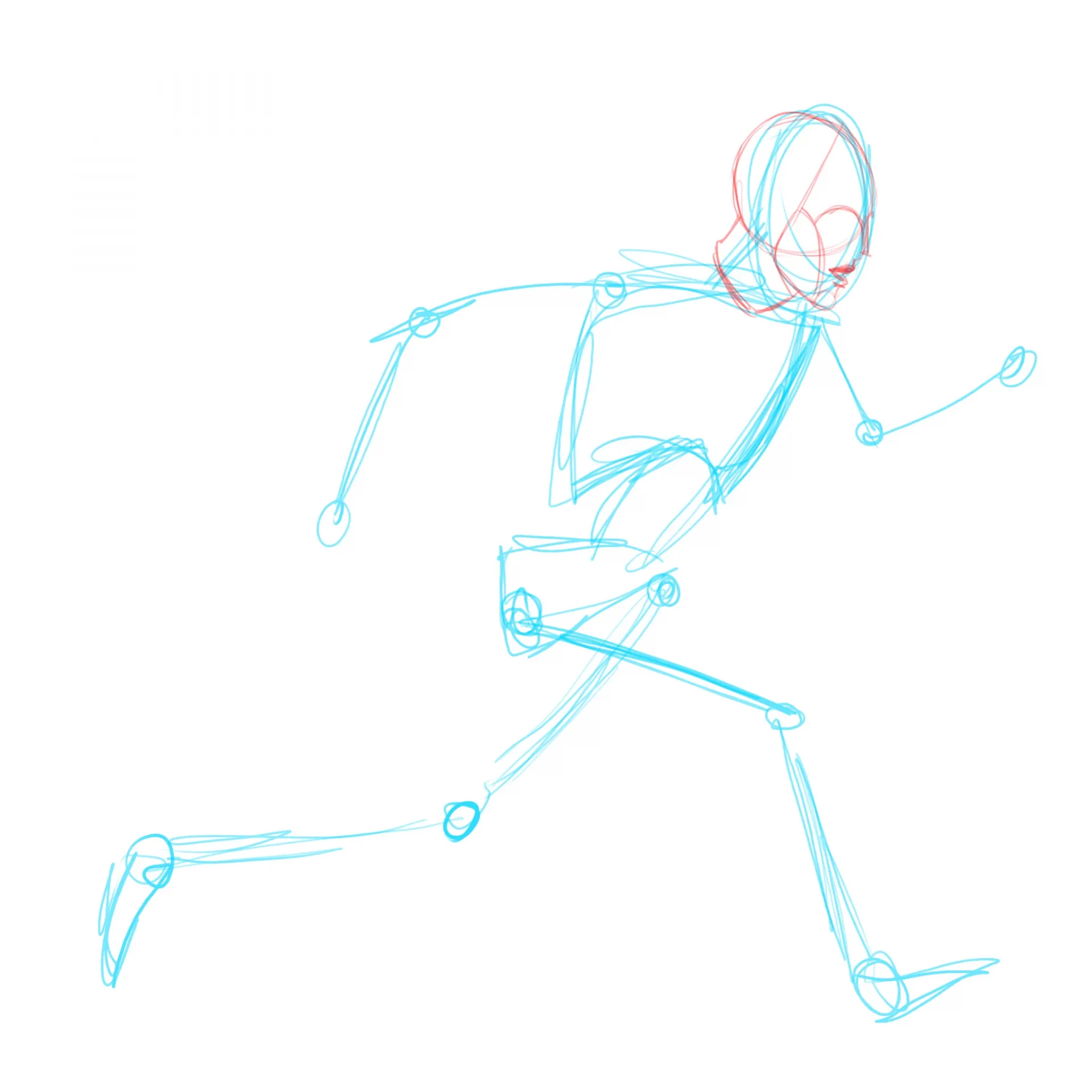
Then move on to the chest, with a slight three-quarter view: one shoulder is partially covered by the chin and part of the torso, while the other is more visible, with a slight twist upwards.
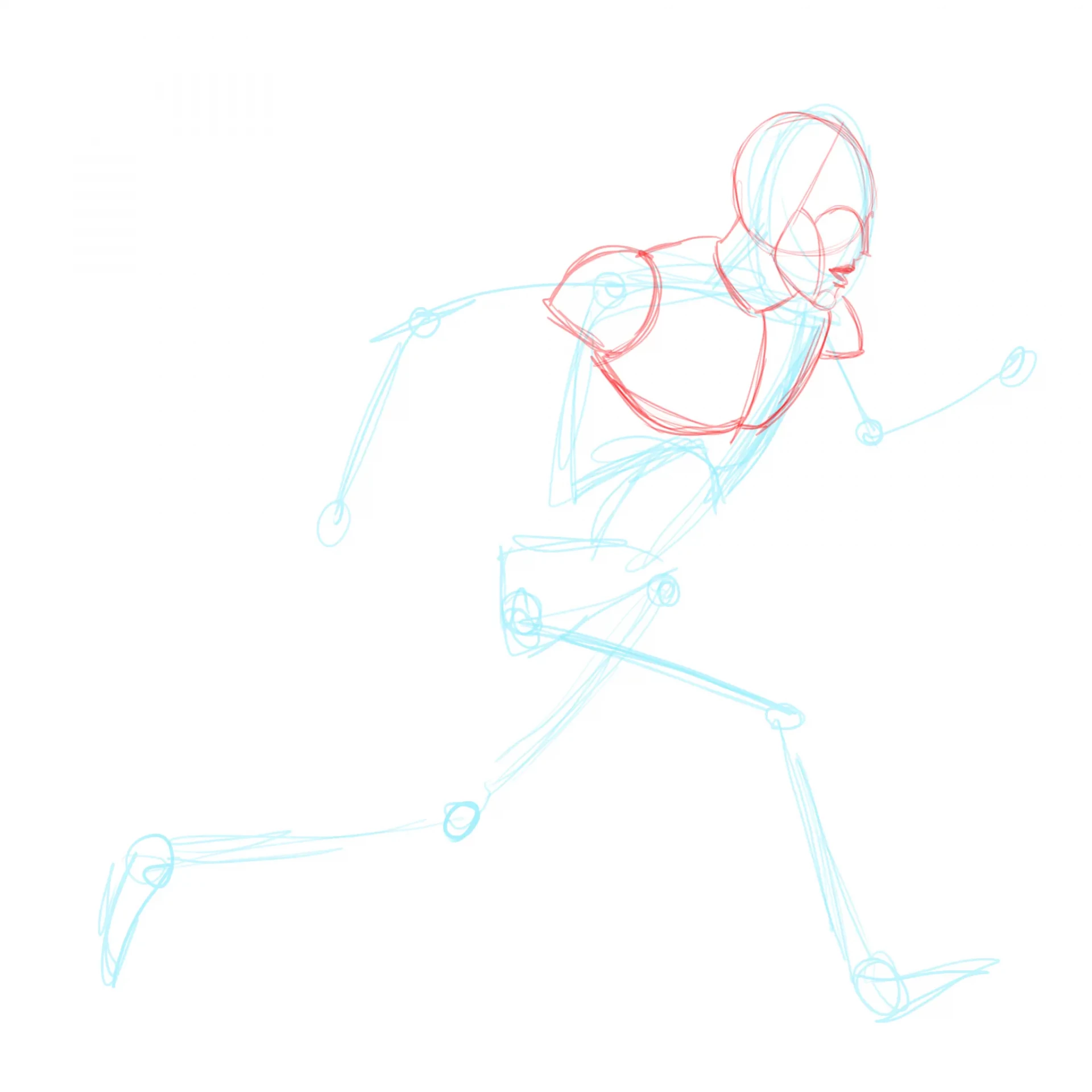
Draw the whole torso now. Identify the vertical axis and its inclination. Remember that if the chest goes in one direction, the pelvis must go in the opposite direction.
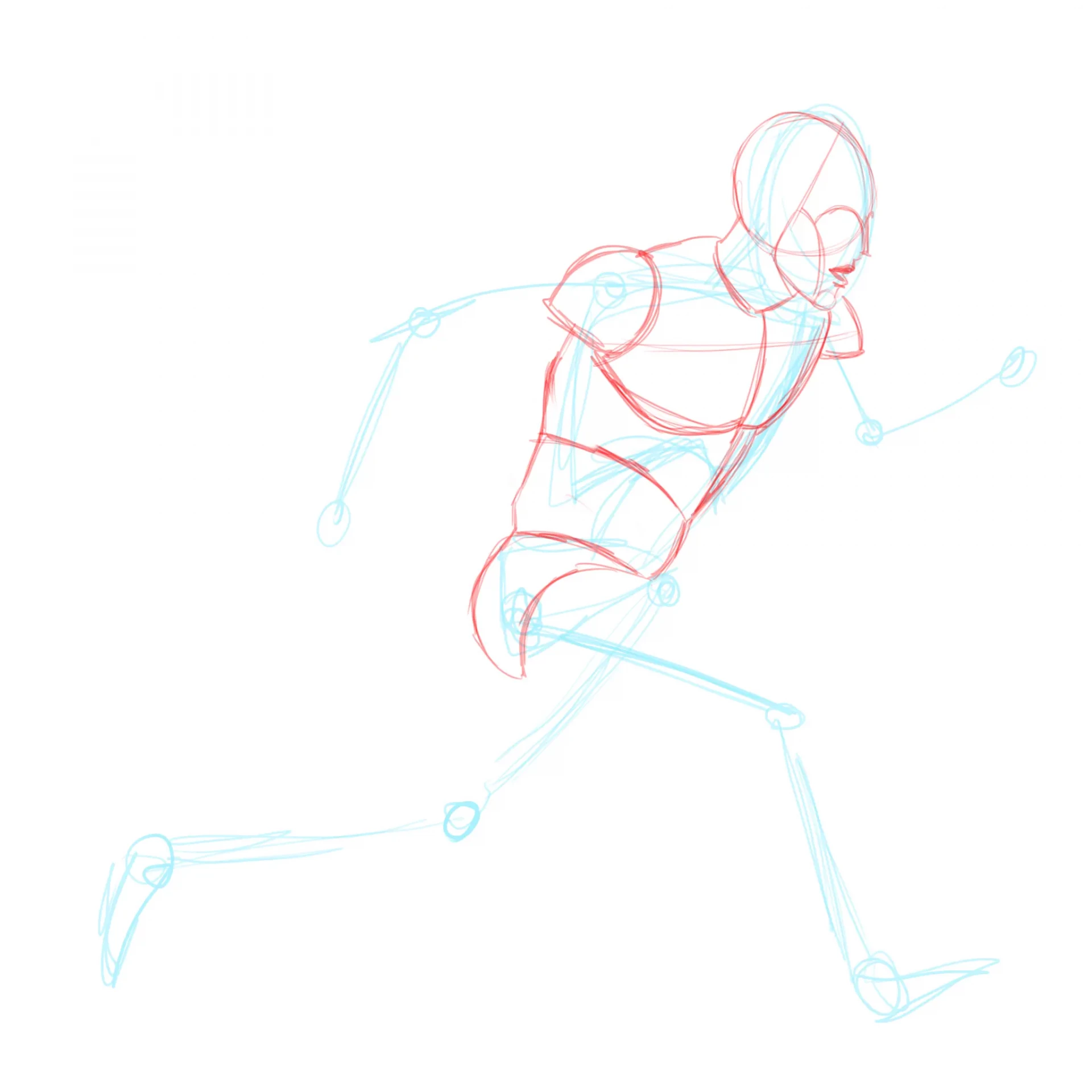
Following the diagram and the previous tips, draw the volumes of the arms and legs. Allow the muscles to shorten and stretch naturally.
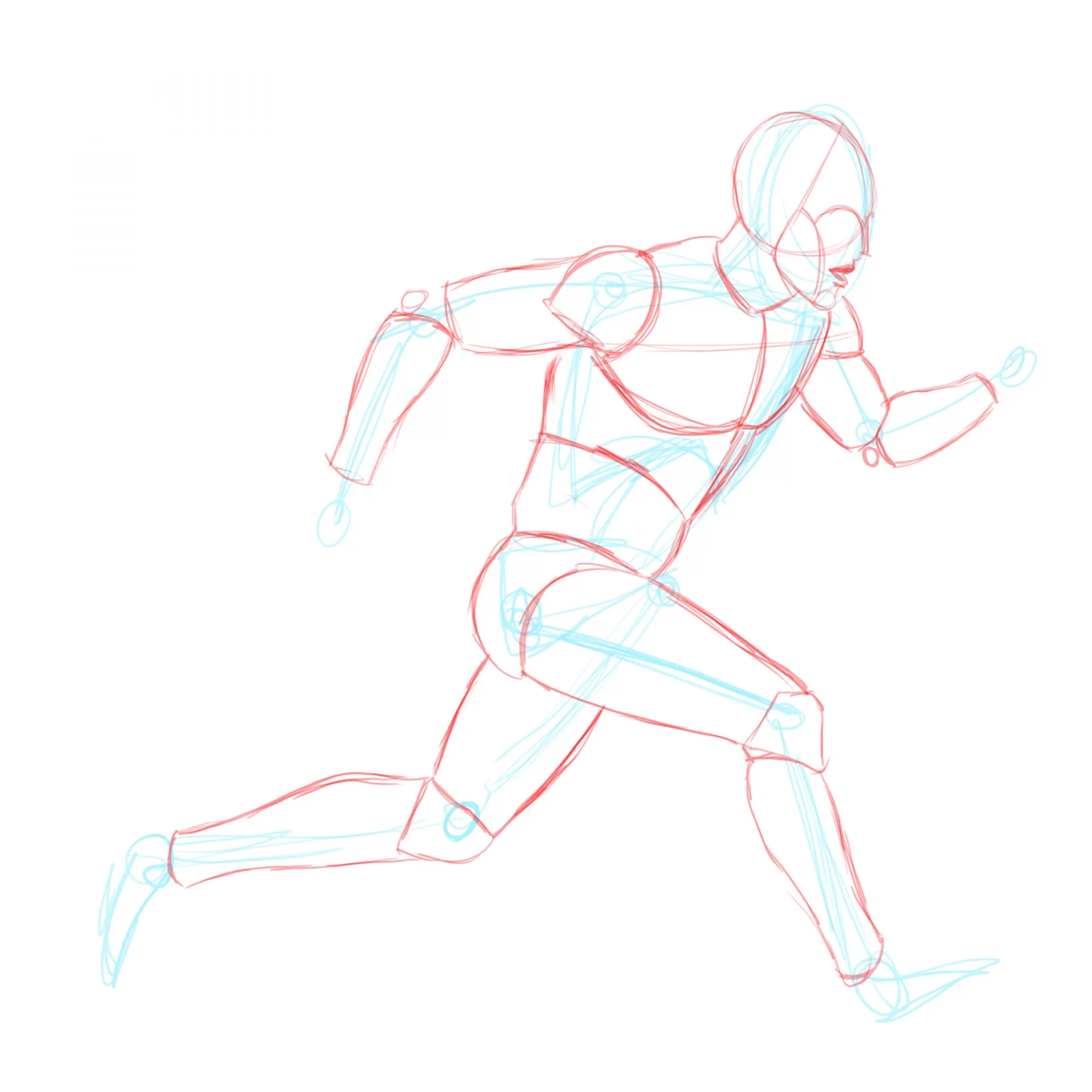
To finish the structure of our character, draw the hands with clenched fists: one oriented inward, the other outward. For the feet, draw one stretched out, with the heel off the ground, and the other bent, with the toes touching the ground.
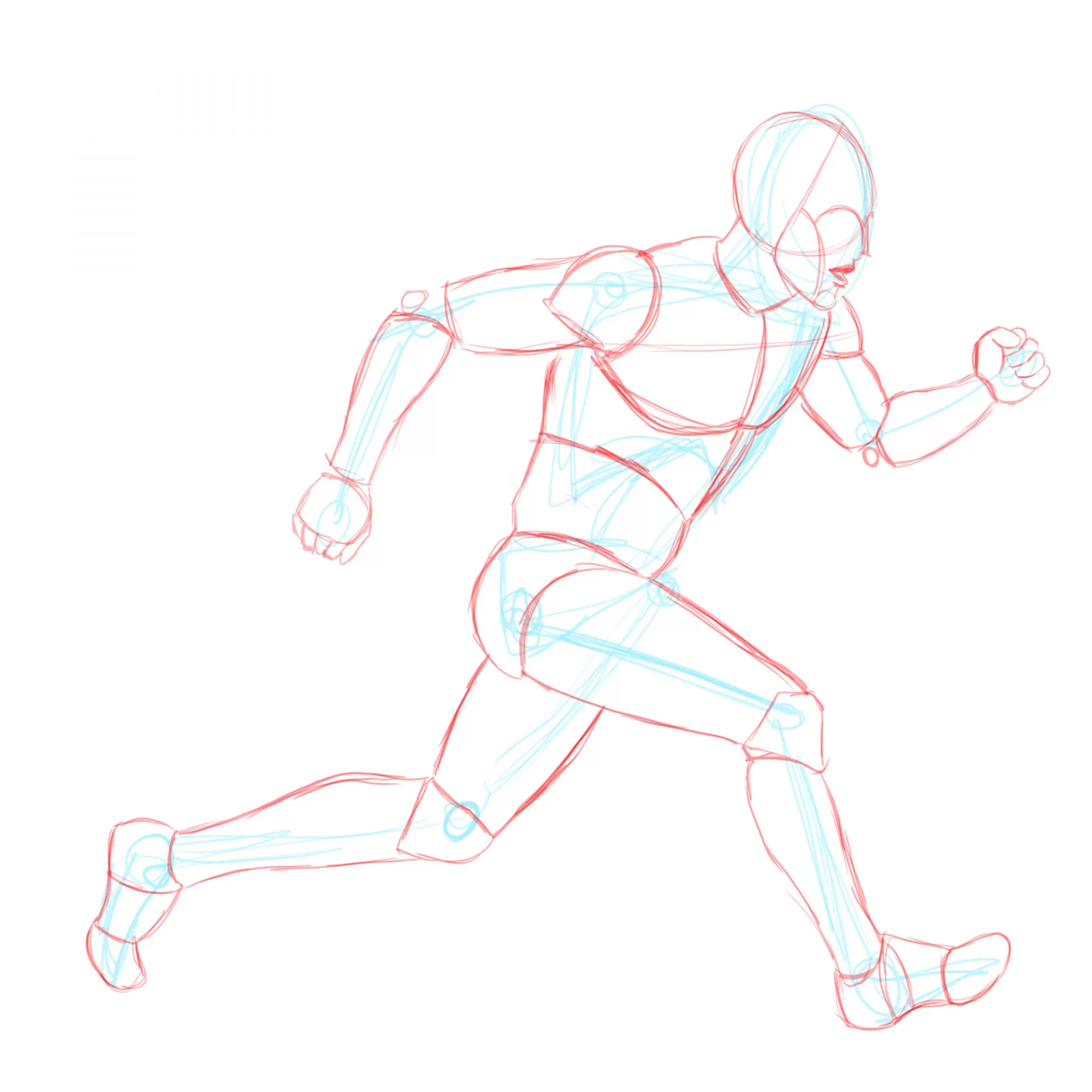
Draw the upper body
Once our structure is finished, let's start by drawing the face. It is important to express effort and fatigue: the mouth and nostrils slightly open, the neck muscles tense, and the gaze fixed forward. We will also draw the hair flying out in the opposite direction, as if being pushed back by the wind.
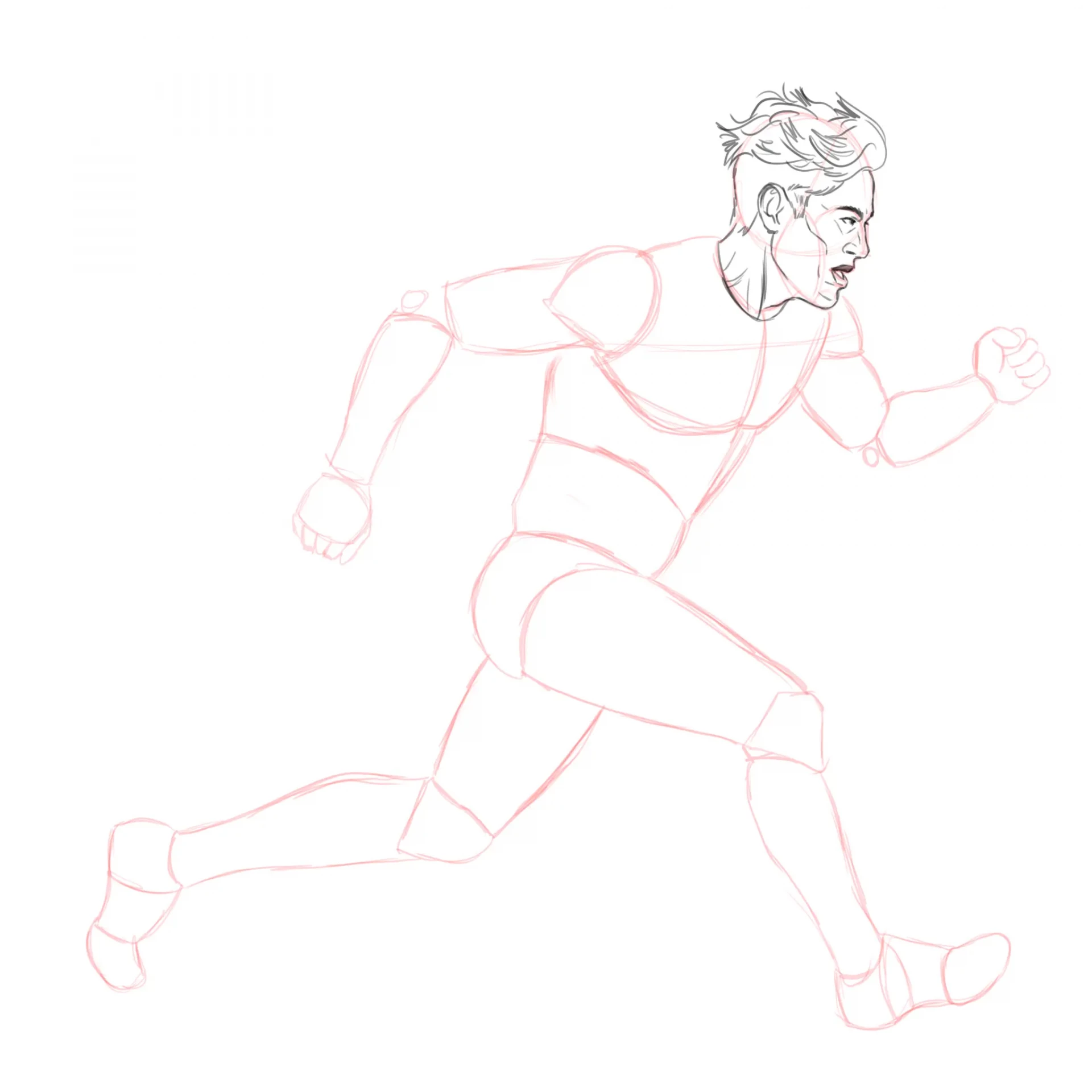
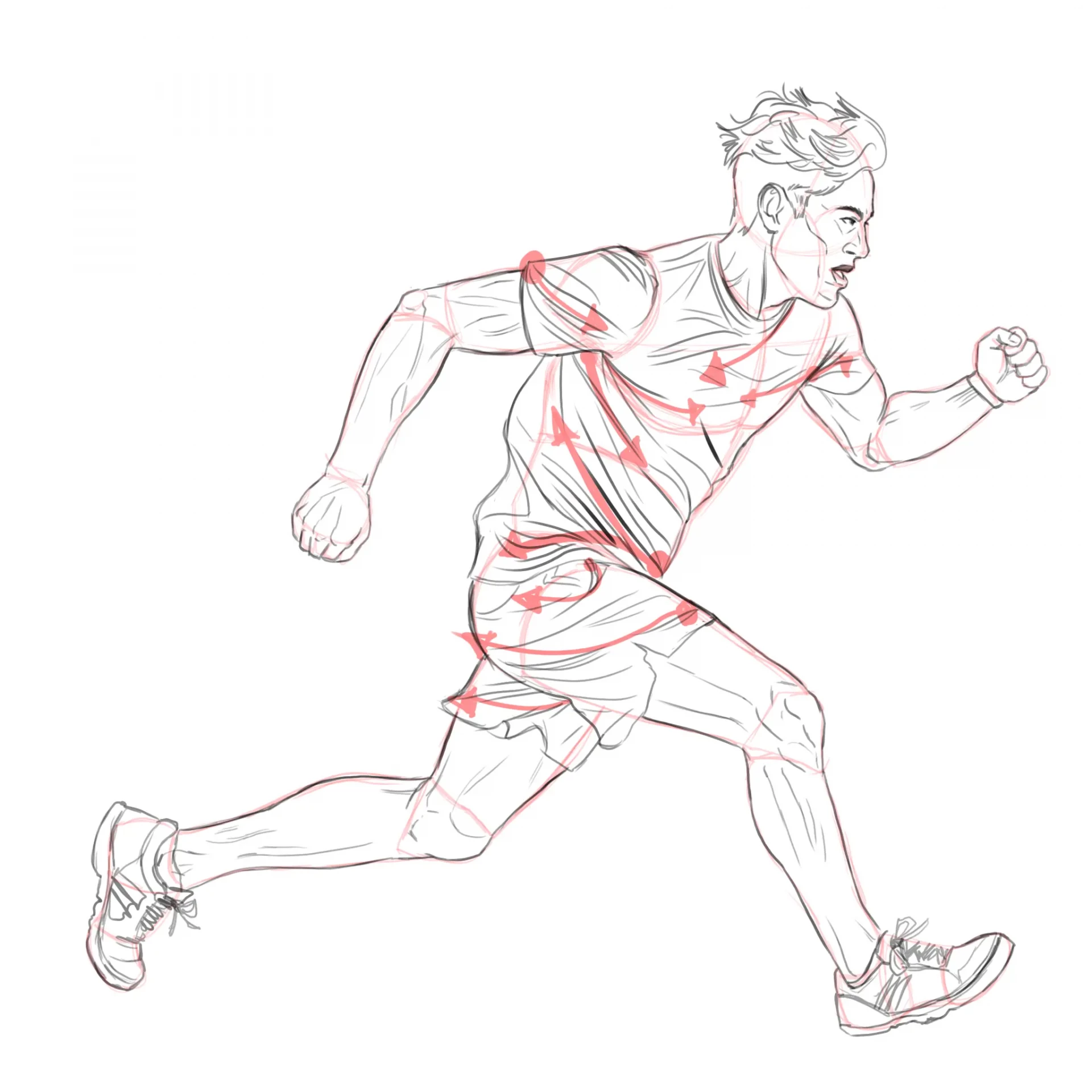
The next step is to draw the clothes, choosing a suitable outfit: here, a t-shirt and sports shorts.
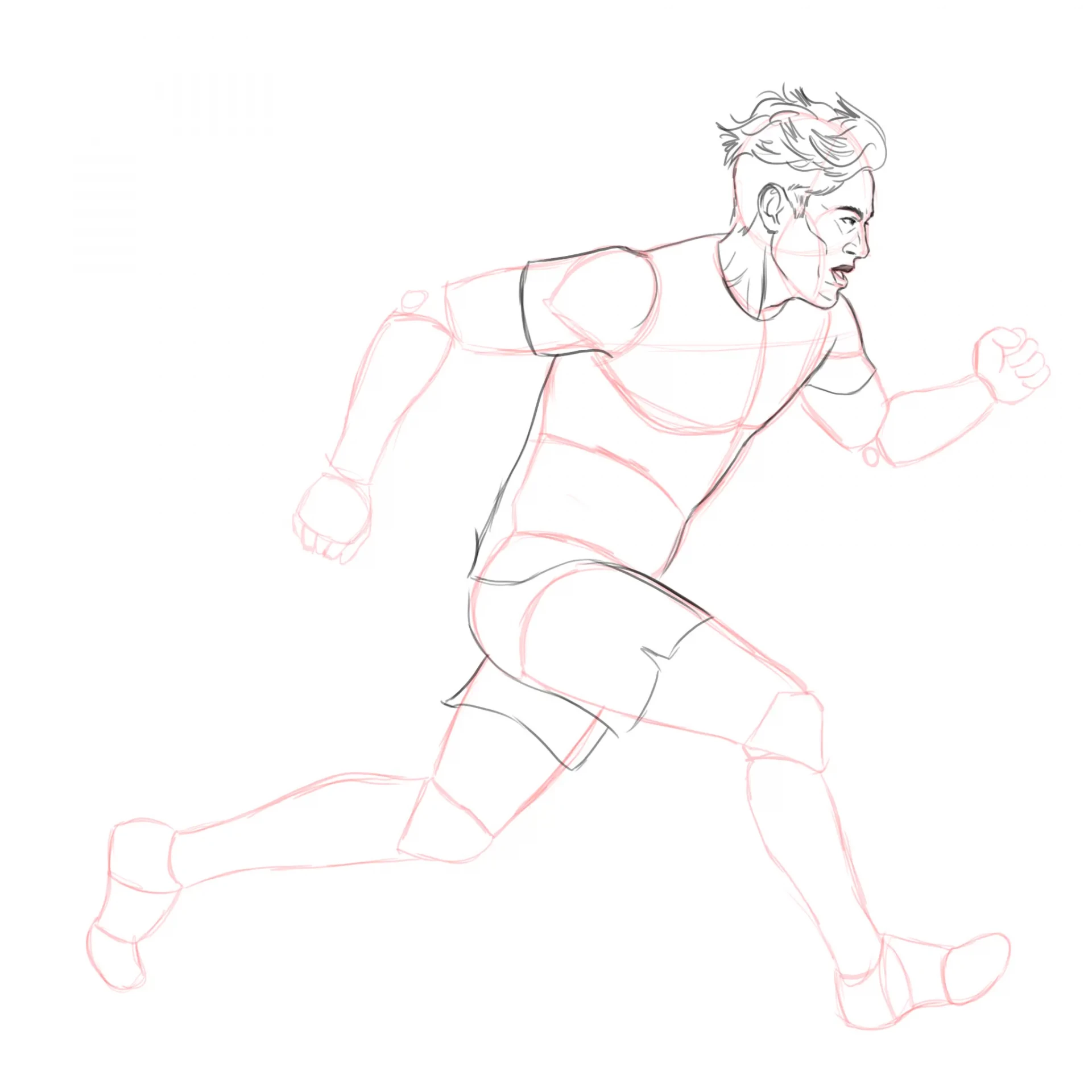
Clothes need to convey a lot of movement. To achieve this, draw folds starting from the points of tension. Observe the arrows on the drawing and analyze the twists along the torso and legs.

Draw the arms adding slight muscle tension, not forgetting the tendons and bones whose shape is visible. Finish with the hands in a fist position.
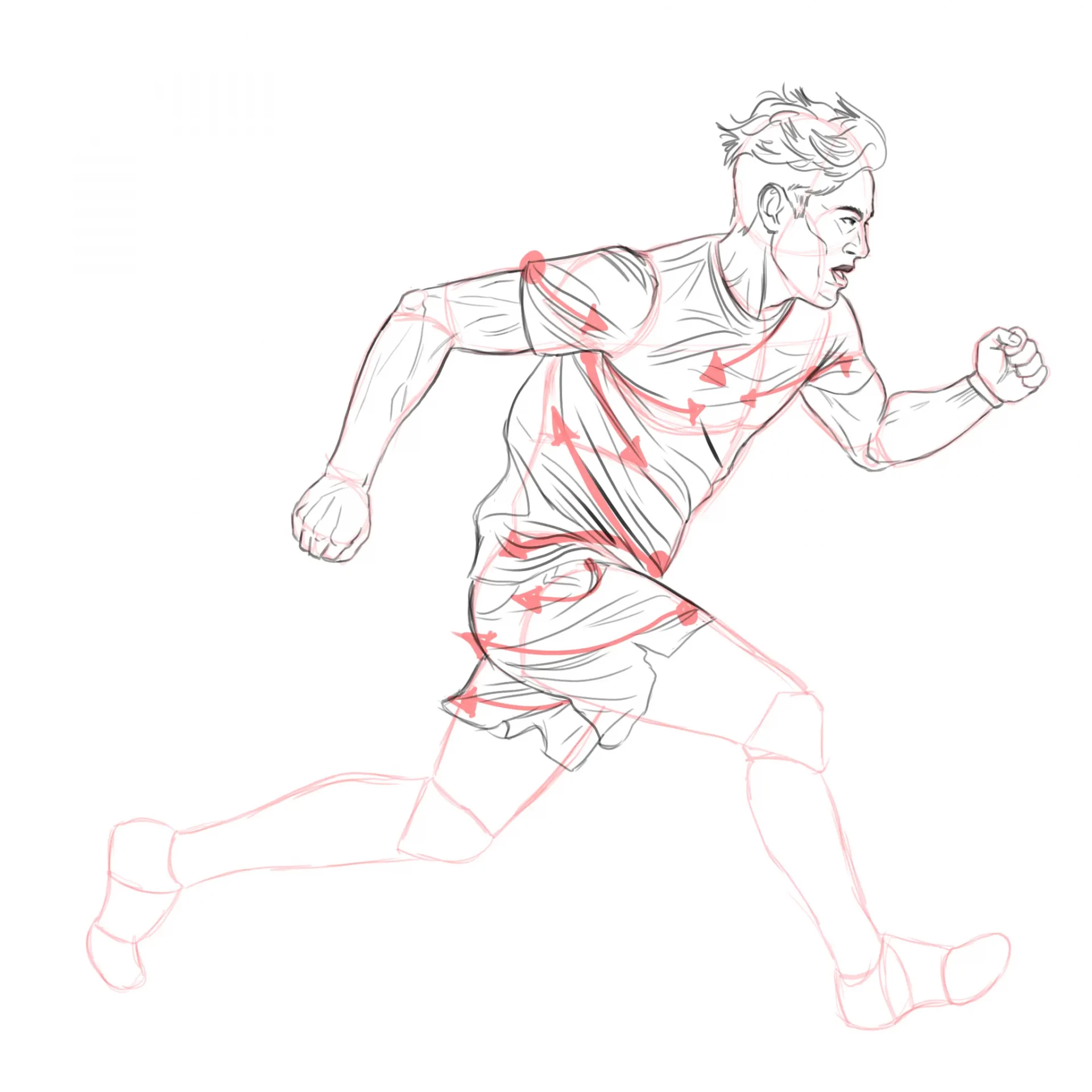
Repeat the same thing for the legs. Observe how the muscles tense or relax: you will see that anatomy does not apply in the same way to a rigid body as to a moving body.
Add shadows and volume to the drawing
Erase all sketch residues and construction lines. Depending on the technique you use, you may choose a different approach, but I suggest applying a neutral base color: your volumes will be more accurate.
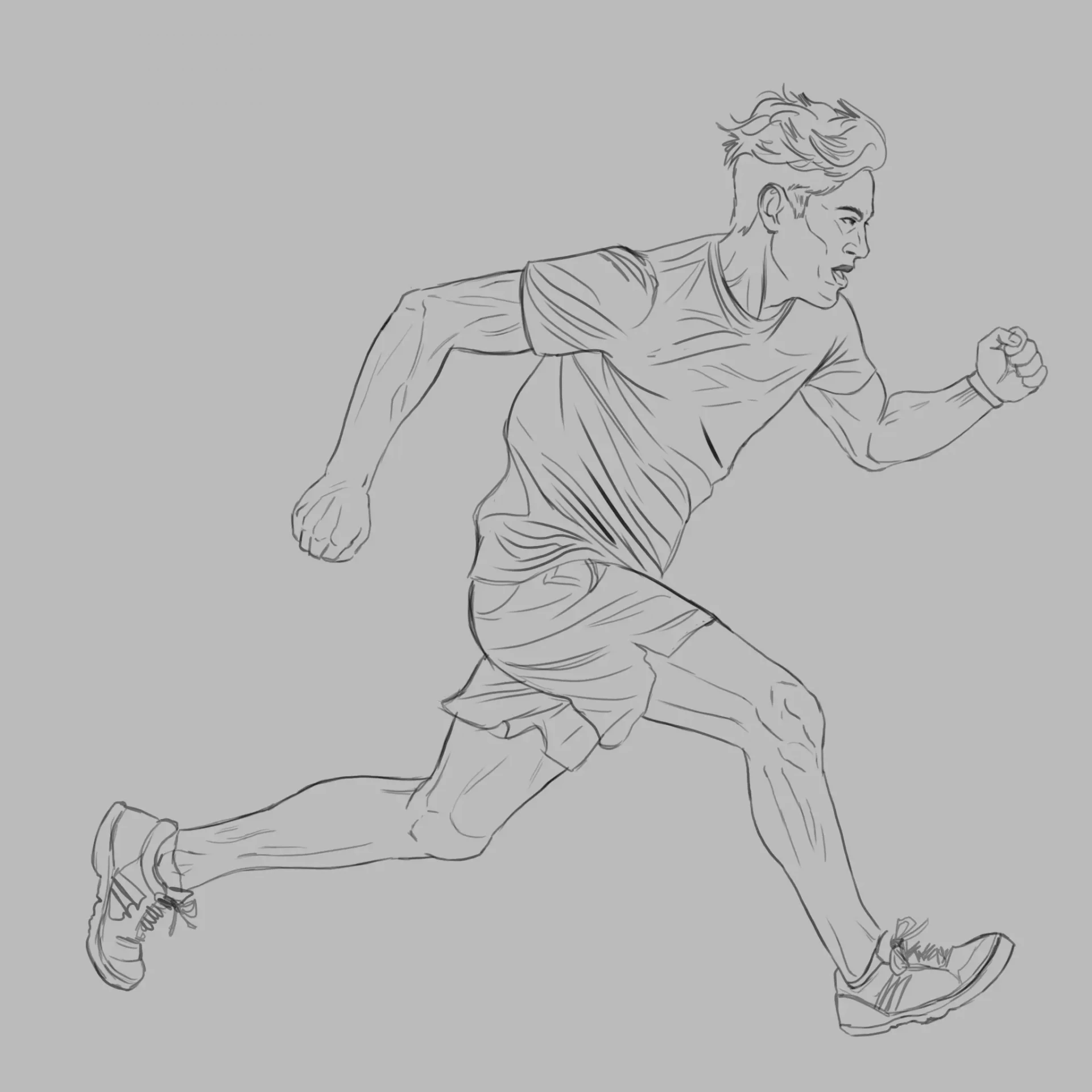
Identify the main shadows on the model. The area under the cheekbones and chin darkens, casting a V-shaped shadow on the chest. Notice also how shadow covers almost the entire torso and the left leg. Finally, look in detail at how the shadows are articulated in relation to the muscles, both in the arms and the legs.
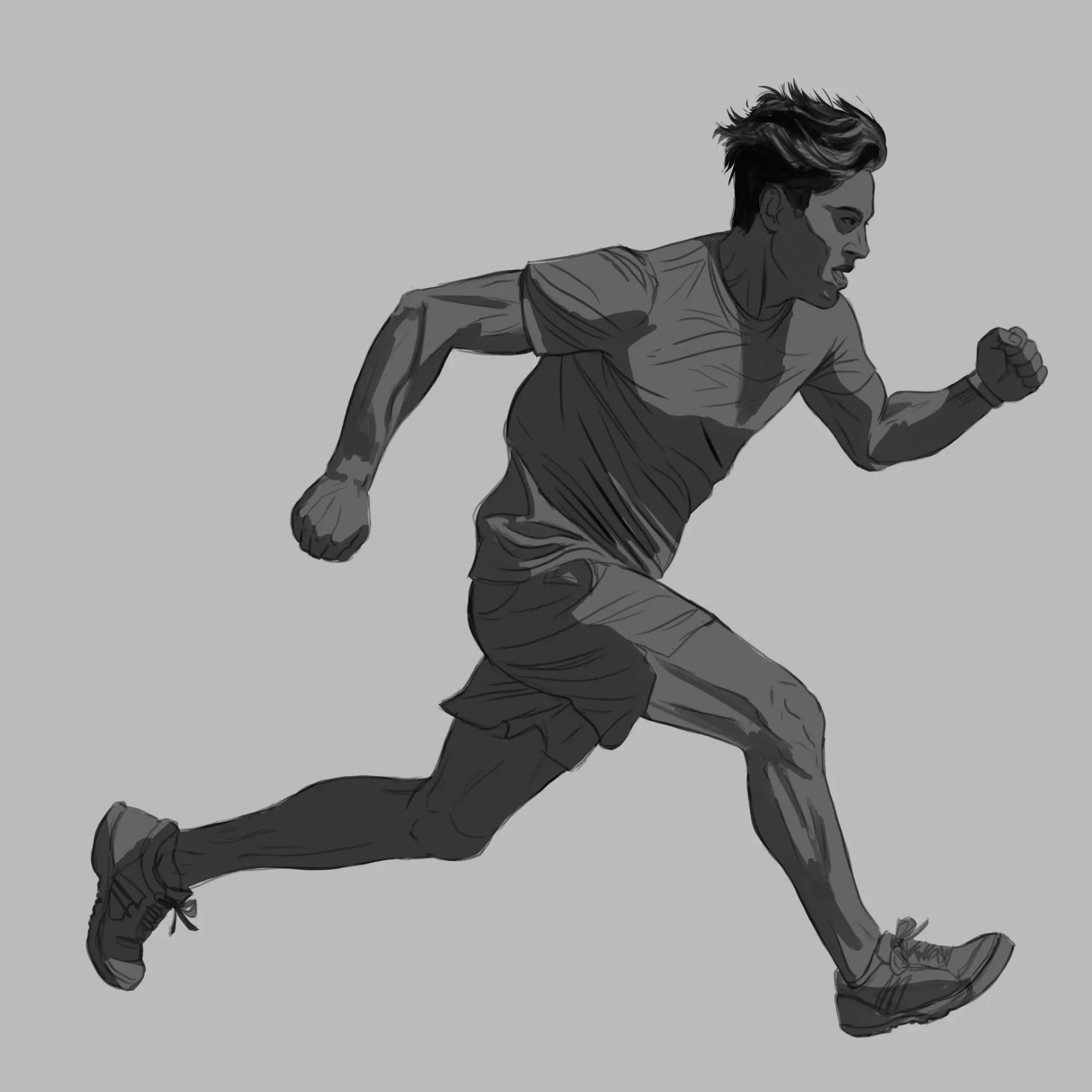
If you wish, you can go further by adding different tones of shadow and light to enhance the volume, while respecting the base shadow. I recommend progressing in stages: start with the head by focusing on the facial features and hair texture, then move on to the clothing to give depth to the folds, and finish with the limbs while respecting the muscle tension.
Below is a final view of the result. You'll notice that I added some white dots and lines on the face to simulate sweat. In this type of drawing, it's important to highlight elements that convey the effort exerted.

This completes today's tutorial. I hope it inspires you to create your own drawing of a person running by applying the tips I've shared. Remember: to accurately depict the body in motion, it is essential to carefully choose and observe your reference models.
Discussion
No comments yet.