
How to Draw a Pyramid
Since the time of the Greeks, the seven wonders of the ancient world have fascinated humanity. Among them, the pyramids have stood the test of time and continue to fuel our imagination.
Today, I'm going to take you through how to draw a pyramid, inspired by the famous pyramids of Giza.
What is a pyramid made of?
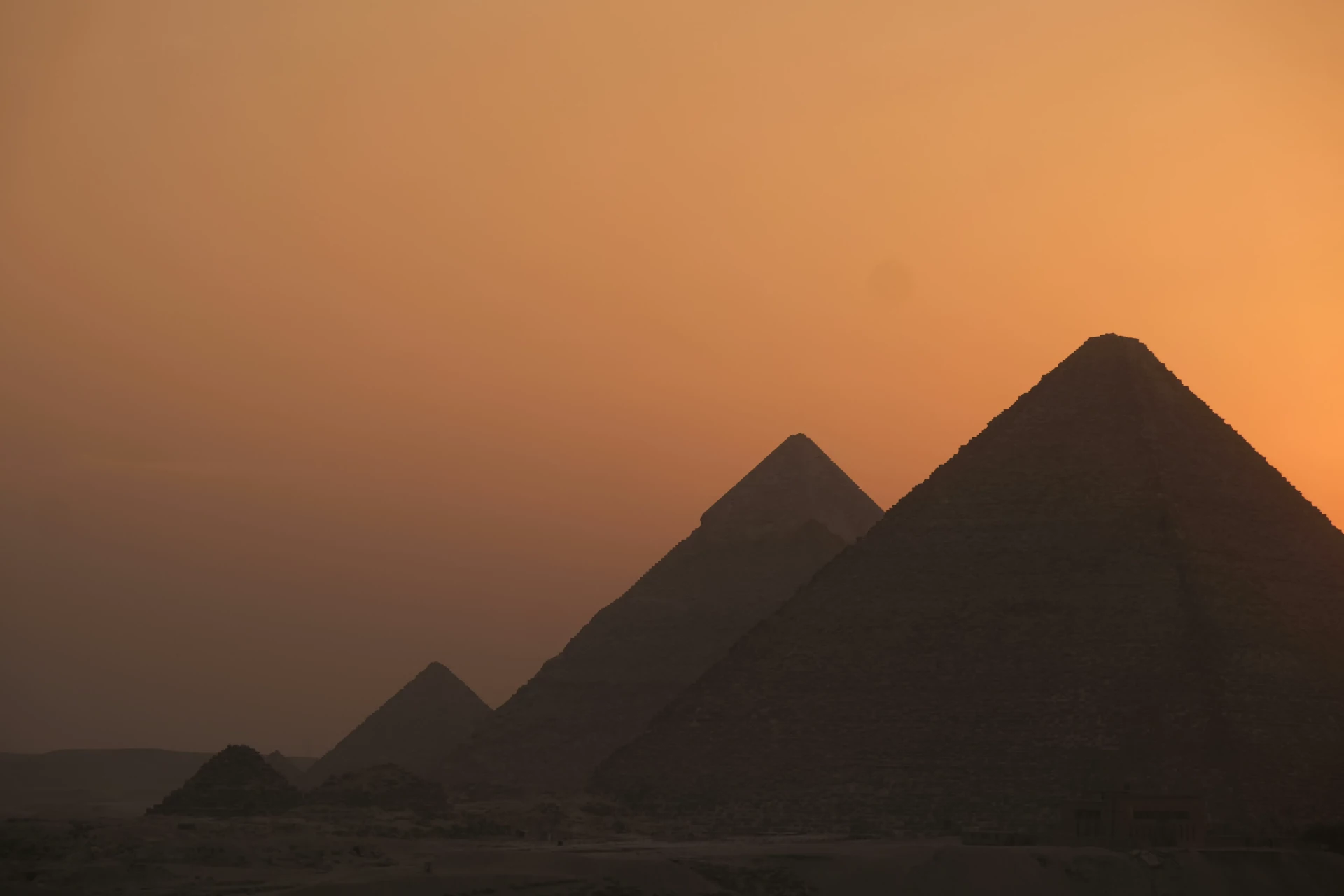
As we are taught in school, a pyramid is simply a triangle that rises from a square base. They were built with huge blocks of stone and, according to ancient accounts, covered with limestone to give them a smooth and shiny finish.
Pyramids have been linked to humanity for literally thousands of years. They are among the few monuments that have been drawn by hundreds of artists throughout history, from the Egyptians who erected them, to the ancient Greeks, and then the European explorers of the 19th century.
These images have left us with a record of these fascinating structures through the ages, and in all kinds of techniques.
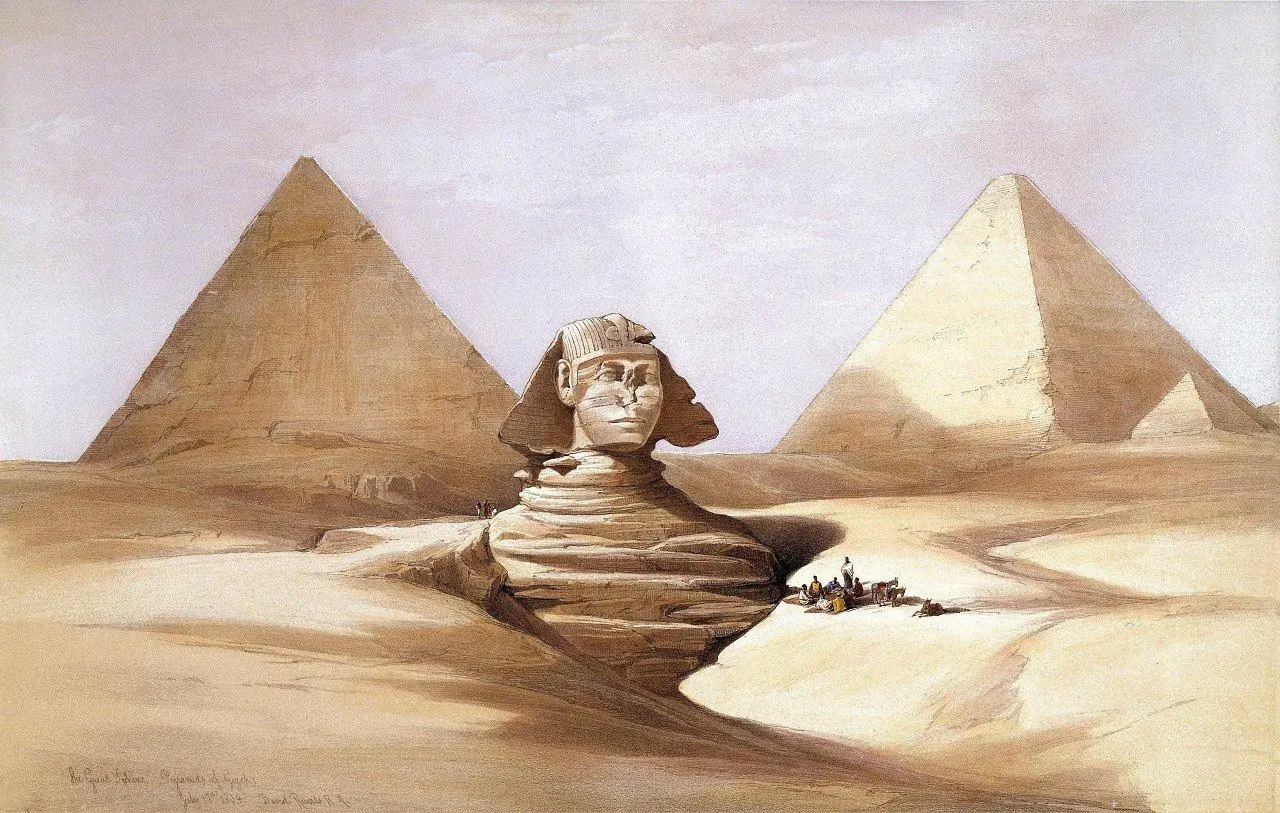
The Great Sphinx, Pyramids of Giza (1839) David Roberts
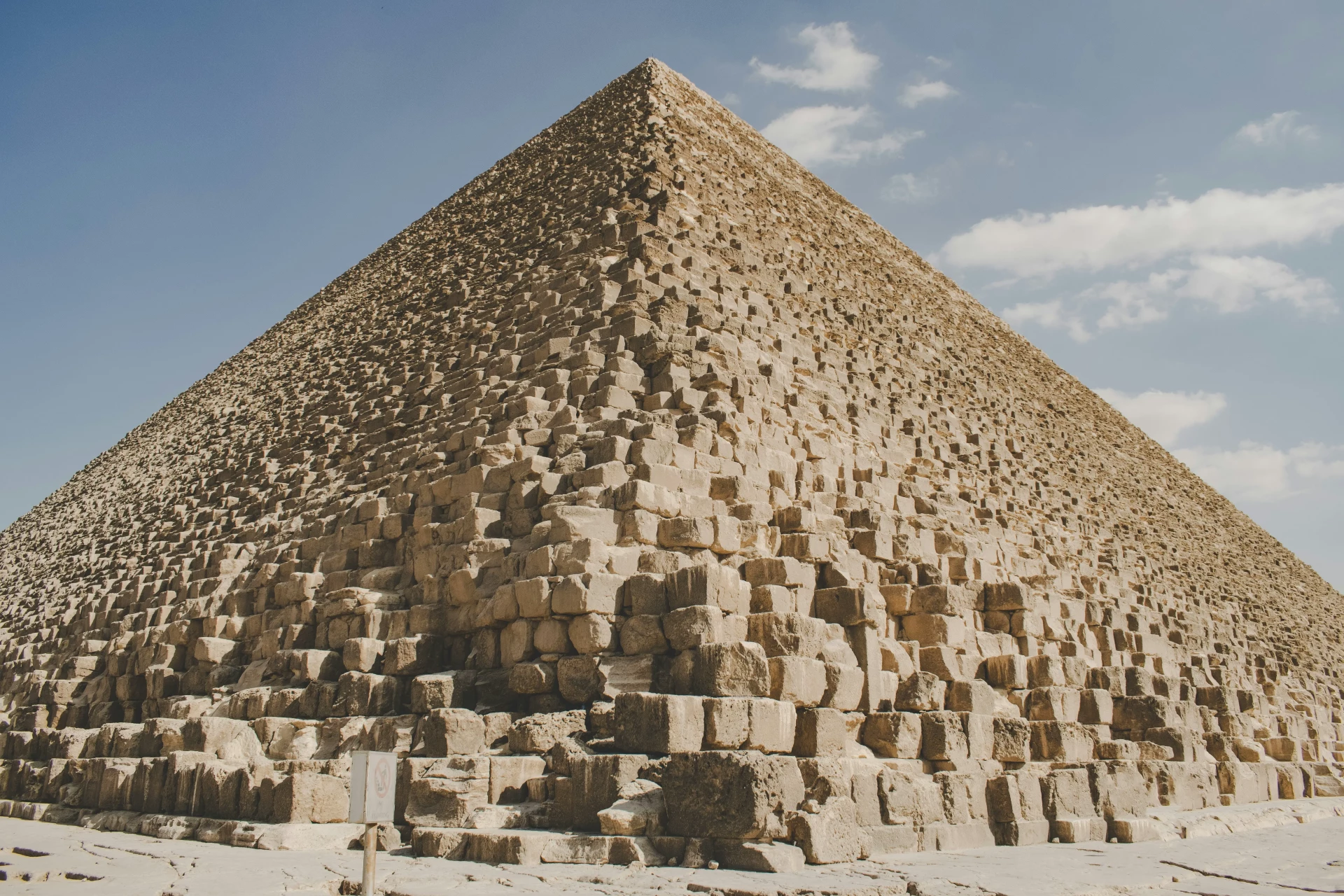
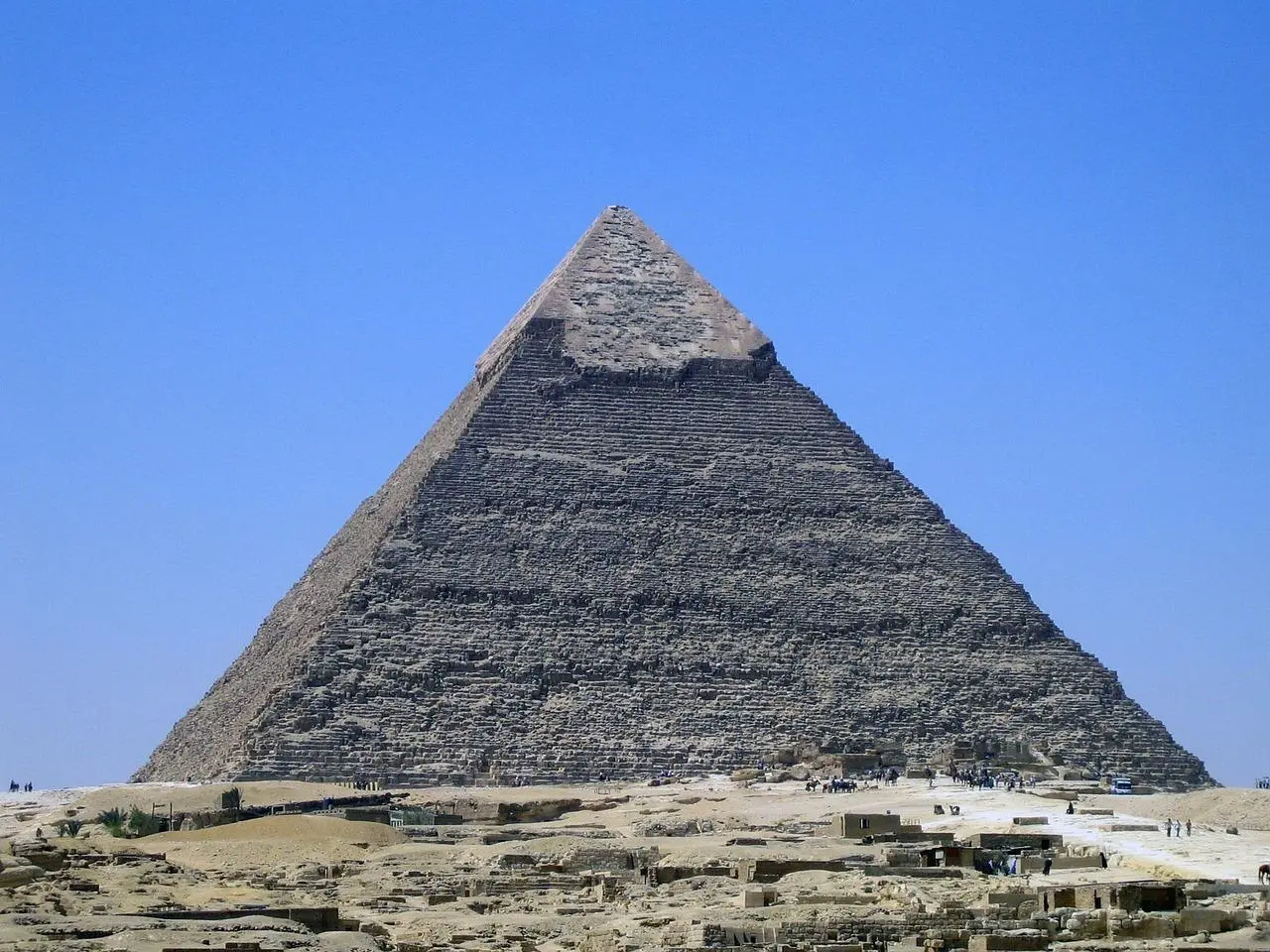
The Pyramid of Khafre
In this image, we can appreciate the structure much better. We can distinguish several layers in its composition and notice important elements, such as the remains of what could be the base of the limestone coating. We also see levels of different structures, perhaps used as a base for the larger blocks.
Draw a pyramid step by step
Without further ado, let's start drawing our pyramid. Grab the material you prefer to work with, and I also recommend having a ruler, as today we are aiming for precision.
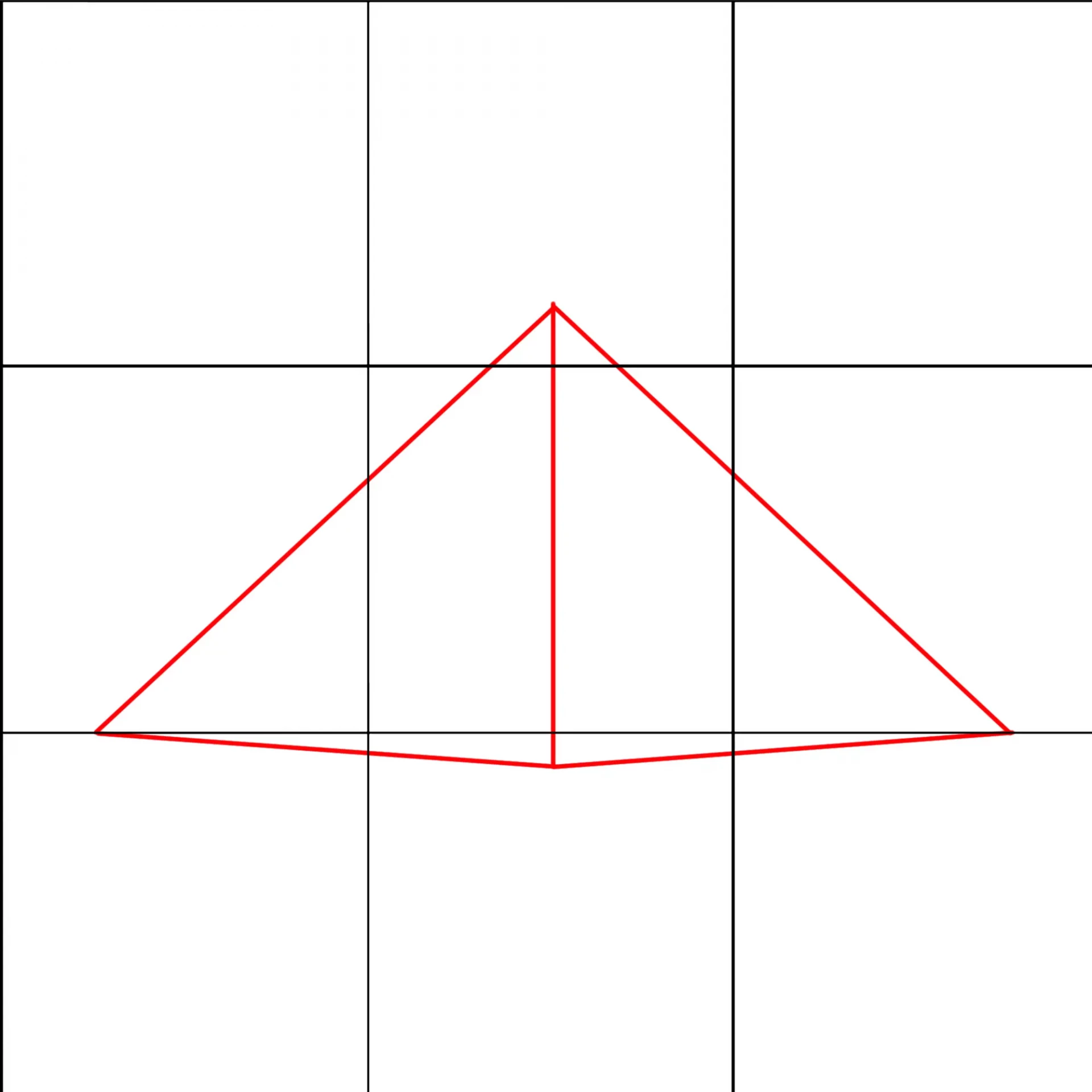
Let's start by drawing a grid in thirds. Place the object on the lower horizontal line. As you can see, it's a triangle divided in two, with a slight inclination at its bottom.
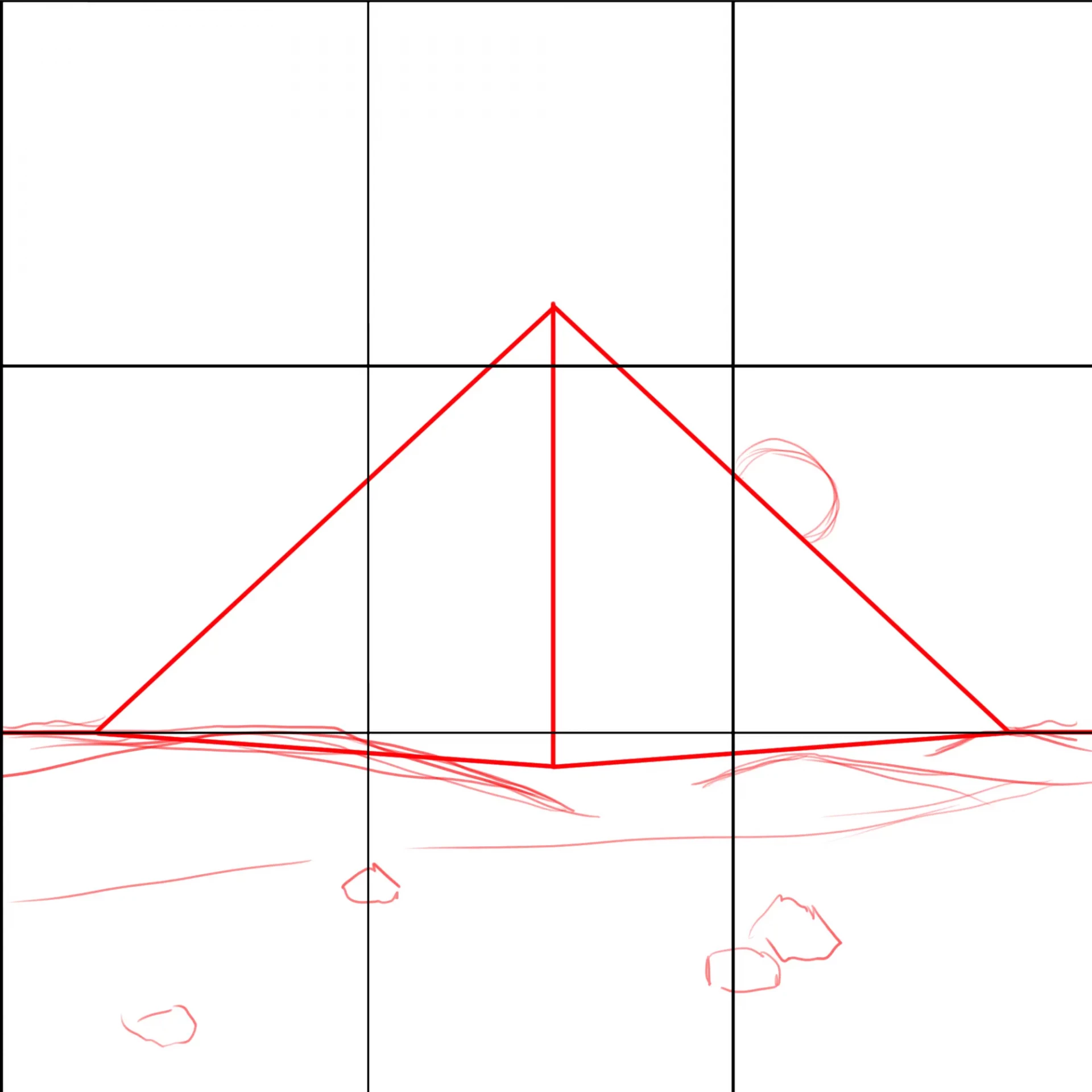
The sketch is actually very simple, as there are not many details to add: it is an isolated structure in the middle of the desert. Draw a few dunes under the pyramid and, for an aesthetic effect, place the sun in the background behind it. This is totally optional.
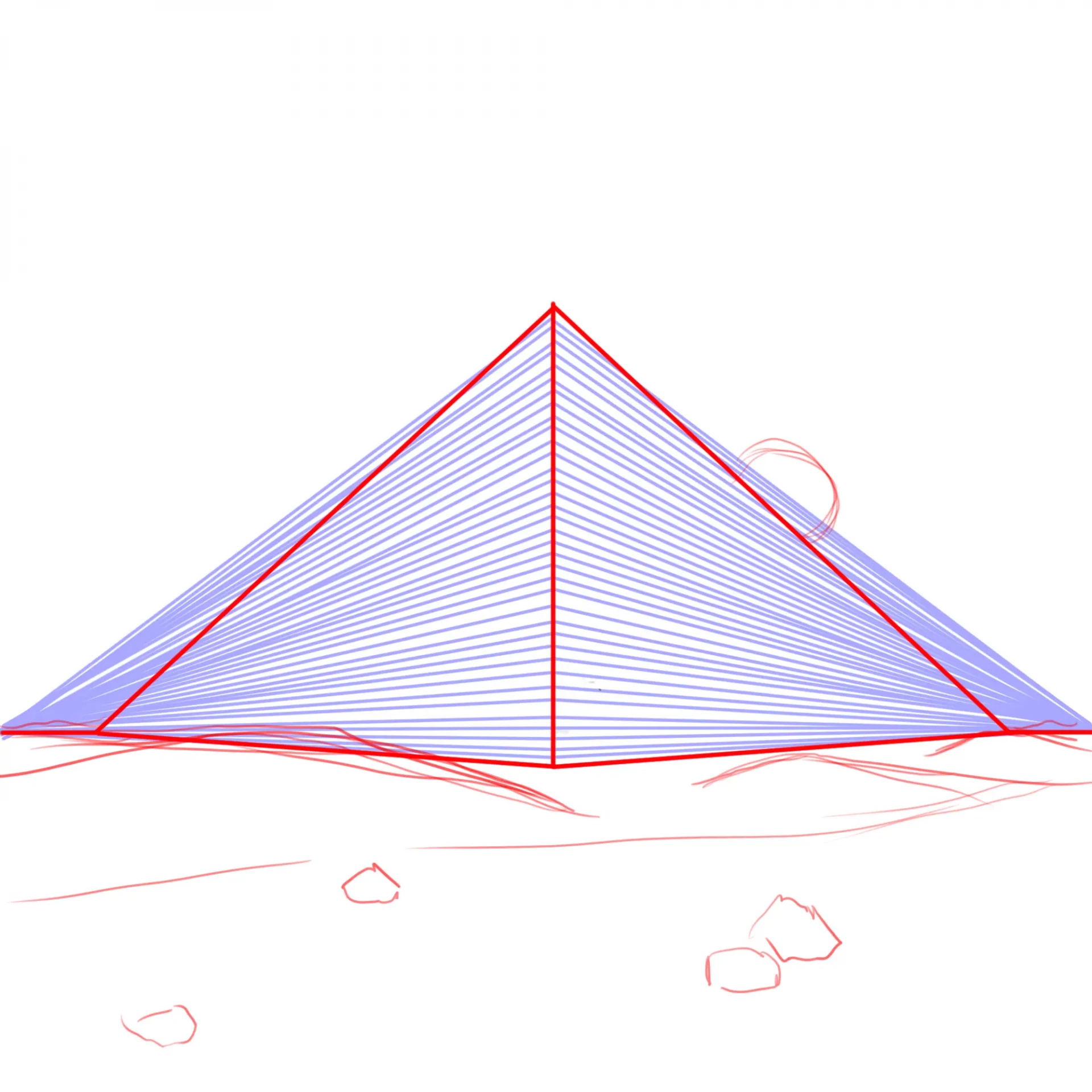
Starting from both sides of the horizon, draw lines that converge towards the center of the structure. This will help you distribute the blocks that make up the building more easily.
Draw the stone blocks of a pyramid
Start by drawing a base of elongated and alternating blocks. It's not necessary to draw perfect shapes. On the contrary, add some irregular lines and incomplete blocks. Also pay attention to distance: the further you move away from the center, the smaller and less detailed the blocks become, eventually reducing to simple lines.
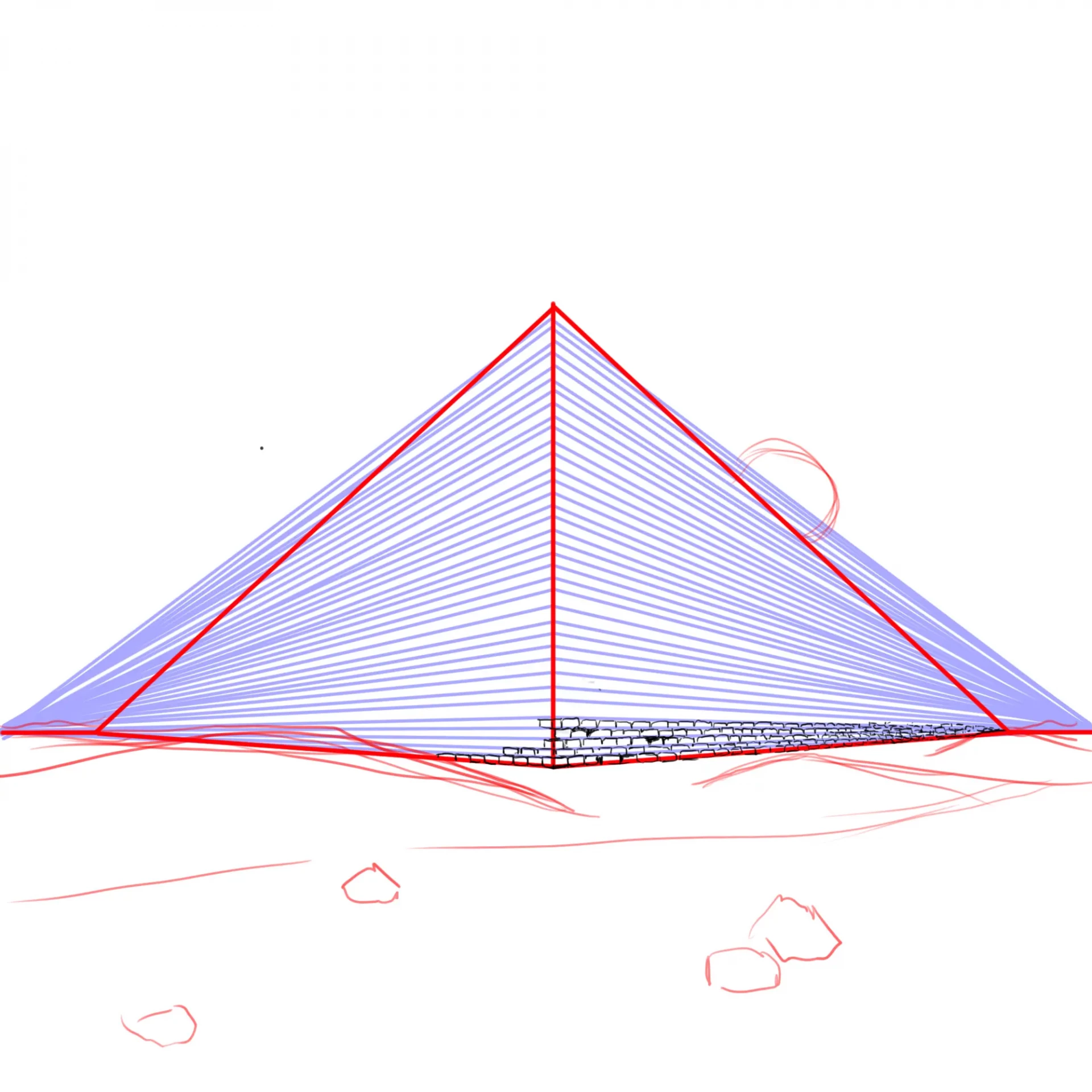
Once the base is built on four or five levels, you can divide the structure into different layers, as in the previous example.
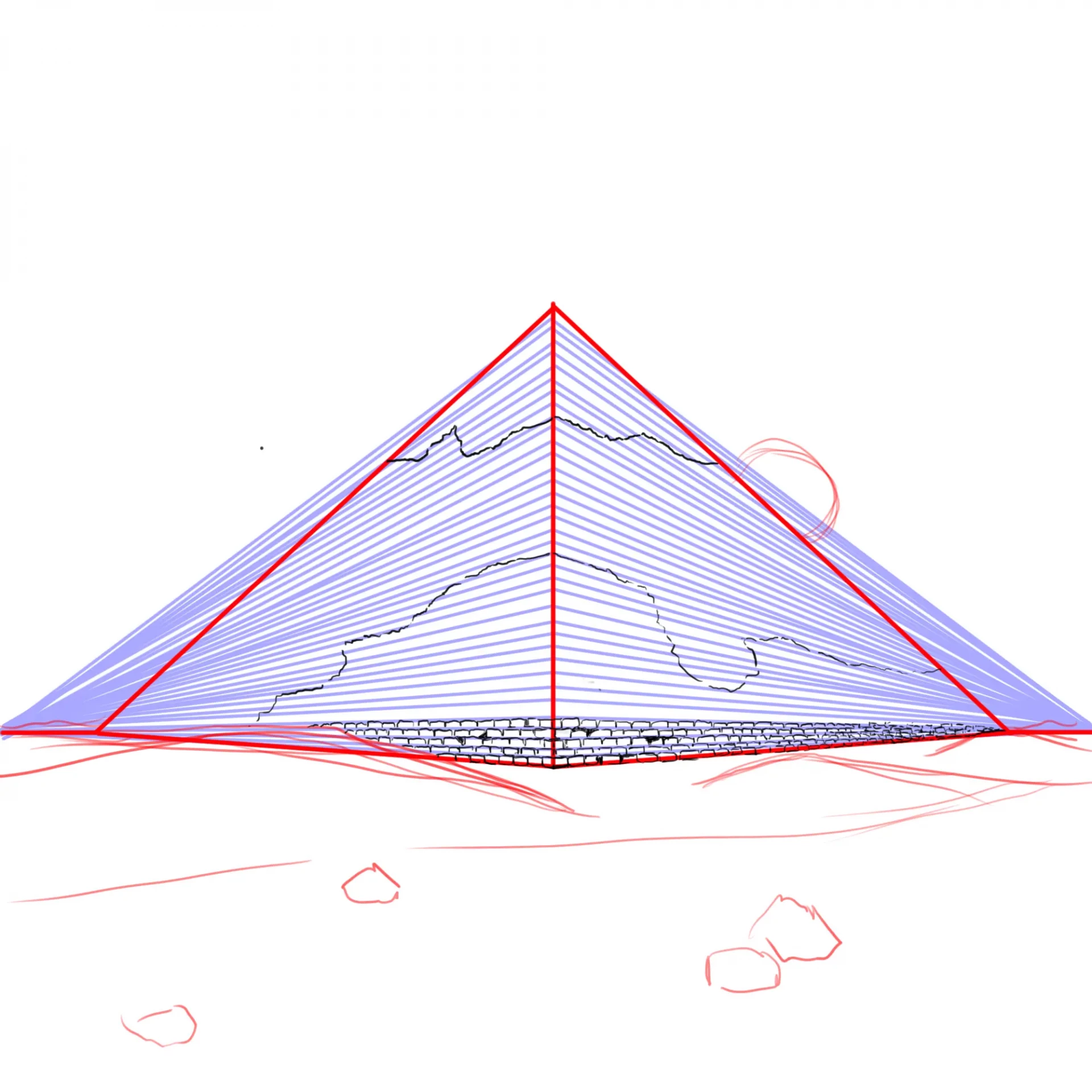
Complete the section of blocks, but draw them even more rudimentary and irregular. This will create an effect of ruin and deterioration. However, add a bit more definition to those in the center, as they are crucial for marking the angle.
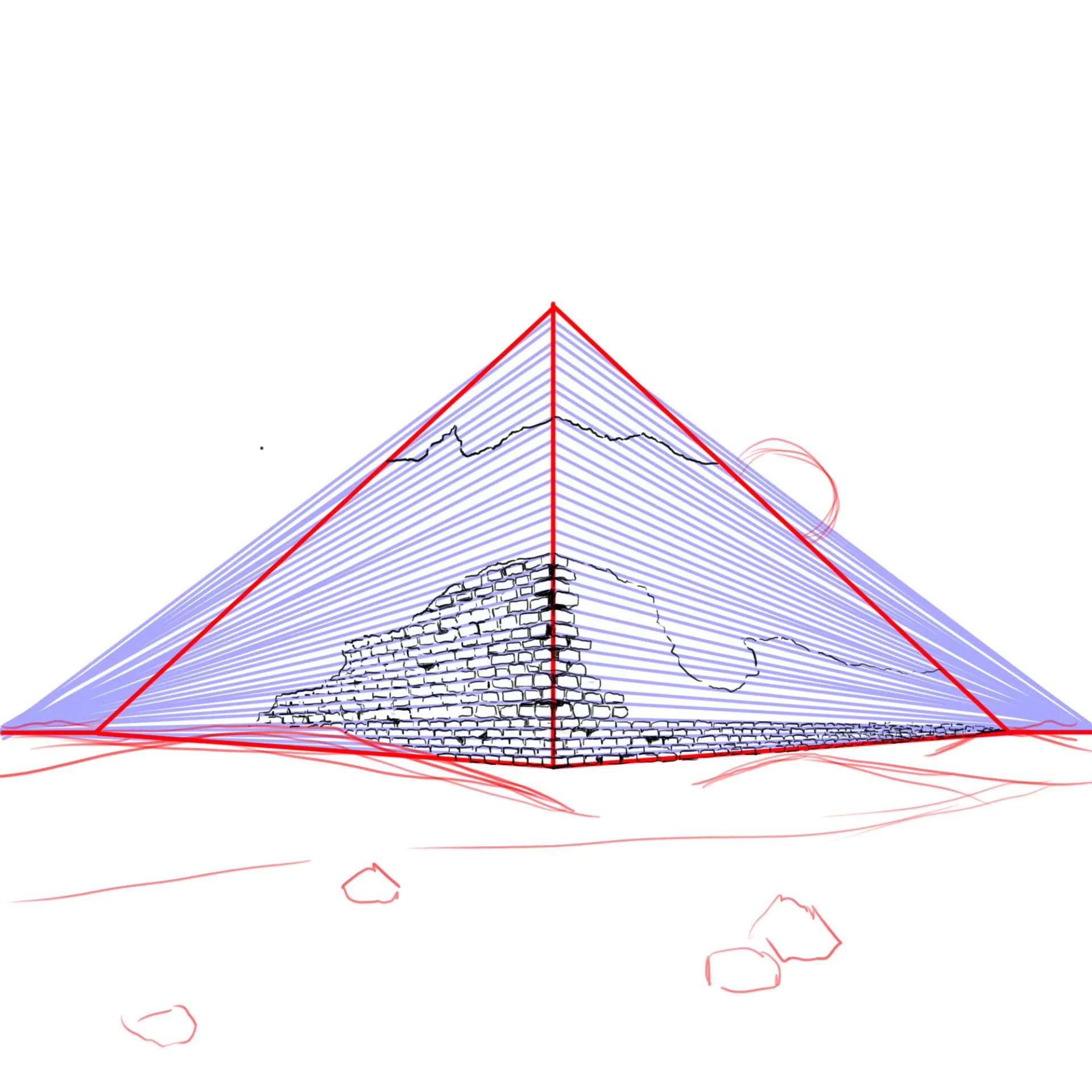
In the next layer, draw bumps and cracks, as if it were a clay coating. Accentuate the texture on this side, since it is the darkest due to the backlight.
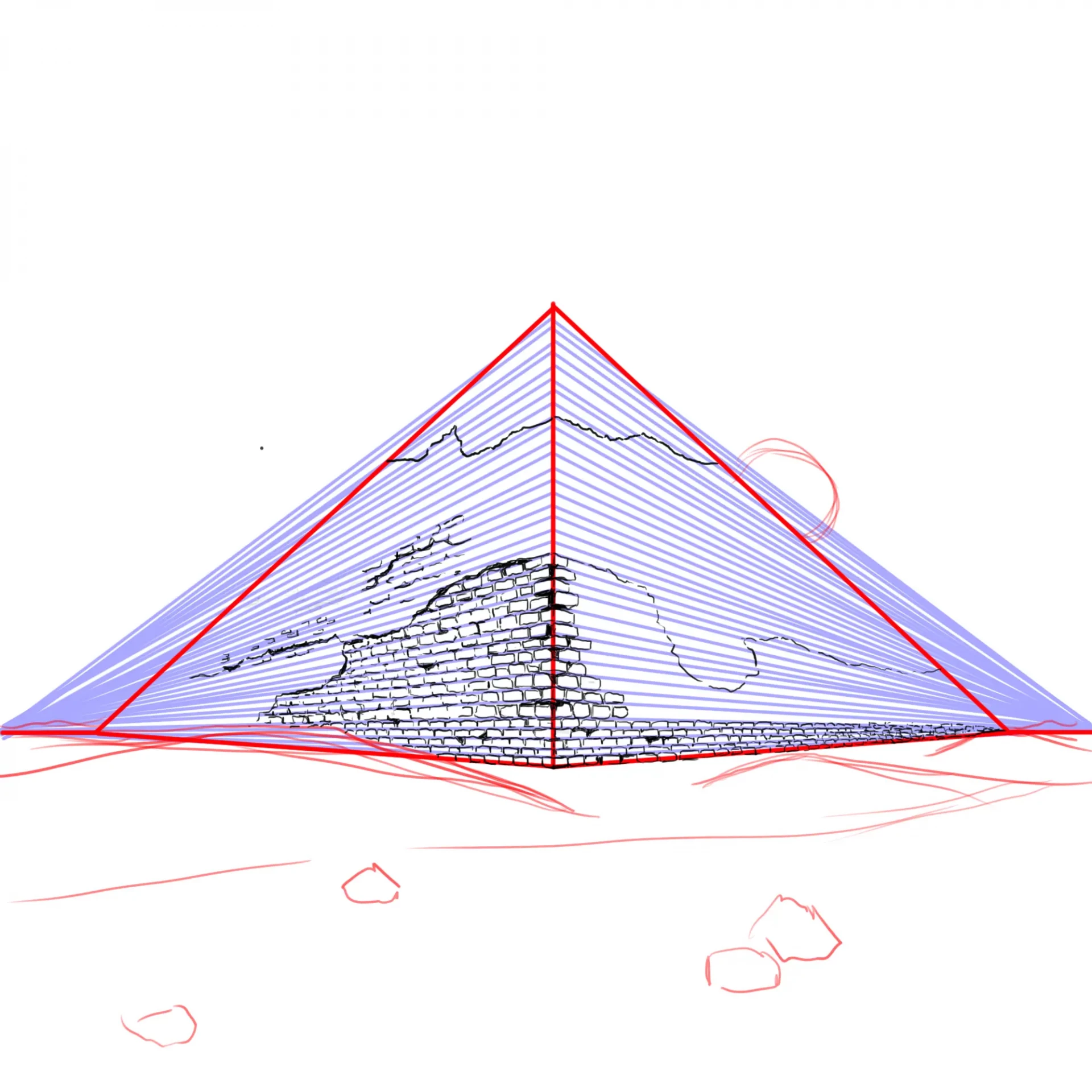
Observe the result of this dark layer, rich in roughness and thick cracks. You can also open up some block areas to add realism.
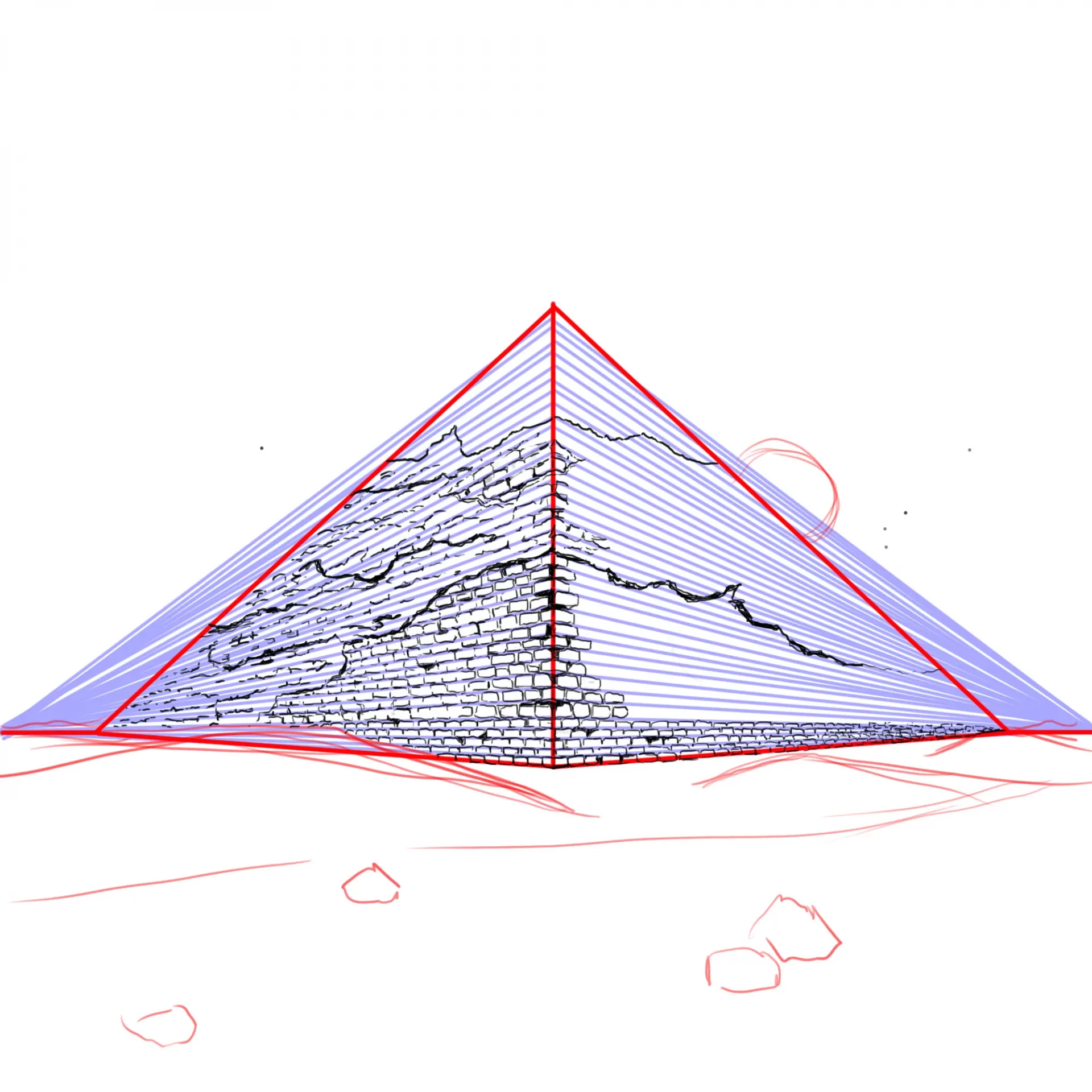
Once the dark side is finished, move on to the other side. As it is better lit, it will require finer lines and more pronounced contrasts.
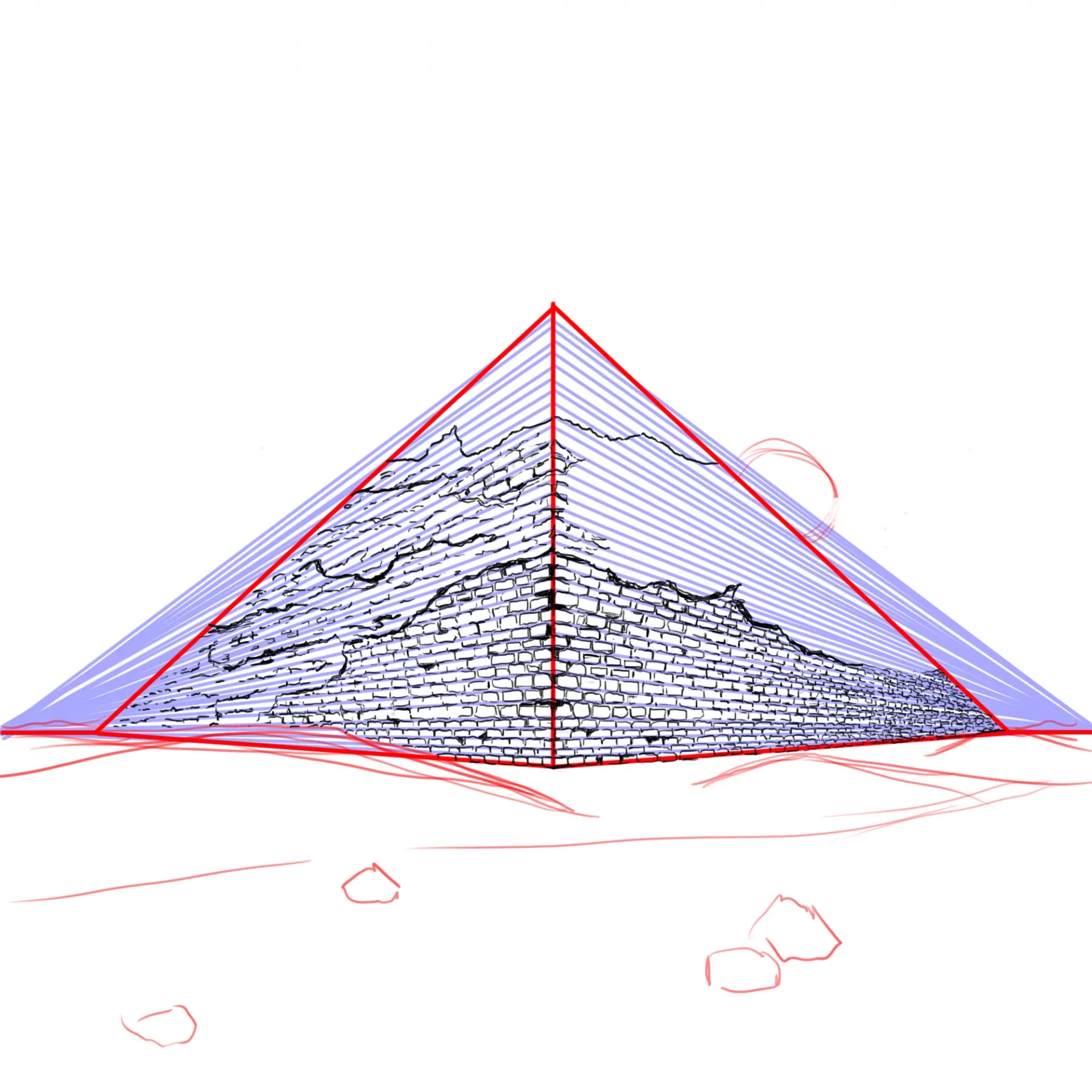
Here is the second side, with much fewer details, especially in the area directly exposed to the sun.
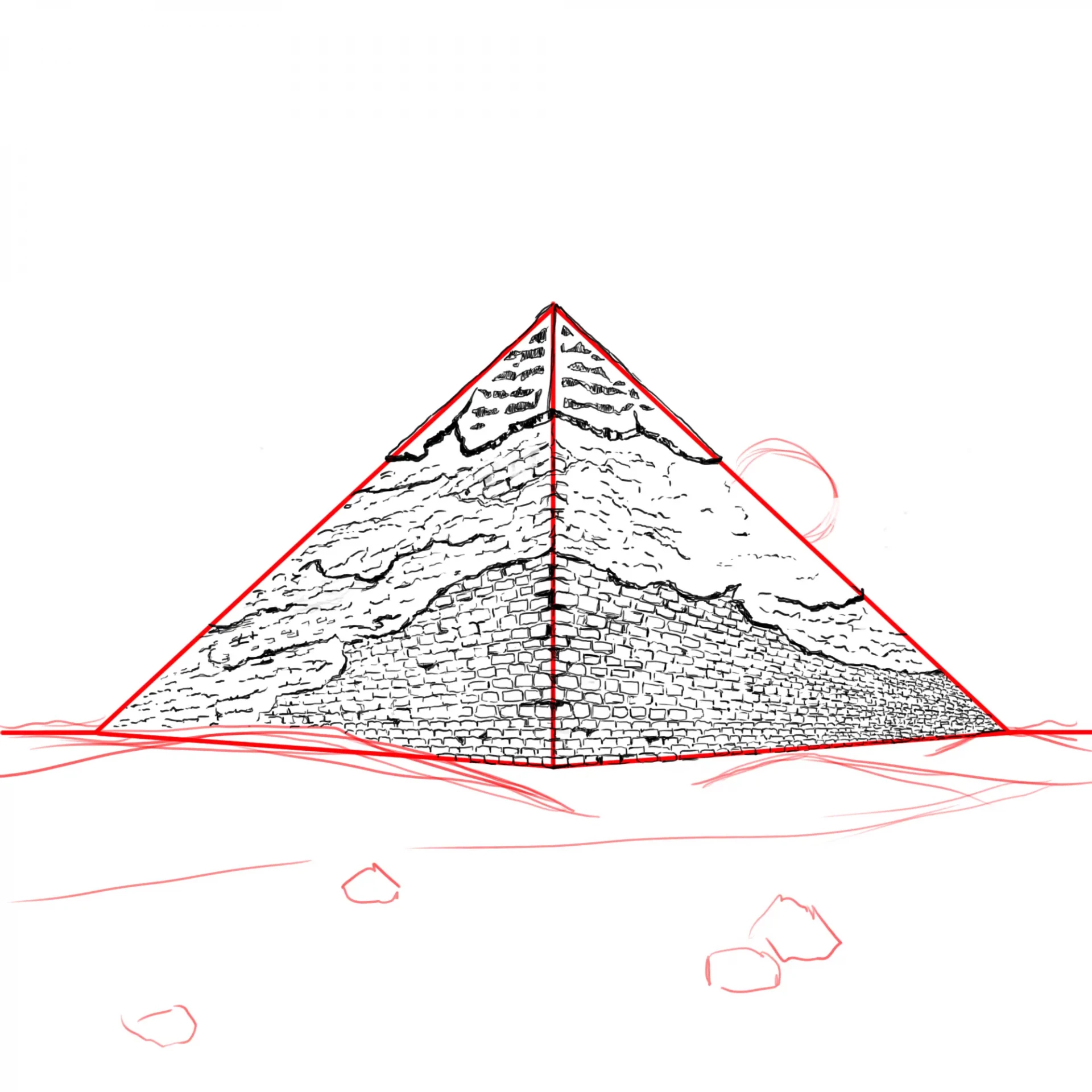
In the upper part, draw a fairly thick edge to separate this last layer from the rest of the structure, then add some marks to simulate the effect of time.
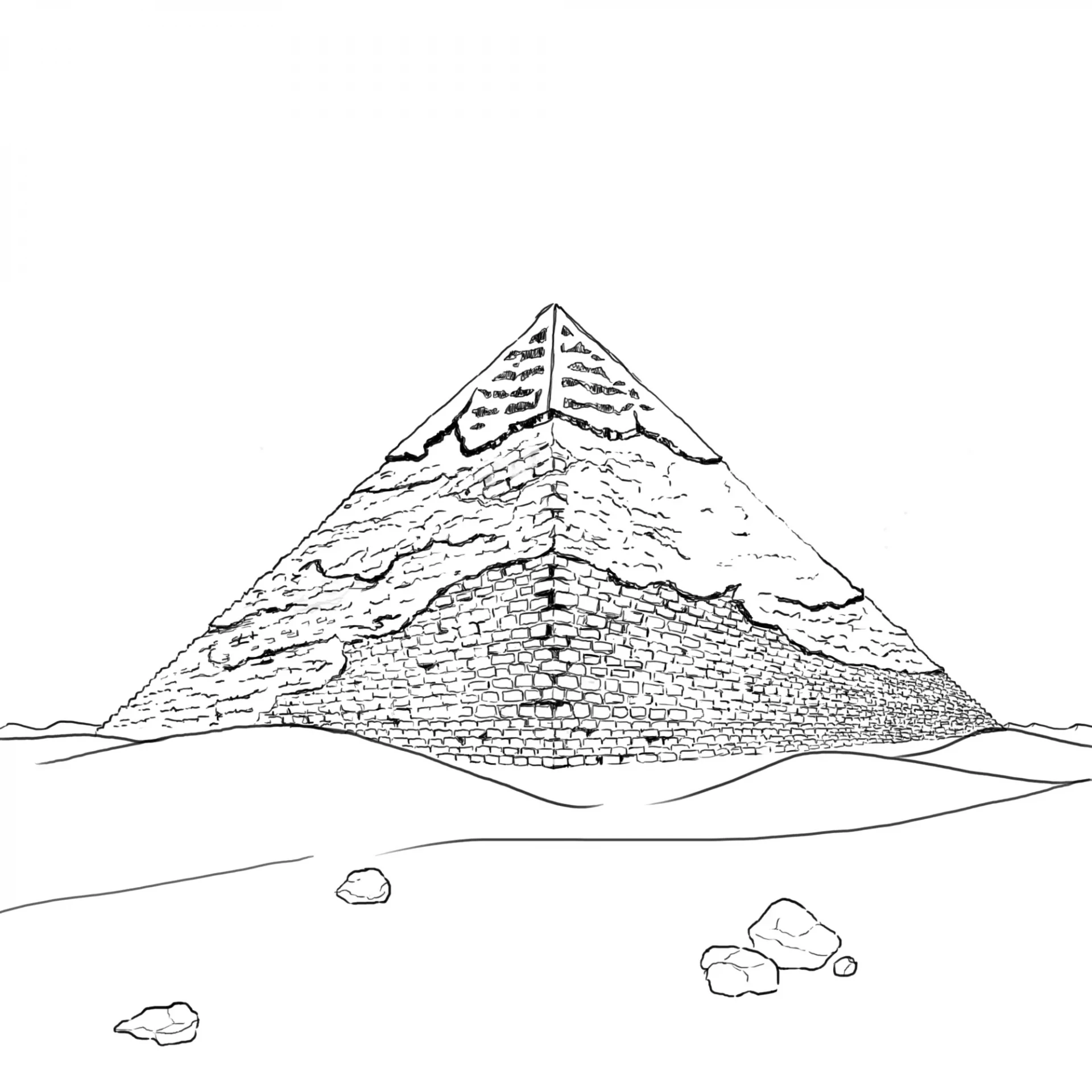
Now erase the sketches and construction lines to clean up your drawing. We are going to move on to color.
Add color to the drawing
Let's start with the sky. Usually, I would use a light blue that fades into yellow to simulate the intense light reflecting off the desert sand. But today, I'm going to opt for a sunset.
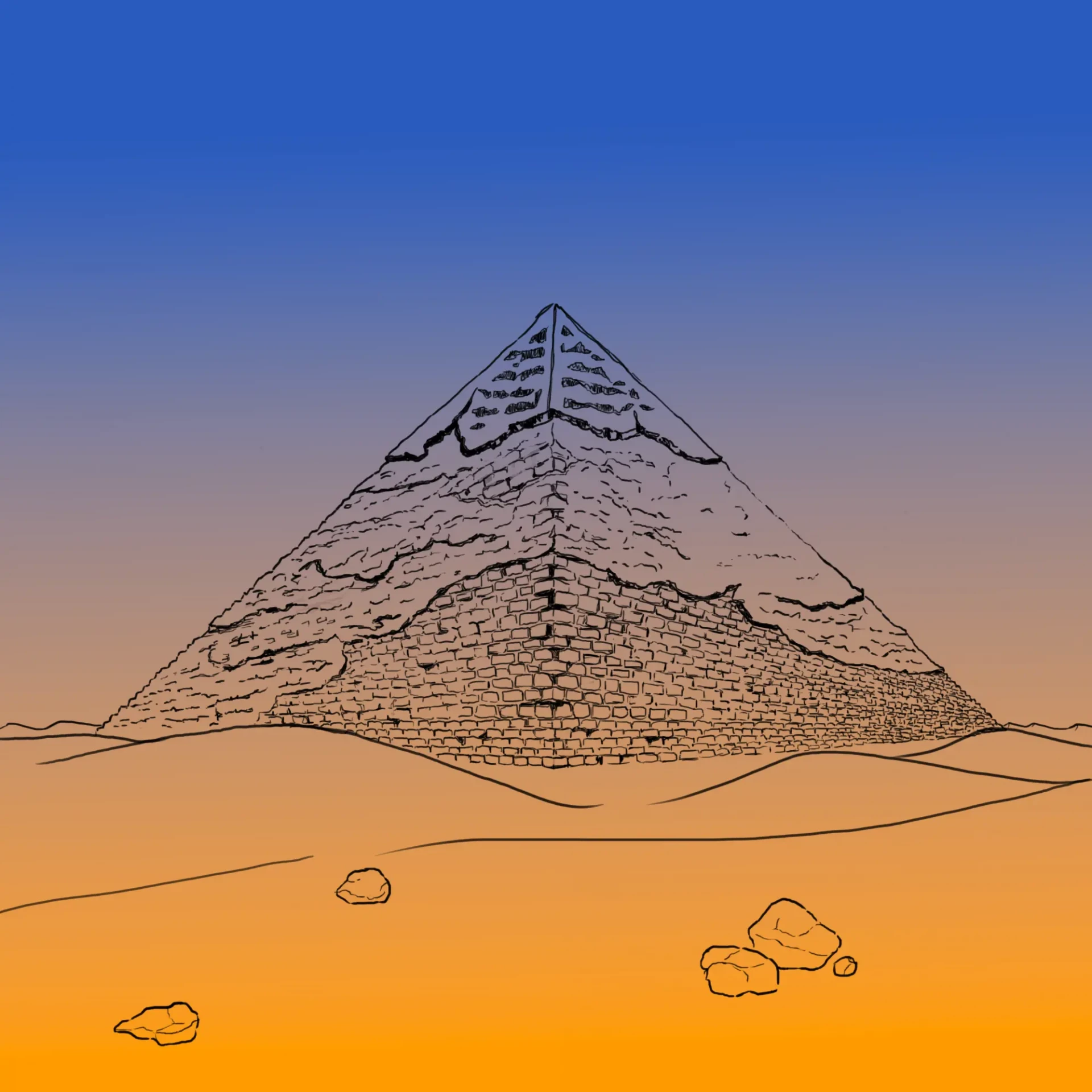
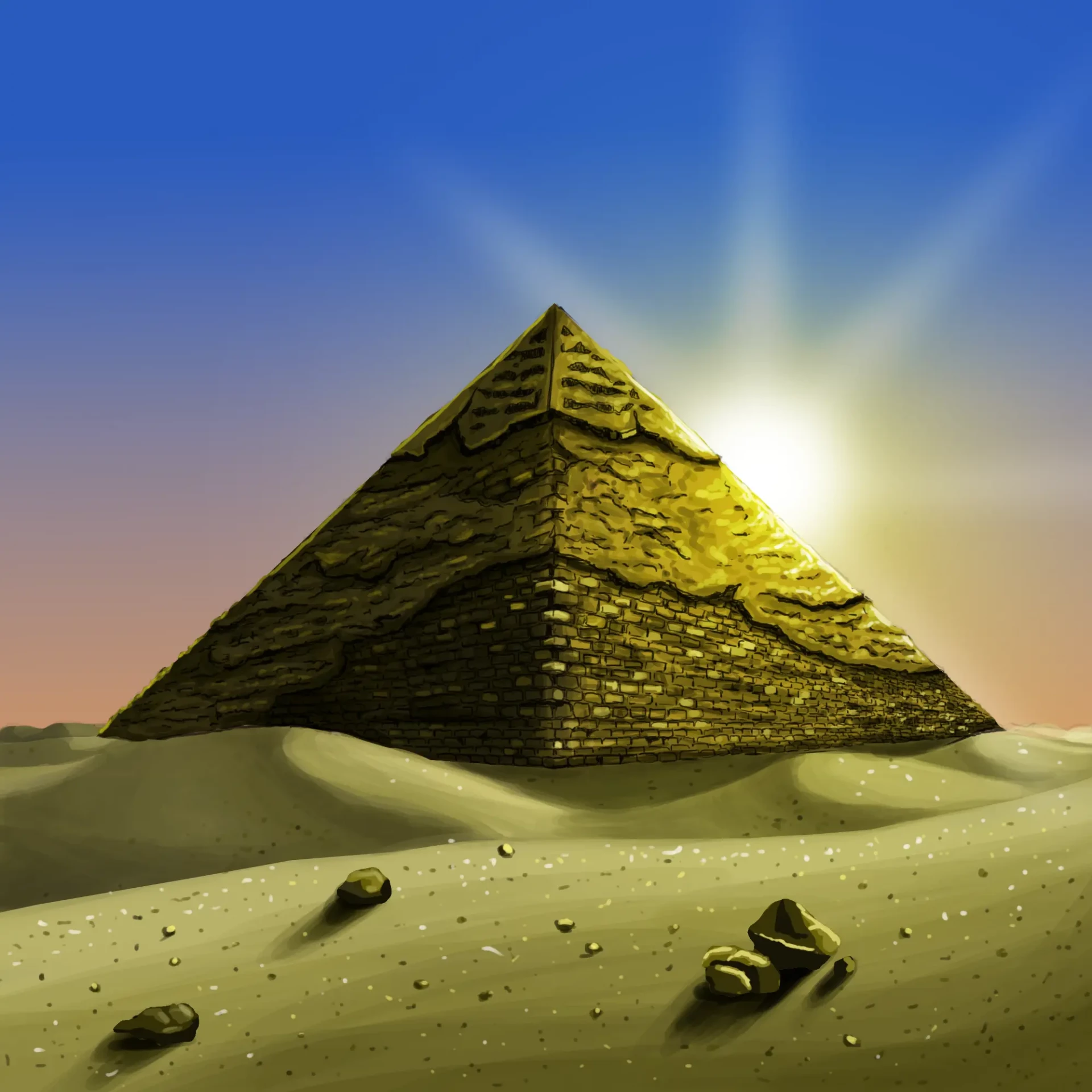
Taking into consideration the light from the sky, color the sand and pyramid. To harmonize the overall drawing, use desaturated ochre tones to create a more subdued atmosphere.
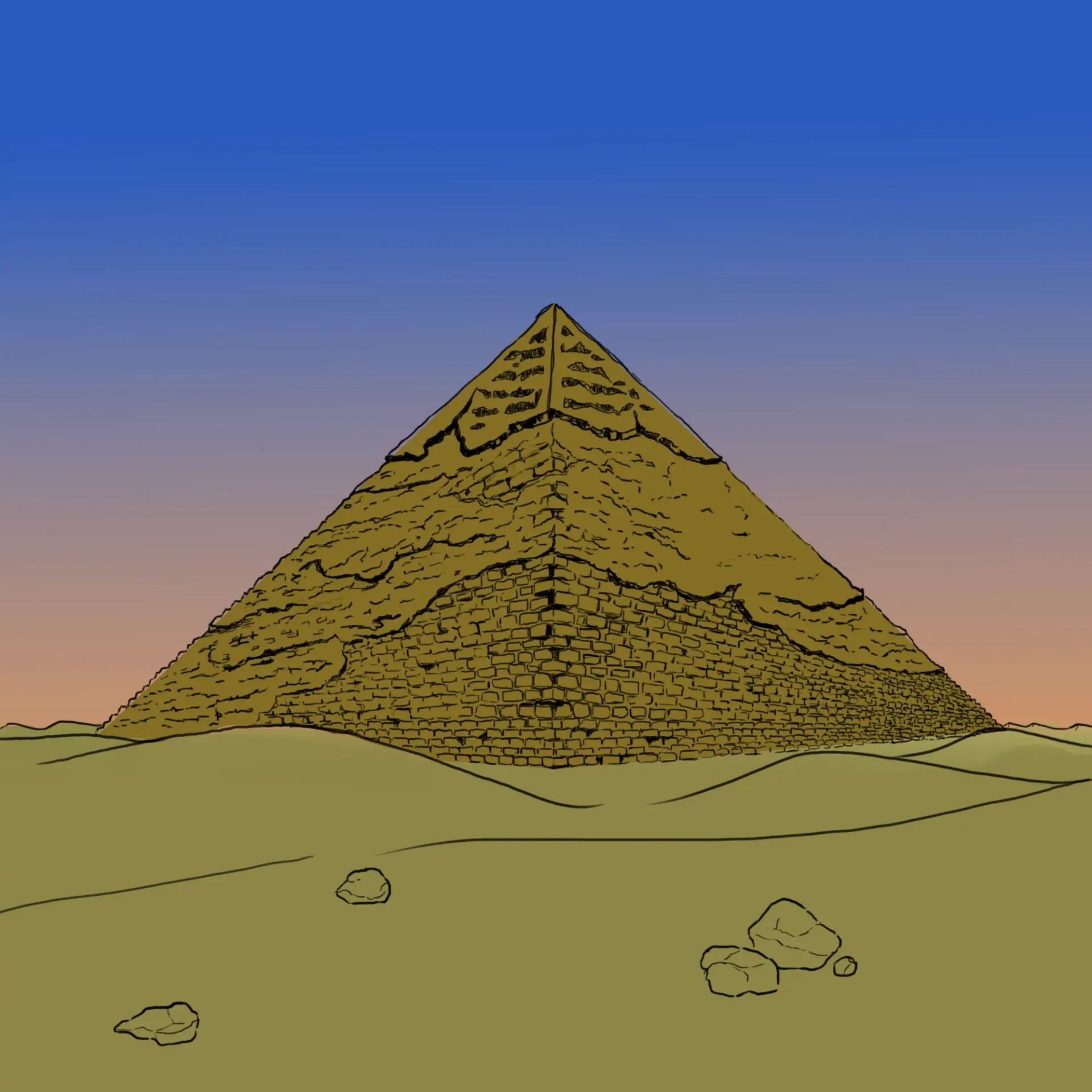
Then add a well-blended yellow spot, followed by a white spot on top, with rays. Make sure that the light does not illuminate the pyramid directly, but rather lets its influence be perceived by slightly brightening certain areas, possibly with the same yellow.
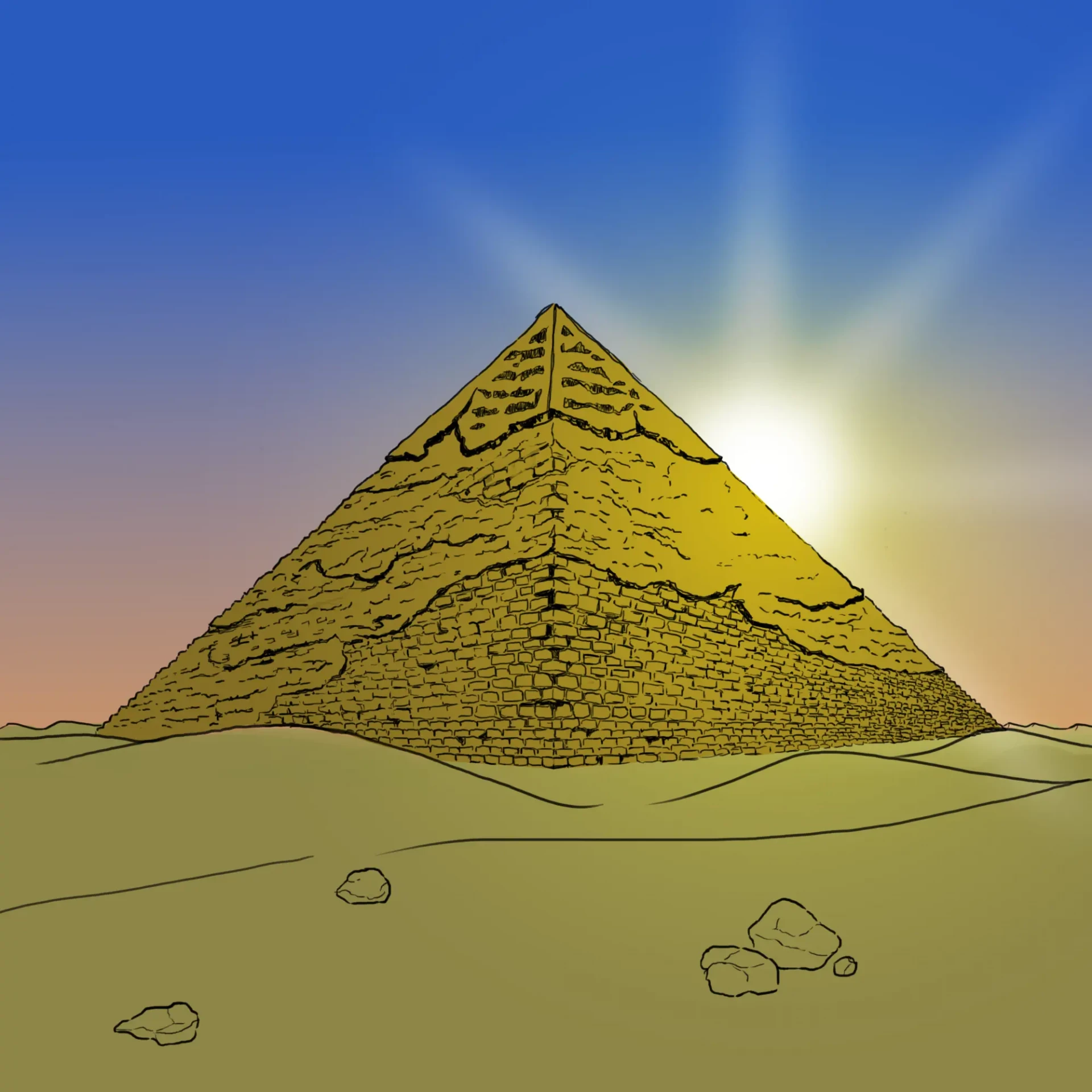
Draw the desert dunes
With your light source defined, color the shadows of the dunes using a slightly darker shade. As the light is softer, the contrast will be less marked.
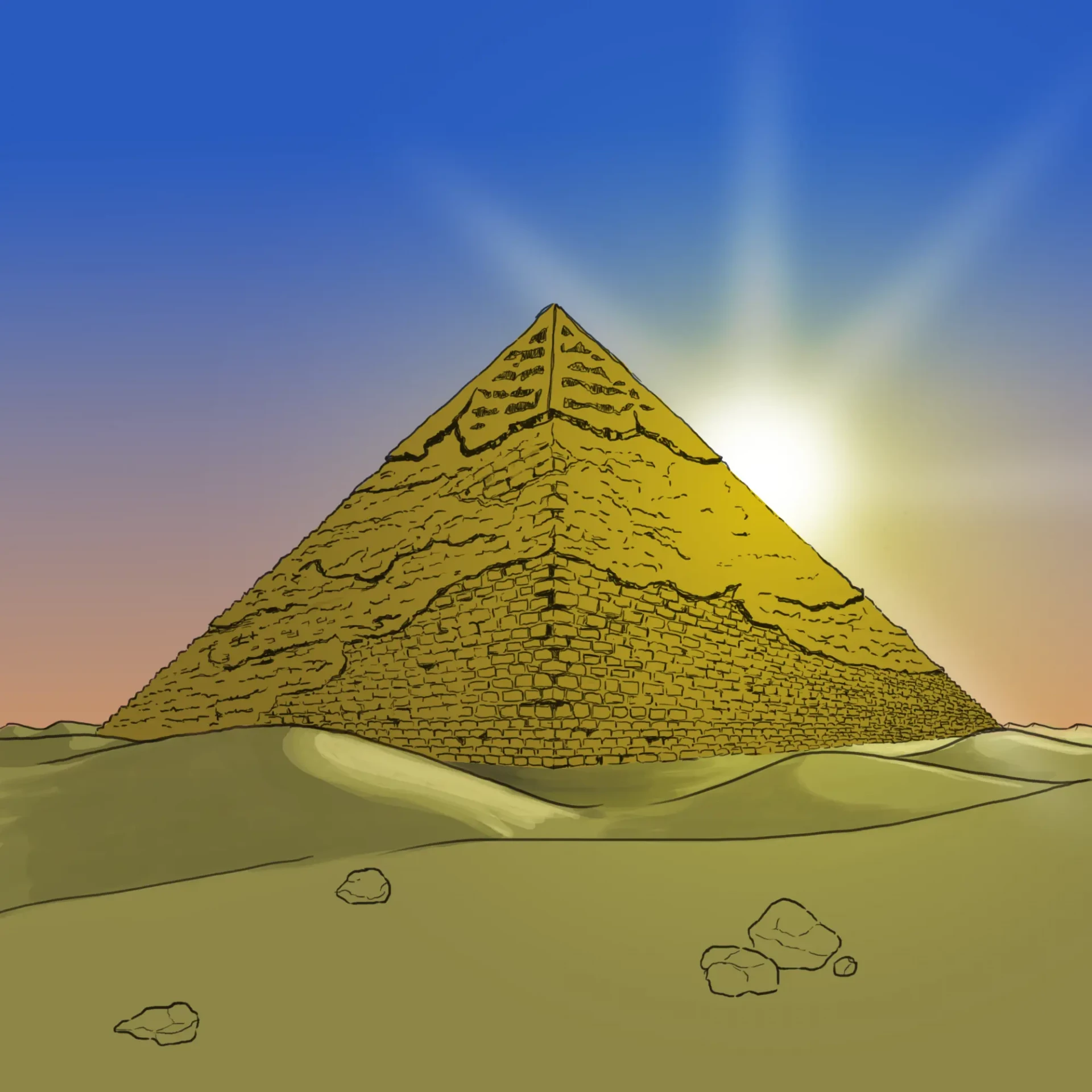
For more realism, darken the edges of the shadows a bit and gently fade into the previous shade. Lightly illuminate the faces exposed to the sun, without exaggerating.
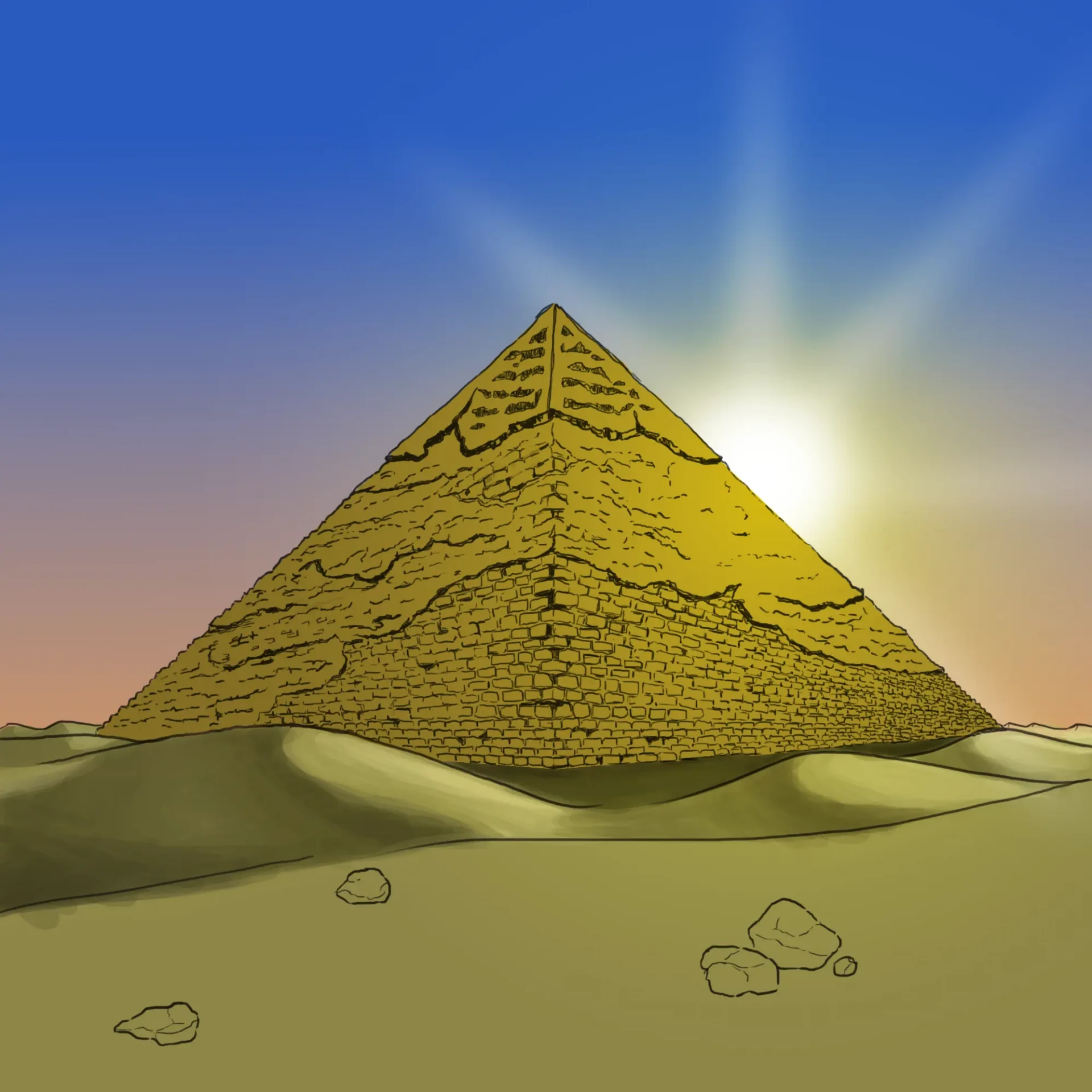
Come to the foreground, where you will apply a gradient using the same tones as for the dunes in the background. Notice how the shadow here points towards a lower corner.
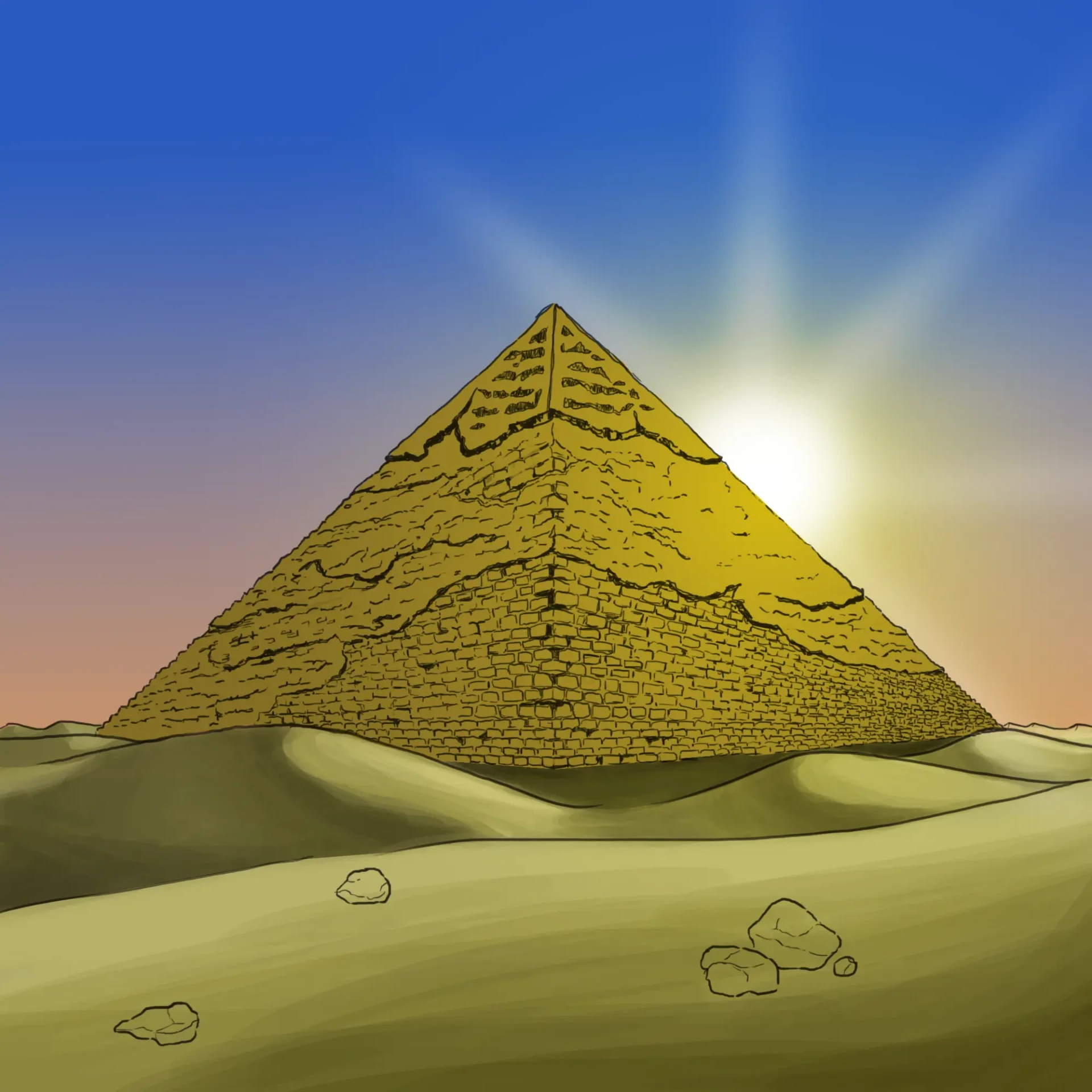
Then color the foreground elements, such as the rocks. Use darker tones and stronger contrast, because these are small elements on which light acts differently. Vary the yellows and browns to create spots and irregularities, and possibly add a bit of white to achieve a sandy texture.
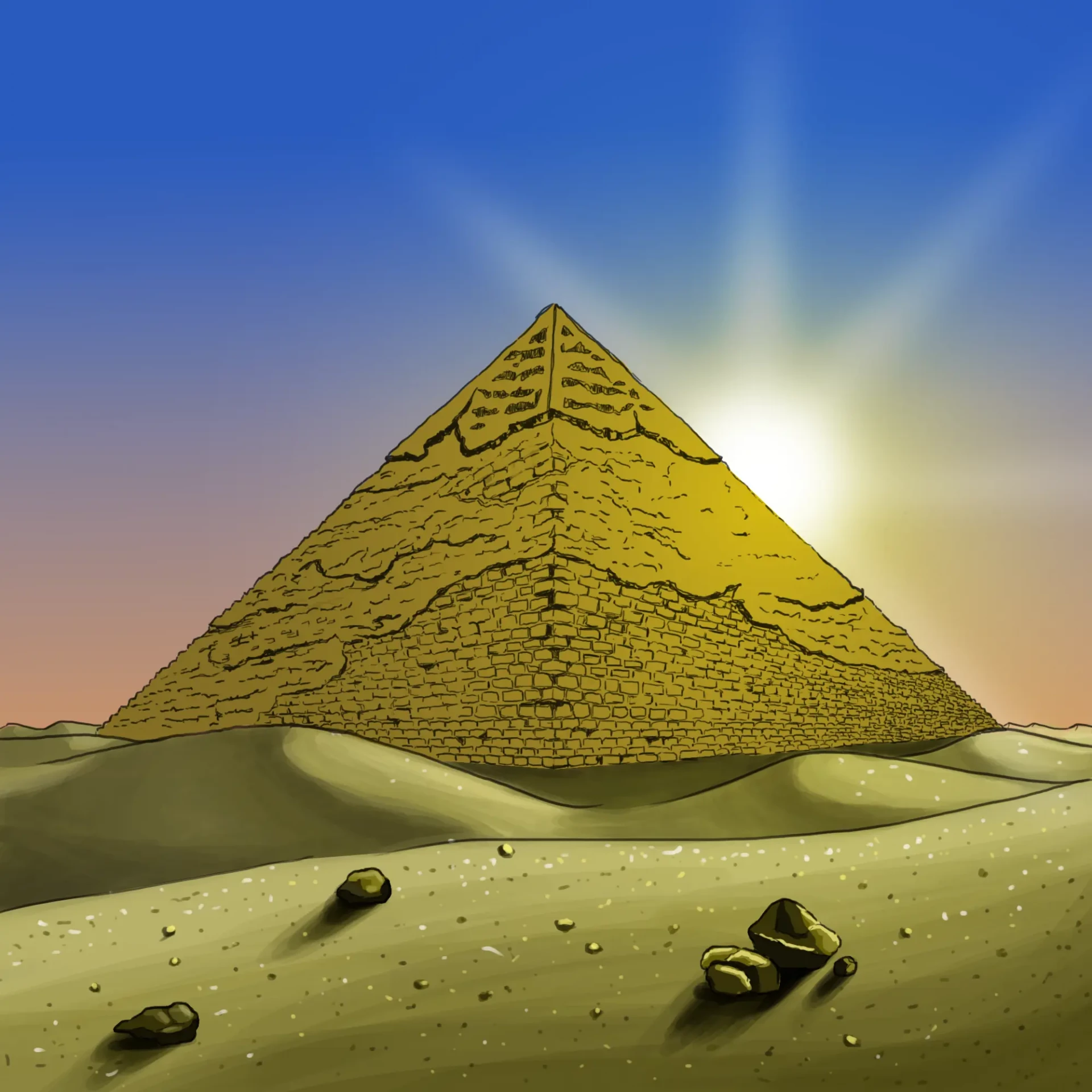
Finalize your drawing
As mentioned earlier, the side away from the sun will be noticeably darker. Therefore, add a layer of less saturated brown.
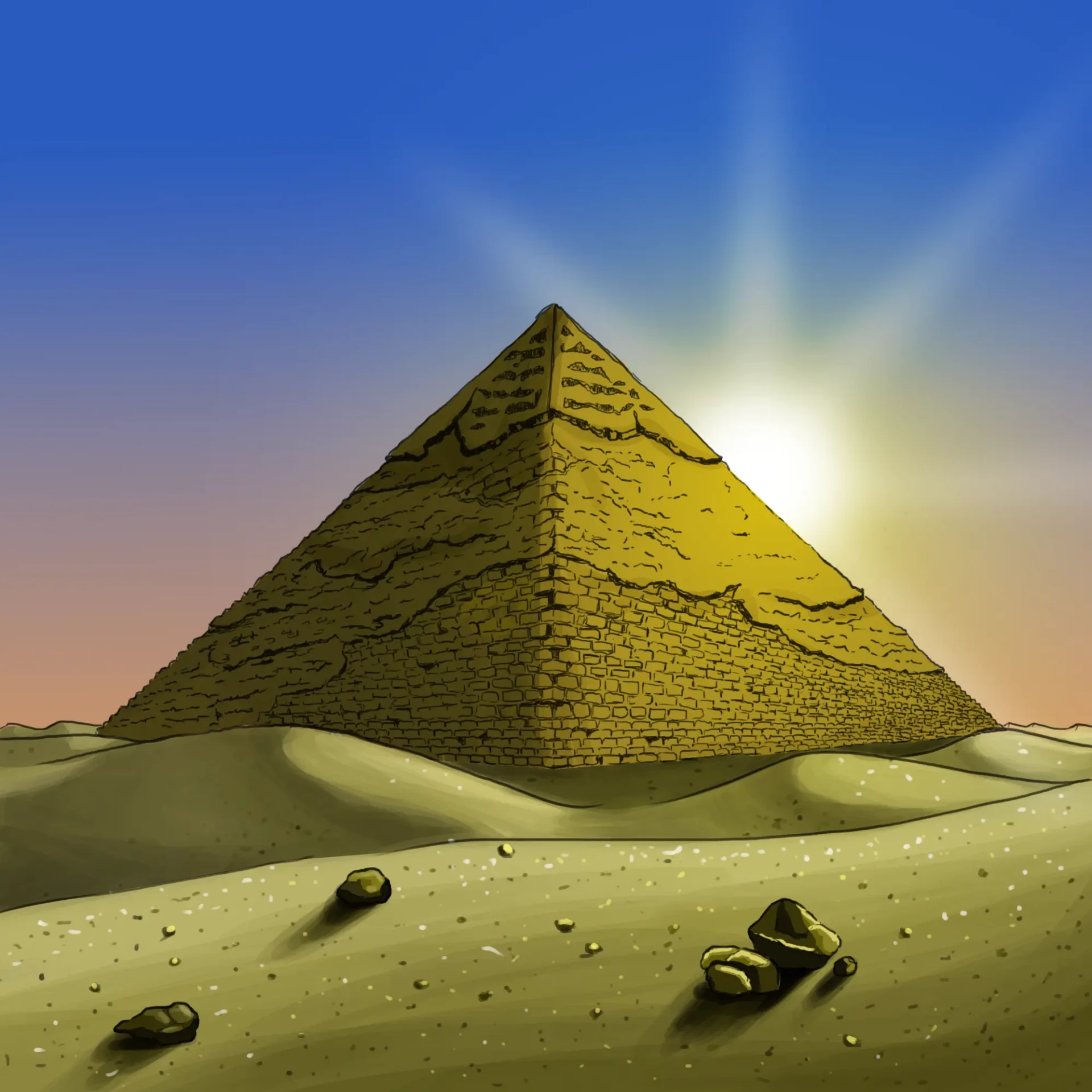
Then start using a darker shade to enhance certain shadow areas, particularly the edges of each level and the most damaged blocks.
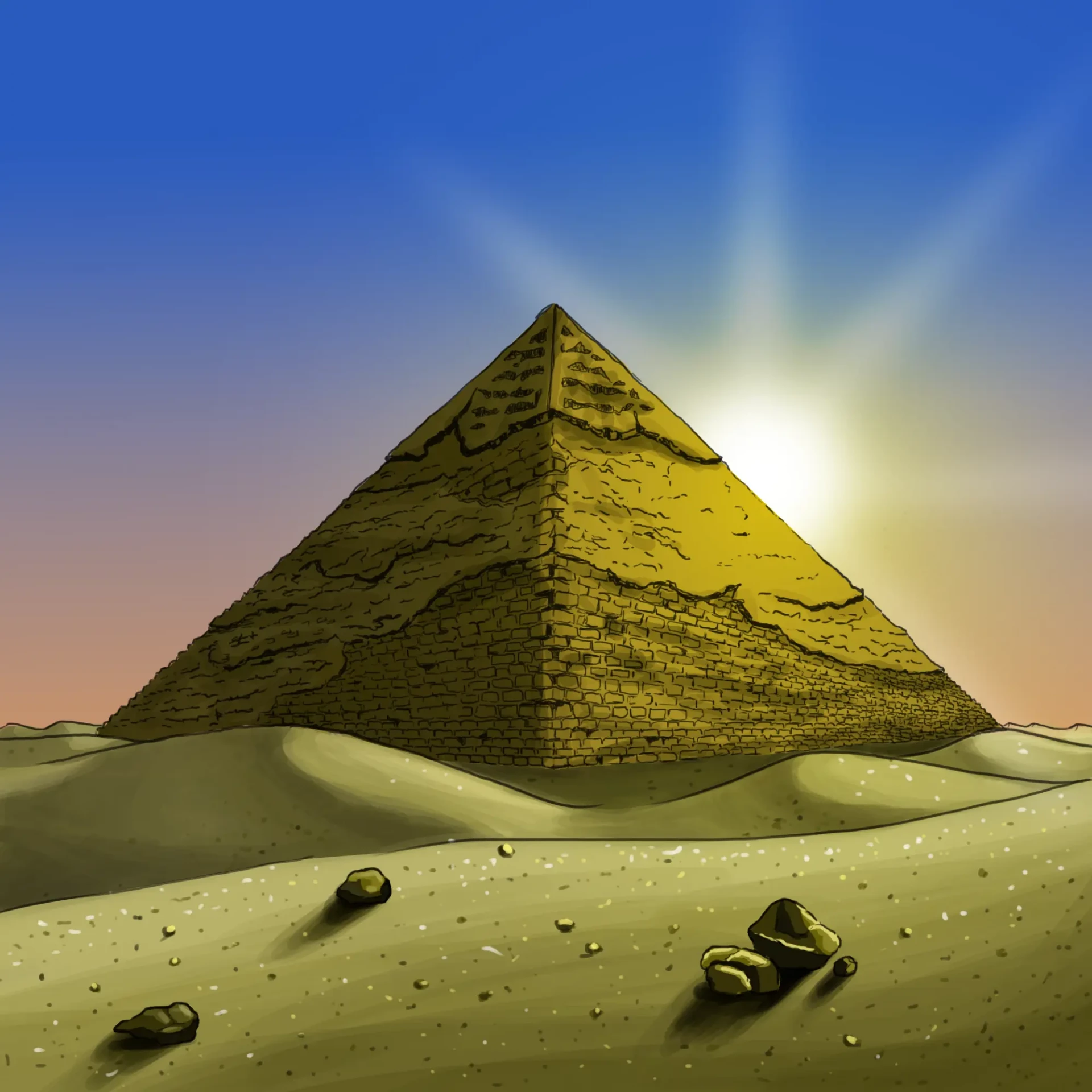
Focus on the dark layer: make sure to shade the roughness and emphasize certain areas further, like the levels of blocks.
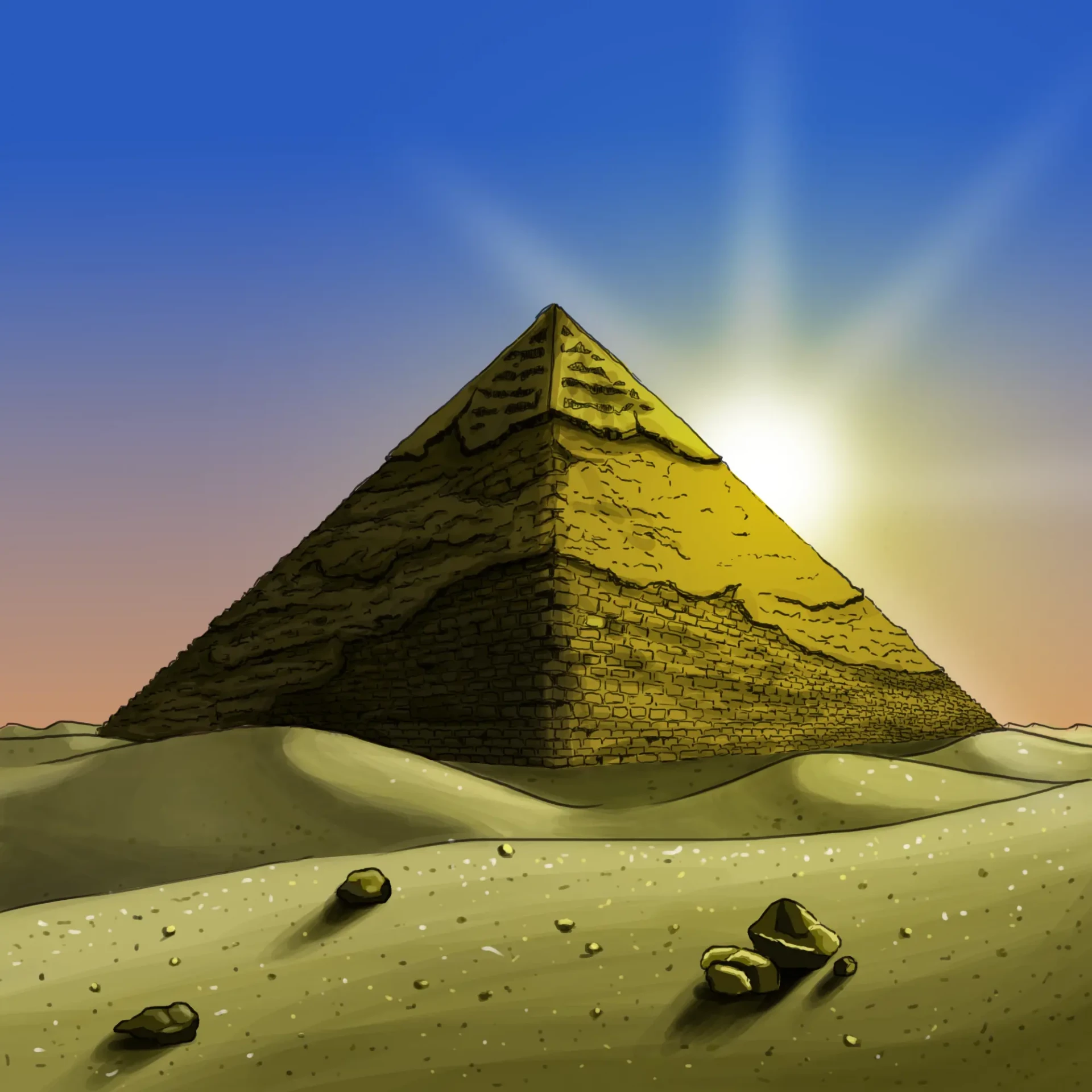
You can now be more meticulous and shade the edges of the blocks. It’s not necessary to be perfectly accurate, but add more details to give solidity to the whole structure.
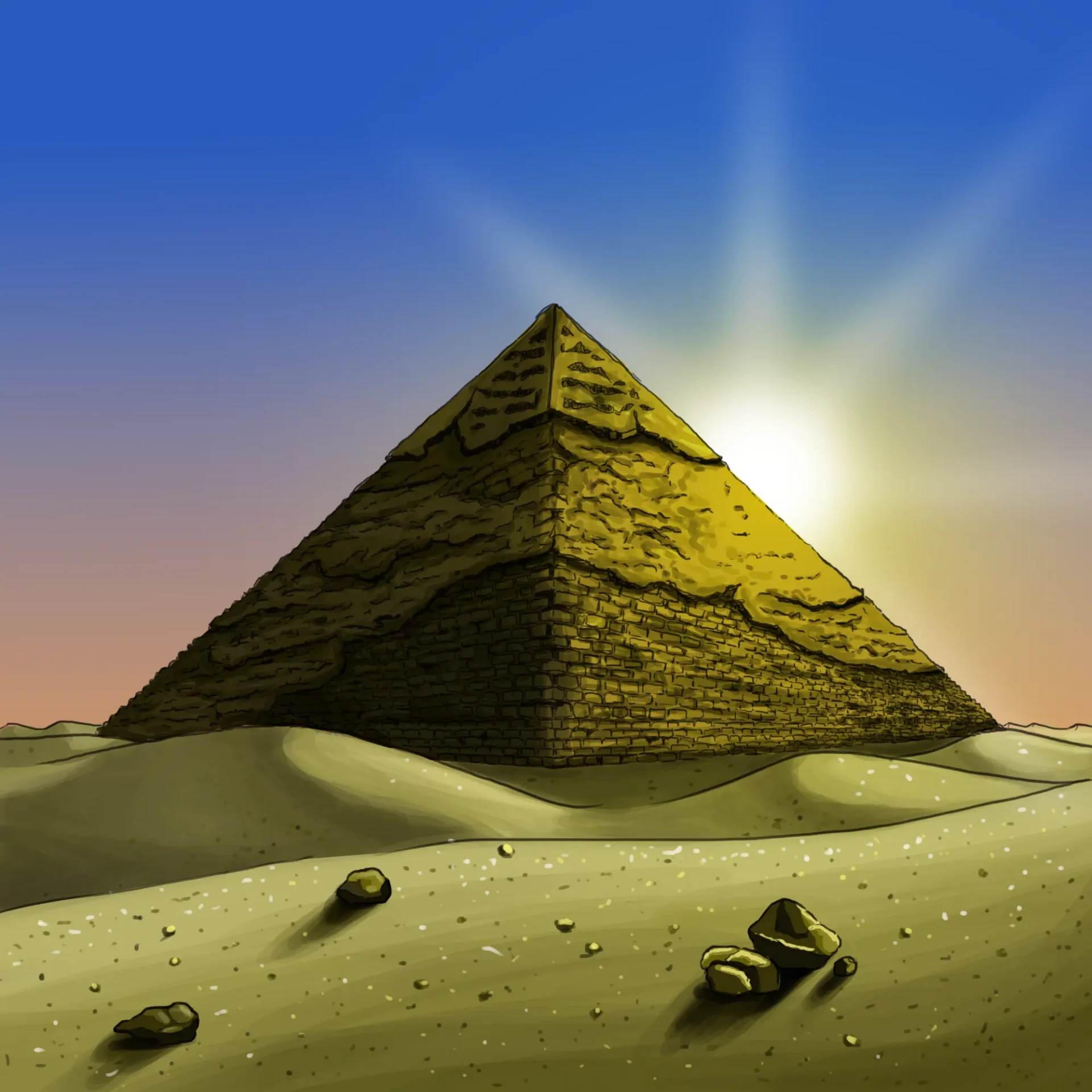
Then add touches of light. The side facing the sun may look too flat: draw a very bright yellow edge, then add some splotches with the same color to shape the relief. With light tones, also illuminate some blocks and the outline of a few cracks.
You can even lightly illuminate certain areas of the dark side, but for this, use a mid-tone shade.

Here is our impressive pyramid, shaped by different layers that testify to the passage of millennia. I hope you enjoyed this tutorial!
Discussion
No comments yet.