
How to Draw a Storm
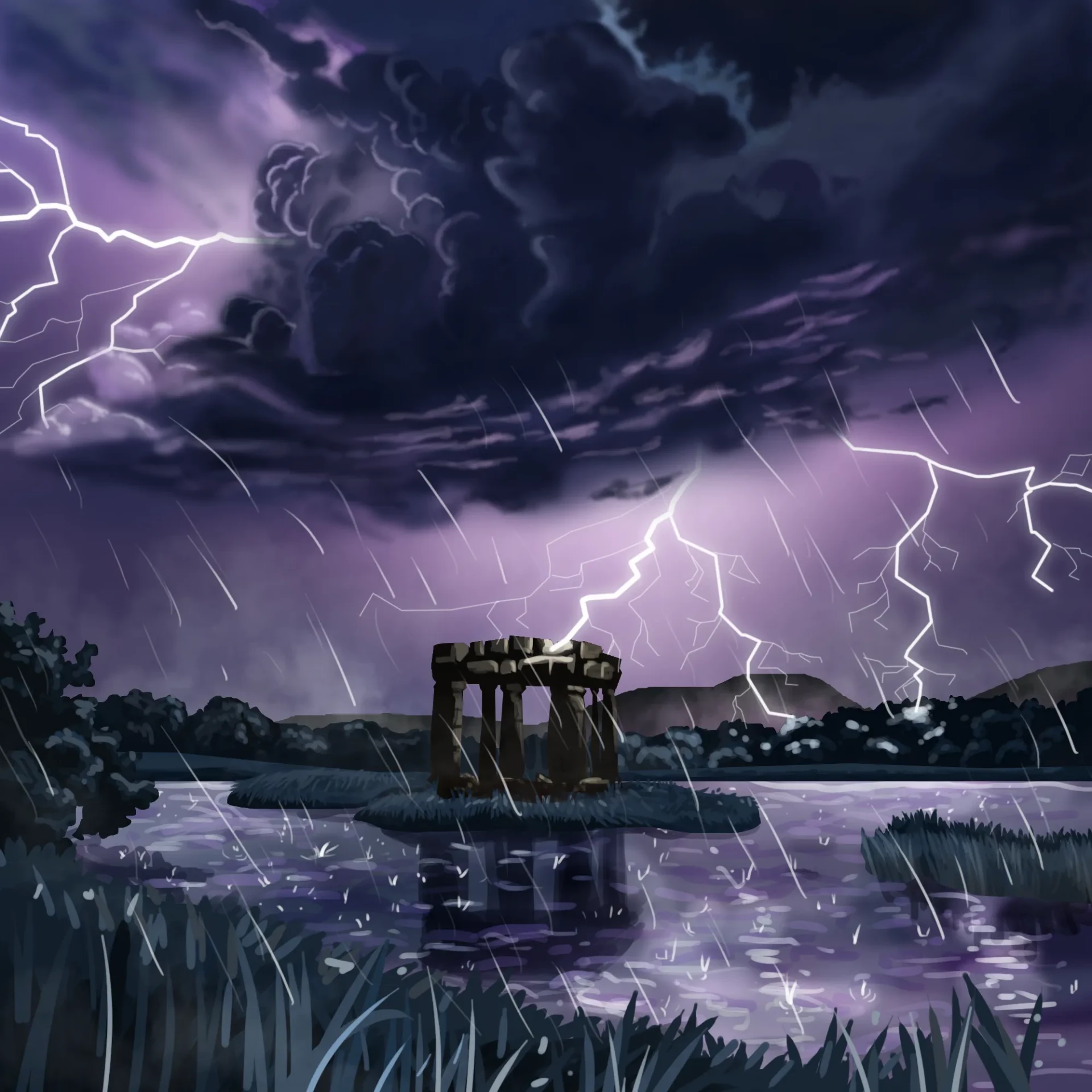
Storms have been feared by many cultures over time. Undoubtedly, a storm is an impressive event, capable of inducing fear even when observed from the safety of one's home.
Drawing a storm represents a real challenge: standard lines are not always sufficient to convey the violence and intensity of this phenomenon. Join me in this tutorial today where we will explore the stylistic resources that can be used to create a convincing stormy scene.
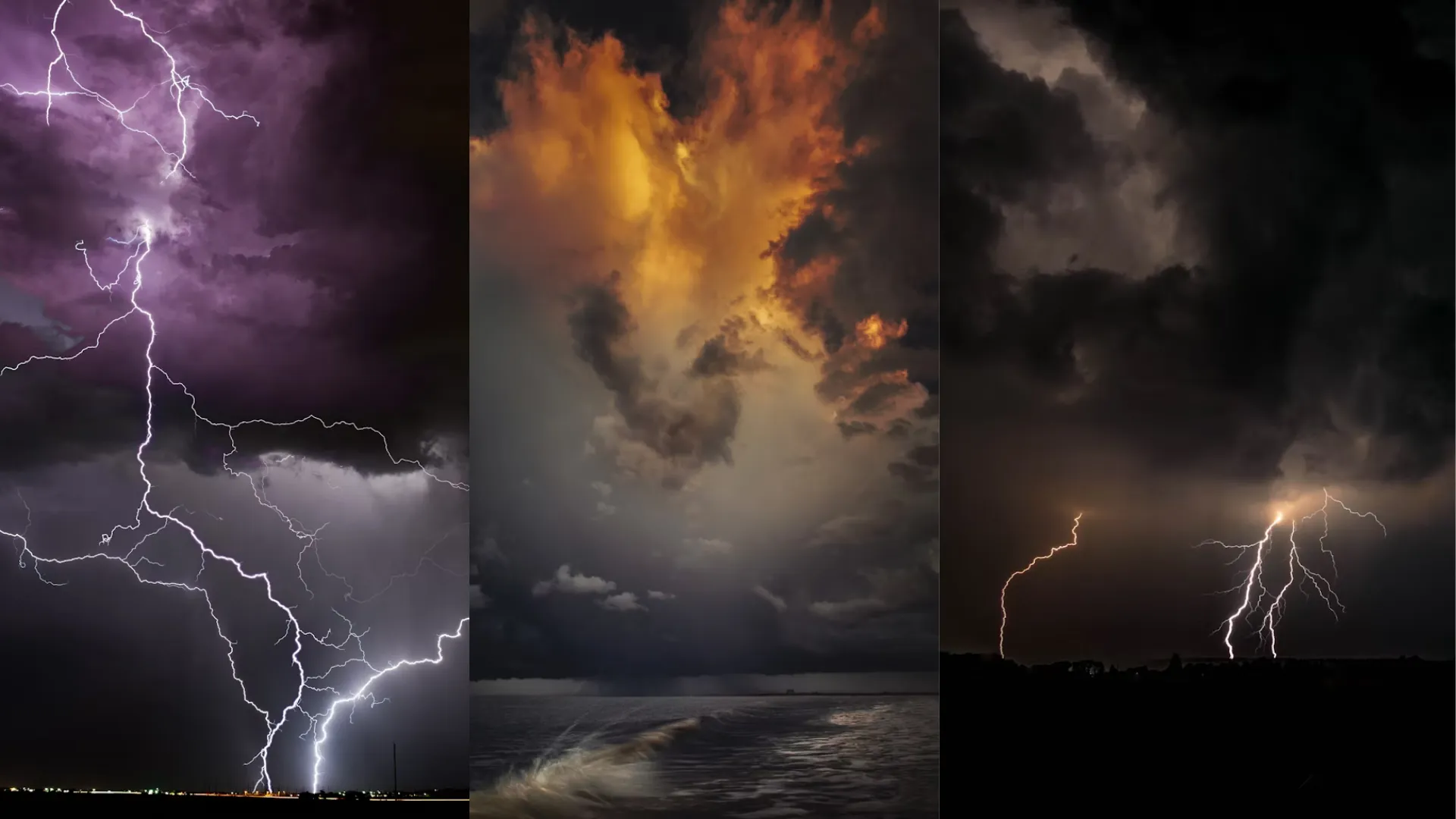
Drawing a storm step by step
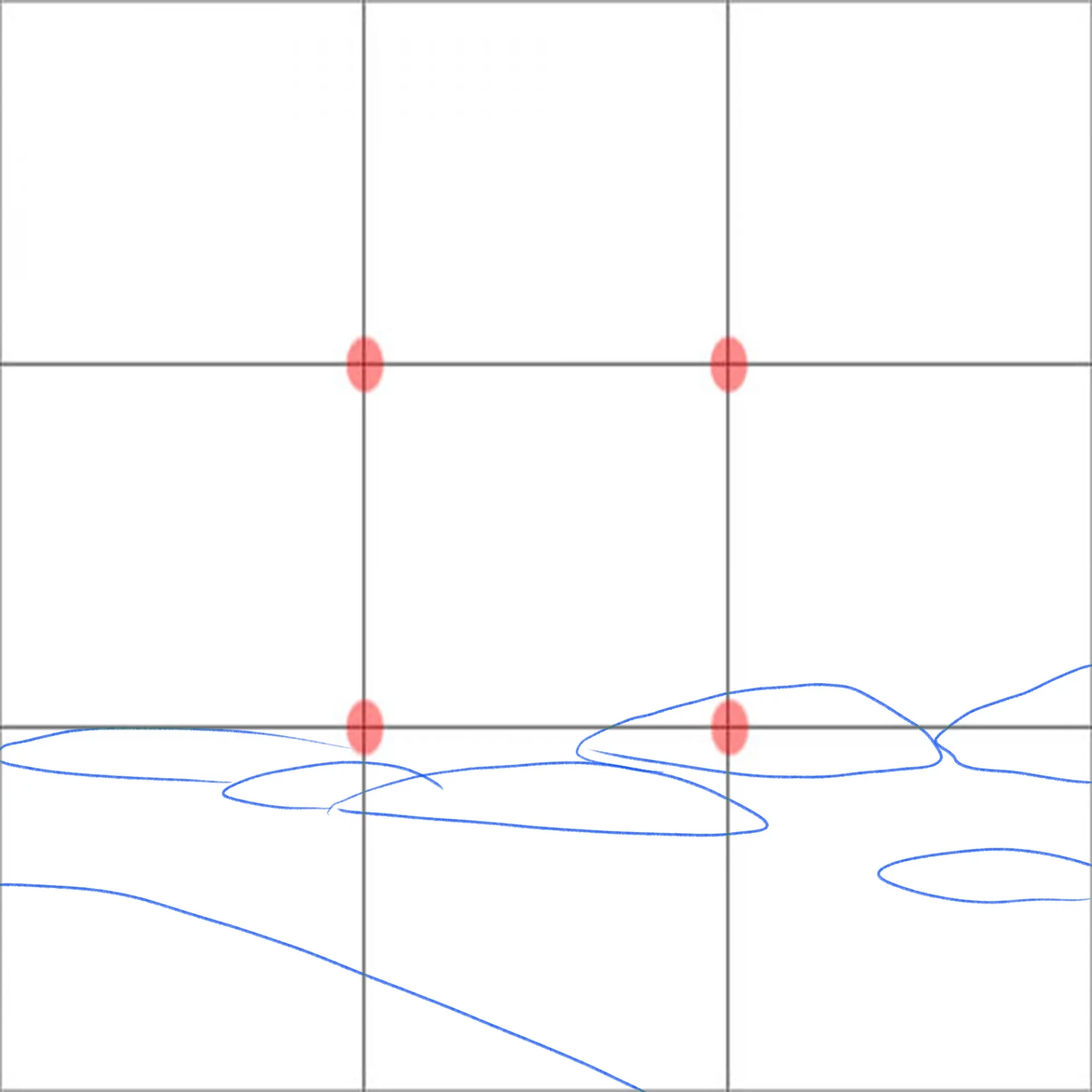
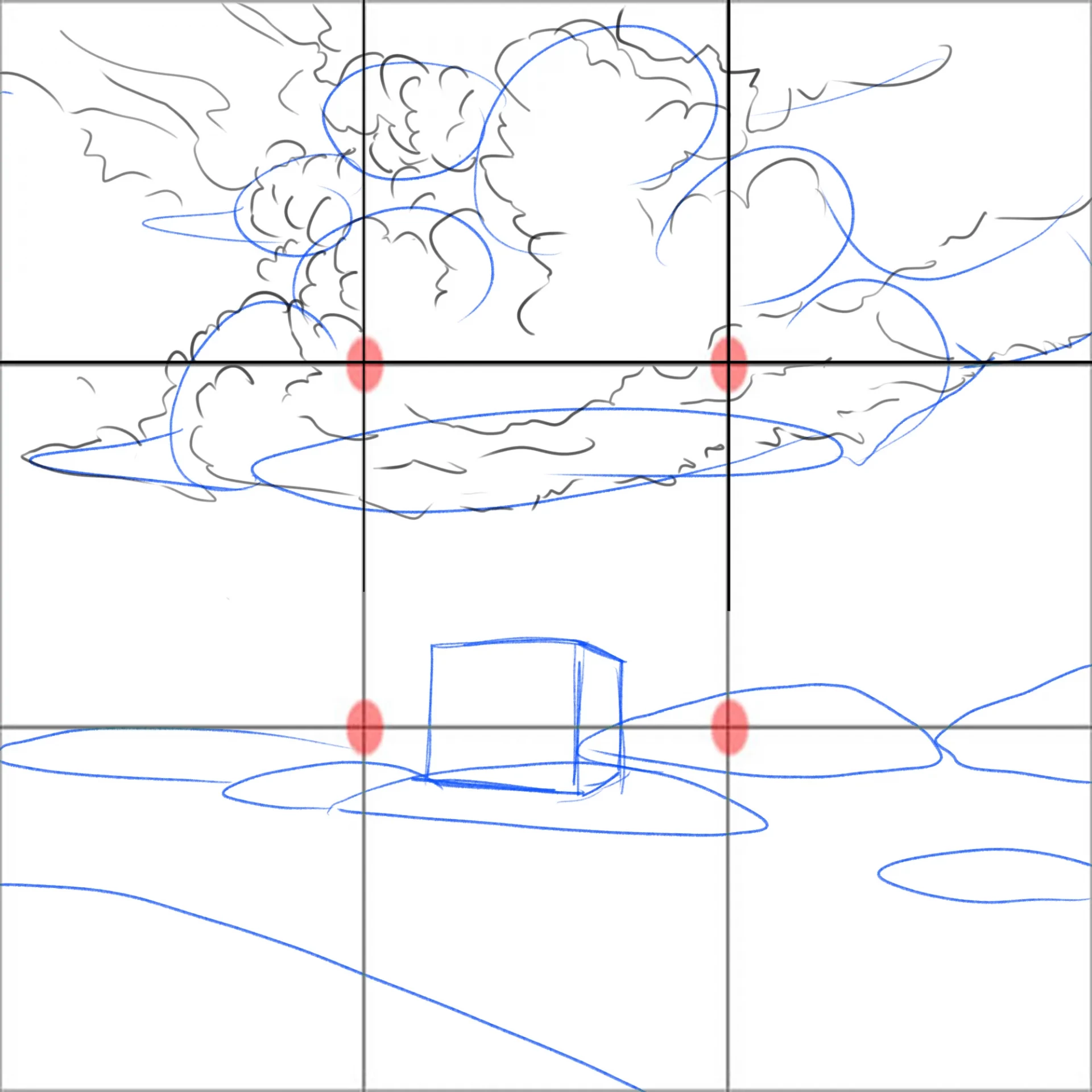
Start by defining the landscape. By applying the rule of thirds, place the horizon line on the lowest line: this will ensure the sky is the main focus. We will place large dark clouds there, as well as some lightning.
Start by drawing some small islands in the lower part of the grid, respecting the horizon line limit.
For this composition, we will also use a structure in the center: so draw a cube to define its dimensions.
In the sky, draw a large cloud occupying a large part of the composition, making sure, however, to leave a space between the stormy sky and the solid ground.
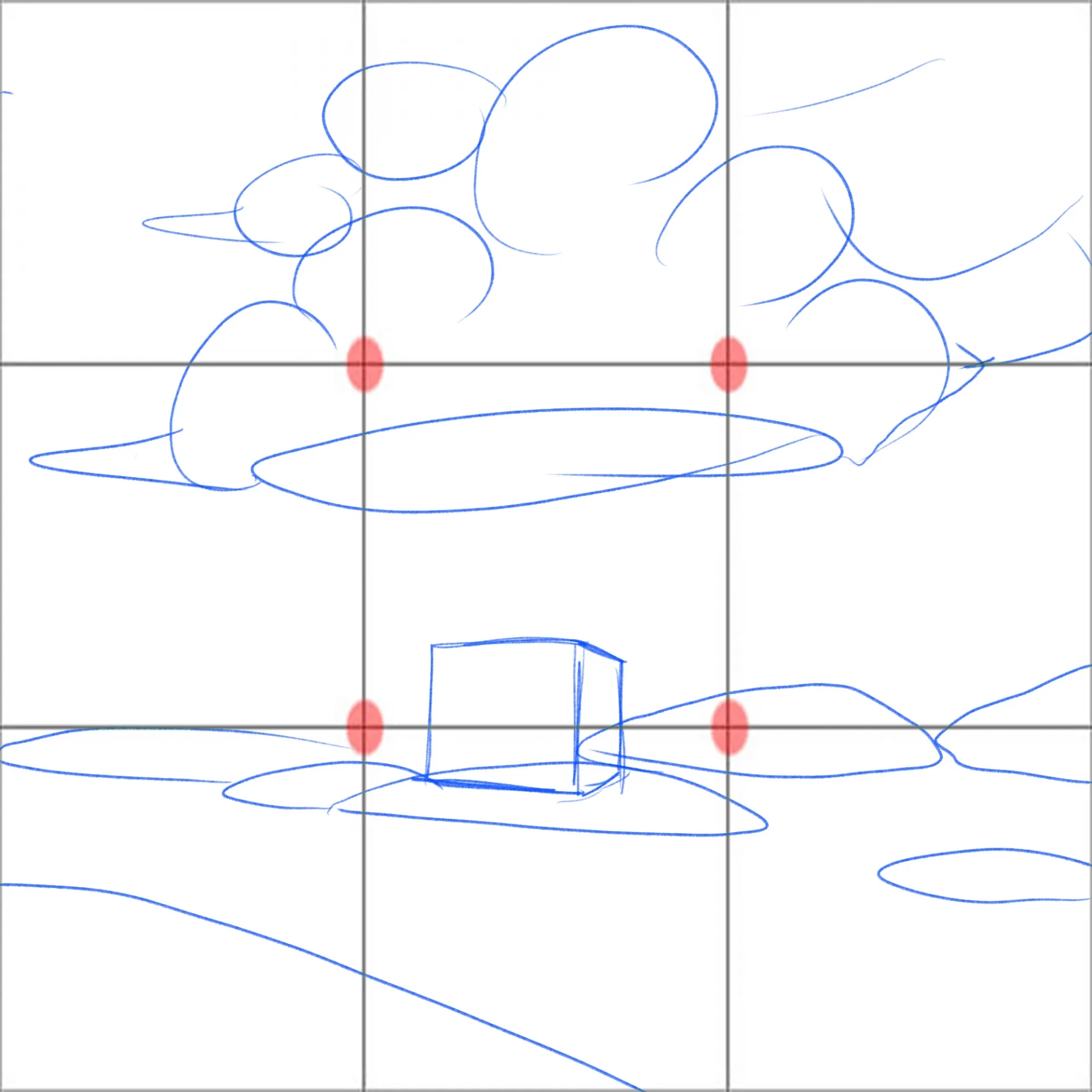
Start shaping the clouds in a free and dynamic manner, using several wavy, round, and elongated shapes of varying sizes.
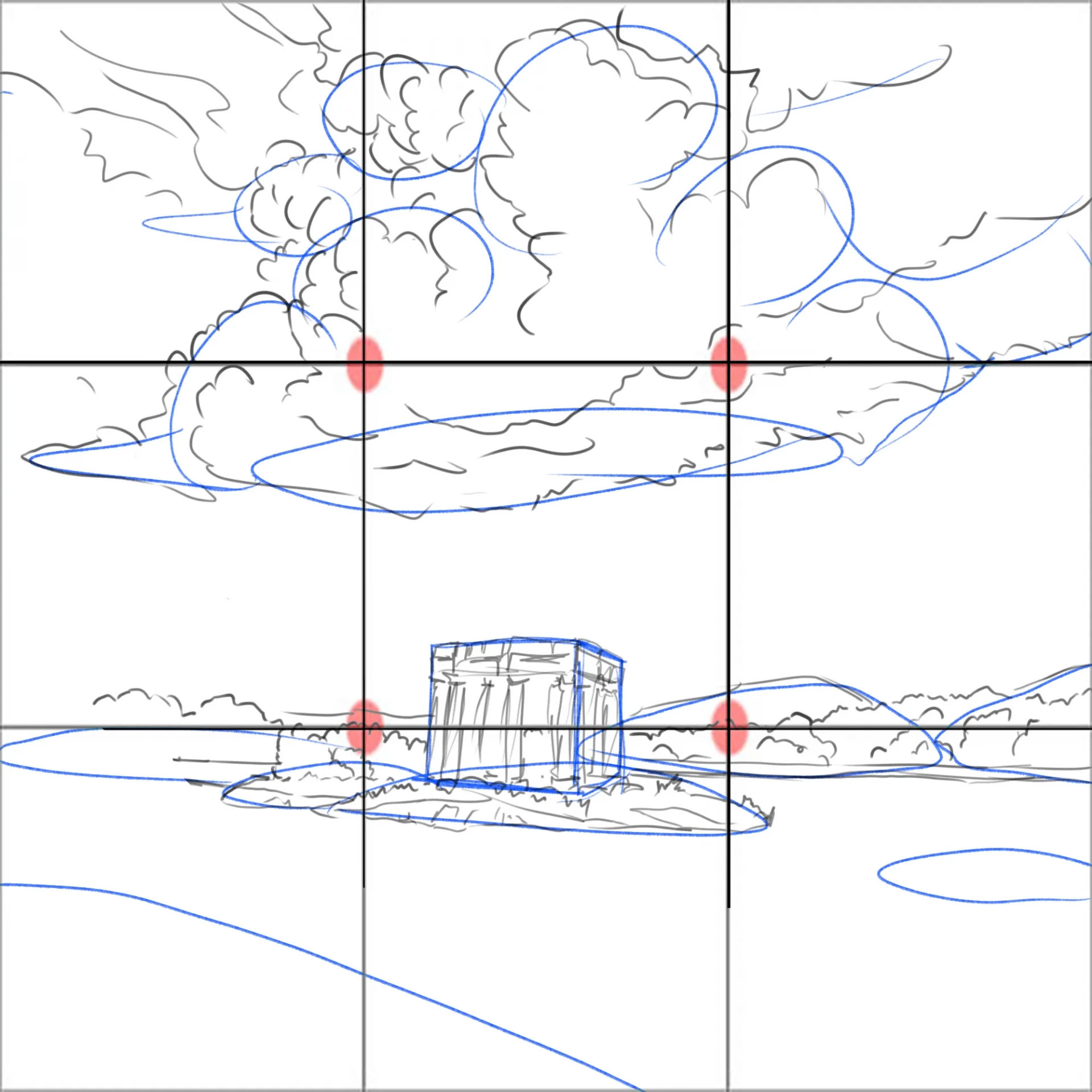
You can then draw a small Greek temple in the center, roughly sketched and without going into detail, as the contrast will hide much of it in the shadows. Draw the vegetation around it in the same way, bearing in mind that this is in the background: only the silhouettes of the trees will be visible.
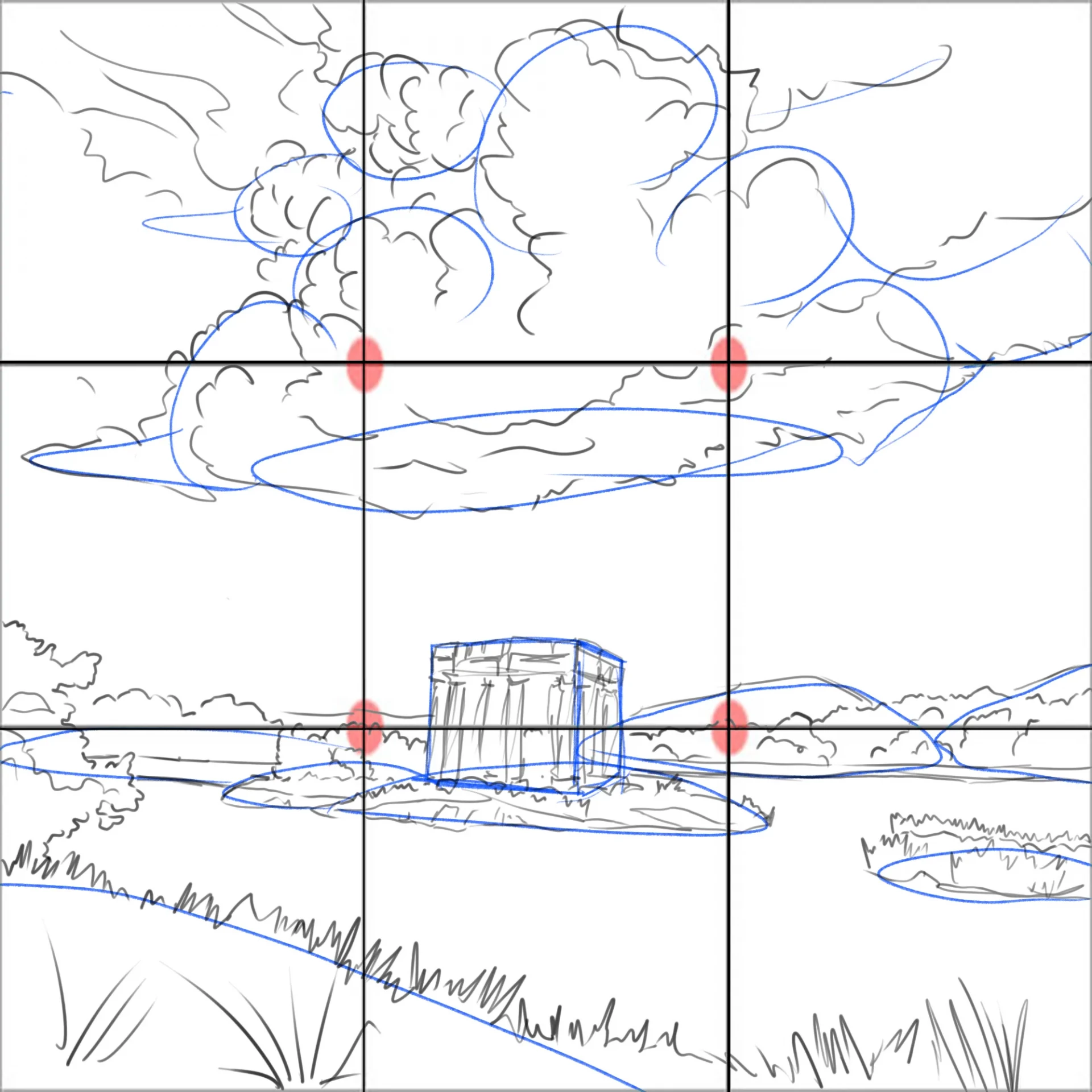
Finally, draw the elements in the very foreground, where you can add more details, like blades of grass and a few bushes at the side.
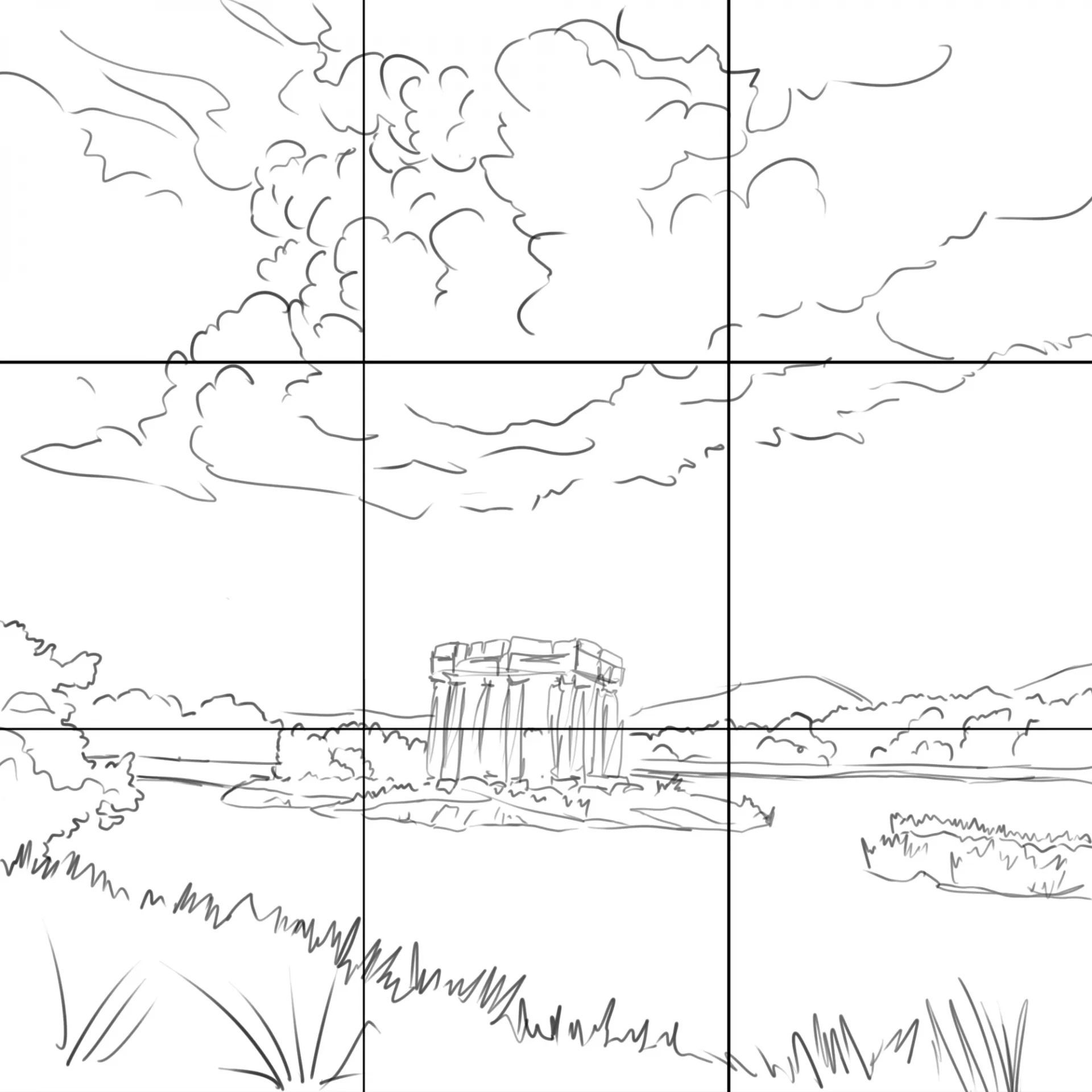
The elements on the ground can vary according to your imagination. In our case, we will depict a small lake, in order to draw choppy water as a result of rain, and some ruins that introduce a trace of human presence.
Apply color to the drawing
Let's now add color to our drawing. Start with a gradient of purple, with the lighter tones at the top of the image, an aesthetic choice that emphasizes the chaotic nature of the scene.
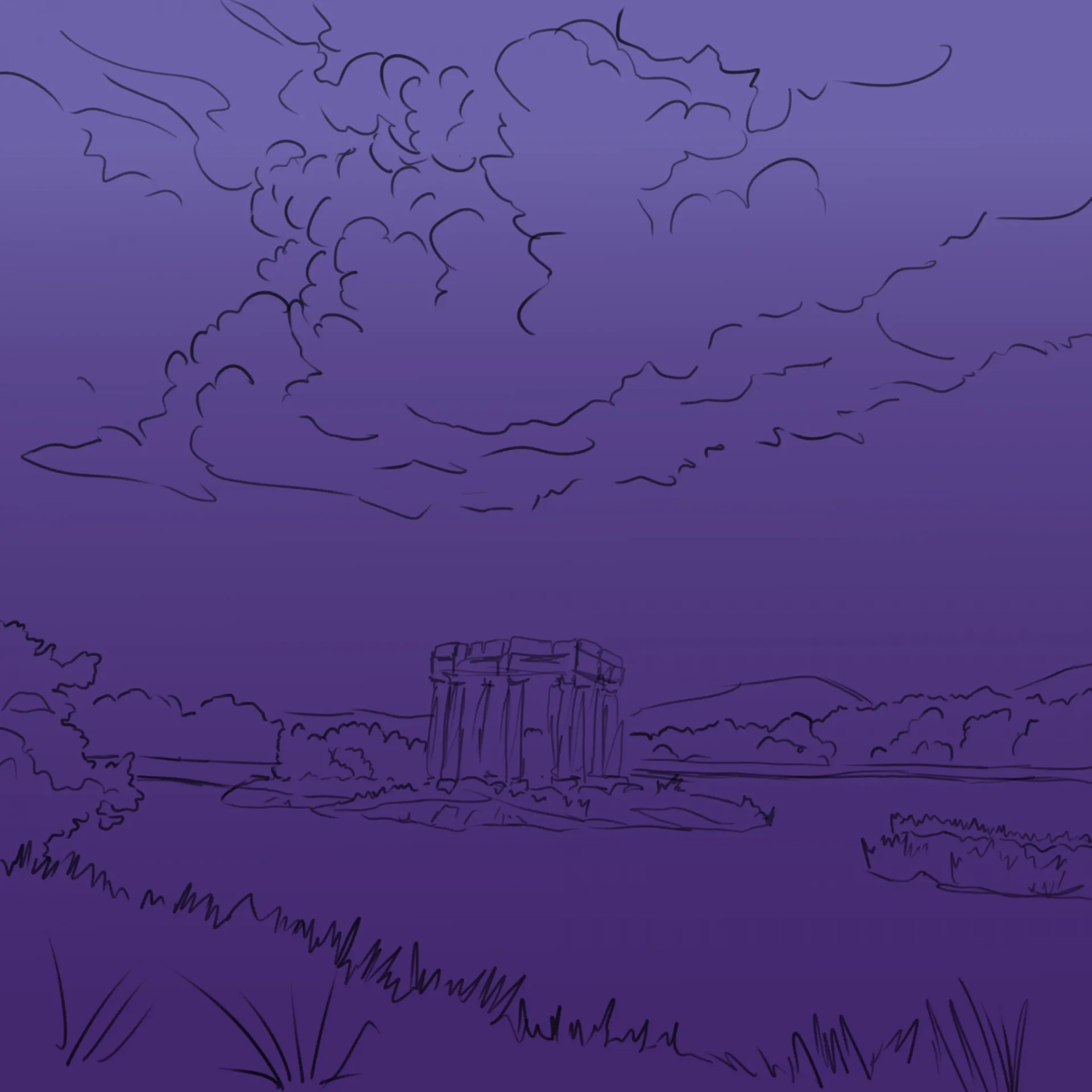
Our next step will be to add softly blended splashes of lilac and fuchsia fading to an almost pure white.
These bright patches represent the lightning generated by the storm. Over these patches, you can apply soft, circular brush strokes in various shades of blue and violet to create the base of the clouds.
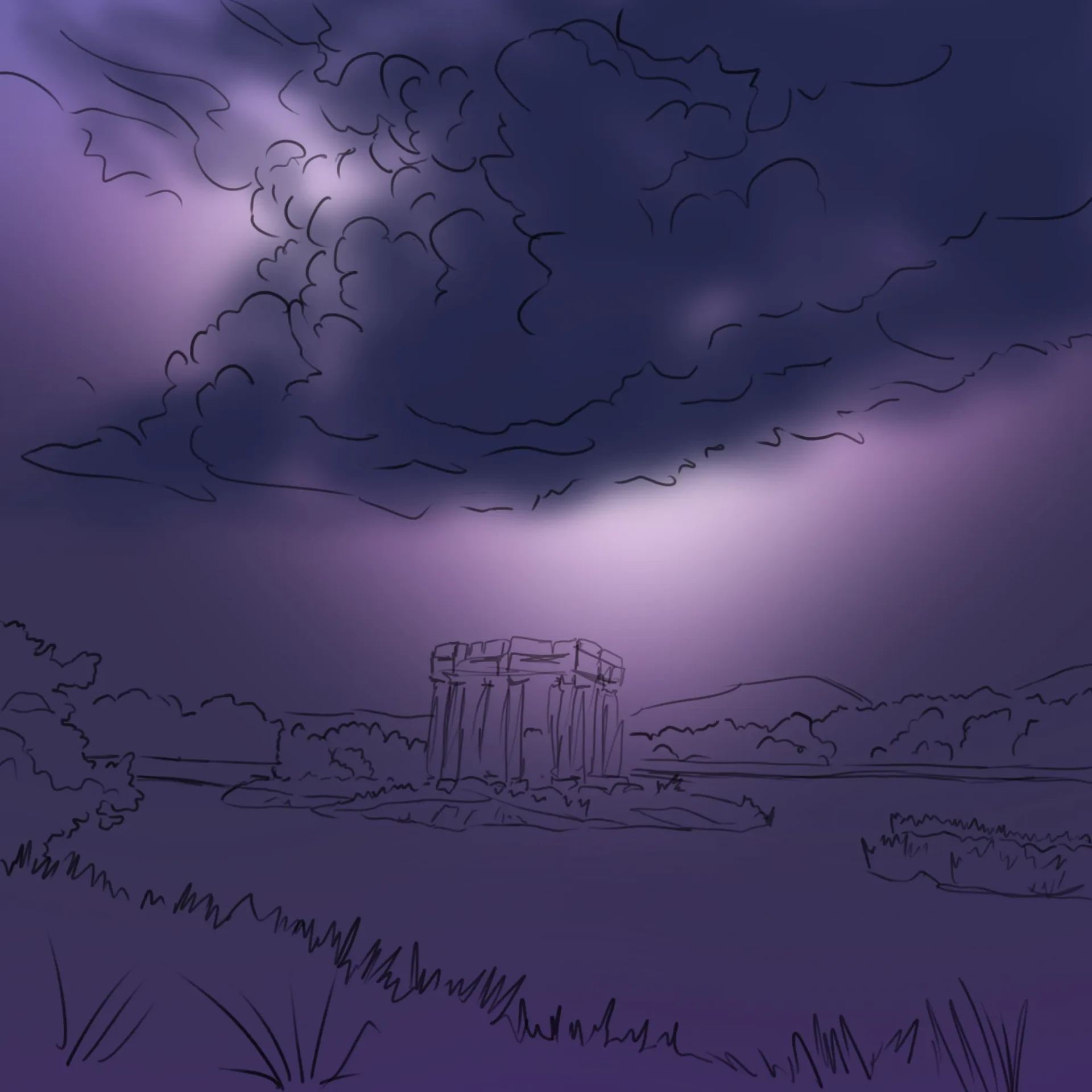
Continue by darkening certain areas to start creating cloud shapes. Remember to leave some light areas around the lightning to mark the bright contrasts.
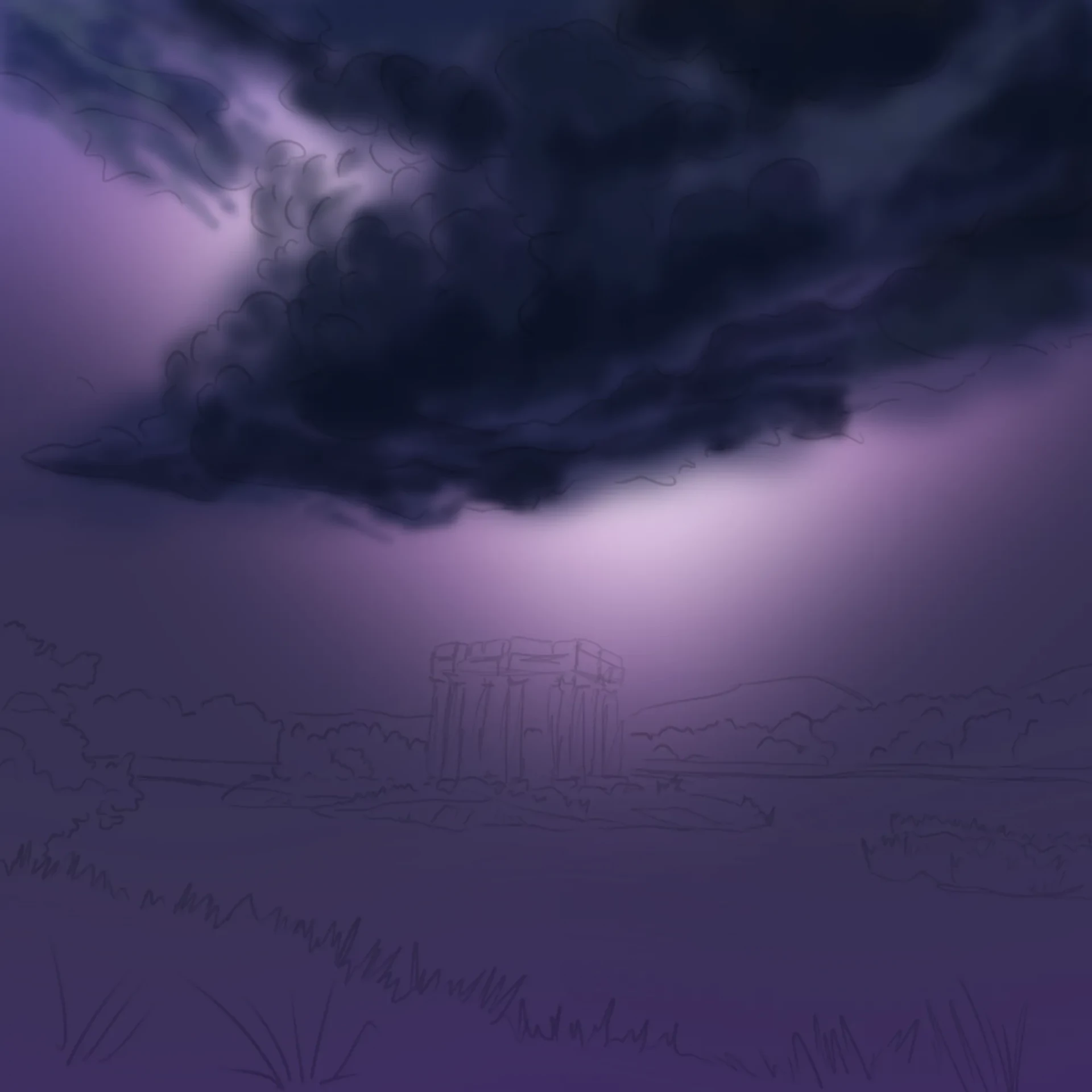
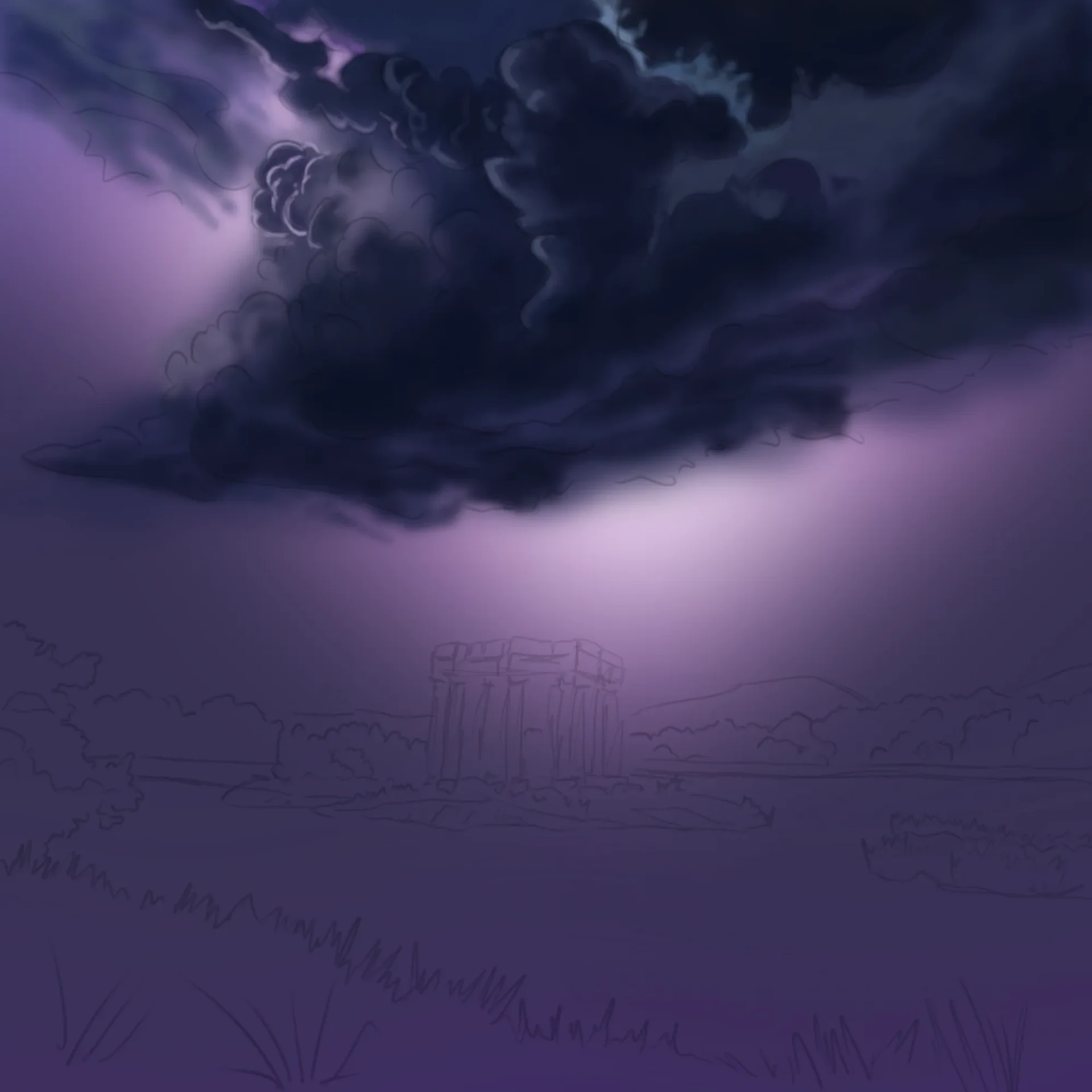
Here, two very intense light sources dominate the scene. Therefore, the contrasts will be strong. Create light outlines close to the illuminated areas, but avoid pure white. This contrast will make the bright parts even more expressive.
Draw lightning
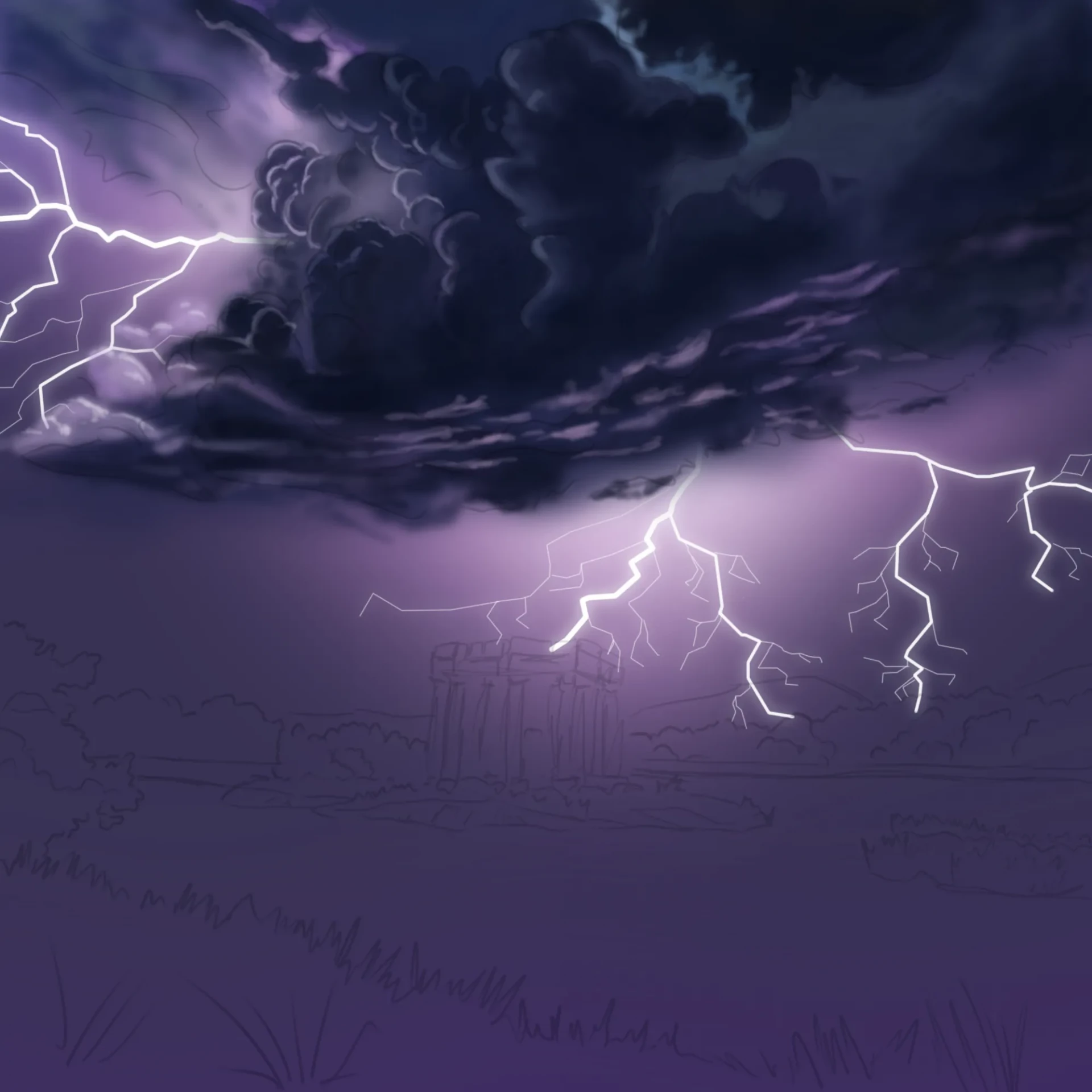
Draw jagged, irregular, and descending lines: lightning bolts originate from clouds and strike a specific point on the ground.
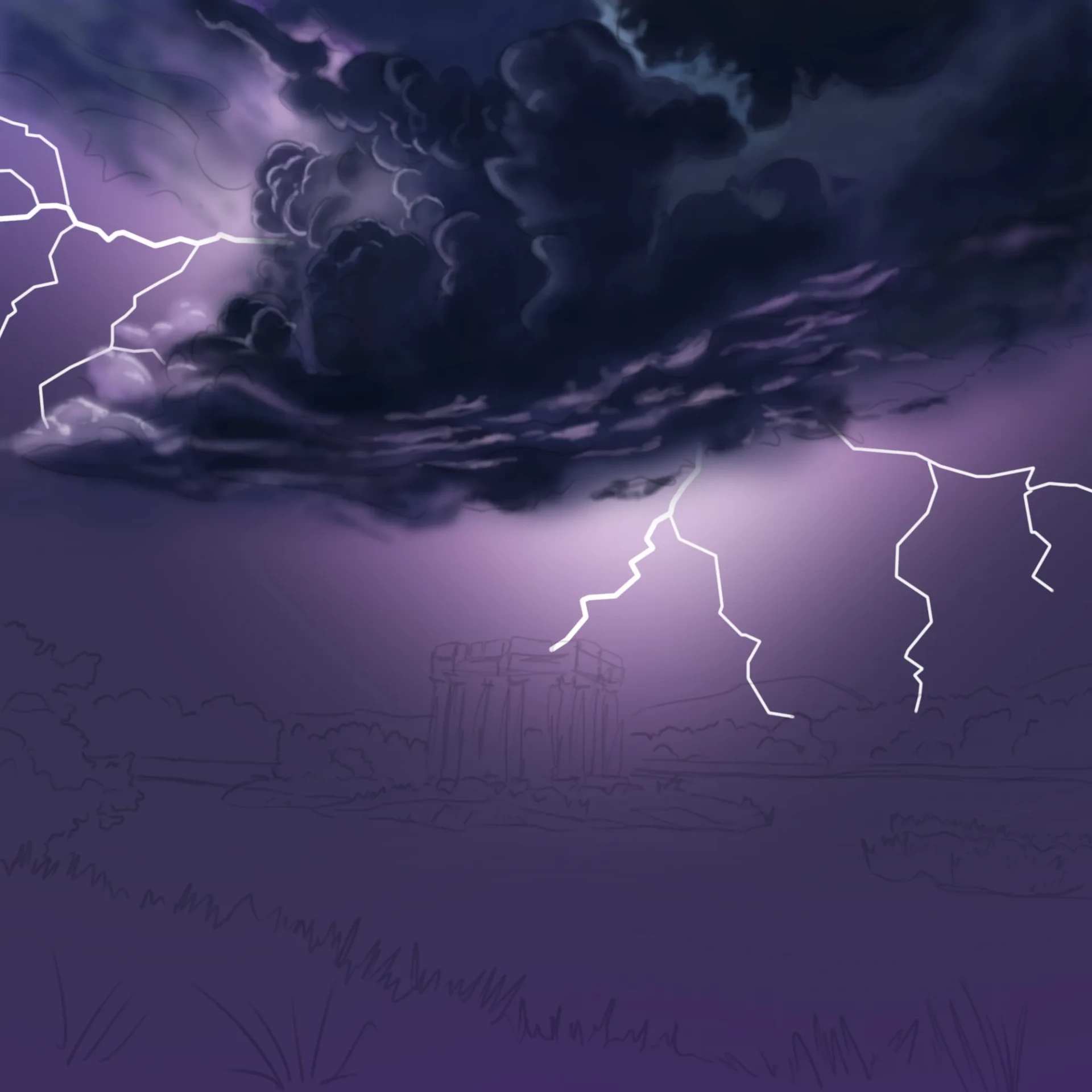
To enhance their visual impact, add small, fine, and short lines around the main ones. To give them a luminous effect, apply a slight blur around the lightning, then go over the lines to make them stand out clearly.
Draw the landscape
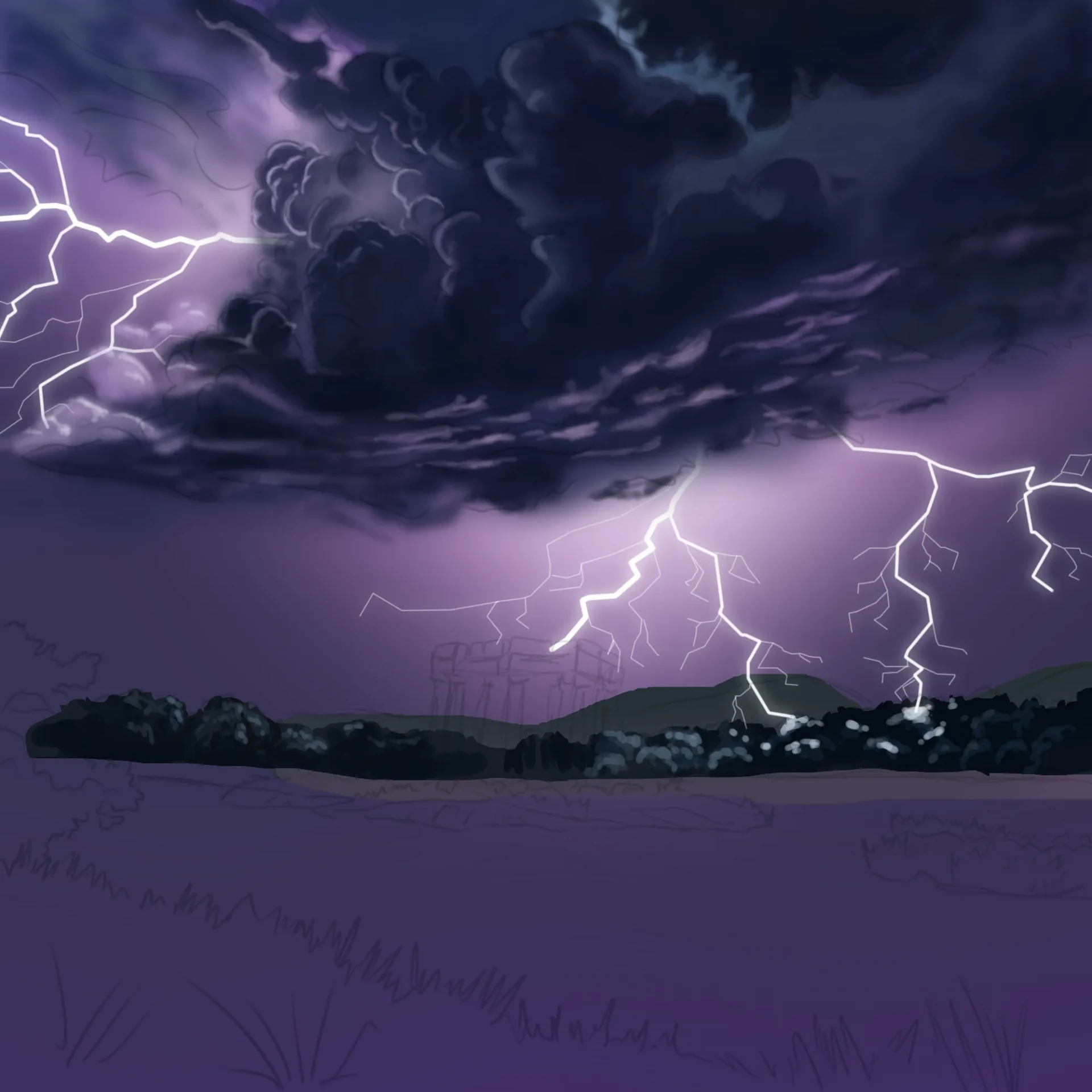
Although the sky is the center of attention, we will enrich the scene with a landscape bathed in its light. Draw mountains and a dark forest, which will be illuminated by lightning. Use short, rounded brush strokes in shades of blue to represent the foliage of the trees.
Move onto the ground with blues mixed with green, drawing small lines to suggest grass.
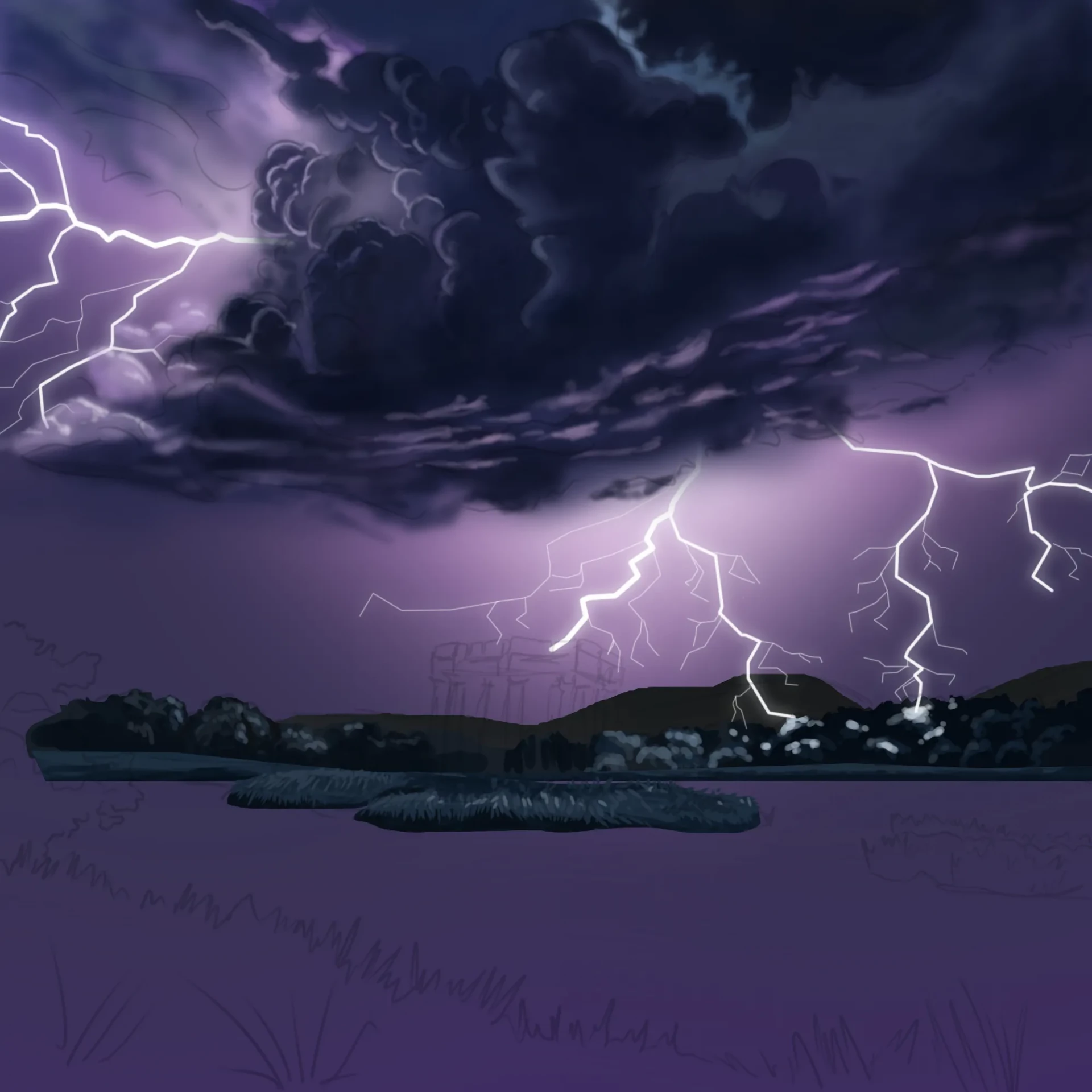
In the foreground, draw blades of grass, typical of marshes or lake edges. Start with a dark base, then add progressively lighter vertical lines.
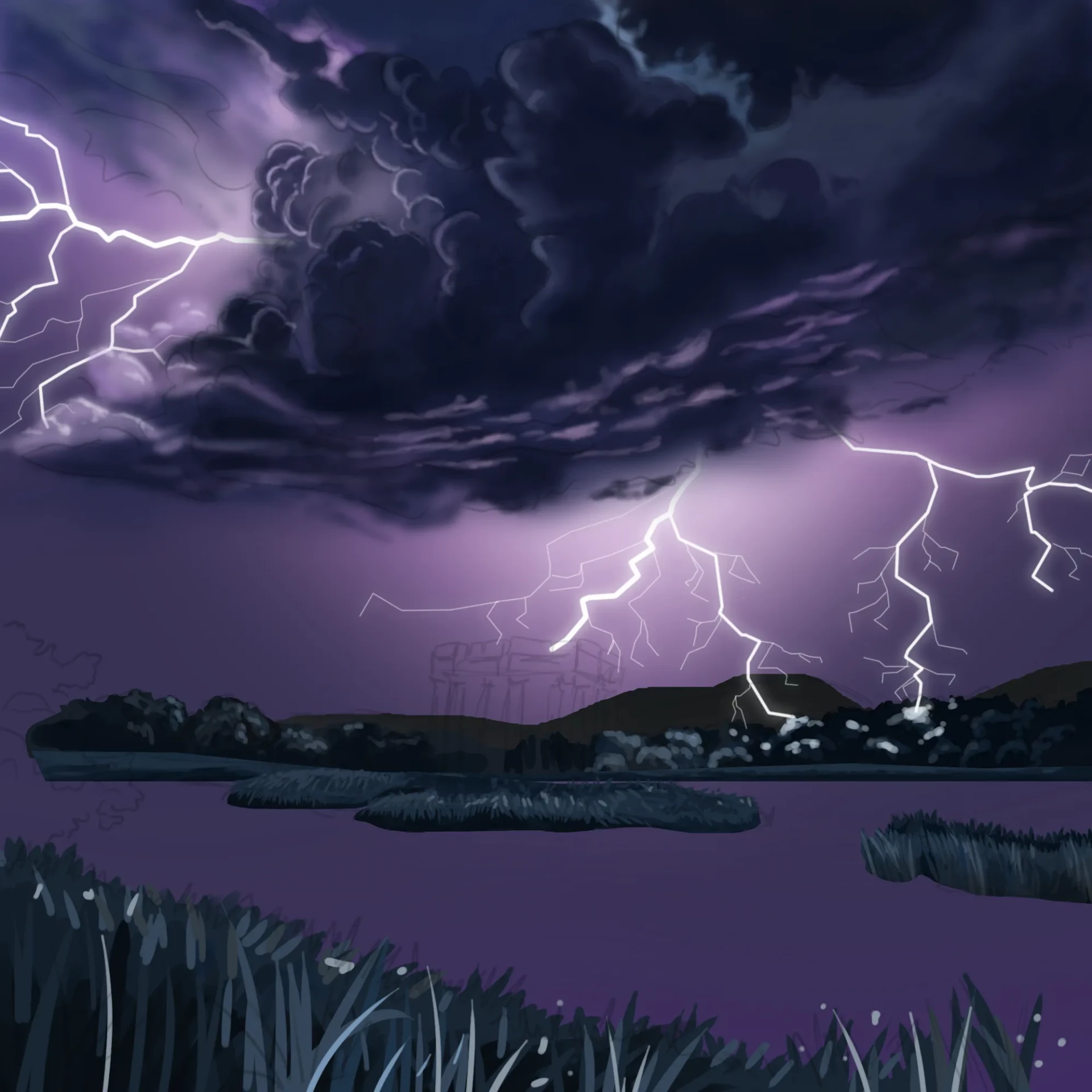
Finalize your drawing
Draw the ruins in a very dark, desaturated brown. Then, identify the area impacted by the lightning: the closest surfaces should be drawn with light tones. As you move away, the shades should darken, except in areas exposed to light; the rest must remain in shadow.
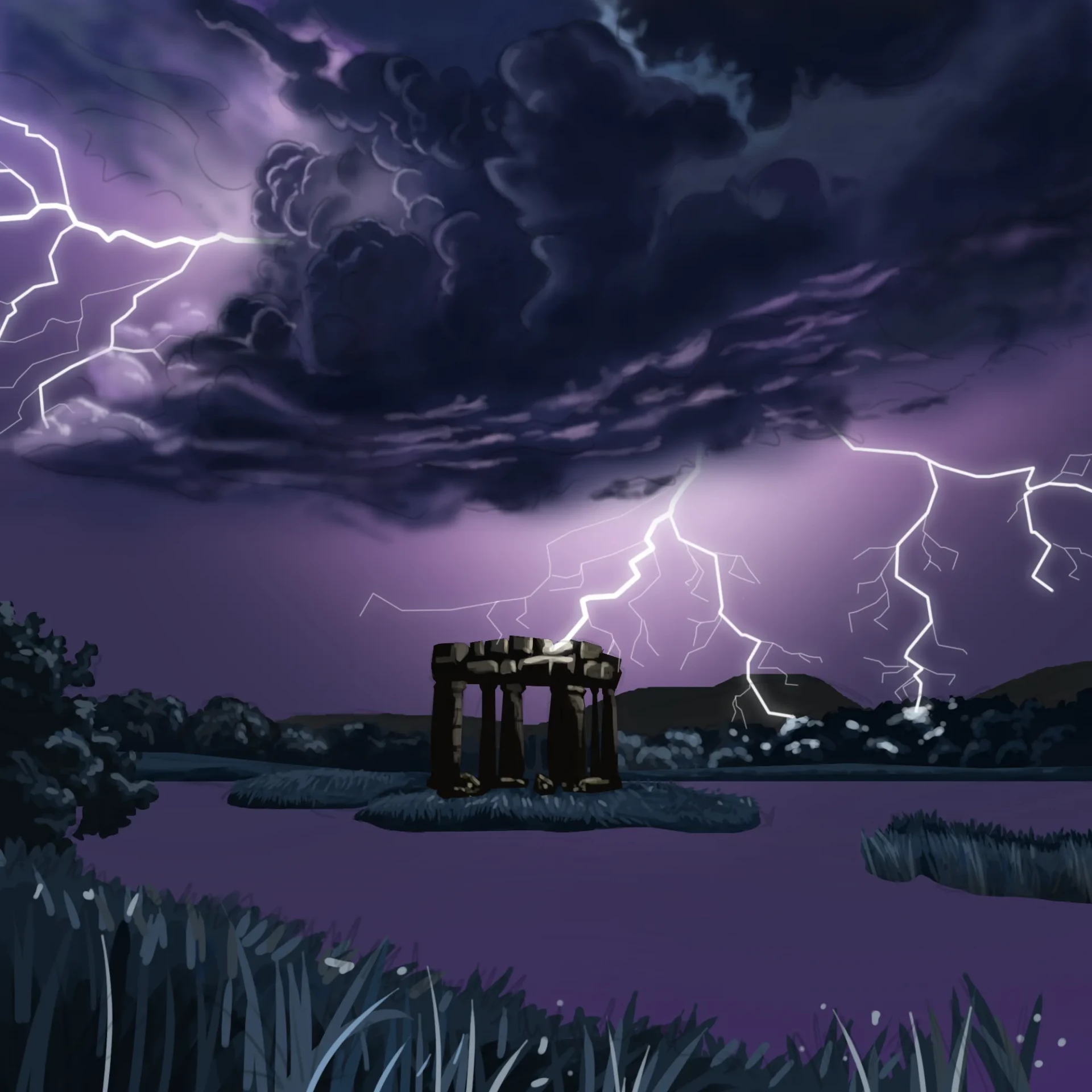
Don't forget that water acts like a large mirror. Start by drawing patches reflecting the sky, especially the lightning.
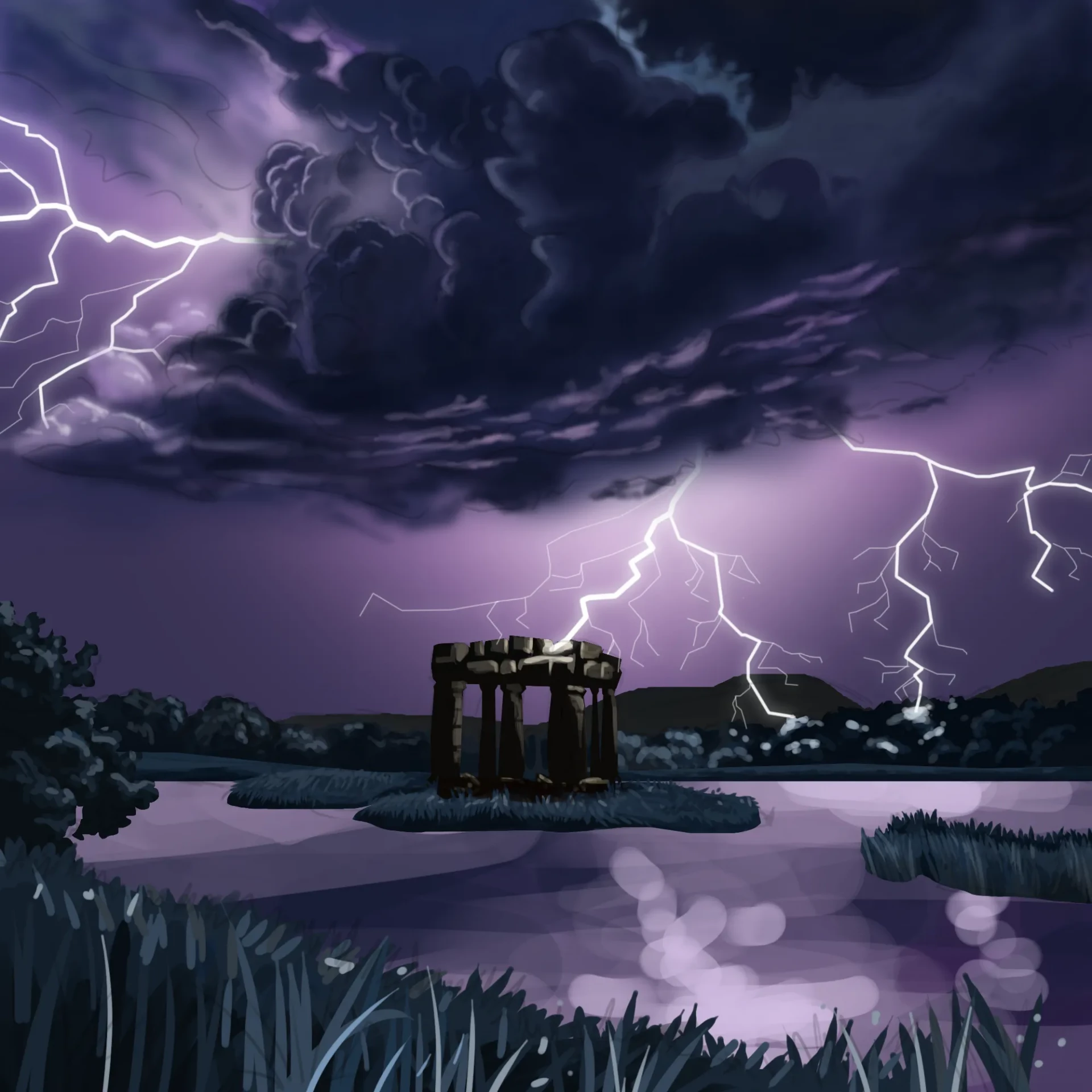
Once the base is smoothed out, add the shadows cast from the ruins, grass, small islands, etc. Then draw small horizontal lines in dark blues and purples to simulate choppy water.
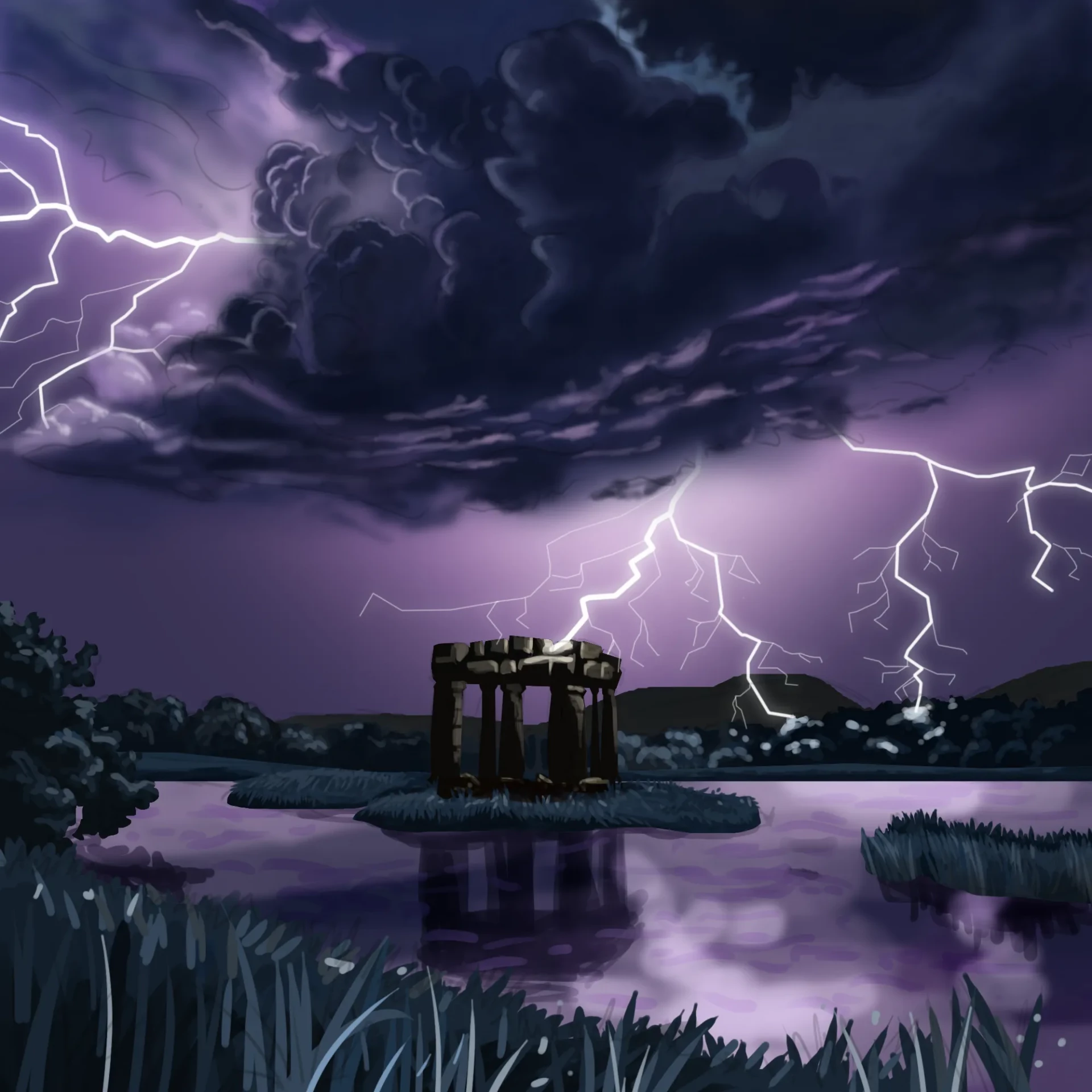
Finally, use white to create reflections on the surface by drawing irregular horizontal lines. Also add some splashes to evoke raindrops, as well as diagonal lines to represent falling rain.

And there you have it, the drawing is complete! This exercise has enabled you to draw a stormy landscape that goes beyond a simple illustration, aiming to convey the power and intensity of a storm.
Now it's your turn to draw your own storm!
Discussion
No comments yet.