
Simple Approach to Watercolor Painting
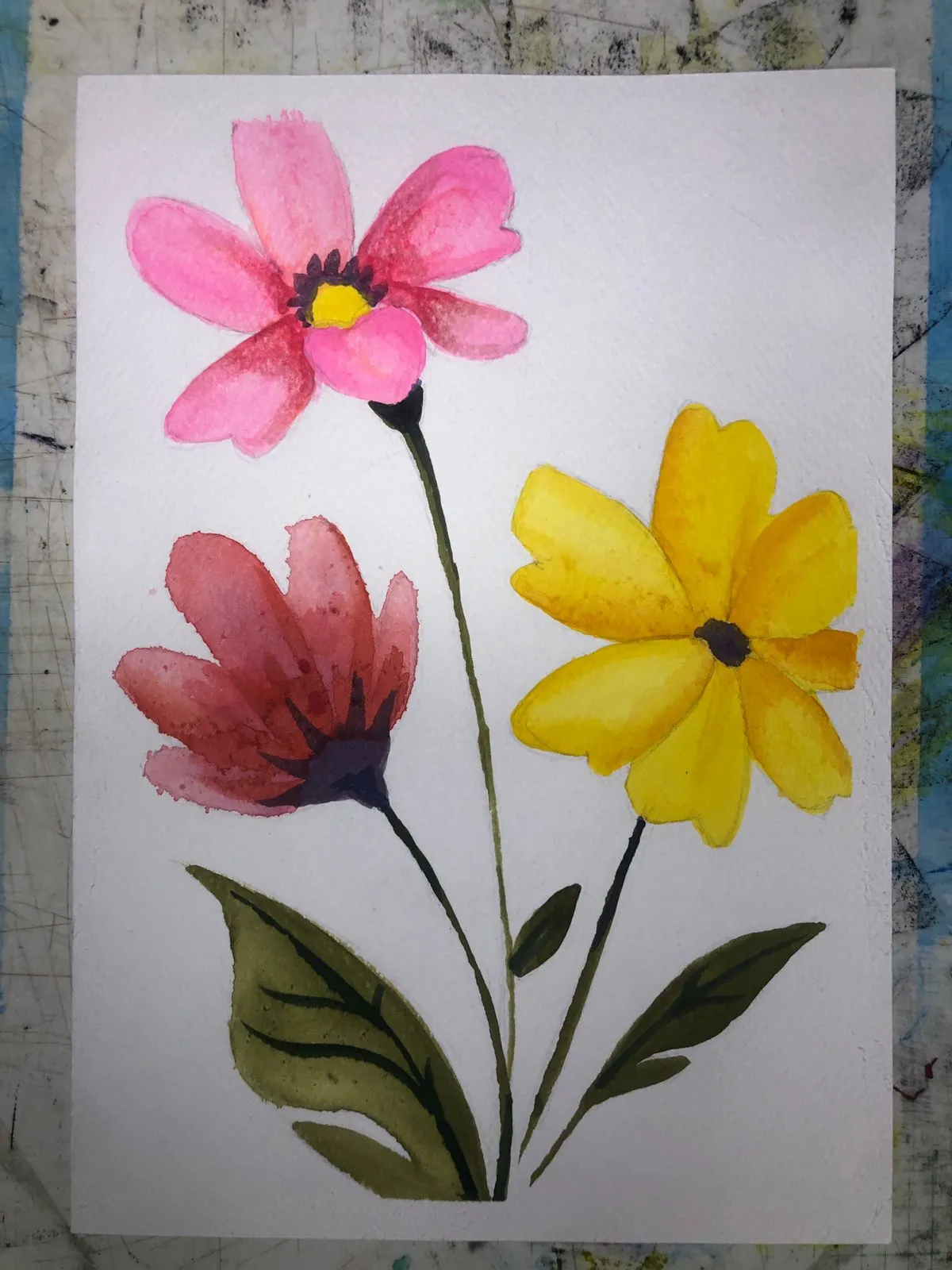
Watercolor is a beautiful medium, although it can be a bit complex at the beginning. That's why it is best to start with simple designs to learn how to use it properly.
Today, I'm bringing you a new tutorial in which you can put into practice those little tips and techniques that you might have already seen, but not yet applied on paper.
So, grab your brushes and get to work!
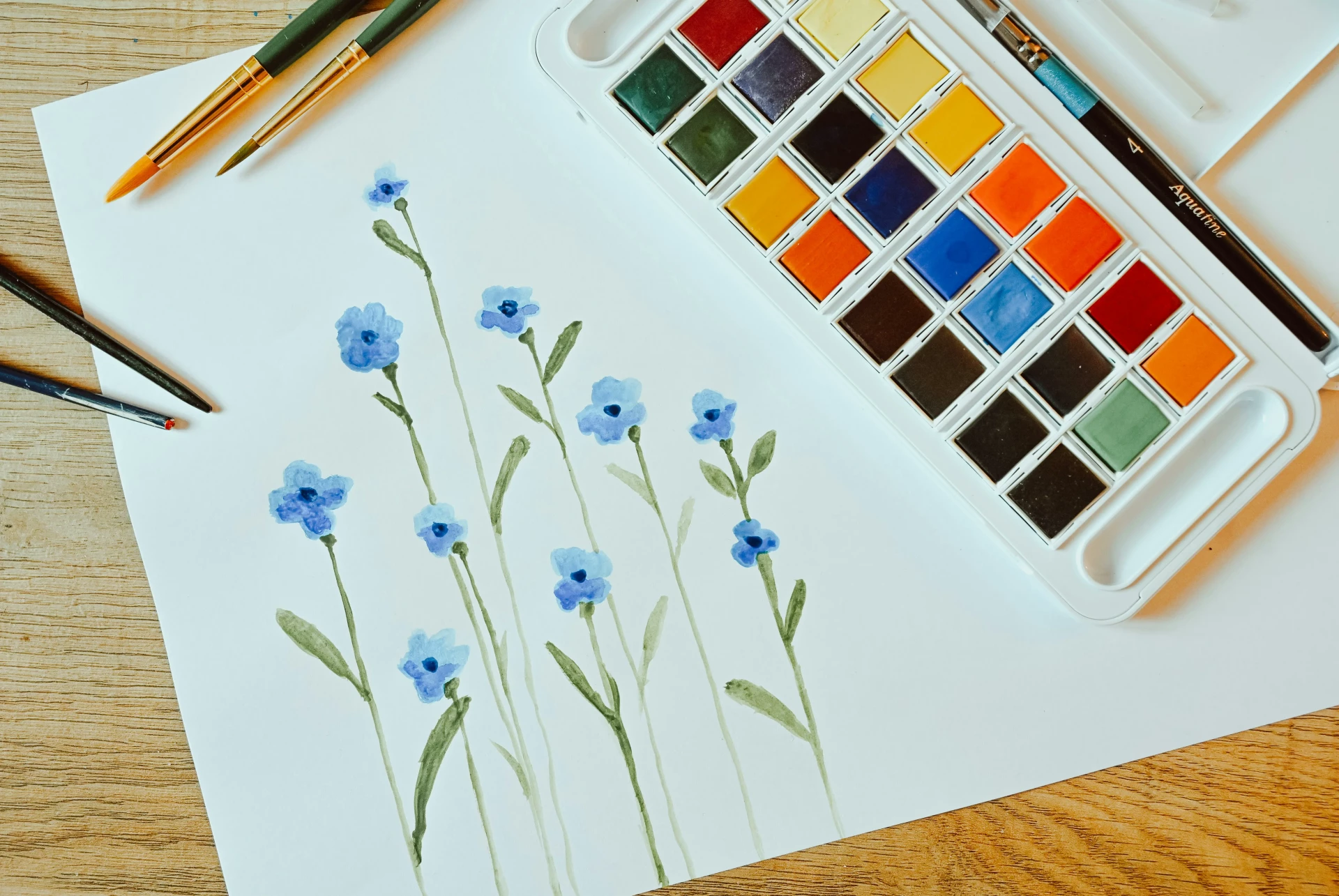
Paint a floral design
If we think about something simple, practical, and aesthetic, a floral theme offers a wide range of possibilities and a lot of freedom to achieve a harmonious result.
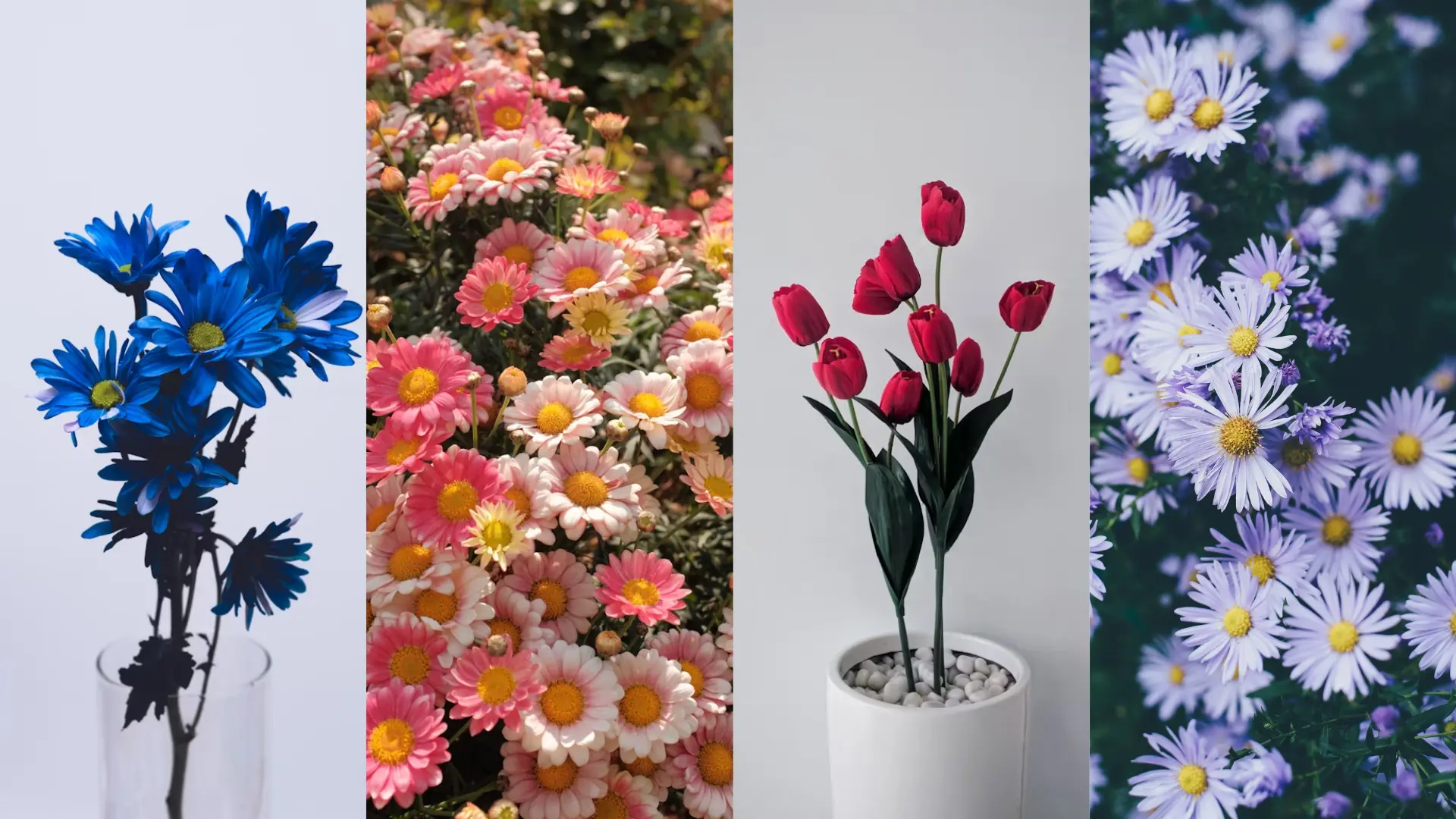
Head over to your search engine and gather several reference images to use in your composition.
Prepare your workspace
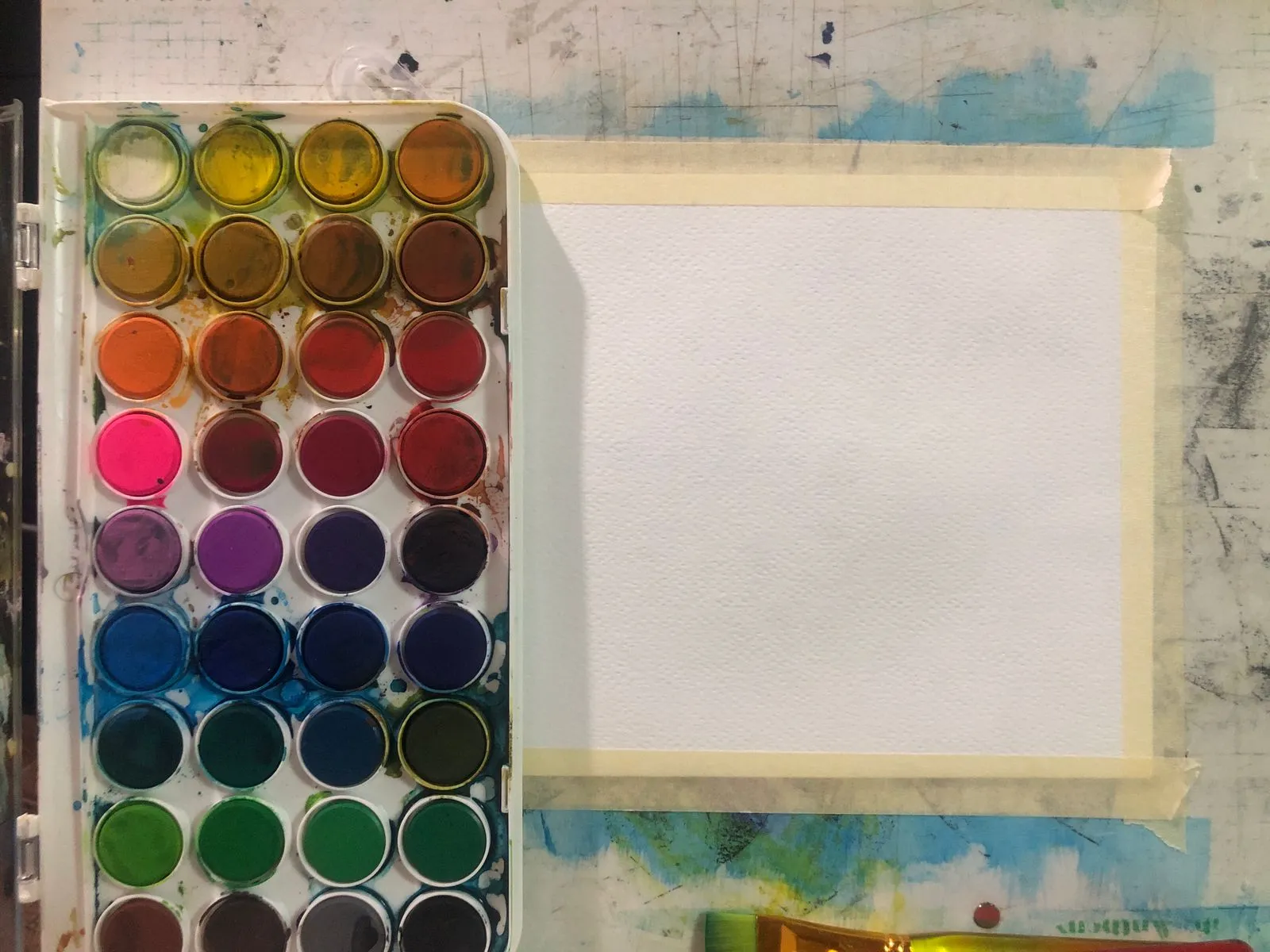
Before starting, make sure you have all the necessary materials at hand. Choose a spacious, well-lit area, and gather the following tools:
- Brushes of different sizes and shapes.
- Your watercolors, in pans or tubes.
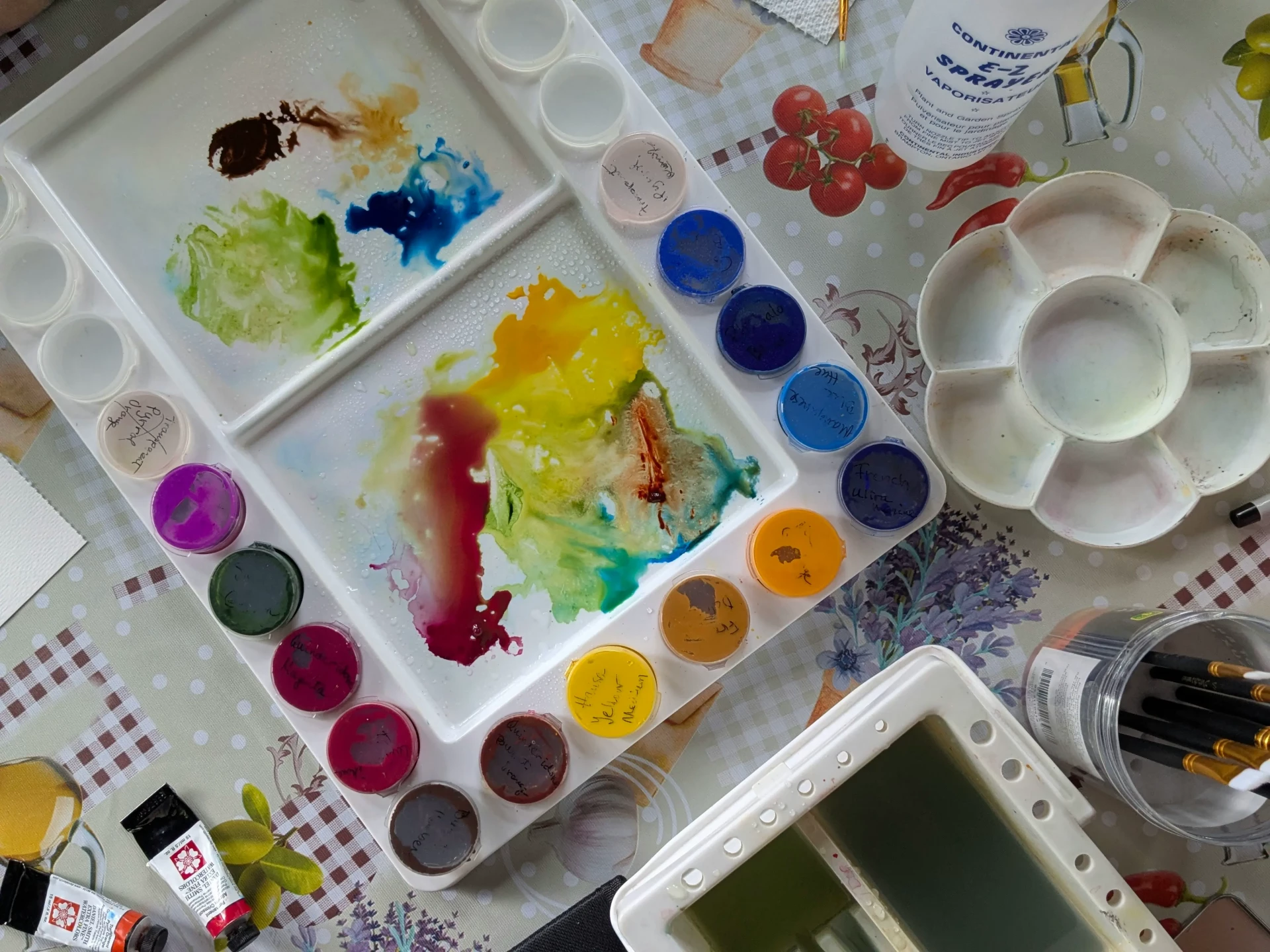
- A palette for making your mixes.
- Suitable paper with a weight of at least 250 g/m².
- Adhesive tape to secure the paper on the edges.
- One or two water containers.
- A graphite pencil and an eraser (or cleaning putty).
- A tissue, towel, or cloth to soak up excess water.
- Attach the paper to the table with adhesive tape, then moisten it with a thin layer of water using the largest brush. Once the paper is dry, you can start your sketch or painting.
Choose your color palette
Choosing your colors wisely is essential. You can have exactly the same elements in your composition, but a simple color variation can radically transform the perception: either produce a striking effect, or reduce your work to an uninteresting painting.
Here are three color palettes: choose the one that you find most interesting.
A palette of earthy tones, providing a warm and understated feeling.

A bright palette, dominated by warm colors, balanced by a soft green and a delicate pink.

A contrasting palette, combining cool and warm tones, where deep blue stands out for its density.

For this exercise, we will use the second palette.
Step-by-step guide to easy watercolor painting
Everything is ready: equipment, composition, color choices. It's time to paint.
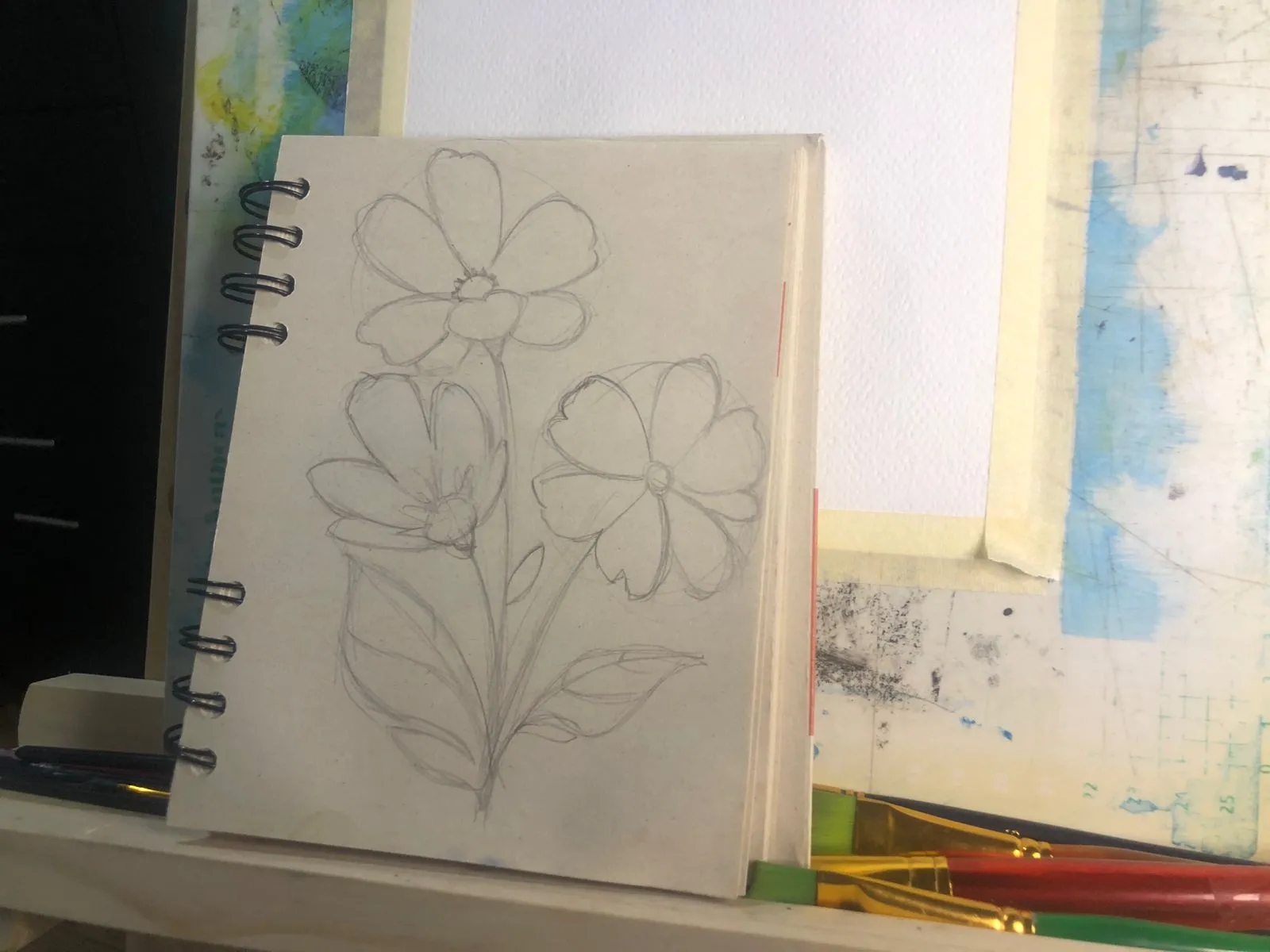
You can sketch directly on the watercolor paper, even though this may leave unwanted marks. That's why I recommend drawing first in a sketchbook or on another sheet, so you have a clear idea of what you're going to do without touching the final sheet.
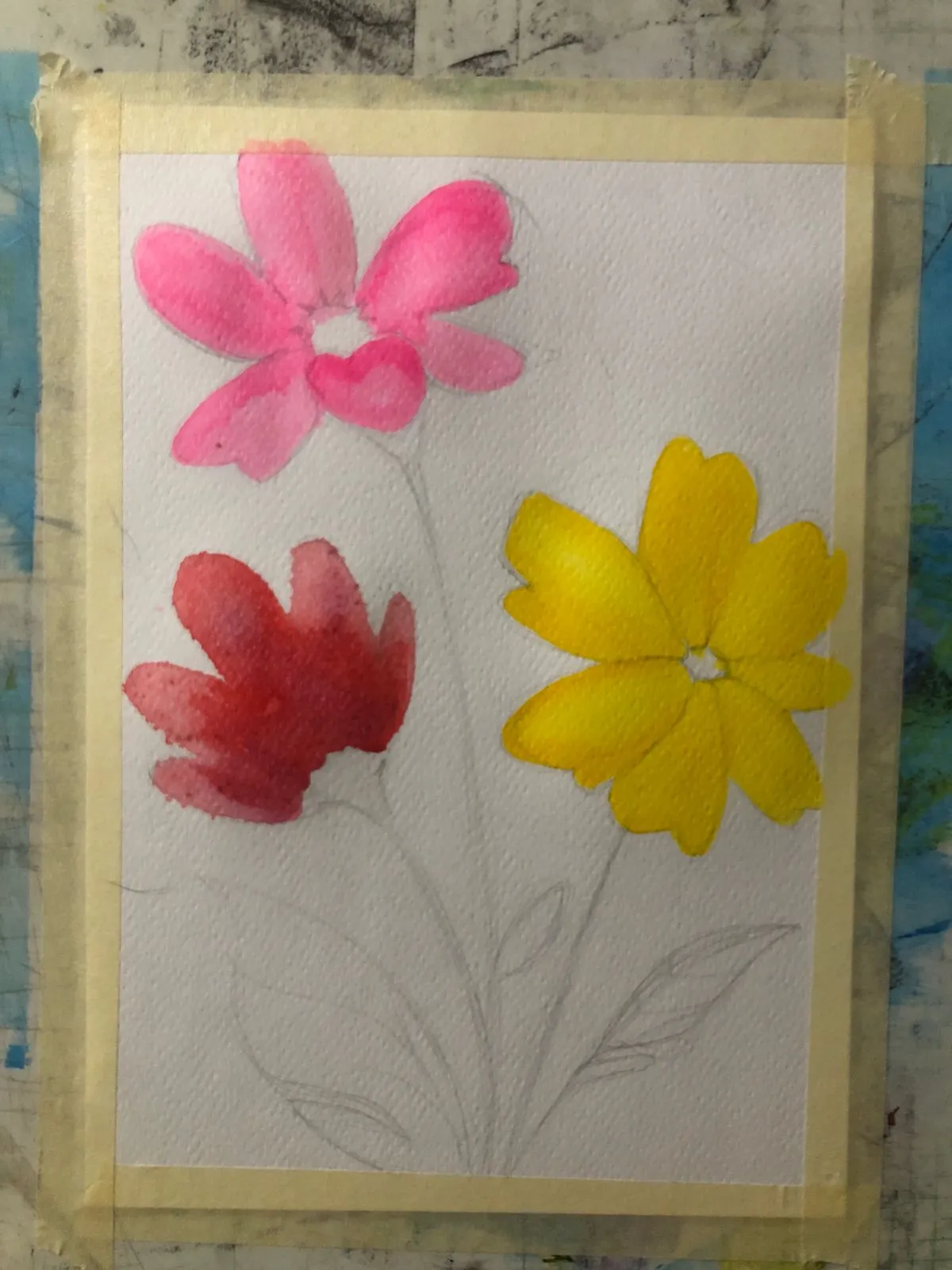
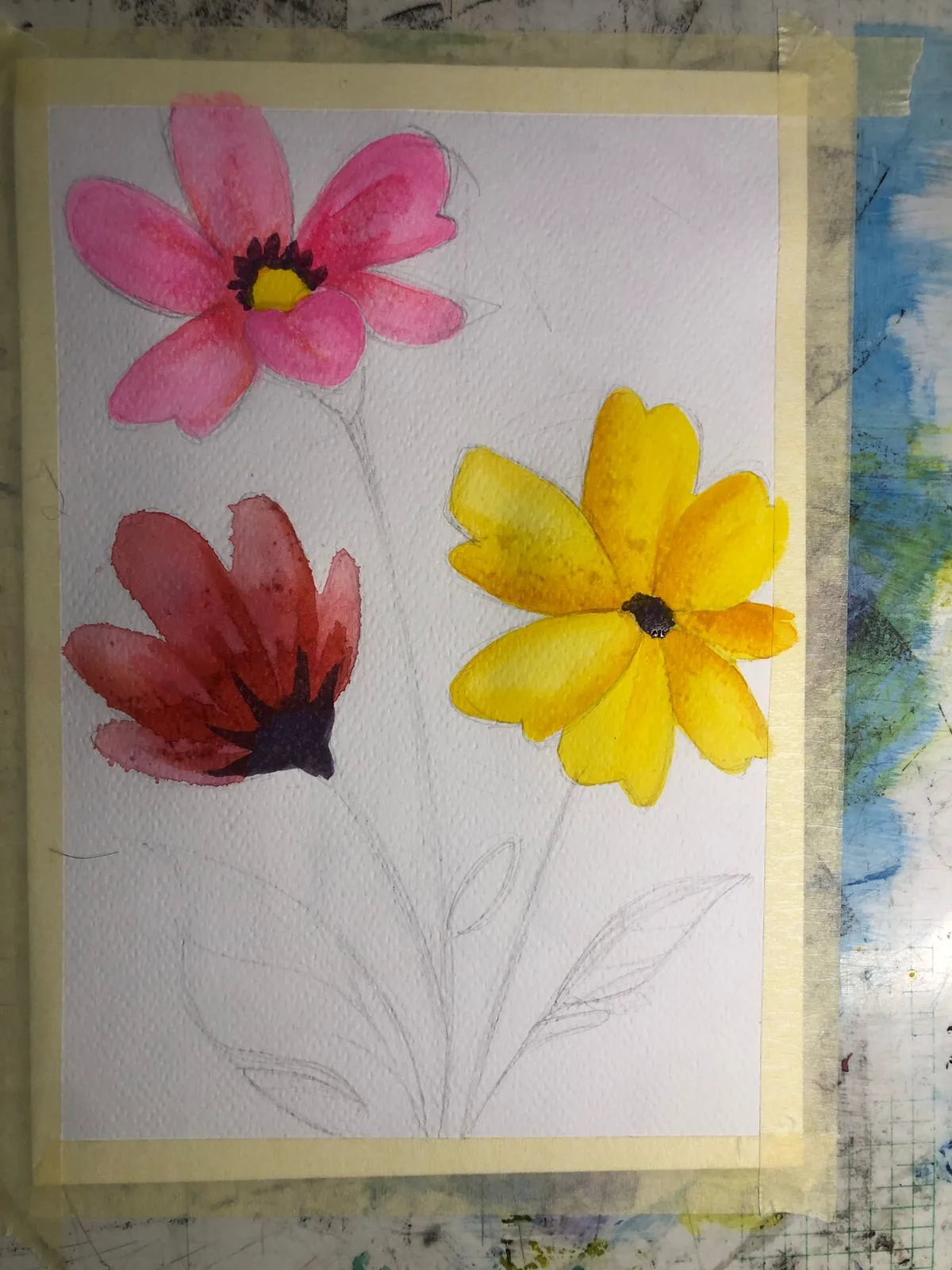
Paint the petals with watercolor
Take your brush and load it with a bit of pigment, making sure not to oversaturate it. Drag it to shape each petal without trying to even out the color; on the contrary, allow some areas to be more concentrated and others more translucent.
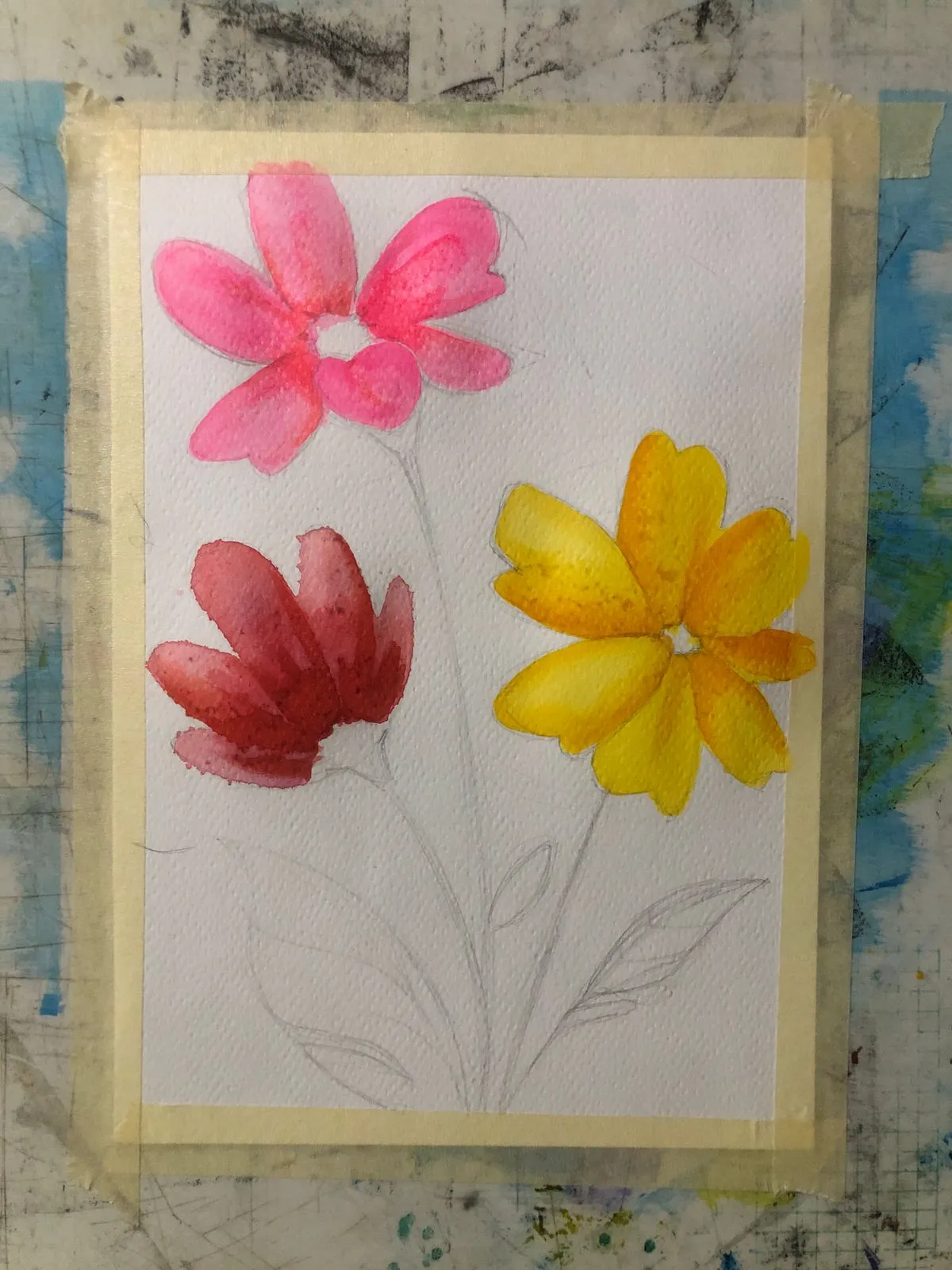
To define the shape of the petals, you can add layers of the same color or a slightly darker shade. However, be careful: you must wait for the first layer to dry completely. This ensures that the layers overlap without mixing.
This technique is called "wet on dry".
If you want to create softer gradients in certain areas, use a brush soaked in clean water to gently blend the color.
When working with watercolor, it is recommended to progress from light to darker tones. That's why we start with the petals of each flower. We will now take a darker color, blue, brown, or even a mix of both, and paint the inner part using dots or small decorative lines.
Paint the stems
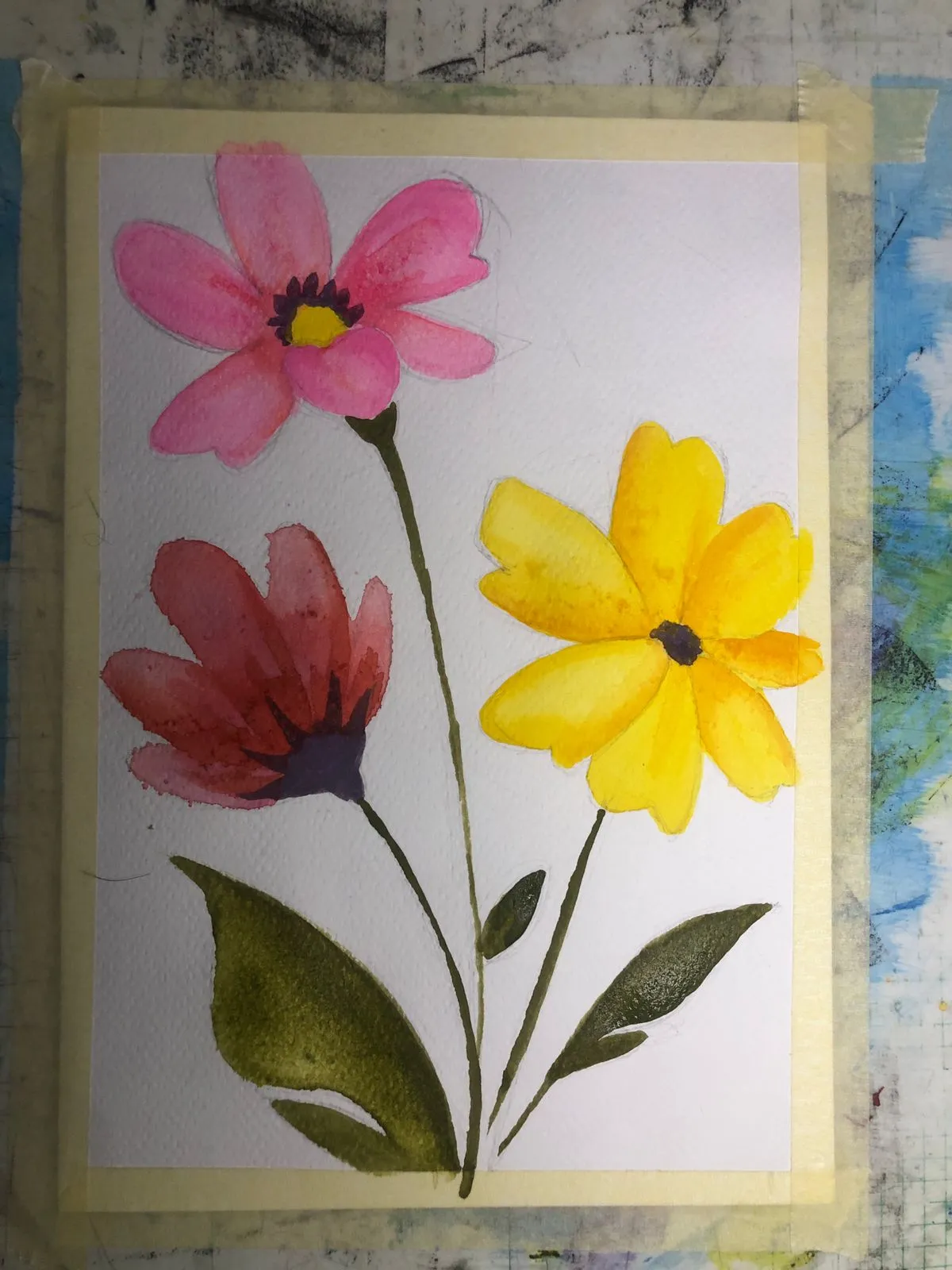
Lines can be very challenging to master when working with a brush. The best advice I can give you is to load a large brush with enough water and pigment to make a single firm and continuous stroke.
If you wish, you can use the wet-on-wet technique to blend multiple shades of green together, thereby avoiding colors that are too flat or dull.
Finalize your painting
To finish off, let's move on to the leaves. At this point, you have already used the "wet on wet" and "wet on dry" techniques: use them here in the same way.
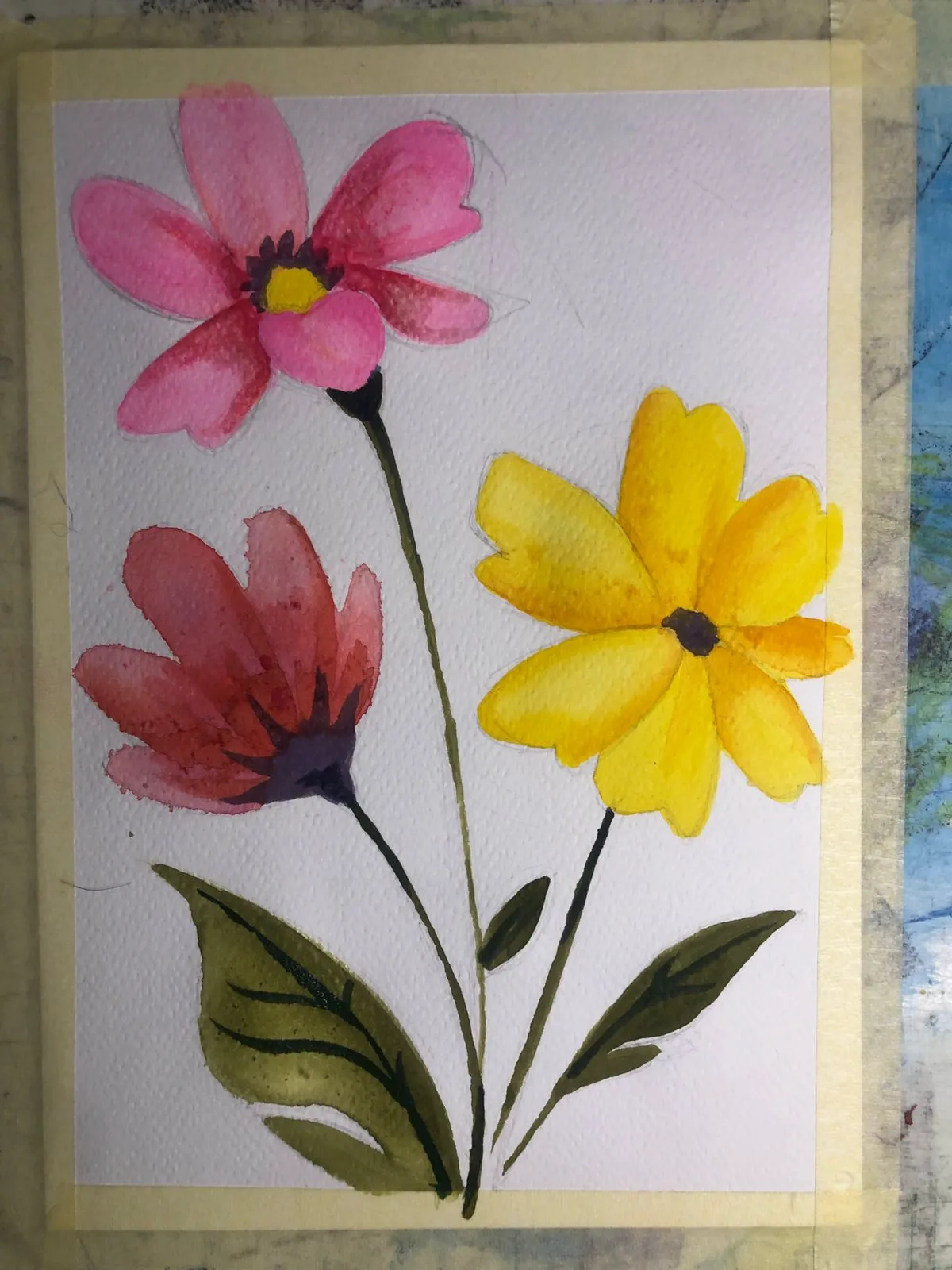
Observe the final result: is it balanced? If necessary, adjust the saturation or the outlines. Once satisfied, gently remove the masking tape by pulling it outward to avoid damaging the paper.

Here, our watercolor painting is complete! We have applied the basic concepts to paint colorful and harmonious flowers. All that’s left is for you to put these tips into practice.
Discussion
No comments yet.