
How to Paint an Abstract Watercolor
Abstraction has always been at the heart of human expression. Long before writing, our ancestors were already translating their thoughts into shapes, lines, and symbols, expressing what they felt as closely as possible, far removed from any faithful representation of the world.
It is with this in mind that we will explore painting today: an abstract watercolor, letting the medium and its unique qualities guide the composition.
The major forms of abstract painting
Throughout modern history, several currents of abstraction have developed. They can be grouped into three main categories:
Shape and color
Some artists have made geometry, composition, and the interplay of colors their main tools of expression. Their works go beyond the representation of what is visible to explore purely formal and chromatic relationships.
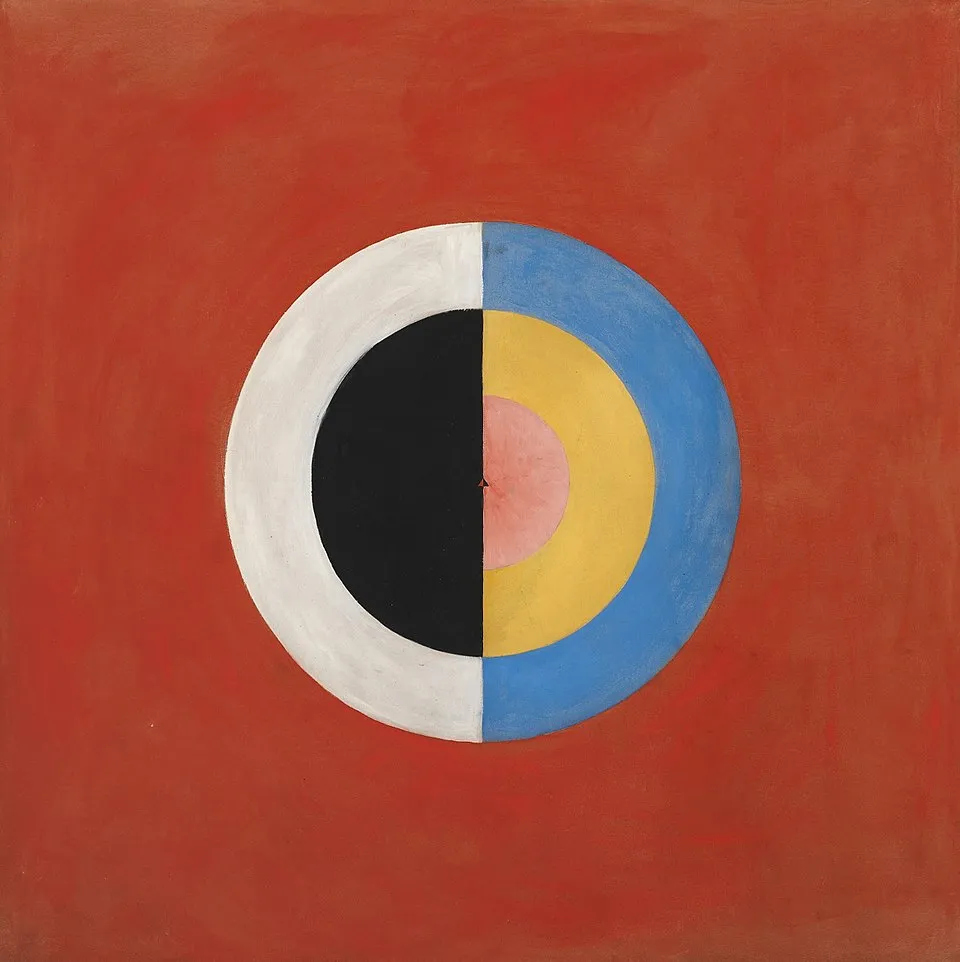
The Swan, no. 17 (Hilma af Klint, 1914-1915)
Abstraction used to convey emotions
Other artists have focused their approach on their inner lives, seeking to give shape to their most intimate feelings. By breaking away from formal conventions, their works reflect the depth of human experience.
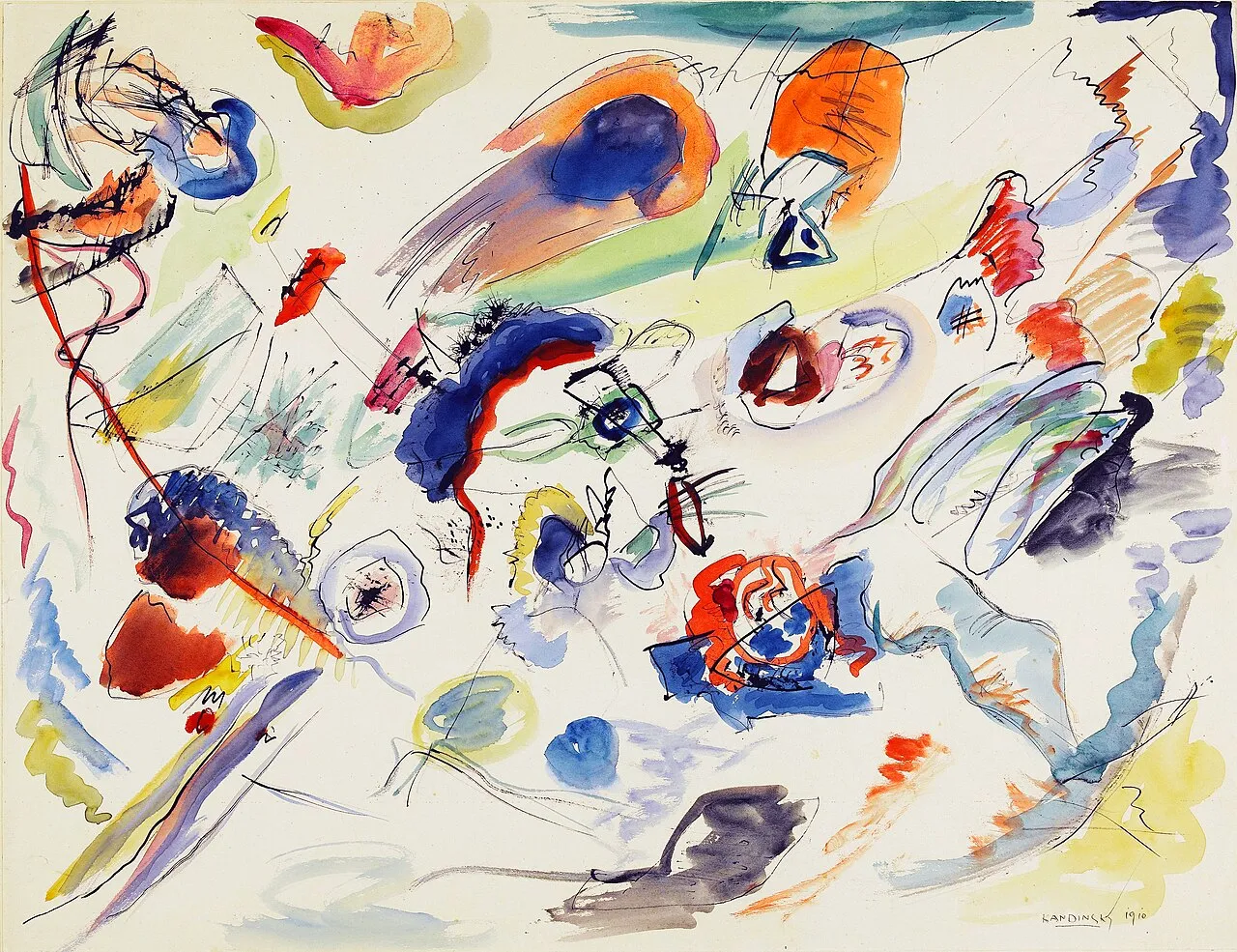
Untitled (Wassily Kandinsky, 1913)
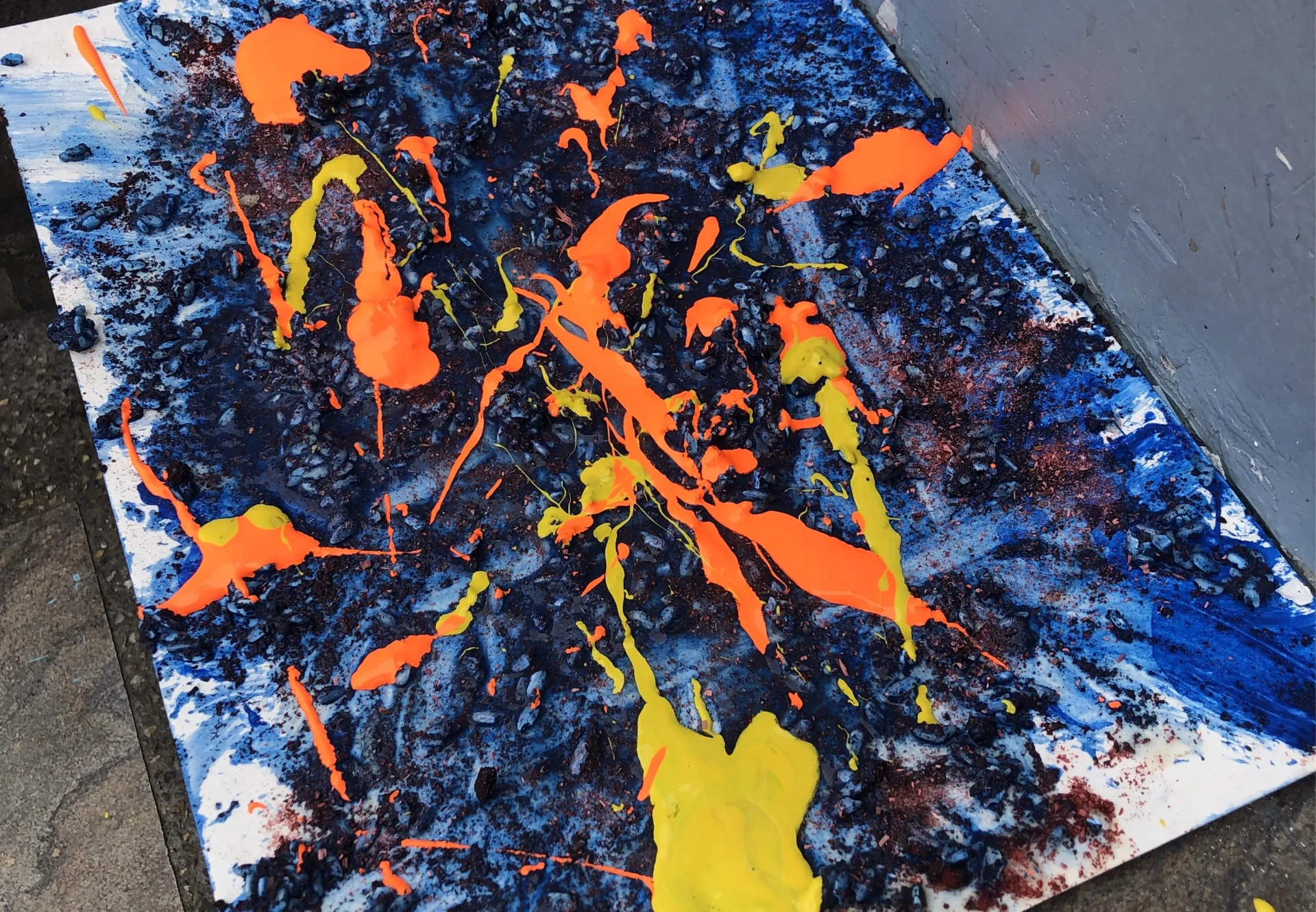
Experimentation as an artistic language
During reflection, some artists began to question the very limits of art: how could they transcend the materiality of a medium in order to gain greater expressive power and conceptual strength? This is where mixed media techniques and major experiments with materials, tools, and methods emerged, approaches that continue to challenge contemporary creation.
Why is watercolor ideal for abstract painting?
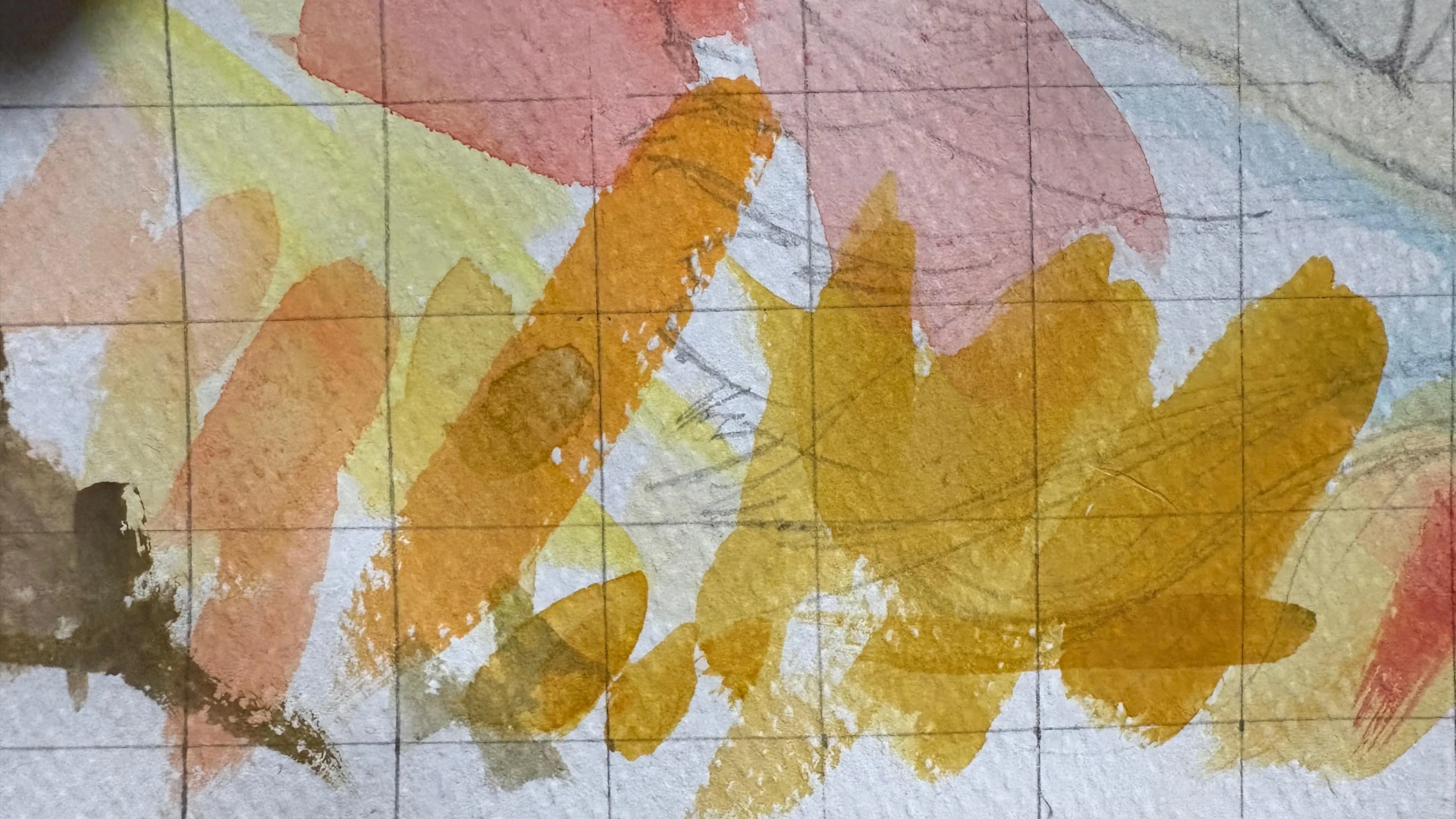
Each medium has its own qualities, and those of watercolor are particularly well suited to creating abstract art. The idea here is to let the material guide the nature of the result. Here are its most valuable qualities:
- Highly fluid gradients.
- Natural blending of colors using the wet-on-wet technique.
- Layering of materials through transparency.
- Incomparable lightness and fluidity.
Equipment
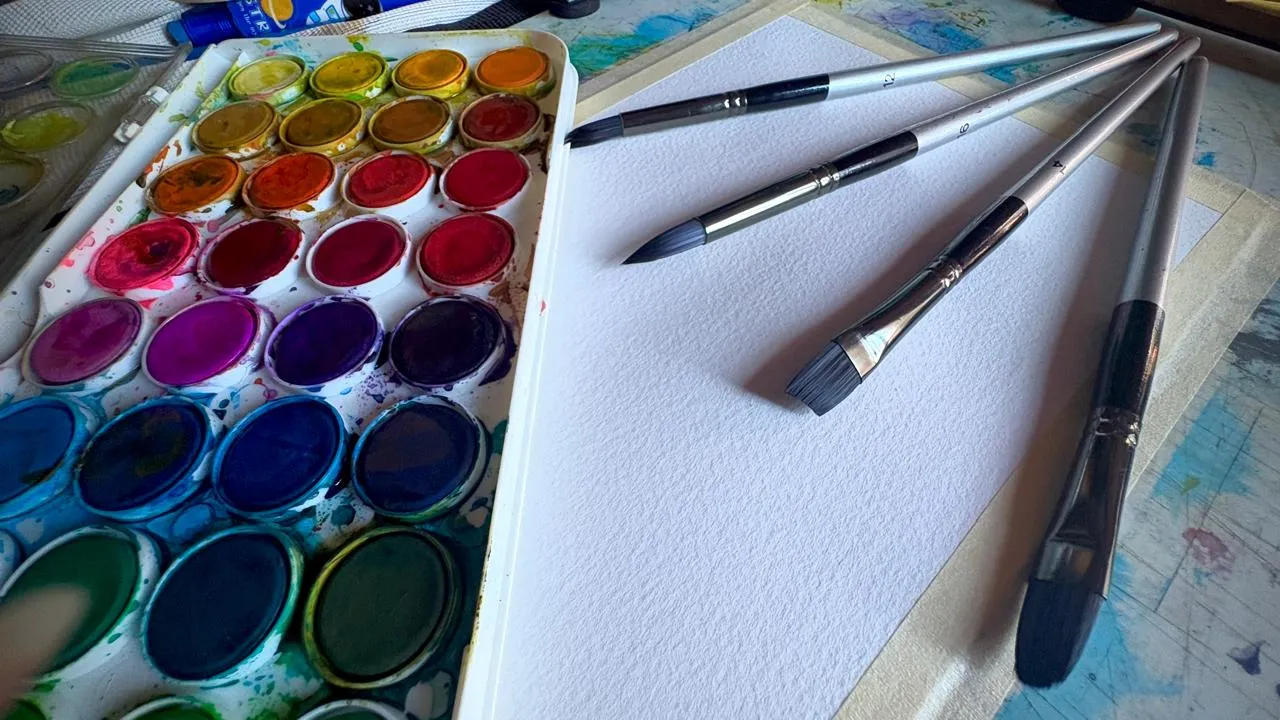
Let’s start by preparing the paper and your workspace. Gather your watercolors, brushes, thick paper (300 g/m² is ideal), masking tape, a container of water, and a cloth for cleaning the brushes. Completely wet your sheet of paper, then immediately secure all four edges to a flat surface; as it dries under tension, the paper will remain perfectly flat.
How to paint an abstract watercolor step by step
Here, forget about the preliminary sketch. Instead, let the work reveal itself as you proceed. Choose a direction: emotion, form, pure experimentation, or dare to explore everything at once. That is the essence of abstraction.
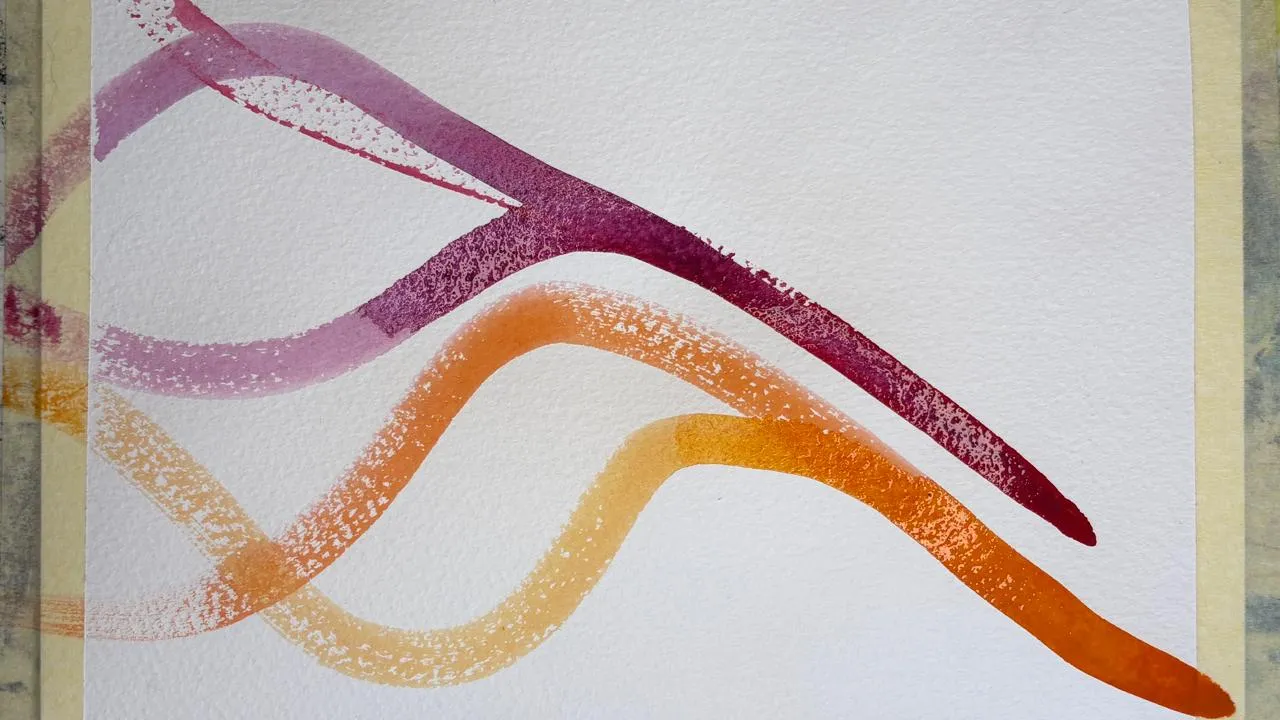
Take your brush and draw a single line. Observe how the pigment deposits along its path, the variation in the moisture of the stroke, until it gradually fades. While the line remains wet, add other tones; similar or contrasting ones. A delicate gesture is enough for the line to absorb a new color and gently blend into the composition.
Paint dots and colored spots with watercolors
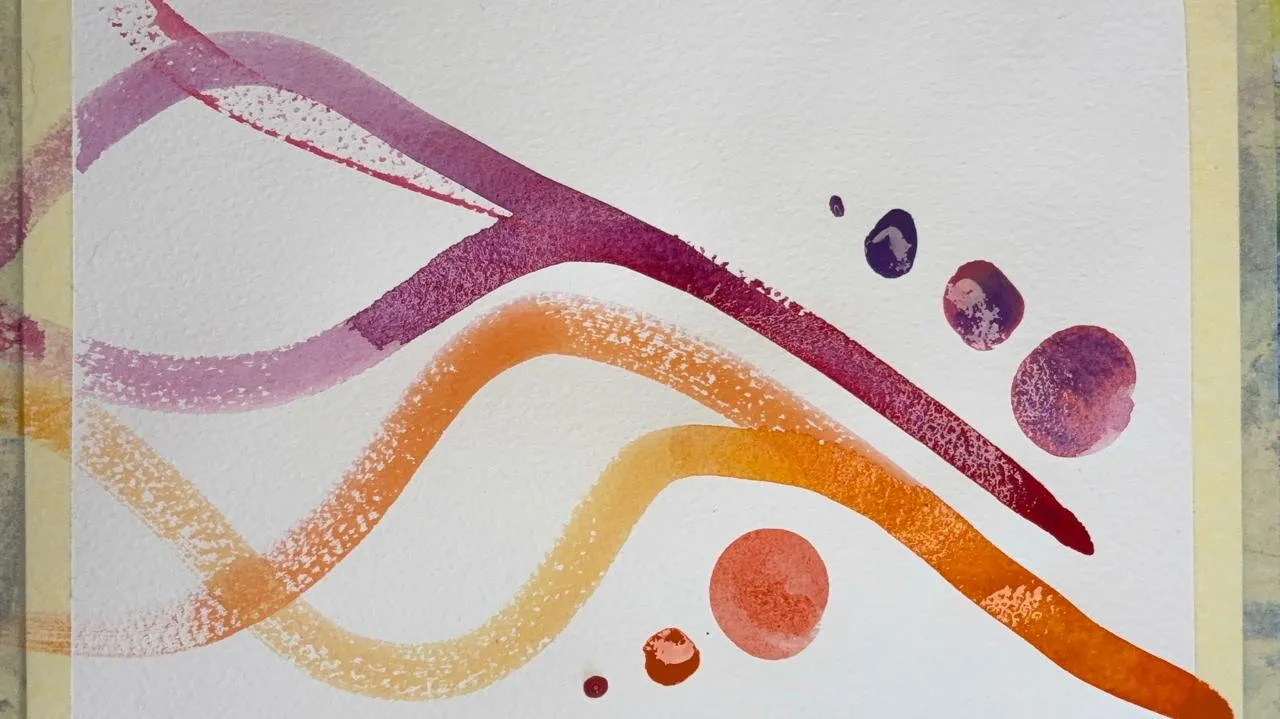
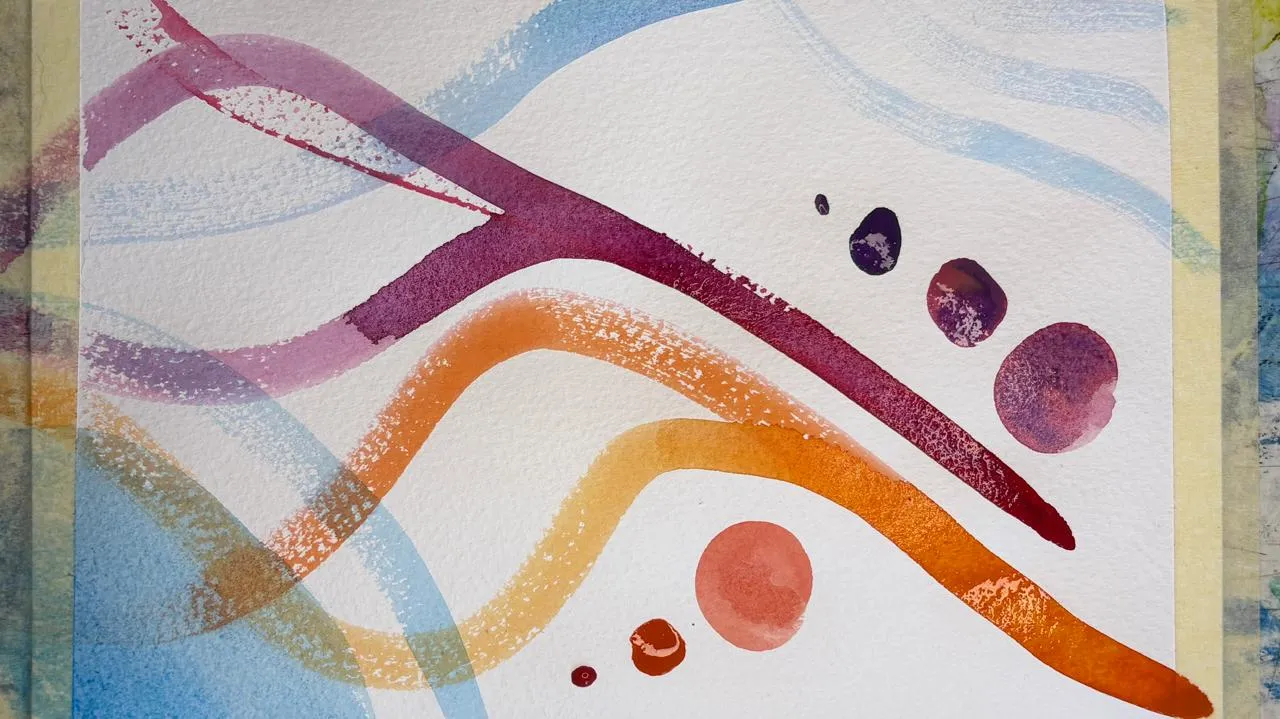
Let’s change the compositional element. Create dots of different sizes, irregular shapes, or more geometric planes; it’s up to you. A few small touches of color will add nuance and bring the surface to life.
Play with transparency
Allow your artwork to dry completely. Then, prepare a wash, a very diluted mixture of pigment and water, and apply it over the entire piece. Where the colors were still blending while wet, they now overlap in translucent layers. The gradients give way to a luminous layering, creating a completely different effect.
Splashes to liven up the composition
Generously load your brush with pigment and gently dab it onto the paper. A shower of small colored drops will bring life to the composition in a spontaneous and vibrant way.
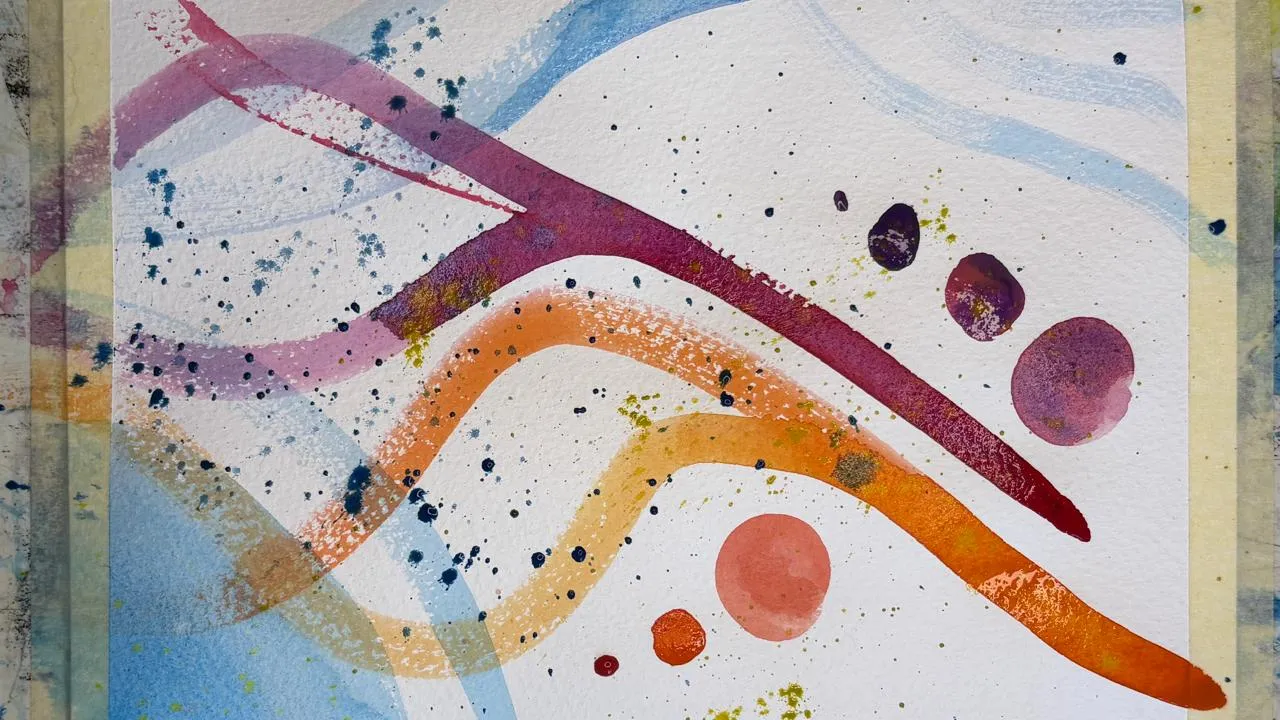
Once the paint is dry, carefully remove the masking tape by peeling it off outwards, edge by edge. You will reveal your artwork framed with a clean and uniform white border, a revelation each time.
Before you stop, explore other avenues: replace the brushes with other tools, observe the marks they leave, let your curiosity guide you. In abstract art, the only limits are those you set for yourself. So dare to create freely.
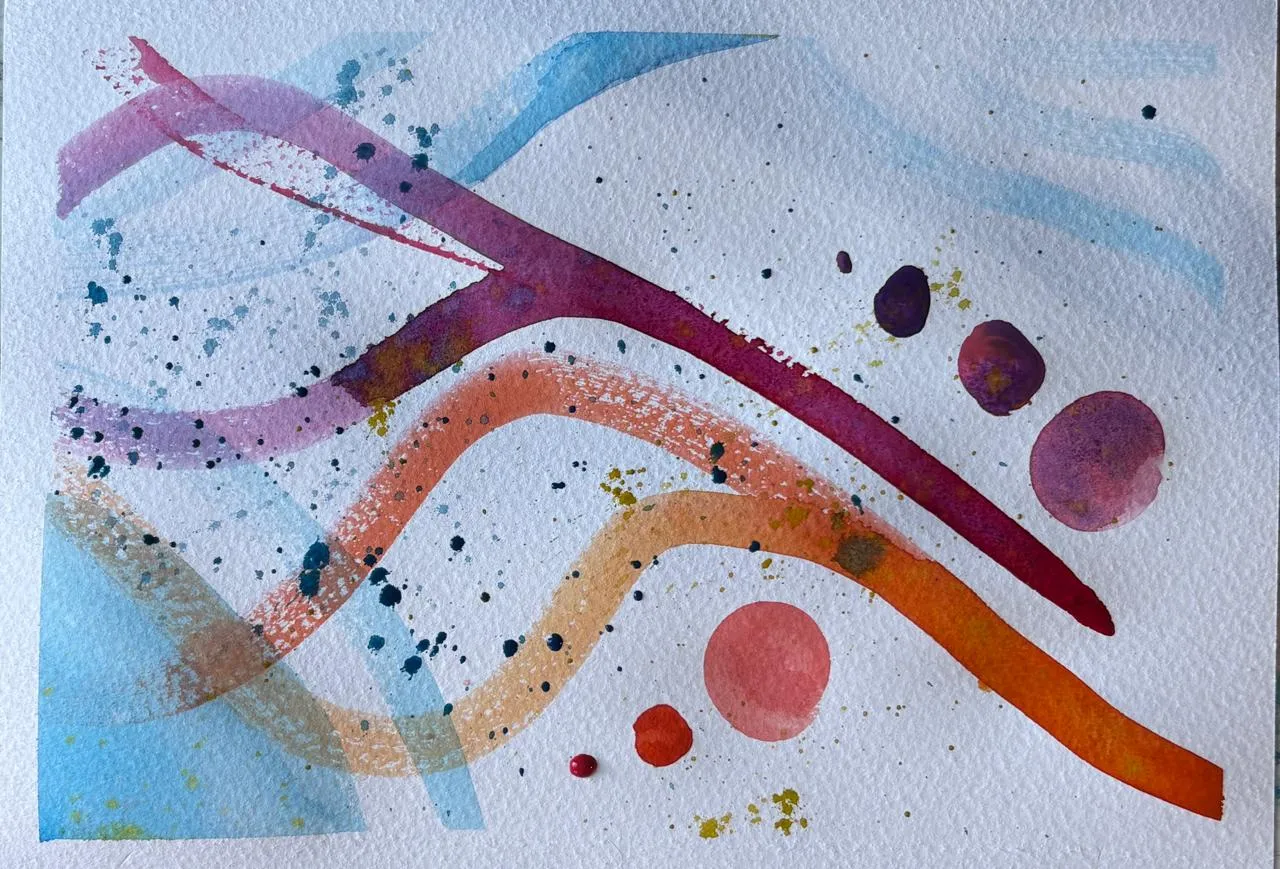
Abstract watercolor can never be fully controlled, and that is precisely what makes it so charming. Each time you take out your brushes, it has its share of surprises in store: a color that spreads differently than expected, two shades that mix spontaneously, or a splash that suddenly adds character to the composition.
Don’t try to control everything. Let yourself be guided by the forms, experiment, and dare to break away from your habits. In abstract art, there are no real mistakes, only discoveries and creative choices.
I hope this article has inspired you to pick up your brushes and get started.
Discussion
No comments yet.