
How to Paint a Character in Watercolor
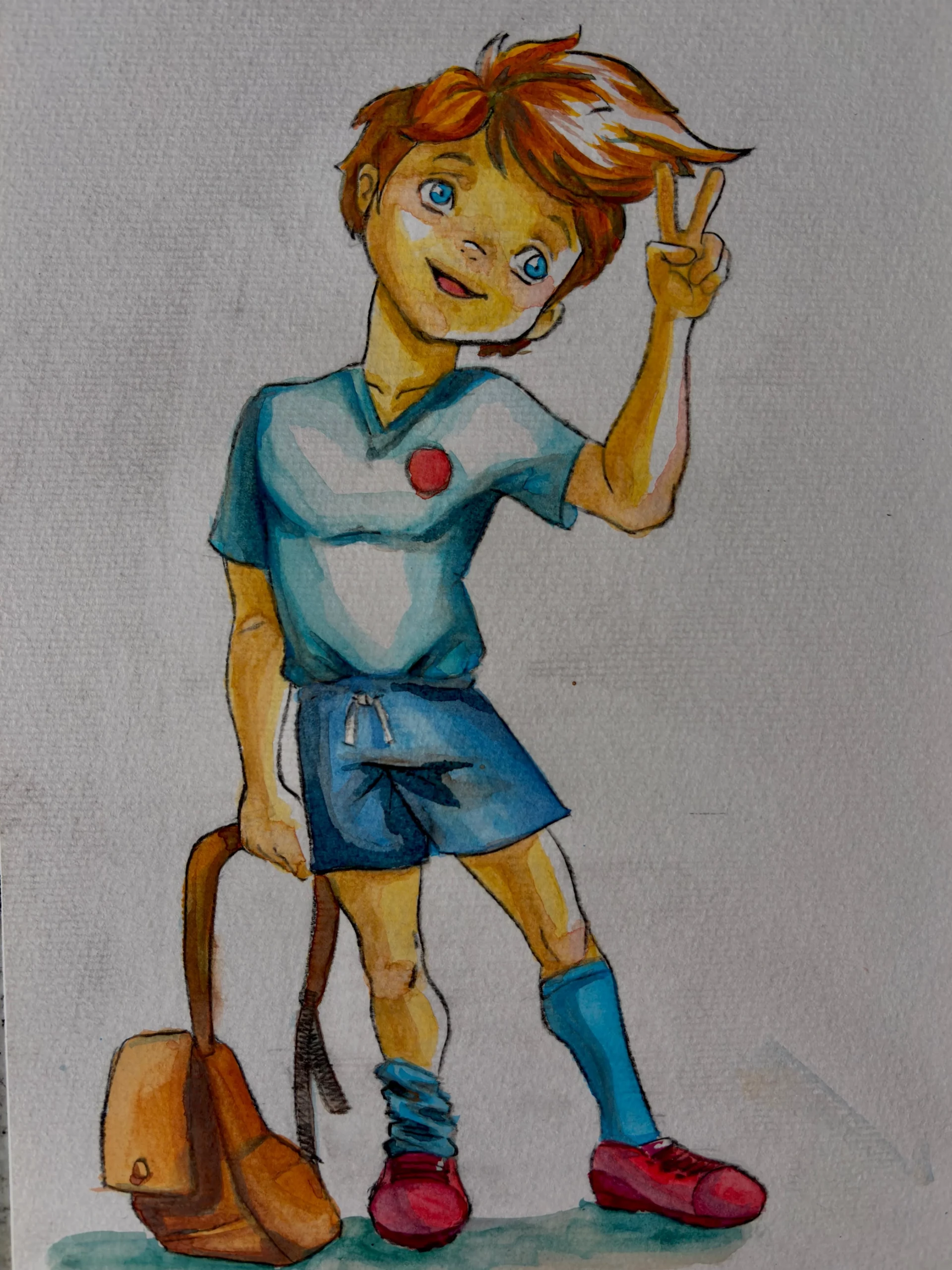
Hello and welcome to this new article dedicated to watercolor! Today, we're going to explore how to use this technique to add color to a character.
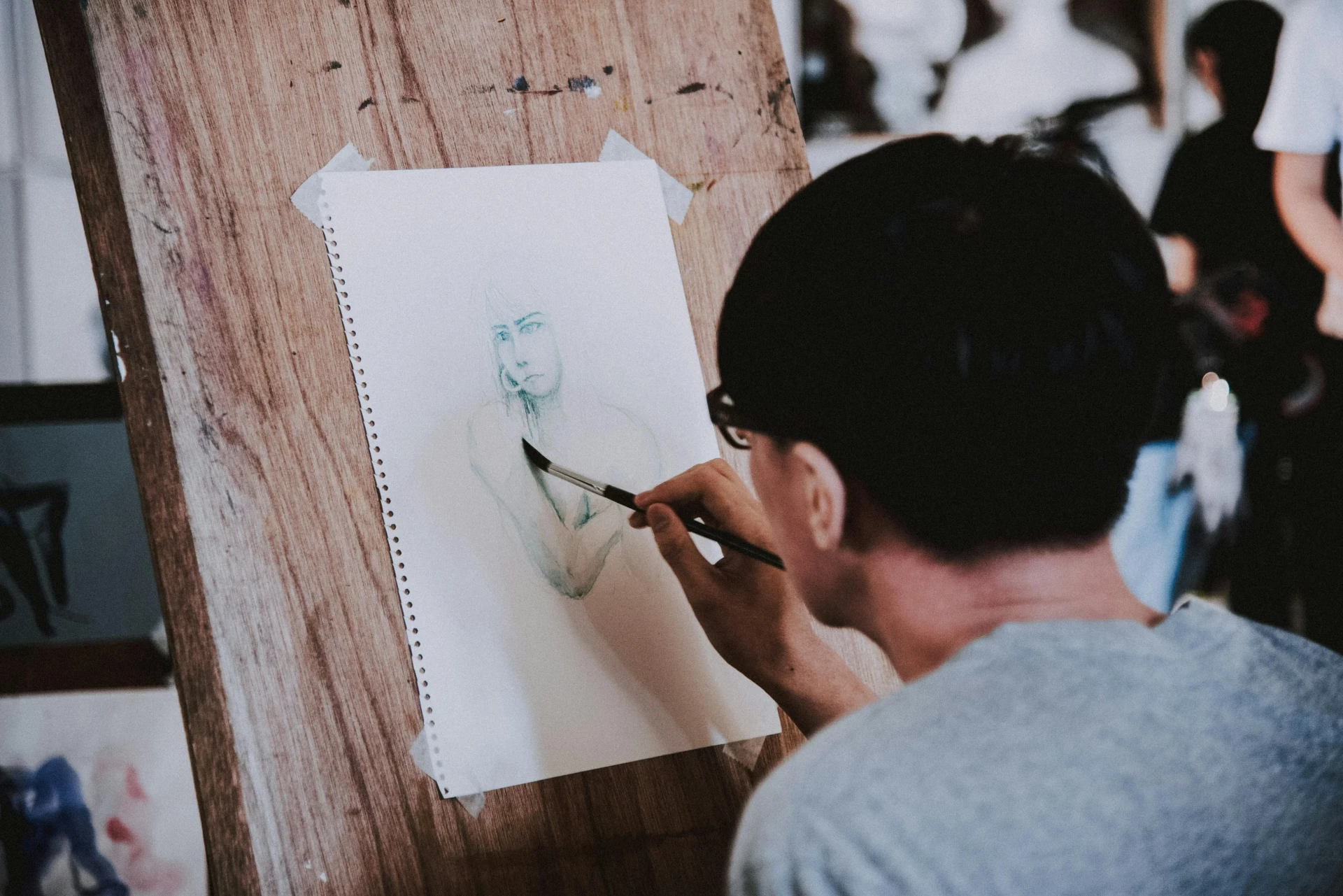
Concepts of watercolor
If you have ever worked with watercolor, you undoubtedly know about the different qualities of this medium, as well as the various techniques that allow you to apply it. Here are the concepts that we will use in this exercise:
- Color wash to apply the base shades.
- Wet on dry for shadows and contrasts.
- Layering complementary colors to darken the tones.
- Preservation of white space on the paper for highlights and reflections.
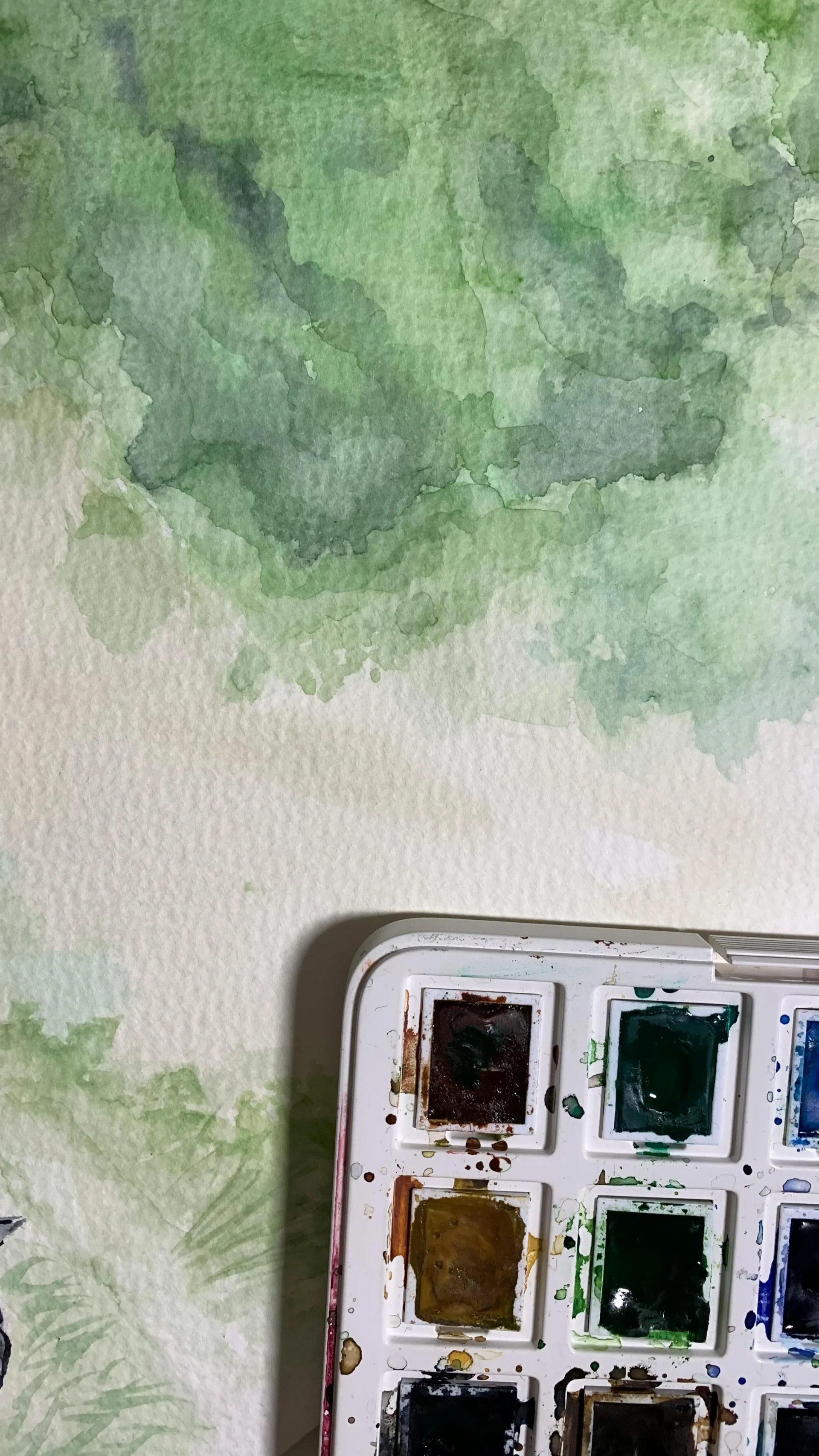
How to successfully draw a character
There are many reasons to draw a character: conducting an anatomical and color study, designing the protagonist of a comic or animation project, or simply creating fanart of your favorite series. Here are some considerations to keep in mind when creating a character from scratch and giving them real visual impact.
Dynamic poses
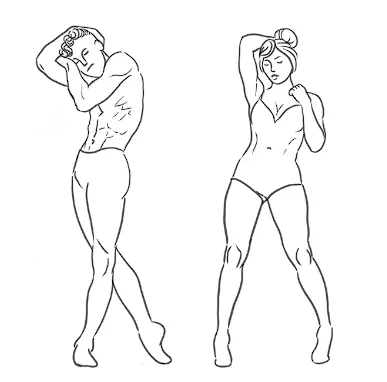
As an artist, I recommend you set aside rigid poses and instead opt for more dynamic poses inspired by photography, creating diagonals with the horizontal axes of the body, namely the shoulders and hips. You can also play with balancing weight: for example, by having the body rest on one leg, placing your character sitting, or leaning against a wall.
Another way is to use hands to create identity: crossed arms for a serious person, or arms raised to the sky for someone outgoing, for example.
A suitable color palette
We often hear about the psychology of colors, now is the right time to put it into practice. Identify the colors that define the identity of your character and incorporate them into your design.
Be careful not to overdo it, however: opt for a limited palette of no more than four colors. Choose a main color, add its opposite color to create contrast, then one or two additional shades to balance the palette.

Accessories
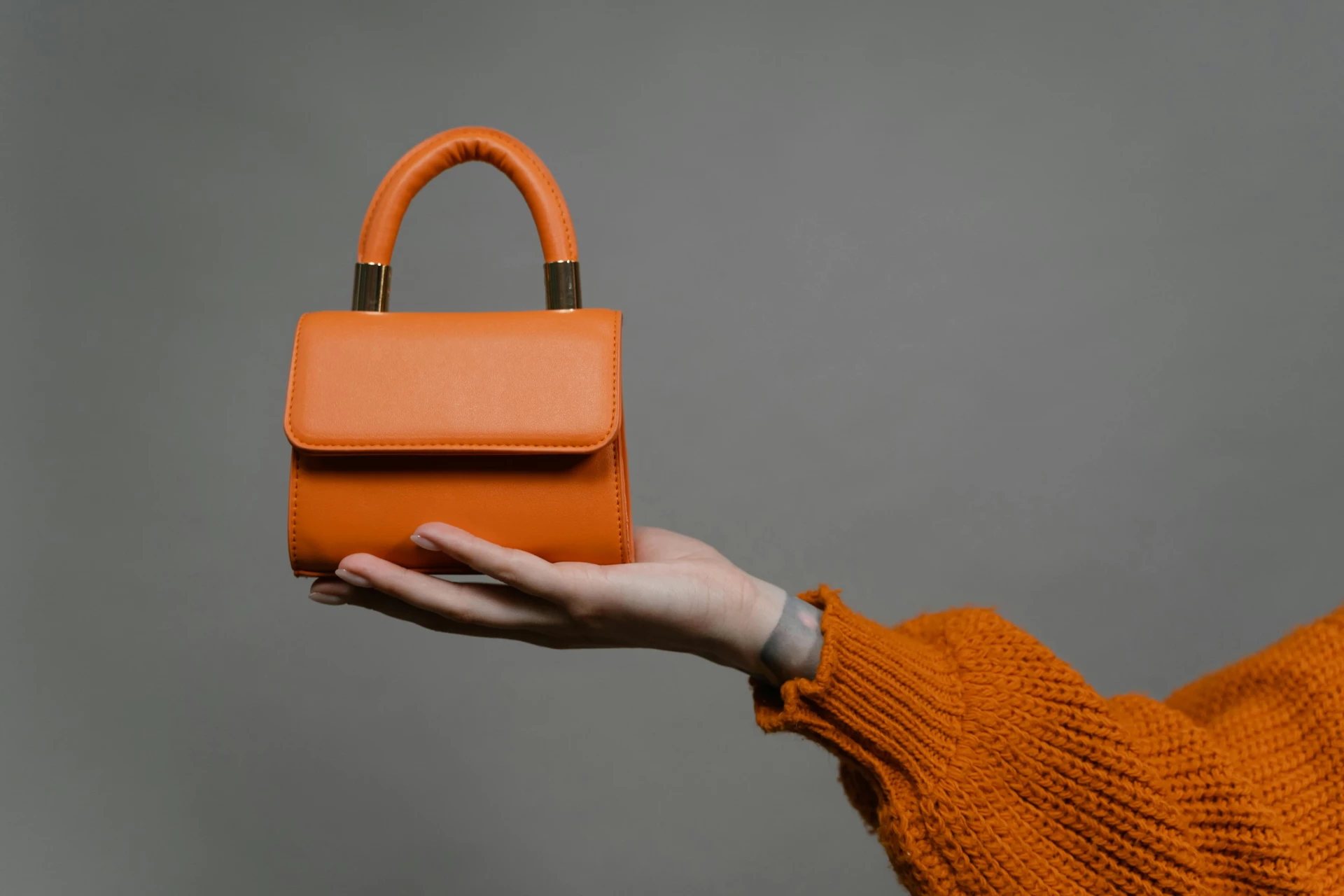
Accessories are essential, both in fashion and in illustration. They enable you to give your character an element to interact with and reinforce their intention: a sword, a suitcase, or even a pet, for example.
All these elements enrich the composition and make it more lifelike and attractive.
How to paint a watercolor character step by step
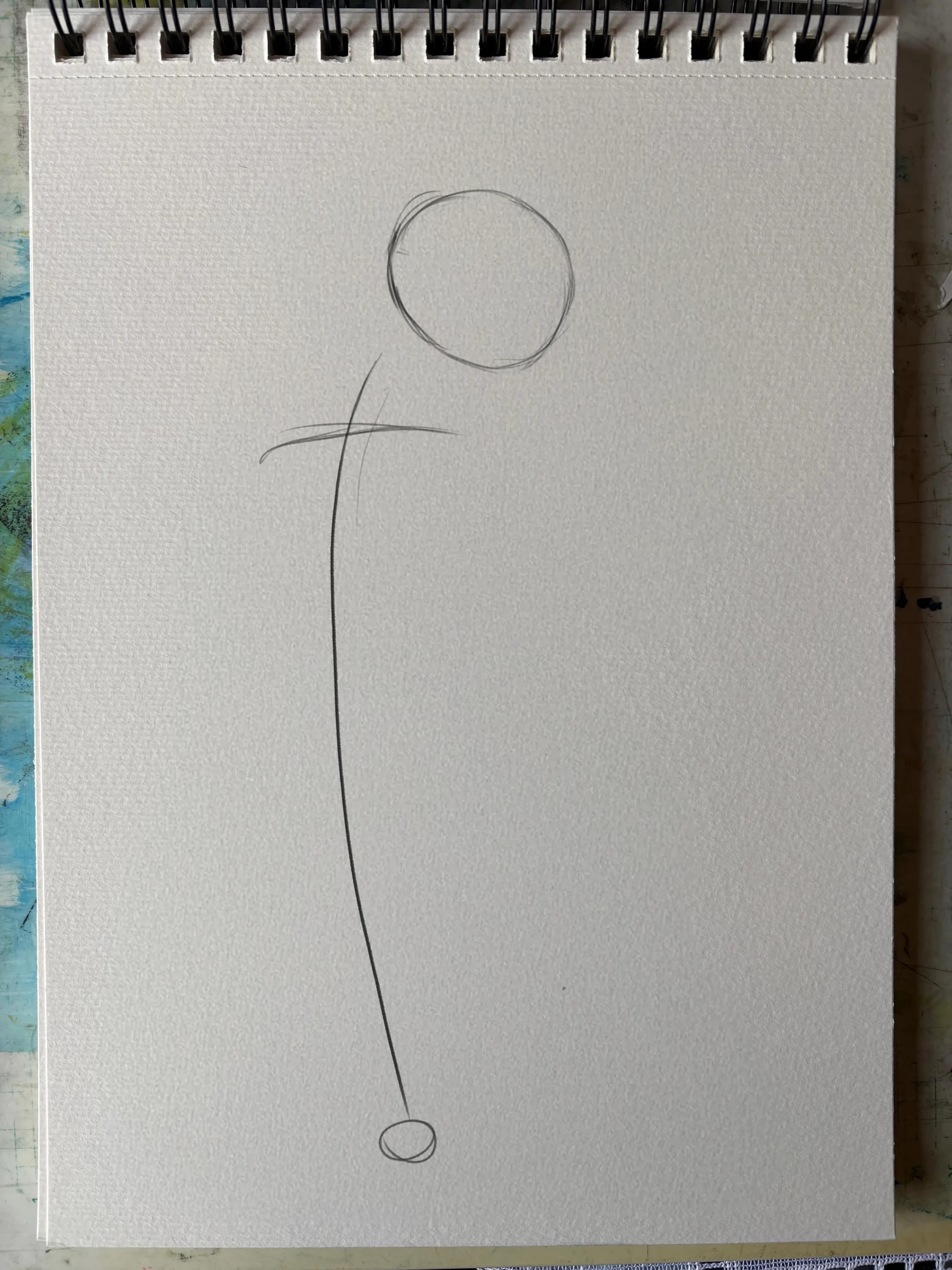
The first step is to define a line of action that determines the pose of the character. Draw a strong confident line to provide the impulse for movement.
Then add a horizontal axis at the top to indicate the tilt of the torso. Finally, place a circle for the head, slightly tilted to reinforce the position.
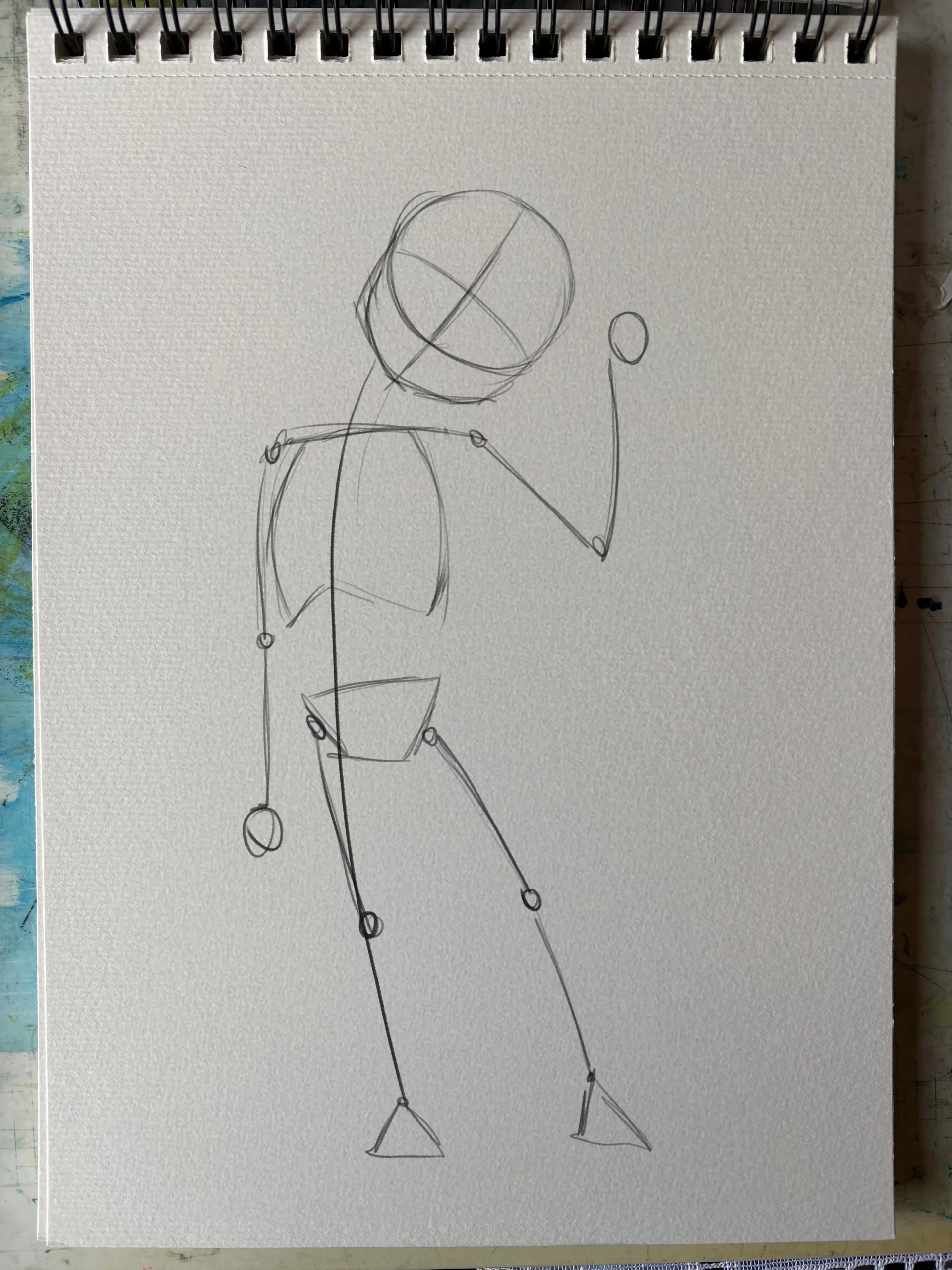
Based on the previous guide lines, you can position the limbs following the principles mentioned above. Feel free to vary the position of the arms and legs and play with the weight distribution to add more dynamism to the pose.
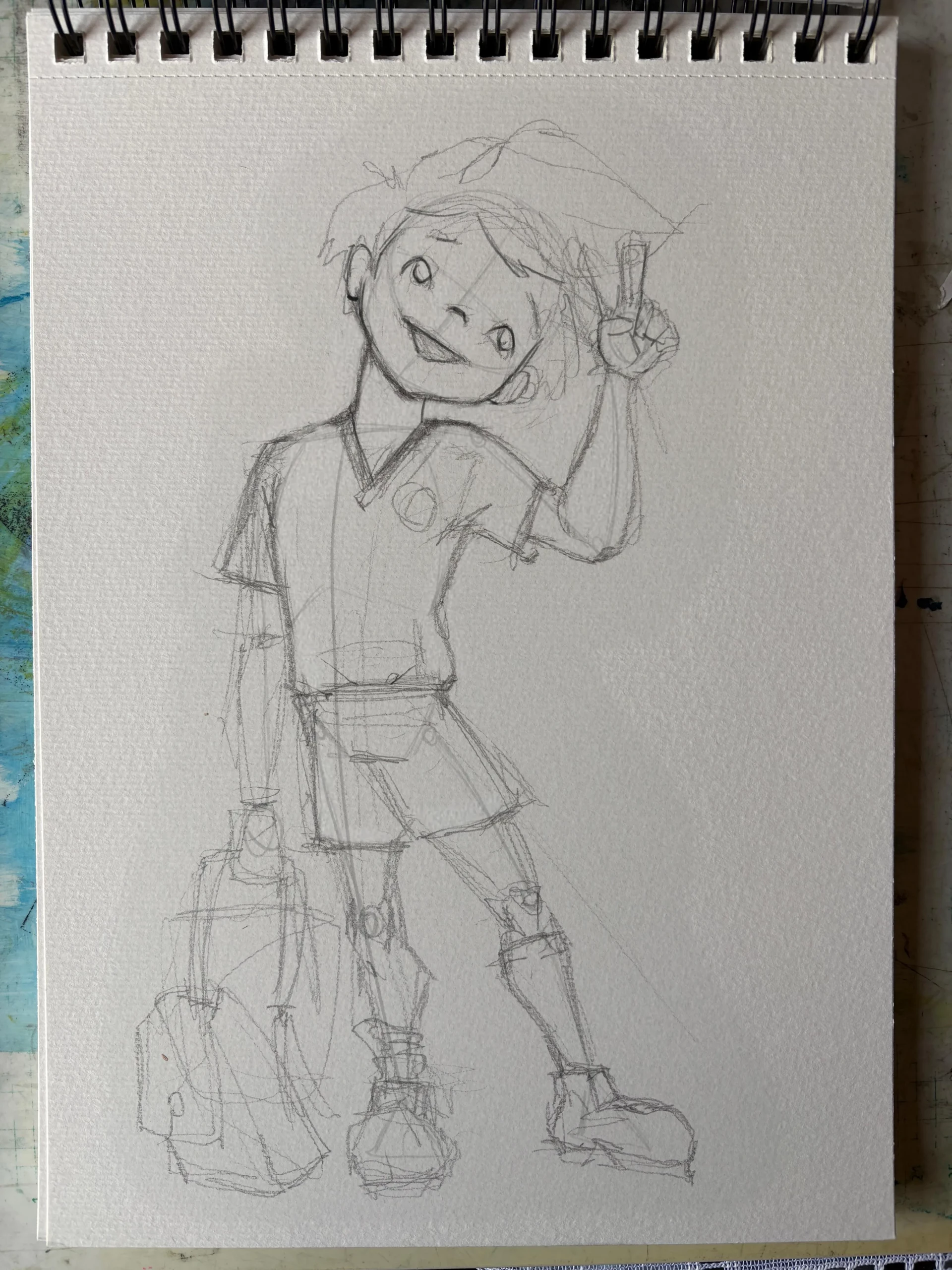
Now that the line of action and pose are in place, you can move on to volume and define your character's clothing.
For a more natural result, let your hand move freely: step back from the paper and use your wrist and shoulder to bring more life to your strokes.
You can now choose between two options: either reduce the excess graphite using a kneaded eraser to preserve the outline for later, or create a line drawing with a water-resistant medium such as black chalk or India ink, which will not be affected by the watercolor.
Ensure you use strong lines, with variations in intensity, to give dynamism and avoid a flat rendering. Use thicker strokes for the main elements, and finer lines for details and delicate parts.
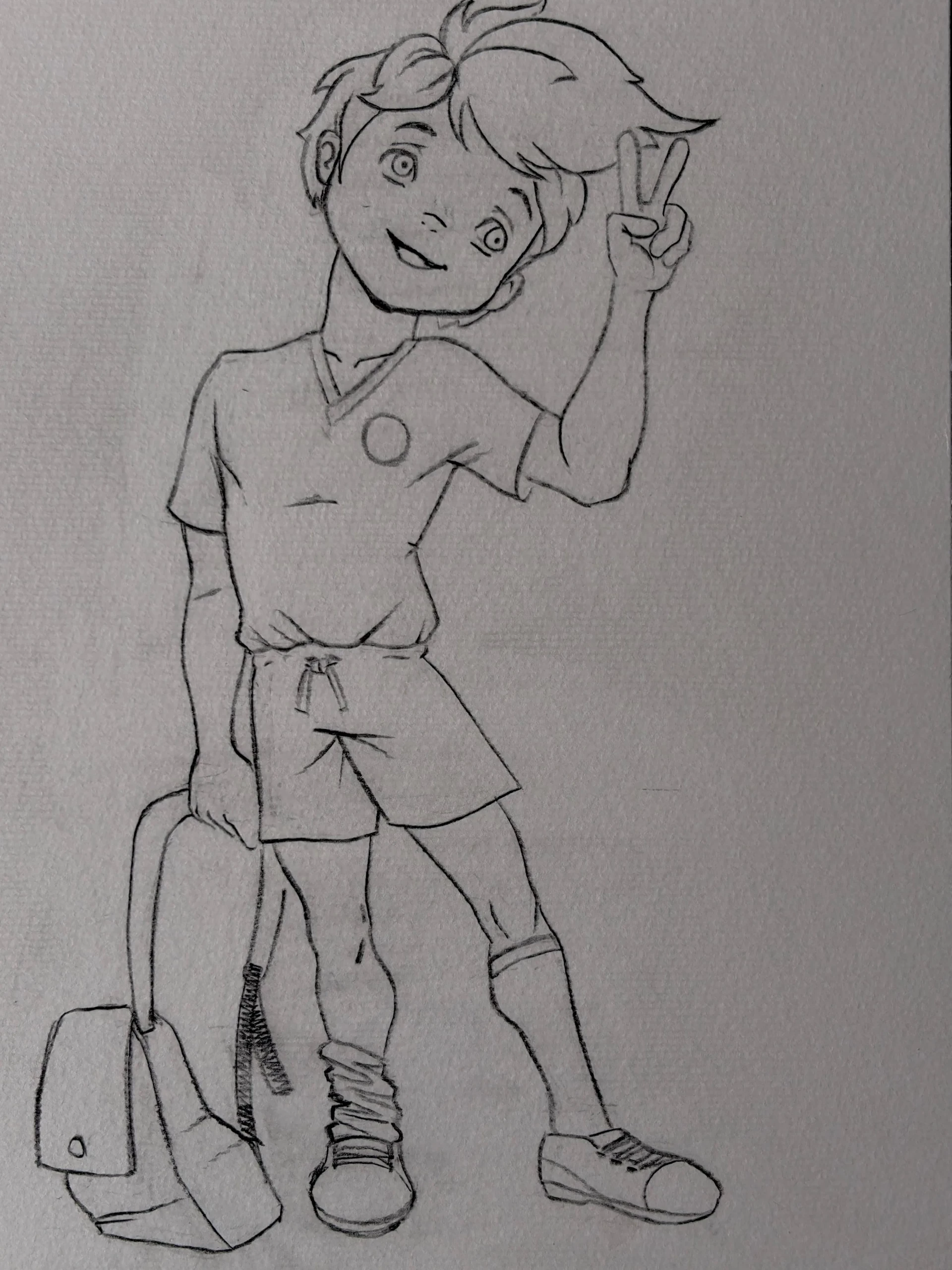
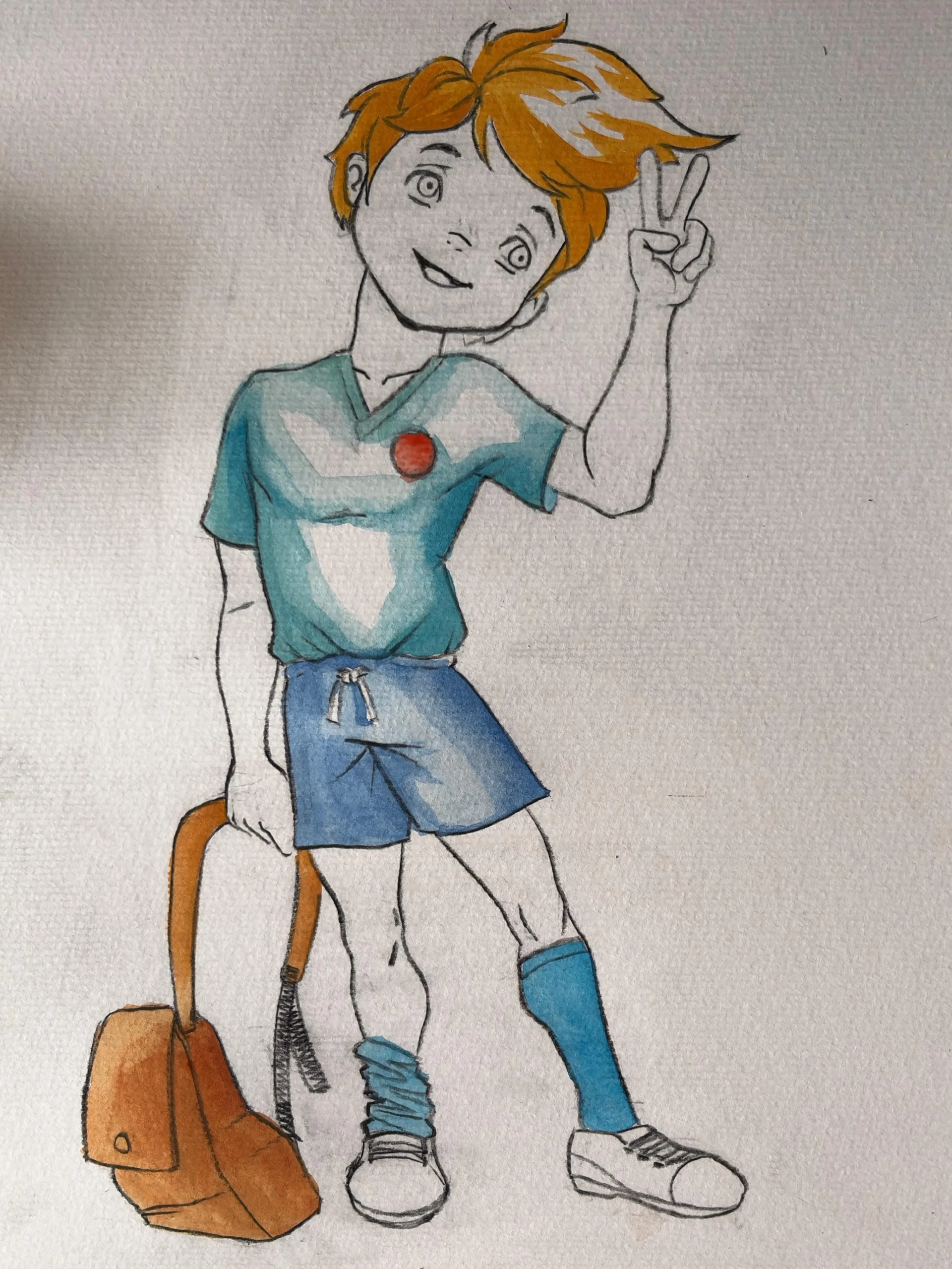
Apply watercolor paint
For this model, we will use a simple palette, with blue as the main color, applied to the clothing.
The orange will bring contrast, particularly in the hair and personal object. Finally, the flesh tones will balance the overall picture, with a touch of red to enhance the warmth of the colors.
Apply the colors with a fine brush in order to precisely follow the lines when necessary, but also to work on narrow areas without difficulty. Remember to preserve the areas of light: avoid covering them, even with a very light shade.
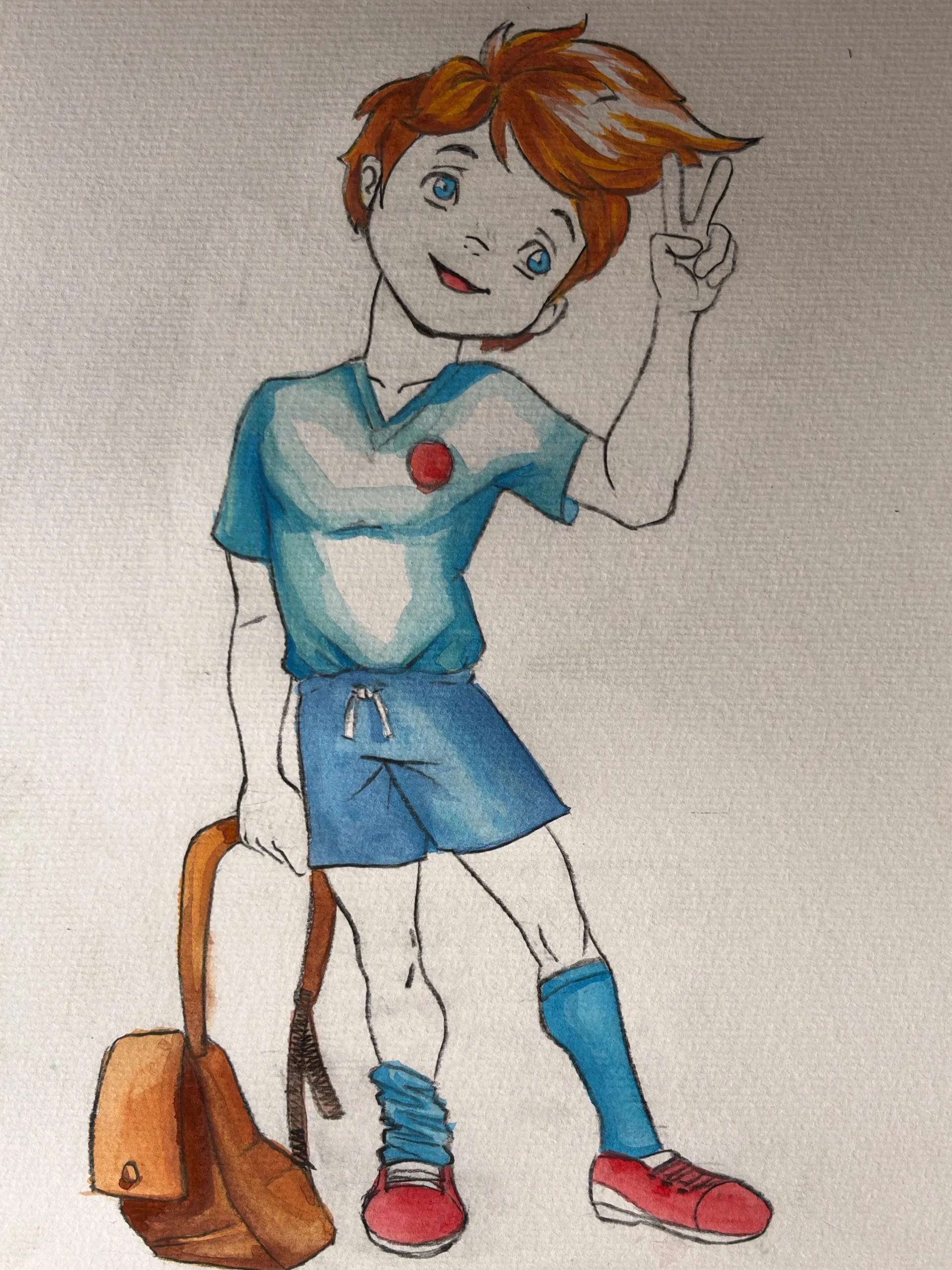
Before moving on to skin tones, we will enhance the depth and intensity of the base colors. Identify the areas of cast shadow, then, once the first layer is completely dry, apply a new layer with a slightly darker, similar shade.
For instance, if your shirt is in light blue, you can use a slightly stronger sky blue, then gradually darken it with royal blue, saving ultramarine for the darkest areas. For the orange, you can shift towards red, then add a few touches of brown for the shadows.
Add skin color to the character
Skin color represents an infinitely vast spectrum that requires rigorous study. However, generally speaking, a Caucasian complexion can be achieved with a pink base, made from red and white, then a touch of yellow. The other option is to use an orange tone and reduce its saturation with white. In this case, we will opt for the second option in order to obtain a warmer shade.
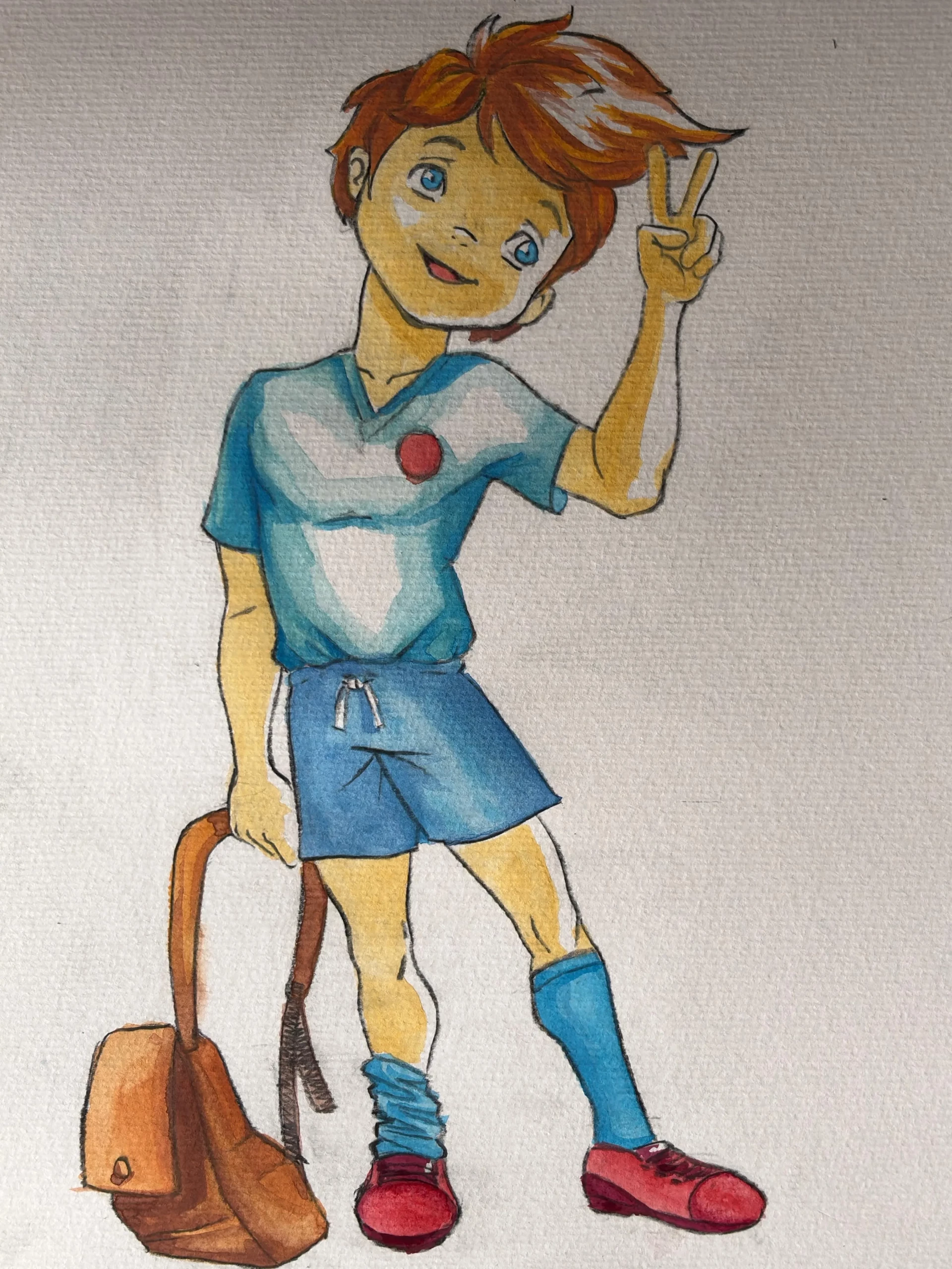
To darken the skin, we will use the same approach of close colors, with a more saturated orange for the general shadows, then an intermediate brown tone in the darkest areas. To create warmth, we can apply a transparent red on the cheeks, nose, elbows, and knees.
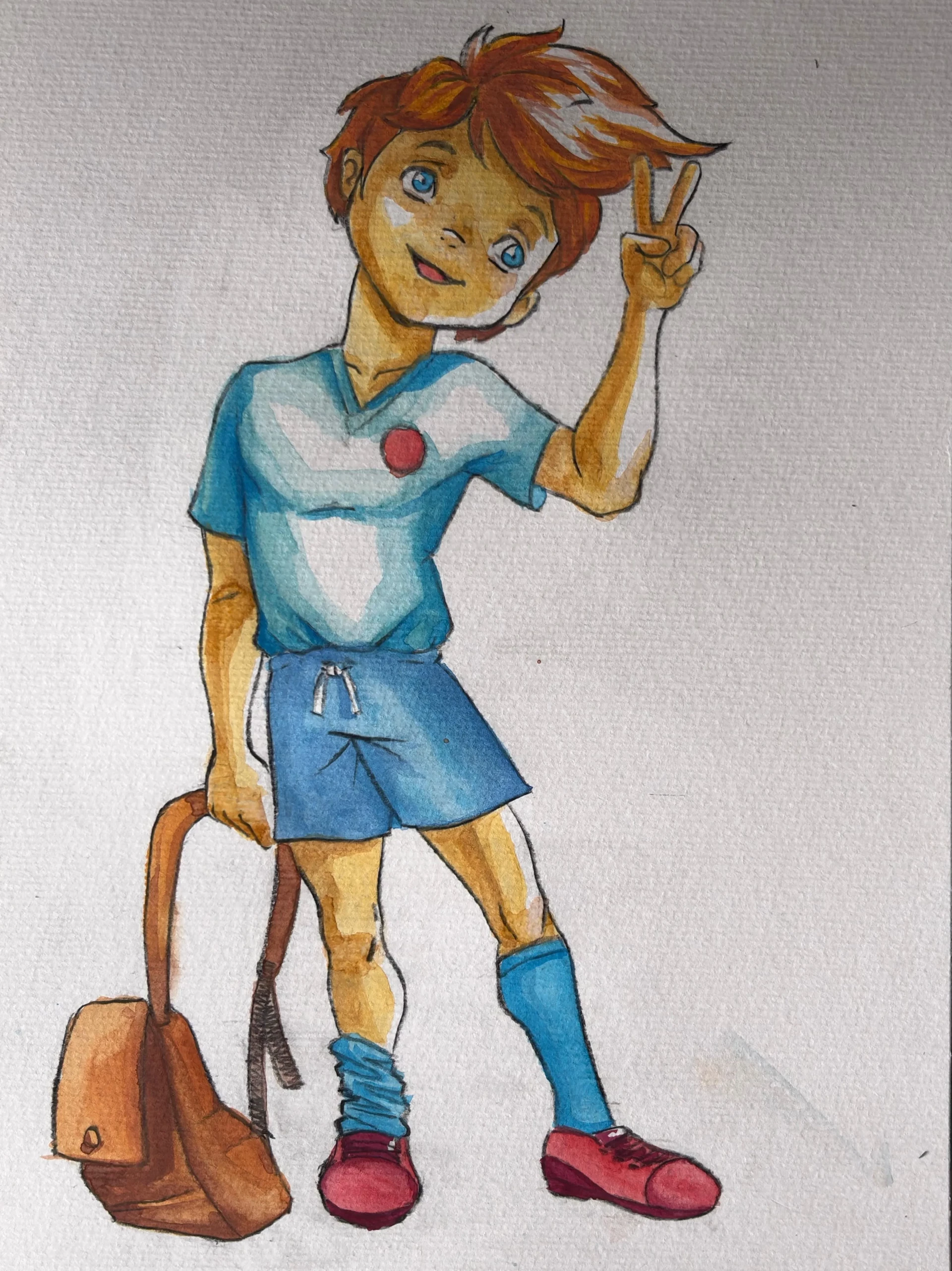
We finish by using complementary colors to enhance the shadow areas. This can be done in two simple ways.
The first involves applying a very light wash of the complementary color directly to the areas to be darkened. This allows us to not only darken the shade, but also to create a subtle and natural color variation.
The second method involves starting with the base color, then adding a small amount of its complementary color in a wash. The mixture then naturally darkens, and you can apply it to the desired areas.
Ideally, use these two approaches to achieve a richer and more nuanced result.

And here is our finished watercolor character! I hope you enjoyed this tutorial.
Discussion
Thank you for these very detailed and clear explanations. However, I have a small reservation: we work with watercolor and you talk about pink made with red and white! Similarly, orange lightened with white! In watercolor, we use water to lighten, not white.
Hello Stormo!
Indeed, by diluting the pigment in water, one achieves a more transparent texture which, on the white of the paper, appears lighter. However, one can also create pastel shades by using white pigment: this is ideal for achieving the flesh tones we needed for our character.
Thank you for this very comprehensive tutorial full of helpful tips.