
How to Paint a Portrait of a Woman in Watercolor
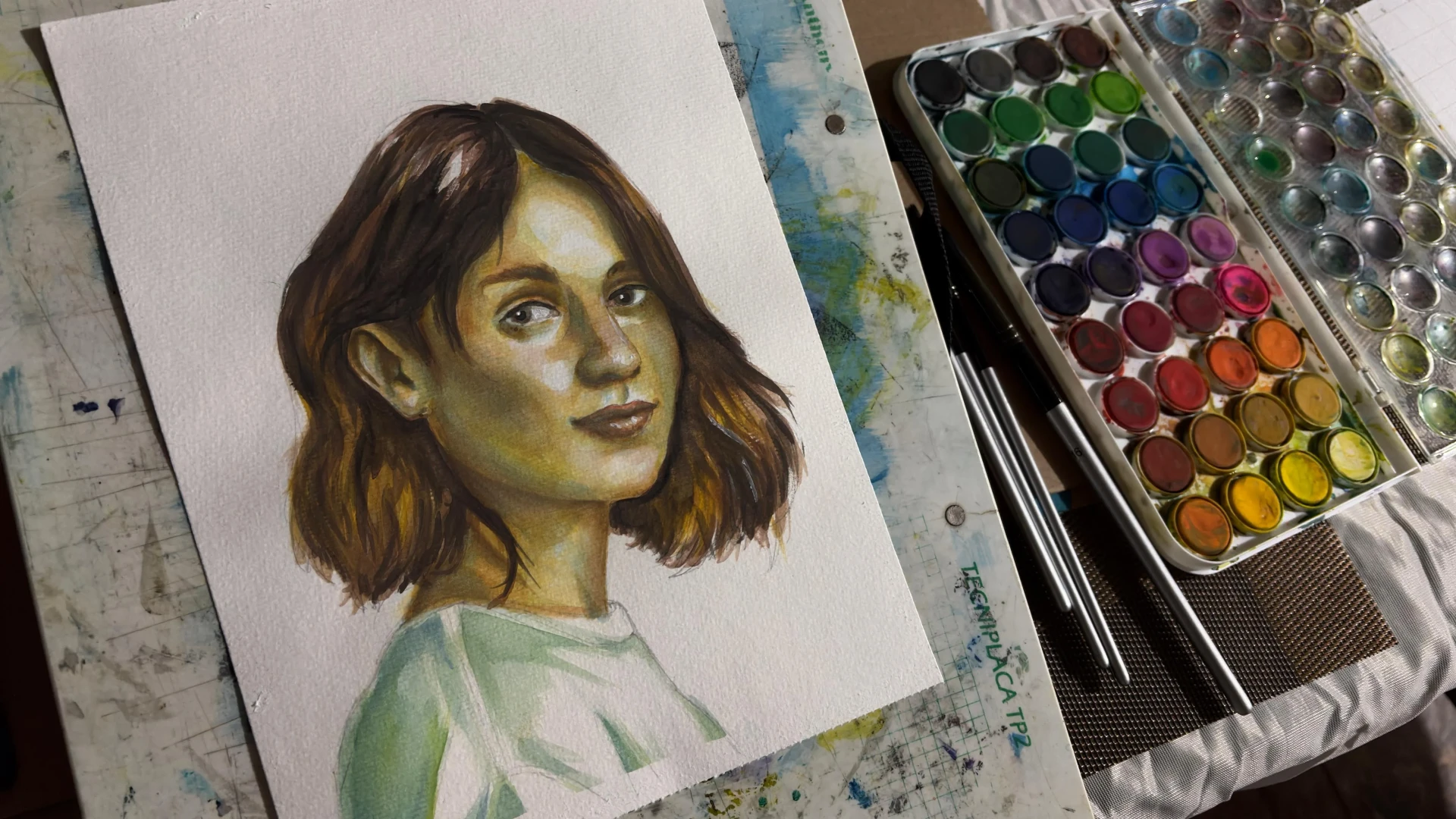
Portraiture is one of the most demanding subjects in watercolor. The slightest variation in color or contrast can change the expression of a face. In this tutorial, we will explore how to create a female portrait in watercolor by going through each step of its creation.
Precautions to take before you start
To succeed in this exercise, a few essential points must be taken into account:
- First, familiarize yourself with watercolor on simpler subjects like flowers, then landscapes, before tackling portraits.
- Use high-quality paper, 300 g minimum, with a high percentage of cotton to withstand the various layers of paint.
- Work at a slight angle, which is ideal for applying uniform washes.
- Avoid adding too many layers without letting it dry between each application, this alters the purity of the tones.
- Limit the use of pure black. Instead, build chromatic blacks with different colored tones as pure black gives a flat and dull result.
Basic techniques to master
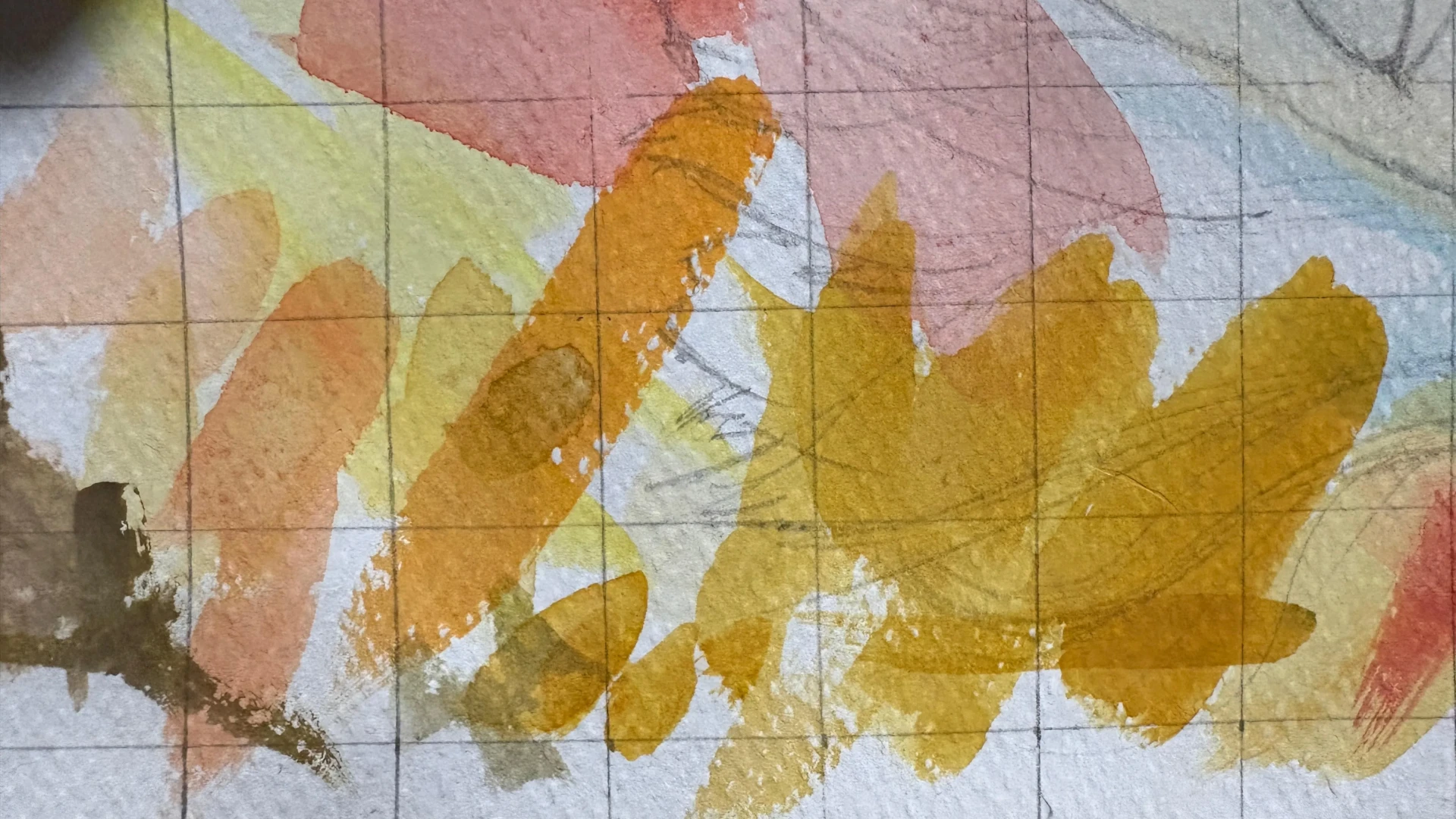
For this portrait, we will use two fundamental techniques: wet on wet and wet on dry.
- Wet on wet allows you to integrate multiple tones with blends that transform into flawless gradients — ideal for base skin tones.
- Wet on dry results in sharp overlays, perfect for well-defined contrasts like certain shadows or precise details.
Understanding skin tones before painting with watercolor
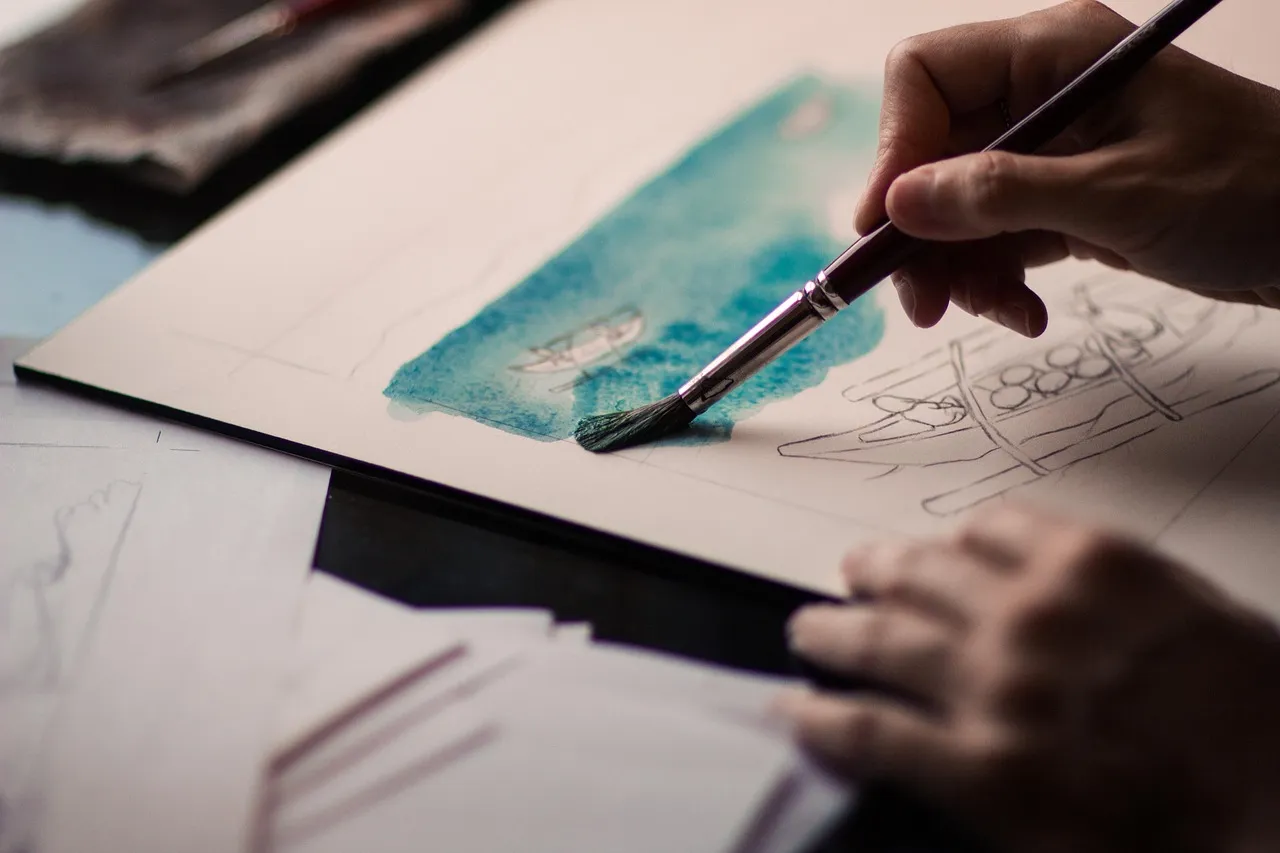
Before embarking on the final portrait, carry out a preliminary exercise on a sphere with flesh colors, observing the different skin tones.
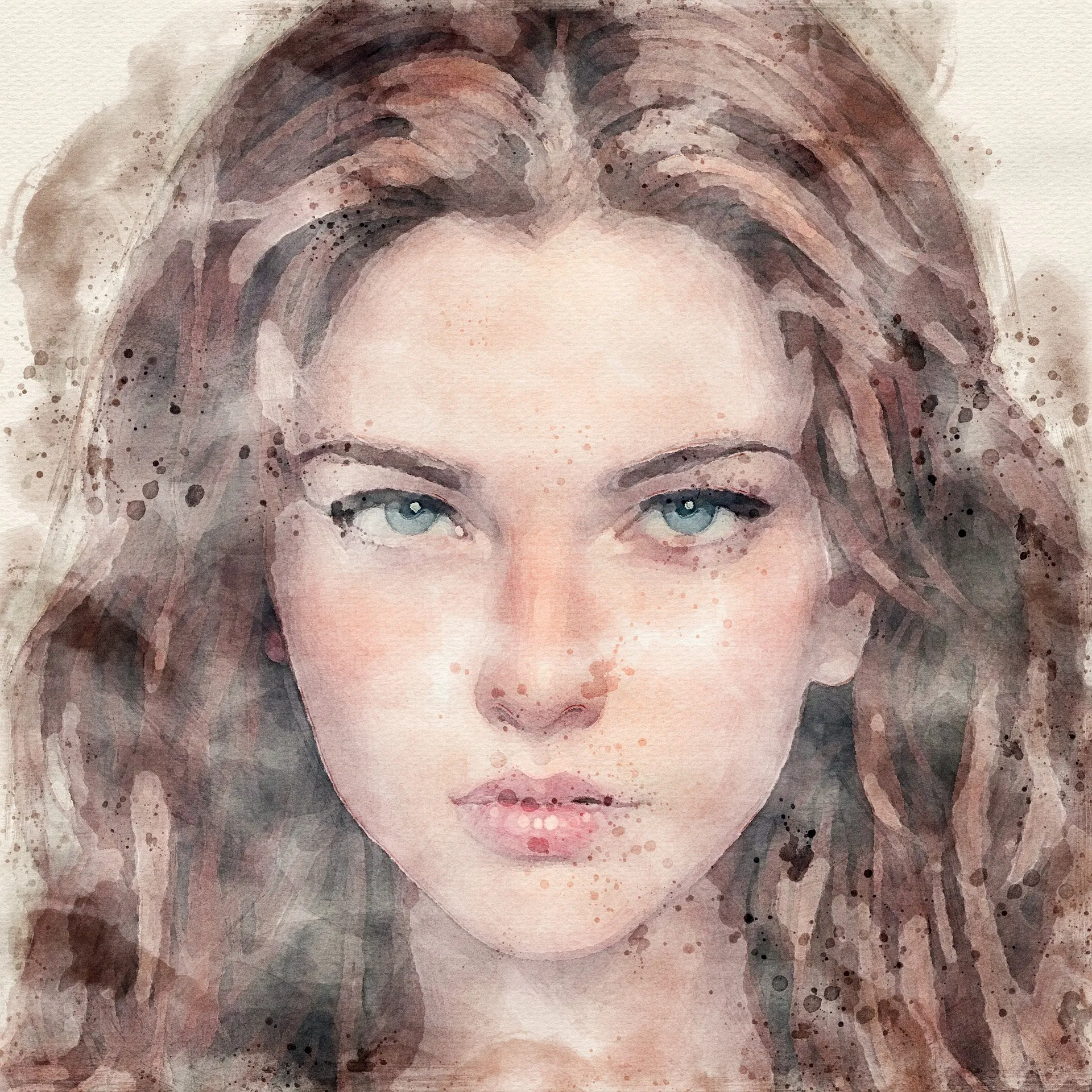
For fair skin, the base consists of a mixture of yellow, ocher and a little blue. We then add red, orange and green undertones to create nuances, and complementary colors to darken and generate volume.
Draw a sketch of a woman's portrait
Start with a circle in the top half of the paper. Draw a slightly curved horizontal cut in the middle.
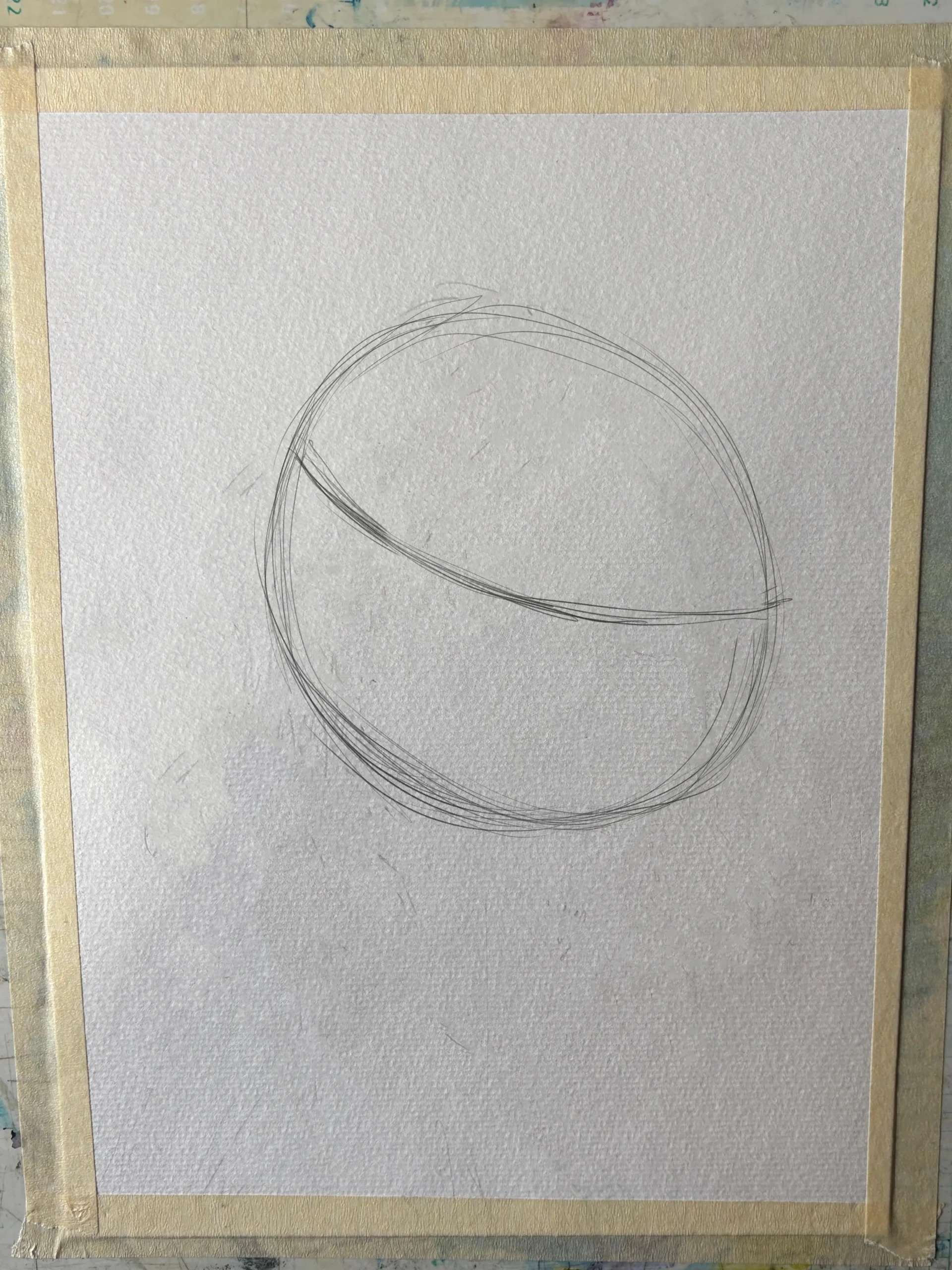
Draw a vertical line perpendicular to the first, make sure the angles are 90 degrees and the line extends slightly beyond the circle.
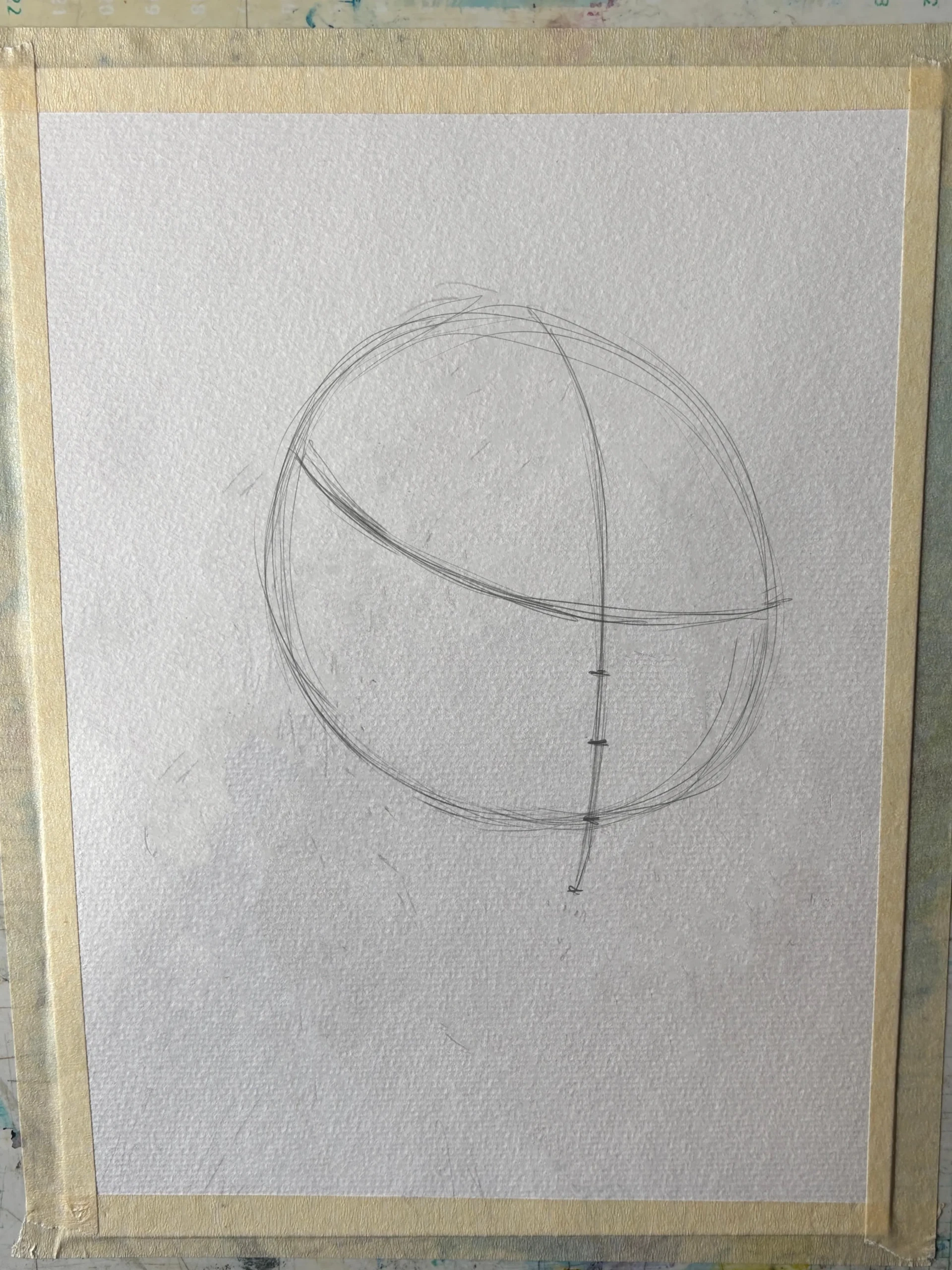
Divide each line into three parts, taking into account the three-quarter angle.
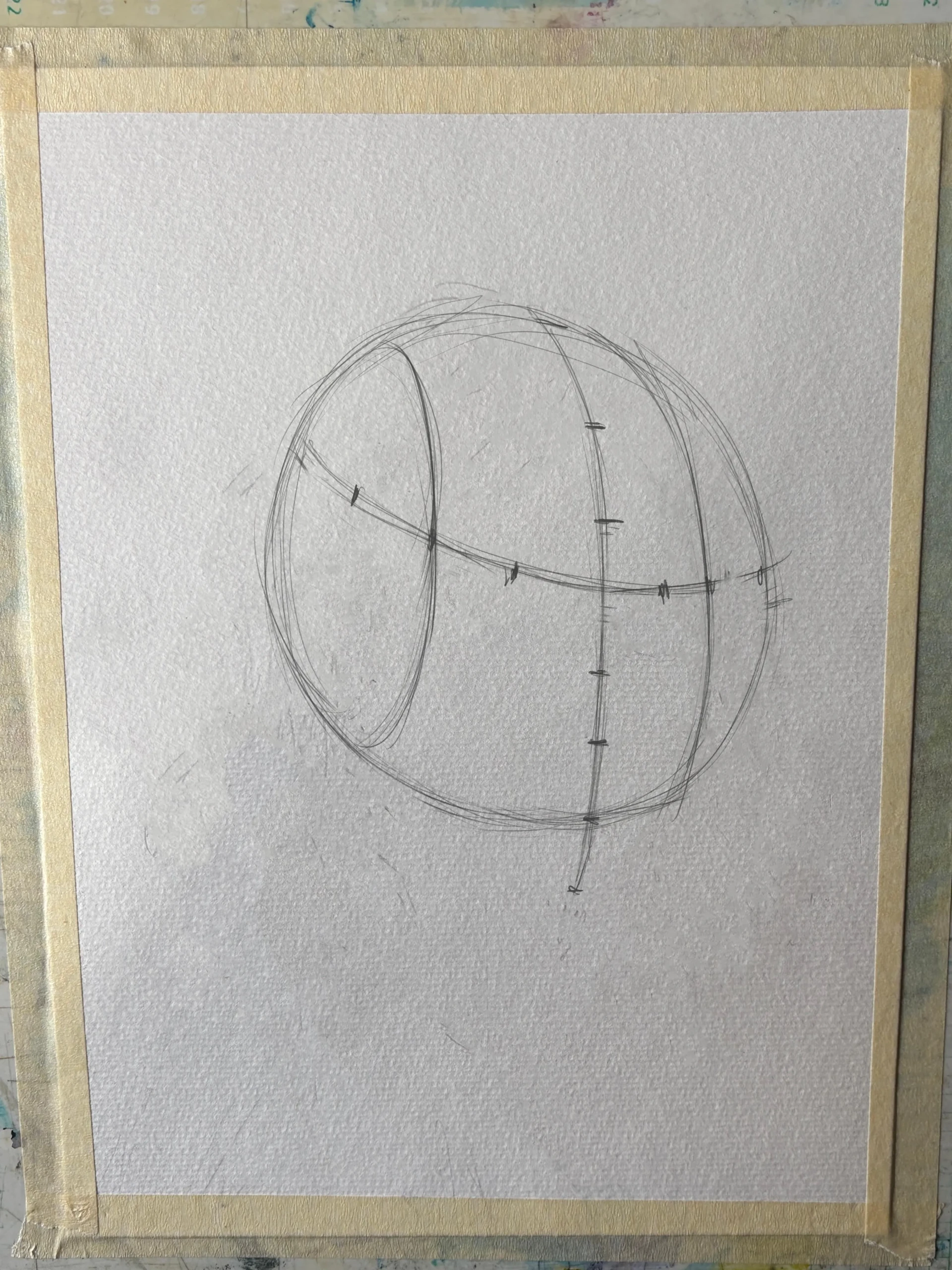
We now come to place the facial features.
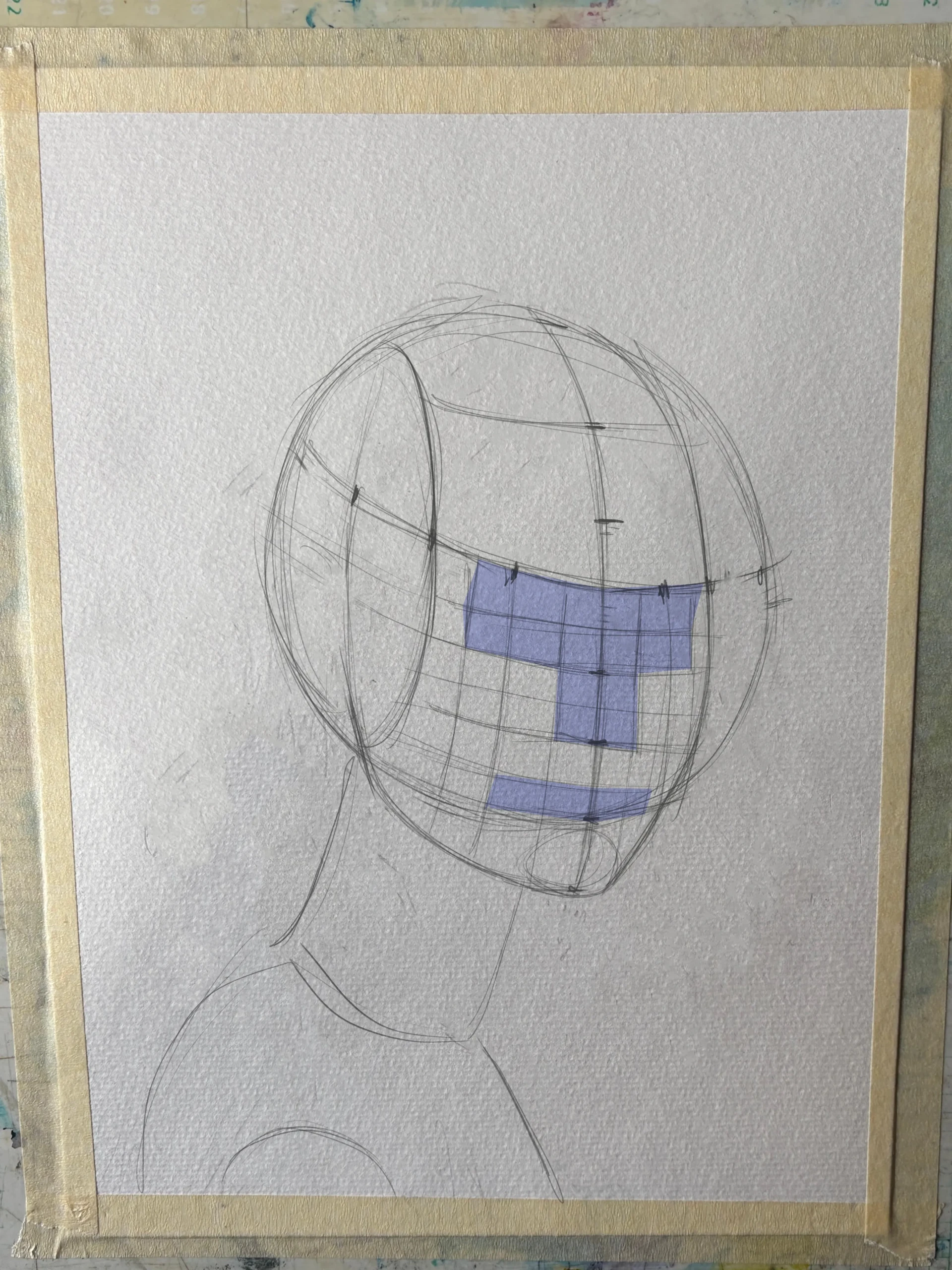
Draw the eyebrows on the horizontal line, then the eyes looking at the viewer.
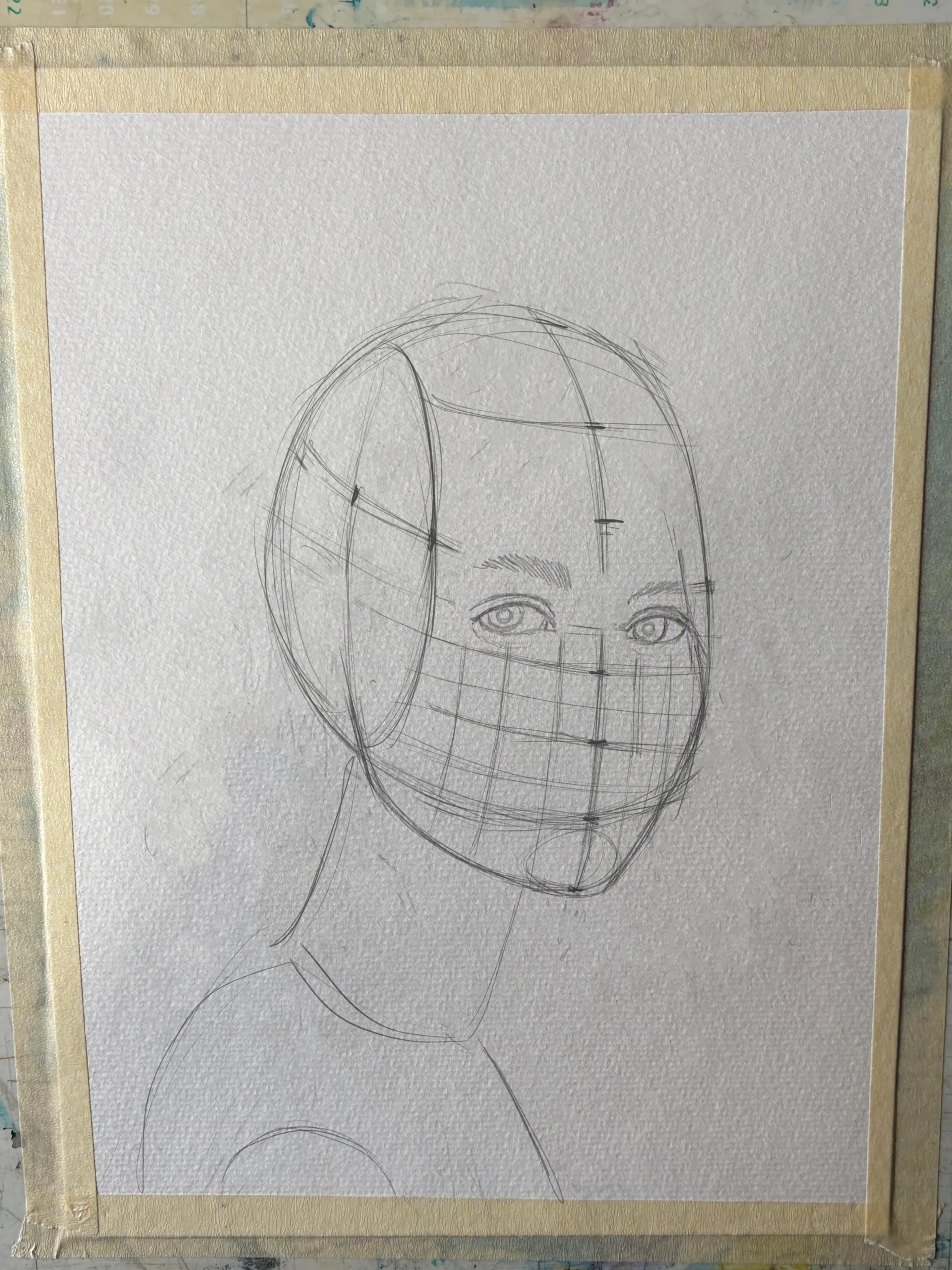
Trace the nose line to the next guide line.
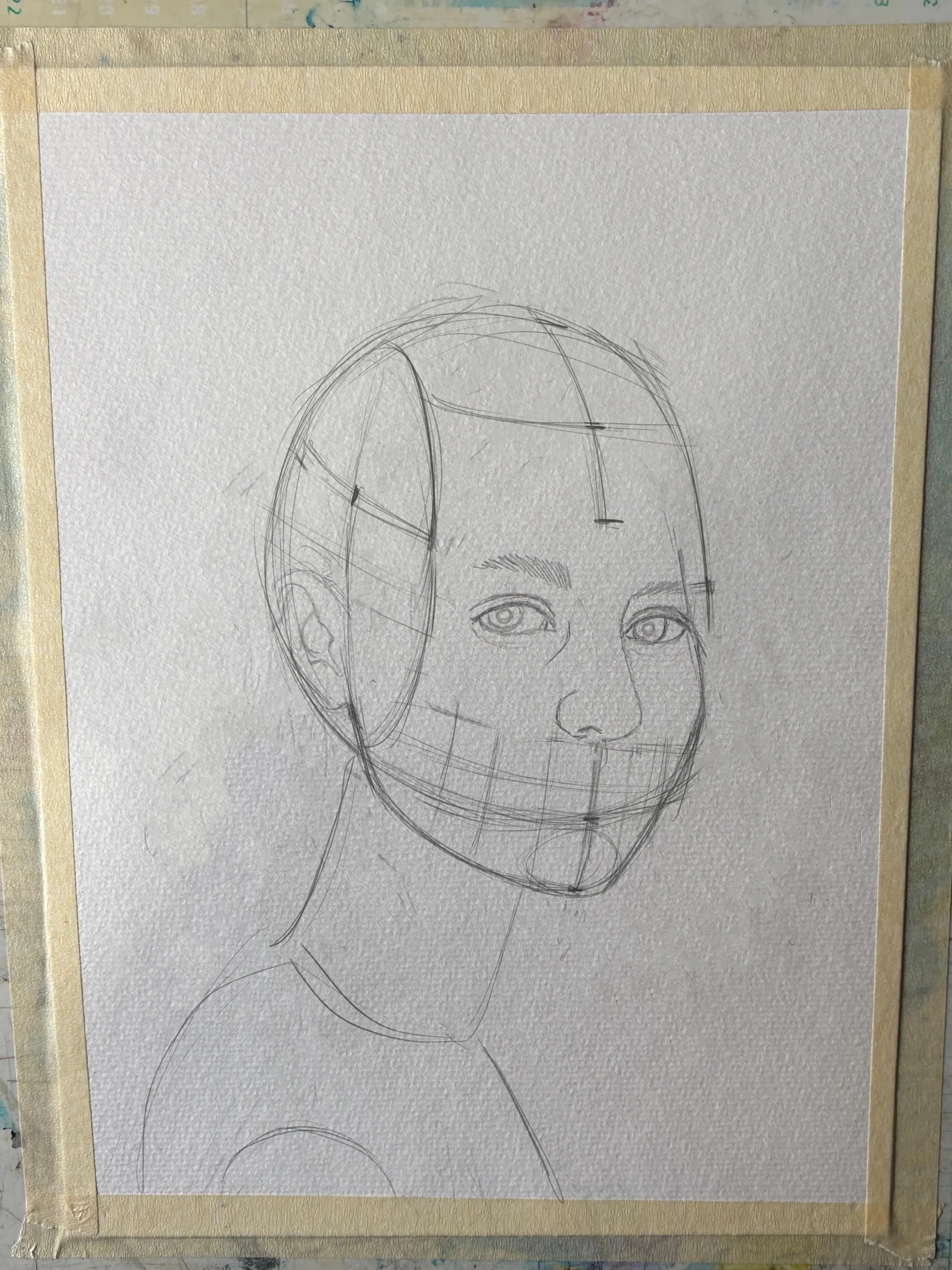
Place the lips on the outline of the circle, aligning the corners with the center of the eye.
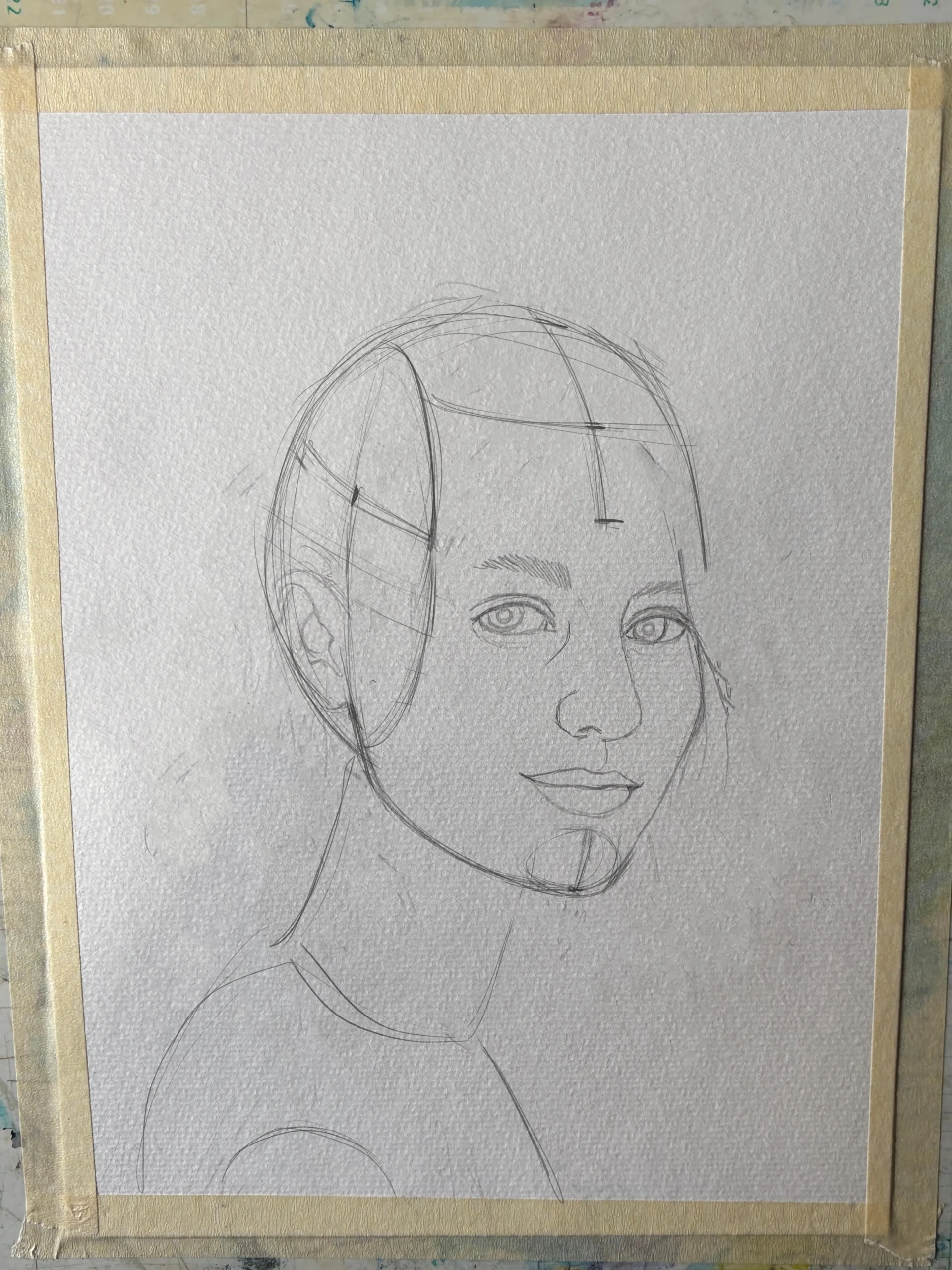
Finish with the hair: long, wavy strokes with slightly messy ends.
Draw a long neck and place the bust in profile for an elegant look.
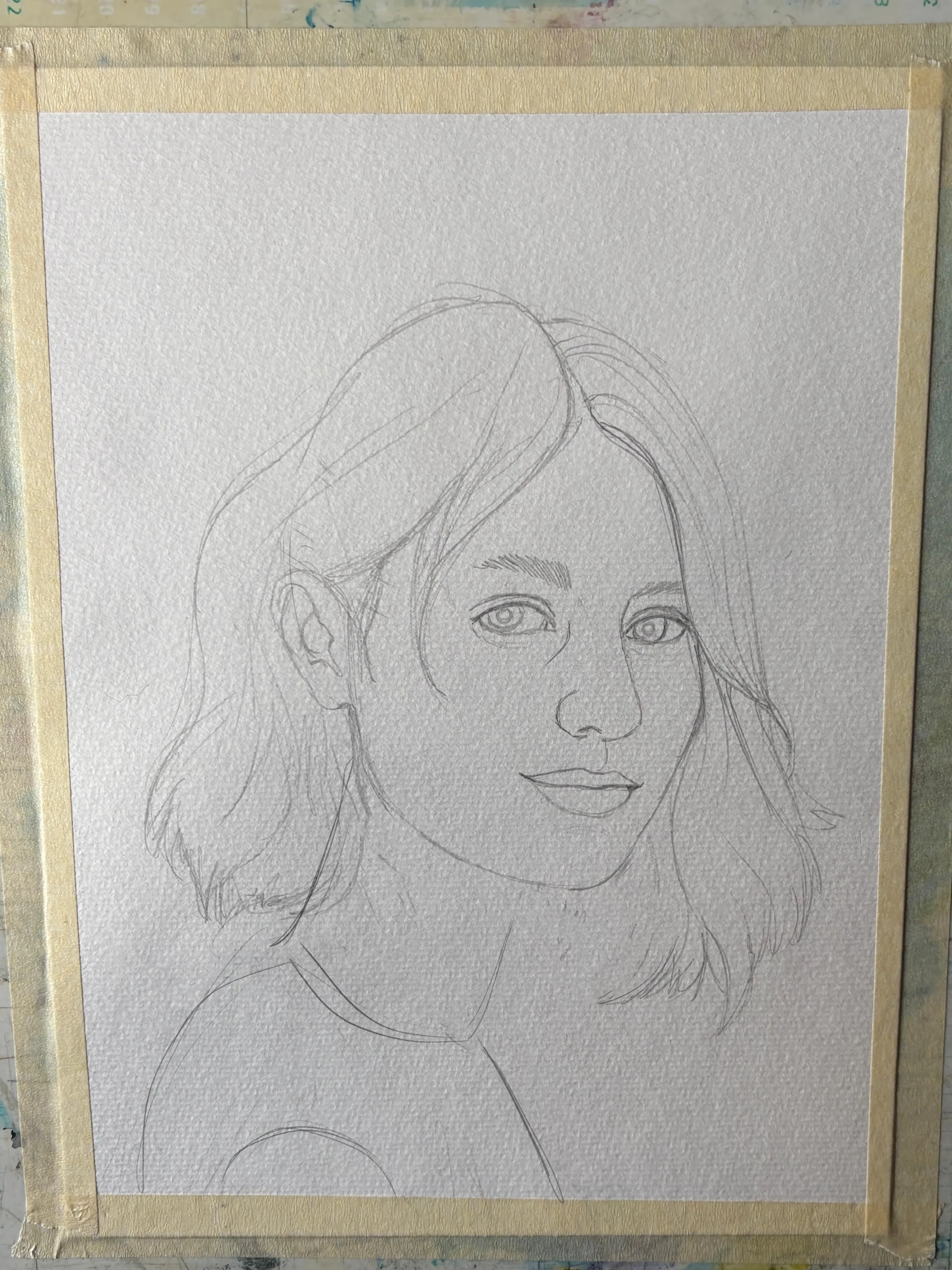
Draw the sketch directly on dry paper before dampening it. Erase all unnecessary lines and remove excess graphite, the sketch should be almost imperceptible before you start painting.
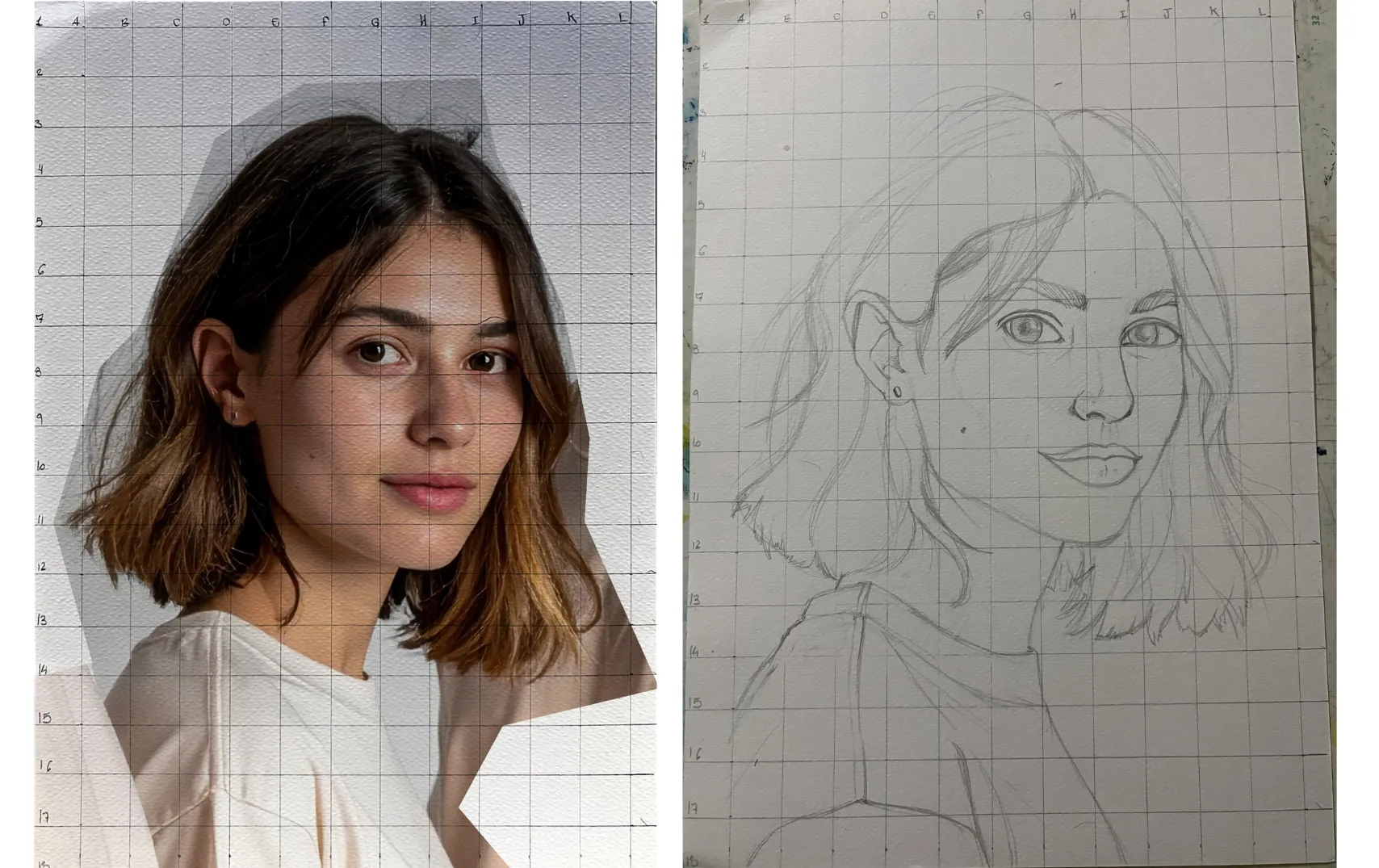
To ensure that your portrait corresponds to the person depicted, you can use several tools, such as the grid method, a light table, or, if you are more confident in drawing, draw a sketch by eye.
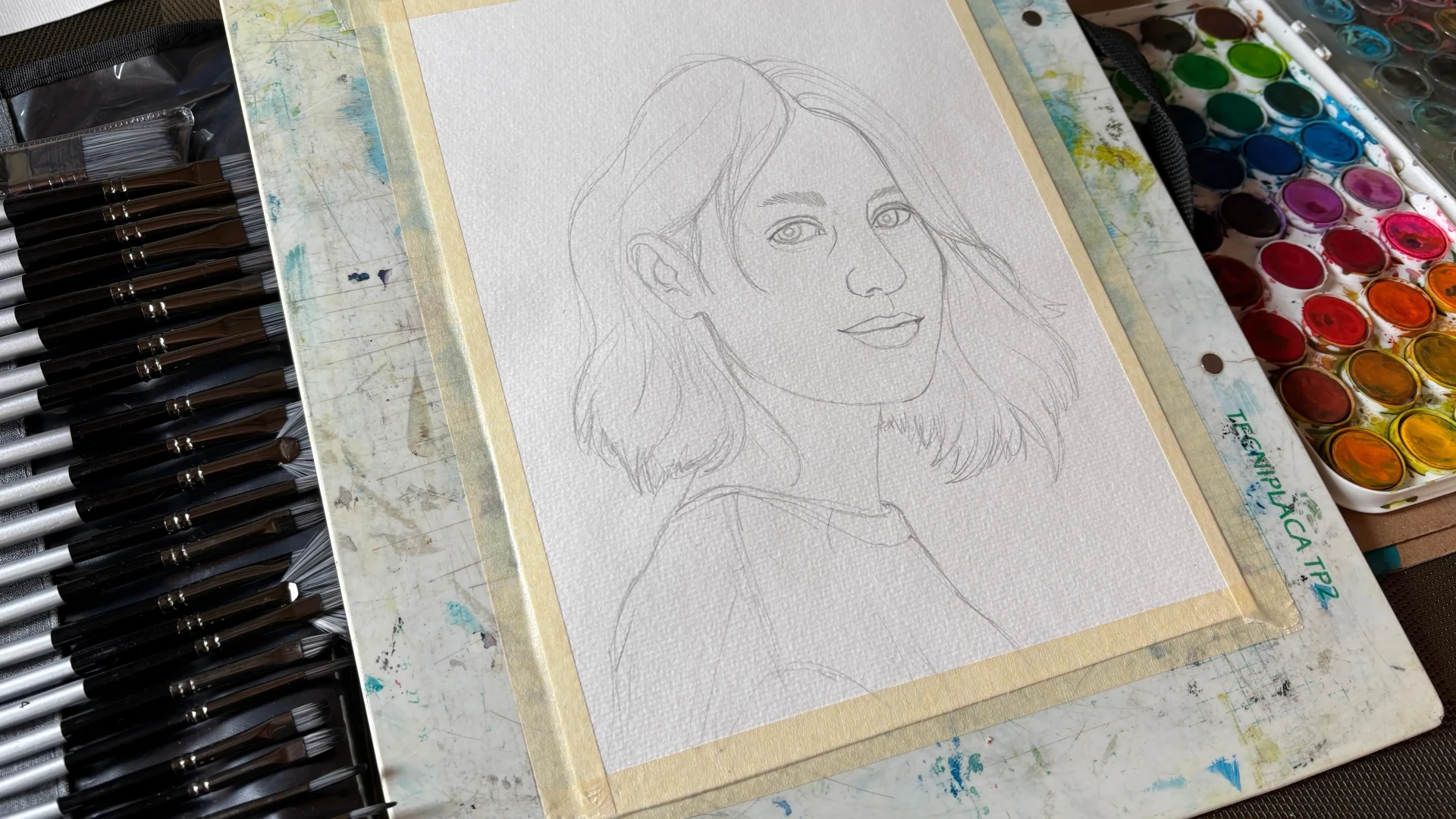
Prepare the watercolor paper
Two options are available to you. The first is to completely submerge the sheet in water and let it dry flat. The second, more common, method is to secure all edges with masking tape, then cover the entire surface with an even layer of water with a wide paintbrush before allowing to dry.
Step-by-step guide to painting a portrait of a woman in watercolor
Start with a layer of very diluted blue, rinse the brush several times to reduce the density of the pigment.
Apply it to the edges and gently dissolve with a damp brush, removing any excess to create a soft gradient. Once slightly dry, add darker shadows with a brush loaded with lightly diluted pigment.
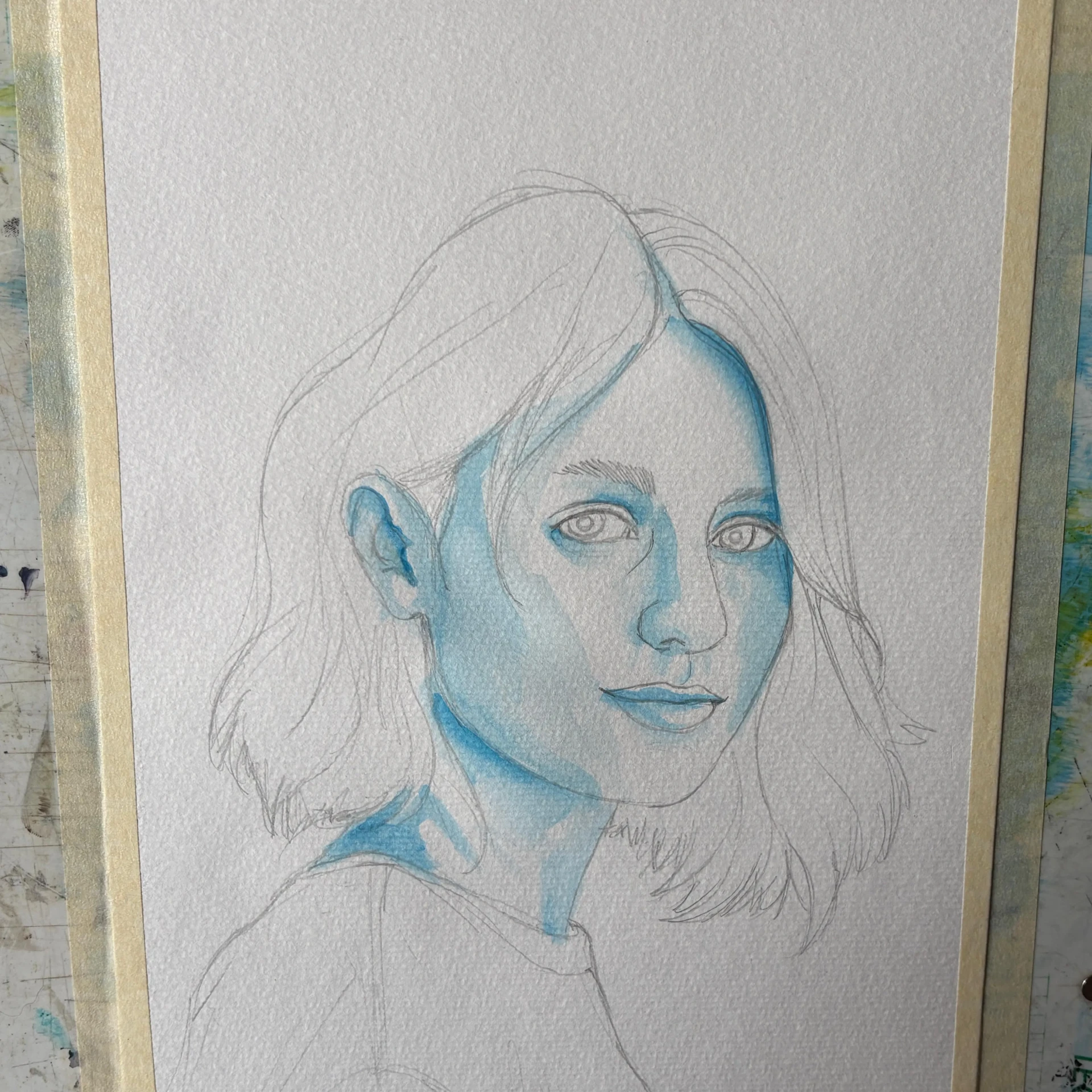
The idea is to create depth. So wait for this to dry a bit and then add some darker shadows. To do this, let the brush absorb more pigment and do not dilute it too much in water. Repeat the technique with a second brush.
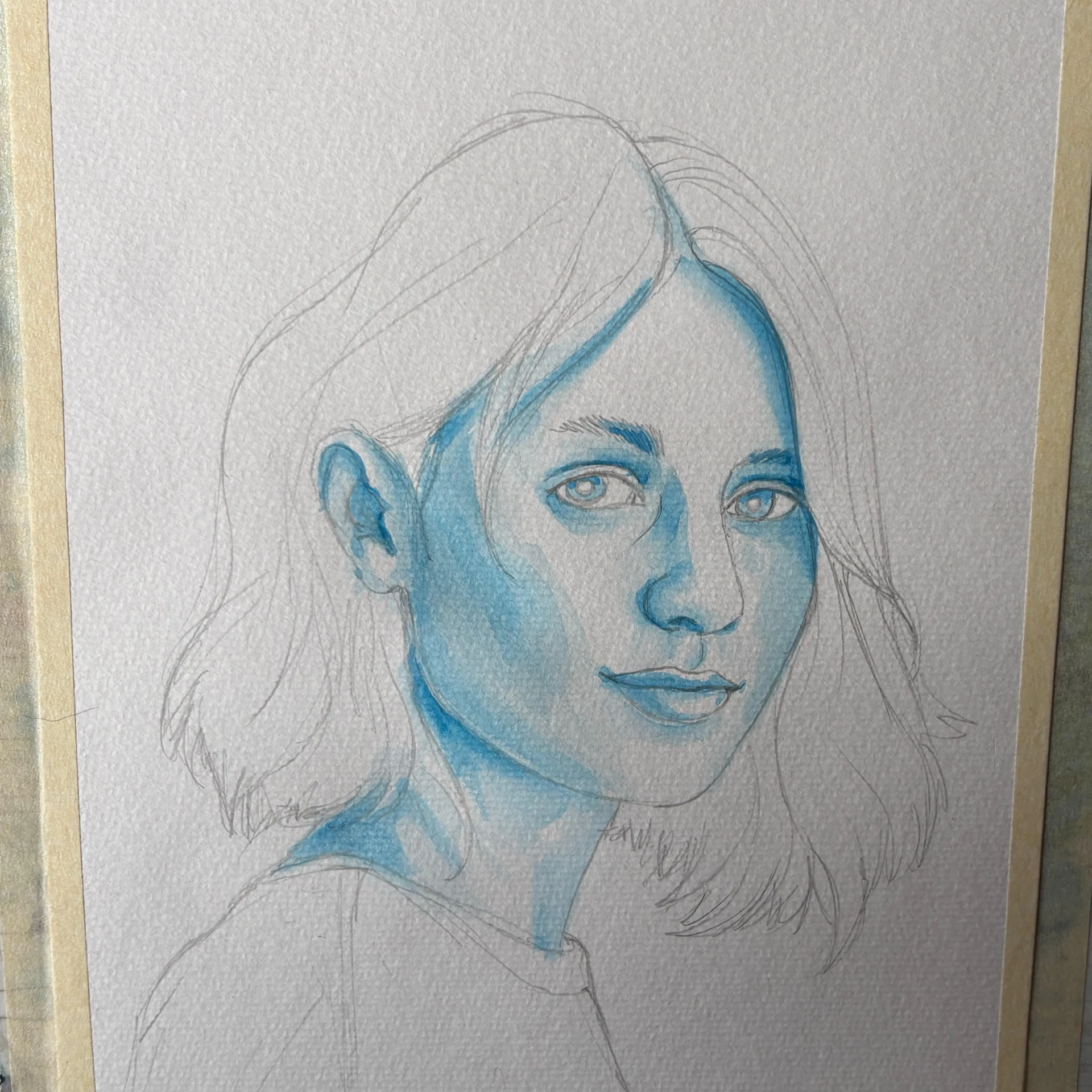
First layers of warm watercolor colors
Now take the lightest yellow or ocher you have and apply it evenly to the skin to create a very light base coat. Be careful, however: it is important that the lightest areas remain white. So avoid touching them with any color.
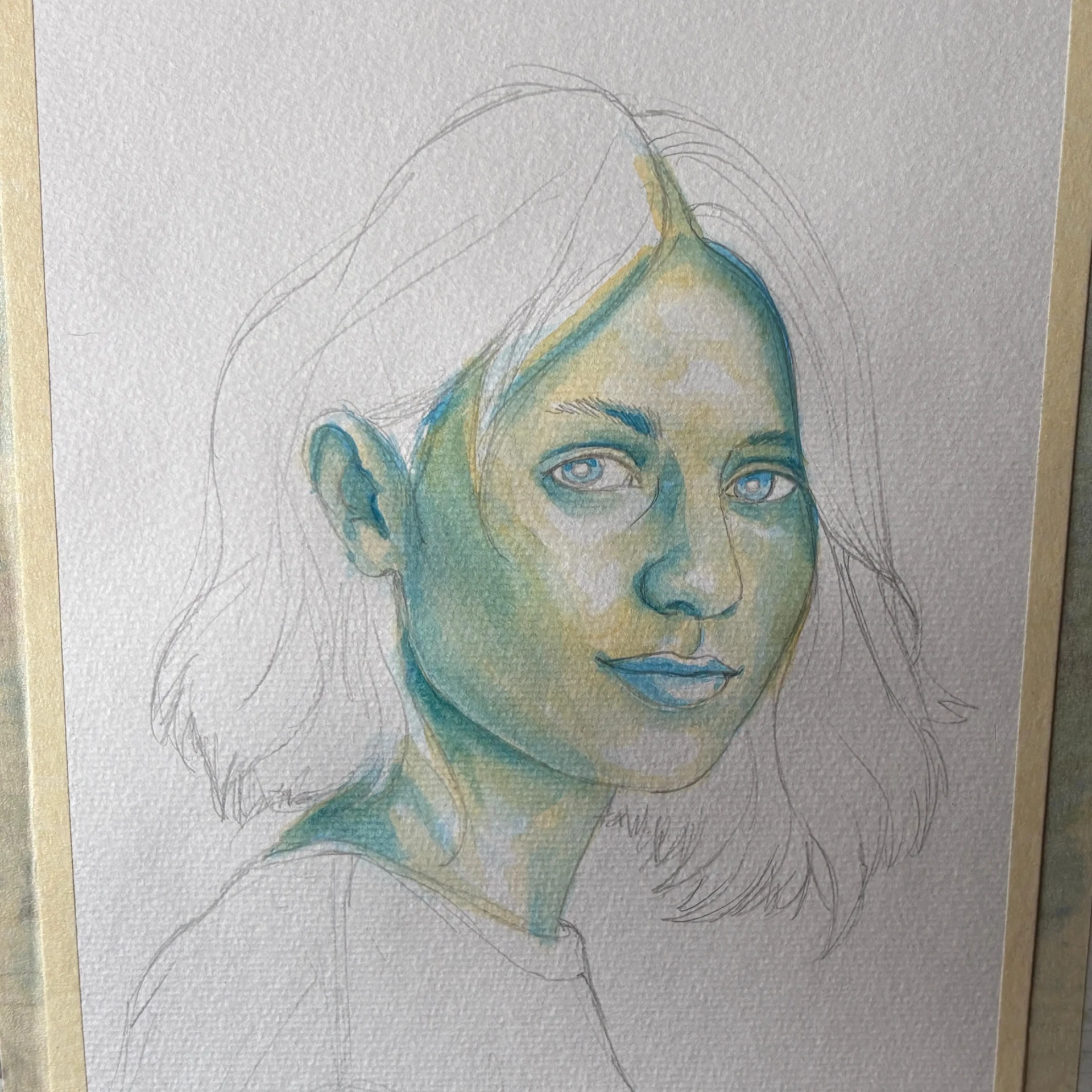
Before adding another layer of yellow or ocher, and in order to create chromatic dynamism, I recommend that you add a few strokes of well-diluted orange to the darkest areas to begin to tone them down.
You will notice that the blue then takes on a dark tone which fits in perfectly.
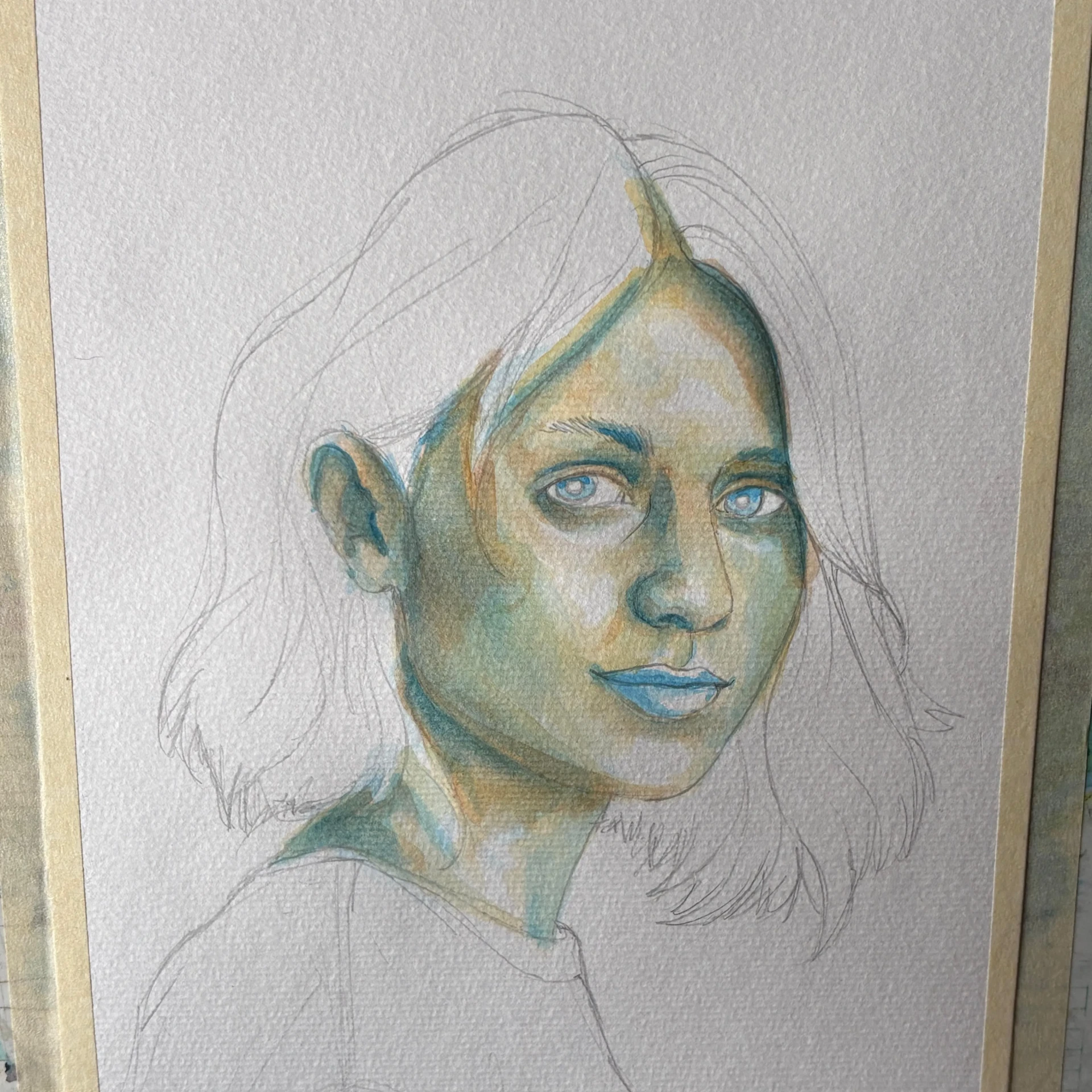
Now take another yellow that is a little more intense, and apply it in strokes with your brush loaded with color, blending with a second brush. This new layer should not completely cover the previous one. What we're looking for is to reduce the area slightly so we start creating an organic gradient.
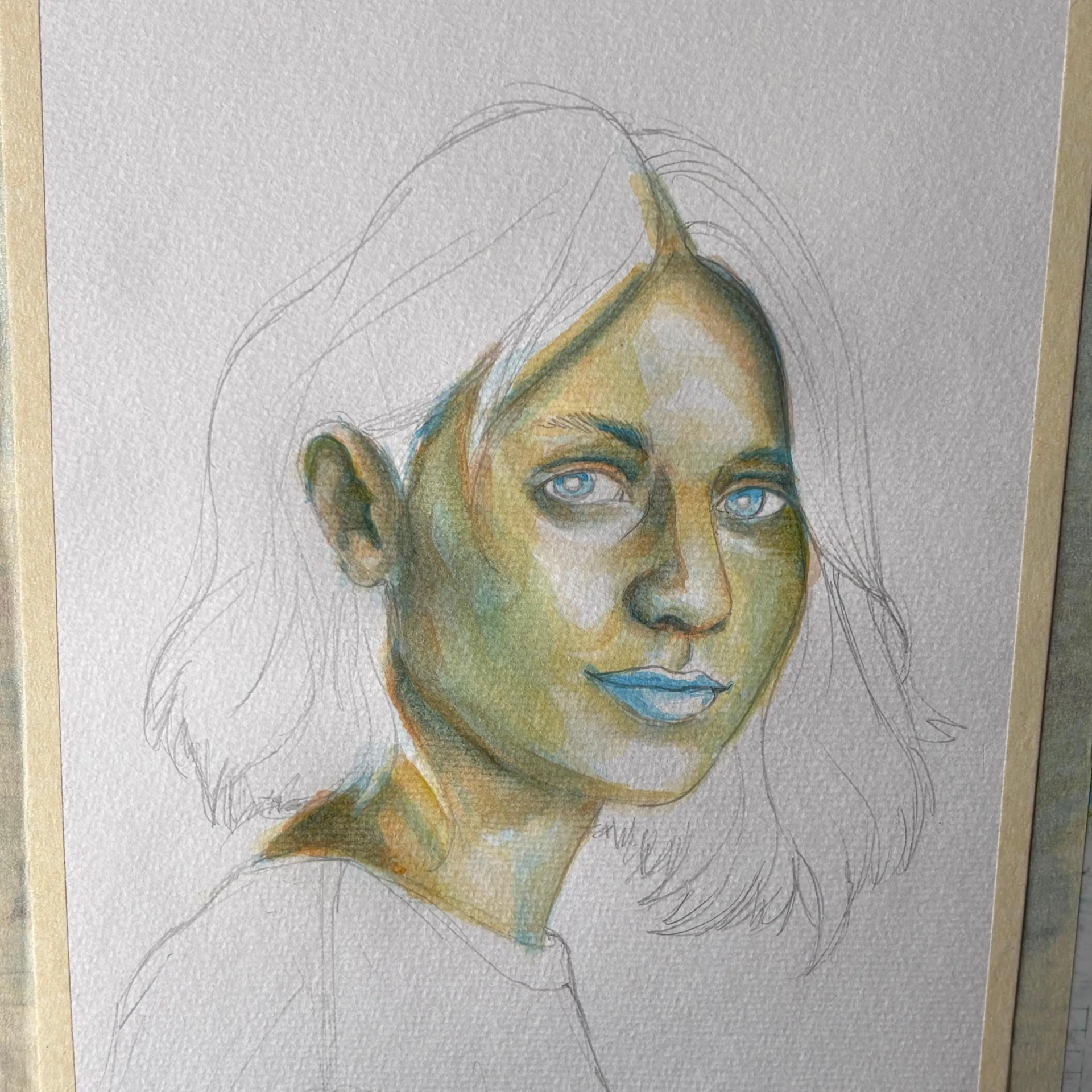
Finally, we will add a layer of orange, reducing the area again so that we can see the transition between the most intense tones and those closest to white.
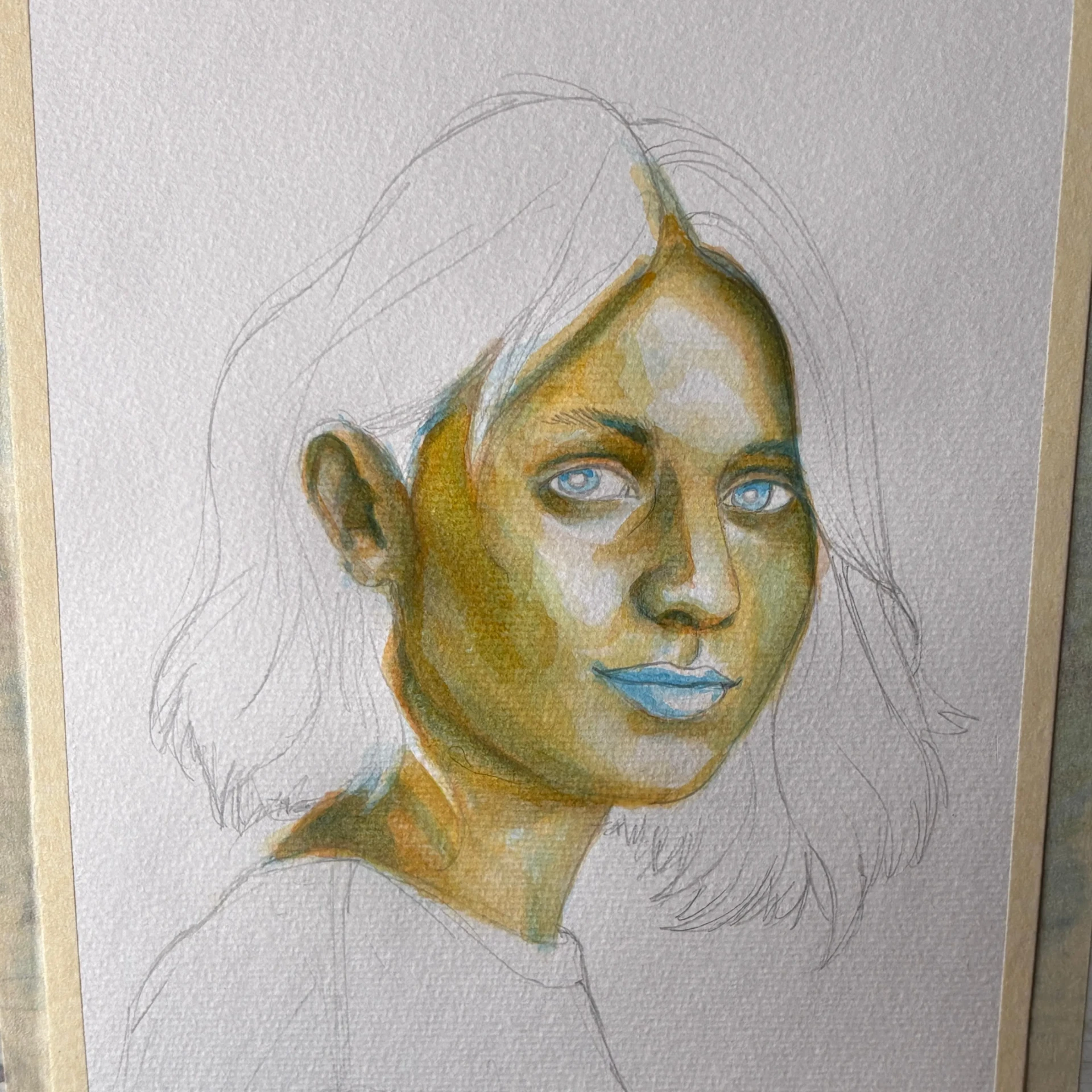
Define with brown tones
Now take a light brown and start defining the darker areas, such as the folds of the eyelids, the nostrils, the contour of the side of the nose, the corner of the lips and the folds of the ear.
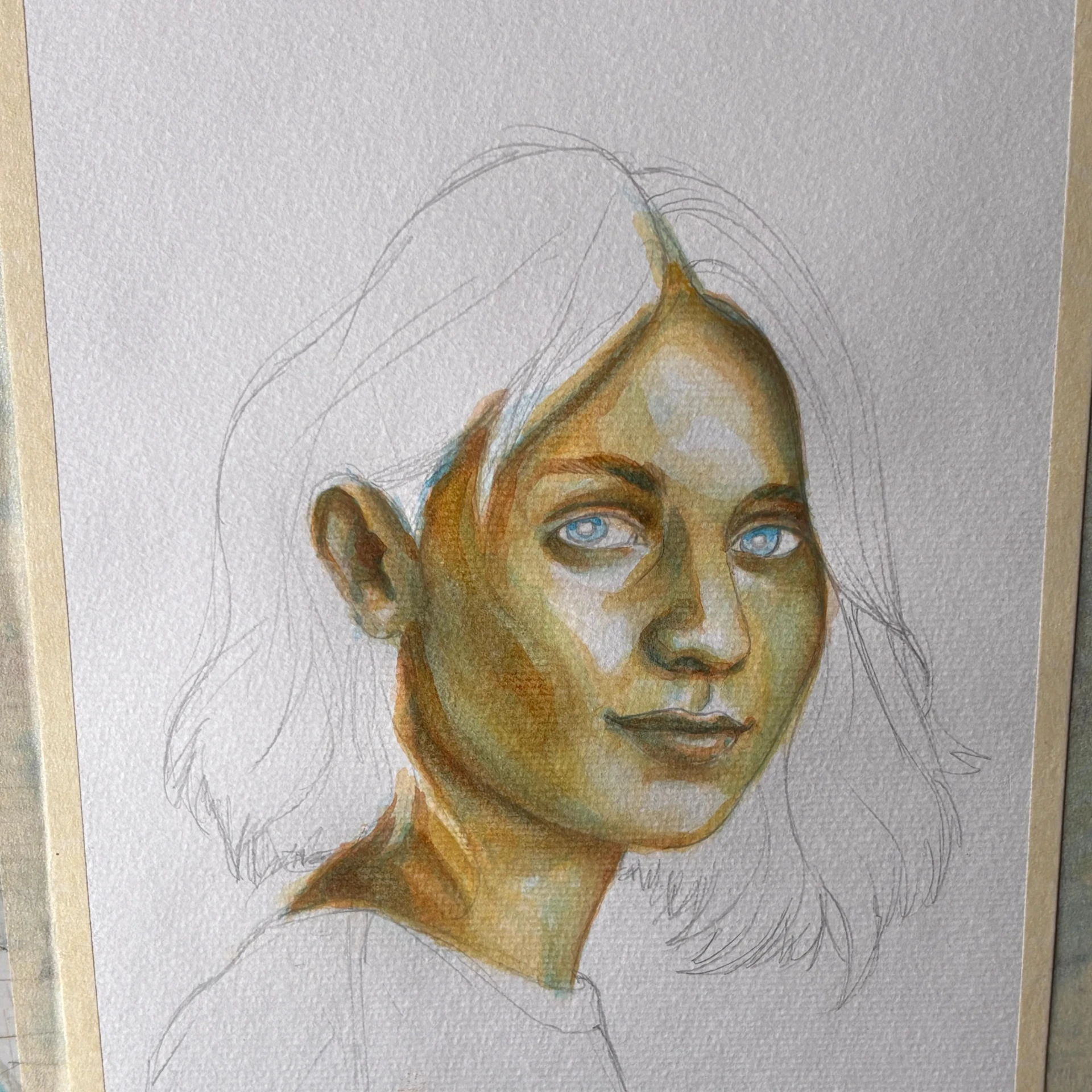
Then go to a darker tone and change your brush to a finer one. Once the previous layer has dried slightly, you can go over it again, this time with greater detail and precision.
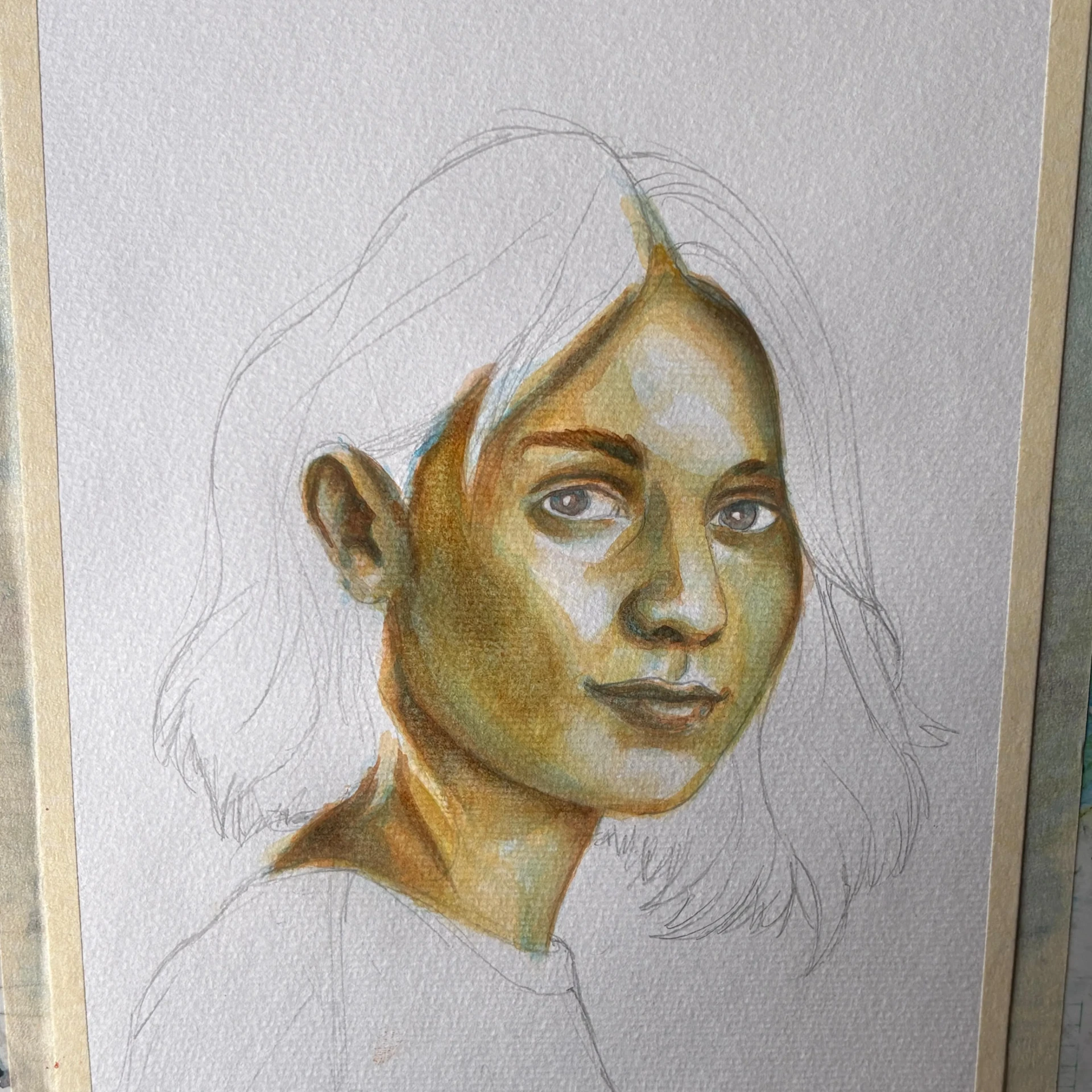
This step is almost identical to the previous one. Identify the dark areas and, with an even more dull and concentrated tone, finish drawing the edges and shadows. This is the time to define the eyelashes and eyebrows, as well as some precise details of the facial features.
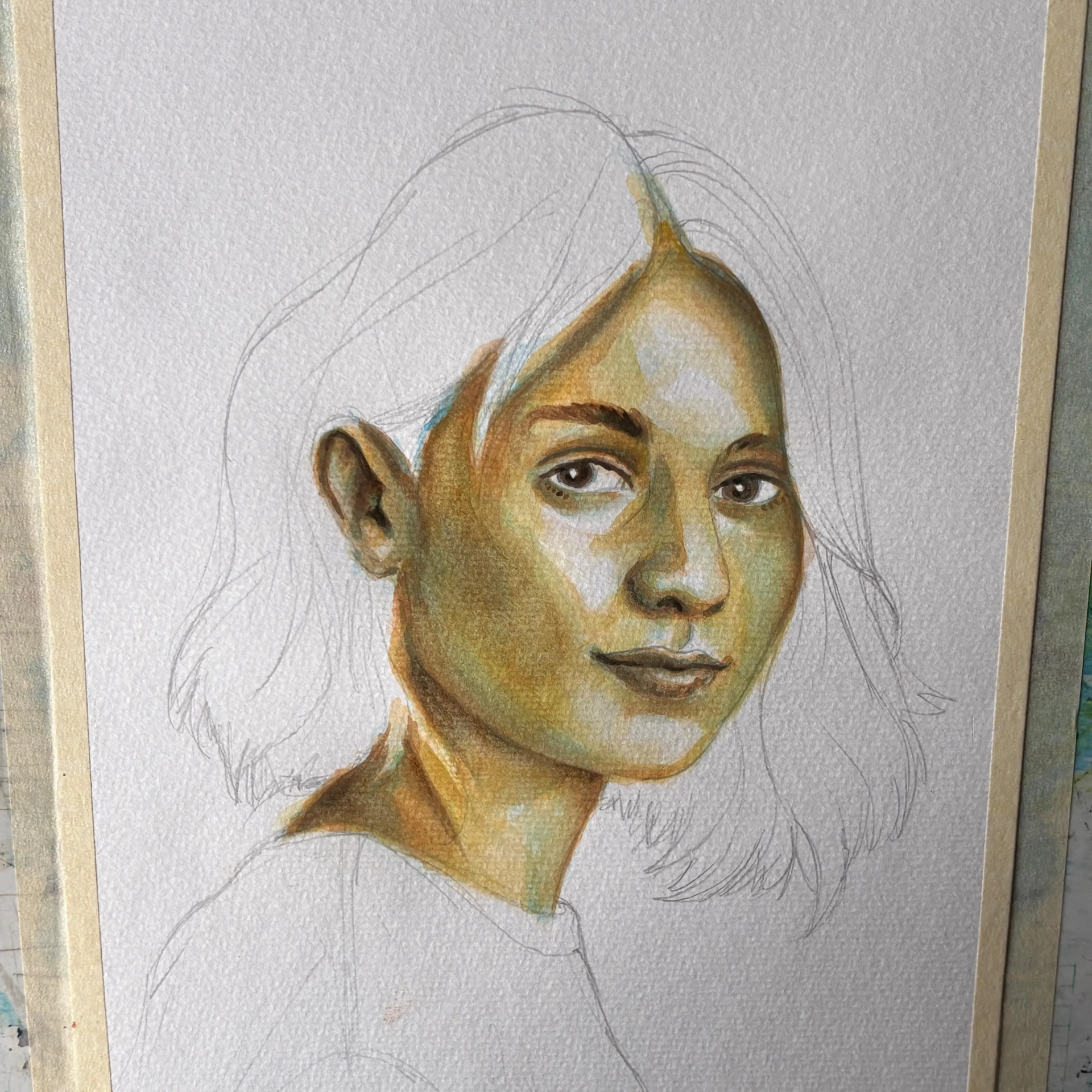
Bring life to the portrait with a touch of red
Load a brush with well-diluted red and apply small dots to warm areas of the face, such as the cheeks, nose, lips, and chin. Blend them immediately with a damp second brush until they almost disappear. The effect on the entire portrait will be immediate and radical.
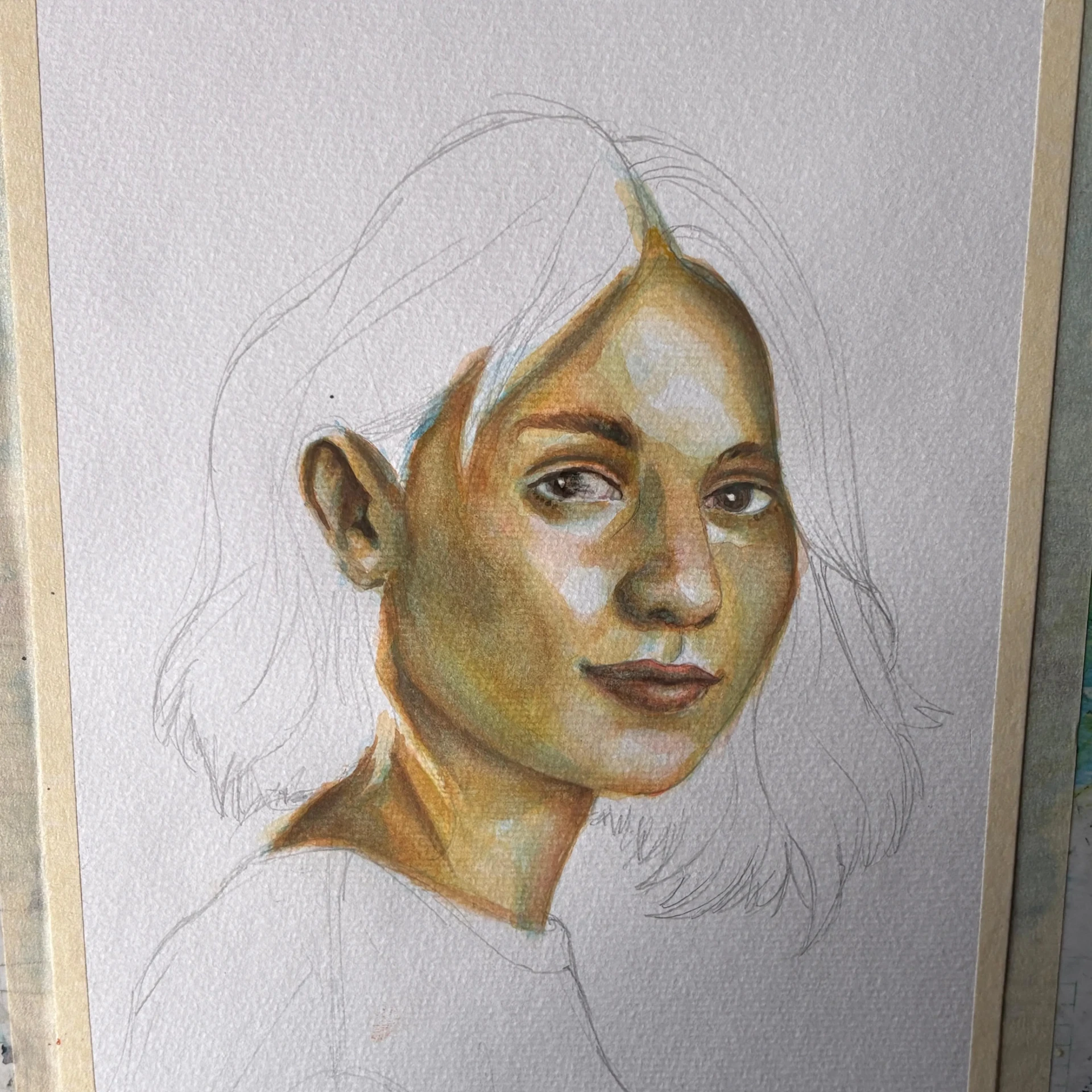
Finalize your watercolor portrait of a woman
After painting the face of our portrait, let's now move on to the hair.
To start, take tones of ocher and light brown, then make long strokes that follow the wavy shape of the hairstyle. It is necessary to leave some white spaces for light.
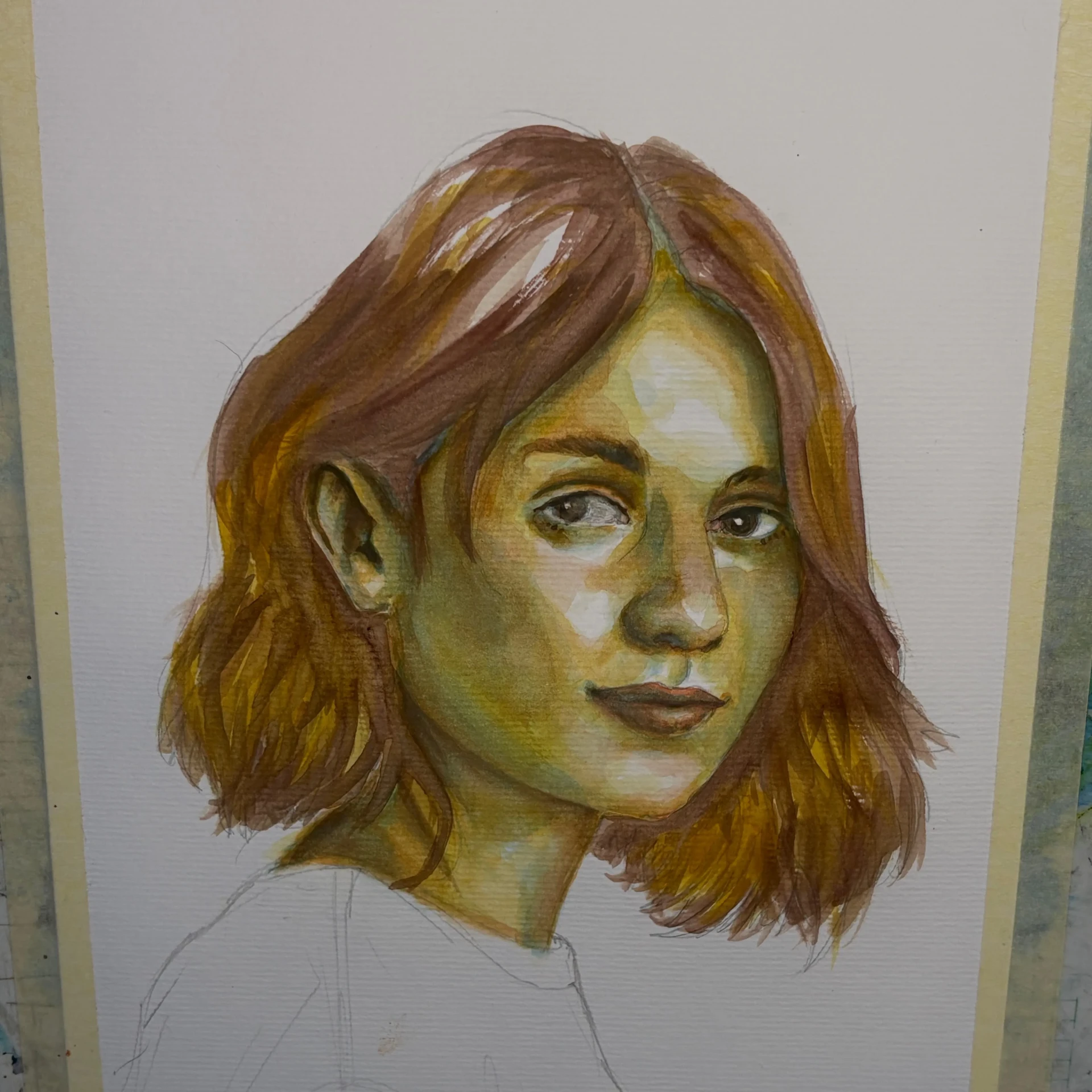
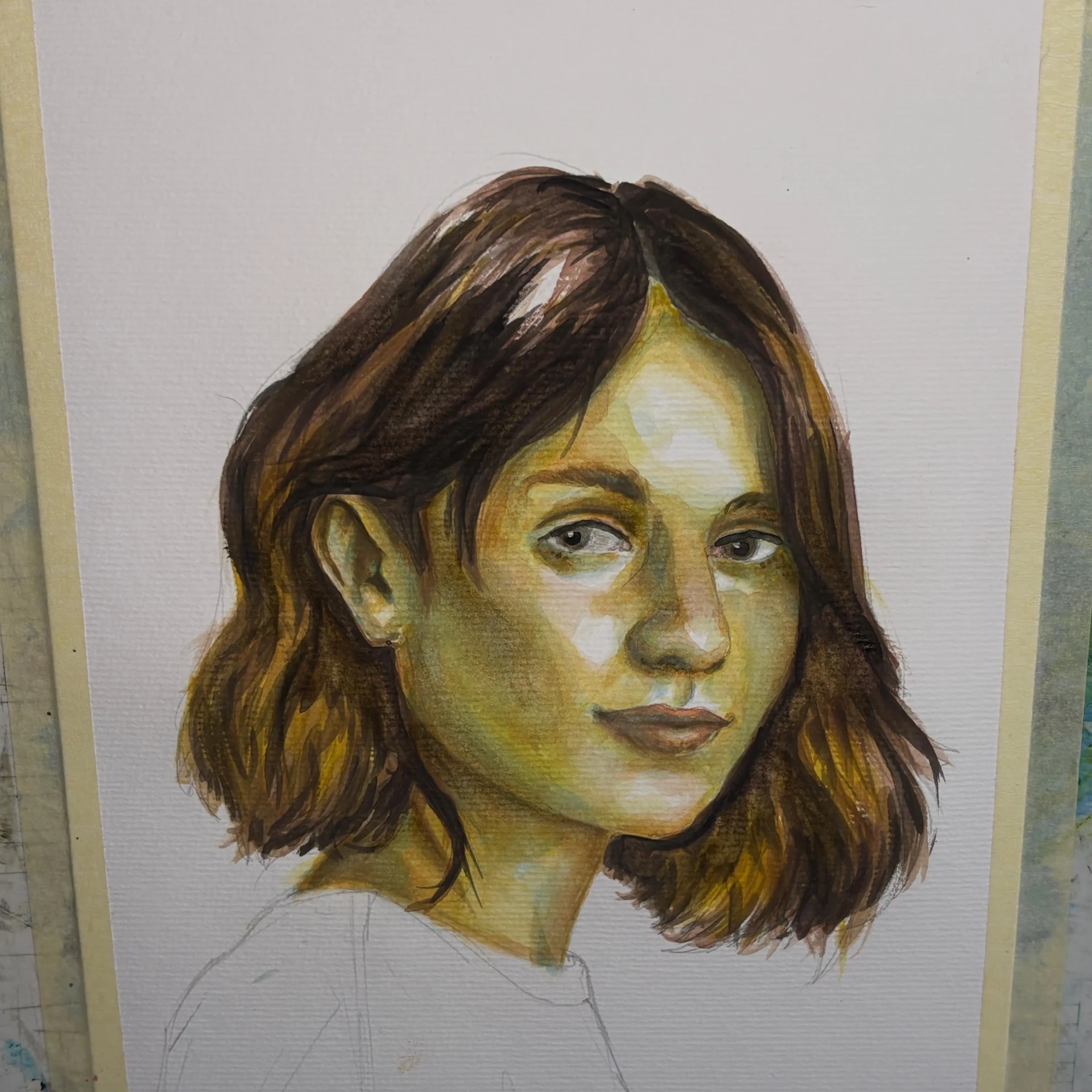
Then continue to darken little by little, without ever reaching total black. Instead, use darker browns, then when you run out, mix in a little blue for more opacity.
To finish, paint the model's shirt with very diluted blue and yellow tones, similar to those used for the skin. No gray, even for white clothing.
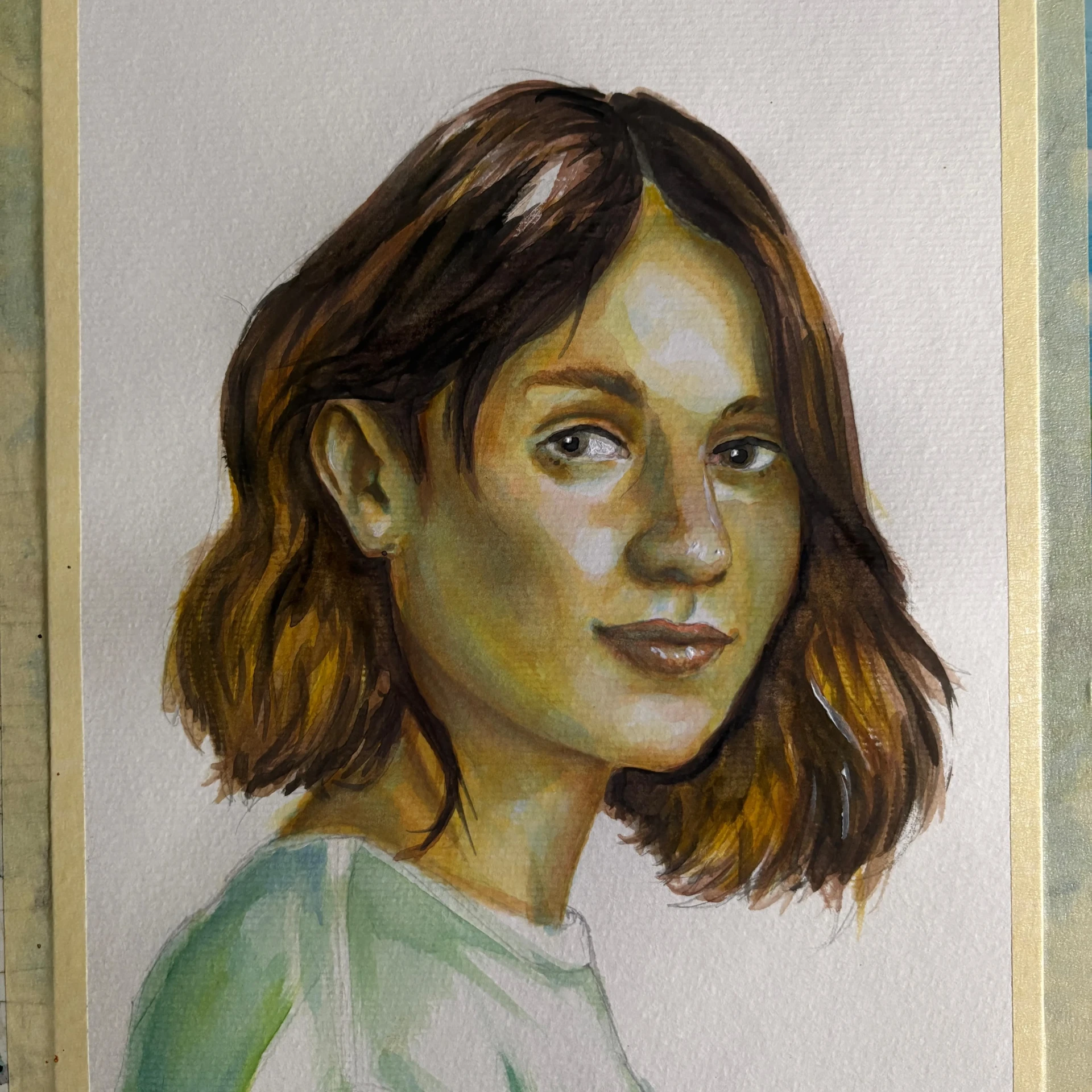
And that’s it for this tutorial! I hope you liked it and that it made you want to start painting watercolor portraits. This is undoubtedly one of the most demanding exercises in this technique, but also one of the most rewarding. Don’t hesitate to review these steps as many times as necessary, and above all, get started!
Discussion
Hello Bryam.
This tutorial is really very interesting; I haven’t dared to try watercolor portraits yet, but this might just encourage me.
Just a small clarification: when you use “light brown or dark brown,” could you specify the names of the colors? I use Sennelier.
Best regards.
Hi Reinette86!
In reality, I don’t dare to give a very specific color, because the shades can vary depending on a thousand factors, both in the watercolor palette and on the model itself. That’s why I recommend that you rather use an approximate shade. In your case, you could find several tones ranging from a more yellowish ochre to a much deeper burnt sienna. The color you choose will therefore depend solely on what you need at that specific moment!