
How to Draw a Street in Perspective
Mastering perspective means giving depth to the two-dimensional world of drawing: corridors that stretch to the horizon, forests, entire cities. In this tutorial, we will learn how to draw a street using a central vanishing point.
Urban sketching as a source of inspiration
For artists who like to draw in built-up areas, urban sketching is a kind of equivalent to landscape painting for the Impressionists. Going out to explore the main streets with a sketchbook and pen, drawing lines that recreate the architecture, is a practice that is both simple and rewarding.
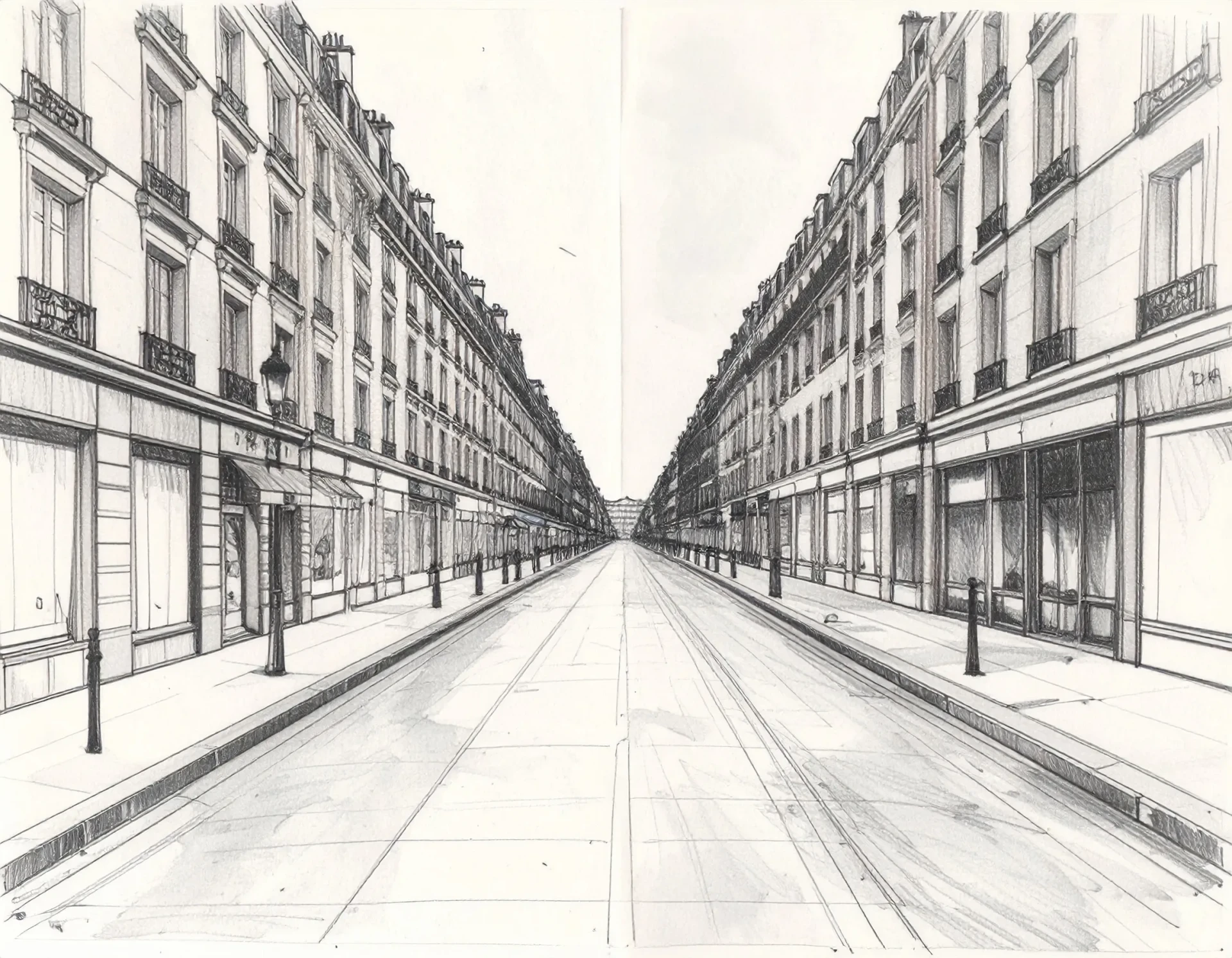
To draw a street, you must first design the houses that line it. You can opt for a generic model or give each one an individual touch: windows with varied frames, doors with pediments or double doors, balconies, flower boxes.
How to draw one-point perspective
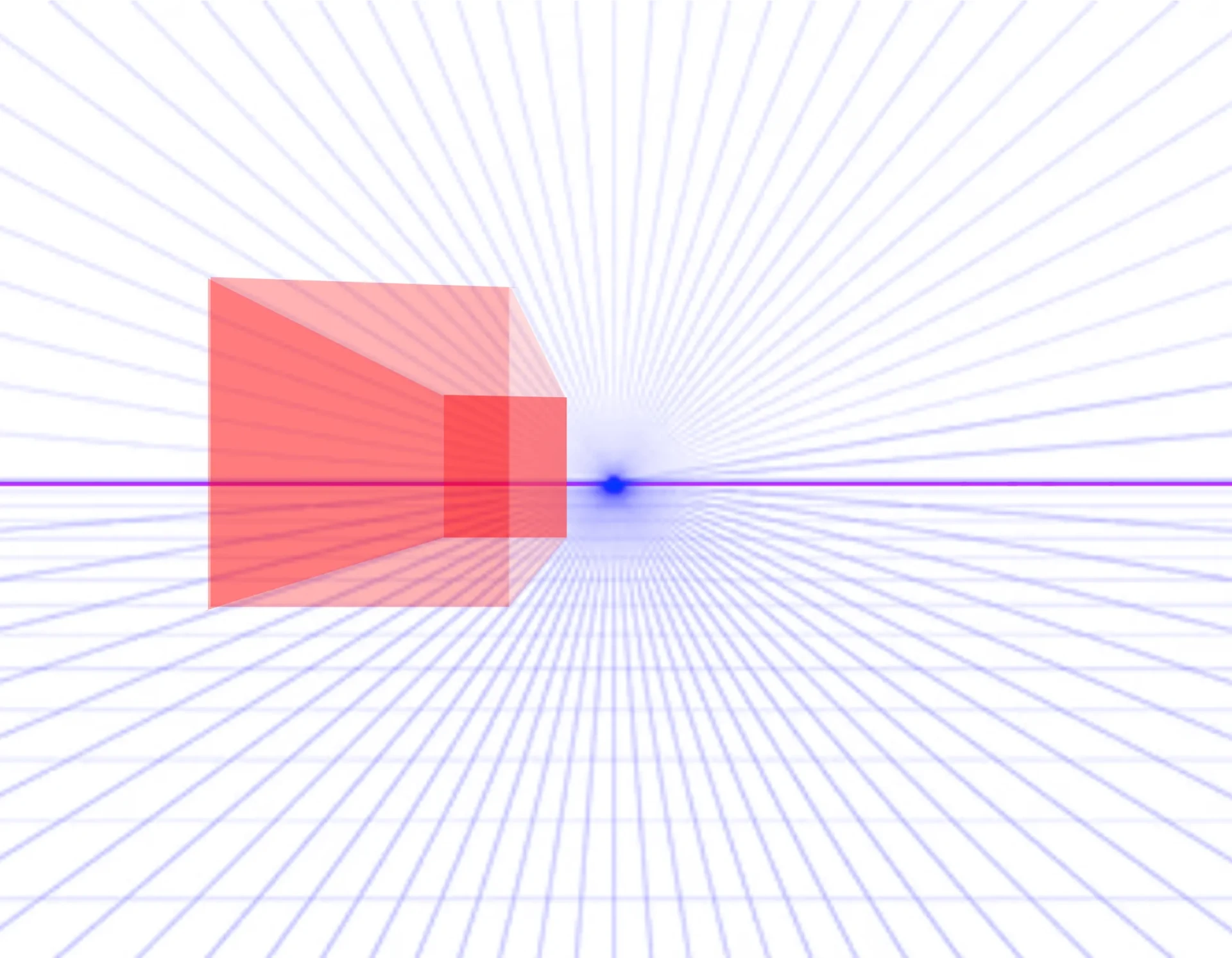
Draw a horizon line, then from its center, project lines in all directions. These guides are used to project the objects. Keep in mind that the horizontal and vertical lines must remain perfectly straight, without any inclination, unless the object itself requires it.
Draw a street in perspective step by step
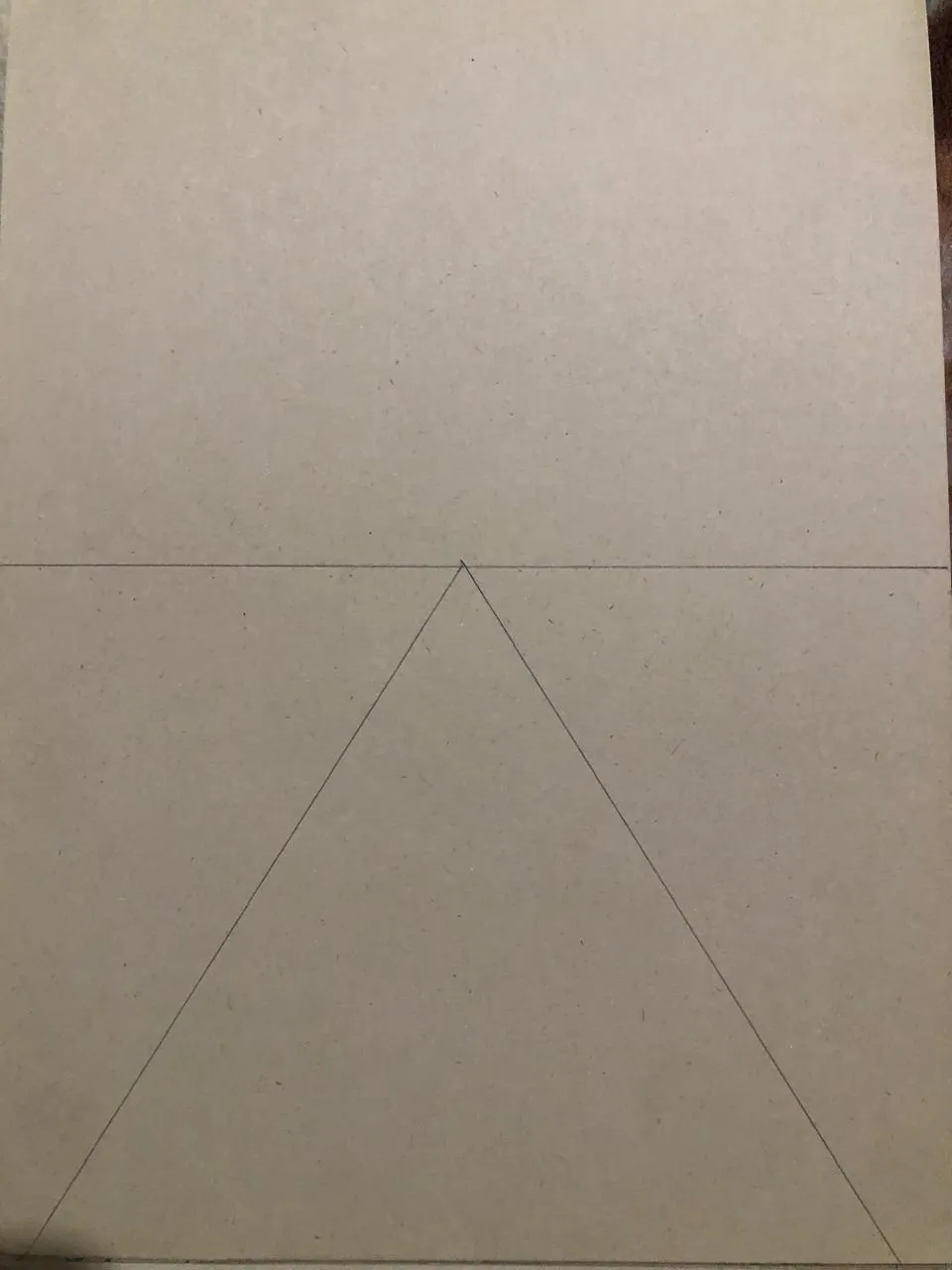
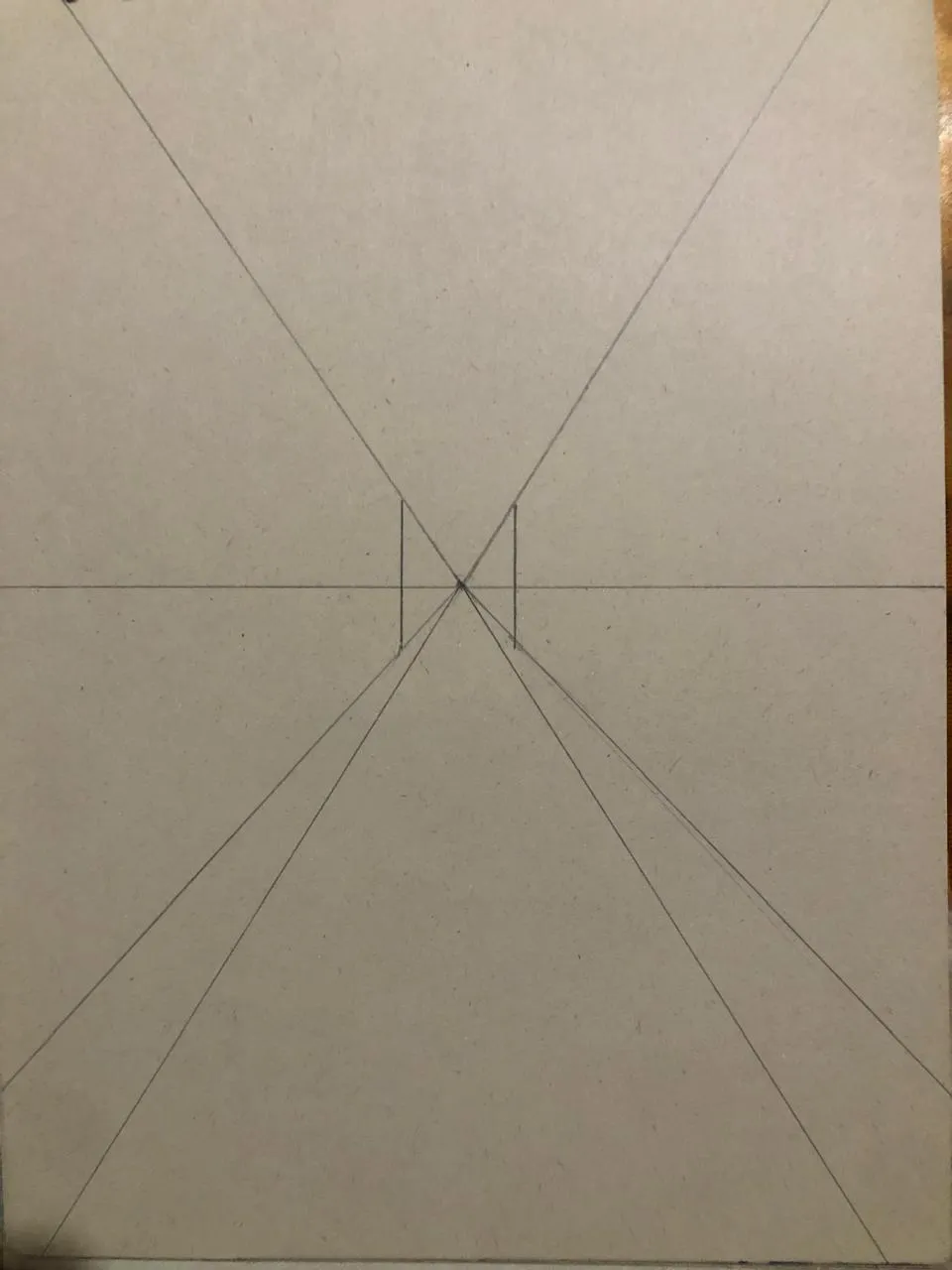
Start with a horizontal line in the middle of the sheet. From its center, project two lines towards the lower corners. For a more natural result, avoid too much symmetry; make sure the lines end at slightly different positions.
Add two parallel lines to guide the sidewalk: you will see the strip narrow as it approaches the center. Then, draw two vertical lines one or two centimeters from the center to mark out the bottom of the street.
Divide the blocks to draw the houses
Divide the side strips to define the space for each house. As you move closer to the center, the objects gradually decrease in size by about half until they reach the horizon. By carefully observing the image, you will find a trick to be absolutely precise.
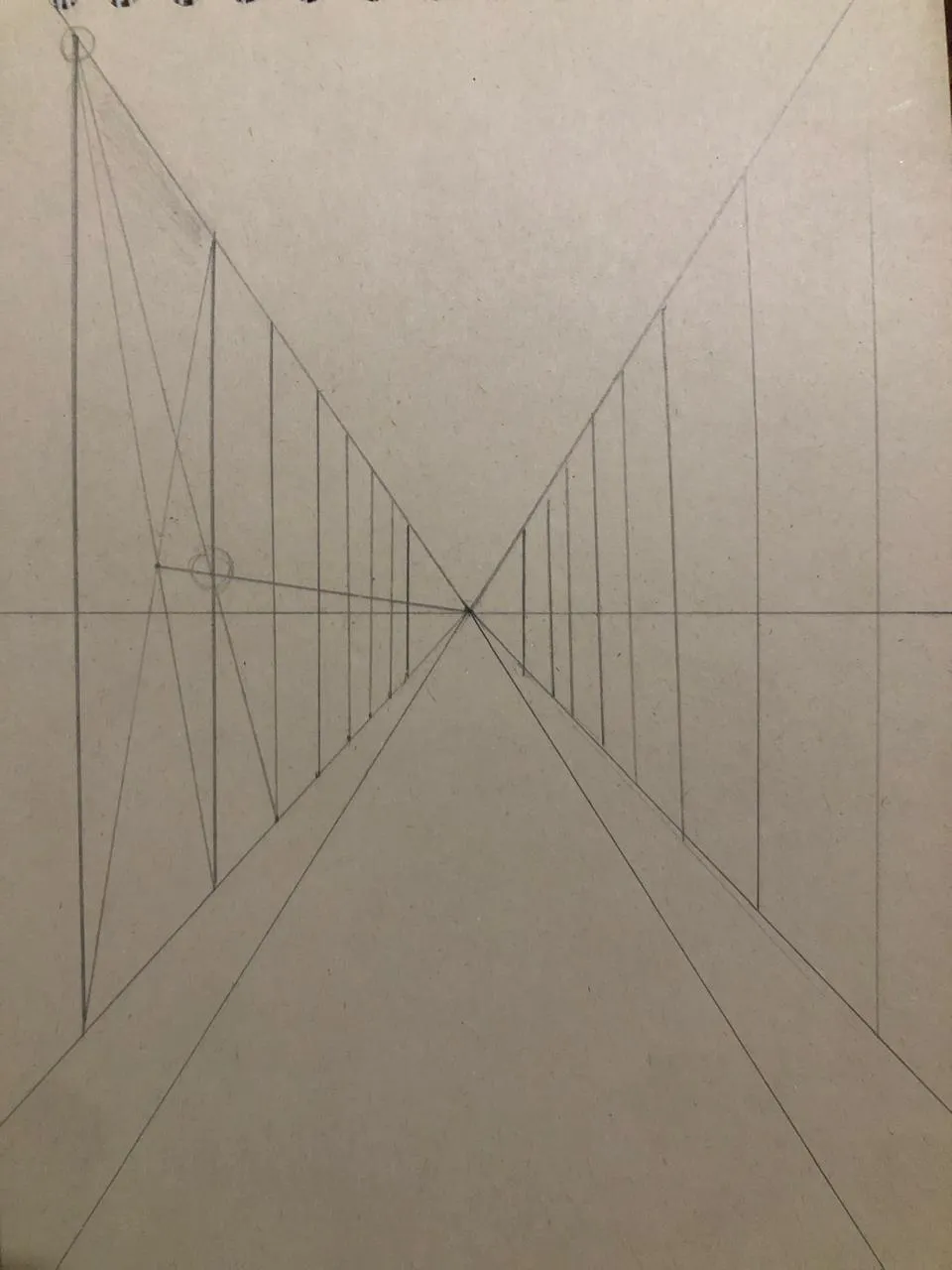
Start with the first house: three windows, a door, and a balcony. For each element, identify its top and bottom positions, then draw a guide line to the center.
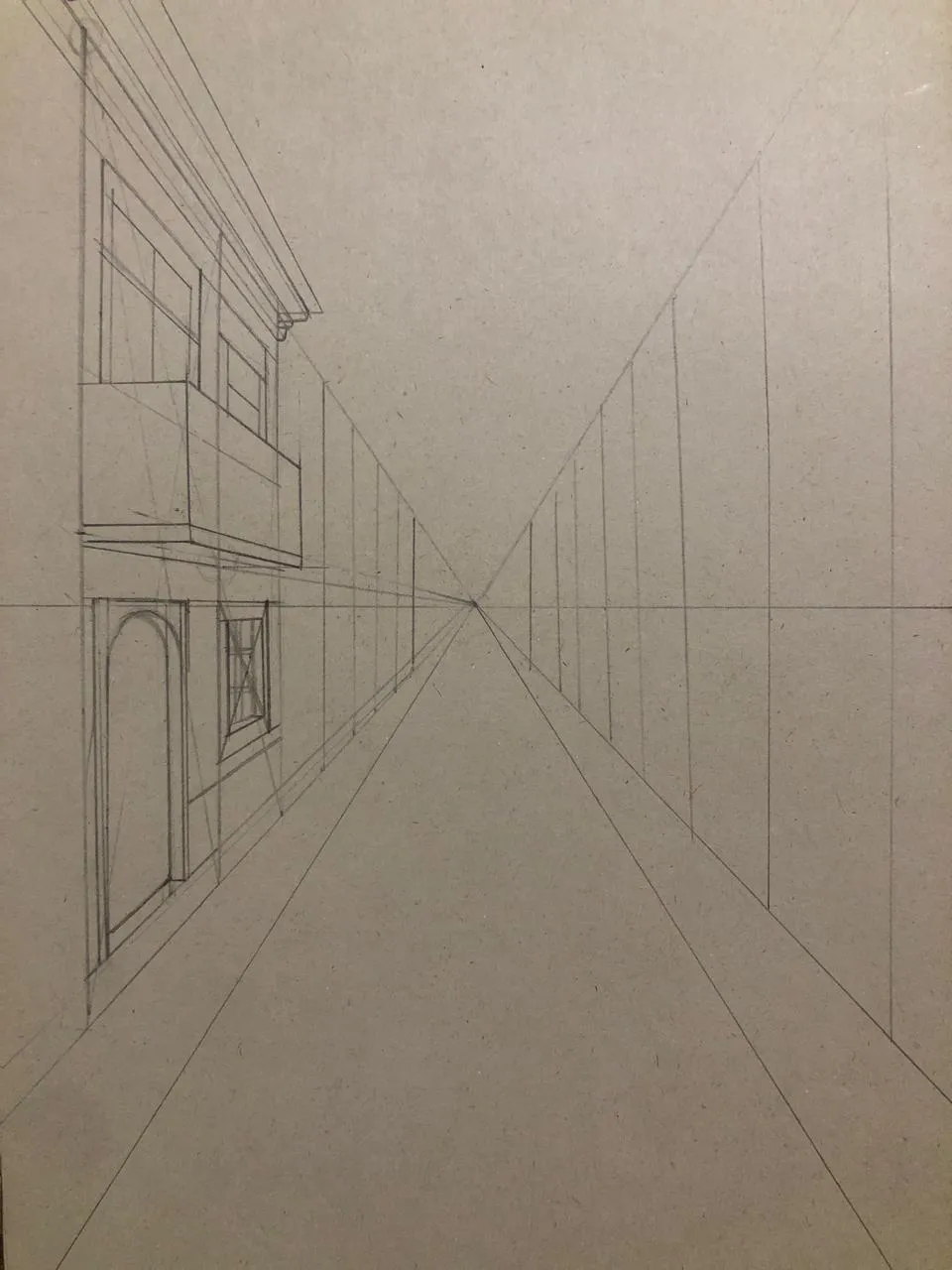
Apply the same principle to the neighboring houses, gradually simplifying the details as you get closer to the vanishing point.
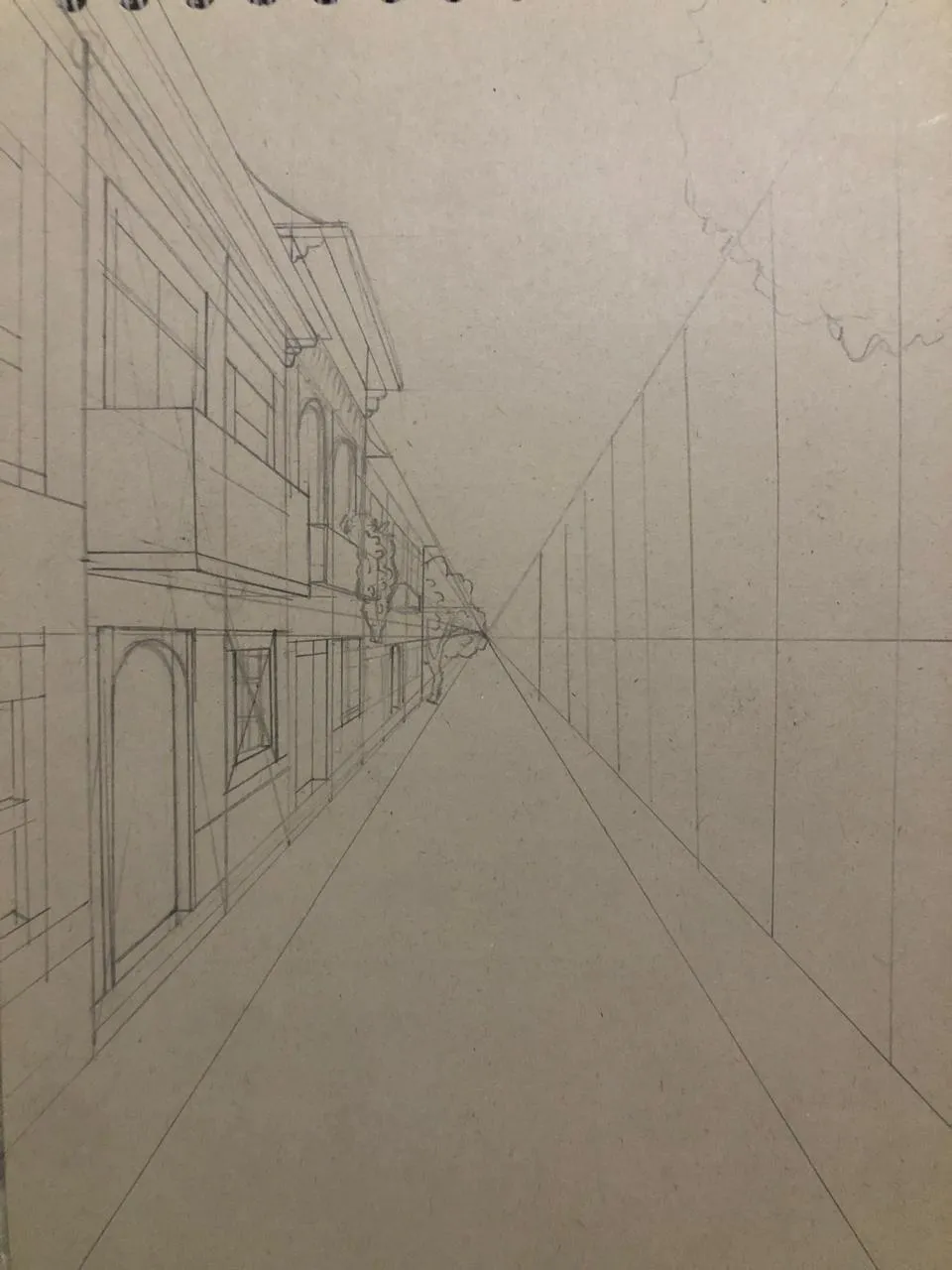
For the opposite side of the street, avoid simply making it a mirror image of the first side. In this example, create different houses; a green space at the end of the street adds a stylistic touch to the composition while also simplifying the overall drawing.
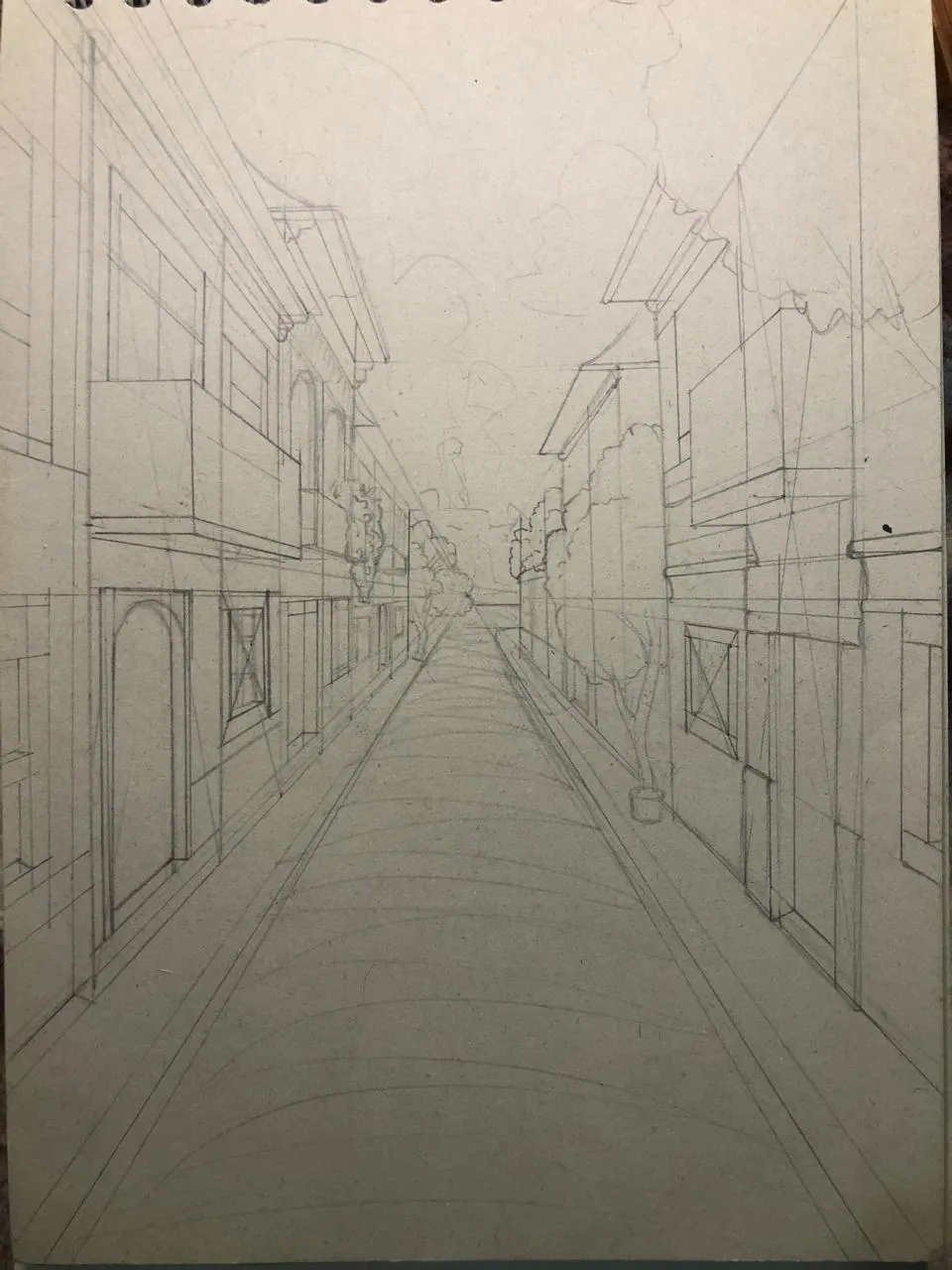
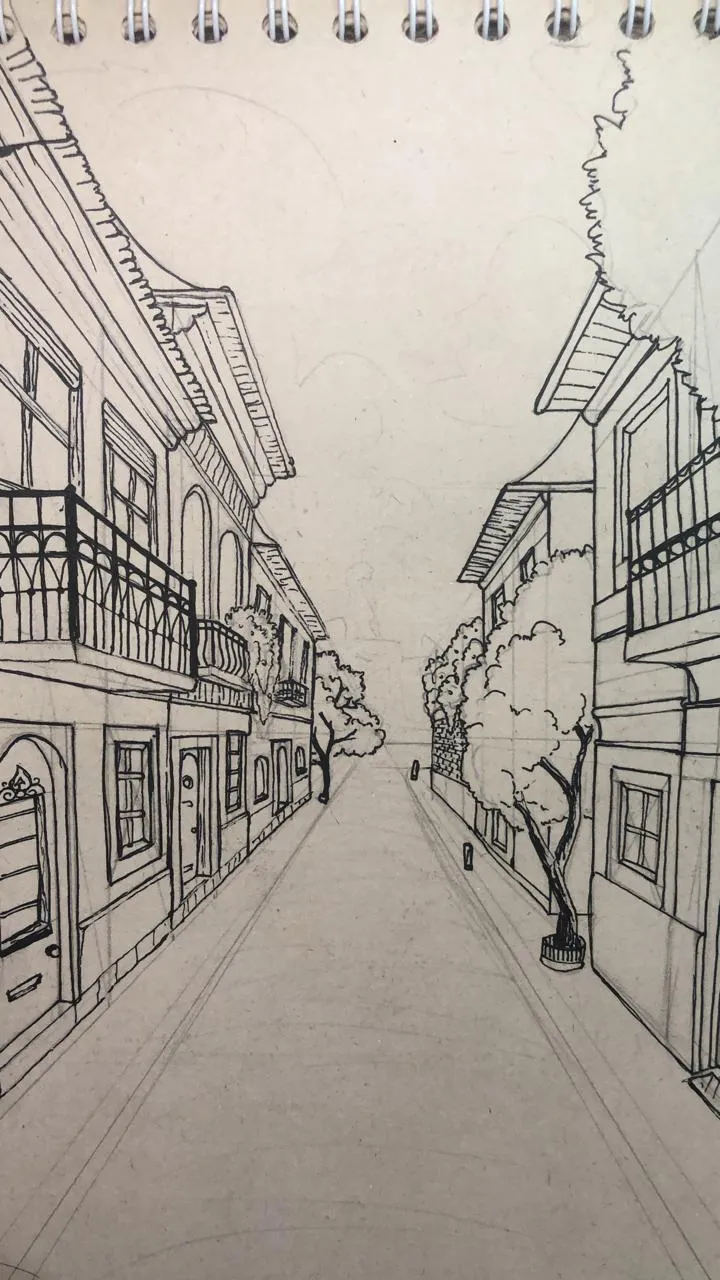
The sketch is finished, but ink lines will give it its true character. Take your time and explore different textures: long lines, short lines, straight lines, curved lines, continuous lines, intermittent lines, thick or thin lines. Each variation enriches the result.
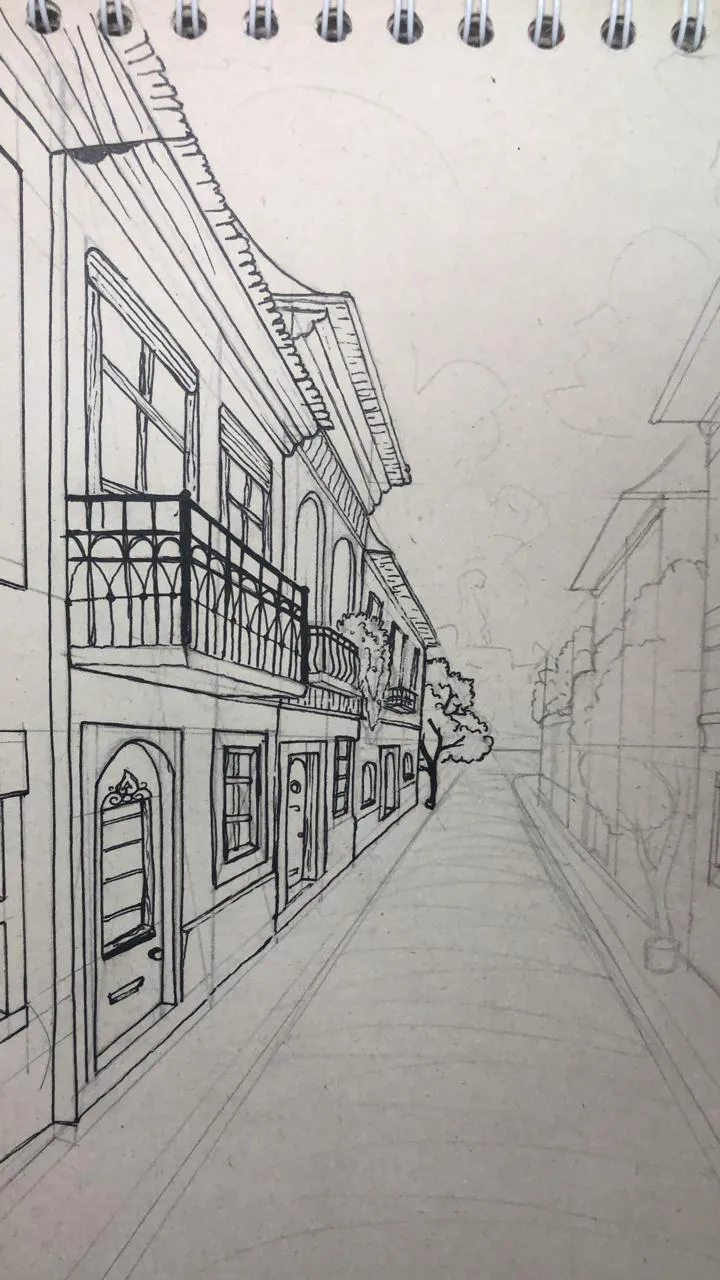
Add elements of life to the scene: trees for a warm atmosphere, street lamps for more elegance, or bollards for a more urban look.
Draw the cobblestones and paving stones of a street in perspective
The ground is almost an art form in itself; the paving immediately transports you from one city to another. In this example, three types of coverings coexist: irregular stones spaced out on the sidewalk, rectangular stones with rounded edges fitted tightly on the roadway, and large cubic blocks used to separate the two areas.
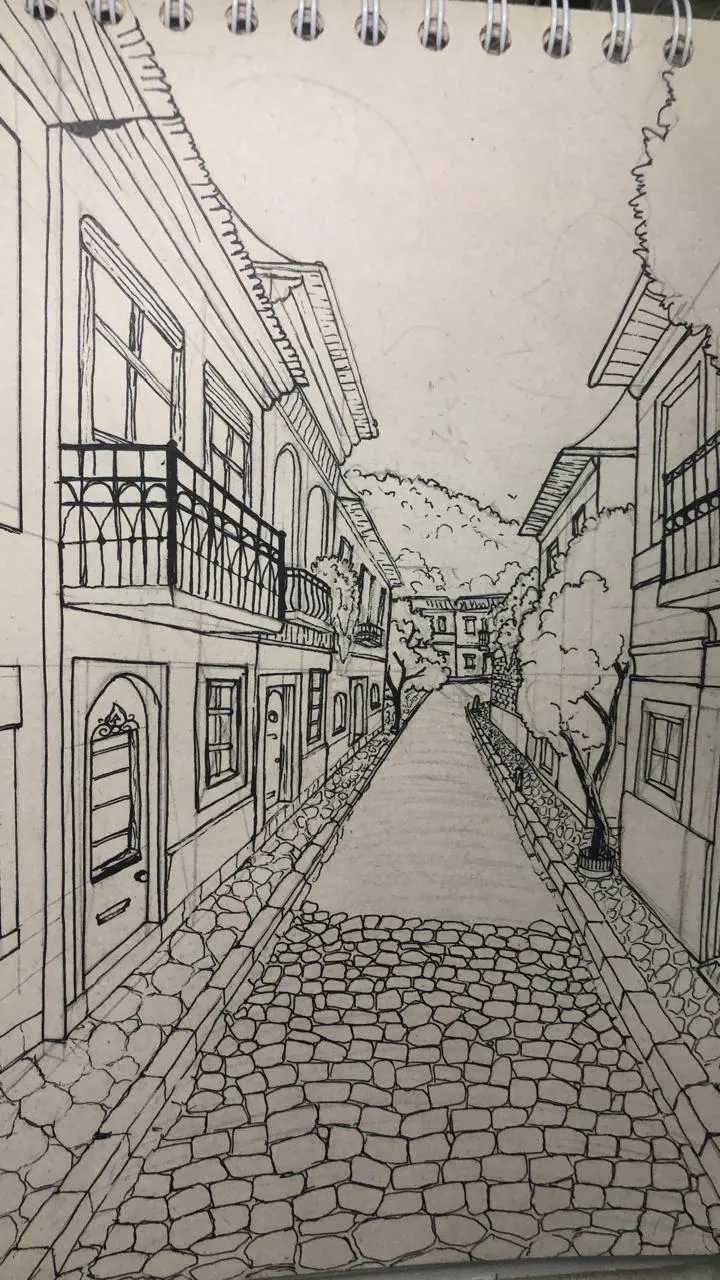
Gradually simplify the paving as you get closer to the horizon. Once finished, erase the pencil to appreciate the drawing properly; you can then add shadows or color according to the technique of your choice.
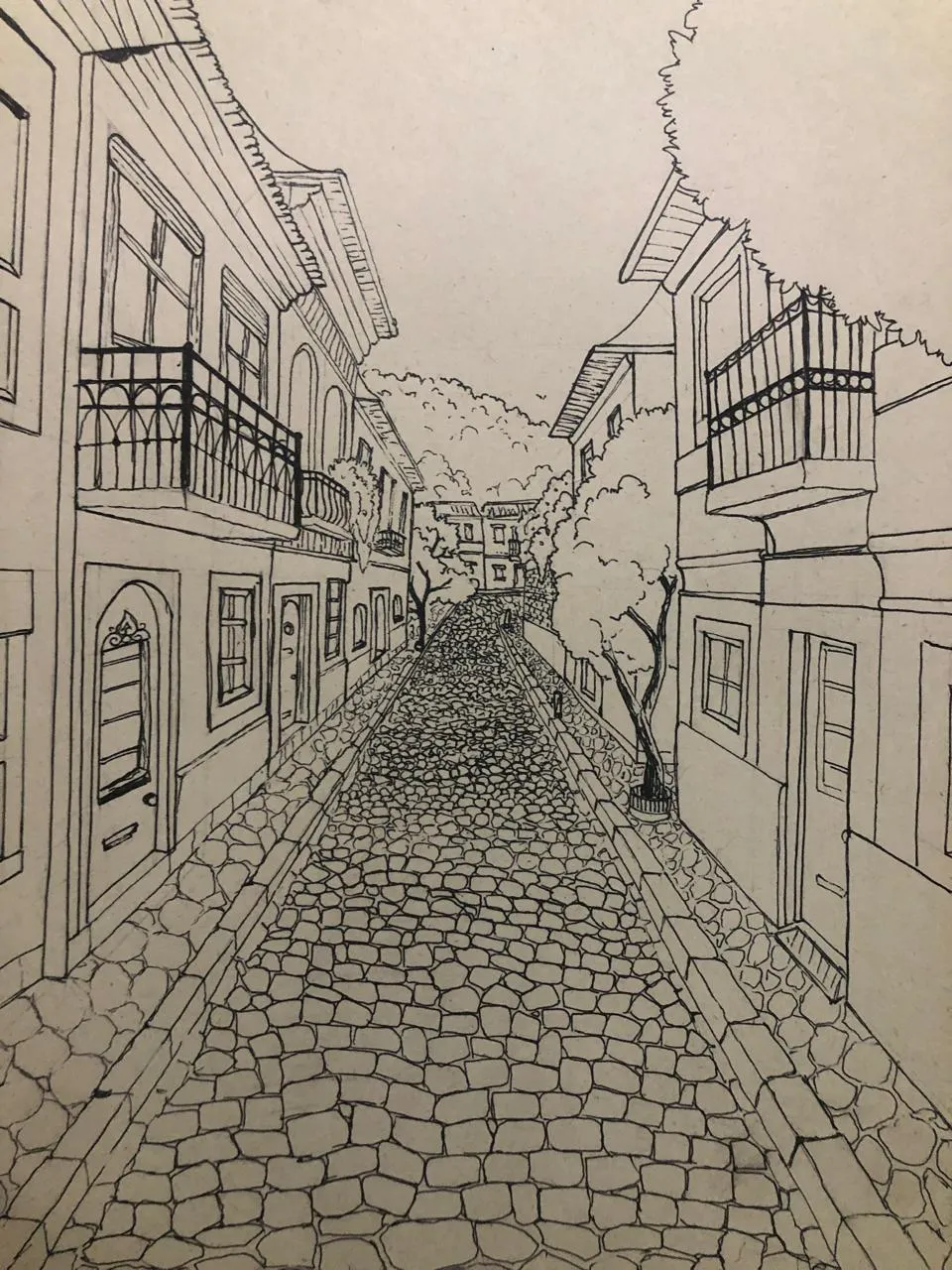
If you want to add color to the scene, choose a limited palette dominated by earthy tones, such as ocher, brown and burnt sienna, with a few shades of green for the natural areas. More than the textures, it is the lighting that will bring life and volume to the composition.
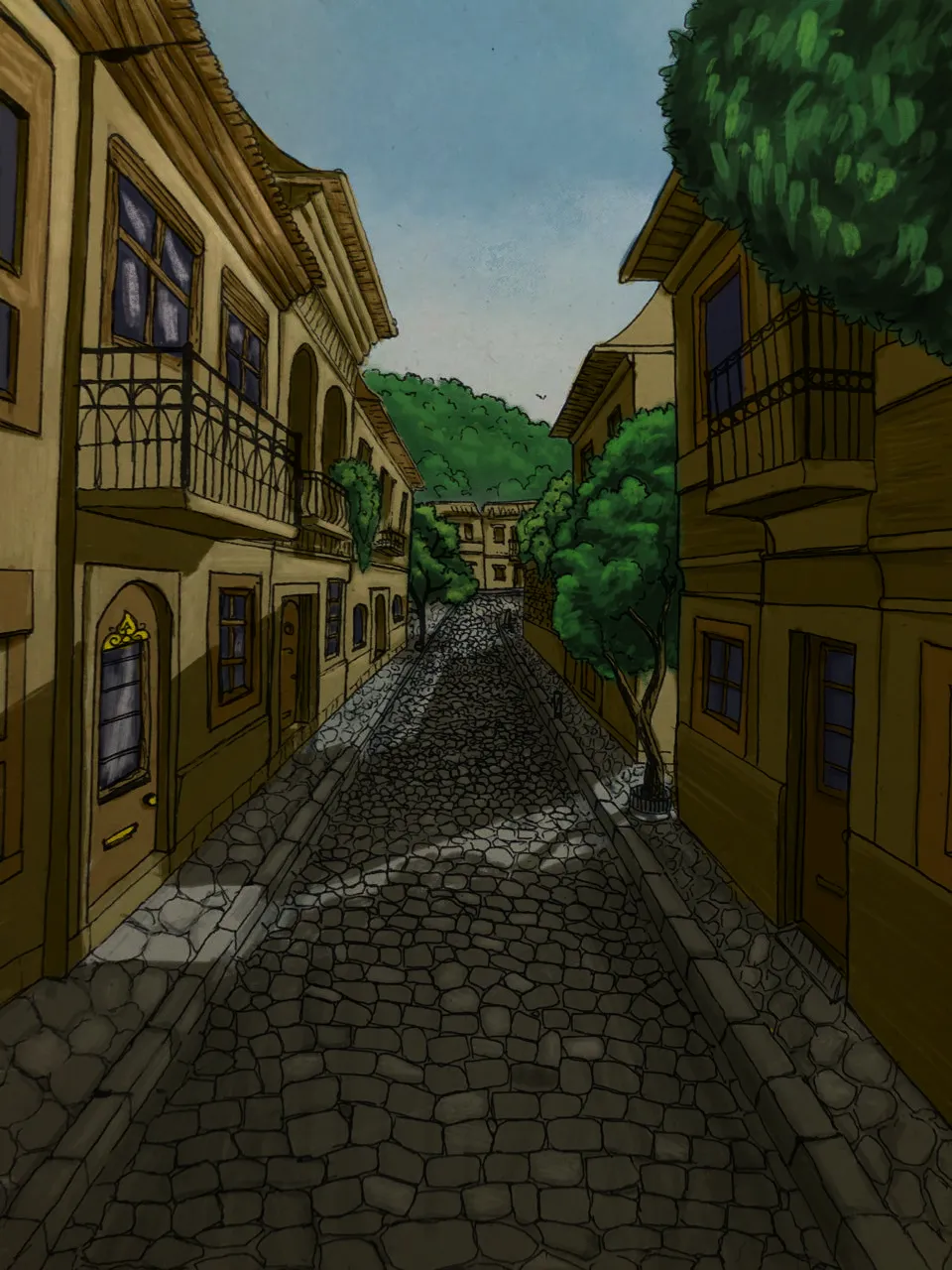
In this tutorial, the coloring phase has been deliberately left out to enable you to clearly observe the linework and the projection of the perspective. Now it’s your turn to create your own version by incorporating all these concepts.
Discussion
Top article to better understand and understand the perspective.
Top article to better understand and understand the perspective.
Very much more than putting into practice