
How to Draw a Person Walking
Learning to draw the body in motion is both exciting and rewarding. However, I advise you to start with the basics before tackling more dynamic movements, such as dancing or fighting.
Welcome back! In this tutorial, we will analyze the human body while walking, in order to lay the necessary foundations for understanding the body in motion.
Analysis of the structure based on a model
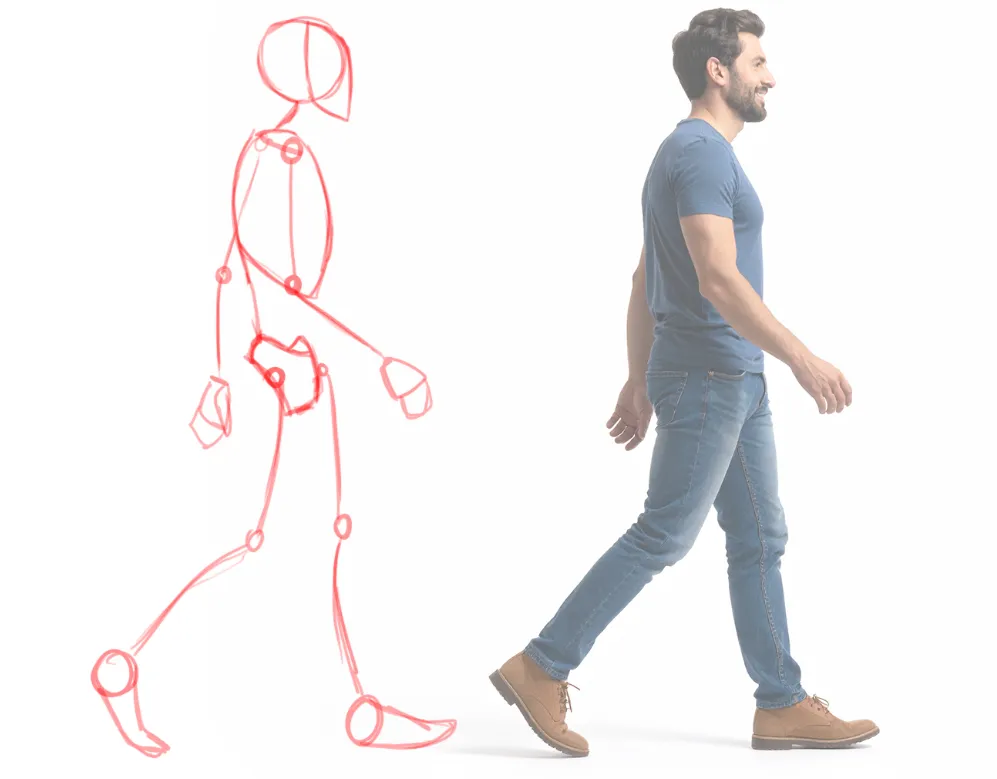
To begin, take a few photos of people walking naturally. Observe the distribution of weight, the lateral swinging of the limbs, the inclinations, and other elements of the movement.
Here are the key takeaways:
In general, the spine remains straight and relaxed.
The limbs alternate: one moves forward while the other stays behind.
This alternation is reversed between the arms and the legs.
The elbows and knees are bent at approximately 65°.
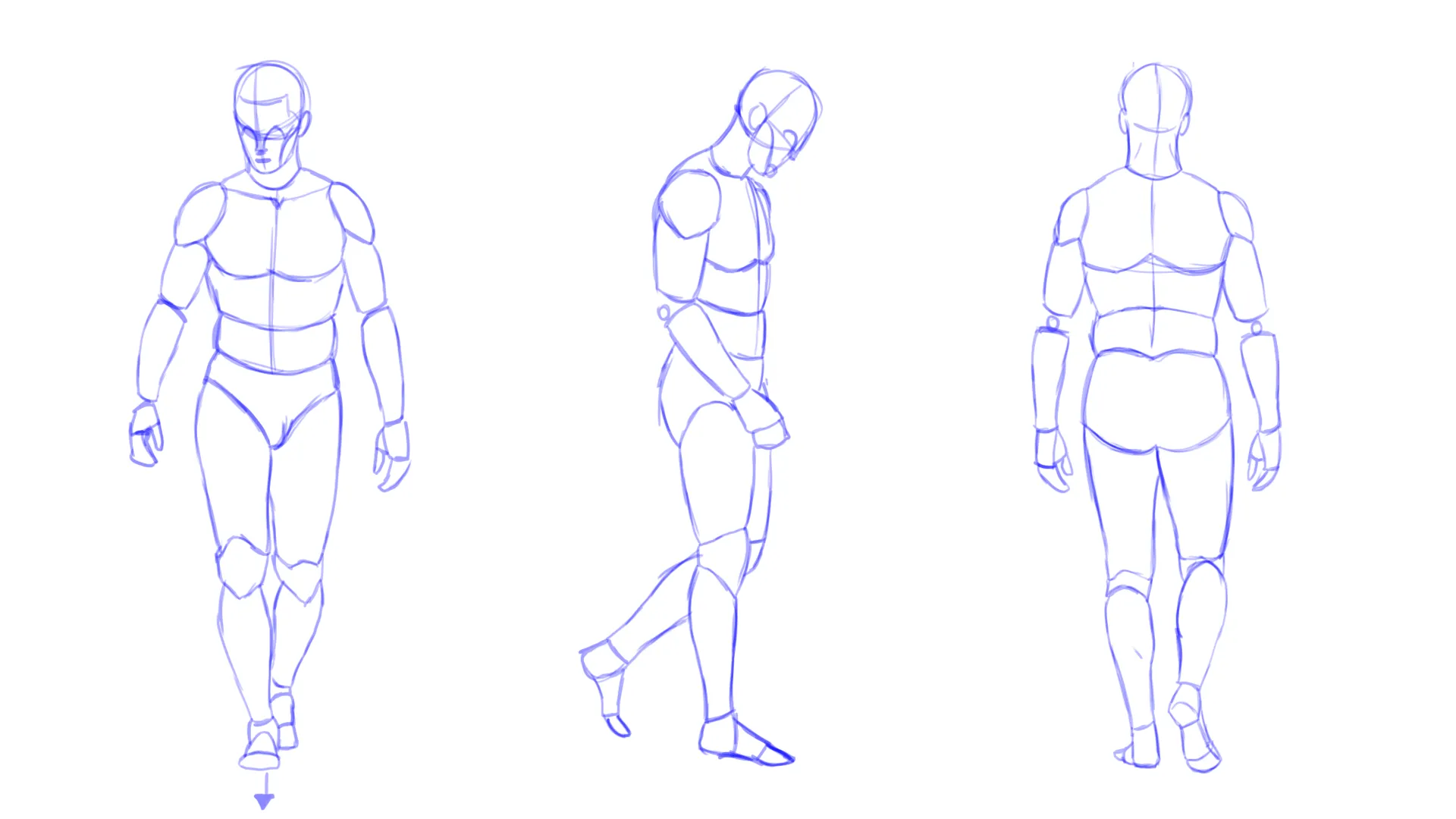
Let’s now look at a diagram of the parts of the body from the front, side, and back, so we can analyze the body in motion as a whole. Try to identify the elements we just saw in each of these views.
How to draw a person walking, step by step
For this tutorial, we will draw a woman walking, as seen from the front. Since we already know some basic principles of proportions, we will quickly create a diagram to define the posture and weight distribution.
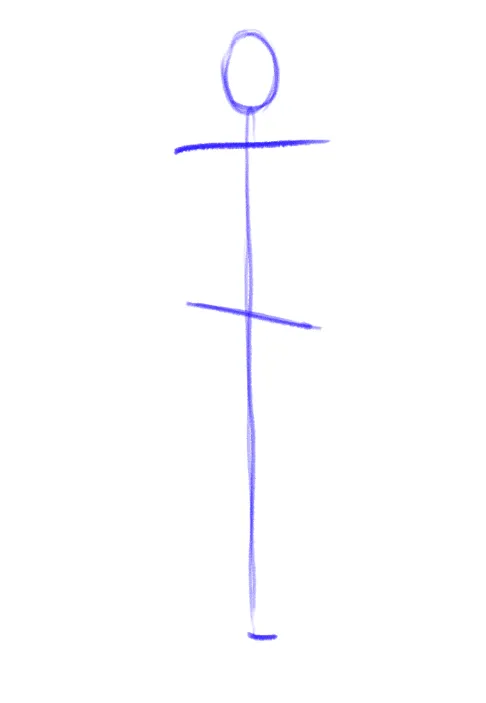
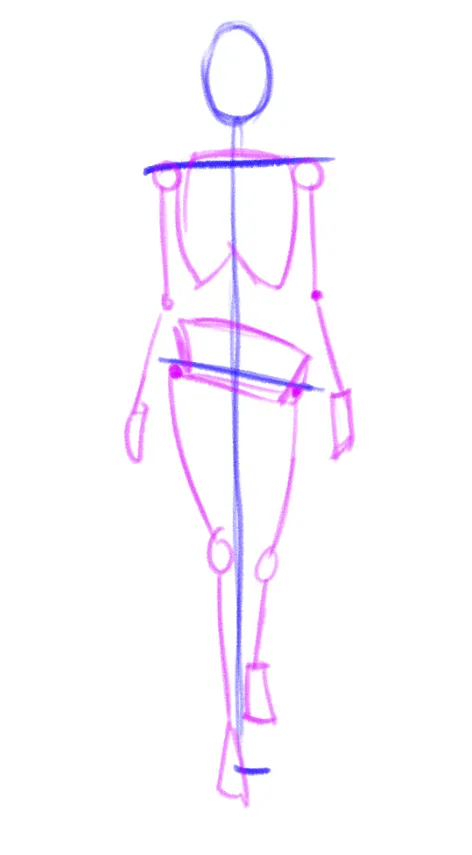
Let’s start with an oval that determines the position and size of the head. From this measurement, draw a vertical line representing the total height of the figure, down to the soles of the feet. Finally, draw two axes at the level of the shoulders and hips, slightly inclined in opposite directions.
Based on this, we construct the diagram by adding a simplified bone structure.
The arms are slightly bent. Pay attention to the position of the elbows, which must be in proportion to the shoulders.
For the legs, one must be positioned further forward than the other. The one at the back appears shorter due to perspective.
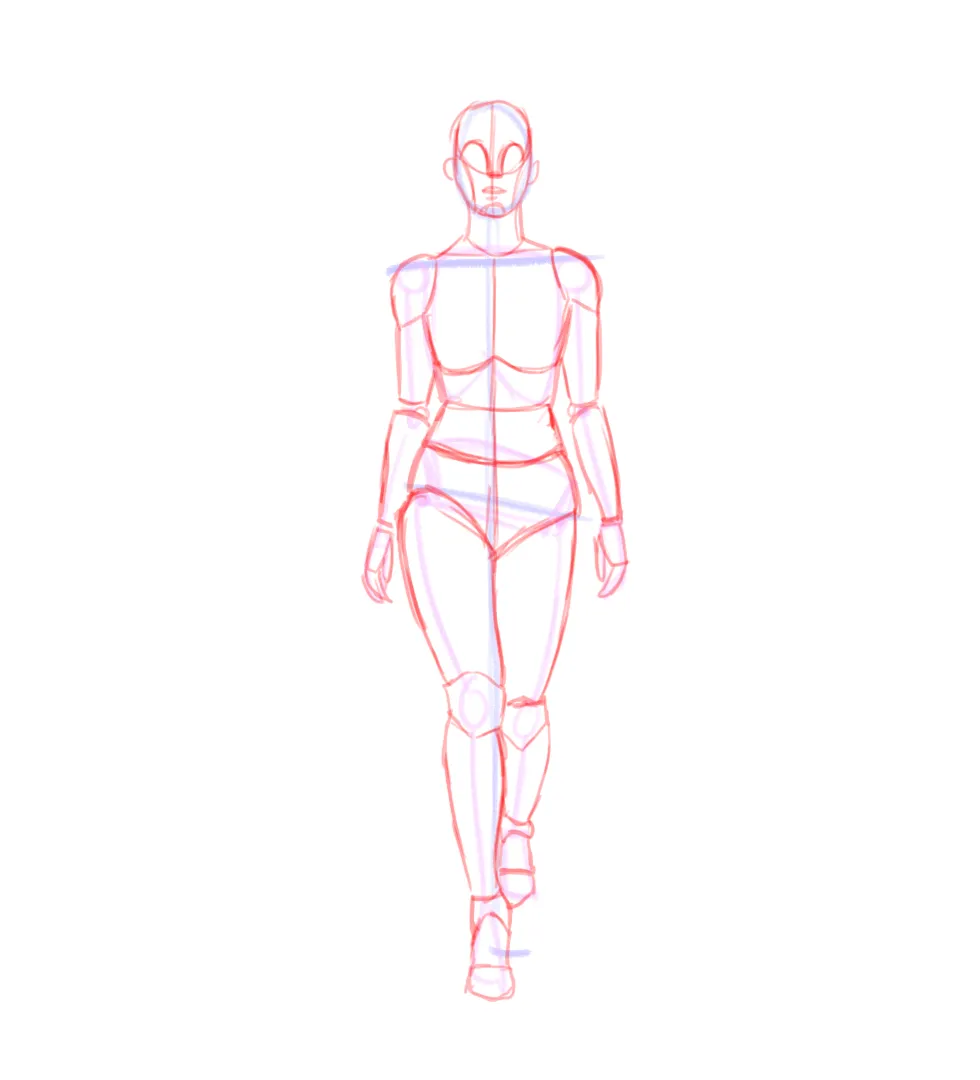
Draw a volume model
Here we have the corresponding volume model, to better understand the silhouette that we are going to construct.
Note the slight inclination of the shoulders and hips, as well as the alternating movement of the arms and legs. Also observe the shape of the muscles, constructed with curved lines that give the posture a more natural appearance.
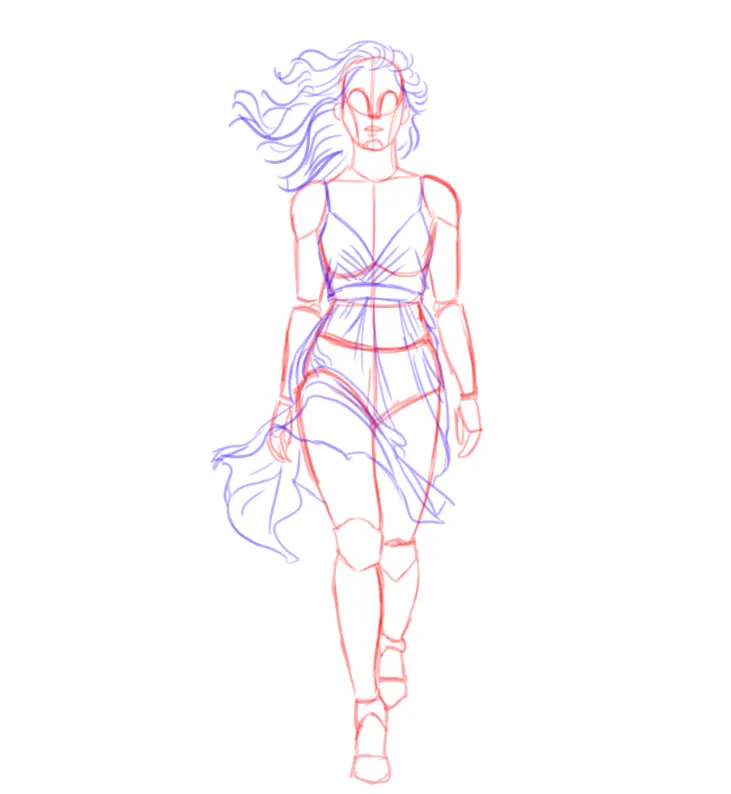
We then add a few additional elements, such as hair and clothing. Here, I chose to give them a lot of movement to emphasize, by contrast, the still side of the step.
Draw the face
Let’s start with a face with a neutral expression, looking straight ahead. This is not mandatory: you can direct the gaze elsewhere to give more dynamism to your drawing.
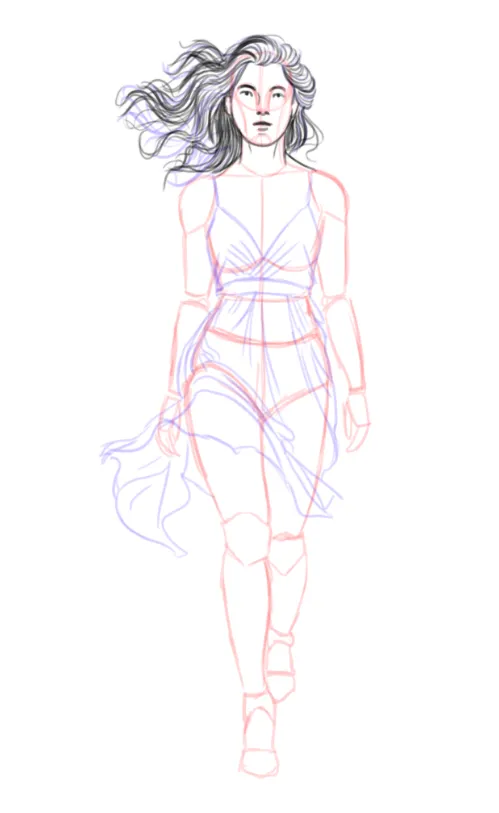
Let’s move on to the upper part of the dress, which is made from a thin fabric that wrinkles easily. Its cut leaves the shoulders bare, allowing us to observe the distribution of weight, and especially their slight inclination.
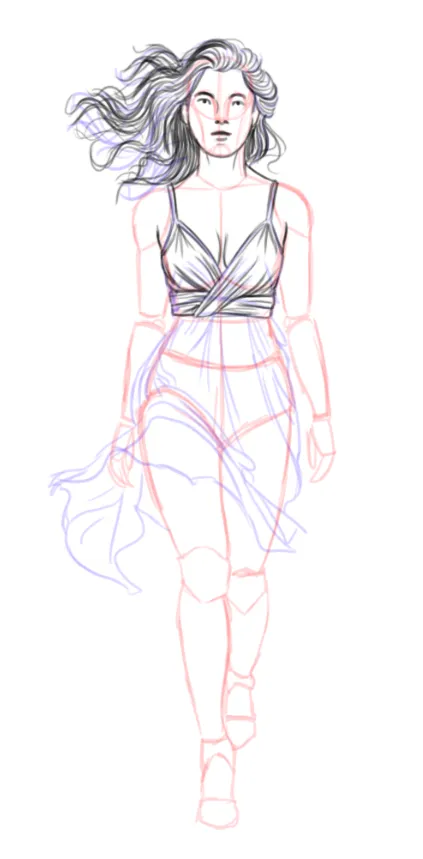
Let’s continue with the skirt and how it falls and drapes. The pleats start at the waistband, at the level of the hips. Part of the skirt is slightly lifted and gathered by the knee as it moves forward.
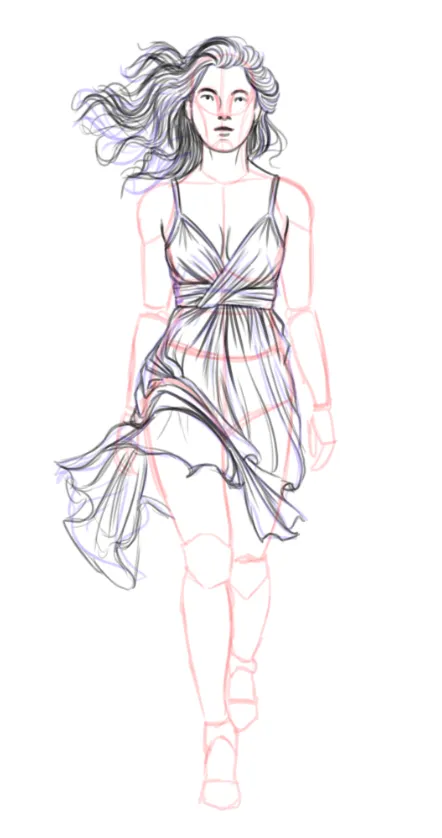
Now it’s the arms’ turn. Keep a slight bend in the elbows while maintaining a relaxed and natural posture. One detail should be noticed: the left arm is fully visible, while the other disappears behind the hip and the raised part of the dress.
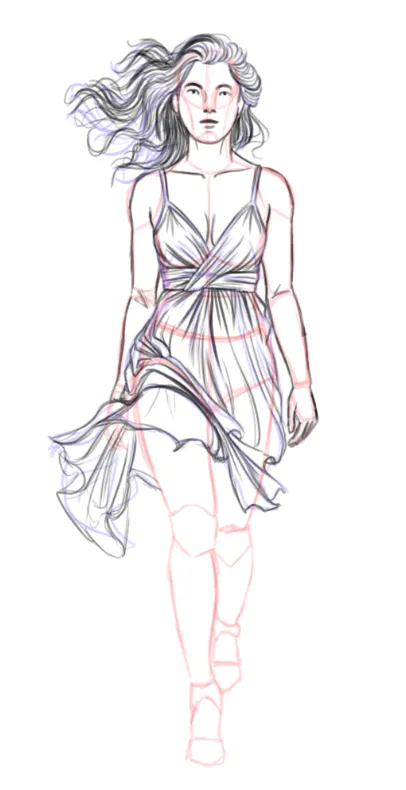
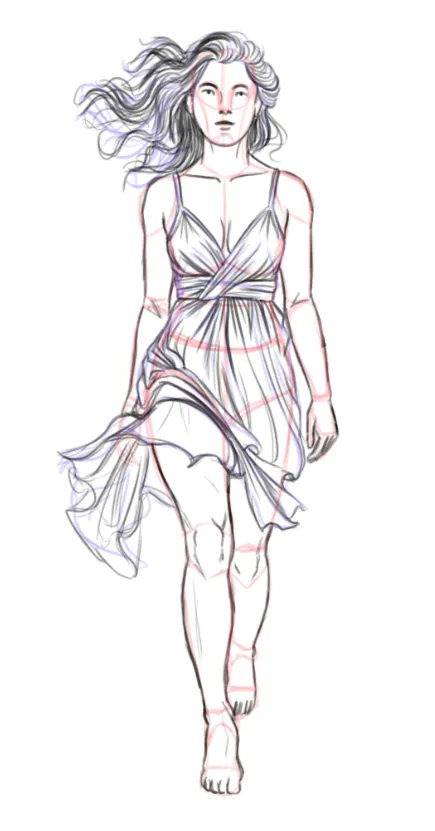
Let’s move on to the legs. The movement is similar to that of the arms, but reversed: the right leg moves forward, while the other remains behind, with the heel raised.
Add shadows
Start by erasing the diagram lines and refine the contours to obtain a clean drawing. This will allow you to identify any errors and the lines that need to be retouched.
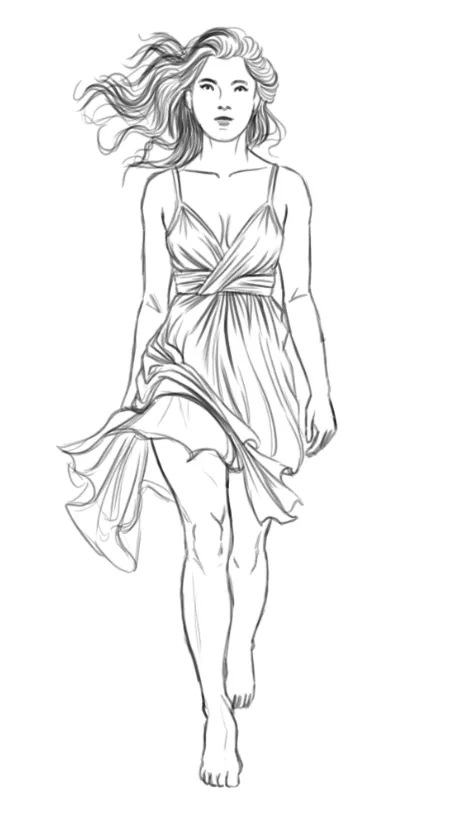
Next, apply a first layer of general shadow. Our model is backlit: the shadow therefore covers almost the entire silhouette, with the exception of a thin, bright outline on the left side.
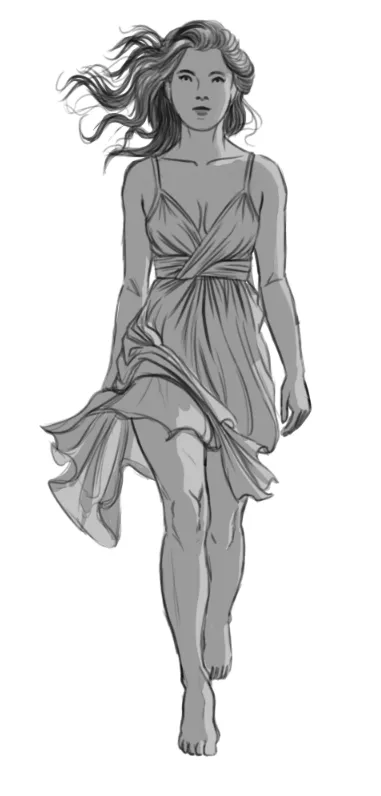
You can add details using darker grays to define the volumes of the face, the folds of the clothing, the texture of the hair, and the shape of the limbs. Start with a tone close to the base color, then gradually darken it until you achieve the desired result.
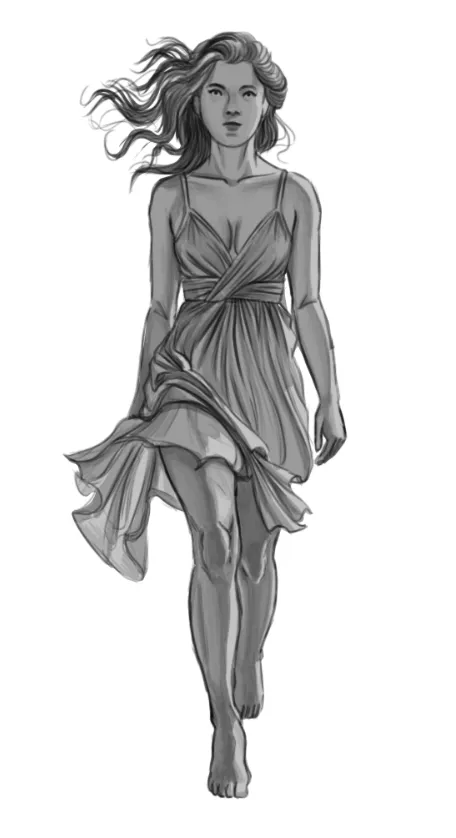
Finalize the drawing
Finish with a few bright highlights: they enhance the volumes and increase the contrast without needing to darken the shadows further. A few light tones between the folds of the clothing also accentuate the depth and better define the shapes.
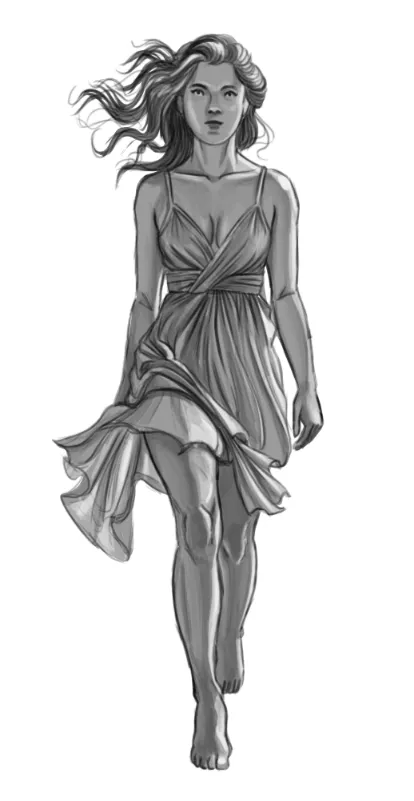
And there you have it, the tutorial is finished! I hope these steps have helped you better understand what to observe when drawing a person walking. Now it’s your turn to practice and create your own version!
Popular Articles
Discussion
No comments yet.